JACKSON HOLE, Wyo. — Friday, August 28, 2026
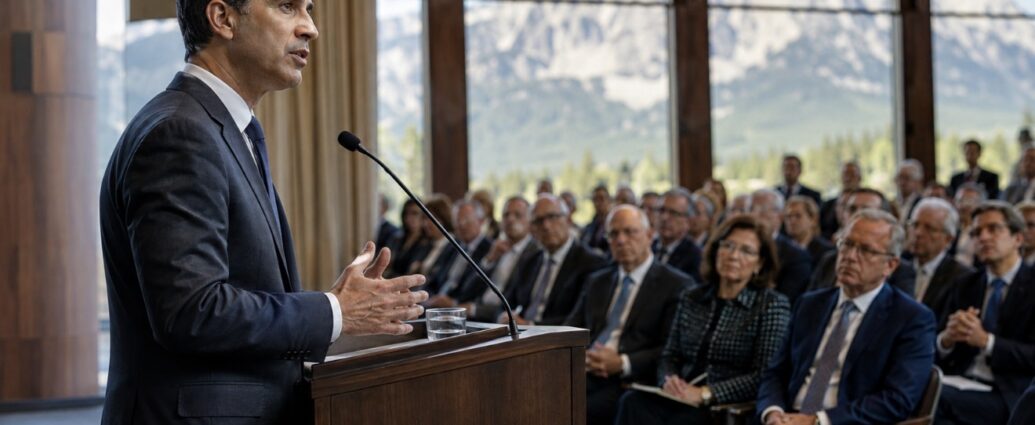
Federal Reserve Chairman Kevin Warsh delivers his first Jackson Hole keynote at 10 a.m. Eastern this morning at Jackson Lake Lodge, in the shadow of the Tetons, with markets waiting on one question: is the Fed preparing to raise rates again?
He probably won’t answer it directly.
There is an irony in the setting. The Kansas City Fed titled this year’s symposium “Financial Innovation: Implications for Payments and Policy,” and Warsh signaled a month ago that he wanted to use the speech for big ideas rather than the tactical question of what the Fed does at its three remaining meetings. Events have not cooperated.
A visibly split committee. The Fed held its benchmark rate at 3.5% to 3.75% in July over three dissents in favor of a hike — the most since September 2016 — from Cleveland’s Beth Hammack, Minneapolis’ Neel Kashkari and Dallas’ Lorie Logan. Kansas City’s Jeffrey Schmid and St. Louis’ Alberto Musalem, who had no vote in July, later said they would have joined them. Minutes released this month showed many participants believed tightening would likely be needed if inflation did not come down.
But the data moved against them. July payrolls fell 23,000 against expectations of a gain near 80,000, and core inflation came in subdued, pulling market pricing for a September increase back sharply. Traders have largely shifted the next hike to December. That reordering is the most important change since Warsh last spoke, and much of the audience will be listening for whether he shares it.
The bond market is the live wire. The 30-year Treasury yield closed at 5.31% on Aug. 17, its highest since 2007, and the Treasury Department intervened on Aug. 19 to bring long-term borrowing costs down. Treasury Secretary Scott Bessent’s move raises an uncomfortable question about who is setting the price of money. Sen. Elizabeth Warren sent Warsh a letter Thursday ahead of the gathering.
Warsh also has a credibility problem of his own making. At his July press conference he repeatedly pointed to sharply higher bond yields as welcome, implying the Fed was content to let markets do the tightening — a stance that pushed long yields higher still and left investors confused about the strategy. Standard Chartered’s economists argue he now has to say plainly that the Fed will raise rates if core PCE does not fall steadily.
How markets could break. If he puts a September move clearly in play, yields and the dollar rise, rate-sensitive tech sells off, banks gain and gold slides. If he flags inflation risk without endorsing a hike — the likeliest outcome — stocks hold, short yields ease and gold recovers. A genuinely dovish message blaming tariffs and energy for the price surge would spark the biggest rally, and is the least likely: inflation has now run above the 2% target for a sixth straight year, and disowning it would cost the Fed dearly.
The most probable speech is carefully hawkish. No promise for September, but a clear signal that the next move is more likely up than down.
That may knock stocks and gold lower on the day. But Warsh has been criticized for saying too little, too vaguely, for months. If he finally explains how he decides, markets may take the clarity even if they dislike the message.
JBizNews Desk | Jackson Hole, Wyoming
© JBizNews.com All Rights Reserved. Reproduction or distribution without written permission is prohibited.