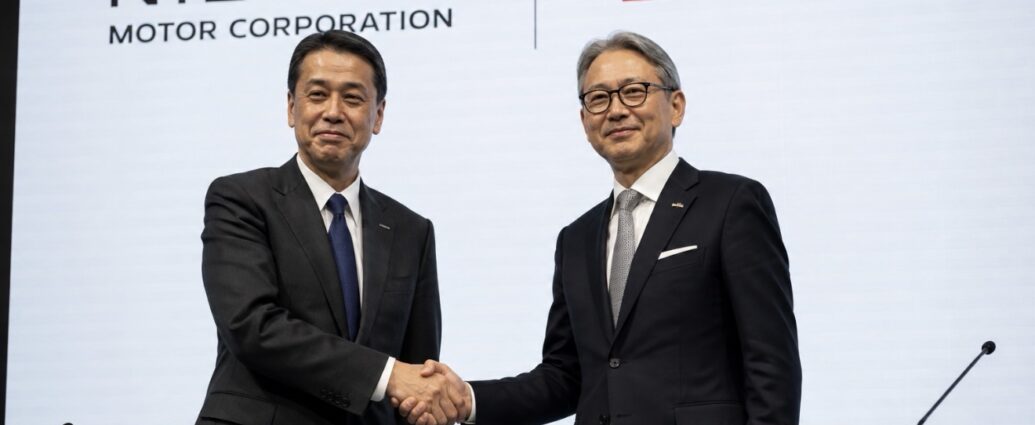
TOKYO — Nissan and Honda are joining forces on one of the most expensive and increasingly important parts of building a modern automobile: the software and electronics that control the vehicle.
The Japanese automakers said Monday they will jointly develop standardized electronic control units and software for next-generation vehicles, targeting a rollout beginning in fiscal 2029.
The companies plan to align the core architecture behind their vehicles, including electronic control units, operating systems, middleware and vehicle-control software. Mitsubishi Motors, Nissan’s alliance partner, is also considering joining the effort.
The agreement is significant because software is quickly becoming one of the largest development costs in the auto industry.
Modern vehicles increasingly rely on centralized computers and software to control driver-assistance systems, infotainment, batteries, connectivity, automated driving and over-the-air updates. Developing those systems separately across multiple brands can require billions of dollars in engineering and years of work.
Nissan and Honda are effectively deciding that some of that expense no longer makes sense to carry alone.
By sharing common software architecture and electronic controls, the companies can spread development costs across more vehicles while still designing their own models, brands and customer experiences around the underlying technology.
That could make both companies more competitive at a time when Chinese automakers are rapidly expanding with vehicles that combine lower prices with advanced digital features.
Companies such as BYD have placed enormous pressure on Japanese, European and American automakers by moving quickly in electric vehicles, plug-in hybrids, in-car technology and software.
For Honda and Nissan, sharing technology offers a way to narrow that gap without completing the full corporate merger the two companies previously considered and abandoned.
The software partnership is part of a broader strategic relationship that began in 2024. Even after merger discussions ended, the automakers continued exploring areas where cooperation could lower costs and increase scale.
The trend extends well beyond Japan.
Global automakers increasingly recognize that building every piece of software independently is becoming too expensive. Volkswagen and other European manufacturers have pursued technology partnerships, while automakers around the world are working with chipmakers, cloud companies and artificial-intelligence developers.
The automobile itself is also changing.
For generations, consumers differentiated vehicles largely by engines, transmissions, handling and styling. Increasingly, the experience is determined by software: how quickly the screen responds, whether features can be updated remotely, how driver-assistance systems behave and how effectively the vehicle connects to phones, applications and other devices.
That shift changes the supply chain as well.
Traditional auto suppliers historically sold mechanical components that could remain largely unchanged for years. Software-defined vehicles require continuous updates, sophisticated semiconductors, cybersecurity protection and computing platforms that may evolve throughout the life of the automobile.
For Nissan and Honda, cooperation could therefore produce savings far beyond software engineers.
Standardized electronics could eventually reduce the number of unique components the companies need to purchase, simplify supplier relationships and allow new technology to be deployed across multiple models more quickly.
There is also urgency.
Both automakers face major strategic decisions involving electrification, hybrids, tariffs and manufacturing capacity. Honda has already reconsidered portions of its electric-vehicle strategy while emphasizing hybrids, and Nissan has been pursuing a broader restructuring aimed at lowering costs.
Sharing software gives them one area where they can gain scale without surrendering their independence.
For consumers, the impact will not be visible immediately. The first vehicles using the jointly developed technology are not expected until fiscal 2029.
But the decision reflects a much larger transformation already underway across the automobile industry.
The most expensive battle in the next generation of cars may no longer be fought entirely under the hood.
Increasingly, it will be fought inside the computer.
JBizNews Desk | Tokyo
© JBizNews.com All Rights Reserved. Reproduction or distribution without written permission is prohibited.