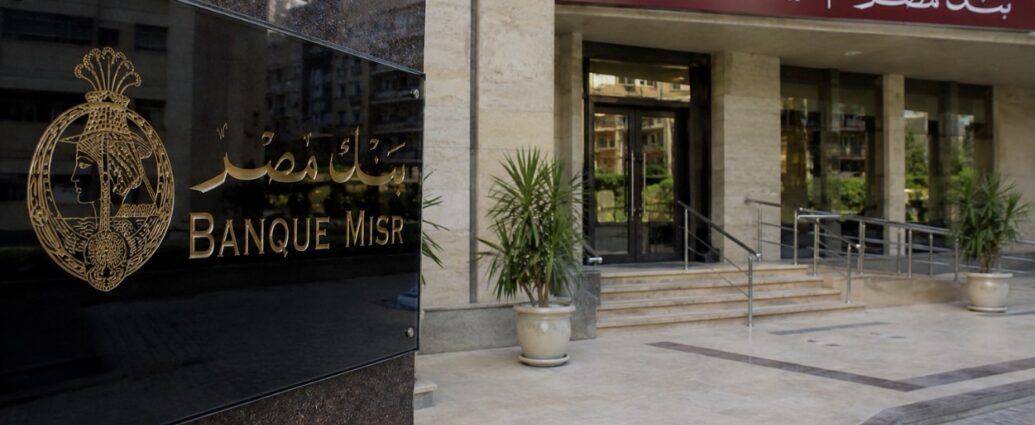
CAIRO — The United States is moving to cut the United Arab Emirates branches of Banque Misr off from U.S. dollar transactions over alleged dealings involving Iran, extending Washington’s sanctions campaign deeper into the international banking system.
Banque Misr is Egypt’s second-largest bank and one of the country’s most important financial institutions.
The restrictions are aimed specifically at its UAE branches rather than the entire bank, but the consequences could still be significant because access to the U.S. dollar remains essential to large portions of international trade and finance.
The UAE and Egyptian central banks said they are coordinating over the matter and that Banque Misr will take the steps necessary to maintain normal operations.
The U.S. restrictions are expected to take effect after a public-comment period.
For businesses operating internationally, the development is important because it demonstrates how powerful U.S. financial sanctions can be even outside American borders.
A company in Dubai may be buying equipment from Europe, receiving goods from Asia or selling products somewhere in the Middle East, but if the transaction is settled in dollars, it can still pass through the U.S.-linked financial system.
That gives Washington enormous leverage.
A bank that loses access to dollar clearing can find it significantly harder to conduct international transactions, finance trade or serve corporate customers whose businesses depend on dollar payments.
The action against Banque Misr also demonstrates the growing risk surrounding secondary sanctions.
Companies do not necessarily have to be directly dealing with a sanctioned Iranian entity to face problems. Exposure can emerge through banks, customers, shipping companies, suppliers or other intermediaries involved somewhere in a transaction.
That makes sanctions compliance increasingly important for companies with operations across the Middle East.
Banks and businesses must understand not only who their direct customer is, but also where payments originate, where they ultimately go and which institutions touch the transaction along the way.
The U.S. has been intensifying financial pressure on Iran by targeting the institutions and networks that allow Iranian businesses and government-linked entities to move money internationally.
Restricting access to dollars can be one of Washington’s most powerful tools because the U.S. currency continues to dominate global trade and financial settlements.
For Egypt, the situation is particularly sensitive.
Banque Misr plays a major role in the country’s banking system and serves companies and individuals throughout Egypt and internationally. Egyptian authorities will therefore want to prevent restrictions on the UAE branches from disrupting the broader institution or undermining confidence.
For the UAE, the action is another reminder of the balancing act facing one of the world’s fastest-growing financial centers.
Dubai and Abu Dhabi have become major hubs connecting businesses across Asia, Europe, Africa and the Middle East. That international reach also makes compliance with U.S. sanctions increasingly important for banks operating there.
The immediate restriction may involve only a handful of Banque Misr branches.
The larger message reaches much further.
In today’s global financial system, access to the dollar is effectively access to the commercial bloodstream of international business.
And Washington is showing again that it is willing to use that access as leverage.
JBizNews Desk | Cairo
© JBizNews.com All Rights Reserved. Reproduction or distribution without written permission is prohibited.