Artificial intelligence is no longer just changing how companies work. Global financial regulators are now warning that it could also change how fast — and how dangerously — cyberattacks can hit banks, markets and other critical financial infrastructure.
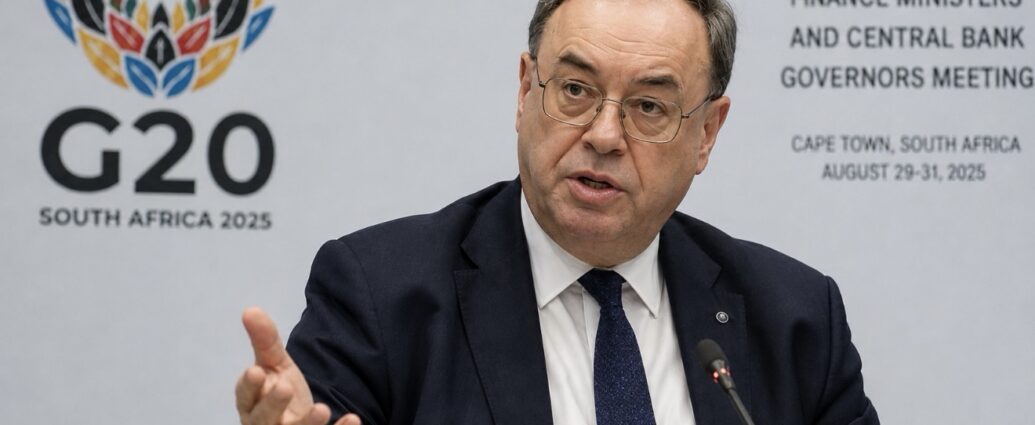
The Financial Stability Board, the international body that monitors risks to the global financial system, warned G20 finance ministers and central bank governors this week that the rapid development of powerful artificial intelligence models is creating a new level of cybersecurity risk.
FSB Chair Andrew Bailey said the most immediate concern from frontier AI is its potential effect on cyber risk.
In simple terms, AI could allow hackers to do in minutes what previously took teams of people hours, days or even weeks.
AI systems can potentially search for weaknesses in computer networks, generate malicious code, automate phishing campaigns, adapt attacks while they are underway and dramatically increase the number of targets criminals can attack at the same time.
That changes the economics of cybercrime.
A hacker who once had the resources to attack a handful of companies could potentially use AI to attack hundreds or thousands. And because banks, exchanges, insurers, payment processors and investment firms are deeply connected, a successful attack against one important institution could quickly become a problem for many others.
That is why regulators are looking beyond the danger to one individual bank.
The bigger concern is systemic risk — the possibility that an AI-powered attack could disrupt payments, trading systems, customer accounts or financial infrastructure badly enough to damage confidence throughout the financial system.
If customers cannot access their bank accounts, businesses cannot process payments or markets cannot operate normally, the damage can spread far beyond the company that was originally attacked.
The FSB also warned that financial firms increasingly depend on a relatively small group of major technology companies for cloud computing, artificial intelligence and other critical infrastructure.
That concentration creates another vulnerability.
If many banks are relying on the same technology provider and that provider suffers a major failure or cyberattack, several financial institutions could experience problems at the same time.
The warning does not mean regulators believe an AI-triggered financial crisis is underway.
It means they believe the capabilities are developing quickly enough that governments, regulators and financial companies need to strengthen defenses before a major event happens.
Bailey said authorities should focus on resilience and on ensuring advanced AI models are released and deployed safely and responsibly across countries.
The warning comes as financial regulators are already watching several other vulnerabilities, including high asset valuations, stress in sovereign debt markets and risks in private credit.
But AI introduces something different.
Traditional financial crises usually begin with money — bad loans, too much debt, collapsing asset prices or a shortage of liquidity.
An AI-driven cyber crisis could begin with technology.
A sophisticated attack could potentially disable systems first and create the financial panic afterward.
What It Means for Businesses
This is not only a banking story.
Almost every company now depends on banks, electronic payments, payroll platforms, cloud services and digital financial systems.
If AI makes cyberattacks cheaper, faster and more sophisticated, businesses may face higher cybersecurity costs, stricter insurance requirements and tougher demands from banks, regulators and customers to prove their systems are protected.
Cyber insurance could also become more expensive as insurers attempt to understand a type of risk for which there is still relatively little historical loss data.
For business owners, the message is increasingly simple: AI security is becoming financial security.
Companies spent the past several years asking how artificial intelligence could increase productivity.
The next question may be just as important:
How do you stop artificial intelligence from being used against you?
JBizNews Desk | New York
© JBizNews.com All Rights Reserved. Reproduction or distribution without written permission is prohibited.