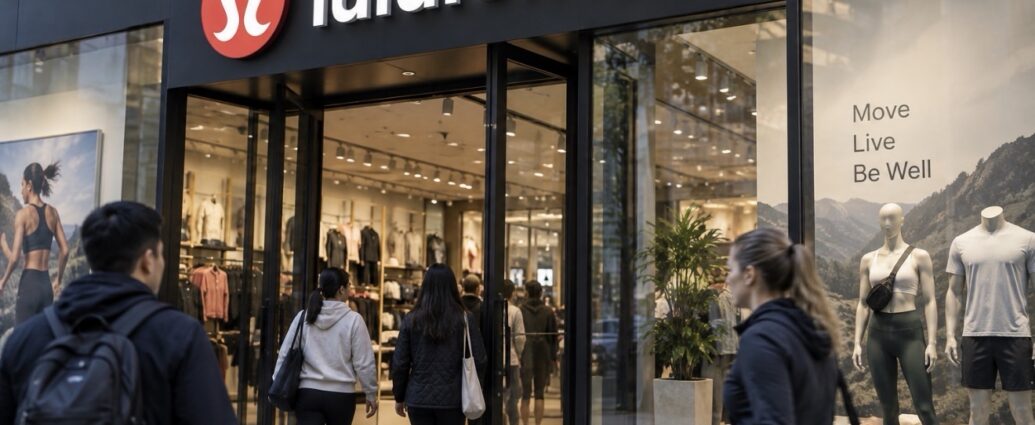
VANCOUVER — Lululemon delivered a sharp warning after Thursday’s market close, cutting its annual sales and profit forecasts as competition from newer athletic brands continues to pressure one of the most successful premium apparel companies of the past decade.
The company now expects fiscal 2026 revenue to decline 5% to 7%.
Previously, Lululemon had expected sales to be roughly flat or fall by no more than 1%.
Its projected earnings were also cut substantially, with the company now expecting $9.48 to $9.73 per share, down from its previous forecast of $10.95 to $11.15.
Shares fell approximately 15% in after-hours trading following the announcement.
The decline adds to what has already been a brutal stretch for investors.
Lululemon shares have lost nearly 69% of their value since the beginning of 2025, a dramatic reversal for a company once considered one of the strongest growth brands in global retail.
The problem is increasingly bigger than one disappointing quarter.
Lululemon is facing stronger competition from brands including Alo Yoga and Vuori, which have been gaining customers in North America and challenging Lululemon’s long-standing dominance in premium athletic apparel.
That matters because premium retail depends heavily on perception.
Consumers are willing to pay significantly more for leggings, workout clothing and casual apparel when they believe one brand is meaningfully more desirable than its competitors.
Once multiple brands begin offering similar products with comparable status, design and quality, that pricing power becomes harder to defend.
The consumer is also becoming more selective.
Households continue spending, but higher food, housing, borrowing and energy costs are forcing more shoppers to think carefully about discretionary purchases.
A customer who once bought several $100-plus items without much hesitation may now compare prices, wait for promotions or try a competing brand.
That puts pressure on both sales and margins.
Lululemon’s leadership situation adds another layer of uncertainty.
Incoming CEO Heidi O’Neill, a former Nike executive, is preparing to take control following a bruising proxy fight involving company founder Chip Wilson.
She inherits a brand that remains globally recognized and highly profitable but now needs to prove it can regain momentum.
The challenge is not simply cutting costs.
Lululemon needs to convince consumers that its products remain distinctive enough to command premium prices while also expanding into new categories and international markets without weakening the brand.
For retailers across the economy, the lesson is important.
A strong brand is not permanent protection.
Competitors can copy product categories, recruit talent, build social-media followings and create new customer loyalties surprisingly quickly.
Once that happens, the incumbent has to earn the premium all over again.
Friday’s regular trading session will provide the first full market reaction to Lululemon’s reduced outlook.
But Thursday night already delivered the larger message.
The premium consumer is still spending.
Lululemon is simply no longer guaranteed to receive that money.
JBizNews Desk | Vancouver
© JBizNews.com All Rights Reserved. Reproduction or distribution without written permission is prohibited.