
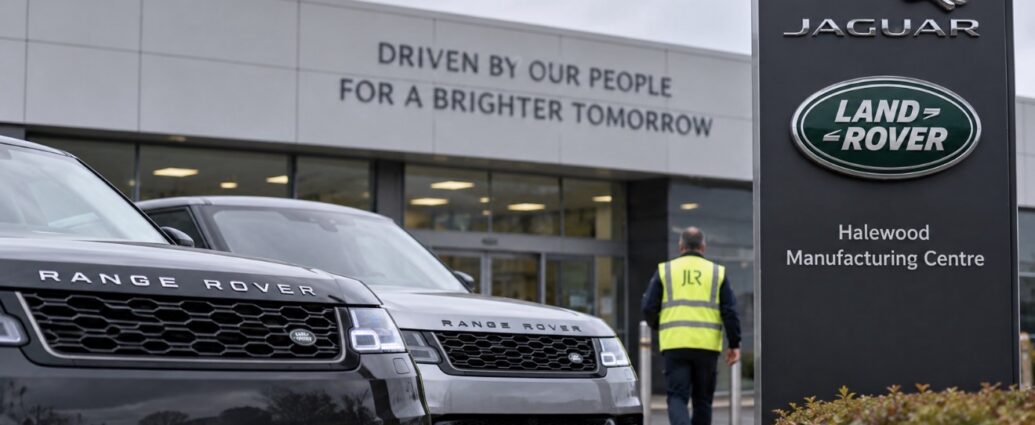
Jaguar Land Rover has opened a major voluntary redundancy program as Britain’s largest automaker races to cut £1.7 billion in costs while tariffs, weaker sales and rising competition pressure its luxury vehicle business.
Jaguar Land Rover is preparing for one of its largest workforce reductions in years as the Tata Motors-owned automaker restructures its operations to withstand a more difficult global auto market.
The company has formally opened a voluntary redundancy program for salaried and management employees, confirming that workers and unions have been informed.
British reports say as many as 4,000 jobs could ultimately be affected, although JLR has not confirmed a specific number.
The restructuring is part of a broader plan to save approximately £1.7 billion over the next two years and lower the number of vehicles JLR needs to sell annually to break even to around 300,000 units.
That is a significant strategic shift for one of the world’s best-known luxury automakers.
JLR employs roughly 33,000 people in Britain and operates major facilities in Solihull, Wolverhampton and Halewood.
Its brands include Range Rover, Defender, Discovery and Jaguar.
The company has been hit by several problems at the same time.
Revenue for the quarter ended June 30 fell nearly 10% from a year earlier to approximately £6 billion.
Profit after tax dropped to £66 million, compared with £248 million in the same period a year earlier.
Free cash flow was negative by nearly £1 billion during the quarter.
The company has also faced manufacturing disruptions, including a fire at a supplier facility that temporarily affected production.
And JLR is still dealing with the financial consequences of last year’s major cyberattack, which shut down production across its British factories for weeks.
But one of the biggest pressures now comes from international trade.
North America is one of JLR’s most important markets, particularly for expensive Range Rover and Defender models.
Higher U.S. tariffs on imported vehicles have made those sales more costly at exactly the moment JLR says it wants to dramatically expand its American business.
At the same time, Chinese automakers are becoming increasingly aggressive competitors in both Europe and international markets.
Brands that barely registered with European consumers several years ago are now selling sophisticated electric and hybrid vehicles at significantly lower prices.
JLR therefore faces an uncomfortable equation:
It needs to continue spending heavily on new electric vehicles and technology while simultaneously cutting the cost of operating the existing company.
The automaker has committed to approximately £18 billion of investment over five years as it develops its next generation of vehicles.
That includes the long-awaited electric Range Rover and a completely redesigned electric Jaguar brand.
JLR is also exploring a partnership with Stellantis to develop additional Defender products specifically for the American market.
What It Means for You
This is another warning that the global auto industry is entering a major restructuring.
Car companies are being squeezed from several directions at once.
They are spending billions developing electric vehicles.
Chinese competitors are gaining market share.
Tariffs are making international manufacturing more expensive.
And consumers remain sensitive to high vehicle prices and financing costs.
Luxury manufacturers are not immune.
JLR’s strategy shows how companies are responding:
Cut the cost base now so they can afford to invest in the vehicles they believe will determine who survives later.
The important number is not simply the reported 4,000 potential job losses.
It is 300,000 vehicles.
JLR wants to redesign its business so it can break even selling roughly that many vehicles annually — giving the company considerably more protection if global sales weaken.
For workers, suppliers and communities tied to Britain’s auto industry, that efficiency push comes with a painful cost.
For the broader industry, it sends a clear message:
Even iconic brands such as Range Rover and Jaguar are being forced to become leaner as tariffs, technology and Chinese competition rewrite the economics of building cars.
JBizNews Desk | New York
© JBizNews.com All Rights Reserved. Reproduction or distribution without written permission is prohibited.




