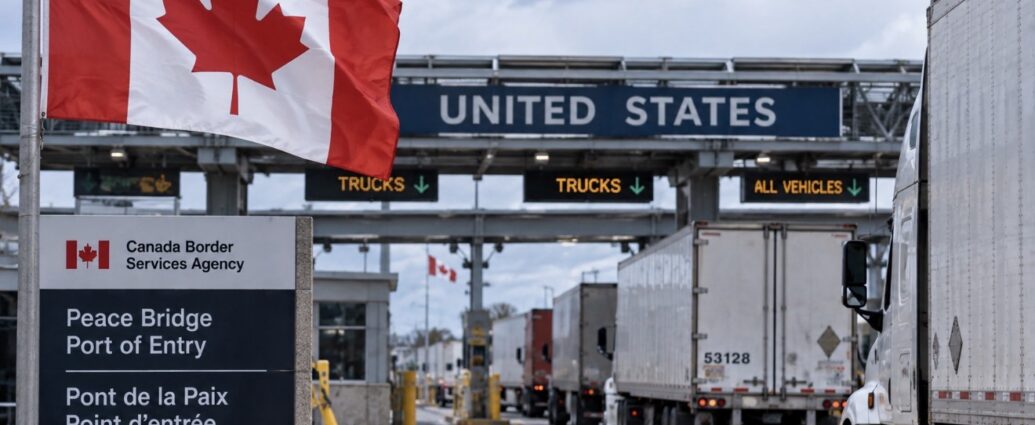
Canada will impose a new wave of retaliatory tariffs on $27.6 billion worth of U.S. goods beginning September 8, escalating a trade fight already hitting steel, dairy, manufacturing and consumer products on both sides of the border.
Canada is preparing to hit back at the United States with a fresh round of tariffs covering $27.6 billion in American imports, matching Washington’s latest trade measures dollar for dollar.
The new Canadian tariffs take effect at 12:01 a.m. on September 8.
Rates will range from 15% to 50%, depending on the product, and are designed to mirror the corresponding U.S. tariffs imposed on Canadian goods.
The measures will target a broad range of American products, including steel and aluminum products, dairy goods, appliances, agricultural equipment, pulp and paper, plastics and electronics.
Some products will face tariffs as high as 50%.
Canada says the retaliation is a direct response to the United States imposing 50% tariffs on $27.6 billion worth of Canadian goods beginning August 22.
Prime Minister Mark Carney’s government has argued that the U.S. measures are unjustified and that Ottawa had little choice but to respond.
The new tariffs add to existing Canadian countermeasures already in place against U.S. goods, including tariffs affecting the automotive sector.
Canada is also rolling out approximately $7.5 billion in additional support for workers and businesses affected by the trade conflict.
That assistance comes on top of nearly $25 billion in previously announced support measures.
The government says the money will help companies adjust supply chains, find new export markets and compete against American products now facing higher Canadian import costs.
But tariffs rarely stop at the border.
When Canada taxes American products, Canadian importers typically pay the tariff first.
Some companies absorb part of that cost.
Others pass it through to retailers, manufacturers or consumers.
That means Canadian businesses relying on U.S. machinery, electronics, ingredients or industrial materials could face higher operating expenses.
American exporters face the opposite problem.
Their products become more expensive in Canada, potentially allowing Canadian or overseas competitors to gain market share.
The trade relationship is especially difficult to unwind because the two economies are deeply integrated.
Auto parts can cross the border several times before a finished vehicle reaches a dealership.
Steel and aluminum flow into factories on both sides.
Agricultural goods, energy products, machinery and consumer products move through supply chains that were built around relatively open trade.
Every additional tariff complicates that system.
Ottawa has already adjusted the retaliation once.
The government removed certain U.S. seafood and fish products from the tariff list after industry concerns, showing how quickly retaliatory measures can create problems for domestic companies that depend on American imports.
Canada is also maintaining a tariff-remission process allowing businesses to request relief when necessary goods cannot reasonably be sourced from Canadian or other foreign suppliers.
What It Means for You
This is where a trade war begins affecting ordinary business decisions.
A 25% tariff can completely change whether a supplier remains competitive.
A 50% tariff can effectively shut a product out of the market.
Companies therefore begin searching for new suppliers, changing production plans or raising prices.
Those changes can remain long after the original political dispute ends.
For American manufacturers, Canada is one of the largest export markets in the world.
Losing even part of that business can hurt factories, farmers and suppliers across the United States.
For Canadian businesses, retaliation creates its own pain because many rely heavily on American goods and equipment.
That is why trade wars create an unusual economic reality:
Both sides can retaliate — and businesses on both sides can still lose.
Unless Washington and Ottawa return to negotiations, September 8 will mark another significant step away from the deeply integrated North American trading system that companies spent decades building.
JBizNews Desk | New York
© JBizNews.com All Rights Reserved. Reproduction or distribution without written permission is prohibited.