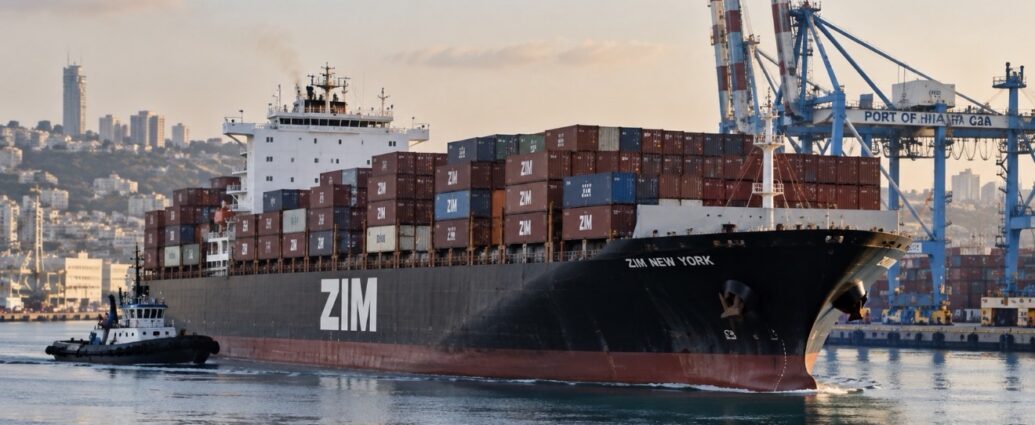
TEL AVIV — German shipping giant Hapag-Lloyd is restructuring its $4.2 billion takeover of Israel’s ZIM Integrated Shipping Services after Israeli officials raised national-security concerns over allowing one of the country’s most strategically important companies to fall under foreign control.
The revised proposal is designed to preserve Israeli control over essential shipping routes, sensitive cargo and maritime capacity while still allowing the broader acquisition to move forward.
Hapag-Lloyd and Israeli private-equity firm FIMI have been given additional time to modify the transaction after discussions with Israel’s economy, finance, defense and transportation authorities.
The central concern is straightforward:
ZIM is not simply another commercial shipping company.
Israel depends heavily on maritime trade for food, energy, industrial goods and other essential imports. During war or other emergencies, access to ships and international routes can become a matter of national security.
That has made the proposed foreign takeover unusually sensitive.
Under the revised structure being developed, ZIM Israel would remain under Israeli ownership and control through FIMI, with its own fleet of approximately 16 vessels.
Those ships would help guarantee that Israel maintains direct access to major international shipping routes even if the larger global ZIM operation becomes part of Hapag-Lloyd.
The companies are also proposing tighter restrictions on foreign ownership.
One provision would lower the threshold at which foreign ownership requires Israeli government involvement from 24% to 10%, strengthening the government’s ability to prevent outside investors from gaining influence over the Israeli-controlled operation.
FIMI has also committed not to list ZIM Israel shares on a foreign stock exchange.
The revised structure would give the Israeli government broader authority over the company and greater protection over the movement of sensitive cargo.
Hapag-Lloyd CEO Rolf Habben Jansen said the company had listened carefully to the concerns raised by Israeli authorities and was working on changes intended to strengthen Israel’s maritime independence and security.
The updated proposal is also expected to improve Israel’s access to shipping routes linking the country with Asia.
That is particularly important because Israel’s economy relies heavily on trade with Asian manufacturing centers.
Another proposed change would increase access to refrigerated shipping containers, which are essential for transporting food, pharmaceuticals and other temperature-sensitive goods.
Hapag-Lloyd and FIMI have also indicated that they would invest in Israel’s maritime workforce and training programs.
The larger acquisition still faces government approval.
The Israeli government holds special rights over ZIM through a so-called golden share, giving it authority to intervene when national-security interests are involved.
That means shareholders can approve the transaction and the companies can agree on the price, but the government can still impose conditions or block the deal.
For Hapag-Lloyd, ZIM would provide a major expansion of its global shipping network.
For Israel, however, the calculation is different.
The question is not merely whether $4.2 billion is a good price.
It is whether Israel can allow a strategically important shipping company to become foreign-owned without losing control over the ships and routes it may need during a national emergency.
That is why what began as a corporate takeover has become a test of how far governments are willing to intervene when commercial infrastructure also functions as national-security infrastructure.
JBizNews Desk | Tel Aviv
© JBizNews.com All Rights Reserved. Reproduction or distribution without written permission is prohibited.