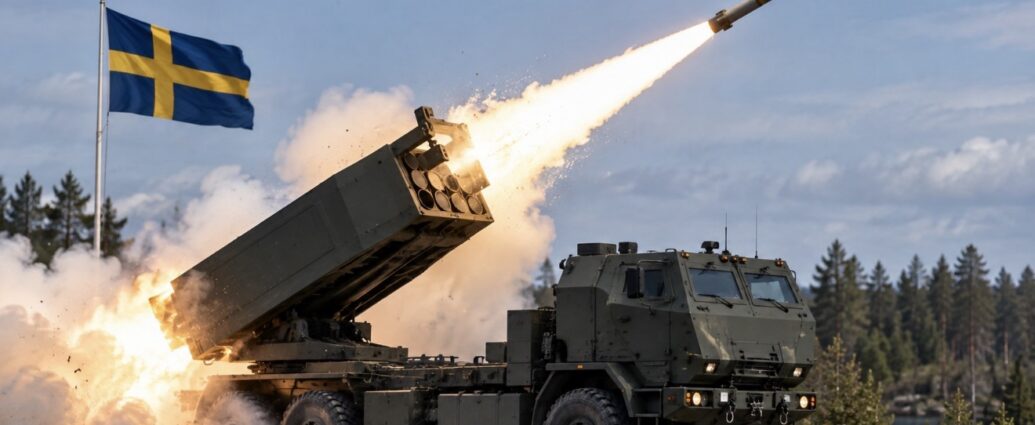
STOCKHOLM — Sweden is buying the U.S.-made HIMARS rocket-artillery system in a deal worth about $729 million, marking another major step in Europe’s rapid military buildup and deepening Sweden’s defense ties with the United States and Finland.
The Swedish government said Monday that it is authorizing the armed forces to procure the High Mobility Artillery Rocket System, built by Lockheed Martin.
The system is designed to launch long-range precision rockets from a highly mobile truck platform, giving armies the ability to strike targets far beyond the reach of conventional artillery.
That capability has become increasingly important across Europe.
Since joining NATO, Sweden has been accelerating investment in systems that can operate seamlessly with other alliance members, particularly Finland and other Nordic countries.
Sweden and Finland also signed a separate declaration Monday to deepen cooperation around rocket artillery, creating the possibility of shared training, logistics, maintenance and future ammunition planning.
The deal is about more than buying launchers.
Sweden is trying to build an entire long-range fires capability around HIMARS.
That means ammunition, training, maintenance, command systems and supply chains all become part of the investment.
The commercial impact spreads well beyond Lockheed Martin.
Rocket-artillery systems depend on electronics, guidance equipment, explosives, propulsion systems, specialized vehicles, communications technology and a large network of suppliers.
That is why Europe’s defense buildup has become one of the biggest industrial-spending stories of the decade.
Governments are no longer simply placing one-time weapons orders.
They are committing to long-term production capacity.
Sweden has already been increasing artillery-ammunition purchases and investing in domestic manufacturing so that it is less dependent on foreign deliveries during a crisis.
The government has also made clear that it wants international defense purchases to strengthen Sweden’s own industrial base wherever possible.
That is where Saab enters the picture.
Sweden has been encouraging partnerships between foreign defense contractors and Swedish manufacturers, particularly around ammunition, sensors, communications and long-term support.
The HIMARS purchase therefore fits into a broader strategy: buy proven NATO-compatible systems abroad while making sure more of the long-term economic activity stays inside Sweden.
For Lockheed Martin, the transaction adds another European customer to a system that has become one of the most recognizable weapons platforms in modern warfare.
For Sweden, it provides something strategically different from traditional artillery.
HIMARS can move quickly, fire precision-guided rockets over long distances and relocate before an enemy can easily target it.
That mobility is especially important in the Nordic region, where large distances, forests and difficult terrain complicate traditional battlefield operations.
The deal also strengthens coordination with Finland, which has its own long-range artillery capabilities and shares a long border with Russia.
The larger business story is what Europe’s rearmament is doing to manufacturing.
Defense budgets are rising.
Governments are signing longer contracts.
Factories are expanding.
Ammunition makers are increasing capacity.
And American defense companies are increasingly being asked to pair major export deals with local production and industrial partnerships.
Sweden’s $729 million HIMARS purchase is another clear example.
Europe is not simply buying more weapons.
It is rebuilding the industrial system required to produce, maintain and replenish them for years.
JBizNews Desk | Stockholm
© JBizNews.com All Rights Reserved. Reproduction or distribution without written permission is prohibited.