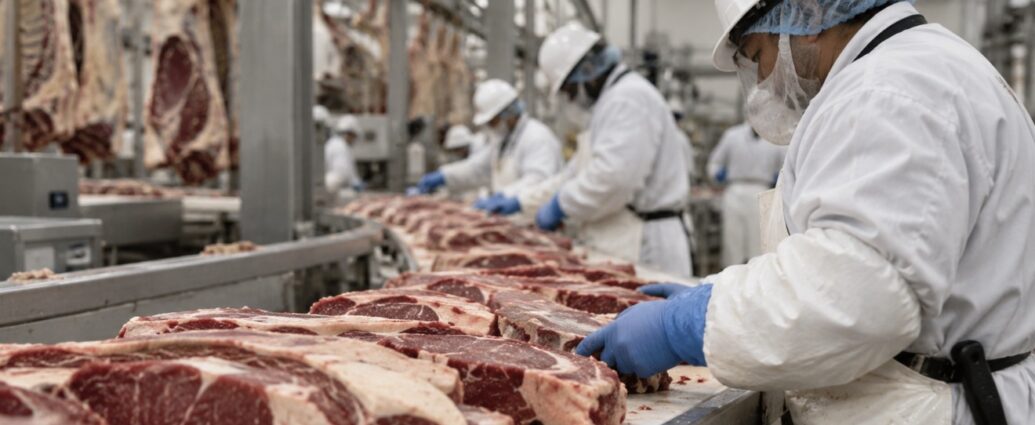
President Donald Trump has ordered a sweeping federal push to expand meat-processing competition, strengthen ranchers and lower beef prices as America’s cattle herd sits at a 75-year low.
The White House moved Friday to reshape parts of the U.S. beef industry, signing two executive orders aimed at helping ranchers, increasing competition among meat processors and expanding the ability of smaller producers to sell across state lines.
The administration says the national cattle herd is at its lowest level in 75 years, while consumer demand for beef has risen by nearly 10% over the past decade.
That imbalance has become a major economic problem.
A smaller cattle herd means processors must compete for fewer animals, pushing livestock costs higher. Those higher costs eventually work their way through slaughterhouses, distributors, supermarkets and restaurants.
The first executive order directs the Agriculture Department to step up enforcement of the Packers and Stockyards Act, with greater scrutiny of unfair, deceptive or anti-competitive practices by large meatpackers.
USDA is also being told to increase investigative staffing and resources.
The second major piece is aimed at smaller processors.
The administration wants to make it easier for state-inspected meat processors to reach customers across state lines, while maintaining federal food-safety standards.
USDA will also create a “Strengthening Processing for U.S. Ranchers” guaranteed loan program intended to help small and regional beef processors stay in business, expand capacity and compete with larger companies.
The administration is also directing USDA to modernize meat inspections, reduce reporting requirements it considers unnecessary and create a one-stop resource connecting ranchers with processing and inspection options.
The broader ranching order goes even further.
Federal agencies including Interior, the U.S. Trade Representative, the Food and Drug Administration and the Small Business Administration have been instructed to review policies affecting ranchers and identify additional actions that could improve their financial viability and market access.
The White House says the ultimate goal is lower prices for consumers.
But that will not happen immediately.
Rebuilding the cattle herd takes years.
Ranchers must first retain more cows for breeding rather than sending them to slaughter, which can actually reduce near-term beef supply even further before additional calves eventually enter the market.
That means the government is simultaneously trying to address a short-term affordability problem and a long-term supply problem.
What It Means for You
This is not just farm policy.
It is a food-inflation story.
Beef prices are affected by the number of cattle available, the concentration of meat-processing capacity and the cost of moving those animals through the supply chain.
Washington is trying to attack all three.
For ranchers, stronger competition among processors could mean more buyers and potentially better prices for cattle.
For small processors, easier interstate access and government-backed financing could create new opportunities.
For consumers, the administration is betting that more competition and more processing capacity can eventually help bring prices down.
But the key word is eventually.
The United States cannot rebuild a 75-year-low cattle herd overnight.
So even with aggressive federal action, beef prices may remain elevated while the industry works through the shortage.
The White House is now treating that shortage as a national economic issue — not simply an agricultural one.
JBizNews Desk | New York
© JBizNews.com All Rights Reserved. Reproduction or distribution without written permission is prohibited.