In his August 29, 2026 article for The Wall Street Journal, “The ICC Tried to Take On the World’s Big Powers. Now It’s Fighting for Survival,” Matthew Dalton framed Israel as a global power alongside Russia and the United States.
Conversely, an alternative media narrative swings to the opposite extreme. NPR and the Associated Press have framed Israel as “diplomatically isolated,” implying severe weakness in its ability to build international coalitions.
These framings, which malign the Jewish state through two different extremes, mirror the anti-Jewish tropes that societies have popularized through the ages, portraying Jews as either all-powerful manipulators or weak, stateless wanderers. Neither is accurate.
Dalton’s central thesis stated, “When the International Criminal Court (ICC) issued arrest warrants for [Russian President] Vladimir Putin and [Prime Minister] Benjamin Netanyahu, human rights groups applauded the decision to go after the leaders of major powers…”
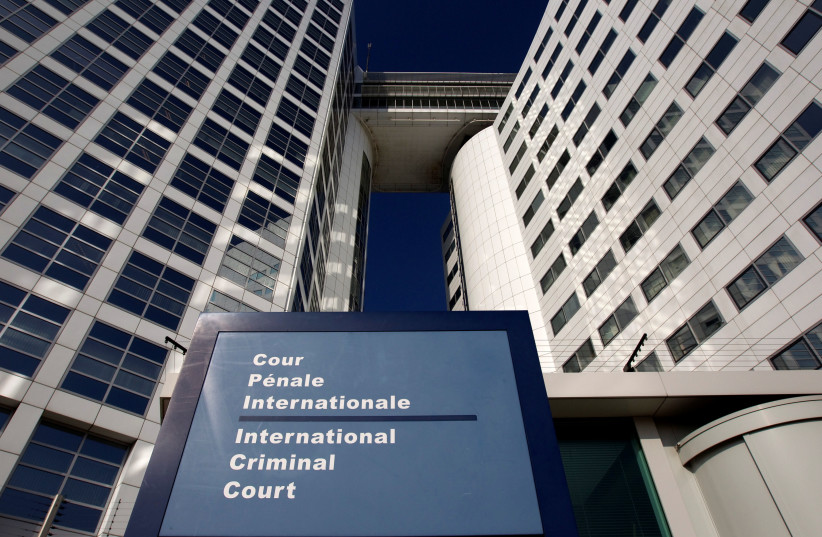
Dalton argued that the ICC’s decision to target Netanyahu opened the door for Washington to dismantle the court.
While it is reasonable to argue that the charges against Netanyahu and former defense minister Yoav Gallant accelerated US opposition to the tribunal, describing Israel as one of the world’s “great powers” misrepresents reality.
Quantifying power and influence is inherently difficult (and academics hotly debate methodology), as the metrics of national strength evolve alongside shifting global values. Nevertheless, tangible indicators like economic output and military projection can provide some vital clarity.
In measurable terms, Israel ranks far below the US and Russia. Media outlets could classify Israel as a dominant regional power (even that claim is debatable), but grouping it with the US and Russia is factually inaccurate.
Economically, Israel’s 2025 nominal GDP reached $611 billion, whereas the US and Russian nominal GDPs reach into the trillions ($32 trillion and $2.6 trillion, respectively). Adjusted for Purchasing Power Parity (PPP), Israel’s economy hovers just above half a trillion dollars, while the US and Russian PPP economies comfortably reach tens of trillions.
Military force projection reveals an even wider divide. The US maintains global force projection capability, while Russia can project military power across Europe and Asia. Israel’s conventional military reach, by contrast, is primarily regional, with neither the naval nor air-force capacity to sustain large-scale deployments far beyond the Middle East.
The Global Firepower Index, which evaluates conventional military capabilities, ranked Israel 15th in the world in 2026, whereas the US and Russia ranked first and second. Furthermore, differences in population size and strategic partnerships compound these disparities.
The US and Russia draw from populations of roughly 342 million and nearly 144 million, respectively, compared with Israel’s roughly 10 million. The US maintains more than 1.3 million active-duty service members, while Russia has sought to expand its armed forces to roughly 1.5 million personnel. Even the US active-duty force alone amounts to more than one-eighth of Israel’s entire population.
Beyond manpower, the US anchors its security posture in collective-defense arrangements such as the 32-member NATO, alongside a network of bilateral agreements that allow it to maintain military bases and station forces around the world.
Russia similarly maintains military forces and bases outside its borders, including in several countries that belong to the Collective Security Treaty Organization (CSTO). Israel, by contrast, has no comparable alliance or overseas-basing network and therefore must project military power primarily from its own territory.
Crucially, alliances do not imply equal footing. In the US-Israel security relationship, Washington has substantial diplomatic and economic leverage through its military assistance and broader security relationship with Israel, which can shape and, at times, constrain Israeli military actions.
Notably, perception-based surveys, such as the annual US News & World Report Power Rankings (developed with the Wharton School), frequently place Israel among the top 10 most powerful nations globally, often ranking it as high as eighth or 10th based on surveyed global public opinion. But perception is not synonymous with reality.
These surveys measure visibility, news presence, and perceived military leverage, so the media’s outsized reporting on Israel has an outsized influence on their results.
While Israel cannot be claimed as a world power, news outlets cannot accurately describe it as impotent either.
Media whiplash
Regarding the AP’s mischaracterization of Israel as diplomatically isolated on February 5, 2026, CAMERA’s Tamar Sternthal pointed out that Israel maintains active diplomatic relations with over 166 countries.
At the time of the article, Israel had recently signed major agreements with Egypt, the United Arab Emirates, and Germany worth $35 billion, $2.3 b., and $3.5 b., respectively. More recently, as of August 31, Israel and Greece signed a defense export deal worth nearly $3.5 b.
Sternthal argued that the AP’s framing echoed the strategic objective articulated by Hamas leader Khaled Mashaal at a February Al Jazeera forum: “We must pursue Israel and entrench the idea that it is an outcast entity that has lost its international legitimacy.”
This media whiplash – framing Israel as an omnipotent global orchestrator on one hand or an isolated, powerless pariah on the other – channels two long-standing historical fabrications.
The medieval legend of the “Wandering Jew,” originating in 13th-century Europe, depicted Jews as cursed, stateless, and permanently isolated wanderers.
Conversely, The Protocols of the Elders of Zion, a 19th-century fabrication, alleged a secret Jewish conspiracy controlling global banks, media, governments, and international conflicts.
Modern reporting that alternates between calling Israel an outcast or a superpower echoes these exact archetypes.
Rather than reducing the Jewish state to extreme platitudes, journalists must report on Israel as it exists: neither a global superpower on par with the US and Russia, nor a helpless, isolated pariah.
Distorting these facts undermines fair reporting on a complex region where actual military capacity and the perception of strength carry profound, real-world consequences.
The writer is a US media researcher at the Committee for Accuracy in Middle East Reporting and Analysis (CAMERA) in Israel. She was previously a Breaking News desk manager at The Jerusalem Post.