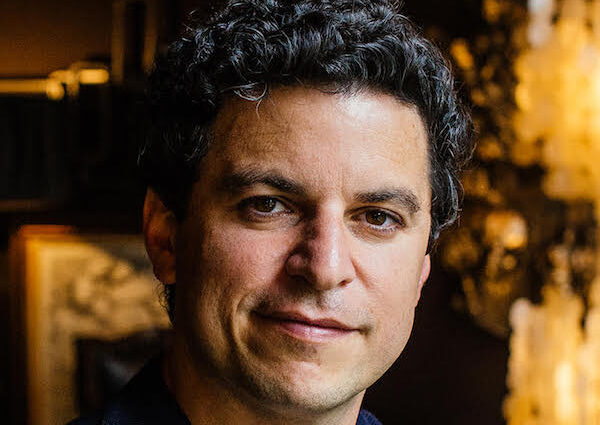
Noah Kerner will not tell you that an entire generation has lost faith in the idea that patient, boring investing can make them rich. He’s not ready to sign off on the concept of “financial nihilism,” the theory that young Americans, spooked by AI, debt, and a generally uncertain world, have decided the only rational move is to gamble on crypto, prediction markets, and parlays instead of grinding out 8% a year in an index fund.
“I don’t know if it’s real,” Kerner told Fortune in a recent interview. “I don’t have the statistics on it.”
But ask him about online sports betting in general, and the hedging disappears. The onset of the NFL season, he said, is “the moment millions of Americans are primed to make a bet and most likely lose money”—and he’s decided the right response isn’t a lecture, it’s a payout.
This season, Kerner’s financial wellness company, Acorns, known for investing customers’ spare change, is offering to match a user’s self-reported sports betting losses, up to $50, and deposit it directly into a new Acorns investment account. The campaign, called “Investinall,” is styled as a spoof pharmaceutical launch—complete with an “active ingredient” (compound interest) and “inactive ingredients” (diversification and patience)—timed deliberately to the first Sunday of the NFL regular season, when Kerner says the country is most primed to lose money on a bet.
Kerner’s diagnosis
Kerner was careful, in conversation, not to overclaim about a nihilistic mindset behind the current moment in gambling.
“It’s just not what history shows,” he said, noting every generation learns to save money and invest at some point. “But I understand in a time where there’s a lot of uncertainty in the world, that people shift into a nihilistic mindset,” he said, citing anxieties about AI taking jobs or the possibility of geopolitical catastrophe as plausible triggers. “But it’s just not what history shows.”
He added: “Our goal is to pull people into a place of hope, confidence, and patience … you might as well do the right thing for your money.”
That agnosticism about the broader cultural diagnosis stands in contrast to his certainty about the underlying behavior. Acorns cites data showing 27% of Americans and 52% of men ages 18 to 49 have an active online sportsbook account, and 96% of surveyed bettors lost money overall. One in four bettors, per the same data, say they’ve missed a bill payment because of gambling. Kerner, who was a psychology major in college, described the mechanics behind sportsbook design as variable rewards, near-miss notifications, and in-game micro-bets engineered to keep the dopamine loop running.
“I tell the company we’re in the business of managing emotions,” Kerner told Fortune, adding that he likes to think of himself as the “chief emotional officer” or “chief emotions officer.”
The remedy: cash, no questions asked
The mechanics of Investinall are unusually simple, and Acorns is relying entirely on the honor system to run it. A new customer goes to a dedicated page, self-reports how much they lost on a bet, opens an Acorns Invest account, and commits to a recurring investment of at least $5. In return, Acorns deposits between $1 and $50 into the new account, no proof of the loss required.
Asked whether he worried about the exposure—or what happens if huge numbers of bettors show up during the first weekend of football claiming losses—Kerner waved off the risk, treating the payout less as a giveaway and more as a redirected marketing budget.
“We have a marketing budget to acquire customers, so we just basically put it into creative ideas like this and give it back to the customer,” he said. Pressed again on whether the math could break if uptake outpaced projections, he added: “We’re basically going on honor code that says, like, if you lost, you come to us, you tell us you lost money, you set up an Acorns account.”
Acorns is leaning on one comparison above all others to make its pitch land: The average surveyed bettor spends $274 a month, or $3,284 a year, on gambling. Invested instead at a historical 8% annual return, the company says, that same money could grow to more than $950,000 over 40 years. It’s a hypothetical, not a guarantee—return assumptions like that are doing a lot of work in that sentence—but it’s the number built to make a bettor pause before placing a Sunday parlay.
Kerner traces the strategy to a company instinct he describes as opportunistic rather than moralizing: inserting Acorns into “one of the worst moments in someone’s money life, which is when you’re gambling and losing money.”
Betting, trading, predicting: no real distinction, he says
Kerner extends his skepticism well past sportsbooks. Asked whether he considers prediction markets, including Kalshi and Polymarket, that let users wager on everything from elections to the weather—fundamentally different from a sportsbook, he didn’t hesitate: “I think betting is betting.”
The company’s press materials go further, lumping day-trading apps into the same category, arguing they “sell volatility as opportunity” and are “engineered to exploit impulse,” aimed at a generation “trained to expect instant results.”
Kerner said he isn’t involved in regulatory debates over how prediction markets should be classified or overseen, treating the question as outside his lane even as his marketing squarely targets the behavior.
For all the certainty in Kerner’s diagnosis of the problem, he’s notably modest about how much progress the company—16 million customers and more than $33 billion invested since 2014—has made against it. Asked how Acorns is doing at managing the emotions and habits that drive people toward gambling instead of investing, Kerner responded: “Not well enough! The reality is that 100 million Americans should be using Acorns or a product like Acorns… Since we don’t have a hundred million customers yet, we’re not doing a good enough job.”
Maybe you can be part of that solution this football season.
For this story, Fortune journalists used generative AI as a research tool. An editor verified the accuracy of the information before publishing.
This story was originally featured on Fortune.com