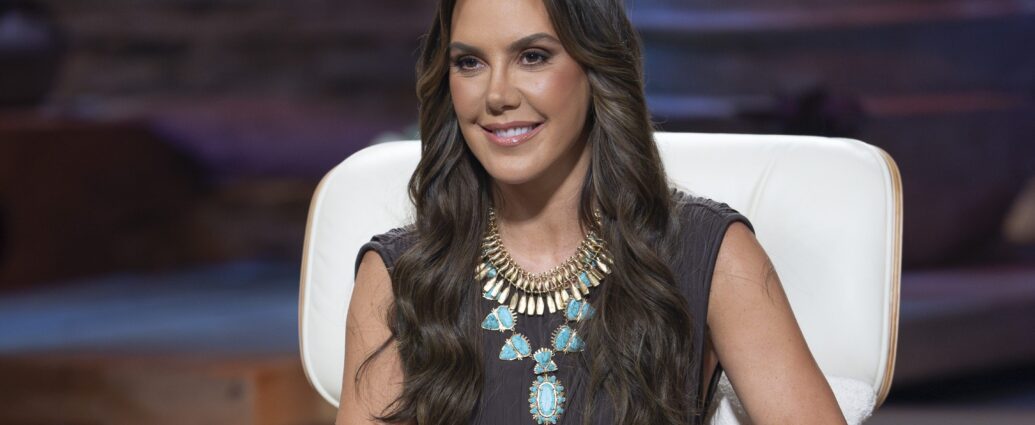
Kenda Scott is joining the permanent cast of Shark Tank this season, putting her alongside famously tough investors like Kevin O’Leary. But throughout her career building her eponymous jewelry brand—and becoming one of the richest self-made women—she was surprised to find that being a successful leader doesn’t actually require being cutthroat.
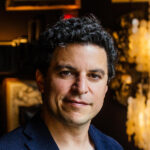
“You can be kind and strong at the same time. It doesn’t mean you’re weak. Kindness does not mean you’re weak,” Scott said in a recent interview with fellow Shark Tank star Daniel Lubetzky. “I’m a kind and strong leader.”
She first learned this lesson in her 20s, after dropping out of Texas A&M University after one year to care for her ill stepfather. She soon launched her first business, a hat boutique that donated proceeds to cancer research. Scott later joined a friend’s travel magazine in the early 1990s, working in advertising sales for Destination Weddings and Honeymoons Magazine. There, she said, she met a manager whose merciless leadership style would shape her approach to running a company.
“I had a boss at the magazine who was a terribly-horrible boss,” Scott said. “I say often he was the best boss I ever had because it taught me everything I won’t ever be in a boss. I will never treat somebody the way that I was treated by this person, but I’m so thankful.”
That often inspires the message Scott—who has an estimated net worth of $900 million—tells any young Gen Zers who may be struggling in one of their first professional opportunities, like an internship.
“‘This is a gift,’” she recalled telling young professionals. “‘I know it doesn’t feel like it right now, this experience that you’re having, but I say it too. The worst boss was my best boss.’”
Scott turned $500 and a jewelry-making hobby into a global brand worth more than $1 billion
While Scott ran the hat store—and later worked at the magazine—she began making jewelry as a hobby. In 2002, while pregnant with her first son, she took $500 and bought materials to make earrings. She then walked from store to store in Austin, Texas, pitching her designs to local boutiques.
“There were so many times I was afraid I was going to lose everything…I remember negotiating with my landlord on when I could pay rent. I had nothing to back me up,” she told Entrepreneur in 2015. “Failure wasn’t an option.”
In the early years of her eponymous company, Scott sold her car and took out multiple personal loans, funneling the money back into Kendra Scott. When she tried to raise outside capital, she found another obstacle: a lack of investors willing to bet on her.
“In the early days, I would walk into a boardroom asking for money—nobody in there looks like me, it’s a boardroom full of men,” Scott added with Lubetzky. “A lot of women are not getting funded in their businesses. So the first 10 years of my business, no one would give me money. No one.”
The lack of funding forced Scott to build the company on her own terms—and taught her to be unusually disciplined with money.
“I’m actually really grateful in a way that I just didn’t get a big check in the beginning because I think a lot of entrepreneurs that have that VC funding early, they just don’t have perspective on how to really budget and have that scrappy small startup mentality that you need even in a big business,” she said.
Today, Kendra Scott Jewelry can be found in thousands of boutiques and retailers across the world, including Nordstrom, Neiman Marcus, and Target. Kenda Scott, which is valued over $1 billion, also has over 100 standalone locations.
The scrappy, failure-embracing path to becoming a self-made billionaire
Scott’s positive mindset, paired with a scrappy approach to building a business, is hardly unique. Sara Blakely, who has appeared as a guest investor on Shark Tank, built her billion-dollar net worth as the founder of Spanx by doing whatever it took to get her products in front of customers.
In her early days, Blakely would personally walk into Neiman Marcus stores and move her products closer to the checkout counter—away from what she called the “sleepiest corner of the store.” She knew she probably wasn’t supposed to do it, but that didn’t stop her.
“I always say, ask for forgiveness, not permission,” she said on the School of Hard Knocks.
This self-described “unhinged” approach also meant riding around with a “SPANX” license plate, signing up for British billionaire Richard Branson’s reality TV show, and even paying her friends to go into department stores and buy her product.
“You gotta do what you gotta do,” Blakely wrote on Instagram.
And while not every idea is destined to bring success, self-made billionaire and KIND bar founder Daniel Lubetzky has similarly argued that setbacks can be an entrepreneur’s greatest teacher.
“Sometimes a failure is more valuable than a success,” Lubetzky previously told Fortune.
This story was originally featured on Fortune.com