
New York City could soon pay significantly more to borrow money as bond investors increasingly price in the possibility that the city’s credit rating will be downgraded.
The warning is already showing up in the market.
The yield on 10-year bonds issued by the New York City Transitional Finance Authority reached about 3.89% for the week ending Sept. 4, up from 3.70% just one week earlier and roughly 2.9% at the end of January.
That matters because when investors demand higher yields to buy city bonds, New York ultimately pays more interest to finance everything from roads and bridges to schools and other major projects.
And with the city borrowing billions of dollars, even relatively small increases in interest rates can translate into hundreds of millions of dollars in additional costs over time.
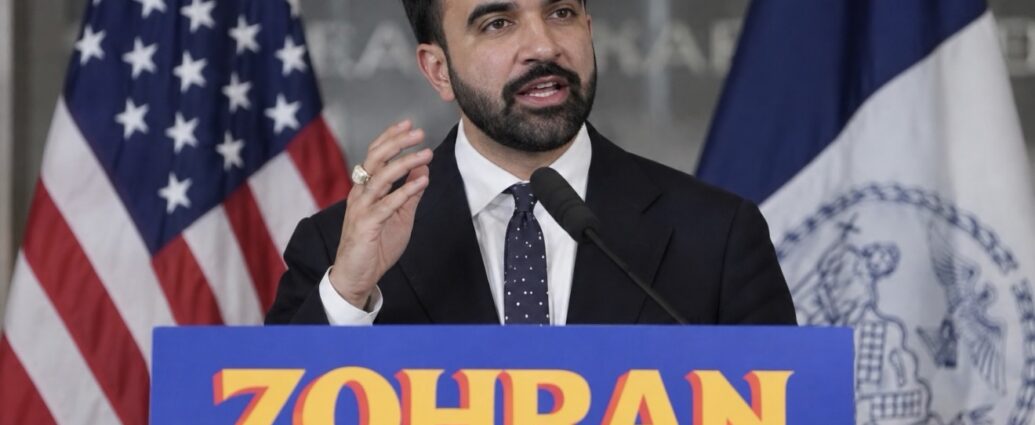
The concern is that spending under Mayor Zohran Mamdani is growing faster than the recurring revenue available to support it.
New York City Comptroller Mark Levine’s office has already warned of a structural imbalance in which city expenditures are projected to outpace revenues in the years ahead.
The comptroller found that the city is relying in part on billions of dollars in one-time measures and short-term pension savings to close near-term budget gaps rather than permanently matching recurring spending with recurring revenue.
That imbalance is now beginning to matter to the bond market.
Rich Farley, a debt-finance attorney at Herbert Smith Freehills Kramer, told the New York Post that the narrowing difference between yields on highly rated New York City debt and U.S. Treasury securities suggests investors are treating the bonds as riskier than their current ratings indicate.
In other words, the market may be moving before the rating agencies do.
New York City’s general-obligation bonds remain highly rated, but several warning lights are already flashing.
Moody’s and Fitch have placed the city’s general-obligation credit on negative outlook, while the city comptroller recently noted that three of the four agencies that rate the city shifted their outlooks from stable to negative earlier this year.
A negative outlook is not itself a downgrade, but it signals that a downgrade could follow if the city’s financial position deteriorates.
The consequences would reach well beyond Wall Street.
A credit downgrade generally means investors demand higher interest rates before lending money to a government. That raises the cost of issuing new bonds and potentially refinancing existing debt.
New York City already spends billions of dollars annually servicing its debt. As those costs rise, more tax dollars have to be used simply to pay interest — money that cannot be spent on policing, sanitation, infrastructure, schools or other city services.
It also creates a difficult cycle.
Higher spending increases borrowing pressure. Higher borrowing costs increase the city’s expenses. Those additional expenses can then widen future budget gaps, potentially forcing tax increases, spending cuts or still more borrowing.
The Mamdani administration strongly rejects the suggestion that New York City is heading toward a fiscal crisis.
City officials say investor demand remains strong and point to the fact that the major rating agencies continue to maintain high ratings on New York City debt.
Mamdani has also argued that his administration has found substantial savings, maintained strong reserves and prepaid nearly $2 billion of fiscal 2027 expenses.
The city recently directed agencies to identify additional savings of 2.5% in fiscal years 2027 and 2028.
But bond investors do not have to wait for a formal downgrade to demand more money for taking additional risk.
That is what makes the latest movement in NYC bond yields important.
For businesses and taxpayers, the question is no longer simply whether New York can balance its next budget.
It is whether investors believe the city can sustain its spending for years to come without substantially raising taxes, cutting services or taking on increasingly expensive debt.
If investors decide the answer is no, New Yorkers will be paying the price long before a rating agency officially changes the letter grade.
JBizNews Desk | New York
© JBizNews.com All Rights Reserved. Reproduction or distribution without written permission is prohibited.





