Stock futures and government bonds moved higher Thursday as falling oil prices and easing Treasury yields helped investors shake off the previous day’s selloff triggered by the Federal Reserve’s first interest rate hike since 2023.
The Fed raised its benchmark rate by a quarter percentage point Wednesday, lifting the target range to 3.75%-4%. The move, approved unanimously by the central bank’s policymakers, was meant to cool inflation that has stayed stubbornly high, driven in part by the recent surge in oil prices. Fed Chairman Kevin Warsh told reporters the bank is “hard pressed to describe” the current inflation trend as improving, and most officials penciled in at least one more rate increase before the end of the year.
Wall Street didn’t like what it heard. The Dow Jones Industrial Average dropped 631 points Wednesday and the S&P 500 closed below 7,600 as investors digested the hike and Warsh’s inflation warning. Higher rates mean pricier borrowing across the board — mortgages, credit cards, auto loans, and business financing all get more expensive when the Fed moves like this, squeezing household budgets that are already stretched by elevated gas prices.
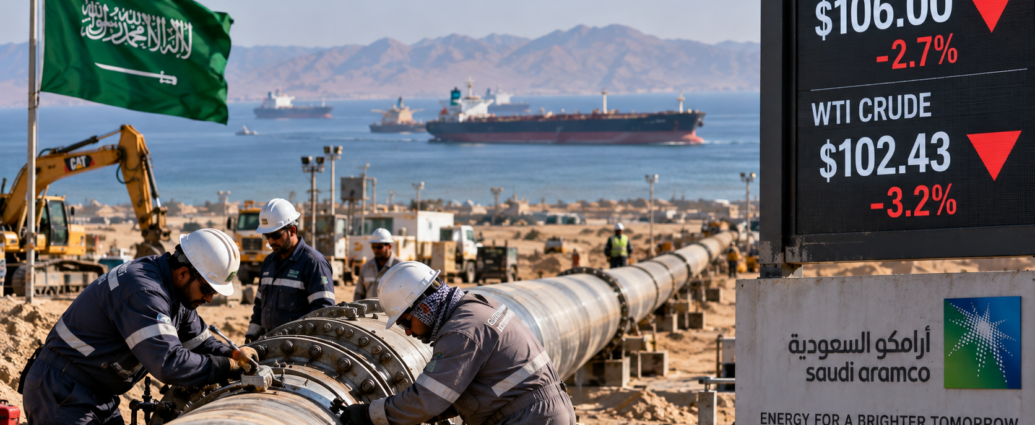
By Thursday morning, though, the mood had shifted. Dow futures climbed roughly 300 points as two forces worked in investors’ favor at once: Treasury yields fell back from Wednesday’s highs, and oil prices kept dropping for a second straight session. Brent crude, the international benchmark, slid to around $106 a barrel after tumbling 2.7% Wednesday. U.S. crude fell 3.2% to $102.43 a barrel.
The oil retreat traces back to Saudi Arabia, where a damaged pipeline has been driving prices higher for more than a week. The kingdom’s East-West pipeline, which normally moves about 7 million barrels of oil a day across the country to its Red Sea coast, was knocked offline after a drone attack. Saudi officials now say they expect to restore roughly half the pipeline’s capacity within days, with full repairs finished in about six weeks. That timeline gave traders enough confidence to sell off some of the risk premium built into oil prices over the past two weeks.
When oil drops, it tends to ease two pressures at once: it takes some heat off inflation, which makes bond investors happier, and it lowers the odds that companies will need to raise prices further, which helps stocks. That’s largely why Treasuries and equities moved in the same direction Thursday even though they don’t always track together.
Not every analyst thinks the rally has legs. Mark Haefele, chief investment officer at UBS Global Wealth Management, said in a note that his team remains positioned for further gains but is “preparing for near-term volatility.” He added that if the Fed’s tightening stays measured and corporate profits keep growing, “the rally should have scope to broaden across sectors and regions.” His advice to investors: spread out stock holdings rather than betting heavily on rate-sensitive sectors or a single trend.
For everyday Americans, the tug-of-war between the Fed and the oil market matters directly. A rate hike raises the cost of financing a car or carrying a credit card balance. A pipeline outage half a world away raises the price of filling up the tank. When both ease at the same time, as they did Thursday, it offers some relief — but Wednesday’s rate increase doesn’t reverse itself just because Thursday was calmer. Borrowing costs tied to the Fed’s benchmark rate stay higher until the central bank decides otherwise, and officials have signaled they’re not done raising rates this year.
Bond markets reflected that mixed picture. Yields on 10-year Treasuries, which had briefly topped 5% this week for the first time since 2007, eased back Thursday as the improving oil picture took some urgency out of inflation bets. Lower yields generally translate into slightly cheaper long-term borrowing costs, including mortgage rates, over time — a small counterweight to Wednesday’s Fed move.
The next test for markets comes as investors watch whether Saudi Arabia’s pipeline repairs stay on schedule and whether the Fed follows through on its signal for another rate hike before year’s end. Both outcomes will shape how much relief Thursday’s rally actually delivers to consumers already squeezed by two years of elevated energy and borrowing costs.
JBizNews Desk | Wall Street
© JBizNews.com All Rights Reserved. Reproduction or distribution without written permission is prohibited.