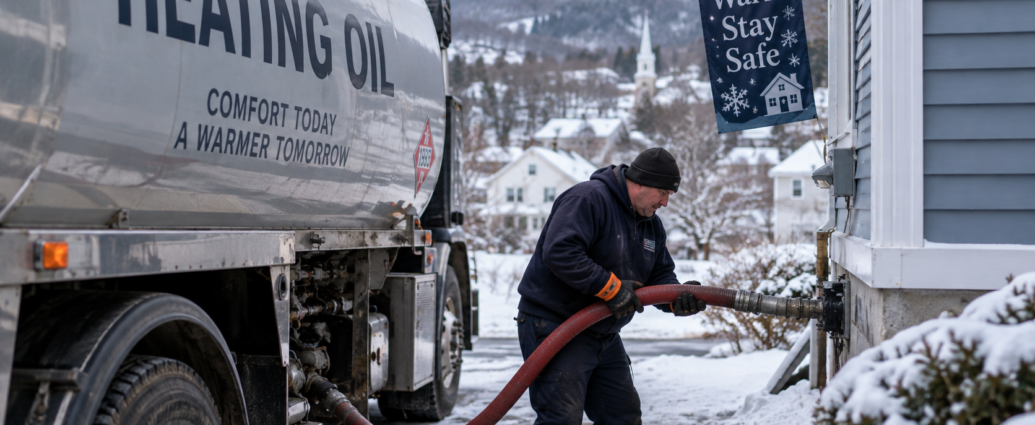
Millions of Northeast households could face sharply higher heating bills this winter as surging diesel and oil prices work their way into the cost of keeping homes warm.
The biggest increase is expected to hit families that rely on heating oil, a fuel concentrated overwhelmingly in the Northeast.
The National Energy Assistance Directors Association, or NEADA, projects that households using heating oil will spend an average of about $2,297 this winter, up from $1,749 last winter. That is an increase of roughly 31%, or nearly $550 for the season.
Across all heating sources, the organization expects the average U.S. household to spend about $1,030 this winter, $82 more than last year and an increase of 8.7%.
For families already struggling with higher grocery, gasoline, housing and borrowing costs, another several hundred dollars for heat can quickly become a serious household-budget problem.
And in the Northeast, the impact could be especially severe.
Why Heating Oil Is Surging
The explanation begins with diesel.
Heating oil and diesel are both distillate fuels and are chemically very similar. Because they come from essentially the same part of the refining process, their prices tend to move together.
William O’Neil, a principal research analyst at S&P Global, said heating-oil prices historically have a strong relationship with diesel prices because the products are effectively chemically identical apart from additives and treatments.
That matters because diesel prices have surged amid disruptions to global energy markets.
Oil prices have climbed above $100 a barrel amid conflict in the Middle East and disruptions affecting energy supplies, while pressure on refinery capacity and petroleum-product supplies has helped drive diesel substantially higher.
By Friday, regular gasoline averaged about $4.47 a gallon nationally, according to AAA data. Diesel was trading around record levels near $6.45 a gallon.
Those prices do not remain confined to the gas station.
Diesel is used throughout the economy to move freight, operate trucks and power industrial equipment. Heating oil comes from the same family of petroleum products, meaning the same supply pressures can eventually reach household furnaces.
O’Neil estimated that heating oil, which generally cost around $3.75 to $4 a gallon last winter, could potentially cost roughly $2 more per gallon this season if current market conditions persist.
That would represent an increase approaching 50% for the fuel itself.
NEADA’s seasonal household forecast is more conservative, projecting the approximately 31% increase in total heating-oil expenditures.
Northeast Takes the Biggest Hit
Heating oil is no longer a major source of residential heat across most of the United States.
In the Northeast, however, it remains important.
About 4.79 million U.S. households used heating oil as their primary heating fuel during the winter of 2023-24, according to the U.S. Energy Information Administration.
Roughly 82% of them were in the Northeast.
That geographic concentration means a national heating-oil price shock becomes disproportionately a New England and Northeast household-budget problem.
Homes in states including Maine, New Hampshire, Massachusetts, Connecticut, Rhode Island, New York and Pennsylvania are among those particularly exposed to changes in heating-oil prices.
Many Northeast homes are also older, and colder winter temperatures can significantly increase the amount of fuel households consume.
Gas and Electric Homes Aren’t Escaping
Heating-oil customers face the largest projected percentage increase, but households using other energy sources are also expected to pay more.
NEADA projects natural-gas heating costs to rise about 5.8%, while households using electricity could see costs increase roughly 9%. Propane heating costs are projected to rise about 8.7%.
Combined, those increases produce the organization’s projected 8.7% increase in average national winter-heating expenditures.
The increases arrive after several years in which household energy affordability has already become a growing concern.
Electricity costs in particular have climbed significantly since 2021, driven by factors including higher natural-gas prices, infrastructure expenses, financing costs and rising electricity demand.
A $550 Hit Has Consequences
An extra $550 heating bill does not exist separately from the rest of a family’s budget.
For a household with limited disposable income, the money has to come from somewhere.
That can mean cutting grocery spending, delaying other bills, using credit cards or accumulating utility debt.
Low-income families are particularly vulnerable because energy expenses consume a larger portion of their income.
NEADA tracks those pressures through its Energy Hardship Project and has warned that energy affordability remains a persistent problem for struggling households.
The organization is pushing for additional funding for the federal Low Income Home Energy Assistance Program, commonly known as LIHEAP.
The program provides federal funding to states, territories and tribes to help qualifying households pay heating and cooling bills and address energy emergencies.
That assistance becomes particularly important during a sudden energy-price shock because families cannot simply stop heating their homes when temperatures fall.
The Bills Are Coming Soon
For Northeast heating-oil customers, the financial impact could arrive before winter officially begins.
Many homeowners fill or substantially replenish their tanks ahead of the coldest months, meaning households can begin seeing higher prices during the fall.
The timing makes current energy-market conditions especially important.
Oil prices have eased somewhat from recent peaks, but global supplies remain vulnerable to geopolitical disruptions, refinery problems and developments in the Middle East. Brent crude recently remained above $100 a barrel even after retreating from higher levels.
That leaves heating costs dependent on something homeowners cannot control: what happens in global energy markets between now and the coldest part of winter.
A decline in crude and diesel prices could soften the increase.
Another major supply disruption could push bills higher.
For Northeast families dependent on heating oil, however, the message from current forecasts is already clear: keeping the house warm is likely to consume a significantly larger portion of the household budget this winter.
JBizNews Desk | Washington, D.C.
© JBizNews.com All Rights Reserved. Reproduction or distribution without written permission is prohibited.