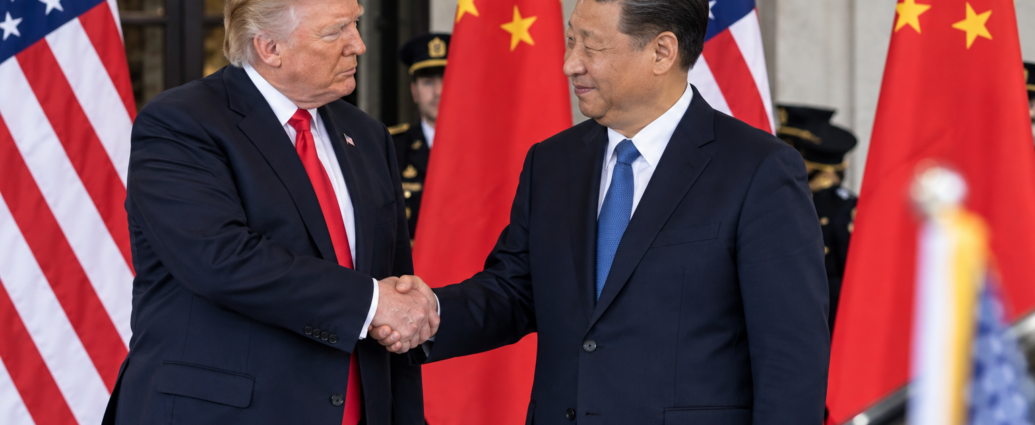
American businesses operating in China are urging Washington and Beijing to keep their fragile trade peace intact, warning that another tariff escalation could raise costs for companies and consumers just as the world’s two largest economies try to negotiate a broader agreement.
Sean Stein, president of the U.S.-China Business Council, described extending the trade truce as “absolutely necessary” as President Donald Trump and Chinese President Xi Jinping meet in Washington this week.
The warning comes after Treasury Secretary Scott Bessent said the United States and China agreed Wednesday to extend their existing trade arrangement by two months, moving its expiration from Nov. 10 to Jan. 10, 2027.
The extension prevents the current arrangement from expiring while negotiators explore whether the two governments can reach a larger economic agreement.
For American businesses, the immediate benefit is not simply lower tariffs. It is more time and greater predictability.
Why Businesses Want the Truce
Tariffs function as taxes on imported goods, generally collected from U.S. importers when products enter the country.
Companies can absorb those additional expenses, pressure suppliers to reduce prices, change where they source products or pass some of the cost to customers.
That means another escalation in U.S.-China tariffs could affect businesses and households through everything from manufacturing inputs and electronics to consumer goods.
The U.S.-China Business Council represents American companies doing business with China. Its latest annual survey found that strained U.S.-China relations, weakness in China’s economy and persistent tariffs were among the biggest challenges facing its members.
Stein said when the survey was released in June that despite those difficulties, competing in China remains important for many American multinational companies.
The concern is particularly acute because businesses have already seen how quickly the trade relationship can deteriorate.
During the 2025 escalation, tariffs imposed by Washington and Beijing reached triple-digit levels before the two governments stepped back and began a series of temporary arrangements.
The current Busan agreement significantly reduced those tensions and helped restore trade in critical minerals and other products.
Only Two More Months
The latest extension is relatively short.
Bessent said Wednesday that he and Chinese Vice Premier He Lifeng still had “unfinished business” following earlier negotiations and met again in Washington as Xi arrived for his state visit.
The Treasury secretary said the governments were examining whether they could pursue a broader agreement rather than continue resolving issues individually.
“I don’t know whether a bigger deal can be done,” Bessent said in an interview Wednesday while discussing the negotiations.
The two-month extension gives negotiators additional time without locking either government into a long-term arrangement.
It also keeps pressure on both sides.
Washington has been pushing Beijing to fully implement commitments involving rare earths and purchases of American agricultural products. Earlier this year, Bessent said the U.S. expected China to fully meet its commitments involving rare earths and U.S. farm products.
Rare earth minerals are especially important because they are used in products ranging from electric vehicles and electronics to advanced industrial and defense equipment.
Interruptions can therefore spread quickly through manufacturing supply chains.
What It Means for American Companies
For businesses, uncertainty itself carries a cost.
Companies deciding where to manufacture products, how much inventory to purchase or whether to make a multimillion-dollar investment may be reluctant to commit when tariff rates could change dramatically within months.
Importers also have to decide whether to stockpile goods before possible tariff increases, shift production elsewhere or accept the risk that products already ordered could become more expensive.
That uncertainty can ultimately influence prices, investment and hiring.
The U.S.-China Business Council’s 2026 survey underscores the problem. The organization said fragile bilateral relations and entrenched tariffs remain significant obstacles for American companies, even though China continues to be an important market for many multinational businesses.
Xi Arrives in Washington
The trade negotiations are unfolding alongside one of the most significant diplomatic meetings between Washington and Beijing in years.
Xi arrived in Washington Wednesday for a state visit, with Trump personally greeting the Chinese leader at Joint Base Andrews.
The White House scheduled an official state arrival ceremony Thursday, followed by meetings between the two leaders and a state dinner.
It is Xi’s first White House state visit in more than a decade.
Trade is only one part of a much larger agenda.
The governments are also confronting disagreements involving artificial intelligence, critical minerals, Taiwan, Iran and access to advanced technology. Despite those tensions, both governments have shown an interest in preventing their economic relationship from sliding back into the tariff confrontation seen previously.
What Comes Next
The most important question for businesses is whether the additional two months produce something more permanent.
A broader agreement could address tariffs, Chinese purchases of American agricultural products, access to critical minerals and other longstanding economic disputes.
Failure to make progress would bring the same uncertainty back quickly.
The new Jan. 10 deadline means companies will enter 2027 watching Washington and Beijing closely, knowing another breakdown could once again alter supply chains, import costs and investment decisions.
For American companies doing business across the Pacific, the temporary truce provides breathing room.
What they still do not have is certainty.
JBizNews Desk | Washington
© JBizNews.com All Rights Reserved. Reproduction or distribution without written permission is prohibited.