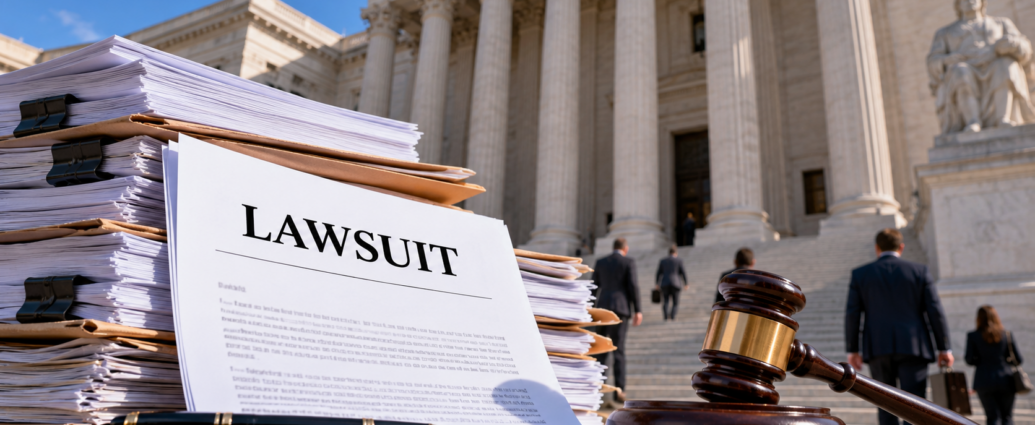
A major public pension fund and another shareholder are taking The New York Times Company to court, seeking internal records they say could reveal whether its board adequately oversees the newspaper’s editorial standards amid allegations of anti-Israel bias in its coverage.
The State Board of Administration of Florida, which oversees the Florida Retirement System Trust Fund, and the National Center for Public Policy Research filed the petition Wednesday in New York state court in Manhattan.
Both organizations are shareholders of The New York Times Company.
The proceeding does not ask a judge to rule that the Times’ reporting is biased, nor does it seek monetary damages.
Instead, the shareholders want access to corporate books and records to investigate whether the company’s board has adequately monitored compliance with journalistic standards and protected what the petitioners describe as a critical business asset: the Times’ reputation.
Why Shareholders Are Taking Action
Florida Attorney General James Uthmeier, who serves as a trustee of the State Board of Administration and is representing the fund, framed the dispute as a corporate-governance issue rather than an attempt to dictate individual news stories.
The Florida fund serves more than 1.2 million members and beneficiaries and owns approximately 161,375 shares of New York Times stock, according to reporting on the filing.
Uthmeier argues that the credibility of a news organization has direct financial value.
The shareholders contend that if readers come to perceive journalism as unreliable or biased, that could damage a media company’s reputation and ultimately affect subscriptions, advertising, growth and shareholder value.
The petitioners say they want to determine what systems exist at the board level for monitoring journalistic accuracy, corrections and compliance with editorial standards.
What Records They Want
The dispute began before Wednesday’s court filing.
The shareholders previously requested documents from the Times, but the company rejected the demand.
A later, narrowed request sought board-level governance records dating from 2020, including information about how editorial-standard issues reach directors or board committees, whether accuracy and corrections have appeared on board agendas, and documents showing the reporting structure involving the Times’ standards operation.
The shareholders are now asking a judge to compel the company to produce records.
Such proceedings can allow shareholders to investigate potential corporate wrongdoing or board oversight failures before deciding whether additional litigation is warranted.
Former Employee’s Allegations Cited
The petition also relies partly on allegations from an unnamed former Times employee.
According to the filing, the Jewish former employee worked on the newspaper’s video desk for nearly a decade and says she repeatedly raised concerns about antisemitism and what she perceived as anti-Israel bias within the newsroom.
She says she raised concerns at least 15 times between 2019 and her departure in March 2026, bringing them to managers, the Times’ standards operation and human resources.
According to the petition, she alleges that an HR representative at one point suggested that if the company’s values did not align with hers, she might seek employment elsewhere.
Those are allegations presented in the shareholder petition and have not been established as findings by the court.
Gaza Coverage Comes Under Scrutiny
The petitioners also point to examples of Times reporting about Israel and Gaza that were subsequently corrected or updated.
One involves a July 2025 front-page photograph of a severely malnourished Palestinian child in Gaza.
The Times subsequently updated its reporting to add that the child had pre-existing health conditions after obtaining additional information from his doctor.
The shareholders argue that episodes involving corrections and updates justify examining whether the company’s board has sufficient systems for overseeing editorial standards.
The petition itself goes further, alleging that a pattern of disputed reporting raises questions about whether standards are being applied consistently.
Those allegations remain contested.
The Times Pushes Back
The New York Times strongly rejects the shareholders’ characterization of the dispute.
“This lawsuit has no merit and was brought for an improper purpose,” Times spokesperson Charlie Stadtlander said.
The company argues that although the proceeding is framed as a request to inspect corporate records, it is actually an effort to place political or ideological pressure on an independent news organization.
The Times said it believes the allegations of bias are false and argues that the records demand threatens journalism protected by the First Amendment.
The company says it intends to defend against the proceeding vigorously.
Why This Case Is Different
Criticism of news organizations over their coverage of the Israel-Hamas war is not new.
What distinguishes this dispute is the mechanism being used.
The challenge is coming from shareholders exercising rights associated with their ownership of a publicly traded company.
Rather than asking a court to determine whether a particular article was fair, the petitioners are asking whether the Times’ corporate board has sufficient oversight systems to monitor standards that could affect the company’s reputation and financial value.
Uthmeier’s office says the proceeding seeks to enforce the Florida fund’s shareholder right to inspect the company’s books and records.
That distinction could become central to the case.
The shareholders characterize the dispute as a corporate-governance matter involving directors’ oversight responsibilities.
The Times characterizes it as an effort to use shareholder law to pressure editorial decision-making.
What Happens Next
A New York judge will have to determine whether the shareholders have established a legally sufficient purpose for inspecting the requested corporate records and what documents, if any, the company must produce.
That decision would not itself determine whether the Times’ Israel coverage was biased.
Instead, it would determine whether the shareholders are entitled to examine internal corporate records concerning the board’s oversight of editorial standards and related risks.
If access is granted, the documents could help the shareholders decide whether they believe additional corporate action or litigation is warranted.
For now, the case presents an unusual collision between shareholder oversight, corporate governance and press independence — with both sides arguing that fundamental rights and responsibilities are at stake.
JBizNews Desk | New York
© JBizNews.com All Rights Reserved. Reproduction or distribution without written permission is prohibited.