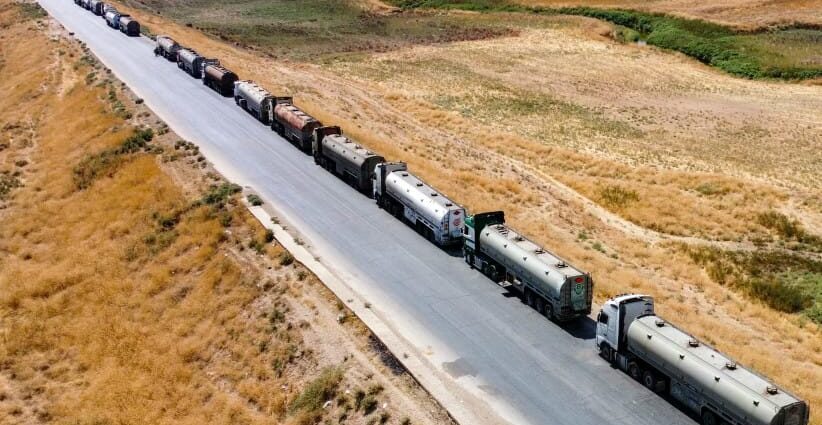
One of the most important developments in the Middle East is taking place along the sun-scorched border of Iraq and Syria. This border has usually been quiet in recent years. But it hasn’t always been that way. Back in 2014, the extremist genocidal group ISIS used the long, open border to invade Iraq. Later, Iranian-backed militias went the other way, moving into Syria’s Euphrates River Valley from Iraq.
Today all this has changed. The border is peaceful. Iraq and Syria now control the area again. Today the border is used for the important trade in oil and gas. It has become an energy corridor. Iraq ships oil by truck to Syria for export. Syria is sending gasoline to Iraq. This has happened because Iraq can no longer easily export oil through the Strait of Hormuz.
In addition, it can’t import gasoline from Iran or other places. This is ironic for Iraq, a country that sits on an ocean of oil. An ocean it can’t export easily.
Iraq attempts to rein in Iranian-backed militias
Iraq is also at a crossroads. It is trying to rein in Iranian-backed militias. The plan of the new Prime Minister of Iraq, Ali al-Zaidi, is to rein them in by June 2027. He has the Trump administration’s backing. Zaidi was also in New York for the UN General Assembly last week. He met with Syria’s President Ahmed al-Sharaa. Iraq views Sharaa with suspicion. He was imprisoned at Camp Bucca in Iraq from around 2006 to 2010. At the time, he was associated with Al Qaeda members as well as other Sunni insurgent extremists. Zaidi, by contrast, is a Shi’ite businessperson backed by the Shi’ite Coordination Framework of Shi’ite parties in Iraq.
Today Iraq and Syria are working together. Syria’s state media SANA says “Syria has begun transporting imported gasoline to Iraq through its Baniyas oil terminal under a renewable three-month agreement, with plans to increase traffic to about 200 tanker trucks a day, the Syrian Petroleum Company said Sunday.”
It added that “the first batch of 57 trucks began moving Thursday through the al-Tanf border crossing, Ahmed Qubbaji, the company’s deputy chief executive for transportation and storage, told SANA. The arrangement is intended to help secure supplies for Iraq amid disruption to shipping through the Strait of Hormuz.” Online video showed trucks crossing the border in a kind of mad dash that seemed more like the film Mad Max than gentrified energy trade.
The report at SANA noted that “Qatar-based UCC buys the gasoline from international suppliers, while Syrian authorities handle its transportation in return for transit fees, Qubbaji said.” The fuel arrives in Syria via the port of Baniyas. “Workers check each truck’s tank before loading, verify the cargo weight, and seal the tank. Customs officials then check the paperwork and truck numbers before the vehicles head toward Iraq,” SANA added. “Between 1,000 and 1,200 trucks carrying Iraqi oil already cross Syrian territory each day, Qubbaji said, with traffic varying according to weather, transport activity and tanker arrivals.”
The transport is happening at the usually quiet border crossing area of Tanf. Tanf is named for an old agricultural post in Syria. However, in 2015 the US moved forces into this area to back Syrian rebels against ISIS. For years, the US maintained a small garrison in Syria near the Iraq and Jordan border. After the Assad regime fell, the US left Tanf. Now this area has become key to the new oil and gas transit corridor.
SANA adds that “gasoline and fuel oil are currently transported through al-Tanf. The company is considering other border crossings and additional cargoes for transit to Iraq, including coal and sulfur, he said. The company is also preparing the Arab Gas Pipeline toward the Syrian-Jordanian border and a branch to Lebanon. Qubbaji said the Lebanon branch could be ready in about 15 days if the remaining work is completed.”
The report went on to note that Syria has signed on to a “memorandum of understanding on the proposed Kirkuk-Baniyas oil pipeline, with foreign companies including Chevron, Total and UCC involved, Qubbaji said.” Reports say Zaidi met with ExxonMobil and HKN while in New York. This is part of Iraq’s move to ingratiate itself with American companies.
Iraqi Oil Ministry activates development contract with US-based company
In July, Channel 8 in the Kurdistan Region noted that “the Iraqi Ministry of Oil has officially activated a development contract with US-based HKN Energy for the Hamrin oilfield. The project targets a peak production of 140,000 barrels per day and will capture 40 million standard cubic feet of gas per day under a zero-flaring policy.” It said the US is backing the rehabilitation of the Kirkuk-Baniyas pipeline.
In November 2025, the World Oil website reported, “HKN Energy has reached a key milestone in the development of Iraq’s Hamrin oil field after finalizing technical terms with the Ministry of Oil (MOO), advancing the project toward a full field development contract. The agreement was concluded in Kirkuk at the headquarters of the North Oil Company (NOC) and builds on the Heads of Agreement signed in July 2025 between HKN and the Iraqi government. The new technical terms outline the framework for increasing production and improving operational efficiency at Hamrin, one of the region’s underdeveloped assets.”
Meanwhile, Rudaw media in the Kurdistan Region of Iraq noted on September 27 that “Iraq continues to sell its crude oil at a discount of 10 to 20 percent as daily exports recover to around 3 million barrels, with higher shipping costs and security risks around the Strait of Hormuz weighing on sales.”
“Discounts continue and vary per the buying company. The range is from 10 to 20 percent. The discount compensates for the security risks in the Strait of Hormuz. Transport and insurance companies are given the discount,” Uday Awad, head of the federal parliamentary finance committee, told Rudaw’s Malik Mohammed on Sunday.