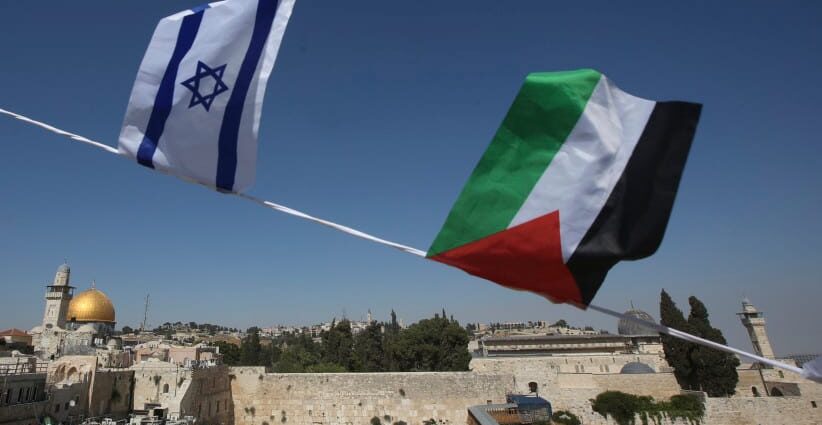
How can Palestinians and Israelis live on the same land, with each people enjoying freedom, security, and political rights? Choosing between the slogans of “two states” and “one state” does not answer that question. The harder questions concern who holds decision-making power, who can move, reside, and work freely, and how Jerusalem, refugees, settlements, and the protection of civilians will be addressed.
With the Knesset election scheduled in Israel for October 27, 2026, and the Palestinian legislative election scheduled by the Central Elections Commission for November 28, 2026, voters have every right to ask the parties what future they propose for both peoples. The announced dates make this debate urgent, although announcing an election does not guarantee that it will take place or that any party will adopt a plan for peace.
Israeli parties across the political spectrum need to address Palestinians’ national and political rights, the human and political costs of continued occupation and settlement expansion, and the consequences for Israelis’ own security. Palestinian parties and leaders need to set out their vision for statehood, Jerusalem, refugees, civilian protection, and future relations with Israel and Jordan. Asking both sides for clarity does not suggest that their political positions are equal or disregard the reality of occupation. It means that anyone seeking voters’ trust should offer commitments that can be examined.
Palestinian statehood before confederation
In my critique published in World Affairs in 2022, I examined Alon Ben-Meir’s proposal for an Israeli-Palestinian-Jordanian confederation. In the simplest terms relevant here, a confederation is an arrangement in which sovereign states agree to manage specified responsibilities through shared institutions while retaining their own statehood and core powers. It is not another name for a single state, and it does not resolve questions of sovereignty merely by being proposed. The sequence envisaged in the proposal requires an independent Palestinian state before a shared framework with Israel and Jordan is considered.
That starting point cannot be skipped. Palestinians seek more than freedom of movement within a wider region: they seek self-determination and institutions with real authority over their land, borders, and resources. If a party that lacks such authority enters shared institutions with a stronger party, confederation could conceal a continuation of the existing imbalance of power. Once a Palestinian state exercises genuine sovereignty, however, the parties could decide, by mutual consent, which responsibilities to delegate to shared bodies: arrangements for certain crossings, water and energy management, residency and employment rules, or agreed security measures.
Declaring a state on paper is not enough. A state unable to manage its resources, connect with the outside world, or provide work for its people would struggle to be viable. That is part of the appeal of some confederal ideas: they seek to combine self-determination with a wider space for movement and trade. But this possibility depends on ending the restrictions that prevent Palestinians from exercising their rights and halting settlement expansion that undermines the land required for their state. Jordan’s consent cannot be presumed, either.
My 2022 study did not offer an unqualified endorsement of confederation. It examined the idea’s opportunities and obstacles. In its conclusion, I also seriously considered a single democratic state based on equal citizenship in light of the reality of control over the land and the failure to achieve partition. I return to these alternatives now to ask what each might deliver in terms of rights, sovereignty, and security, and what stands in the way of implementation.
Borders do not erase interdependence or correct inequality
The need to coordinate roads, water, airspace, markets, infrastructure, and religious sites will not disappear once political borders are drawn. Institutions established by agreement could help manage these connections instead of leaving decisions to the stronger party alone.
But calling an institution “shared” does not make decision-making power equal. Israel’s economy is far stronger than the Palestinian economy, and their relationship has been shaped by decades of control and unequal dependence.
If markets open without safeguards, labor, investment, and resources could flow toward the stronger economy, deepening inequality rather than reducing it. Any agreement therefore needs clear rules for investment, workers’ rights, and infrastructure, along with the capacity for the Palestinian economy to grow and make independent decisions. Economic cooperation can support peace, but it cannot substitute for sovereignty or correct a power imbalance on its own.
The same reasoning applies to security. Israelis have a right to live without fear of attack; Palestinians have a right to security and freedom, and to lives free from permanent security control. The proposal considered coordination, information-sharing, and monitoring of threats among the three parties, with coordination involving Egypt where geography requires it. These broad ideas, however, demand detailed negotiations. Who controls external borders? Who decides how airspace is managed? What powers would shared agencies have? How would individual rights be protected when the institutions of different states disagree?
Palestine would not be an equal partner if it lacked effective authority over its crossings and security, even where mutual monitoring and coordination existed. Nor is security only a matter for security agencies. Freedom of movement and work, an end to violence, and respect for due process affect people’s stability and trust. In my original study, I criticized administrative detention and its effects on people deprived of liberty without a fair trial.
Jerusalem, refugees, and settlements: A test of rights
These three issues put any confederal vision to a practical test. In Jerusalem, it may be possible to consider joint administration of certain services and matters concerning holy sites. That would not, by itself, settle political sovereignty or residents’ rights. Any arrangement must protect access to religious sites and the political and everyday rights of Jerusalem’s residents. My study also noted the Hashemite custodianship of Muslim and Christian holy sites, one of the considerations that make the participation of the parties concerned essential to any discussion of the city.
The refugee question cannot be postponed as though it were a detail to resolve after the institutions are agreed. Return, compensation, property, and acknowledgment of displacement are central to reconciliation.
Residency and citizenship arrangements can be negotiated, but a refugee’s rights cannot be reduced to a number automatically offset against the number of settlers who might remain in a future Palestinian state. The two issues have different legal and human histories, and each requires explicit and fair treatment.
A future arrangement might allow some settlers to stay where they live while retaining Israeli citizenship, provided that they come under Palestinian law and sovereignty, property and compensation claims are resolved, and discriminatory privileges end. Others might choose to move to Israel. Allowing individuals to remain in their homes, however, is different from preserving a settlement system that exercises separate authority over Palestinian land. Even this possibility cannot be responsibly proposed without first resolving the rights of landowners and obtaining the agreement of those concerned.
Jordan and the regional horizon
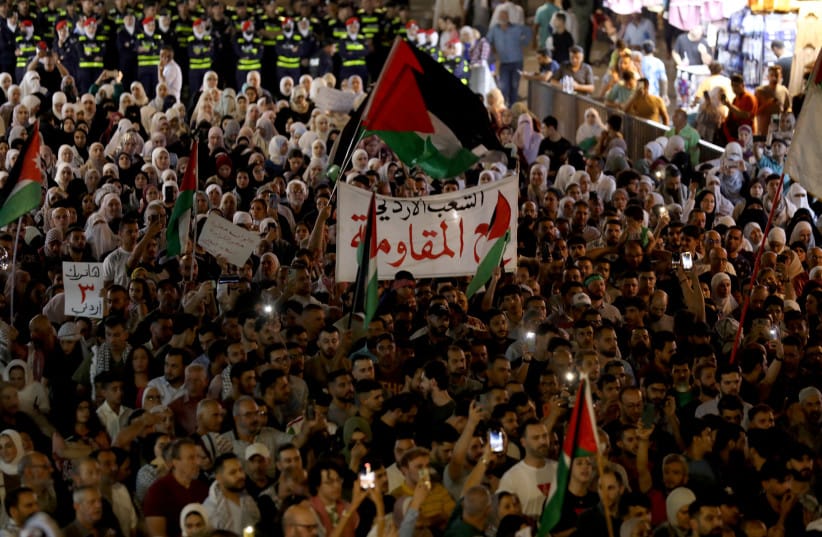
Jordan has deep human, geographic, and economic ties with Palestine, and its participation could widen opportunities for movement and cooperation. Yet Jordan is no substitute for a Palestinian state, nor can it be assigned political or security burdens without its consent. Its participation, should it choose to take part, would have to rest on defined interests, reciprocal guarantees, and respect for each state’s right to decide what authority it delegates to shared institutions.
My original study also discussed a wider possibility, to be considered after a Palestinian state is established: a flexible regional economic association that might eventually include Syria and Lebanon alongside Palestine, Israel, and Jordan, and perhaps Egypt and other states later.
Among its aims would be to allow people to live and work across the participating states and to spread some economic burdens over a wider area. But this remains a possibility contingent on each state’s consent and clear arrangements for rights, movement, and equal decision-making. It is neither an existing agreement nor an automatic consequence of peace. There is no direct precedent for a state emerging from occupation and immediately entering a shared system with the state that occupied it. Shared institutions could also weigh heavily on the smaller state unless their powers and accountability are carefully defined.
I also discussed possible roles for the United States, Germany, Saudi Arabia, and Egypt in diplomatic efforts and regional guarantees. No mediator should be assumed to be impartial, and no country should be assigned commitments it has not made.
A just peace could open the way to broader regional cooperation, but its effect on the regional balance of power is a political assessment, not an outcome anyone can promise. That horizon begins with an agreement that protects rights and is accepted by those it affects.
Reconciliation cannot be signed into existence
Even if leaders agree on borders and institutions, communities will still carry memories of fear, pain, and mistrust. A political settlement therefore needs long-term work in education, media, culture, economic life, and relations between people. Ben-Meir discussed joint economic, health, and housing projects; improvements to education; reciprocal visits; and the involvement of women and students, sport, art, and interfaith dialogue. Such efforts can help dismantle stereotypes if they are not presented as substitutes for political rights and justice.
Palestinians cannot reasonably be asked to embrace coexistence while their rights remain unresolved, just as Israelis’ fears cannot be ignored in discussions of their future. Reconciliation requires each society to learn about the other through its people rather than through the harshest image offered by its opponents. As I argued in my study, interfaith dialogue also benefits when we stop comparing the best in our own beliefs with the worst in someone else’s and acknowledge what we can value in others. These principles do not erase political disagreements, but they can keep mutual ignorance from fueling them.
What the polls measure – and what they don’t
Recent findings reveal a gap between openness to a settlement and confidence that one can be achieved. In a telephone survey by the Palestinian Center for Public Opinion conducted between July 5 and 18, 2026, among 309 respondents in the West Bank and Gaza Strip, 77.7% rated the lack of trust as a very major or moderate obstacle to peace. Another 68.9% agreed that future coexistence would be possible if justice and equal rights were guaranteed. And 80.9% agreed that political agreements alone would not suffice without mutual trust and respect. The report gave a response rate of 64% and a stated margin of error of ±5.57 percentage points at the 95% confidence level.
Asked to choose the best guarantee of long-term peace, 44.3% selected “ending the occupation and establishing an independent Palestinian state,” while 32.7% chose the option combining the proposed guarantees. The 44.3% therefore represents respondents who selected that particular answer, not everyone who supports Palestinian statehood. The survey did not ask about confederation: conditional support for coexistence cannot be turned into support for a specific political proposal.
In a face-to-face survey by the Palestinian Center for Policy and Survey Research, conducted between August 5 and 8, 2026, among 1,270 respondents in the West Bank and Gaza Strip, the stated margin of error was ±3.5 percentage points. Presented with three political alternatives, 56% preferred two states based on the 1967 borders, 14% chose a confederation between the states of Palestine and Israel, and 10% preferred a single state with equal rights; 20% did not state a preference. In a separate question about support for the two-state solution without additional details, 44% expressed support. In the same survey, 58% said settlement expansion had made the two-state solution impractical. Preferring a political solution does not mean believing it can be implemented, and the wording of a question and the alternatives offered affect the responses.
An Israeli-Palestinian joint poll in July 2024 recorded support for a two-state confederation among 35% of Palestinians and 20% of Israelis overall. The Palestinian component interviewed 1,270 adults face to face between July 17 and 20; the Israeli component surveyed 900 adults online between July 18 and 29, with weighting to reflect the population groups’ representation. Neither this poll nor the 2026 survey measured support for the three-party proposal that includes Jordan. Nor does the difference between the Palestinian figures of 35% and 14% establish a measured trend in support for the same proposal: the circumstances and the way the alternatives were presented differed.
In an Israel Democracy Institute survey conducted between August 31 and September 3, 2026, the sample comprised 605 Jewish and 150 Arab respondents. Among Jewish respondents, 39% ranked a party’s stance on foreign affairs and security first or second among the factors shaping their electoral choice; 38% did the same for the economy and the cost of living. The survey did not ask about confederation. It does, however, help explain why any argument for peace must offer practical answers on security and the economy, rather than relying on the name of a constitutional arrangement.
Political choices also reach into everyday livelihoods. In another Palestinian Center for Public Opinion survey, conducted between June 24 and July 5, 2026, the overall sample comprised 503 adults in the West Bank, including east Jerusalem, and the Gaza Strip. Of a specialized subsample of 300 respondents who answered questions about the private sector and banking restrictions, 74% said the private sector had helped keep the economy functioning during crises. This result should not be attributed to everyone in the overall sample, and it does not establish the effects of any particular political arrangement. It does pose a concrete test for any peace plan: would Palestinians be able to work, move, trade, and receive payments without restrictions that keep their economy dependent?
What should voters hear?
In my article on elections between displacement and coexistence, I asked a question that reaches beyond party victories: if Palestinians are here to stay, and Israelis are here to stay, how will they live together? That statement does not equate their positions under occupation. It rejects political programs built on the imagined disappearance of either people.
Parties may disagree over a single democratic state, two states, or a confederation to be considered after a sovereign Palestinian state is established. I do not offer a documented assessment of party platforms here. Instead, I ask the parties to answer publicly: How will they deal with land, Jerusalem, refugees, settlements, and the protection of civilians? Who will control crossings and resources? What will change in people’s opportunities to work and move, and in their families’ security? What are the stages of implementation, what guarantees will apply, and who will hold leaders accountable if they do not honor their commitments?
Confederation is not an inevitable outcome of peace, and its name alone creates neither rights nor economic opportunities. A single state or two states must likewise be tested against equality, authority, and security in practice.
Ending violence and returning to the pursuit of peace is a responsibility that begins now: violence breeds harm, while peace can bring good when it is grounded in rights and guarantees. Once these questions become programs on which leaders can be held to account, the ballot box can help shape the future of both peoples, rather than leaving “peace” as a promise repeated at election time.
Dr. Nabil Kukali is the founder and president of the Palestinian Center for Public Opinion (PCPO), and a researcher specializing in public opinion polling, as well as political, social, economic, and other fields of research. He has more than three decades of experience in designing and conducting field studies and analyzing public opinion trends in Palestine and the Middle East.