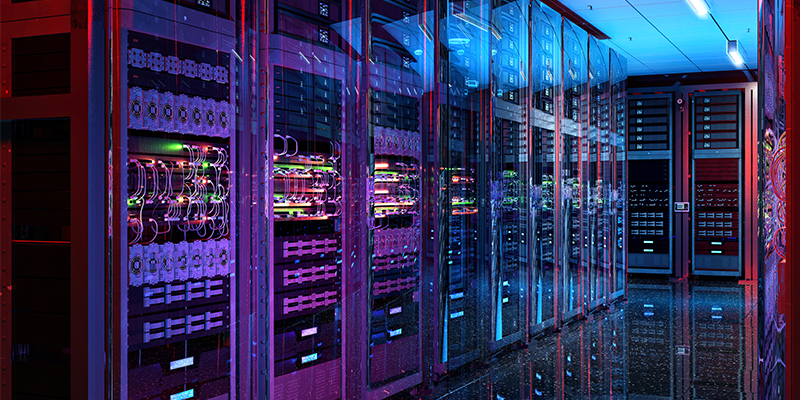
“The cloud rests on concrete,” claimed Jason Tolliver, president, Americas logistics and industrial, Cushman & Wakefield – a succinct reminder that the rapid advancement of artificial intelligence depends on an enormous physical infrastructure operating behind the scenes. From construction and power to transportation and ongoing operations, industrial development and logistics provide the backbone supporting the digital revolution.
At the CREDA Conference in Denver, Tolliver brought together three industry leaders to examine the expanding footprint of AI data centers and the opportunities and challenges accompanying their growth. He called data center development the “hottest topic, not only of the current time, but probably the most transformative topic that I’ve seen in my entire career in commercial real estate.”
Mike Ryan, national president, Ryan Companies US, Inc., said that AI data centers are the highest and best use of commercial real estate in the current market. “If it can be a data center, it probably will end up being a data center,” stated Ryan, with the acknowledgement that community support and power are necessary prerequisites.
Winning Community Support
Gaining community support for data centers remains a critical issue. Jey Muthukrishnan, head of NORAM storage distribution and deployments, Meta, explained that data centers are fundamentally changing people’s lives, and the key to gaining public support is honesty about the issues that matter to local communities. According to Muthukrishnan, communities are often willing to accept data centers because the centers provide well-paying jobs over an extended period. A multi-year build is followed by ongoing operations and eventual rebuilds, all of which require local labor.
Ryan concurred with Muthukrishnan’s assessment, explaining that common priorities emerge when community members are asked what they want for their neighborhoods: good, durable jobs, a strong tax base and funding for schools.
However, while data centers can provide significant economic benefits, some states and local communities remain reluctant to allow their construction. Abatements will likely remain in place in some states, but resistance at the municipal level can be less rigid.
In many cases, Ryan explained that communities simply want more time to understand the potential impacts of data centers. Real estate developers can partner with community leaders to help write zoning codes and establish data center policies. Locally elected city council members are frequently not opposed to data centers on political grounds, rather they need assistance in establishing a framework for this relatively new use of land.
Addressing Energy Concerns
One of the most prevalent sources of pushback against data centers is their energy usage. But taking reports of power consumption “at face value” misrepresents the comprehensive impact of data centers, said Jesse Laver, vice president, data center logistics, DHL Supply Chain. Laver explained that hyperscalers are proactive adherents to climate pledges, investing aggressively in solar and alternative energy and even paying for sustainable aviation fuel to transport materials. Ryan agreed with Laver’s assessment, adding that his company is currently working on data centers that will entirely run on clean power.
Opportunities Beyond the Data Center
When communities are amenable to the establishment of data centers, all three panelists concurred that such development creates tremendous opportunities for partnerships. Laver explained that 85 to 90% of hyperscalers want an end-to-end logistics partner. Currently, only 40% feel that this need is being met, presenting a substantial opportunity for logistics providers to fill in the gap.
Beyond logistics, the increased prevalence of data centers presents new opportunities throughout commercial real estate as manufacturers demand buildings that can support evolving manufacturing processes. Ryan predicted a significant increase in volume for both speculative industrial and build-to-suit business due to what he calls the “AI-enabled flywheel,” whereby AI capabilities transform manufacturing processes and, in turn, create additional demand for industrial real estate.
Keeping the Growth in Perspective
The rate at which data centers are disrupting the commercial real estate space is noteworthy, yet the rapid pace of expansion can also be overstated. Ryan asserted that data centers are not fully displacing other uses of commercial real estate. A large data center requires approximately 500 acres, meaning that 1,000 data centers would occupy roughly 500,000 acres nationwide.
Data centers may occupy only a fraction of the available land across the U.S., but their influence extends far beyond their physical footprint. “Data is the drug of choice” in today’s world, says Muthukrishnan, noting the growing expectation for instantaneous, high-quality information. Even without the AI component, he noted, data essentially runs our daily lives, making the infrastructure that stores, processes and moves it increasingly indispensable. What that means, noted Muthukrishnan, is that “unless you want to change everything about our lives – and I don’t think any of us are up for it – data centers are not going away.”

This post is brought to you by JLL, the social media and conference blog sponsor of the CREDA Conference 2026. Learn more about JLL at www.us.jll.com or www.jll.ca.
The post AI Data Centers Drive a New Era of Industrial and Logistics Growth appeared first on Market Share.