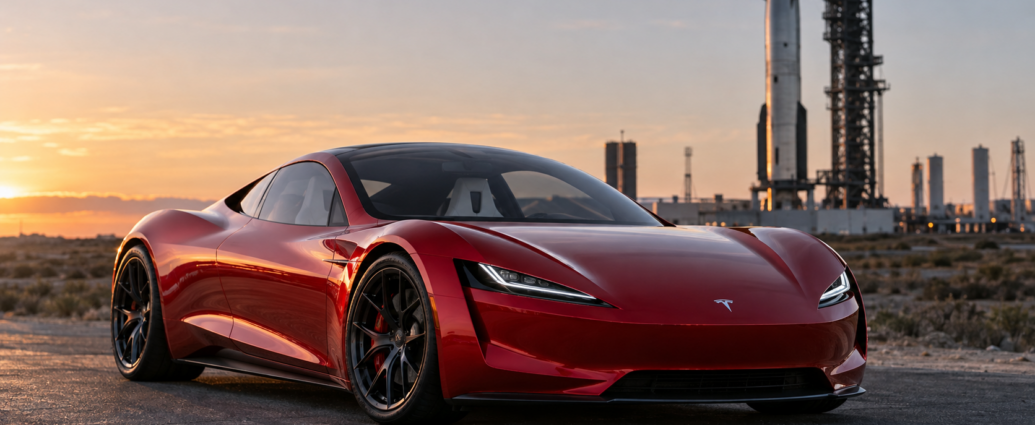
Tesla will finally show off its long-delayed second-generation Roadster on Oct. 15, nearly nine years after it first unveiled the electric sports car and began taking $50,000 deposits from buyers who are still waiting for a car.
The event will be held outdoors in Waco, Texas. It was originally scheduled for Oct. 1, but Tesla pushed it back two weeks, citing a severe weather forecast for central Texas. The company said pricing, specifications and its long-term production plans are unchanged.
Tesla first revealed the Roadster as a surprise at the end of a truck event in November 2017. At the time, CEO Elon Musk promised a car that could go from 0 to 60 miles per hour in 1.9 seconds, faster than any street-legal production car then on the market, with a range of 620 miles on a single charge. Production was originally targeted for 2020. That date came and went, followed by several more.
In plain terms, some customers handed Tesla $50,000 almost a decade ago for a car that does not yet exist, and they are about to find out whether the wait was worth it.
The deposits are not small. A standard reservation costs $50,000: a $5,000 payment by credit card, followed by a $45,000 wire transfer due within 10 days. Buyers who wanted a spot in the limited Founders Series paid $250,000 upfront. Tesla has never said how many people have reserved a Roadster or how much money it is holding in deposits. Last month, ahead of the reveal, the company reopened its reservation list on the same $50,000 terms.
For buyers, that money has effectively been an interest-free loan to Tesla. To put it in perspective, with short-term Treasury rates above 4% today, $50,000 parked in a high-yield savings account could earn roughly $2,000 a year in interest. Instead, deposit holders have been waiting with nothing but a place in line.
Tesla has not announced an official price. The base Roadster has long been expected to cost around $200,000, putting it in the same range as high-end sports cars from Porsche and Ferrari rather than Tesla’s everyday models like the Model 3 and Model Y. Production is expected to begin in 2027, but a reveal is not the same as a delivery date, and Tesla has not given buyers a firm timeline for when they will actually receive their cars.
The stakes go beyond one car. The Roadster has become a symbol of Tesla’s habit of announcing bold products and then missing deadlines. The Cybertruck arrived years late, and the Semi truck took far longer than first promised to reach customers. A strong showing on Oct. 15, with a production-ready car, firm specifications and a clear delivery schedule, would help repair that reputation. Another round of prototypes and promises would do the opposite.
Musk has hinted that the new Roadster will be more radical than earlier prototypes. He has talked for years about an optional “SpaceX package” that would use small rocket-style thrusters to boost acceleration and handling. Tesla’s teaser for the event carried the words “Go for launch,” and invitations sent to reservation holders point to a site near SpaceX’s rocket test facility in McGregor, Texas, just outside Waco. Whether those features make it into a car that people can actually buy is one of the biggest open questions.
The market has also changed since 2017. When the Roadster was first shown, a sub-2-second electric supercar sounded like science fiction. Today, several electric hypercars from China and Europe already post eye-popping acceleration numbers, and luxury brands like Ferrari are moving into electric sports cars. The Roadster will no longer have the field to itself.
For the deposit holders, the answer comes in one week. They will learn what the car looks like, what it can do, how much it costs and, most importantly, when they can finally drive one home.
JBizNews Desk | Austin
© JBizNews.com All Rights Reserved. Reproduction or distribution without written permission is prohibited.