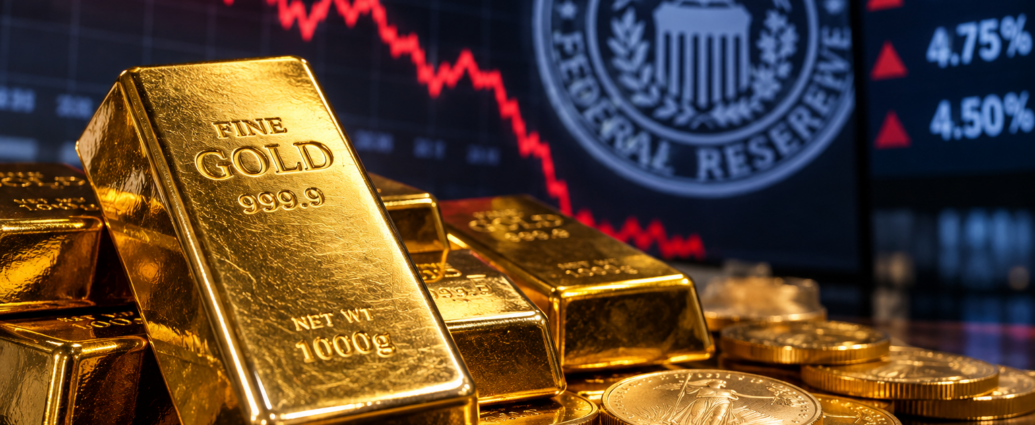
NEW YORK — Gold prices remained near their lowest level in more than two months Thursday as expectations of another Federal Reserve interest rate increase strengthened the U.S. dollar and reduced demand for the precious metal.
Gold traded near $4,110 an ounce after falling approximately 1.3% Wednesday, reaching its lowest level since early August. Prices recovered slightly in early Thursday trading but remained under pressure.
The decline followed the release of minutes from the Federal Reserve’s September meeting, which indicated that most policymakers believed another interest rate increase could be necessary before the end of the year.
Investors were pricing in roughly a 20% probability of an October rate increase and a substantially greater likelihood of another hike by December.
Higher Interest Rates Pressure Gold
Gold typically struggles when interest rates rise because it does not generate interest or dividend income.
Higher yields on U.S. Treasury securities and other interest-bearing investments make those alternatives more attractive, encouraging some investors to shift money away from precious metals.
The yield on the benchmark 10-year Treasury has climbed to levels not seen in more than two decades, adding pressure to gold prices.
A stronger U.S. dollar has also weighed on demand. Because gold is priced internationally in dollars, a rising dollar makes the metal more expensive for buyers using other currencies.
Oil Prices Add to Inflation Concerns
Continued tensions in the Middle East have complicated the outlook for gold.
The U.S.-Iran conflict and disruptions affecting energy shipments have kept oil prices elevated, increasing concerns about persistent inflation.
Higher energy costs can raise transportation, manufacturing and consumer prices, potentially giving the Federal Reserve additional reasons to maintain restrictive monetary policy.
Although gold traditionally attracts investors during geopolitical uncertainty, higher interest rates and a stronger dollar have offset some of that safe-haven demand.
Central Bank Buying Offers Support
Purchases by central banks have helped cushion gold’s recent losses.
Central banks continue to hold gold as part of their international reserves, providing an important source of demand even as private investors reassess their exposure.
Analysts at ANZ have pointed to official-sector purchases as a factor supporting the market despite pressure from rising bond yields.
What It Means for Consumers and Investors
Lower gold prices could benefit consumers purchasing jewelry, coins or other precious-metal products.
However, investors holding physical gold, gold-backed exchange-traded funds or mining shares may face additional volatility if interest rates continue rising.
Meanwhile, higher yields on Treasury bills, certificates of deposit and money market investments offer savers alternatives that generate income without exposure to gold’s daily price fluctuations.
What Comes Next
Investors will closely monitor upcoming U.S. inflation figures, employment reports and Federal Reserve commentary for clues about the timing of another rate increase.
Oil prices, geopolitical developments and movements in the dollar will also remain important influences on gold.
For now, expectations of tighter monetary policy continue to weigh on the precious metal, even as geopolitical uncertainty and central bank purchases provide underlying support.
JBizNews Desk | New York
© JBizNews.com All Rights Reserved. Reproduction or distribution without written permission is prohibited.