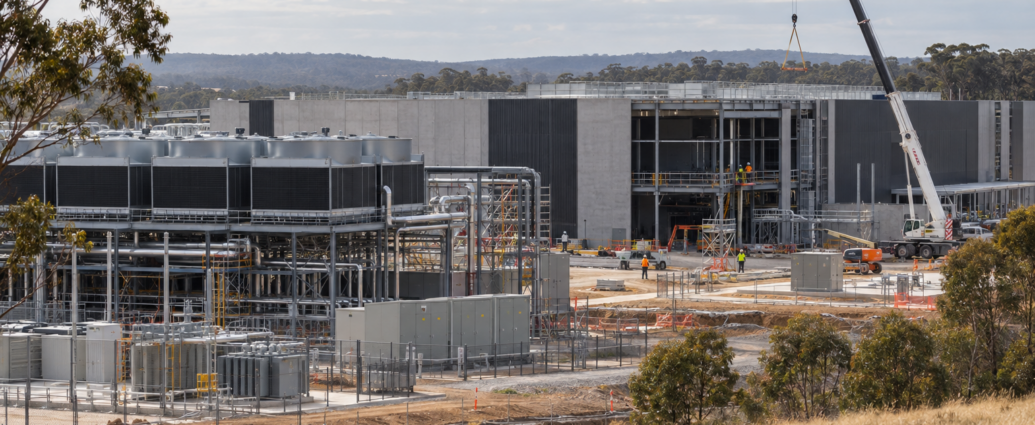
Nvidia-backed data center developer Firmus Grid is reportedly preparing to postpone its Australian stock-market debut and seek private funding instead, putting a multibillion-dollar financing plan in doubt as investors question its valuation and ability to deliver an ambitious construction program.
Bloomberg reported Thursday that Firmus was discussing a private funding round with existing shareholders and potential new investors. The deliberations remained ongoing, and terms could change. The available company disclosures did not confirm a final decision to withdraw the offering.
The proposed listing had been scheduled for October 23. Firmus was seeking as much as US$5.5 billion, including an option allowing additional shares to be sold. Its original A$11 offer price implied an equity valuation of approximately A$43.7 billion, or US$30.4 billion.
The difficulty is translating enthusiasm for artificial intelligence into investors’ willingness to pay that price.
Firmus announced a fully subscribed US$2 billion equity round in August, with commitments from investors including Nvidia, Coatue, Blackstone-managed funds and Jane Street. The company said that transaction brought its post-investment valuation above US$10.5 billion.
The proposed public valuation was therefore roughly three times the August level, less than two months later. Reuters reported that prospective investors questioned the valuation increase, construction execution and debt burden.
Earlier Thursday, reports suggested bankers were considering reducing the offer price to A$8.25. That would represent a 25% cut from A$11, although no final revised price had been established in the reporting reviewed.
The uncertainty had consequences for an existing shareholder. Maas Group, an Australian construction-services company holding a 3.2% interest in Firmus, finished Thursday down 22.4% after falling as much as 30% during trading. Firmus did not respond to Reuters’ request for comment.
The operating business is smaller than its planned footprint—a distinction central to assessing what investors would be buying.
In a September 8 announcement, Firmus described a portfolio of seven AI factories across Australia, Singapore, Indonesia and Malaysia. Two sites were operating, in Australia and Singapore, while five were under development and targeted to become ready for service over the following 24 months.
These facilities combine specialized computing chips, power supplies, cooling equipment and networking systems to provide the computing capacity used to train and operate AI models.
Firmus also announced that OpenAI would contract dedicated computing capacity at two Malaysian sites. The company said its total contracted capacity across customers exceeded 900 megawatts.
Customer commitments help establish demand, but contracted capacity is not the same as completed infrastructure or revenue already earned. Buildings, electricity connections and computing equipment must be delivered before planned operations can generate their expected returns.
Firmus has already arranged substantial financing for that expansion. In February, it announced a US$10 billion debt-financing facility led by Blackstone-managed funds and supported by Coatue for its Australian Project Southgate rollout. A financing facility should not be treated as proof that the entire amount has been borrowed or spent.
A private equity round could provide another source of construction capital. Investors would negotiate the valuation and other terms directly rather than buying shares through the proposed public offering.
That route would not remove the underlying business questions. New investors would still need to assess construction schedules, customer obligations, financing costs and the timing of cash generation. Issuing additional equity could also dilute existing shareholders, depending on the transaction’s structure.
For U.S. technology suppliers and investment firms, the case illustrates how financing decisions can influence the pace of AI infrastructure development. It does not, by itself, establish that Firmus has canceled chip orders, lost customers or stopped projects.
The next material development is a confirmed financing decision: whether Firmus secures a private round, revises the public offering or announces a new listing timetable.
JBizNews Desk | Sydney
© JBizNews.com. All rights reserved. This article is original reporting by JBizNews Desk. Unauthorized reproduction or redistribution is strictly prohibited.