Porsche delivered 16% fewer cars worldwide in the first nine months of 2026 than a year earlier, and its biggest market, North America, was down 13%. The German sports car maker said Friday it handed over 178,532 vehicles from January through September, as sharply weaker demand in China, the end of an entry-level model and a deliberate choice to protect the brand over chasing sales all weighed on results.
North America remained Porsche’s largest region, with 56,088 deliveries. That means close to 1 out of every 3 Porsches sold anywhere in the world this year went to a buyer in the United States or Canada. When the American market slips, Porsche feels it immediately.
Part of the U.S. slowdown traces back to Washington. When Porsche reported first-half results in July, it pointed to the expiration of U.S. tax credits for electric vehicles as one reason North American deliveries fell. Without that credit, an electric car costs an American buyer noticeably more out of pocket, and Porsche’s electric Macan felt the hit. Macan deliveries fell 21% to 51,025 vehicles worldwide, with Porsche noting that strong electric Macan deliveries a year earlier made the comparison tougher.
The other drag is a car Porsche simply stopped building. The company ended production of its 718 line, the Boxster and Cayman, which were the least expensive ways into a Porsche sports car. With no 718s left to sell, shoppers looking for an entry-level Porsche have fewer options.
China was the steepest drop by far. Deliveries there plunged 33% to 21,493 vehicles. In plain terms, Porsche sold roughly 2 cars in China this year for every 3 it sold over the same stretch last year. Chinese buyers have been turning toward fast-improving local electric car brands, and other German luxury makers are feeling the same pressure. Mercedes-Benz reported an 8% drop in third-quarter car sales on Wednesday, also citing tough conditions in China.
Europe slipped too. Deliveries in Germany, Porsche’s home market, fell 7% to 20,954, and sales in the rest of Europe dropped 11% to 44,949.
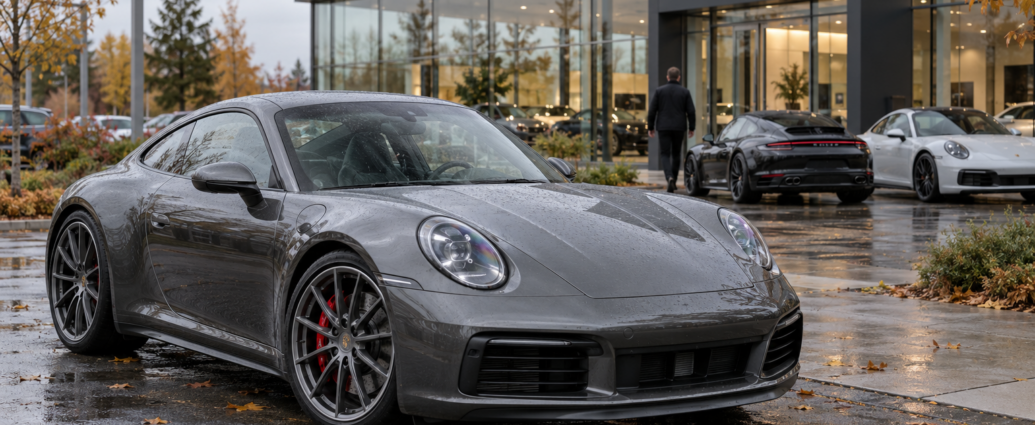
One car went the other way. The iconic 911 posted a 12% rise in deliveries to 42,217 vehicles, as demand for its exclusive, high-performance versions stayed strong. The Cayenne SUV remained Porsche’s best-seller at 59,586 deliveries, down just 2%.
That split tells the whole story of Porsche’s strategy. Wealthy buyers are still paying up for the most exclusive models, while the cheaper end of the lineup and the electric cars are losing ground. Porsche says it is fine with that trade. The company described market conditions as challenging and said it is putting the brand’s long-term strength ahead of short-term sales targets.
The fix Porsche is pursuing is to sell fewer cars at higher value. Matthias Becker, the board member in charge of sales and marketing, said the company’s focus is on highly desirable sports cars, attractive variations of existing models, and expanding the options buyers can use to personalize their cars. Personalization is a profit engine for luxury carmakers, because buyers who custom-order paint, interiors and trim pay well above the base sticker price.
Porsche is also holding firm on profit targets. The company is aiming for an operating return on sales of 10% to 15% over the medium term, meaning it wants to keep $10 to $15 of every $100 in sales as operating profit. Selling fewer but pricier cars is how it plans to get there.
For American shoppers, the result is a narrower and more expensive lineup. With the 718 gone and electric models without a federal tax credit, the cheapest new Porsches have moved further out of reach, while dealers lean on the 911 and Cayenne, which still draw buyers willing to pay top dollar.
Porsche said third-quarter deliveries were in line with the trend from the first half of the year, which suggests the slowdown has leveled off rather than deepened.
JBizNews Desk | Wall Street
© JBizNews.com All Rights Reserved. Reproduction or distribution without written permission is prohibited.