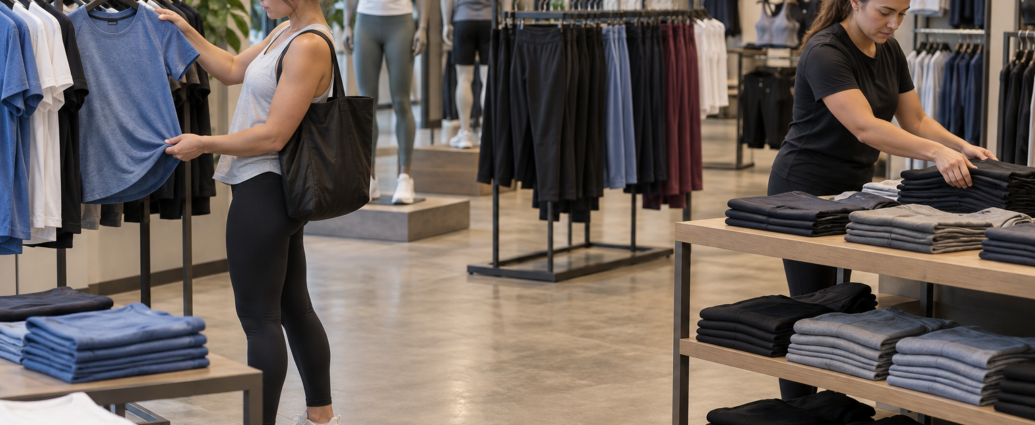
Lululemon’s October 7 appointment of a new product chief adds fresh leadership to a turnaround already reshaping its stores: fewer product variations, more attention to local demand and faster replenishment of popular items. Across retail, companies including BJ’s Wholesale Club, Dollar General and Under Armour are also narrowing selections to make inventory work harder.
For shoppers, the trade-off is fewer choices. For businesses, the aim is to stop tying up money in merchandise that sits unsold while the products customers want run out.
Lululemon named Maggie Gauger president and chief product officer, effective October 26, bringing design, merchandising, footwear, innovation and materials science under a newly created role. The appointment follows Heidi O’Neill’s September 8 arrival as chief executive.
The broader strategy challenges a familiar retail assumption: that carrying more products necessarily brings more sales. Each variation requires purchasing, storage, shelf space and attention from employees. A slow-selling item can consume those resources without generating enough revenue to justify them.
Retailers track these variations as stock-keeping units, or SKUs. Five scents of the same body wash can count as five separate items. Different package sizes, clothing colors and sizes can also create separate inventory records.
BJ’s outlined one of the largest planned reductions on its August 21 earnings call. Chairman and Chief Executive Bob Eddy said the company intends to remove about 20% of its SKUs over the next couple of years.
Older clubs carry roughly 7,500 items, he said, with a longer-term target of about 6,000 to 6,500. That represents roughly 1,000 to 1,500 fewer items per club.
Eddy acknowledged that previous cuts had cost sales and led BJ’s to restore some products. The current approach removes overlapping choices while making room for new categories. He cited fewer body-wash variants and duplicated soda packages, alongside additions in newer beverages.
The commercial test is whether customers switch to a remaining product rather than leave without buying. Eddy reported encouraging early results and outlined additional changes for September and around year-end. Those comments describe management’s plans and early observations, rather than proof that the full program has succeeded.
Dollar General’s effort is further along. In March, Chief Operating Officer Emily Taylor said the retailer had removed more than 1,500 SKUs over several years. The company reported better availability of merchandise alongside lower inventory.
On its August 27 call, Chief Executive Todd Vasos said further cuts would be more targeted, including tests in lower-volume stores and locations facing elevated merchandise losses. He linked inventory improvements to getting products onto shelves faster.
Apparel companies have an additional incentive: protecting full-price sales. Too many styles can leave a brand with excess seasonal merchandise that must be discounted, eroding profit and encouraging customers to wait for clearance.
Under Armour’s fiscal 2026 annual report said the company had reduced SKUs by approximately 25% over two years. On its August call, Chief Executive Kevin Plank said further simplification would concentrate resources behind stronger products and reduce reliance on promotions. He also acknowledged that the approach involves near-term revenue trade-offs.
Lululemon’s September earnings call described a 15% SKU reduction in North American store presentations, with the approach being extended across its store network. A smaller group of locations is testing further reductions and selections tailored to local preferences.
The changes come amid deteriorating results. Lululemon’s September 3 release reported second-quarter revenue down 4% to $2.4 billion, an 8% decline in Americas revenue and a 9% decrease in global comparable sales, a measure of performance in established stores and online. It lowered its annual revenue outlook to a decline of 5% to 7%.
Fewer products do not guarantee lower prices or fewer shortages. A retailer can lose customers if it removes the flavor, fit or package they specifically want. Clothing brands seeking more full-price sales may also offer fewer bargains over time.
The next tests are concrete: Lululemon’s new leadership roles take effect October 26, while BJ’s has outlined another assortment wave around year-end. Subsequent results will show whether leaner selections improve sales and inventory productivity without sacrificing customer loyalty.
JBizNews Desk | New York
© JBizNews.com. All rights reserved. This article is original reporting by JBizNews Desk. Unauthorized reproduction or redistribution is strictly prohibited.