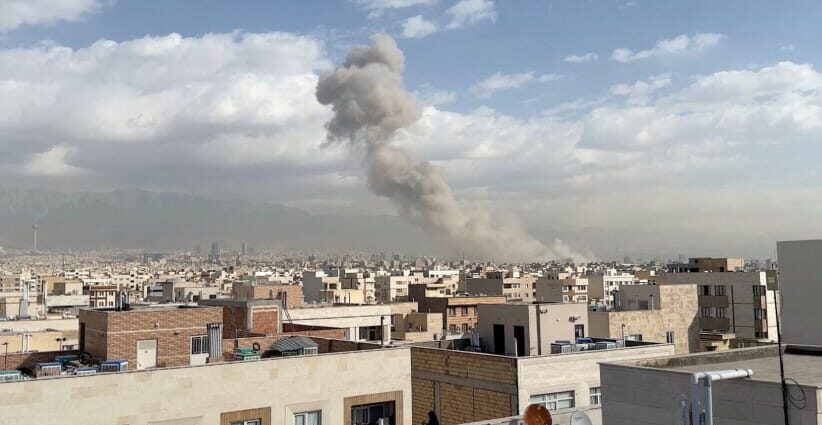
Iran is fortifying its defenses and preparing for a possible new round of fighting with the US and Israel, satellite images indicate, the Wall Street Journal reported on Monday.
“Iran is fortifying its defenses, rallying loyalists and threatening a wider, harsher response against the US and its Gulf allies as it prepares for potential American attacks after the midterms and seeks to deter them,” the report noted.
The findings come amid a series of reports suggesting that the US or Israel could resume military operations against Iran. Maariv reported over the weekend that the US had pressured Israel to carry out strikes against Iran. Both Israel and the US have upcoming elections, and renewed military action could have implications for those votes.
PBS reported on October 11 that “Iran has continued to reject a deal with the US. The head of Iran’s Supreme National Security Council says Tehran finds the latest response from the United States ‘insufficient’ as efforts at negotiations to end the war and fully open the Strait of Hormuz limp along.”
The emerging picture is of an Iran continuing its efforts to rebuild its missile and drone programs despite the damage inflicted by previous US and Israeli strikes.
In March, Prime Minister Benjamin Netanyahu said Iran could no longer produce ballistic missiles because of the extensive damage caused by US and Israeli attacks. There were also optimistic assessments of the number of Iranian missile launchers destroyed and missiles effectively “corked” inside storage facilities after strikes collapsed access routes.
However, The New York Times reported in April that Iran was repairing its missile bunkers. Tehran has shown it can rebuild military capabilities despite sustained attacks.
The WSJ reported that “Iran has also reinforced protection around its nuclear sites and other security-related bunkers. Last month, it built passive defense measures such as makeshift dirt mounds around its Pickaxe Mountain and Natanz nuclear sites to impede any attempted raid by ground forces, according to Vantor satellite images analyzed by the Institute for Science and International Security, a Washington, D.C.-based nonprofit.”
The report also quoted Behnam Ben Taleblu, senior director of the Iran program at the Foundation for Defense of Democracies.
“In both word and deed, the Islamic Republic is actively preparing for the next war,” Behnam Ben Taleblu said.
Iran’s vast territory complicates efforts to identify and eliminate its military threats. The country is approximately 75 times the size of Israel and 150 times the size of Lebanon.
Israel’s difficulties in defeating Hezbollah in Lebanon and eliminating all the threats posed by the terrorist organization illustrate the challenges involved in locating and destroying Iran’s military capabilities across a much larger territory.
Iran strengthens defenses and prepares population for renewed conflict
The new Wall Street Journal report raises further concerns about the scale of Iran’s preparations for another confrontation.
“Satellite images show Iran is strengthening sensitive locations, including nuclear sites and border areas, to make them more resilient to attacks. The government is also preparing Iranians for renewed war, sending paramilitary forces to read war stories to kindergartners, advertising training in firing shoulder-mounted anti-aircraft missiles and holding rallies,” the report added.
According to the report, Iran is preparing to defend against several types of airstrikes. Tehran has likely drawn lessons from the 12-day war in June 2025, as well as the subsequent round of strikes that began in February 2026 and continued until May.
Iran is also continuing to threaten shipping through the Strait of Hormuz, a strategically important waterway for global energy supplies.
The US has sought to ensure that commercial vessels can continue passing through the strait while limiting the impact of the crisis on energy prices. Nevertheless, Washington’s efforts have not resolved the broader conflict with Iran, which remains an open-ended challenge.
The WSJ reported that “Iranian officials have hinted that their forces could conduct land incursions into neighboring countries, according to people familiar with the warnings.”
The withdrawal of US troops from Iraq on September 30 could provide Tehran with additional opportunities to act.
For example, Iran could attempt to infiltrate neighboring countries through Iraq or use Iranian-backed militias there to launch further attacks. Those militias have already attacked a key pipeline in Saudi Arabia.
Although US Central Command and Saudi Arabia carried out retaliatory strikes in July, Riyadh has been reluctant to confront the militias in Iraq while simultaneously dealing with the Houthi threat.
The possibility of a broader regional confrontation makes the Wall Street Journal report particularly significant.
“Tehran has separately warned Arab officials that it could strike regional targets including Saudi oil facilities in the event of a renewed conflict, some of the people said.”
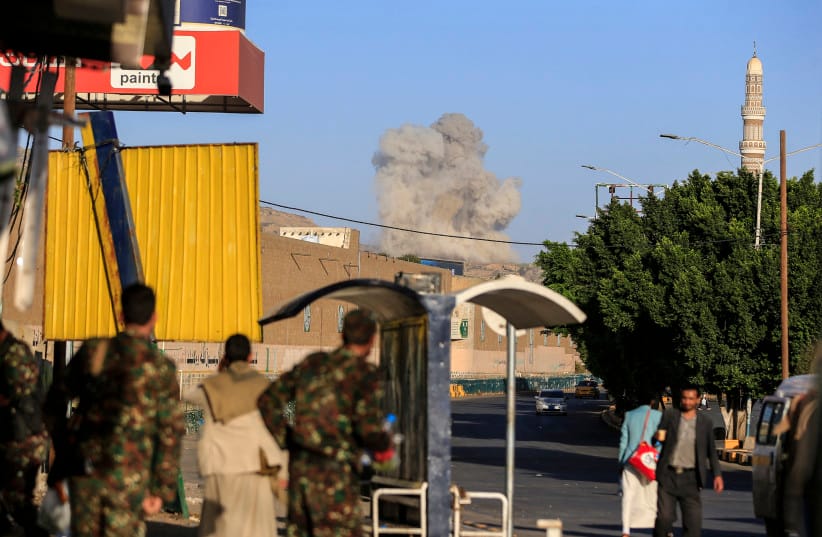
Saudi Arabia is already weighing how to respond to the threat posed by the Houthis, who have targeted Saudi airports in recent days, killing and wounding people.
Could renewed strikes produce different results?
The central question is whether renewed US or Israeli military operations against Iran would achieve more lasting results than previous campaigns.
Iran is seeking to rebuild its capabilities while adapting to lessons learned from earlier confrontations. Those efforts include expanding its drone arsenal alongside its missile programs.
Tehran has also demonstrated its ability to strike US military bases across the region.
Iranian officials can assess publicly available reports describing damage to US facilities and aircraft, as well as the repositioning of American military assets following previous attacks.
Such information could help Tehran evaluate the effectiveness of its operations and shape its preparations for another confrontation.
The challenge for Washington and Jerusalem is therefore not simply whether they can strike Iranian military infrastructure again, but whether renewed operations would prevent Iran from rebuilding its capabilities and threatening US forces, Israel, and neighboring countries.