Energy costs and the AI construction boom threaten to prolong inflation, putting more pressure on business borrowing.
October 13, 2026
BOSTON — Boston Federal Reserve President Susan Collins said Tuesday she expects interest rates will need to rise further before the end of 2026, keeping the prospect of higher financing costs hanging over businesses and households.
Speaking at the Boston Fed’s annual regional and community bankers conference, Collins supported September’s quarter-point increase and said further tightening would likely be appropriate. She left the timing dependent on incoming economic data. The Fed’s benchmark range stands at 3.75% to 4%.
“I also currently expect that it will be appropriate to raise rates a bit further before the end of the year,” Collins said.
Why Another Increase Is on the Table
Collins cited August annual inflation of 3.4% using the Fed’s preferred personal consumption expenditures measure. Core inflation, excluding food and energy, was 3%.
Although recent short-term readings improved, she warned that rising diesel, jet fuel and heating oil prices, together with data-center construction, could sustain price pressures. She described employment as broadly balanced and continued healthy growth as her most likely outlook, giving the Fed room to concentrate on inflation.
What It Means for Businesses
For companies carrying floating-rate debt, another increase could raise the cost of financing inventory, equipment and everyday operations. Businesses approaching a loan renewal could face higher payments even if their borrowing balance stays unchanged.
As an illustration, a quarter-point increase passed through fully to a $1 million floating-rate loan adds $2,500 in annual interest expense. Across several credit facilities, that can reduce the money available for hiring or expansion.
Energy expenses create another squeeze. A distributor paying more for diesel while its credit line becomes more expensive faces pressure on both operating costs and financing. Passing those expenses to customers can protect margins, but also risks weakening sales.
What Borrowers Should Watch
Collins’s comments signal her policy preference; they do not establish a new Fed decision or guarantee a particular increase.
For business owners, the practical issue is when existing debt reprices. A fixed-rate loan retains its contracted rate, while a variable-rate facility can adjust according to its terms. Refinancing exposes borrowers to the rates and lending conditions available when the replacement loan closes.
The next inflation and employment reports will help determine whether Collins’s expected increase becomes policy—and whether businesses finish the year facing another rise in borrowing costs.
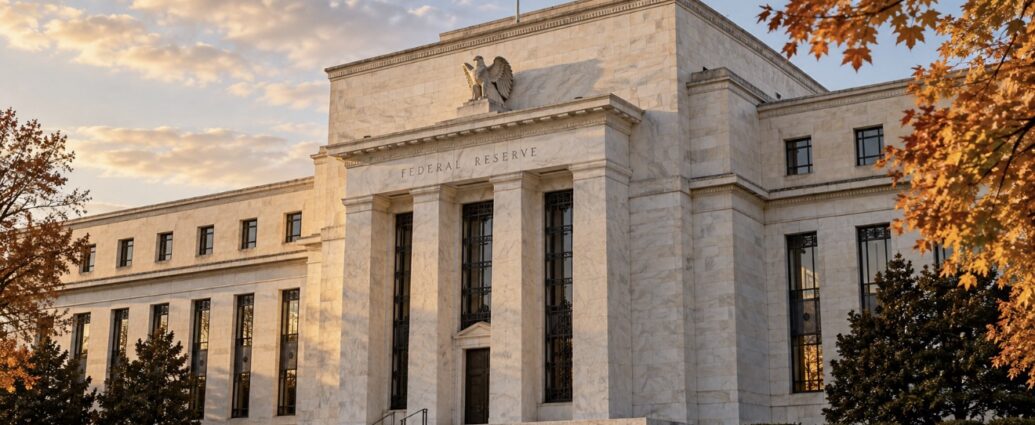
Image: AI-generated editorial illustration of the Federal Reserve building.
JBizNews Desk | Boston
© 2026 JBizNews. All rights reserved.