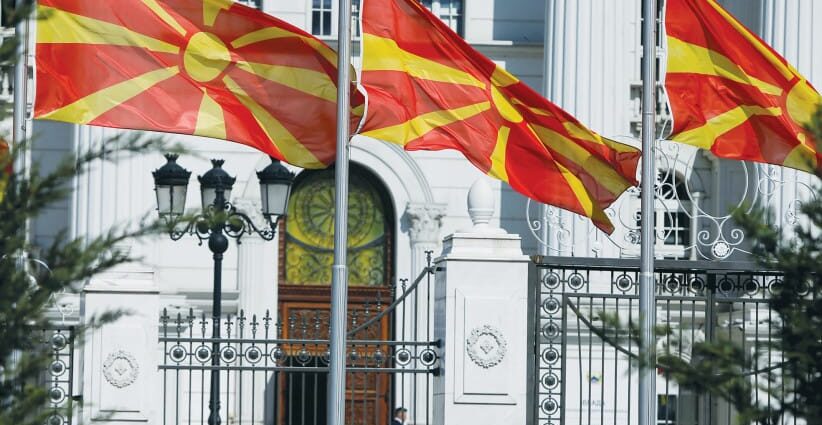
For most visitors, Israel is viewed through the prism of geopolitics and eternal conflict. For Orce Gjorgjievski, it is also like a classroom.
The mayor of Skopje, North Macedonia’s capital city, arrived in Israel this week to attend the gathering of global municipal leaders at MUNI EXPO 2026 in Tel Aviv with one goal: to study how Israeli cities confront some of the most demanding challenges any municipality can face. From emergency preparedness and crisis management to traffic, water management, and digital public services, Gjorgjievski believes Israeli local government offers lessons that extend well beyond the country’s unique security reality.
“I came to Israel with great respect and with a clear intention – to learn from experiences that are not only theoretical, but experiences created in real, difficult and complex circumstances,” Gjorgjievski told The Jerusalem Post.
MUNI EXPO, Israel’s flagship municipal conference, brings together mayors, local authority leaders, government officials, and innovators from around the world to exchange ideas on urban planning, sustainability, resilience, and the future of city governance. For Gjorgjievski, who became mayor of the City of Skopje late last year after previously leading the suburban municipality of Kisela Voda, the visit was an opportunity to see how Israeli municipalities continue to function under immense pressure while delivering the everyday services residents depend upon.
His interest lies in the practical side of municipal government.
Skopje, like many European capitals, faces familiar urban challenges
Skopje, like many European capitals, faces familiar urban challenges: traffic congestion, pollution, aging infrastructure, housing pressures, and the growing expectation that city governments should respond faster and more efficiently. Gjorgjievski says he believes Israel’s experience offers valuable insight, not simply because of the country’s technological achievements but because its municipalities have been forced to adapt under extraordinary circumstances.
“Israeli cities demonstrate something very important, and that is that local government must be prepared before a crisis happens, not improvise when it is already too late,” he said.
What impressed him most, he explained, was the level of organization, rapid response, and coordination between local authorities, emergency services, healthcare providers, and volunteer organizations.
“From Israel, we can learn that the resilience of a city is not built only through infrastructure, but also through discipline, trust, preparedness, and clear communication,” he said. “The city must be a living system that knows how to react, how to protect, and how to continue functioning.”
Those lessons, he says, apply just as much to natural disasters, cyberattacks, and infrastructure failures as they do to security emergencies.
Speaking with Gjorgjievski, one theme quickly emerges: he sees local government less through the lens of politics than through residents’ everyday experience.
Managing the greater Skopje metropolis, a city of over 500,000 residents, is a major leap, but Gjorgjievski credits his time in Kisela Voda with shaping his approach. While leading that southern suburb, he says, he discovered there is no such thing as a minor issue when it comes to public service.
“There I learned that there is no ‘small’ issue when it comes to citizens,” he told the Post. “For some people, it is a street; for others, it is a sidewalk; for others, it is a park; for others, it is a problem with waste or traffic. For the institution, it may be a case file, but for the citizen, it is everyday life.”
That perspective has shaped his first months leading the republic’s capital.
Skopje, he said, is “a living organism” made up of different municipalities, neighborhoods, and communities, each with its own priorities and expectations. The immediate challenge after taking office was restoring “order, trust, and the feeling that the city has someone taking care of it,” and Gjorgjievski’s approach is deliberately hands-on.
“I do not believe in politics from an office,” he explained. “I believe in fieldwork, in talking with people, and in solving problems step by step.”
That philosophy also explains why he was drawn to MUNI EXPO.
Rather than looking for broad theories about urban development, he came searching for ideas that can be implemented back home.
Among the areas he hopes to improve are crisis coordination between institutions, municipal technology, traffic management, waste collection, water resources, and public safety.
“For me, visits like this have value only if they lead to concrete ideas that will improve the lives of citizens,” he said. “Skopje deserves modern solutions.”
‘Concrete benefits for citizens’
Asked how he would describe his city to someone visiting for the first time, Gjorgjievski does not begin with infrastructure projects or investment figures. Instead, he speaks about its identity.
He describes Skopje as “a city of diversity, cultures, history, hospitality, and people who know how to welcome you with an open heart.”
That identity is evident throughout the city, from the centuries-old Old Bazaar and the historic Stone Bridge to Matka Canyon and Mount Vodno, which overlooks the capital. It is a city where Ottoman, Byzantine, and modern European influences continue to coexist.
At the same time, Gjorgjievski readily acknowledges that the city has significant work ahead.
He wants cleaner streets, better-maintained public spaces, more efficient public transport, additional green areas, and stronger infrastructure.
“My goal is for Skopje not to be a city that only has beautiful places, but a city that functions the way its citizens deserve.”
The various urban challenges facing European capitals, he argues, cannot be viewed in isolation.
Traffic contributes to pollution. Infrastructure influences quality of life. Urban planning shapes housing, green spaces, and mobility. The common denominator is whether a city functions efficiently enough to earn its residents’ confidence.
“If I have to single out one issue,” he said, “it is the functionality of the city. When a city does not function well, citizens lose time, nerves, health, and trust in institutions.”
That, in turn, has reinforced his interest in Israeli innovation.
Israel’s reputation as the “Start-Up Nation” is well known, but Gjorgjievski’s interest is focused on how innovation can improve municipal government rather than simply drive economic growth.
He points to digital traffic monitoring, smart waste management, water management, energy efficiency, rapid-response systems, and digital public services as areas where Israeli expertise could help cities such as Skopje modernize.
“Citizens should not lose time at counters,” he said. “They should not wait for days for information. Institutions should not react slowly when technology already offers faster solutions.”
Technology, he argues, should become an everyday tool that makes local government “more organized, more transparent and closer to citizens.”
That philosophy also underpins his vision for closer cooperation between North Macedonia and Israel.
Gjorgjievski believes ties between the two countries should increasingly be built city-to-city, with municipalities exchanging expertise in areas including water management, tourism, digital services, energy efficiency, innovation, and security. He also welcomed the prospect of Skopje one day becoming twinned with an Israeli city.
Such partnerships, he said, should extend far beyond ceremonial agreements.
“They should mean real cooperation, the exchange of experiences, projects, knowledge, and concrete benefits for citizens,” he said, adding that “the friendship between Macedonia and Israel should also be deepened at the local level because cities are closest to citizens.”
‘An attack on the values of Skopje’
Gjorgjievski’s visit to Israel came just weeks after an incident that challenged one of the values he says defines his city.
In April, two men poured an accelerant around the entrance of Skopje’s synagogue and Jewish Community Center before hurling a firebomb at the building. While the blaze charred the entrance and courtyard, firefighters prevented it from spreading to the interior. Authorities later arrested several suspects, charging two men with terrorism.
For North Macedonia’s Jewish community, which only numbers in the hundreds and was decimated by the Holocaust, however, the significance of the attack extended well beyond the physical damage.
Community leaders described it as the first such assault on Jewish communal life in the country’s modern history. Shortly afterward, Harakat Ashab al-Yamin al-Islamia (HAYI), an alleged Iranian front group, claimed responsibility, describing the Jewish Community Center as a symbol of the connection between the local Jewish community and Israel.
Gjorgjievski says his reaction was immediate.
“My reaction was clear and human – shock, concern, and the strongest condemnation,” he said.
“Such an act is not an attack only on one building or one community. It is an attack on the values of Skopje, on peace, coexistence, and the dignity of all our citizens.”
He described the Jewish community as “an important and respected part of our city and state history,” adding that “antisemitism, hatred, and violence have no place in Skopje.”
The attack touched a particularly sensitive chapter in the country’s history.
In March 1943, more than 7,000 Jews from what is now North Macedonia were deported to the Treblinka extermination camp during the Bulgarian occupation. Virtually none returned.
Today, that history is preserved at the Holocaust Memorial Center for the Jews of Macedonia, which opened in central Skopje in 2011 on the site of the city’s former Jewish quarter. Widely regarded as one of Europe’s strongest examples of Holocaust-era restitution, North Macedonia’s legislation enabled heirless Jewish property to be returned to the Jewish community, helping fund both the memorial and wider communal life. The museum also houses the ashes of Macedonian Jews murdered at Treblinka.
Gjorgjievski says he believes that history places a responsibility on today’s leaders.
“That is a wound that must not be forgotten,” he told the Post. “The memory of our fellow Jewish citizens is part of Macedonia’s collective memory, but also our moral obligation to remember, to respect and never to allow hatred, antisemitism, and evil to be repeated.”
He noted that today, the country’s largest Jewish community lives in Skopje, and described its members as “highly respected and valued citizens” whose culture and traditions continue to enrich Macedonian society. The community also includes Jewish MP and former minister Rashela Mizrahi.
Asked what message he wanted to send following the attempted arson attack, Gjorgjievski’s answer was brief.
“My message is simple and sincere: you are not alone.
“The Jewish community in Skopje is part of our city, part of our history, and part of our common future.
“As mayor, I have an obligation to ensure that every citizen feels safe, respected, and welcome. No one should live in fear because of their faith, tradition, origin, or identity.”
For Gjorgjievski, combating antisemitism also requires education. The Holocaust Memorial Center, he argued, should serve as more than a place of remembrance.
“When young people learn about the Holocaust, they do not learn only about one tragedy,” he said.
“They learn how far hatred can go when it is allowed to become normal. They learn why silence is dangerous. They learn why human dignity must always be defended.”
He believes the museum should remain “a living place of education, dialogue, and warning,” adding that “contemporary antisemitism is not defeated only through condemnation. It is defeated through knowledge, education, a culture of respect, and a clear institutional response.”
Those themes – preparedness, trust, and responsibility – are the same ones Gjorgjievski returned to throughout his visit to Israel.
Whether discussing emergency management, technology, or protecting minority communities, he repeatedly framed the role of local government in practical terms: creating cities that function, respond, and earn the confidence of the people they serve.
Asked what success would look like when his time as mayor eventually comes to an end, he again avoided sweeping political ambitions.
“I would like my legacy to be simple and visible – for Skopje to once again become a city with order, dignity, and a clear direction,” he said.
He hopes residents will remember reconstructed streets, renovated parks, better public transport, improved safety, and institutions that are closer to citizens.
Ultimately, however, he returns to the reason he came to Jerusalem.
“For me, visits like this have value only if they lead to concrete ideas that will improve the lives of citizens,” he deliberated.
“Skopje deserves modern solutions.”