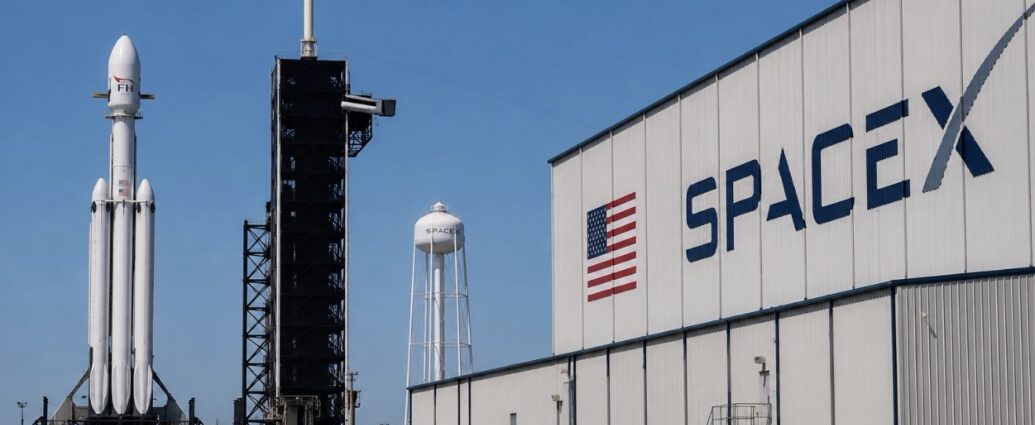
According to analyst reports released Tuesday, July 7, following SpaceX’s IPO quiet period, Wall Street is sharply divided over just how valuable the company can become. Brian Gesuale of Raymond James initiated coverage with a “Strong Buy” rating and an $800 price target — the highest on Wall Street and roughly 430% above where the stock traded during Tuesday’s session. If shares ever reached that level, SpaceX would carry a market value of roughly $10.5 trillion, more than double the current value of Nvidia, the world’s largest publicly traded company.
The bullish call came as several investment banks published their first research reports on the newly public company. Morgan Stanley assigned a $300 price target, highlighting SpaceX’s long-term potential in launch services, satellite communications and artificial intelligence infrastructure. Goldman Sachs set a $205 target, while UBS came in at $210. Dan Ives of Wedbush Securities issued a $190 target. The company also joined the Nasdaq-100 Index, prompting billions of dollars in automatic purchases from index funds and exchange-traded funds that track the benchmark.
SpaceX completed its blockbuster initial public offering on June 12 under the ticker SPCX, becoming one of the largest IPOs ever. After an initial rally, the shares settled into a volatile trading range as investors weighed the company’s growth prospects against its lofty valuation.
The investment case extends far beyond rockets. SpaceX now combines its reusable launch business with the rapidly expanding Starlink satellite network and xAI, the artificial intelligence company merged into the business earlier this year. Chief Executive Elon Musk has outlined plans for space-based computing infrastructure capable of supporting next-generation AI workloads, while company filings describe an addressable market measured in the tens of trillions of dollars.
Not everyone believes those projections. Aswath Damodaran, professor of finance at New York University and one of Wall Street’s leading valuation experts, has argued that even a valuation above $1 trillion stretches reasonable assumptions. He has also questioned the company’s addressable market estimates, saying investors should distinguish between long-term vision and measurable financial performance.
The financial metrics illustrate the challenge. SpaceX generated approximately $18.7 billion in revenue last year while posting a net loss of roughly $5 billion. Even after its recent pullback, the shares continue to trade at a valuation far above most established technology companies on a price-to-sales basis. Morningstar analysts have likewise projected a more gradual revenue trajectory than many of the most optimistic forecasts currently circulating on Wall Street.
Investors also face structural risks. Additional insider shares are scheduled to become eligible for sale over the coming quarters, potentially increasing supply in the market. Meanwhile, Musk retains overwhelming voting control through the company’s dual-class share structure, limiting the influence of public shareholders on corporate decisions.
The debate carries consequences well beyond professional investors. With SpaceX now included in the Nasdaq-100, millions of Americans indirectly own shares through retirement accounts, pension funds and index funds. That broad ownership has renewed discussion in Washington over valuations, corporate governance and whether highly valued growth companies should become major components of passive investment portfolios so soon after going public.
For now, the gap between Wall Street’s highest and lowest expectations remains extraordinary. One respected analyst believes SpaceX could become the first company worth more than $10 trillion. Others believe investors have already priced in years of future growth. As the company begins life as a public corporation, the market will ultimately decide which view proves closer to reality.
JBizNews Desk | New York
© JBizNews.com All Rights Reserved. Reproduction or distribution without written permission is prohibited.