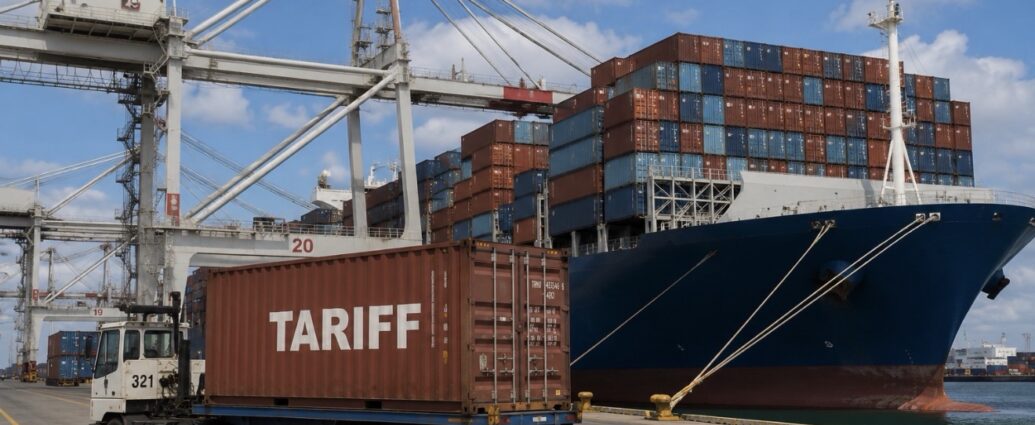
WASHINGTON, D.C. — The flat tariff that has governed nearly every import entering the United States since winter is set to vanish this week, and the administration is racing against its own calendar to determine what takes its place. The 10 percent Section 122 surcharge expires by law at 12:01 a.m. on Friday, July 24, a hard statutory deadline that the president cannot extend on his own — and its lapse could reshape the cost of imported goods almost overnight.
The surcharge has an unusual origin. After the Supreme Court struck down the administration’s earlier tariffs in February, ruling 6 to 3 that emergency economic powers did not authorize the president to impose them, the White House turned within hours to Section 122 of the Trade Act of 1974. That provision allows a temporary import surcharge to address international payment problems, but it comes with a strict ceiling: 150 days, after which only an act of Congress can keep it alive. Those 150 days run out Friday, and Congress has shown no appetite to extend the measure.
The practical stakes are large. Trade-weighted estimates suggest the average effective U.S. tariff rate could fall from roughly 13 percent to around 7 percent the moment Section 122 lapses, a swing that would ripple through import costs, retail pricing, and corporate margins across the economy. For importers, that represents either a meaningful reprieve or a fresh bout of uncertainty, depending on what the administration announces in the narrow window before the deadline.
That is where today’s date becomes pivotal. The Office of the U.S. Trade Representative faces a July 20 completion deadline on a pair of Section 301 investigations designed to serve as the surcharge’s successor. Those probes, opened in March, examine excess manufacturing capacity across 16 economies and forced-labor enforcement spanning more than 60 countries. The proposal on the table would impose 12.5 percent duties on 46 nations, a list that includes China, Vietnam, India, Thailand, Japan, and South Korea. Unlike the emergency authority the courts rejected, Section 301 rests on firmer legal ground, giving the administration a more durable foundation for keeping tariffs in place.
The maneuvering reflects a broader strategy of statute-shopping. Having lost its primary tariff tool at the Supreme Court, the administration has moved methodically through the trade code, invoking one authority after another to preserve its leverage. Section 232, which covers steel, aluminum, automobiles, and semiconductors, remains untouched by the recent legal turmoil and continues to operate under separate authority. A new set of Section 232 tariffs on pharmaceuticals, structured with tiered rates, is scheduled to take effect July 31, just a week after the Section 122 cliff.
For businesses, the compressed timeline is a planning nightmare. Companies that import from the countries targeted by the proposed Section 301 duties must weigh the possibility that their costs stay roughly flat, drop sharply, or shift onto an entirely different legal footing within the span of a few days. Procurement teams have been urged to mark the July 24 date carefully and to protect their positions on entries already made, since a parallel court challenge to Section 122 could eventually affect refund rights for tariffs paid while the surcharge was in force.
The lack of certainty is itself a cost. Firms that cannot predict their duty exposure struggle to price contracts, manage inventory, and commit to supply arrangements, and the whipsaw between tariff regimes makes long-term sourcing decisions harder to justify. Retailers weighing holiday-season orders and manufacturers locking in component supplies are both operating without a clear read on what the coming weeks will bring.
What happens next hinges on choices being finalized in Washington right now. The surcharge can expire as scheduled and leave a lower baseline rate, or the administration can roll out its Section 301 replacement and hold effective tariffs closer to current levels. Either way, the next several days will set the terms of trade for the remainder of the year — and importers are watching the clock as closely as the policymakers running it.
JBizNews Desk | Washington, D.C.
© JBizNews.com All Rights Reserved. Reproduction or distribution without written permission is prohibited.