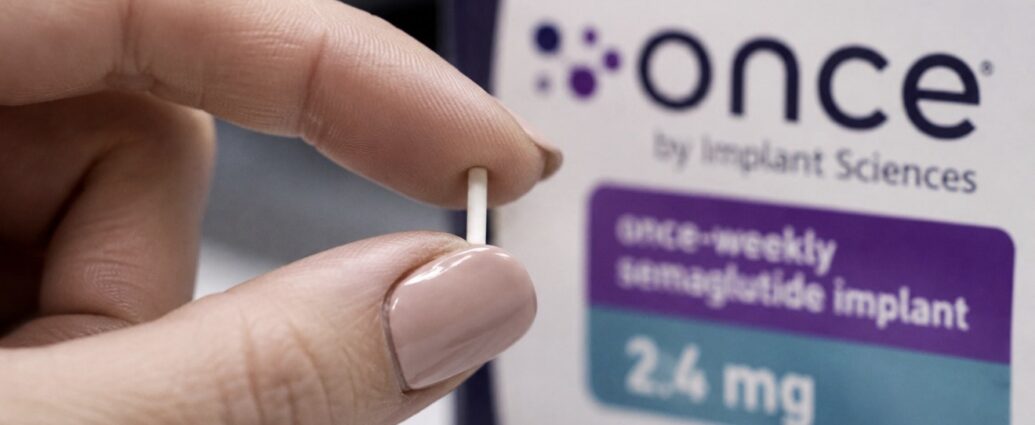
Vivani Medical is wagering that a matchstick-sized device tucked under the skin can fix the costliest weakness of the blockbuster weight-loss drugs: keeping patients on them long enough to hold onto the pounds they shed. On Tuesday, July 7, the Alameda, California biopharmaceutical company said it had signed an agreement letting Novo Nordisk run an internal evaluation of NPM-139, its experimental implant that releases semaglutide — the same molecule inside Novo’s Wegovy obesity injection and Ozempic diabetes shot — in a slow, steady dose over six months to a year. Adam Mendelsohn, Vivani’s president and chief executive, said the deal reflects Novo’s interest in the platform and reinforces the company’s confidence in a “market opportunity” for a treatment patients could receive once or twice a year.
The pitch is aimed squarely at a real and expensive problem. Real-world studies show that up to 65% of GLP-1 users stop treatment within a year of starting, driven off by cost, gastrointestinal side effects and the burden of weekly injections. One large analysis of more than 125,000 patients found 64.8% of those without type 2 diabetes discontinued within a year, versus 46.5% of those with diabetes. The consequences show up on the scale: withdrawal trials such as STEP 4 and SURMOUNT-4 found that roughly two-thirds of lost weight is regained within a year of stopping, often erasing the metabolic gains that made the drugs so sought after in the first place. An implant that delivers the medicine automatically for months removes the daily and weekly decision-making that trips patients up.
Vivani’s device is essentially a tiny titanium reservoir preloaded with a fixed dose of semaglutide, built on the company’s proprietary NanoPortal platform, which is designed to leak the drug out at a controlled rate. Mendelsohn has argued the approach could also blunt the nausea and other side effects tied to the peaks and troughs of injections, and the company says the implant can be removed or swapped for a higher or lower dose if needed — a feature it frames as giving patients the “peace of mind” of stopping whenever necessary. Skeptics note the flip side: those insertion and removal procedures add friction for patients and clinicians that a self-administered pen does not.
The Novo agreement carries no exclusivity, licensing terms or upfront payment, and amounts to the world’s dominant obesity player kicking the tires rather than committing. Novo confirmed the arrangement and said it aims to complement its own research with outside innovation. Still, for a company Vivani’s size, the validation matters. The stock closed near $1.60 on July 8, giving the clinical-stage firm a market value of roughly $116 million — a rounding error against a GLP-1 market that some analysts project could top $100 billion by the early 2030s. Lake Street rates the shares a buy with a $4 price target, though the company still carries no revenue and steady losses.
The science remains early. In June, an Australian human research ethics committee cleared Vivani to begin SLIM-1, the first human study of the semaglutide implant. The Phase 1 trial, expected to start in mid-2026, will enroll about 20 overweight or obese adults who have never taken a GLP-1, testing the implant’s safety, tolerability and drug levels against a low starting dose of Wegovy over four weeks. Vivani chose Australia partly to tap government research tax incentives. Preclinical work has been encouraging — a single implant produced more than 20% sham-adjusted weight loss sustained for a full year in animals — but human efficacy is unproven, and the road from a four-week safety readout to a marketable product runs through a Phase 2 dose-ranging study and years of larger trials.
For the broader industry, Vivani’s bet underscores where the obesity gold rush is heading next. The first wave of competition was about who could produce the most weight loss; Wegovy has averaged about 15% over 68 weeks, reaching nearly 28% at a higher dose. The next battle is durability and adherence — turning a drug people quit into a therapy people stay on. Whether the answer is an implant, a cheaper oral pill, or better insurance coverage is unsettled, and questions about the implant’s eventual price and reimbursement remain wide open. But the maintenance problem is now the field’s central commercial question, and a small California biotech has put a physical device on the table as one possible fix. With Novo Nordisk watching, the coming Phase 1 data will determine whether the idea graduates from intriguing to investable.
JBizNews Desk | New York © JBizNews.com All Rights Reserved. Reproduction or distribution without written permission is prohibited.