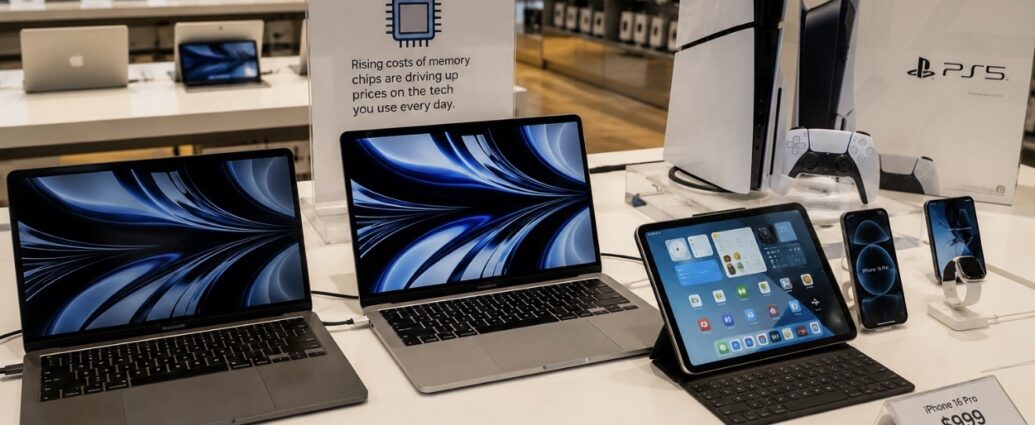
The artificial intelligence spending boom is now reaching into consumers’ wallets, driving up the prices of laptops, smartphones and video-game consoles as memory chips become scarcer and more expensive. Apple raised prices on its iPad and MacBook lines on Thursday, saying it could no longer absorb soaring memory and storage chip costs. In a statement, the company said the consumer-electronics industry is facing an unprecedented supply squeeze, adding, “We have never seen a component price increase this much, this quickly.” The new MacBook Neo now costs $150 more than before.
The shortage stems from the explosive demand for AI infrastructure. The world’s three largest memory-chip manufacturers—Samsung Electronics, SK Hynix and Micron Technology—are dedicating increasing amounts of production capacity to the high-performance memory used in AI servers built for companies such as Microsoft, Google, Meta and Amazon. Every production wafer directed toward advanced AI memory leaves fewer chips available for everyday consumer electronics, creating tighter supply and higher prices across the technology market.
Research firm Gartner projects the shortage will reduce global personal-computer shipments by 10.4% and smartphone shipments by 8.4% during 2026, while increasing average PC prices by about 17% and smartphone prices by roughly 13% compared with last year.
Ranjit Atwal, a senior analyst at Gartner, said both the size and expected duration of the shortage distinguish it from previous chip cycles. While some retailers built inventories earlier this year, he warned that those supplies are limited and higher prices are expected to spread across retail shelves through 2027.
Gaming companies are already passing those higher costs on to consumers.
Sony recently increased the price of its PlayStation 5 by $100, bringing the standard model to $649.99, while also raising the price of its PlayStation Portal handheld device to $249.99.
Microsoft announced price increases ranging from $100 to $150 across several Xbox models and discontinued its highest-end console. The company warned customers that additional price increases could follow later this year as hardware costs continue rising.
Nintendo has also raised pricing on its Switch 2, citing higher component costs, exchange-rate movements and tariffs.
The pressure extends throughout the personal-computer industry.
Manufacturers including Lenovo, Dell, HP, Acer and ASUS have all warned customers about rising component costs and have implemented price increases generally ranging between 15% and 20%, according to research firm IDC.
Memory chips now represent a larger share of the total cost of producing modern computers than in previous years, meaning higher chip prices flow quickly into retail pricing.
The timing is especially difficult because manufacturers are simultaneously promoting a new generation of AI-capable computers while consumers upgrade systems ahead of the end of support for older Windows versions.
Consumers may also notice other changes beyond higher prices.
Industry analysts expect manufacturers to reduce standard storage capacity on entry-level devices, promote older models for longer periods, expand sales of refurbished equipment and slow the pace of new product introductions until component supplies improve.
Budget-conscious shoppers are likely to feel the greatest impact because lower-priced devices leave manufacturers with less flexibility to absorb rising costs.
The situation illustrates how the AI boom is increasingly affecting everyday consumers.
While much of the discussion surrounding artificial intelligence has focused on stock prices, data centers and corporate investment, the enormous demand for advanced memory chips is now influencing the cost of many products families purchase every day.
Until manufacturers significantly expand memory-chip production—a process expected to take several years—higher prices for laptops, smartphones and gaming systems are likely to remain part of the technology landscape.
JBizNews Desk
© JBizNews.com All Rights Reserved. Reproduction or distribution without written permission is prohibited.