
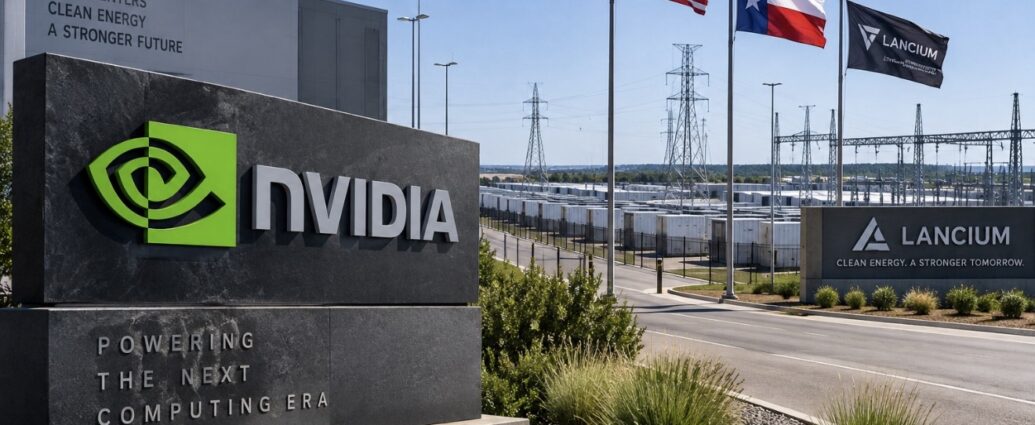
Nvidia plans to invest as much as $3 billion in Lancium, the Texas power-infrastructure developer behind a major Stargate data-center campus, pushing the world’s most valuable AI chipmaker deeper into the electricity and real-estate bottlenecks now limiting artificial-intelligence expansion.
The reported deal calls for Nvidia to initially invest $2 billion for roughly a 20% stake in Lancium, with another $1 billion available if the company reaches additional milestones. Lancium develops large-scale power infrastructure and is helping build the Abilene, Texas, campus tied to Stargate, the AI infrastructure venture backed by OpenAI, SoftBank and Oracle.
The significance is that Nvidia is no longer limiting its strategy to selling chips into the AI boom. The company is increasingly investing across the infrastructure needed to make those chips useful, including data-center operators, networking companies and now the power systems that determine where new computing capacity can actually be built.
Electricity has become one of the biggest constraints on AI expansion. Developers can buy servers faster than utilities can always provide new generation, substations and transmission capacity. That has made land with secured power access dramatically more valuable and turned grid connections into strategic assets.
For Nvidia, the investment helps protect demand for its own processors. A data center that cannot obtain enough electricity cannot install more GPUs, regardless of how strong customer demand may be. Supporting companies that solve those infrastructure problems therefore helps expand the market Nvidia ultimately sells into.
The strategy is also becoming more expensive. Nvidia has made dozens of private-company investments across the AI ecosystem, raising questions among investors about how aggressively the company should deploy its enormous cash generation outside its core chip business. Nvidia shares slipped Monday as investors assessed the reported Lancium deal alongside its broader investment program.
For utilities, developers and infrastructure investors, the larger message is clear: AI capital is moving downstream. The next wave of spending is increasingly reaching electricity generation, transmission, cooling, land and construction rather than stopping at semiconductor manufacturers.
That broadens both the opportunity and the risk. If AI demand continues rising, companies controlling scarce power and data-center capacity could become some of the biggest beneficiaries. If expectations fall short, those same multibillion-dollar infrastructure commitments could leave investors holding expensive assets built around growth assumptions that never fully materialize.
JBizNews Desk | Texas
© JBizNews.com All Rights Reserved.
Reproduction or distribution without written permission is prohibited.




