
A federal lawsuit filed October 2 against McDonald’s is putting computer-assisted food pricing under fresh scrutiny, alleging that a shared recommendation system helps restaurants coordinate higher menu prices. McDonald’s disputes the allegations and says franchisees independently decide what customers pay.
The case arrives as retailers expand digital pricing tools and states restrict the use of shoppers’ personal information to set prices. For businesses, the technology promises faster decisions and more efficient inventory management. For households, the central question is whether prices reflect ordinary competition or information customers cannot see.
The McDonald’s complaint, filed by Illinois customer Michael Thomas in the Northern District of Illinois, alleges that the company combines nonpublic restaurant data in a pricing platform and uses its influence over franchisees to encourage adoption of recommended prices. It seeks damages through a proposed class action.
Those are allegations, not findings of illegal conduct. In an October 1 explanation of its pricing practices, McDonald’s said its tools provide restaurant-specific recommendations that franchisees may accept or reject. The company says it does not use dynamic pricing, change prices in real time or determine prices according to an individual customer’s willingness to pay.
That distinction matters because several different technologies are being grouped together in the public debate.
Dynamic pricing changes a price according to conditions such as demand, available supply or competitors’ prices. Personalized pricing uses information associated with a particular customer to determine an offer. A pricing recommendation shared among businesses raises a separate question: whether those businesses are making independent decisions or coordinating prices.
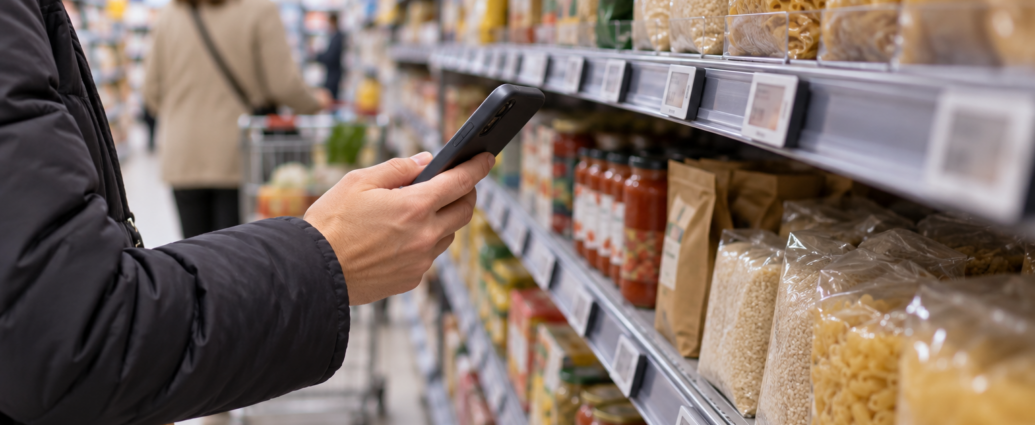
Electronic shelf labels are another tool altogether. They display prices digitally, allowing stores to update approved prices without replacing paper tags throughout an aisle. Their presence does not establish that a retailer uses artificial intelligence, customer profiling or demand-based price increases.
Walmart says its digital shelf labels display the same price for every customer and do not contain cameras, microphones or facial-recognition systems. The company says approved pricing updates remain subject to associate review.
Digital tools can also support discounts. In April, Flashfood announced that its surplus-food marketplace had expanded across more than 100 Kroger stores in the Mid-Atlantic division. The service connects shoppers with discounted groceries and helps retailers recover value from food that might otherwise be wasted.
The strongest recent example of shoppers seeing different online grocery prices came from an investigation published in December 2025 by Consumer Reports, Groundwork Collaborative and More Perfect Union.
Researchers recruited 437 shoppers for simultaneous shopping tests at selected stores on Instacart. Nearly three-quarters of tested grocery items appeared at multiple prices, with some offered at as many as five price points.
One box of corn flakes appeared at $2.99, $3.49 and $3.69 from the same store. The highest offer was 70 cents, or about 23%, above the lowest.
The researchers estimated that recurring basket-price differences could amount to approximately $1,200 a year for a household of four. That was an extrapolation from their tests, not a measured annual loss for every household.
Instacart disputes that characterization. It says the experiments randomly assigned shoppers to test groups, did not use personal or demographic information to set prices and did not increase overall grocery prices. It also rejects the claim that families paid $1,200 more annually because of the tests.
The company ended the item-price testing program in December 2025. The episode therefore demonstrates price differences observed during discontinued experiments; it does not establish that Instacart currently charges individuals according to their personal profiles.
States are drawing different boundaries around these practices.
New York’s disclosure law, effective since November 10, 2025, requires covered businesses to notify consumers when an algorithm uses their personal data to set an individualized price. A disclosure requirement is different from a prohibition.
Maryland’s law took effect October 1. It restricts covered grocery retailers and third-party food delivery services from using personal data to charge higher prices for covered food, while allowing specified exceptions, including voluntary loyalty programs and certain differences based on costs, supply or location.
New Jersey signed its Fair Price Protection Act in July, targeting individualized pricing based on personal data for groceries and necessities. It also imposed a one-year moratorium on new electronic shelf-label use while allowing existing labels to remain in operation.
The implications extend to inflation measurement. Bank of England researchers warned this year that increasingly individualized prices could make aggregate inflation figures less representative of households’ experiences. They also noted that statistical agencies are adapting through more detailed transaction data.
For shoppers, comparing the same item across stores and delivery platforms remains useful, but a price difference alone does not prove surveillance pricing. Delivery markups, membership discounts and local costs can also explain a gap.
The unresolved issue is how courts and regulators distinguish legitimate price analysis from unlawful coordination or misuse of personal data. The McDonald’s case now puts that boundary before a federal court.
JBizNews Desk | New York
© JBizNews.com. All rights reserved. This article is original reporting by JBizNews Desk. Unauthorized reproduction or redistribution is strictly prohibited.




