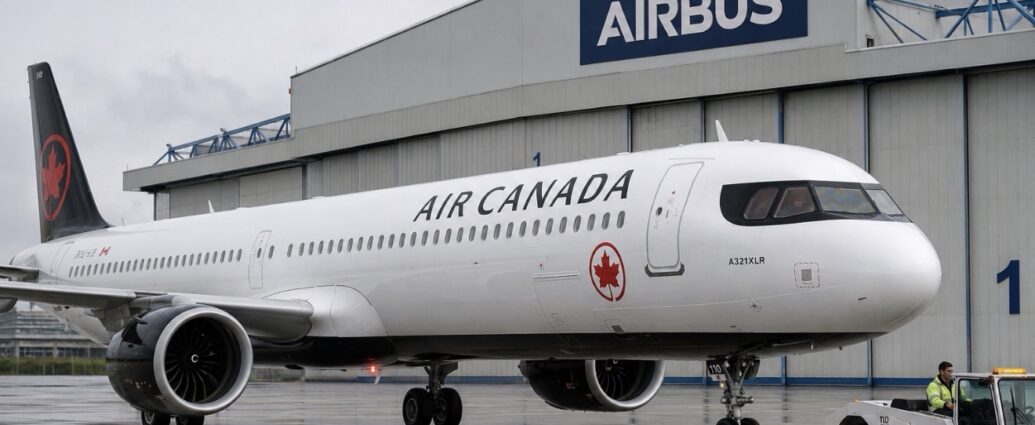
MONTREAL — June 2026
Air Canada is wagering that a new generation of fuel-efficient aircraft can unlock routes that larger jets could never profitably serve nonstop.
The carrier took delivery of its first Airbus A321XLR in Hamburg, Germany, on April 24, 2026, and officially entered the aircraft into service this month, marking the beginning of a fleet strategy designed to connect Canada directly with smaller European destinations. The airline has ordered 30 A321XLR aircraft and becomes the first Canadian carrier to operate the type.
The significance of the aircraft lies in its name. The “XLR” stands for Extra Long Range, allowing a narrowbody aircraft—the same basic size travelers typically associate with domestic flights—to remain airborne for up to nine hours nonstop.
That capability addresses a long-standing challenge for airlines. Traditional narrowbody aircraft lack the range to operate many transatlantic routes, while larger widebody jets such as the Boeing 787 Dreamliner often require significantly higher passenger volumes to operate profitably. The A321XLR sits directly between those two categories.
For airlines, the economics are compelling.
Configured with approximately 182 seats, the aircraft burns substantially less fuel than a widebody while requiring fewer passengers to fill seats. That makes it possible to profitably serve what the industry calls “long, thin” routes—city pairs with enough demand to justify nonstop service but not enough to support a larger aircraft.
That strategy is already reshaping Air Canada’s route map.
The aircraft’s inaugural route connected Montreal and Toulouse, France, followed by scheduled service between Montreal and Berlin beginning July 18 and Montreal and Nantes beginning July 22.
The airline plans to operate approximately 12 A321XLR routes during 2026, with nine serving Europe.
From Toronto, the aircraft will open new service to Copenhagen, Manchester, and London Heathrow. Additional routes from Halifax and Ottawa to Heathrow are expected later this year.
In some cases, the aircraft is helping preserve existing routes that may otherwise have become uneconomical. Air Canada plans to continue operating its Montreal-Dublin service during slower travel periods by utilizing the more efficient A321XLR instead of deploying a larger aircraft.
For travelers, the benefits extend beyond airline economics.
The aircraft enables direct service to destinations that previously required connections through major hubs, reducing travel time and avoiding some of the congestion associated with Europe’s busiest airports.
Recognizing concerns about long flights aboard a single-aisle aircraft, Air Canada has outfitted the jet with its newest cabin design, including large seatback entertainment screens throughout the aircraft and upgraded passenger amenities intended to create what the airline describes as a widebody-style experience.
The A321XLR also forms part of a broader modernization effort underway at Air Canada.
The aircraft joins the carrier’s growing fleet of Airbus A350s and Boeing 787 Dreamliners, while the airline simultaneously transfers all 51 Boeing 737 MAX 8 aircraft to its leisure-focused subsidiary, Air Canada Rouge.
The move is strategically important because the 737 MAX had been operating some transatlantic routes near the limits of its range. The A321XLR can comfortably perform those missions while allowing larger aircraft to be redeployed to higher-demand markets.
Air Canada has described the transition as part of its effort to build “one of the most modern and capable fleets in the industry.”
The airline’s bet reflects a broader shift occurring across global aviation.
By the end of March 2026, Airbus had secured more than 500 orders for the A321XLR worldwide as airlines increasingly embrace fuel-efficient narrowbody aircraft for routes once reserved exclusively for widebody jets.
Industry observers frequently compare the trend to the role once played by the Boeing 757, which pioneered many transatlantic narrowbody routes decades ago.
The timing is particularly notable given elevated fuel prices linked to ongoing instability in the Middle East.
With energy costs remaining volatile, aircraft capable of delivering meaningful fuel savings have become increasingly attractive. For airlines, the A321XLR offers a way to expand networks, test new destinations, and add service frequency without assuming the financial risks associated with operating larger aircraft.
For Air Canada, the strategy is straightforward: use a smaller, more efficient aircraft to open new markets, reduce operating costs, and pursue profitable growth city by city.
Whether the gamble pays off will become clearer as the remaining 29 aircraft join the fleet over the coming years. But the decision reflects where much of the airline industry increasingly believes the future lies—not in bigger airplanes, but in smarter and more efficient ones.
Montreal — JBizNews Desk
© JBizNews.com All Rights Reserved. Reproduction or distribution without written permission is prohibited.