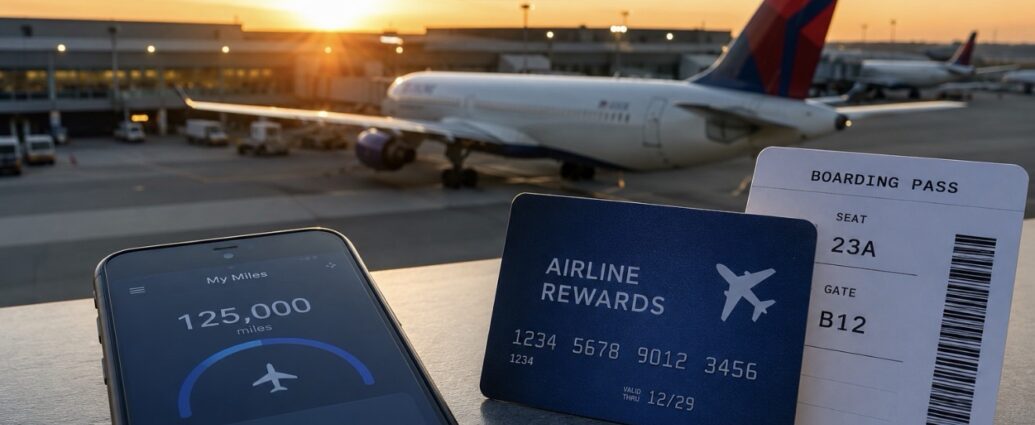
A record accumulation of airline reward points is helping power one of the busiest summer travel seasons on record, while transforming airline loyalty programs into some of the industry’s most valuable financial assets. Airlines now value outstanding customer loyalty points at approximately $38 billion, underscoring how credit card partnerships have become central to airline profitability and business strategy.
What was once viewed primarily as a customer rewards program has evolved into a multi-billion-dollar financial engine. Major airlines now generate billions of dollars annually by selling frequent flyer miles to banks, which in turn award those miles through co-branded credit cards. Every swipe of an affiliated credit card generates revenue for the airline, regardless of whether a customer books a flight.
The business has become so lucrative that airline executives increasingly factor loyalty program performance into major corporate decisions. Route planning, airport gate allocations, premium lounges, terminal expansion, and even international destination selection are now influenced by where an airline’s highest-value credit card customers live and travel.
JetBlue recently cited customer spending patterns from its TrueBlue credit card members as a factor in launching new service to Milan and Barcelona. Conversely, the airline also considered the number of co-branded credit card holders on certain routes when evaluating which markets to discontinue.
American Airlines has likewise intensified its efforts to expand at Chicago O’Hare International Airport, viewing the market as strategically important for growing its loyalty program and attracting additional credit card customers. Company executives have highlighted strong growth in new card signups in the Chicago market as a key business metric alongside passenger traffic.
Perhaps the clearest indication of the industry’s changing economics comes from airline-bank partnerships. Delta Air Lines disclosed that American Express is expected to pay the carrier approximately $9 billion this year for miles issued through Delta-branded credit cards, illustrating the enormous value financial institutions place on airline loyalty programs.
Those partnerships have also reshaped the customer experience. Airlines are increasingly reserving premium airport lounges, priority boarding, complimentary baggage, discounted award travel, and elite status benefits for travelers carrying co-branded credit cards. Several carriers have modified their loyalty programs so that credit card spending now plays a larger role than actual miles flown in earning elite status, further strengthening the connection between airline profitability and consumer spending habits.
The surge in reward point redemptions comes as airlines prepare for one of the strongest travel seasons in recent memory. American Airlines expects to operate its largest summer schedule ever, with thousands of daily flights serving millions of travelers as leisure demand remains robust despite higher airfares and broader economic uncertainty.
For investors, the trend highlights a significant shift in airline business models. Historically dependent almost entirely on ticket sales, carriers now derive substantial high-margin revenue from financial services partnerships. Industry analysts estimate airline loyalty programs can generate operating margins far exceeding those of passenger operations, providing airlines with a more stable source of income during periods of economic volatility.
For travelers, reward programs continue to offer significant value, particularly for those who accumulate points through everyday spending rather than frequent flying. At the same time, airlines continue refining redemption rules, premium benefits, and pricing models as loyalty programs become increasingly important to long-term corporate profitability.
The result is a fundamental transformation of the airline industry. Frequent flyer points are no longer simply a travel perk—they have become one of aviation’s most valuable financial assets, influencing everything from where airlines fly to how they compete for customers and generate billions of dollars beyond the sale of airline tickets.
JBizNews Desk | New York
© JBizNews.com All Rights Reserved. Reproduction or distribution without written permission is prohibited.