
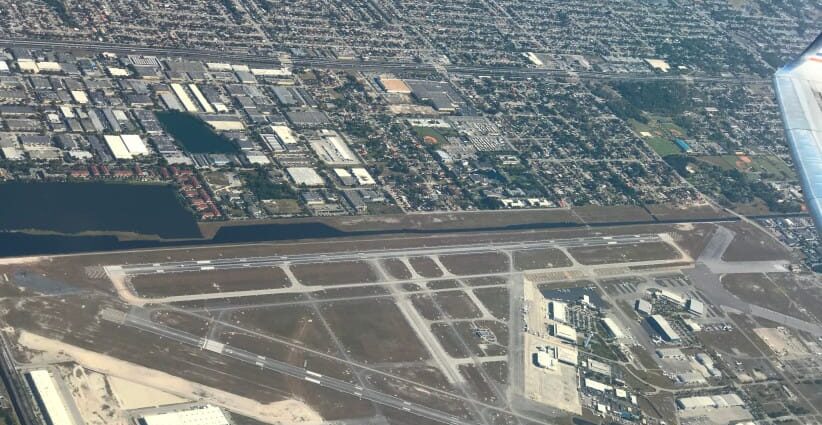
Most passengers look out an airplane window and see a long, black strip of asphalt. To many, it resembles an unusually wide road.
In reality, a runway is a highly complex, precise, and durable engineering structure. It must withstand enormous loads, extreme weather, and thousands of takeoffs and landings each year while maintaining exceptionally high safety standards.
Every runway is the result of years of planning, millions of hours of work, and hundreds of millions of dollars in investment. Here are some of the most fascinating facts about the place where every flight begins and ends.
A runway’s resemblance to a road is misleading. While an ordinary road is designed primarily for cars and trucks, a runway must accommodate aircraft weighing more than 500 tons. It must absorb repeated loads for decades while showing almost no deformation.
The visible surface is only the top layer of a much deeper, multilayered structure. Beneath the asphalt or concrete are thick layers of base material, crushed stone, soil-stabilizing materials, and drainage systems.
Depending on the soil and the aircraft expected to use the runway, the structure may extend as much as one or even two meters below the surface.
When a wide-body aircraft lands, each wheel may carry tens of tons. As the plane touches down at more than 250 kilometers per hour, an enormous amount of energy is transferred to the ground. This is one reason a runway must be considerably stronger than an ordinary highway.
Runways withstand enormous forces
Many people assume an aircraft’s weight presents the greatest challenge. In practice, some of the strongest stresses come from horizontal forces. During braking, the aircraft’s brakes, tires, and thrust reversers generate enormous shear forces across the runway surface.
Permitted variations in runway elevation are extremely small. Even a minor depression or slight bump can affect an aircraft traveling at high speed. Laser measurements of runway surfaces are therefore accurate to within millimeters.
Although a runway appears flat, it usually has gentle slopes that allow rainwater to drain quickly. This prevents water from accumulating on the surface and reduces the risk of skidding.
Many runways also have thousands of closely spaced grooves cut into their surfaces. The grooves help drain water, improve tire grip, and reduce the risk of skidding in wet conditions.
Large black patches are often visible near the beginning of the landing zone. These are not burn marks. They are layers of rubber left behind when aircraft tires first make contact with the ground.
At busy airports, enormous amounts of rubber accumulate and must be removed regularly to preserve runway friction.
Like a car, a runway requires regular maintenance. Crews inspect its friction, surface roughness, cracks, depressions, lighting, markings, and drainage systems. A runway may be closed to repair a minor defect before it becomes a larger problem.
One of aviation’s best-known dangers is foreign object debris on the runway. A bolt, a small stone, or a piece of metal can be sucked into a jet engine and cause severe damage. Runways are therefore inspected frequently for unusual objects, no matter how small.
Maintenance crews may also inspect a runway following an especially hard landing, a lightning strike, an unusual storm, or an earthquake.
Airports use specialized vehicles to measure a runway’s coefficient of friction. Some spray a measured amount of water onto the surface and test how the wheels respond, helping ensure that the runway provides the grip required under safety standards.
Hundreds of lights are installed along the runway, at its edges, and throughout the approach areas. Their colors, intensity, and placement are determined by international standards. They help pilots identify the runway in fog, rain, and darkness.
Sections where aircraft touch down or wait for takeoff may be specially reinforced to withstand heavier loads.
Like bridges, runways are affected by temperature changes. They expand slightly in summer and contract in winter. Engineers design them to withstand these movements without cracking.
Runway markings and symbols
The white stripes, runway numbers, centerlines, and touchdown-zone markings are not decorative elements. Each serves an operational purpose and gives pilots essential information about their position and stage of flight.
The numbers displayed at the beginning of a runway indicate its approximate compass direction. Runway 9 faces east, at 90 degrees. The same runway is marked 27 when approached from the opposite direction because it then faces 270 degrees, or west.
Building a runway for large aircraft can cost between $100 million and $300 million. The cost may be even higher when the project requires complex groundwork, advanced lighting systems, and additional infrastructure.
Per square meter, a runway generally costs several times as much as an ordinary road.
Constructing one involves far more than laying asphalt. The work requires extensive earthmoving, soil stabilization, drainage, electrical, lighting, and communications systems, as well as numerous strength and safety tests.
As a result, building a new runway can take two to four years.
At busy international airports, maintenance work is often carried out only at night. Once the final flight has departed, hundreds of workers, dozens of trucks, and heavy machinery move onto the runway.
Within six to eight hours, crews may remove old asphalt, lay a new surface, repaint markings, and complete inspections. By morning, the runway is back in service as though nothing had happened.
One of aviation’s greatest achievements is that most passengers barely think about the runway beneath them, even though they travel along it for less than a minute.
Beneath the aircraft’s wheels lies an enormous engineering system designed to withstand decades of extreme loads, changing weather, and thousands of takeoffs and landings each year.
The next time you look out an airplane window during takeoff or landing, you may see more than a strip of black asphalt. You may see one of the most impressive engineering projects ever built on the ground.




