By JBizNews Desk
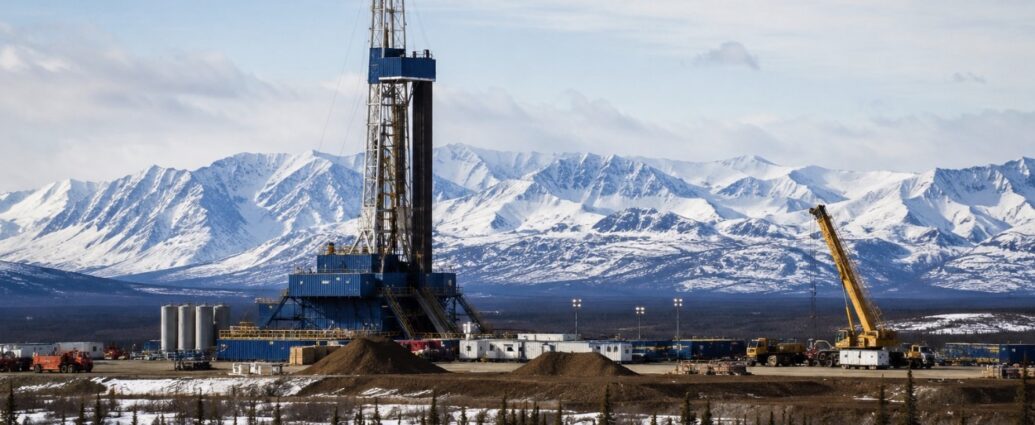
May 25, 2026 — Alaska’s long-dormant oil sector is experiencing its sharpest revival in nearly two decades as major discoveries, surging lease demand, elevated oil prices and accelerated federal permitting under the Trump administration pull capital and drilling activity back into the American Arctic.
Operators including ConocoPhillips, Santos Ltd., Repsol SA, Exxon Mobil Corp., Shell Plc and privately held Armstrong Oil & Gas are ramping up exploration and development programs across Alaska’s North Slope after a series of discoveries and lease sales reignited industry expectations for long-term production growth in the region.
The momentum accelerated in March when a lease auction inside the National Petroleum Reserve-Alaska (NPR-A) generated a record $164 million in winning bids, one of the strongest federal Arctic lease sales in modern history.
The revival marks a dramatic reversal for a basin many energy analysts believed was entering permanent decline.
Instead, the combination of new discoveries, stronger oil economics, geopolitical instability and aggressive permitting reforms is increasingly positioning Alaska once again as a strategic pillar of long-term American energy supply.
The clearest signal arrived May 18, when Australia-based Santos confirmed first oil production at its long-awaited Pikka development on Alaska’s North Slope — the first major new oil field brought online in the region in roughly twenty years.
Santos, which operates the project with a 51% stake alongside partner Repsol, is targeting plateau production of approximately 80,000 barrels per day later this year. Oil from Pikka flows through a newly constructed 22-mile pipeline connecting into the broader Trans-Alaska Pipeline System.
The company also confirmed successful appraisal drilling at its nearby Quokka discovery, which executives believe could eventually rival Pikka in production scale.
The discoveries are reviving optimism around Alaska’s broader resource base.
The U.S. Geological Survey estimates the NPR-A alone may contain roughly 8.8 billion barrels of technically recoverable oil — far more than many industry models assumed even a decade ago.
That resource potential is now intersecting with a dramatically more favorable political environment.
Under Interior Secretary Doug Burgum, the Trump administration has aggressively moved to accelerate energy permitting timelines throughout Alaska’s Arctic regions as part of its broader “American Energy Dominance” strategy.
Interior Department officials are developing a streamlined framework designed to allow qualifying North Slope projects to complete portions of environmental review and permitting in as little as 30 days through standardized programmatic analysis covering roads, well pads, pipelines and processing infrastructure.
The accelerated structure is expected to benefit projects including ConocoPhillips’ Willow development, additional Santos expansion phases and future drilling tied to acreage secured during the March lease sale.
The administration is also preparing a new offshore leasing framework through the Bureau of Ocean Energy Management that would reopen portions of Arctic territory previously restricted under both the Obama and Biden administrations.
The policy shift arrives at a moment when geopolitical instability has sharply increased strategic pressure for additional North American oil production.
The U.S.-Iran conflict and ongoing tensions surrounding the Strait of Hormuz have tightened global spare production capacity, revived energy-security concerns and pushed governments and investors to reassess the long-term importance of domestic supply.
Alaska’s revenue outlook has already improved materially as a result.
The Alaska Department of Revenue now forecasts Alaska North Slope crude prices averaging approximately $75 per barrel during fiscal 2026, including war-driven price spikes above $90 earlier this spring. Those assumptions translate into significantly higher royalty and severance-tax revenues for the state government after years of fiscal pressure tied to declining throughput in the Trans-Alaska Pipeline System.
For major operators, the opportunity is increasingly becoming difficult to ignore.
ConocoPhillips — currently the largest integrated producer on Alaska’s North Slope — said during first-quarter earnings that its massive Willow project reached roughly 50% completion during the winter construction season, with first production targeted for 2029.
Chief Executive Officer Ryan Lance also confirmed the company completed a four-well winter exploration program while securing what management described as “high-priority acreage” during the March NPR-A auction.
Combined with Pikka, Quokka and other adjacent discoveries, the projects could significantly reverse the long-running decline in North Slope production that has weighed on the Trans-Alaska Pipeline System for decades.
TAPS throughput has fallen from a peak above 2 million barrels per day in 1988 to roughly 475,000 barrels per day in recent years, forcing pipeline operators to engineer around low-flow risks including freezing and viscosity challenges.
New production from Willow, Pikka and future NPR-A developments could potentially push pipeline throughput back above 500,000 barrels per day for the first time in years while materially extending the system’s long-term economic viability.
The industry optimism, however, is colliding with growing legal and environmental resistance.
Groups including the Natural Resources Defense Council, Center for Biological Diversity, Friends of the Earth and several Alaska Native organizations have filed multiple lawsuits challenging expanded Arctic leasing and drilling approvals.
Community leaders in the Iñupiat village of Nuiqsut, located near several major development areas, have warned that expanded drilling activity threatens caribou migration routes and traditional subsistence resources.
Environmental groups also argue the broader revival narrative may be overstated, noting that several major oil companies reduced or exited portions of their Alaska portfolios over the past decade, including Shell’s retreat from offshore Arctic drilling and BP’s sale of Alaska assets to Hilcorp Energy.
But industry executives increasingly counter that the problem was never geology.
It was access.
Now, with elevated oil prices, stronger federal support, revived lease activity and multiple commercially viable discoveries coming online simultaneously, Alaska is once again drawing serious long-term capital back into the Arctic.
The strategic implications extend far beyond the state itself.
With Russian crude increasingly isolated from Western markets, Middle East shipping lanes vulnerable to disruption and global spare production capacity tightening, Alaska’s Arctic reserves are once again being viewed in Washington and across energy markets as a critical strategic asset rather than a stranded one.
Whether the industry can fully overcome the region’s legal battles, infrastructure costs and extreme operating conditions remains uncertain.
But for the first time since the glory years of the original Trans-Alaska Pipeline buildout, the discoveries, the capital, the policy environment and the global market signals are all moving in the same direction.
JBizNews Desk
© 2026 JBizNews. All Rights Reserved. Reproduction or distribution without written permission is prohibited.