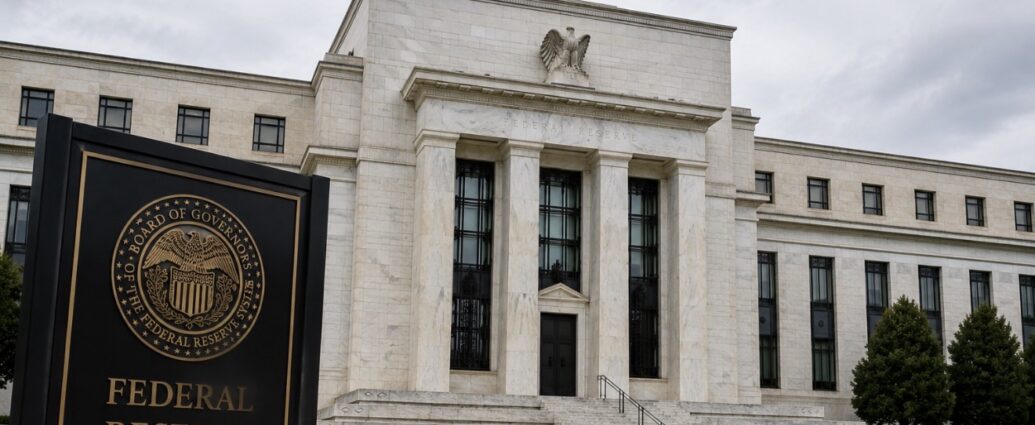
Every one of the nation’s largest banks would survive a severe economic downturn with enough capital remaining to continue lending, according to the results of the Federal Reserve’s annual stress test, providing another sign that the U.S. banking system remains resilient despite ongoing economic uncertainties.
The central bank reported that all 32 financial institutions subjected to this year’s examination successfully passed the test, maintaining capital levels above required minimums even under an extreme hypothetical recession scenario.
The exercise, required under post-financial-crisis reforms enacted through the Dodd-Frank Act, is designed to evaluate whether major banks could continue operating during periods of severe economic stress.
Each year, regulators subject banks to a series of hypothetical shocks and estimate potential losses across lending, trading, and investment portfolios.
This year’s scenario was particularly demanding.
The Federal Reserve modeled a severe global recession in which unemployment rises to 10%, residential home prices fall 30%, commercial real-estate values decline 39%, and corporate credit markets experience significant disruptions.
Banks with major trading operations were also required to absorb the hypothetical failure of their largest trading counterparties alongside a sudden market shock.
Even after projecting hundreds of billions of dollars in losses across the financial system, regulators concluded that every institution remained adequately capitalized.
The list included many of the country’s most recognizable financial institutions, including JPMorgan Chase, Bank of America, Citigroup, Wells Fargo, Goldman Sachs, and Morgan Stanley, as well as large regional banks and U.S. subsidiaries of foreign lenders.
The results carry important consequences.
Performance on the stress test influences the amount of capital banks must maintain through what regulators call the Stress Capital Buffer, a safeguard designed to ensure institutions can absorb losses during difficult economic periods.
This year, however, the Federal Reserve indicated that capital requirements will remain unchanged until 2027 as regulators continue evaluating proposed modifications intended to improve transparency within the testing process.
For everyday Americans, the significance goes well beyond banking regulation.
The purpose of the stress test is to ensure that banks can continue providing mortgages, auto loans, business financing, and consumer credit even during severe recessions.
When banks stop lending, economic downturns often become significantly worse.
That lesson was learned during the 2008 financial crisis, when weaknesses within the banking system amplified broader economic damage.
The annual stress test is intended to prevent a repeat of that experience.
Investors are also paying close attention.
Historically, successful stress-test results often pave the way for increased dividends and share repurchase programs. Banks that demonstrate strong capital positions frequently return more cash to shareholders in the weeks following the results.
Announcements regarding dividends and buybacks are expected in the coming days.
The timing is particularly noteworthy given ongoing concerns surrounding commercial real estate.
Office-property values remain under pressure as remote and hybrid work continue reshaping demand. Several high-profile office-building loan defaults have attracted attention in recent weeks, highlighting the challenges facing portions of the commercial property sector.
The Federal Reserve’s decision to model a nearly 40% decline in commercial real-estate values underscores the seriousness with which regulators continue to view those risks.
Bank executives have long argued that stress tests are overly conservative and require institutions to hold more capital than necessary.
Regulators counter that strong capital buffers are precisely why the banking system has remained stable during recent periods of turmoil.
This year’s results will likely strengthen both arguments.
For banks, the clean sweep demonstrates the strength of their balance sheets.
For regulators, it validates the safeguards implemented after the financial crisis.
Either way, the message from the Federal Reserve was straightforward: even in a severe recession, America’s largest banks would remain open for business.
JBizNews Desk | New York
© JBizNews.com All Rights Reserved. Reproduction or distribution without written permission is prohibited.