


Kennedy’s HHS AI Challenge Advances as Grant Critics Overlook LymeX’s Public-Private Innovation Model
WASHINGTON, July 16 — As the White House Office of Management and Budget’s proposed overhaul of the federal grantmaking process continues to generate widespread opposition, the U.S. Department of Health and Human Services has entered the evaluation phase of a separate artificial intelligence initiative built on a different model—one that HHS says is designed to complement traditional federal research through a public-private partnership.
The broader grantmaking proposal drew 496,769 public comments before the deadline. Researchers who analyzed the 52,322 comments publicly available at the time found that approximately 95% opposed the proposal, while roughly 1% supported it. The most common concerns centered on reducing the role of independent scientific peer review, expanding the influence of political appointees over funding decisions, allowing grants to be terminated before completion, and creating uncertainty for universities, hospitals, research institutions, biotechnology companies, nonprofits, and patient advocacy organizations that rely on federal research funding.
Those comments, however, were directed at the Administration’s proposed government-wide grantmaking rule—not at HHS’s LymeX innovation initiative.
At the same time, HHS has officially closed applications for its TOPx AI & Invisible Illness Challenge, moving the competition into the evaluation phase following the July 15 deadline. The challenge seeks breakthrough artificial intelligence solutions for Lyme disease, Long COVID, Myalgic Encephalomyelitis/Chronic Fatigue Syndrome (ME/CFS), Alpha-gal syndrome, and other invisible illnesses by bringing together innovators from healthcare, academia, technology, entrepreneurship, and patient advocacy.
According to HHS, the initiative builds upon the LymeX Innovation Accelerator, a public-private partnership between the Department of Health and Human Services and the Steven & Alexandra Cohen Foundation, originally launched during President Donald Trump’s first term. HHS’s multi-year Lyme disease strategy states that the partnership was established through a $25 million commitment from the Foundation and was designed to complement—not replace—traditional federally funded scientific research. HHS has also previously stated that more than $10 million in LymeX cash prizes have been underwritten by the Foundation as part of the initiative’s innovation prize competitions.
The current TOPx AI & Invisible Illness Challenge, which offers up to $2 million in prizes, is one of the latest initiatives developed under that broader LymeX framework.
Among those participating in the evaluation process is Duvi Honig, Founder and CEO of the Orthodox Jewish Chamber of Commerce, who was appointed to serve on the HHS evaluation panel for the AI & Invisible Illness Challenge.
Honig said the ongoing public debate surrounding federal grantmaking demonstrates the importance of distinguishing between traditional government grant programs and innovation challenges built through public-private collaboration.
“The concerns being raised about the broader federal grantmaking proposal deserve to be heard and debated on their own merits,” Honig said. “At the same time, I respectfully ask whether many people realize the HHS AI & Invisible Illness Challenge follows a different model. HHS has made clear that LymeX is a public-private partnership with the Steven & Alexandra Cohen Foundation that was specifically created to complement traditional federally funded research while accelerating innovation through prize competitions.”
Honig praised HHS Secretary Robert F. Kennedy Jr. for embracing what he described as a collaborative approach to solving some of healthcare’s most difficult challenges.
“I applaud Secretary Kennedy’s leadership for recognizing that government does not have to work alone,” Honig said. “By bringing together federal leadership, private philanthropy, researchers, entrepreneurs, clinicians, artificial intelligence developers, universities, hospitals, nonprofit organizations, industry leaders, and patient advocates, HHS is creating another pathway to identify breakthrough solutions for patients living with invisible illnesses. Public-private partnerships like LymeX expand the innovation ecosystem and encourage the best minds from across the country to compete to solve problems that have challenged patients and physicians for decades.”
Honig said he believes innovation challenges should be viewed as complementary to traditional research funding rather than a replacement for it.
“Patients suffering from Lyme disease, Long COVID, ME/CFS, Alpha-gal syndrome and other invisible illnesses have waited far too long for answers. Every credible pathway that accelerates scientific discovery, responsible artificial intelligence, earlier diagnosis, and better treatments deserves serious consideration. When government, philanthropy, academia and the private sector work together, patients are the ultimate beneficiaries.”
HHS has not yet announced how many applications were submitted for the challenge. The Department is expected to complete the evaluation process in the coming months before selecting finalists and ultimately announcing the winning teams.
JBizNews Desk | Washington
© JBizNews.com All Rights Reserved. Reproduction or distribution without written permission is prohibited.

High Court names nine-justice panel to hear petitions on law halting arrest of haredi draft dodgers
The High Court of Justice will convene a nine-justice panel on July 28 to hear petitions against a law freezing arrest, investigation, and enforcement proceedings against qualifying ultra-Orthodox (haredi) yeshiva students who fail to report for military service.
Supreme Court President Isaac Amit announced the expanded panel on Thursday.
It will include Deputy Supreme Court President Noam Sohlberg and Justices Dafna Barak-Erez, David Mintz, Yael Willner, Ofer Grosskopf, Alex Stein, Gila Canfy-Steinitz, Yechiel Kasher, and Ruth Ronnen.
The composition of the panel is particularly significant because it includes all five justices who issued the court’s detailed and sharply critical rulings in November 2025 and April 2026, requiring the government to enforce military-service obligations against haredi draft evaders: Sohlberg, Barak-Erez, Mintz, Willner, and Grosskopf.
The challenge will therefore place before those justices a temporary law suspending the very criminal and administrative enforcement proceedings that they previously ordered the state to strengthen.
Grosskopf issues temporary order suspending law’s enforcement
Amit’s decision came one day after Grosskopf issued a temporary order suspending the law’s entry into force until further notice and a conditional order requiring the Knesset and government to explain why it should not be struck down.
Grosskopf cited the High Court’s longstanding rulings on the enlistment of yeshiva students, the implications of freezing enforcement proceedings “with regard to only certain sections of the population,” and the “weighty arguments” raised against the law’s validity.
The dispute comes after a succession of increasingly forceful High Court judgments on inequality in military service and the government’s failure to enforce the existing draft law.
In June 2024, a nine-justice panel unanimously ruled that, following the expiration of the statutory framework allowing deferments for yeshiva students, the government had no legal authority to refrain from drafting them or to continue funding institutions for students required to serve.
The court returned to the issue in November 2025, ordering the government to formulate an effective enforcement policy without delay.
That ruling said the policy must include meaningful criminal proceedings and broader economic and civil measures and found that the state’s conduct had come close to a complete abandonment of enforcement against haredi draft evaders.
Criminal proceedings against haredis must be applied equally
The five-justice panel said the rate of criminal proceedings against haredi evaders must ultimately be no lower than the rate applied to other population groups and described the existing situation as selective enforcement that undermined both equality and the rule of law.
After the government failed to implement that ruling, the same panel issued another decision in April ordering specific ministries and public bodies to consider revoking benefits, including subsidized housing, daycare assistance, public-transportation discounts, and municipal tax reductions.
The justices said that “no real steps” had been taken to implement their previous judgment and stressed that the state could not continue avoiding enforcement while citing the prospect of future legislation.
The Knesset nevertheless passed the temporary enforcement freeze on Tuesday by 58 votes to 54. The law was intended to remain in force until November 30 and would suspend enforcement against yeshiva students meeting its conditions.
It was passed despite warnings from the Knesset’s legal advisers that it would protect one group from criminal consequences for failing to meet draft obligations while leaving those consequences in place for the rest of the population. The advisers also raised serious concerns over the legislative process through which it was advanced.
The four petitions were filed by Israel Hofsheet, opposition leader Yair Lapid, and seven other Yesh Atid lawmakers; Yisrael Beytenu chairman Avigdor Liberman, MK Oded Forer, and the party; and the Movement for Quality Government in Israel.
The respondents must submit their replies to the petitions and requests for an interim injunction four days before the July 28 hearing. Grosskopf’s order freezing the law will remain in place until the court rules otherwise.
Keshet Neev contributed to this report.

US to change visa duration regulations for foreign students, journalists
The Trump administration moved on Thursday to tighten the duration of visas for foreign students, cultural exchange visitors and journalists, according to a government notice.
The new final rule from the US Department of Homeland Security creates a fixed time period for F visas for international students, J visas that allow visitors on cultural exchange programs to work in the US, and I visas for members of the media. Those visas are currently available for the duration of the program or US-based employment.
The effective date is 60 days from publication in the Federal Register, subject to congressional review.
US President Donald Trump kicked off a wide-ranging immigration crackdown after taking office in January 2025. The latest action would create new hurdles for international students, exchange workers, and foreign journalists.
The Trump administration has increased scrutiny of legal immigration, revoking student visas and green cards of university students over their ideological views and stripping legal status from hundreds of thousands of migrants.
Under the new regulation, the student and exchange visa periods would be no longer than four years. The visa for journalists – which currently can last years – would be up to 240 days or, in the case of Chinese nationals, 90 days.
The visa holders could apply for extensions, it said.
DHS cites rise in visa applications for change in guidelines
The department cited a dramatic rise in such visas in the posting. It said there were more than 1.8 million student visa admissions in 2024, a more than 11% increase over the previous year.
The US granted visas to more than 500,000 exchange visitors and 37,300 members of the media in fiscal year 2024, which began on October 1, 2023, it said.
The significant increase in the volume of such visitors “poses a challenge to DHS’s ability to monitor and oversee these nonimmigrants while they are in the United States,” DHS said.
DHS said it has many examples of students and exchange visitors staying for decades on their visas.
Visa holders who want to stay in the United States beyond their fixed period of admission will need to apply to DHS for an extension or gain readmission by traveling abroad and then re-entering the United States, the new rule said.

‘An attack against humanity: Argentina marks 32 years since deadly AMIA bombing
The AMIA bombing was an attack “against humanity as a whole,” Argentina Ambassador Shimon Axel Wahnish said at a ceremony commemorating 32 years since the attack against the Jewish community center in Argentina on Thursday.
“For 32 years, I’ve been hearing that it was an attack against the Jewish community, against Argentina as a whole. But, even if both claims are true, I like to think of it as a wider attack against humanity as a whole,” said Wahnish at the ceremony held in the Foreign Ministry in Jerusalem.
The AMIA bombing killed 85 people and injured more than 300 in 1994, in what remains the deadliest terror attack on Argentinian soil and one of the deadliest against the Jewish community outside of Israel.
“It’s important not to fall into the narrow-sightedness that it was an isolated attack. The attack that we suffered in 1994 was part of a bigger chain of events that includes international terrorism,” he added.
“And if you follow this thread, you can see that it all ends up in the same enemy, that wants to instill psychological terror by means of violence, and who wants to erode the bases of our culture, our civilization, and of all of humanity,” Wahnish explained.
Ties between nations, responsibility to honor and fight for freedom
The ambassador also delved into the similarities between the Israeli and Argentinian national anthems, and pointed out that a key word they share is “freedom.” He also said, “[It’s] our responsibility to honor the memory of those killed in the attack, but also fight for a world with freedom.”
Argentinian President Javier Milei has been keeping this fight alive by pushing for justice and by declaring both Hamas and the Islamic Revolutionary Guard Corps (IRGC) as terror organizations, according to Wahnish.
Eden Bar Tal, director-general of the Foreign Affairs Ministry, who was also present at the ceremony, pointed out during his speech how the Argentine judiciary determined that Iran was responsible for the AMIA attack and the previous 1992 bombing of the Israeli Embassy in Buenos Aires, where 29 people were killed.
“Iran, together with its proxy Hezbollah, carried out these horrendous attacks,” he said, adding that Israel appreciated the recent push by Milei to confront Iranian terrorism and reject granting immunity to the perpetrators.
Roxana Levinson, niece of Jaime Plaksin (who was killed in the AMIA bombing) and Graciela Susevich of Levinson (who was killed in the bombing of the Israeli Embassy in Buenos Aires in 1992) spoke at the ceremony.
Terror attacks destroy families, ‘we can’t live in peace with Iran’
“Terror attacks don’t only take the victims. The expansion wave takes whole families,” she told those gathered. “And we must remember who was and still is responsible for the tragedy, because the Iranian regime still wants to destroy us, erase us from the map.
“We can’t live in peace with a terror organization. And Iran is a terrorist organization that has its own state, and that finances the appetite for bloodlust of its leaders with the hunger of its people,” Levinson said.
Levinson, who spoke with The Jerusalem Post during the ceremony, said that the latest legal developments in the AMIA case bring hope, but she still doubts that anything can be achieved after so many years of negligence.
“After 32 years of purposefully pushing against the investigation, with proof being destroyed and obstacles placed in the way, it’s difficult to believe that this time there will be a result,” she said of the search for justice in Argentina.
Levinson told the Post that she feels honored to conduct the ceremony. She explained that this was because it was an opportunity to tell the stories of some of the victims, to turn them into “more than just a number.”
The chairman of the World Zionist Organization was also present at the event, along with ambassadors from several countries and key diplomats from the Foreign Ministry.

Iranian foreign minister visits Doha amid missile strikes on Gulf states, release of US citizen
Iran’s Foreign Minister Abbas Araghchi arrived in Doha on Wednesday, just days after Tehran fired missiles toward Qatari territory and other Gulf states, in a visit that underscored the Islamic Republic’s attempt to produce a specific narrative for its Arab neighbors and send a message to Washington.
Araghchi, according to the Foreign Ministry, made the journey to “meet with Qatari authorities and offer his condolences” after the death of former Qatari emir Sheikh Hamad bin Khalifa Al-Thani.
The visit came days after the IRGC confirmed it fired on Qatar, claiming it was targeting the Al Udeid US base where satellite imagery released by Soar Atlas confirmed some level of damage to American aircraft maintenance facilities, leading to civilian injuries. Doha said that three people, including a child, were injured by falling shrapnel in the attack.
Qatari media noted that Araghchi’s visit came at the tail end of visits by foreign officials expressing their condolences, with Al Jazeera theorizing that the decision might have been a deliberate way the foreign minister could avoid “awkwardness” with other diplomats.
International relations expert Dr. Arman Mahmoudian, research fellow at the University of South Florida’s Global and National Security Institute, told The Jerusalem Post that he believed the visit was part of Iran’s efforts to emphasize lines in its narrative that it is not targeting the Gulf but the US, and poses no regional danger as long as its demands are met.
‘It is expected of Muslim and noble nations to expel these child killers, occupiers’
Highlighting this, Mahmoudian noted that only days ago the IRGC issued a statement addressing the Kuwaiti and Jordanian public, pushing the narrative that the attack is not on them but the American military assets based there.
“Honorable and noble people of Kuwait and the holy land of Jordan, it is expected of you Muslim and noble nations to expel these child-killers and occupiers from your soil,” the IRGC statement read.
“The pure soil of the land of Kuwait and the sacred land of Jordan, the sanctuary of the prophets, must not remain under the occupation of criminals who, in just the past two years, have martyred seventy thousand Palestinians – including twenty thousand children – in heroic Gaza and perpetrated the Minah School massacre.
“We expect you not to miss any opportunity to destroy the aggressive American institutions and to liberate the Islamic lands from the bases of the American occupiers.”
Despite its claims, Gulf nations have had to swallow damages and the human cost of Iran’s attacks. Kuwait’s military announced on Tuesday that one of its navy vessels was targeted in an Iranian attack, which led to four armed forces personnel being injured.
The statement, Mahmoudian said, may be a sign Iran is “attempting to contain the escalation and prevent it from damaging its broader relations with Arab states.”
Arghchi visit part of broader effort to limit diplomatic consequences
“The Araghchi visit could therefore be part of a broader effort to reassure regional governments and limit the diplomatic consequences of the attacks,” he commented.
In addition to pushing its narrative across the Gulf, Mahmoudian said that the visit may also be some form of indirect communication with the United States.
“It is notable that this is happening around the same time that Iran released an Iranian-American dual national who had been detained by the Iranian authorities late last year,” he commented.
Iran agreed on Wednesday to release Dena Karari, who was charged with espionage during the June war while running a charity for impoverished Iranian children.
“Historically, this has been a recurring feature of covert diplomacy between Iran and the United States: Iranian officials visit third countries that frequently serve as mediators, while the release of detained citizens can signal diplomatic movement behind the scenes,” Mahmoudian said.
“I would therefore say that the visit likely serves both purposes: reassuring regional countries and facilitating an indirect exchange of messages with Washington.”

Australian antisemitism ‘passed point of no return,’ Jewish leader tells ‘Post’ after emigrating
Australian antisemitism “has passed the point of no return,” former president of the Australian Jewish Association, Dr. David Adler, told The Jerusalem Post on Thursday. Adler recently relocated to Israel, citing the surge in antisemitism in Australia.
While the family only arrived on July 9, Adler told the Post that aliyah has been in “preparation for a long, long period of time.”
“We’ve seen a general deterioration in Australia for a long time,” he told the Post. “Australia has essentially outsourced its manufacturing. Its defense capacity is down. National identity is being lost. Education standards are down. There is a crazy socialist activism, left-wing activism. Those things have been building gradually. But no doubt October 7 unleashed a level of antisemitism and anti-Israel extremism that I didn’t think could occur in Australia.”
“On October 8, there were some leaders of the Muslim community and some Muslim groups in Australia celebrating on the streets. On October 9, we had the riots in front of the Opera House.”
What Adler found the most shocking was that the authorities “failed to act” after these incidents.
Australia passed point of no return, ‘all downhill’
“There was not a single arrest from the riots at the Opera House, despite a number of laws being broken. And that area, I know from security experts, is covered by high-definition CCTV. However, the authorities chose not to act and instead warned the Jewish community not to go there,” he explained.
Since then, Adler said it’s “been all downhill.” He said he has lost track of the number of threats made against him, including death threats.
This led him to arrive at the viewpoint that the trends in Australia “have passed the point of no return.”
“The tipping point has been reached and passed. And even though there’s a Royal Commission running at the moment, and it’s doing a good job in exposing some of the accounts and evidence of antisemitism, I do not have confidence in efficient action being taken to deal with it.”
Adler told the Post that anti-Jewish violence is predominantly coming from Islamic extremism, but that “Australia has taken nowhere near enough action” to combat this. “It should do things like expel the hate preachers, deport the hate preachers, close down mosques that are teaching extremist and radical views, and in fact has done some things in the opposite.”
“The whole antisemitic, anti-Israel extremism is on a level that no one forecast.”
Adler mentioned how Dr. Hillel Newman, Israel’s ambassador to Australia, recently told The Australian that he has never come across such hatred as he has in his Australian diplomatic post, and he has served in two Muslim countries in the past.
“I think [Newman’s] assessment is correct, and it’s refreshing in my view that we have a diplomat, a senior diplomat, who’s prepared to call out the issues as he sees them.”
‘We will see an exit of certain parts of the Jewish community from Australia’
These issues, Adler said, form part of the “whole package of reasons” why he and his wife decided to immigrate to Israel.
“So we’re officially citizens of Israel and absolutely loving it,” he told the Post. “It’s such a different atmosphere between Australia and Israel. You only need to be here 10 or 15 minutes, and you perceive the difference.
The first main difference, Adler said, is the pride in national identity.
“You wander around Israel anywhere, and you see Israeli flags everywhere. You see them on homes, on shops, on cars. In Australia, it’s much, much less common to see Australian flags flown privately.”
The other major difference, he said, is the mood of the people.
“There is a happiness, there’s an optimism, there’s a friendliness.”
“My final comment for Australian Jews is I’d urge them to assess the trends and make their evaluation as to what is best for themselves and their families.”
“I think we will see an exit of certain parts of the Jewish community from Australia.”

House Republicans Unveil $95 Billion Budget Plan With $73 Billion for Defense and Intelligence
The Republican-controlled House Budget Committee unveiled a 47-page budget resolution on Wednesday, July 15, outlining a $95 billion reconciliation package that would provide $73 billion in new funding over the next decade for defense and intelligence priorities while also directing billions toward agriculture and election administration.
The committee is scheduled to mark up the resolution Thursday morning as House Republican leaders push to move the package through Congress using the budget reconciliation process, allowing the legislation to pass the Senate with a simple majority rather than the traditional 60-vote threshold.
The proposal arrives as Congress continues debating military spending, support for U.S. allies, border security and the growing federal deficit.
Breaking Down the Package
The resolution instructs four House committees to produce legislation by September 11.
The House Armed Services Committee would receive authority to draft legislation providing $60 billion in new defense spending.
The House Permanent Select Committee on Intelligence would receive $13 billion, bringing total national security funding to $73 billion.
The House Agriculture Committee would receive a $12 billion target for agricultural assistance, while the House Administration Committee would receive $10 billion to encourage states to implement portions of the SAVE America Act, including proof-of-citizenship requirements for voter registration and voter identification measures.
While the resolution establishes overall funding targets, it does not specify how individual defense dollars would ultimately be allocated.
Republican leaders have indicated the funding could support replenishing U.S. weapons stockpiles, strengthening military readiness, expanding the defense industrial base and covering costs associated with continuing operations in the Middle East.
Well Below the White House Request
Although substantial, the proposal falls far short of what President Donald Trump requested.
The administration previously sought approximately $350 billion in reconciliation funding as part of a broader $1.5 trillion defense budget proposal for the coming fiscal year.
The House blueprint provides just $73 billion for defense and intelligence priorities—roughly one-fifth of that request.
Equally notable is what the proposal does not include.
The resolution contains no corresponding spending reductions to offset the additional funding, despite repeated Republican pledges to pair new spending with reductions elsewhere in the federal budget.
That omission comes as federal borrowing costs continue climbing.
Net interest payments on the national debt are projected to approach $857 billion this fiscal year, while the federal deficit has already exceeded $1.4 trillion through the first nine months of fiscal 2026.
For businesses, additional federal borrowing ultimately means additional Treasury issuance, influencing long-term interest rates that affect commercial lending, mortgages and corporate financing costs.
A New Path After Senate Gridlock
The proposal also follows a significant setback on Capitol Hill.
One day earlier, Senate Democrats blocked consideration of the National Defense Authorization Act, citing disagreements over defense spending levels and the continuing conflict involving Iran.
The reconciliation package therefore represents an alternative strategy for advancing Republican priorities outside the traditional bipartisan appropriations process.
Whether that strategy succeeds remains uncertain.
Speaker Mike Johnson hopes to move the resolution quickly before Congress enters its August recess, but the legislative calendar continues to tighten ahead of the November midterm elections.
If approved by the House, the measure would become the third reconciliation package considered during this Congress.
Why Agriculture Is Included
The proposal’s $12 billion agriculture provision reflects growing concern over rising production costs facing American farmers.
Earlier Wednesday, the Federal Reserve’s Beige Book reported continued pressure on fertilizer and fuel prices across portions of the Midwest.
Farm operators in the Chicago Federal Reserve district reported purchasing diesel fuel in smaller quantities because of uncertainty over future prices, while some producers shifted acreage from corn to soybeans because corn requires substantially more fertilizer.
Those observations closely mirror arguments made by lawmakers supporting additional agricultural assistance as producers continue facing elevated input costs.
What Businesses Should Watch
Defense contractors will naturally focus on the potential increase in military spending.
Manufacturers serving aerospace, defense and national security industries could benefit if the package ultimately becomes law.
Agricultural suppliers and farm equipment companies will also closely monitor the legislation, particularly if fertilizer and fuel assistance becomes part of the final bill.
For the broader business community, however, the larger issue remains fiscal policy.
Additional federal spending without corresponding offsets increases Treasury borrowing requirements, placing continued pressure on long-term interest rates that directly affect business investment, commercial real estate financing and borrowing costs across the economy.
The House Budget Committee is expected to begin consideration of the proposal Thursday morning, marking the first step in what is likely to become one of Congress’s most closely watched fiscal debates of the summer.
JBizNews Desk | Washington
© JBizNews.com All Rights Reserved. Reproduction or distribution without written permission is prohibited.

Dimon urges calm over fear about AI’s impact on jobs: ‘Stop being breathless over it’
JPMorgan Chase CEO Jamie Dimon on Wednesday said there is still a lot of uncertainty over how AI will impact the workforce and people shouldn’t be “breathless” in their concerns as new technologies have historically created new jobs.
Dimon said in a conversation with Sen. Dave McCormick, R-Pa., at the Pennsylvania Defense and Innovation Summit that “we don’t really know” about the impact of AI on the workforce as the emerging technology advances.
“I think people should stop being breathless over it. You know, it’s created a lot of jobs in our company, and yeah, there are areas where it’s reduced jobs a little bit,” Dimon said.
“Technology always creates new jobs. The question is going to be if it happens too fast, somehow, people are adopting it too fast and jobs are being lost – middle-class jobs before they could be retrained to replace,” Dimon said.
JAMIE DIMON SAYS HE UNDERSTANDS WHY PEOPLE HAVE GROWN ‘ANTI-RICH’
“We’re talking about work skills, it’s the exact same thing we should be doing anyway. That is how to fix it,” he added.
“People know, at JPMorgan, we’re going to redeploy our own people. We reskill them, retrain them,” Dimon said. “I think there are fixes for that.”
“I think we’re kind of scaring the whole world much more rapidly than we should about it,” he said.
WORKERS WHO DON’T USE AI MORE LIKELY TO BE LAID OFF, SURVEY FINDS
The JPMorgan Chase CEO said that based on experience within his company, he thinks “we all have to be more rational in how we use some of this.”
“Here’s the choice: do you save money over here because you know that you can do less, or do you simply want to do faster? I’m kind of, of the mindset, do what I want to do faster, give you better stuff quicker,” Dimon said.
JPMORGAN NAMES 2 NEW CO-PRESIDENTS, SETTING UP RACE TO SUCCEED JAMIE DIMON
“So the headcount won’t go down because I want to make you happier, not less happy. So people should just take a deep breath, but the planning should be around jobs – I think that planning will protect us against too rapid job loss from AI if, in fact, it ever happened,” he added.

NYC moves forward with first busway in the Bronx, Central Brooklyn bus upgrades

New York City is advancing four major public transit projects in the Bronx and Brooklyn that are expected to cut commutes by up to six minutes for nearly 200,000 daily riders. Mayor Zohran Mamdani on Wednesday announced that the city’s Department of Transportation (DOT) will begin construction of the long-delayed Tremont Avenue busway later this year and launch community engagement for improvements along Flatbush, Utica, and Church avenues in Brooklyn, three of the borough’s busiest bus corridors. The projects build on last week’s unveiling of the “Next Stop: Fast Buses, Better Service” plan, which aims to speed up service on 50 bus routes across the five boroughs.

“New Yorkers should not lose hours of their lives sitting in traffic on a bus. From the Bronx to Brooklyn, we’re building streets that move people instead of sticking them in gridlock,” Mamdani said. “These projects will make commutes faster, make our streets safer and return precious time to nearly 200,000 New Yorkers every single day. That’s exactly what public transit should do.”
The “Next Stop” plan aims to improve bus reliability through a combination of service changes, traffic enforcement upgrades, and road redesigns. A key component of the plan is improving speeds on 50 “priority corridors,” which currently include 25 of the city’s slowest bus routes.
Tremont Avenue is one of the corridors identified for improvement. The thoroughfare is notoriously dangerous, with 630 people injured in crashes along the avenue between 2020 and 2024, including 46 serious injuries and four deaths. Its buses also rank among the slowest in the city, averaging as little as 5 miles per hour on some routes, according to Gothamist.
Despite its slow bus speeds, the corridor is a lifeline for Bronx residents: 72 percent of households along the avenue do not own a car. It also connects riders to several subway lines and the Metro-North Railroad, serving roughly 39,000 daily bus riders.
The avenue is now slated to become the Bronx’s first busway, a corridor with dedicated bus lanes and bus-priority infrastructure designed to improve travel times and safety for bus riders, pedestrians, cyclists, and motorists alike. Busways elsewhere in the city have increased bus speeds by up to 60 percent while reducing injuries by as much as 45 percent.
Features of the project include an eastbound busway from Third Avenue to Southern Boulevard, a westbound busway from Southern Boulevard to Belmont Avenue, and an offset shared bus-and-bike lane eastbound from Webster Avenue to Third Avenue.
As part of the initiative, DOT will also upgrade safety at several intersections, including Tremont Avenue and Webster Avenue; Tremont Avenue and Third Avenue; Tremont Avenue, Southern Boulevard, and Crotona Parkway; Third Avenue and East 175th Street; Southern Boulevard, Crotona Parkway, and 180th Street; Crotona Avenue and 180th Street; Third Avenue and 180th Street; and Tremont Avenue and Washington Avenue.
The redesign will install painted sidewalk extensions to shorten pedestrian crossing distances and slow-turning vehicles. The extensions will be reinforced with flexible delineators, granite blocks, and bike parking to discourage illegal parking.
The busway will operate seven days a week from 6 a.m. to 8 p.m. Buses, trucks with six or more wheels, emergency vehicles, and Access-a-Ride vehicles will be allowed to travel the full corridor. Other vehicles, including taxis and for-hire vehicles, will only be permitted to enter for local access and must exit at the next available right turn.
In Central Brooklyn, Flatbush, Utica, and Church avenues—three of the city’s busiest bus corridors—will receive substantial upgrades. Together, the corridors carry 150,000 bus riders every day across 13 routes, with buses crawling as slow as 5 mph.
The DOT and Metropolitan Transportation Authority will develop short-term bus-priority improvements that can be implemented as early as next year, while also creating a long-term vision for “world-class” bus service along the three avenues.

Long-term plans include establishing new “Bus Rapid Transit” corridors outlined in the “Next Stop” proposal. Of the city’s 50 priority corridors, five would be designated as “rapid bus corridors,” featuring bus-only infrastructure such as busways, fully separated lanes, or center-running lanes with transit signal priority at intersections and limited cross traffic.
The overhaul of Flatbush Avenue, one of the planned rapid bus corridors, is already underway. In April, DOT began installing center-running bus lanes along the avenue from Livingston Street to Grand Army Plaza, a project expected to speed up commutes for 132,000 daily bus riders who currently contend with average speeds below 4 mph.
Work on the four-phase project began last fall but was suspended during the winter. DOT now expects Flatbush Avenue to operate as a full rapid bus corridor by 2030.
DOT will also launch community engagement campaigns for future improvements to Utica and Church avenues, with an online feedback portal open through October 31. The agency will host bus rider engagement events beginning August 6 at 6 p.m. in Central Brooklyn, along with additional outreach at Open Streets events, block parties, and community gatherings.
Following this summer’s engagement process, DOT expects to release updated plans for bus-priority improvements this fall.
“Along Tremont Avenue in the Bronx and all through central Brooklyn, slow, unreliable buses are robbing New Yorkers of their precious time every day,” DOT Commissioner Mike Flynn said. “We want New Yorkers to have faith in our outreach, and that starts with actually delivering on projects promised years ago, like on Tremont Avenue, where riders deal with unreliable, over-packed buses every day.”
“We look forward to discussing the possibilities for fast buses through Central Brooklyn this year as we develop exciting proposals for critical bus corridors in the area.”
RELATED:
- New York unveils plan to speed up NYC buses across 50 priority corridors
- 63-block dedicated bus lane proposed for 6th Avenue
- Mamdani restarts plan for 34th Street busway that Trump halted
The post NYC moves forward with first busway in the Bronx, Central Brooklyn bus upgrades first appeared on 6sqft.


Rockefeller’s Greg Fleming Says Federal Debt Worries Him More Than Inflation
Greg Fleming, President and Chief Executive Officer of Rockefeller Capital Management, said the rapidly growing U.S. national debt poses a greater long-term threat to the American economy than inflation, while arguing that artificial intelligence could ultimately help reduce inflation by boosting productivity. His remarks were published by Bloomberg on Tuesday, July 14, from an interview recorded on May 13, 2026.
Fleming’s comments come as government inflation reports have begun showing signs of easing price pressures, shifting attention back toward Washington’s mounting fiscal challenges.
A Veteran Wall Street Voice
Fleming has spent decades leading some of the nation’s largest financial institutions.
Before becoming the founding President and CEO of Rockefeller Capital Management in 2017, he served as President and Chief Operating Officer of Merrill Lynch and previously led Morgan Stanley’s investment management and wealth management businesses.
He also serves on the board of directors of BlackRock and teaches ethics and financial markets at Yale Law School.
In October 2025, Rockefeller Capital completed a recapitalization that valued the firm at approximately $6.6 billion.
The Numbers Behind the Concern
The United States now carries approximately $39.4 trillion in national debt.
During the first nine months of Fiscal Year 2026, the federal government recorded nearly $1.4 trillion in budget deficits—already exceeding the same period a year earlier.
That equates to roughly:
- $155 billion in new borrowing each month.
- Nearly $39 billion in additional debt every week.
Interest payments alone have become one of the federal government’s fastest-growing expenses.
According to the Congressional Budget Office (CBO), net interest on the national debt is projected to total approximately $857 billion during Fiscal Year 2026.
Interest costs reached approximately $970 billion during Fiscal Year 2025 and are projected to climb to roughly $2.1 trillion annually by 2036, totaling $16.2 trillion over the next decade.
The CBO projects interest expenses will equal approximately 3.2% of Gross Domestic Product this year—the highest level on record.
Net interest now exceeds annual federal spending on either Medicare or Medicaid, trailing only Social Security among the government’s largest expenditures.
Not Just Wall Street
Fleming is far from alone in expressing concern.
Maya MacGuineas, President of the Committee for a Responsible Federal Budget, recently warned that federal borrowing could exceed $2 trillion during the current fiscal year despite continued economic growth and relatively low unemployment.
She also noted that both the Social Security and Medicare trust funds are projected to face depletion within the next several years absent congressional action.
Meanwhile, the Congressional Budget Office projects federal debt held by the public will climb to approximately 120% of GDP by 2036.
The Bipartisan Policy Center estimates the United States could once again reach its statutory debt limit sometime between late winter and mid-summer of 2027, depending upon federal revenues and spending.
Why the Timing Matters
Fleming’s warning arrives just as inflation data have begun improving.
This week, the Producer Price Index declined 0.3% in June while the Consumer Price Index fell 0.4%, easing concerns that inflation was accelerating.
Federal Reserve Chairman Kevin Warsh told Congress the latest reports represent encouraging progress but cautioned policymakers against assuming inflation has been permanently defeated.
For Fleming, that distinction is critical.
Inflation tends to rise and fall with economic cycles, energy markets and geopolitical events.
Federal debt, however, continues to grow regardless of monthly inflation reports.
Earlier this year, several Treasury auctions attracted weaker-than-usual investor demand, increasing attention on how financial markets will absorb continued large-scale federal borrowing.
What It Means for Main Street
Growing federal interest costs eventually affect households and businesses alike.
As Treasury borrowing expands, upward pressure on long-term interest rates can increase mortgage costs, commercial real estate financing expenses and borrowing costs for small businesses.
Fleming has repeatedly argued that investors should pay closer attention to federal deficits than short-term inflation data.
At the same time, he remains optimistic that advances in artificial intelligence could improve productivity enough to help moderate future inflation.
Whether those productivity gains arrive quickly enough to offset a national debt approaching $40 trillion remains one of the central economic questions facing policymakers and financial markets.
JBizNews Desk | New York
© JBizNews.com All Rights Reserved. Reproduction or distribution without written permission is prohibited.
Syria intercepts massive Hezbollah arms shipment hidden inside oil tanker from Iraq
Syria’s Interior Ministry said on July 16 that it had intercepted an arms shipment that was likely destined for Hezbollah. The Syrian Arab News Agency (SANA), a state media outlet, said that “specialized security units carried out the operation after detecting a suspicious vehicle parked near the border. A search uncovered a cache of weapons that included long-range missiles, guided anti-tank missiles and drones.”
The ministry noted that “the shipment was intended to cross through Syrian territory towards Lebanon for the benefit of the terrorist Hezbollah militia, while investigations are continuing to uncover all the circumstances of the case, identify all those involved, and the networks associated with it.”
The arms were found in a tanker truck vehicle that was seeking to cross the border from Iraq into Syria. It was stopped “before it could be brought into Syrian territory,” Syria’s North Press Agency noted.
The truck was at the border crossing. A search of the truck revealed a large shipment of weapons, including “long-range missiles, anti-tank guided missiles, and drones,” NPA added.

Shipment signals Hezbollah attempt to build up forces, prepare for war
The Syrian authorities released photos of some of the weapons found during the search.
The Alma Research and Education Center, which focuses on threats to northern Israel, noted that among the items visible in the photos were “at least 100 UAVs (drones), optical fiber spools, RPG warheads that appear to have been factory-prepared for mounting on UAVs, equipped with dedicated electrical release mechanisms and mounting bolts, rather than improvised adaptations as seen in the past, anti-tank guided missiles (ATGMs) and, most likely, Paveh-family cruise missiles.”
Alma added, “This shipment is consistent with Hezbollah’s current force build-up priorities, particularly the strengthening of Unit 127 (the aerial unit), alongside the Radwan Force and its weapons production, logistics, and supply networks.”
The truck was crossing at Tanf Border Crossing, on the Syria-Iraq border near Jordan. Tanf is also the name of an agricultural station and an outpost garrison that was once used by the US military from 2016-2025.
The US military backed a Syrian rebel group called the Syria Free Army at the post. The Syrian rebel group was integrated into the new Syrian Security Forces after the fall of the Assad regime.
The US left the Tanf Garrison in February 2026, and the area has been administered by the new Syrian Transitional Government.
The Tanf border crossing has been used by truckers from Iraq transporting oil to the port of Baniyas. This has increased since the Iranians began a blockade of the Strait of Hormuz.
Iraq provides Syria with oil, smugglers utilize tankers
It is one of the ways that Iraq seeks to move oil for export via Syria. The other major Iraq-Syria border crossing is at Albukamal in Syria on the Euphrates River.
The Syrian General Authority for Ports and Customs said that “a large shipment of weapons, missiles and drones was seized, which was tightly hidden inside one of the oil tankers heading to the city of Baniyas.”
The authority also said that after the seizure, the “shipment was handed over to the competent authorities to complete the investigations, follow up on the case and take the necessary legal measures against those involved.”
The interception of the Hezbollah shipment comes as Syria is stepping up efforts to fight terrorism and drug smuggling. Syrian officials indicated that they are increasing a “nationwide strategy against drug trafficking and addiction,” SANA noted on July 16.
In a meeting chaired by Presidential Secretary-General Abdul Rahman al-Ama, Syrian officials “brought together the ministers of interior, health, religious endowments (Awqaf) and culture, along with representatives from other ministries and government agencies,” SANA added.
Syria previously said it foiled Hezbollah plots in April and May 2026 and has busted several Hezbollah cells over the past year.
Tel Aviv resident diagnosed with West Nile fever, first case in summer 2026, Health Ministry says
A Tel Aviv resident was diagnosed as Israel’s first patient with West Nile fever in the summer of 2026, the Health Ministry and the Environmental Protection Ministry announced on Thursday.
After the resident was diagnosed with the disease, the local authority was instructed to increase prevention, monitoring, pest control, and public information measures.
However, tests conducted since the start of the season have not yet found any female mosquitoes carrying the virus.
The announcement from the ministries did not provide any information about the patient’s age, medical condition, or where they were apparently bitten by the virus-carrying mosquito.
Their residence within Tel Aviv does not necessarily indicate that the infection occurred within the city, since a person may also be bitten while in another area, and only later develop symptoms and undergo a medical examination.

What is West Nile fever and what are its symptoms?
West Nile fever is a viral disease transmitted to humans mainly through the bite of a female mosquito that previously fed on a bird carrying the virus.
The disease is generally not transmitted through routine contact between people, and the virus’s main transmission cycle occurs between birds and mosquitoes. Humans and other animals may become infected after being bitten, but usually do not continue spreading the virus in the environment.
“West Nile fever is a disease transmitted to humans through the bites of female mosquitoes that feed on infected birds,” explained Prof. Siegal Sadetzki, head of the Public Health Directorate at the Health Ministry.
“In most cases, it is a mild disease without symptoms, but in exceptional cases, severe symptoms such as inflammation of the brain or the membranes surrounding the brain may also appear,” she added.
Some of those infected may develop fever, headaches, weakness, muscle and joint pain, a rash, nausea, or diarrhea. In rare cases, damage to the nervous system may develop, expressed through meningitis, encephalitis, confusion, unusual drowsiness, muscle weakness, or impaired consciousness. The risk of severe illness is higher among older adults and people suffering from suppression of the immune system.
The first case was discovered during a period when environmental conditions in Israel are becoming particularly favorable for mosquito reproduction. Heat, humidity, and sources of standing water allow female mosquitoes to lay eggs and rapidly increase the mosquito population. Even a small amount of water left for several days at the bottom of a flowerpot, in a bucket, an old tire, or a container left in a yard may become a breeding site.
The Environmental Protection Ministry noted that every year, from the beginning of June until the end of November, the prevalence of female mosquitoes that may carry the West Nile fever virus is expected to increase. Throughout the year, ministry teams conduct thousands of tests of mosquito larvae and hundreds of captures of adult mosquitoes across the country. The captured mosquitoes are transferred to Health Ministry laboratories for identification and testing.
Mosquito monitoring is carried out using traps placed at selected locations, and therefore serves as an important tool for the early identification of risk areas and for directing pest control measures. However, the absence of findings in the tested traps does not eliminate the need for personal protection against bites.
“The Environmental Protection Ministry carries out continuous and ongoing monitoring throughout the country all year, with an emphasis on the mosquito activity season,” said Dr. Shay Reicher, director of the Pests and Pest Control Department at the Environmental Protection Ministry.
According to him, local authorities are instructed to increase prevention, monitoring, and pest control measures in accordance with the findings.
Reicher stressed that the public has a central role in reducing the risk. “Drying sources of standing water and using protection against bites are simple and effective steps that can prevent mosquito breeding and reduce the risk of exposure to the virus,” he said.
What protective measures can people take against the risks of catching the disease?
The ministries called on residents to inspect yards, balconies, roofs, and shared areas, and to empty water from buckets, flowerpot saucers, old tires, barrels, blocked gutters, ornamental pools, and any other container that may collect water. It is recommended that the inspection be repeated at least once a week, especially after watering, cleaning a balcony, or using children’s pools.
During nighttime, it is recommended to use mosquito repellents, install intact screens on windows and other openings, and wear long, light-colored clothing outside the home.
Operating a fan directed toward the seating area may make it more difficult for female mosquitoes to reach exposed skin. Residents who identify an unusual concentration of mosquitoes or a source of standing water in a public area are asked to report it to the local authority’s 106 hotline.
Responsibility for addressing mosquito hazards in public areas lies with the local authorities, but the Health and Environmental Protection ministries stressed that rapid reporting by residents is essential for locating breeding sites. Following a report, the authorities can drain water, clean channels and drainage systems, conduct monitoring, and carry out targeted treatment against larvae or adult mosquitoes.

Netanyahu’s wife, sons to receive extended Shin Bet protection, PM granted lifelong security
The Ministerial Committee for Shin Bet (Israel Security Agency) Affairs approved on Thursday the granting of extended personal protection to Prime Minister Benjamin Netanyahu’s wife, Sara, and their sons, Yair and Avner.
The committee debated how long each of the family members should be granted security for, sources told Ynet.
For the prime minister, they agreed that he should be given lifelong protection.
Sara Netanyahu will be granted protection as long as her husband is alive, and Yair and Avner Netanyahu will be granted protection for at least the next five years.
Initially, it was discussed whether Sara should also receive lifelong protection, and whether Yair and Avner’s status should be reviewed on a yearly basis, before the aforementioned consensus was reached, sources told Ynet.
This will be implemented regardless of the outcome of the October 27 Knesset election, the committee noted.
The move comes after heavy pressure from both Netanyahu and his wife, and follows on from Shin Bet Chief David Zini approving the Netanyahu family’s request to propose the extended personal protection to the committee on Wednesday.
David Zini served as the Prime Minister’s military secretary prior to his appointment as Shin Bet chief.
Shin Bet, Mossad assess that Netanyahu is at ‘lifetime threat level’
Shin Bet and Mossad officials believe that Netanyahu and his family are at a “lifetime threat level” due to a desire for revenge from enemies of the State of Israel due to Israel’s recent wars, Ynet reported.
Committee sources also said that the current decision applies only to the Netanyahu family, and that other prime ministers’ relatives will be examined separately on a case-by-case basis, Ynet added.
These include the families of former prime ministers Naftali Bennett, Yair Lapid, Ehud Olmert, and Ehud Barak, Ynet added.
Israel to produce its own JDAM bombs en masse within two years, in bid for arms independence
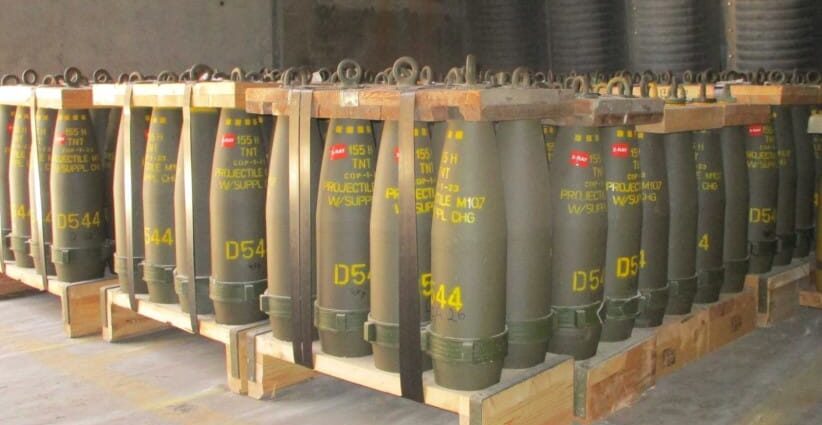
Israel should be able to produce its own Joint Direct Attack Munition (JDAM) bombs en masse within two years, which will revolutionize its warfare capabilities, The Jerusalem Post has learned.
Under orders from former defense minister Yoav Gallant and with recommendations from the commission of Jacob Turkel, Israel started producing more of its own bombs in late 2024 after decades of relying much more on the US for such items, especially during a crisis.
This came after the Biden administration slapped a partial arms freeze on certain bombs to Israel in May 2024 over differences related to the IDF’s invasion of Rafah in Gaza.
The initial idea was for Israel to become more independent in producing so-called dumb bombs.
But that was only the beginning of a process to make Israel more independent in weapons production, especially regarding munitions, which accelerated and expanded much more in 2025-2026, and eventually also focused on producing smarter bombs, like JDAMs.
JDAMs convert bombs into precision-guided munitions
The JDAM is a guidance kit that converts unguided bombs, or “dumb bombs”, into precision-guided munitions (PGMs) which can be used in all weather conditions, including those where using dumb bombs would not be effective.
On January 7, 2025, the Defense Ministry signed two major agreements with Elbit Systems, totaling approximately NIS 1 billion, as part of a strategic effort to strengthen the IDF’s self-sufficiency and operational readiness both in munitions and in raw materials.
In November 2025, the Defense Ministry, where Amir Baram had moved to the position of director-general from serving as IDF deputy chief by March 2025, announced that to date, over 120,000 tons of military equipment, munitions, weapons systems, and protective gear were transferred to Israel via 1,000 aircraft and approximately 150 maritime vessels, mostly from the US.
Baram declared that the ministry over the past two years “has led a tremendous effort to ensure the supply of weapons, equipment, technology, and everything required to enable the IDF to fight and prevail. The 1,000th aircraft that landed today represents another crucial link in the strategic supply chain for the State of Israel.”
He said it was critical to pursue “two parallel tracks: on one hand, strengthening Israel’s defense production base to ensure manufacturing independence, and on the other hand, strengthening cooperation and political and defense relations with our allies around the world, to maintain such an airlift, both in routine and emergencies, and to further strengthen the IDF’s capabilities.”
In January of this year, the Defense Ministry announced it had issued a multi-year order for air munitions manufactured by Elbit Systems, valued at approximately NIS 570 million.
Baram stated at the time, “This air munitions deal joins a series of multi-year force-building agreements currently being advanced across air, land, and additional domains. These agreements will enable inventory replenishment and procurement for years ahead, while investing in the expansion of our defense industrial base.”
“This will enhance the IDF’s readiness for a challenging security decade, support increased defense exports, and strengthen the economic resilience of Israel’s defense industries and the broader Israeli economy,” he said.
Munitions production ramped up during war with Lebanon, Iran
In March, mid-war with Iran and Lebanon, Baram announced an additional ramping up of munitions production with Elbit, “The central focus of the Ministry of Defense…is aerial munitions. Months of preparation and early readiness have enabled the IDF to operate with virtually no constraints in Iran and Lebanon.”
“At the same time, we are now working to replenish all munitions expended in order to be prepared for any scenario. The decisions we made to expand and accelerate production lines in Israel before the operation will now allow us to take production rates to the next level,” Baram stated.
He complimented Israel’s “distinctive integration between the IDF, the Defense Ministry, and the defense industries that enables the rapid translation of operational needs and battlefield lessons into real-time modifications and upgrades, creating exceptionally fast feedback loops,” he added.
While these statements do not divide up which funds went to JDAMs, which to dumb bombs, and when, the continuous rounds of Israel pouring in additional funds to the weapons independence issue leave room for an emphasis on different weapons at different times.
Where did Israel get the money for all of these rapid increases in homegrown munitions?
The Post has learned that the Defense Ministry did not have enough money to pay for the rapid increases in munitions production at some point, as well as for increasing Arrow 3 interceptor production.
Fights with the Finance Ministry over the need to increase the budget delayed funds or left insufficient funds.

Defense Ministry increased Arrow production funds through sales to Germany
In fact, the only way that the Defense Ministry had enough money to jump-start Arrow production was by the creative and quick use of an influx of additional billions of dollars from a second and new deal to sell the Arrow to Germany.
These funds both enabled increasing the development of locally produced munitions and exponentially increased the number of Arrow interceptors produced by a factor of between two and four times.
Some Israeli media outlets criticized Israel for sending Arrow interceptors to Germany mid-war when Israel was carefully budgeting the use of its remaining interceptor supply, and at times was using David’s Sling to try to shoot down Iranian ballistic missiles.
Despite the criticism, the Post understands that only a very small percentage of Arrow interceptors went to Germany.
Effectively, this means the deal gave Israel several dozen or more interceptors over certain critical periods that it would not have had absent the deal with Germany, and this is true even after the small number of Arrows that it sent to Berlin during that time.
Israel does already produce its own kits which convert “dumb bombs” to precision weapons, but not yet anywhere near close to the necessary volume it needs to be independent on the issue.




STAT+: Medicare wants to shake up how it pays for clinical AI
You’re reading the web edition of STAT’s Health Tech newsletter, our guide to how technology is transforming the life sciences. Sign up to get it delivered in your inbox every Tuesday and Thursday.
Good morning health tech readers!
We’re conducting a reader survey that will inform the direction of our coverage and product. I would appreciate it if you’d take a few minutes to help improve STAT.

STAT+: Brain implant restores the sensation of touch in a person with quadriplegia
Keith Thomas just wanted to pet his dog.
A diving accident in 2020 damaged Thomas’ spinal cord and left him with virtually no ability to move or feel his limbs below his neck, so when Bow, his malshipoo, grazed his legs or nuzzled in his lap, Thomas couldn’t feel it or return the affection.
His family got Bow right as Thomas received a brain implant in 2023 as part of an experimental study. The device changed his life. When it zapped his brain and spinal cord with tiny jolts of electricity at the same time, he could lift his arms and shoulders — even stroke and feel Bow’s fur again.
White House weighs releasing controversial intel on Chinese election interference
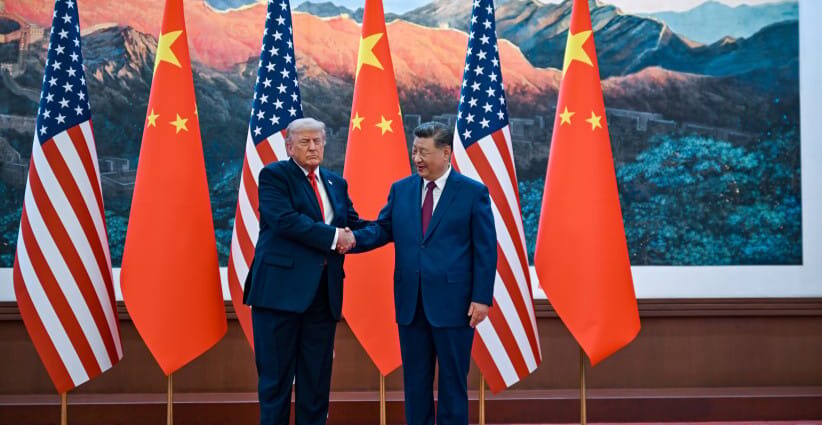
The White House is considering releasing sensitive intelligence related to China and its ability to interfere in US elections that some Trump officials worry could be misleading, according to four people with knowledge of the deliberations.
Trump may disclose the intelligence, which was collected and analyzed during his first term, in a speech that he is due to deliver on Thursday night, when he is expected to outline information about alleged vulnerabilities in the voting infrastructure that could allow for foreign interference in US elections, the sources said.
Reuters could not determine the details of the intelligence, but sources said it is classified and related to whether China had the intention or ability to disrupt US elections in 2020. The sources, who were granted anonymity to discuss classified material, said the intelligence did not show Beijing had manipulated or changed votes.
Trump has continued to repeat the debunked claim that the 2020 election was rigged, suggesting a foreign actor was involved in flipping votes despite legal rulings that Democrat Joe Biden won.
His speech on Thursday may reveal new information about a year-long effort by the Trump administration to collect and review material on what the White House says are vulnerabilities in the nation’s voting infrastructure.
Wider campaign of extending federal control over state powers
The effort is part of a wider campaign to exert federal control over the administration of US elections – a role that rests solely with the states under the US Constitution.
“As usual, anonymous sources are speculating about what President Trump will say during his speech on Thursday evening. The truth is, nobody knows yet what President Trump will ultimately say,” White House spokeswoman Karoline Leavitt said.
The Office of the Director of National Intelligence did not respond to requests for comment. The CIA declined to comment.
No evidence China manipulated votes
The China intelligence was integral to the first Trump administration’s debate about foreign interference in the 2020 election and was reviewed as part of the official intelligence community’s assessment on the issue, the four sources said.
Trump officials said publicly during the first administration that Chinese hackers were targeting election infrastructure ahead of the 2020 election.
Former officials have repeatedly said there is no evidence to suggest China or any other foreign adversary manipulated votes in 2020. A 2021 US intelligence community assessment found no indications that any foreign actor attempted or succeeded in altering “any technical aspect” of the 2020 presidential election vote, including voter registrations, ballots, tabulations or results.
But former intelligence analysts, including Christopher Porter, who served as a national intelligence officer on cyber at the Office of the Director of National Intelligence, wrote a dissent to that report, saying China had the ability to interfere in the elections and could be trying to do so.
A version of that dissent was included in the public release of the 2021 intelligence community assessment.
Porter also wrote a highly classified paper on the subject, expanding on his original argument, two sources said.
Two of the sources who reviewed the paper described it as detailed, outlining specific details of Beijing’s thinking on US elections. Two others said the paper pulled from a small subset of raw intelligence and did not necessarily represent Beijing’s official viewpoint.
Porter has since publicly accused the intelligence community of covering up his dissent reports during Trump’s first term.
Porter declined to comment.
The sources expressed concern that the Trump administration could exaggerate the significance of Porter’s dissent and use it to argue that China did have influence over the outcome of the 2020 vote.
The Chinese embassy in Washington did not immediately respond to a request for comment.
Debate over classification
Current Trump officials have debated in recent weeks whether to declassify the intelligence, with some inside the intelligence agencies worried that doing so could reveal sources and methods of collection and insinuate that Beijing successfully interfered in past elections, two of the sources said.
A White House task force led by conservative journalist John Solomon recently asked the intelligence community for documents outlining the intelligence and has spent the past several weeks reviewing them in anticipation of Trump’s speech, one source familiar with the group’s work said.
The White House did not respond to questions about Solomon’s efforts.
The text of the speech has not been finalized and may still change, the source said.
The White House may also release information related to a years-old allegation that China gained access to US voter data in 2020, a source familiar with the White House’s debates said.
Two people familiar with that issue said that voter data is not confidential, is already available to political consultants for use in targeting election materials, and cannot be manipulated.
The Trump and Biden administrations both reviewed intelligence about China’s potential access to voter data, but two former officials said the intelligence community largely believed that China did not gain entry to US voter systems but instead accessed the information online.

Fed Beige Book Finds Price Growth Slowed or Held Steady in All 12 Districts
The Federal Reserve reported Wednesday, July 15, that economic activity increased at a slight to moderate pace in 11 of the 12 Federal Reserve districts during late May and June, while one district reported no change. The finding came in the central bank’s latest Beige Book, released at 2:00 p.m. ET and based on information collected through July 6.
The line that matters is on prices.
Compared with the previous reporting period, price growth was the same or slower in every Federal Reserve district, the central bank said.
That is a reversal, not a nuance.
What Changed Since June
Six weeks ago, the picture was considerably worse. The June 3 Beige Book described prices rising at a moderate to strong pace, with most districts reporting higher inflation than in the previous report.
Businesses pointed to energy costs connected to the Middle East conflict as a major driver, with the pressure spreading into shipping, transportation, packaging, groceries, fertilizer and other raw materials. Nonlabor input costs were rising faster than many companies could increase their selling prices, squeezing profit margins.
Consumer-facing businesses were having the greatest difficulty passing those costs along.
Wednesday’s report said prices still increased moderately overall, but the direction improved. Nine districts described price growth as moderate, two described it as robust and one reported only slight growth.
Not one district reported that inflation accelerated compared with the previous Beige Book.
Some business contacts continued to attribute cost increases to the conflict in the Middle East, while others cited tariffs. Consumer prices were still rising, and several districts said customers had become more sensitive to price increases.
That creates a complicated environment for businesses: costs are no longer accelerating as quickly, but customers are also becoming less willing to absorb another round of price increases.
The Labor Market
Employment increased on balance.
Five districts reported modest, moderate or solid employment gains, while seven reported little or no change.
That describes a labor market that is neither collapsing nor overheating — approximately the balance the Federal Reserve wants as it evaluates whether inflation is moving sustainably toward its target.
The report also suggested that labor costs are not currently the primary source of inflation pressure. Nonlabor expenses, including energy, transportation and raw materials, remain the larger concern.
The One Issue Still Worrying Businesses
Fuel.
Business contacts generally expected the economy to continue expanding in the coming months, but several districts reported elevated uncertainty over future fuel costs.
That caveat is doing a great deal of work.
Agricultural operators in the Chicago district reported buying diesel in smaller quantities rather than purchasing it by the truckload because they were unwilling to commit at current prices.
Fertilizer costs were identified as an even greater concern heading into the fall and winter, when farmers begin locking in expenses for the next growing season. The report said a modest number of acres had been switched from corn to soybeans specifically because corn requires more fertilizer.
That is what geopolitical instability does to a business plan.
Companies are not only paying more. They are delaying purchases, changing production decisions and avoiding long-term commitments because they cannot reliably forecast what fuel and other energy-related costs will be several months from now.
Inflation Data Moves in the Right Direction
The Beige Book followed two significant inflation reports released over the previous two days.
On Tuesday, the Bureau of Labor Statistics reported that consumer prices fell 0.4 percent in June, the largest monthly decline since April 2020, while annual inflation cooled to 3.5 percent, below the 3.8 percent economists had expected.
On Wednesday morning, the Bureau of Labor Statistics reported that the Producer Price Index for final demand fell 0.3 percent in June, compared with expectations for no change.
The decline was driven by a 1.4 percent drop in final-demand goods prices, including a 6.4 percent decline in energy prices. Gasoline prices fell 12 percent, while diesel, jet fuel and crude petroleum prices also declined.
Services prices, however, increased 0.2 percent, showing that inflationary pressure has eased but has not disappeared.
Then the Beige Book arrived Wednesday afternoon and confirmed that price growth had either slowed or remained unchanged in all 12 districts.
John Williams, president of the Federal Reserve Bank of New York, said in a speech Wednesday morning that there were encouraging reasons to believe inflation had peaked. He projected that overall inflation would decline to approximately 3.25 percent by the end of the year before moving closer to the Federal Reserve’s 2 percent objective in 2027 and reaching the target in 2028.
Financial markets responded to the improving inflation picture. Expectations for a rate increase by September declined, while the two-year Treasury yield moved lower and risk assets, including Bitcoin, strengthened.
What the Federal Reserve Does With It
The Beige Book is published eight times each year, generally about two weeks before a Federal Reserve policy meeting. It provides policymakers with business-level information that may not yet appear in official economic statistics.
Federal Reserve Chairman Kevin Warsh will lead his second rate-setting meeting on July 28 and 29.
At the June meeting, policymakers raised their median 2026 inflation projection to 3.6 percent, up from 2.7 percent, and increased their median federal-funds-rate projection to 3.8 percent.
Minutes from that meeting showed officials divided over the appropriate path for interest rates. Some remained concerned that elevated inflation could require another increase, while others saw reasons to wait for additional information.
Warsh spent Tuesday and Wednesday testifying before Congress. He acknowledged that any central bank would welcome data moving in the right direction but stopped short of declaring the inflation fight finished.
That restraint is understandable. Much of June’s improvement came from declining energy prices during a relative lull in the conflict with Iran. Renewed hostilities and rising oil prices could reverse some of that relief before it becomes embedded in the broader economy.
What It Means for Business
For anyone operating a company, Wednesday’s Beige Book delivers three messages.
Input costs have stopped accelerating as quickly. Customers are watching prices more closely than before. And nobody knows with confidence what fuel costs will do next.
The first two developments offer relief. The third explains why the Federal Reserve is not declaring victory — and why businesses locking in transportation, agricultural or manufacturing contracts for the fall are still making a calculated bet rather than following a predictable plan.
JBizNews Desk | Washington
© JBizNews.com All Rights Reserved. Reproduction or distribution without written permission is prohibited.

See plan to add 1,100 apartments and new park across from the Intrepid Museum in Hell’s Kitchen

Gov. Kathy Hochul on Wednesday announced the development team selected to transform a Hell’s Kitchen parking lot used by the Intrepid Museum into a mixed-use development with more than 1,100 apartments. Gotham Organization, Fisher Brothers, and Mural Real Estate Group will turn the state-owned site at 621 West 45th Street into two connected skyscrapers with 1,127 homes, including about 338 affordable units, new facilities for the museum, and a public park that connects to the existing pedestrian bridge. The project stems from a request for proposals issued in February 2025 for one of the largest remaining undeveloped parcels on Manhattan’s Far West Side.

“The far West Side of Manhattan has a storied history as a vibrant, inclusive community, and this proposal will carry that legacy forward by building for a more affordable future,” Hochul said.
“By transforming a State-owned parking lot into more than 1,100 new homes — with hundreds of permanently affordable units and homeownership opportunities — we are taking direct aim at the housing shortage while strengthening one of New York’s great cultural institutions. This is what’s possible when we put State land to work for the people of New York.”

The state Department of Transportation acquired the land through eminent domain in 2000 and 2002 during the reconstruction of the West Side Highway. Under an agreement with the Intrepid Sea, Air & Space Museum, the state allows the museum to use the surface lot for parking during school trips and special events, as 6sqft previously reported. As required by the RFP, the proposal will preserve parking for the buses and provide access to the pedestrian bridge that connects to Hudson River Park.
Since the lot was the site of a manufactured gas plant, the development team intends to remediate it as part of the state’s Brownfield Cleanup Program.
The two connected towers will have a total of 1,127 homes, with 30 percent, or 338 units, affordable to those earning between 40 and 130 percent of the area median income. Some units will be designated as workforce housing, set aside for middle-income earners like teachers, nurses, and first responders. The developers also propose 108 for-sale condos, with about a quarter made affordable.
As 6sqft previously noted, the RFP sought proposals for buildings with a maximum floor area ratio of 18 and for them to incorporate “forms and facades” that enhance both visual appeal and walkability of Hell’s Kitchen.

In addition to housing, the project will include retail space and replacement parking that will open in phases. Intrepid Park, a new 9,800-square-foot landscaped open space, will connect to the museum’s existing sky bridge.
The project will also expand the museum’s footprint with a new 22,000-square-foot community hub across the West Side Highway called Intrepid Concourse, which will include a visitor center, STEM education facility, and cafe.
“We are thrilled to be a part of such a vital development project for New York City, and appreciative of Governor Hochul’s vision for the neighborhood and belief in the Museum’s mission,” Susan Marenoff-Zausner, president of the Intrepid Museum, said.
“We are excited to collaborate with ‘best in class’ firms that exude excellence and share our belief in community. This project enables us to expand our award-winning educational programs that the Intrepid Museum is renowned for and that have been so impactful for the City’s youth.”

Officials did not release a timeline for the project.
The redevelopment builds upon Hochul’s efforts to identify and convert underutilized or vacant state-owned sites into housing to help address the state’s housing shortage. Other initiatives include the conversion of the Bayview Correctional Facility in Chelsea and the Lincoln Correctional Facility in Harlem.
Another state-owned parcel on the West Side slated for redevelopment is “Site K” at 418 11th Avenue. In December 2024, Hochul unveiled plans for a $1.35 billion mixed-use project with nearly 1,400 homes across from the Javits Center. The development would include a 72-story residential tower, a 28-story hotel, and a five-story podium housing a permanent home for the Climate Museum and community facilities.
RELATED:
- Intrepid Museum parking lot in Hell’s Kitchen slated for development
- East Village parking lot to become 130-unit affordable housing project
- 1,000-unit affordable and supportive housing project breaks ground in East Flatbush
The post See plan to add 1,100 apartments and new park across from the Intrepid Museum in Hell’s Kitchen first appeared on 6sqft.

British retailer M&S launches investigation after anti-Israel stickers placed on potato packages
British retail chain Marks & Spencer (M&S) has opened an investigation after stickers calling for a boycott of Israeli products were placed on packages of potatoes imported from Israel at one of its branches in Worthing, West Sussex.
The case came to light after a customer who bought a 1.5-kg. package of Maris Piper potatoes noticed that the package, marked as originating in Israel, had been labeled with a sticker in the colors of the Palestinian flag bearing the words, “Boycott Israeli Apartheid.” The sticker also included the website address of Palestine Solidarity Campaign, one of the leading organizations in Britain promoting consumer boycotts of Israeli products.
The UK Lawyers for Israel organization (UKLFI), which reported the incident, wrote to the chain’s CEO, Stuart Machin, demanding that the company investigate the matter.
The group said placing stickers on products could amount to unlawful interference with trade and an offense under British law if the goal was to discourage consumers from buying the products and cause financial harm.
Lawyers warn of potential BDS attempts against kosher products
In the letter, the lawyers asked the company to warn all of its employees against similar attempts, especially against Israeli or kosher products, and to report the matter to police if those responsible are identified.
M&S said in response that it conducts routine checks on products in its stores and that employees would be asked to remain alert for any signs of interference with products. According to the company, “it appears that one of the products was tampered with without our knowledge.” It added that the branch manager had opened an inquiry into the incident and that any information gathered would be passed on to the relevant authorities.
UKLFI welcomed the chain’s decision to open an investigation. “Political activists have no right to interfere with products sold in supermarkets in order to intimidate customers or harm trade in Israeli products,” the group said.
Objectionable potatoes originally English, grown for British market
It should be noted that the Maris Piper potato variety in question, sold in the package, is not an Israeli variety but an old British variety developed in England in the 1960s. Israel grows it for export, mainly for the British market, thanks to climate conditions that allow supplies during seasons when the local crop in Britain is limited.
Potatoes of this variety have a light skin, cream-colored flesh, and a relatively high starch content. They are particularly suitable for french fries, baked potatoes, and mashed potatoes, and for years have been considered one of the most popular varieties in Britain.
M&S is one of Britain’s oldest and best-known retail chains. It is identified mainly with clothing and home goods, but also with high-quality food. The chain continues to market agricultural produce from Israel, including fruit, vegetables, and other products, although in recent years it has occasionally been the focus of campaigns by pro-Palestinian organizations calling for a boycott of products originating in Israel.
What REMAX’s Chris Lim wants to build at the American Real Estate Association
REMAX president and chief growth officer Chris Lim created a stir late last month when the American Real Estate Association (ARA) announced his appointment to the fledgling trade group’s board of directors.
“I’ve always believed real estate is an industry where people should be working together,” Lim told HousingWire via email regarding his decision to join the board, “ARA stood out to me as it’s an organization focused on practical issues facing agents today but also on where the industry is headed, and I want to be part of those conversations.”
According to Lim, as he has watched ARA grow over the past few years, it became clear to him that the Mauricio Umansky and Jason Haber-founded association was one he wanted to be involved in. In practical terms, ARA is part of a broader push to give agents and brokerages more choices in professional representation — especially as MLS access becomes less closely tied to mandatory Realtor association membership. According to ARA, it is less NAR replacement and more an emerging challenger with ambitions.
“With more than 20 years as an agent and now working closely with a large network of real estate professionals, I know about and see firsthand the challenges, opportunities and changes shaping the business,” he said. “This felt like the right time to step in and help ensure those perspectives are part of the conversation as real estate continues to evolve while being part of any decisions that may impact agents and our industry.”
Focus on education
In announcing his appointment to the board of directors, ARA said Lim would be focused on helping to shape an educational framework for ARA members. Lim told HousingWire he is looking to build “something practical and accessible that helps real estate agents operate at an even higher level in today’s market.”
“Whether it’s an initiative on communication, negotiation or how to position themselves as trusted advisors, I would like to provide tools they can immediately put into practice for their clients,” Lim said.
In addition to his work on member education initiatives, Lim said he will also be focused on “supporting the organization’s advocacy work and helping advance initiatives that strengthen the real estate profession.”
“That means making sure agents are represented, that their value is clearly understood and that the work they do is protected and elevated. If we can create an environment where agents are better supported and better positioned for the future, that’s a meaningful outcome,” Lim said.
According to Lim, one of the greatest challenges facing agents right now is staying on top of “evolving policies, practices and market dynamics while also helping consumers understand what those changes mean for them.”
“There is a lot of change happening across the industry right now, and it is happening quickly,” he said. “Advocacy that helps bring clarity to the process, supports agents through that change, and reinforces the value of professional guidance for consumers navigating an increasingly complex process is critical.”
More options for REMAX agents
In conjunction with Lim’s appointment to the board, ARA also announced that it will provide all REMAX agents in the United States with a complimentary first-year membership to the association. Lim said this is a wonderful opportunity for REMAX agents to explore the growing association and the benefits it offers members at no additional cost.
“For those who choose to participate, I hope they gain access to meaningful advocacy, valuable educational resources and opportunities to connect with other professionals who are committed to strengthening the industry,” Lim said.
The future of ARA
Looking ahead, Lim said he would feel like success for ARA in the next few years would be for the association to be “recognized as a trusted voice within the industry and as a valuable resource to members.” It is through this that he says ARA would have a meaningful impact on the industry and the consumers that interact with it.
“It would mean ARA is seen as a place where real collaboration happens, between agents, between brokerages, and throughout the business, all working toward making the industry stronger.”
While some may view ARA as a competitor to the National Association of Realtors (NAR), Lim sees it as providing another opportunity for agents.
“Having another choice where real estate professionals can access resources, education and advocacy is ultimately a good thing. ARA is creating space for modern, agent-focused advocacy, and it’s another option for agents who are looking for an emphasis on collaboration and innovation in a shifting market,” he said. “There is a real opportunity to strengthen the profession and support the real estate professionals who help consumers navigate one of life’s most important financial decisions. I’m looking forward to contributing to an organization that is focused on helping agents adapt to an evolving industry.”

The New York Times Asks Federal Court to Quash Subpoenas Seeking Reporters’ Sources
The New York Times asked a federal court Wednesday to quash subpoenas served on three of its journalists in connection with a Justice Department investigation into the disclosure of information about security concerns involving a new presidential aircraft.
The motion was filed under seal in the U.S. District Court for the Southern District of New York, where the reporters had been directed to appear before a federal grand jury. The Times is also seeking permission to make its filing public, while protecting any information that remains subject to grand-jury secrecy.
FBI agents delivered subpoenas Friday to the homes of Times journalists Julian E. Barnes, Eric Lipton and Eric Schmitt, according to the newspaper. The government also attempted to serve reporters Tyler Pager and Adam Goldman, but those subpoenas were not completed.
The subpoenas seek testimony and information that could identify confidential sources used in the newspaper’s coverage of security issues involving a Boeing 747 provided by Qatar for presidential use. The aircraft, valued at roughly $400 million before extensive modifications, is being converted for use as Air Force One.
The Times reported that President Donald Trump traveled aboard an older presidential aircraft after security concerns were raised about the newer plane’s readiness and defensive capabilities. The government subsequently opened an investigation into whether officials improperly disclosed classified or otherwise protected information connected to the reporting.
The Justice Department has said its investigation is focused on identifying government employees responsible for unauthorized disclosures, rather than prosecuting the journalists who received and published the information. The subpoenas nevertheless seek evidence from the reporters that could reveal the identities of their sources.
In its motion, the Times argued that the subpoenas were issued in bad faith and violated the constitutional rights of the newspaper and its journalists. David McCraw, the Times’ senior vice president and deputy general counsel, said the demands were intended to punish the newspaper for its reporting.
“These subpoenas are brought in bad faith to punish The Times for its coverage,” McCraw said in a statement. “They violate the constitutional rights of The Times and its journalists.”
The newspaper also argued that forcing its reporters to disclose confidential sources would interfere with newsgathering and make government officials less willing to provide information to journalists. The Times said it would challenge the subpoenas and defend its reporters’ ability to protect confidential sources.
The subpoenas were delivered two days after the Times published reporting about Trump’s use of an older Air Force One aircraft during a return trip from Turkey. The report said the decision was connected to security concerns involving the aircraft being prepared for presidential service.
The legal dispute comes after the Justice Department changed internal policies that had limited the circumstances under which prosecutors could seize journalists’ records or compel reporters to testify in leak investigations. Those restrictions had generally required prosecutors to pursue other investigative methods before seeking evidence directly from members of the news media.
Federal law does not provide journalists with an absolute privilege allowing them to refuse testimony in every grand-jury investigation. Courts have previously required reporters to testify in certain criminal cases, particularly when prosecutors demonstrate that the information is relevant and cannot reasonably be obtained elsewhere.
The Times is expected to argue that the subpoenas are overly broad, that they intrude on First Amendment protections and that prosecutors have not shown they exhausted alternative ways to identify the officials under investigation. The government can seek evidence through agency records, communications data, access logs and interviews with officials who handled the information.
Because the newspaper’s motion remains sealed, the complete legal arguments and the precise testimony sought from each journalist have not been made public. The Times’ request to unseal the filing could provide additional details if approved by the court.
The Justice Department had not filed a public response to the motion as of Wednesday evening. No hearing date had been announced.
The judge handling the matter may enforce the subpoenas, narrow their scope or quash them. Any proceedings involving grand-jury information or classified material could be conducted partly or entirely under seal.
The case now places a federal court between the Justice Department’s investigation into a possible national-security leak and a newspaper seeking to protect the identities of the government sources behind its reporting.
JBizNews Desk | New York
© JBizNews.com All Rights Reserved. Reproduction or distribution without written permission is prohibited.

Opinion | The Church’s Hope in China

Warren Buffett Says It Is Hard to Find Value When Everyone Prefers Gambling
Warren Buffett, chairman of Berkshire Hathaway Inc., warned Wednesday, July 15, that today’s stock market has become increasingly driven by speculation rather than disciplined investing, saying it has become more difficult to find bargains when investors are focused on short-term bets instead of long-term value.
Speaking with CNBC’s Becky Quick on Squawk Box, Buffett summarized today’s investing environment in one sentence:
“It’s tough to find values when everybody is preferring gambling.”
The comments came as markets continued digesting another volatile week that saw some of the year’s hottest technology stocks suffer sharp declines despite relatively little company-specific news.
Investing versus gambling
Buffett said opportunities always come in cycles.
There are periods when attractive investments appear frequently, he explained, and other periods when investors may wait years before finding exceptional value. He suggested today’s market more closely resembles the latter.
His larger concern was not simply valuation.
Instead, Buffett argued that the financial industry increasingly profits from encouraging constant trading rather than patient investing.
He illustrated the point with Berkshire Hathaway.
An investor who purchased Berkshire shares several decades ago may have generated only a single brokerage commission before simply holding the investment for decades. That, Buffett noted, is not a particularly profitable business model for firms built around frequent trading activity.
He also questioned Wall Street’s constant pursuit of market forecasts and short-term predictions.
According to Buffett, America’s long-term economic growth—not constant trading—is what has historically created wealth for investors.
When he purchased his first stock, the Dow Jones Industrial Average had only recently crossed 100. Today it trades above 51,000, demonstrating the power of long-term ownership rather than short-term speculation.
Wednesday’s market reflected his concerns
Buffett’s remarks came during one of the most volatile trading weeks of the year.
SpaceX fell below its $135 IPO price for the first time.
Leading memory-chip companies including Micron Technology, SanDisk, and SK hynix posted steep declines despite no major deterioration in business fundamentals.
Meanwhile, the broader market continued moving higher as investors welcomed improving inflation data.
The contrast highlighted Buffett’s point: individual stocks can experience dramatic swings while the broader economy continues expanding.
Berkshire remains cautious
Buffett’s investment positioning also reflects his comments.
Berkshire Hathaway’s cash holdings have grown to approximately $397 billion, one of the largest cash balances in corporate history.
The enormous reserve suggests Buffett continues struggling to find acquisition opportunities that meet Berkshire’s strict value-investing standards.
Although Buffett stepped down as Berkshire’s chief executive at the end of 2025, turning day-to-day operations over to Greg Abel, he remains chairman and continues shaping the company’s investment strategy.
He also confirmed that Berkshire now owns an investment in Alphabet Inc. valued at more than $31 billion, adding that he—not Abel—initiated the position before both executives approved expanding it.
A changing legacy
Buffett also discussed his philanthropic plans.
After contributing approximately $47 billion to the Bill & Melinda Gates Foundation over the years, Buffett said he has revised earlier plans and now intends to accelerate charitable giving directly through his family, with the goal of distributing most of his fortune by 2034.
Why his comments matter
Few investors carry Buffett’s credibility.
For more than six decades, Berkshire Hathaway has consistently outperformed the broader stock market through disciplined, long-term investing.
His warning comes as markets continue setting records despite elevated geopolitical tensions, rapid advances in artificial intelligence, historically high valuations and increased retail speculation.
Whether investors choose to follow Buffett’s advice remains to be seen.
But his message was straightforward:
Successful investing depends less on chasing excitement and more on waiting patiently until opportunity clearly outweighs risk.
JBizNews Desk | Omaha
© JBizNews.com All Rights Reserved. Reproduction or distribution without written permission is prohibited.

US Consumers More Cautious in June as Retail Sales Rise by 0.2 Percent
June retail sales rose by 0.2 percent, from an upwardly revised 1 percent gain in May, according to new data from the Census Bureau released on July 16.
This was in line with the consensus forecast.
Transactions were largely driven by motor vehicle and parts dealers and digital retailers, each of which climbed by 1.9 percent. Electronics and appliance stores also rose by almost 1 percent.
Amazon Prime Day contributed to the jump in digital sales, with industry experts estimating that the four-day event would top $26 billion….

Israel should have escorted Ro Khanna on his West Bank visit – opinion
US Representative Ro Khanna (D-CA) visited Israel last week for the express purpose, as he termed it, of seeing what the Palestinians in Judea and Samaria (the Occupied West Bank, as he called it) who live there are up against.
Who is this person who has internalized such a visceral dislike of Israel?
For starters, Khanna, who represents a district at the southern end of Silicon Valley, and Representative Thomas Massie (R-KY), who was recently primaried out of running for another term because Trump dislikes him, teamed up in Congress recently to fight the integration of the US and Israeli militaries.
Together, they introduced an amendment to the 2027 National Defense Authorization Act (NDAA) to strip funding and tech-sharing programs between the two countries. Thankfully, the leadership of the House of Representatives blocked the amendment from receiving a vote, which Khanna then termed “unconscionable.”
Both lawmakers argued, without substantiation, that such integration threatens American sovereignty and avoids congressional oversight while giving no detail as to why they thought this way.
Khanna’s criticism of Israel
Of course, they both have a history of opposing expanded US involvement in Middle East conflicts. Khanna has also criticized Israel’s military conduct in Gaza and opposed funding for the Iron Dome. Khanna is not a friend of ours, to be sure.
During his visit this past week, he alleged that armed Israeli settlers and military personnel surrounded and detained his vehicle in the village of Turmus Aiya for over an hour. Khanna later criticized the Israeli Defense Forces for protecting the settlers
In a taped interview during his visit aired on DRM news (which can be seen here):
He said of the IDF personnel who arrived on the scene to assist: “I saw the arrogance in the eyes of those settlers. 21- and 22-year-olds with guns, laughing that they had detained us. The arrogance of those young IDF soldiers that my tax dollars are funding. It is the arrogance of power, a power that has had no accountability, total impunity, and has created a toxic culture of oppression.”
Notice how he conflated the settlers that had blocked the road on which his van was traveling and the IDF troops who came to assist. For sure, settlers living in Judea and Samaria are clearly in violation of the law if they stopped the vehicle in which the Congressperson was traveling and, if that is the case, they should be prosecuted.
Sadly, it is common knowledge that most often there is no accountability for the illegal acts of the settler community. That must change, of course.
Yet according to the IDF’s report on the incident, the military spokesperson claimed that Khanna’s guide knowingly brought him into a closed military area near Khirbet Zanuta. When notified, IDF troops and police officers intervened after receiving a report of settlers blocking vehicles. In the words of the IDF: “Upon their arrival, the troops disbursed the Israeli civilians and allowed the vehicles to continue on their way.”
Khanna also said: “What people in America are asking is, are you so bought and sold by the establishment and political donors that you cannot see human injustice? So, if you are unwilling to speak up for Palestinian human rights, if you are unwilling to speak up against the genocide in Gaza, the apartheid in the West Bank, then you are morally compromised and we cannot trust you to fight for Medicare for all, or to fight for workers over the billionaires, or to fight for justice and human rights, in the United States.”
What a mouthful, eh? In speaking about what he hears from the electorate in the US, he spews forth every canard spoken over the years about what is going on here with presumed linkage to the resultant inability of the voter to trust him because of what his position may be about Israel.
Sadly, that does seem to be the litmus test in American politics these days. Nevertheless, it takes a certain amount of gall to invoke a non-existent genocide in Gaza as something American citizens care about when what they probably really want their representatives to do is to reinstate their full Medicare coverage or fight for the rights of workers in the US.
Yet what is most surprising to this writer is that there seems to have been no official Israeli government escort with Khanna’s group as they toured the area. How come?
Congressman Khanna is a known quantity here who is on national television in the US often mouthing the same drivel there that he emoted here. So, hopefully, our government knew that this was someone who would make the trip just to stir up more anger at Israel, not only among his district’s constituents, but also Americans generally, given that he is now a nationally known political figure.
One would think, therefore, that a well-run Foreign Ministry would make sure that there was someone from the Ministry with Khanna all the time he was in the country. First of all, Israel could then carefully watch what he does, where he goes, and what he says.
But as importantly, if there was an incident such as the one described, whatever the disputed particulars turn out to have actually occurred, the Israeli government representative presumably would have known how to deal with it.
For those who think that it is possible that Israel offered an escort and Khanna or his people refused, that is highly unlikely in my opinion. If that had been the case, it would have surfaced in the resultant news feeds, but there has been nary a mention of such an offer by either side.
Nevertheless, why doesn’t Israel have a policy in place that says, while we welcome such visits, we consider them important enough to have a government representative accompany the visitor while in Israel.
If the visitor refuses, he or she can be denied entry and then go back to his or her country and badmouth us. For the kind of visitor that Ro Khanna represents, that’s going to happen either way. So, there is no downside, is there?
The citizens of his district may, of course, honestly believe that Khanna is, as he says, “morally compromised.” However, their reasons for feeling that way probably have very little to do with his position on Israel.
My guess is that the good citizens of Milpitas and Sunnyvale in the southern Silicon Valley of California (i.e., the district he represents), given a choice, would prefer that he spend his valuable time and exert his considerable influence on making their lives better and less time on bashing Israel. Not doing so would do more to make him morally compromised than anything that happens here.
Ro Khanna is no friend of ours, nor does he understand Israel’s role as the canary in the coal mine against Iranian aggression. Perhaps when he returns to the US, he should spend more time with the large Israeli tech presence in his district to learn why supporting Israel is as much in the interest of the US as it is in ours.
The writer, a 42-year resident of Jerusalem, is a former national president of the Association of Americans and Canadians in Israel, a past chairperson of the board of the Pardes Institute of Jewish Studies, and a Board Member of the Israel-America Chamber of Commerce (AMCHAM).

EU’s top court upholds Spain’s amnesty law for Catalan separatists
A disputed Spanish law granting an amnesty to those involved in Catalonia’s separatist drive does not violate European Union rules, the bloc’s top court said on Thursday, in a boost to the Spanish government and its Catalan allies.
The amnesty, approved by Spain’s parliament in 2024, was part of an agreement between the ruling Socialist Party and Catalan separatist groups that allowed Prime Minister Pedro Sanchez to stay in power in 2023. The conservative opposition made several unsuccessful attempts to block the amnesty.
“(The court) does not oppose a law, which, in order to reduce institutional and political tensions and facilitate a process of reconciliation, provides for the extinction of criminal liability,” said Koen Lenaerts, president of the Court of Justice of the European Union (CJEU).
In its decision, the CJEU ruled that the adoption and application of the law fall within Spain‘s competence.
The amnesty is the landmark bill of Sanchez’s second term, which has been marked by the minority leftist government’s difficulty in passing laws and corruption scandals affecting his party and family.
Ruling may ease tensions between socialists, separatists
The ruling may help ease tensions between the ruling Socialists and Catalonia’s separatist party Junts, which withdrew its parliamentary support last year, citing the lack of full implementation of the amnesty law as one of the reasons.
Justice Minister Felix Bolaños welcomed the ruling.
“All Spaniards, without exception, are beneficiaries of the amnesty law,” he said, calling for its full implementation concerning senior separatist politicians.
Oriol Junqueras, head of the center-left pro-independence party ERC, which supports Sanchez’s government, welcomed the ruling but criticized judicial reluctance to fully implement the law, including in his own case. He called the victory incomplete.
The CJEU took issue with one provision of the law, ruling that Spanish courts cannot be compelled to lift financial responsibilities or halt preliminary proceedings within a fixed two-month timeframe, pending broader EU decisions.
Out of an estimated 1,600 people who could be pardoned, more than 300 have been granted amnesty for criminal and administrative offenses related to Catalonia’s separatist push since 2011 and the attempt to secede from Spain in 2017, according to Catalan civil group Omnium.
Catalan leader hails ‘resounding victory,’ may return to Spain
Still, former Catalan leader Carles Puigdemont was optimistic, hailing the ruling as a “resounding victory” for the independence movement that “leaves no loophole through which our victory can be disputed” and calling to press forward with the independence cause.
The ruling could benefit Junts leader Puigdemont, who lives in self-imposed exile in Belgium, allowing him to return to Spain without fear of arrest and prosecution.
The Spanish judge handling Puigdemont’s case has said in the past the amnesty does not apply to him as he is also charged with embezzlement of public money used to finance an illegal independence referendum in 2017.
Puigdemont denies the accusation and has appealed to Spain’s Constitutional Court, with a ruling expected in September or October.

Israel denies German flotilla activist’s claim of alleged rape in Israeli detention
A German journalist and Global Sumud Flotilla activist has accused female Israeli prison guards of raping her during a forced strip-search at Givon Prison last October, allegations that the Israel Prison Service has categorically denied.
Anna Liedtke, 25, detailed the alleged assault in an interview published by The Guardian on Wednesday, after Adalah – The Legal Center for Arab Minority Rights in Israel filed a complaint on her behalf demanding a criminal investigation.
The allegations have not been independently verified by The Jerusalem Post. The IPS told The Guardian that allegations are “categorically denied and entirely unsubstantiated,” and that it “rejects any allegation of rape, sexual assault or systematic abuse by its personnel”. Queried separately by the Post on the nature and status of the investigation, the IPS said it had nothing to add beyond the response already given.
The complaint was submitted on June 1 to the Attorney-General’s Office, the IPS’s legal adviser, the National Unit for Investigating Prison Staff, a sub-unit of Lahav 433’s Serious and International Crime Unit, and the commander of Givon Prison.
“We have confirmation from the Prison Service that a file has been opened, but nothing substantive yet,” Adalah told the Post.
Adalah did not provide further information regarding the nature of the file or whether a formal criminal investigation had been opened.
Liedtke claims assault occured in October 2025
According to the complaint and Liedtke’s account to The Guardian, the alleged assault occurred on October 10, 2025, after she was transferred from Ketziot Prison to Givon Prison following the interception of a Gaza-bound flotilla two days earlier.
Liedtke was among approximately 145 participants in vessels affiliated with the Freedom Flotilla Coalition and the Thousand Madleens initiative. The Israeli Navy intercepted the flotilla early on October 8 and diverted the vessels to Ashdod Port, after which most of those detained were taken to Ketziot Prison in the Negev.
The flotilla groups described the voyage as an attempt to deliver humanitarian aid and challenge the naval blockade of the Gaza Strip. Israel has maintained that the blockade is a necessary security measure intended to prevent weapons from reaching Hamas and has accused flotilla organizers of staging provocations rather than genuine aid missions.
Liedtke alleged that she was subjected to physical and verbal violence during her detention and was strip-searched three times without her consent.
She claimed that the first search took place at Ashdod Port in an area that was only partly concealed, leaving her visible to male personnel passing nearby. She alleged that she was again required to strip after being taken to Ketziot Prison.
Following her transfer to Givon two days later, Liedtke told The Guardian she refused an order to undergo a third strip-search. She alleged that two, and later three, female guards forcibly removed her clothes, restrained her hands, forced her to her knees and covered her mouth as she screamed.
One of the guards then allegedly penetrated her vaginally and anally with her fingers, according to the account. Liedtke further alleged that male guards could see into the partially screened area and laughed during the incident.
The allegations are based on Liedtke’s testimony and the complaint filed on her behalf. No findings have been issued regarding the events she described.
Liedtke said she informed friends and medical professionals shortly after leaving Israeli custody and first spoke publicly about the alleged rape at a conference in December.
“There is no reason for me to be ashamed,” she told The Guardian. “Whenever we are silent, they will do it to another person.”
Her attorney, Adalah lawyer Muna Haddad, said the complaint was intended to pursue accountability and examine how Israeli law-enforcement authorities would respond to a demand that the allegations be investigated.
IDF, Prison Service reject allegations of abuse
The Prison Service rejected Liedtke’s account in its response to The Guardian, describing the allegations as entirely unsubstantiated and denying that its personnel had committed rape, sexual assault or systematic abuse.
The IDF also rejected allegations of abuse by the forces involved in intercepting the flotilla and referred questions concerning Liedtke’s detention to the Prison Service.
The claims come amid a wider series of allegations made by participants in Gaza-bound flotillas intercepted by Israel.
In May, organizers of a separate flotilla said that at least 15 participants had reported sexual assault, including rape, after being detained by Israeli authorities. The Prison Service denied those allegations and said all detainees had been held lawfully, with their basic rights protected. Reuters said it was unable to independently verify the accusations.
French prosecutors have also opened a preliminary investigation into allegations of torture, sexual violence and other mistreatment made by French citizens who participated in the May flotilla. The inquiry concerns those separate allegations and is not an investigation into Liedtke’s complaint.
Participants in the October flotilla had also alleged physical abuse, humiliation and degrading treatment immediately following their detention. Those claims were reported by Adalah at the time, before Liedtke publicly disclosed the rape allegation.
The Prison Service has continued to deny allegations of rape, sexual assault or systematic abuse by its personnel.

Why Morocco’s commitment is a major milestone for the US peace plan in Gaza – analysis
On July 16, the US-backed Board of Peace said that Morocco had “formally signed its Participating Country Agreement with the International Stabilization Force.” This was a long-expected development that is key to helping the Board continue to move forward in Gaza.
In Gaza, the Hamas terrorist group continues to control an area of the enclave, estimated at around 30-40 percent of the area. Around 2 million civilians are still trapped under Hamas. Morocco’s commitment is also important, coming after the ISF announced new members from the Kosovo Security Force on July 12.
In order to help the civilians have a chance to escape Hamas rule, they will need reconstruction and also the ability to have security. To secure areas they might one day move to or live in, there will need to be an alternative Palestinian government to Hamas and also an international force.
The US plan to end the war in Gaza was able to secure a ceasefire in October 2025.
The Trump administration has worked hard to make the peace plan come to fruition. However, there are many hurdles. One hurdle is that the Trump administration also has to help manage other issues relating to Israel. For instance, the US is also working on Israel-Lebanon talks.
US creating new ties in Middle East
The US is also trying to work with Syria and restrain Israel from a belligerent policy toward Syria. US President Donald Trump has recently spotlighted the fact that Israel operates in Syria beyond the 1974 ceasefire line. The US is also continuing to fight Iran.
As such, the White House has many issues on its plate. Helping Israel get out of wars on several borders, and helping bring peace to people in Lebanon, Gaza, Syria, and the region is hard work.
The Board of Peace is one part of this effort. Via the Board of Peace, Gaza is supposed to be stabilized. To stabilize it requires an International Stabilization Force.
Around five countries were expected to join the force after the US plan got UN backing and after the Board of Peace was inaugurated in January.
The Moroccan contingent is one of several that are expected to join. “Moroccan forces will support humanitarian aid delivery to Gaza and help train the Palestinian Police Force.
The Board of Peace and the #ISF thank His Majesty King Mohammed VI for Morocco’s unwavering dedication to regional stability, security, and for leading with action to support the people of Gaza,” the Board said on July 16.
“The ISF welcomes the newest members of the Kosovo Security Force to the team. They will support the Gaza security effort in areas such as logistics and civil affairs.”
Morocco joins Abraham Accords after UAE, Bahrain
Morocco is important because it is a member of the Abraham Accords. It joined after the UAE and Bahrain agreed to the original accords in 2020. Kosovo also joined in 2021.
Kazakhstan joined in 2025. As members of the Accords, Kosovo and Morocco are expected to play an important role. Kazakhstan and Albania may also play a role. Albania and Kosovo already sent a team to examine their deployment.
On July 12, the ISF also said it “welcomes the newest members of the Kosovo Security Force to the team. They will support the Gaza security effort in areas such as logistics and civil affairs.”
In addition, Dubravka Suica, the EU Commissioner for the Mediterranean and for Demography as well as a former Mayor of Dubrovnik, recently met with Aryeh Lightstone from the Board of Peace.
They met in Brussels, she posted on July 14, saying, “I welcome his participation in today’s second meeting of our EU Palestine Donor Group. By working together, we can advance Gaza’s early recovery, and help turn the Gaza Peace Plan into tangible progress on the ground. This is our shared goal and our common commitment, in coordination with the Board of Peace and all our partners.”
Suica also met with Nickolay Mladenov, the High Representative of the Board for Gaza. He is a former UN Special Coordinator for the Middle East Peace Process. After her meeting with him, Suica posted about “Gaza’s transitional structures” and the importance of delivering “tangible improvements for the Palestinian people.”
She wrote that “we demonstrated the international community’s unwavering commitment. Now the next step is clear: we need access, Hamas disarmament, security and a clear governance framework to turn that commitment into action.”
Meanwhile, Mladenov spotlighted King Mohammed VI of Morocco “for his visionary leadership, and to the Kingdom of Morocco for its meaningful contribution to the International Stabilization Force in Gaza.” He wrote that “through security support, humanitarian assistance and the deployment of a field hospital, Morocco is, once again, translating its longstanding commitment to the Palestinian people into concrete action. An important contribution to #peace, stability and hope for Gaza and the realization of UNSCR 2803 and President Trump’s Comprehensive Peace Plan.”
It is clear that Morocco’s move toward greater work with the Board and Gaza is a key part of what comes next. Morocco is a friend of the US and Israel.
The Chargé d’Affaires of Kosovo to the State of Israel, Ines Demiri, has also been key to supporting Kosovo’s work with the Board. In June, she met with Kosovo officers Maj. Gentrit Idrizi and Maj. Labinot Lala. “I visited their base to learn more about their important work.
Their service and dedication reflect Kosovo’s steadfast commitment to supporting international peace, security, & stabilization efforts,” she noted. She also visited the Life Support Area Endurance near the Gaza border “which will serve as a vital waypoint for ISF to refit while supporting restoration & humanitarian efforts,” the Board noted.
All of the components of the next phase are slowly coming into view. The logistical support for the ISF. The ISF teams. The countries involved. The donor countries. In addition, the IDF continues to strike Hamas terrorists.
There is also the Civil-Military Coordination Center (CMCC) in Kiryat Gat, set up with US Central Command in October 2025. Along with the IDF and various other countries and NGOs, it has helped with humanitarian assistance in Gaza.

WATCH: Israel Police arrest crime organization boss Yossi Musli after Japanika grenade attacks
New footage released on Wednesday shows the moment Yossi Musli, the head of a crime organization, was arrested at his home on Tuesday by detectives from the Tel Aviv District’s Major Crimes Unit.
The arrest was carried out as part of the investigation into the wave of grenade attacks, arson, and shootings that has hit central and northern Israel in recent days, with a series of attacks focused on branches of the Japanika restaurant chain and other targets.
Earlier on Wednesday, the Tel Aviv Magistrate’s Court extended Musli’s detention by five days. Police suspect he was involved in the wave of attacks being investigated as part of the feud between the Musli and Jarushi crime families. Investigators also believe the probe will widen and that more arrests are likely in the coming days.
During the hearing, Judge Sheli Kotin said there was, for now, a basis that justified keeping Musli in custody.
“Reviewing the investigation materials establishes the suspicion of involvement. In addition, there is a ground for detention of dangerousness, as well as a ground of suspicion of obstruction. I found that there is room to grant the request in part,” she wrote in her ruling.
At the same time, the judge sent a clear message to the investigative unit regarding the case’s continuation.
“The material presented to me is, from an evidentiary standpoint, sufficient for this stage of the investigation and only for the current hearing on the first detention extension,” she wrote. Rotin added that if police do not obtain concrete evidence and do not carry out investigative steps that strengthen the suspicions against Musli, “I do not think there will be room to extend his detention again.”
Musli claims police met with him prior to grenade attacks
During the hearing, Musli chose to address the suspicions against him himself. According to him, several days before his arrest, three detectives from the Tel Aviv Major Crimes Unit came to his home and took him for a conversation at the unit’s offices. He claimed he was told that police had information that he was “organizing with grenades.”
“Several days before they came to me yesterday, officers from Tel Aviv’s Major Crimes Unit had already visited me,” Musli told the court.
“They took me to the Major Crimes Unit offices for a conversation and warned me: ‘Listen, we have information that you are organizing with grenades.’ I didn’t even understand what they wanted.
“They told me: ‘Take four days and calm the area; if not, we will act against you with aggressive measures.’ I asked what aggressive measures meant, and they said they would issue administrative orders against me. I told them, with respect, ‘Thank you. Maybe disconnect my phone.’ I have nothing to do with anything.”
Musli’s lawyer, Doron Noy, attacked the police conduct and argued that if investigators really had prior information about an intention to throw grenades, they should have taken operational steps at that stage.
“If the Major Crimes Unit had this information about grenades, why didn’t they do something operational?” he asked.
“They were at his house; they saw he was there. They saw and know he is not the one throwing the grenades; physically, that is clear. So if they don’t have sufficient evidence linking him- no recording, no visual documentation, no strong testimony or anything else- why arrest him?
“This is all due to public pressure and the attention this affair has drawn. The police want to show, apparently, that they are doing something, even though they have nothing and nothing at all.”
Later in the hearing, Noy added that even while Musli was in custody, additional incidents took place in northern Israel.
“You tell the court that the suspect does not need to carry out the actions physically, but he is allegedly behind them, and tonight, while he was under arrest, two more incidents took place in Haifa and Rosh Pina. So how do you explain a ground for obstruction or dangerousness?
“It happened even when he was under arrest. He told you he is not involved in any feud, and you are not telling him ‘there is this or that against you,’ but asking where he was every night incidents happened, and he explains that he was at home. You can disprove or confirm his claim, because you have the DVR from the cameras at his house, so what is all the noise?”
According to the suspicion, the wave of attacks is connected to an escalation in the feud between the Musli and Jarushi crime families. In recent days, about nine Japanika branches, along with other targets, were hit by grenade attacks, shootings, and arson.
Japanika owner was close to crime family
As part of the investigation, police recently took a statement from Japanika chain owner Barak Abramov. During his testimony, he told investigators that he has no feud with anyone, has no enemies, and does not understand what is behind the series of attacks on his businesses. He also clarified that in his assessment, this was not an attempt to harm him personally.
According to people familiar with the details, Abramov was once considered close to the Musli brothers, and at that time they also helped him, those sources said, on his way to control of the Bnei Yehuda soccer team. In recent years, however, the situation has changed, and he is now identified with figures in the Jarushi family. Police are examining whether that shift lies behind the attacks on the chain’s branches.
It was also learned that in recent months Abramov made a major business move, selling 20% of the Landora group to Leumi Partners for about NIS 200 million, while also working to advance an initial public offering of the Japanika chain on the stock exchange. According to sources familiar with the details, the wave of attacks has delayed that move for now.
Police are continuing their investigation and are preparing to summon additional members of the Musli family for questioning in the coming days. Investigators believe Musli’s arrest is only the first stage of a broader investigation, which is expected to continue in the coming days.

Levine Report Says New York City Unemployment Fell to 5.4%, a 10-Month Low
New York City’s unemployment rate dropped to 5.4% in May, its lowest level in 10 months, according to the monthly economic and fiscal outlook released Wednesday by New York City Comptroller Mark Levine. But the report is blunt about why the number moved: the 0.2-point decline came from a dip in how many New Yorkers are looking for work, not from more New Yorkers finding jobs.
That distinction is the whole story for anyone hiring in this city right now.
Underneath the headline number, the city’s labor market is holding up better than the country’s by almost every measure the Comptroller’s office tracks. New York City’s labor force participation rate stands at 62.6%, near a record high, at a moment when the national rate has slid to a five-year low. The share of working-age New Yorkers who actually hold a job — the employment-population ratio — held steady at a record 59.2% in May. The national figure fell to 59.0% in June. Before this year, the city had never beaten the country on that measure.
The job growth that exists is narrow. Professional and Business Services added 7,000 jobs over the month and 14,000 over the year — the closest thing the city has to a broad-based engine, and the sector that fills office towers and pays the wages that ripple into restaurants, retail and services. Healthcare and Social Assistance added 5,400 over the month and 22,300 over the year, by far the largest gain, though those jobs pay less and lean heavily on government funding.
Financial Activities and Securities are the ones to watch. Both are up from a year ago, but the report says hiring in each essentially stalled over the past month. For a city whose tax base rides on Wall Street bonuses, a stall is not a small detail.
The national picture is worse. Private-sector payrolls grew by just 49,000 in June, and the Labor Department revised April and May down by a combined 74,000, dragging the three-month average to 99,000. Leisure and Hospitality lost 61,000 jobs in what should be a peak tourism month. The U.S. unemployment rate edged down to 4.2%, but again for the wrong reason — participation fell to 61.5% as people gave up looking. Jobless claims stay low. Hiring stays low. The Comptroller’s economists call it a low-hire, low-fire economy, and it has now been the story for the better part of a year.
One number improved. National GDP grew at an annualized 2.1% in the first quarter, revised up from an earlier estimate of 1.6%, with imports up 11.8% and exports up 10.9%.
What it costs to live here
Home selling prices have been essentially flat. Market rents have not. Rents are up 5% to 6% since the middle of 2025 and now sit 35% above where they were before the pandemic — the single biggest pressure on the workforce that every tri-state employer is trying to recruit and keep.
The supply answer is slowly moving. Developers filed plans for nearly 17,000 housing units in the first quarter of 2026 alone, on top of strengthening completions through 2025. Levine’s message with the report was that those units take time to deliver and that inaction is not an option, whatever policymakers decide to argue about.
Tourism has picked up since the World Cup rounds began in early June, but the summer has not delivered what the industry hoped. Hotel room rates are running above a year ago while occupancy is roughly flat with 2025 — meaning hotels are charging more to fill the same rooms, and summer bookings have come in under expectations.
The city’s books
Preliminary tax receipts for fiscal 2026, counted through June, are 7.3% higher than the prior year. The City Council adopted a $125.8 billion budget for fiscal 2027 on June 30, roughly $1.14 billion above what the mayor proposed in his Executive Budget in May. Just over a quarter of that increase came from higher tax revenue projections — about $300 million more than the Office of Management and Budget had forecast.
Levine has testified in support of building a formal framework around the city’s Rainy Day Fund, including a target balance and clear rules for putting money in and taking it out. The Charter Revision Commission is expected to release its final report and any ballot proposals in the coming weeks.
For business owners, the read is this: revenue coming into the city is strong, the job market is stable but not growing much outside health care, and the cost of housing your workers keeps climbing. Those three facts don’t point in the same direction, and the next budget cycle is where they collide.
JBizNews Desk | New York © JBizNews.com All Rights Reserved. Reproduction or distribution without written permission is prohibited.


Opinion | Politics Has Taken Over My Union

Trump Attacks Hochul’s One-Year Data Center Freeze as a ‘Terrible Decision’
President Donald Trump publicly attacked New York Governor Kathy Hochul on Wednesday, July 15, over her decision to temporarily halt new large-scale data center development in New York, calling the move a “terrible decision” in a post on Truth Social and urging the state to reverse course immediately.
“Both the Taxes and the Jobs amount to LIQUID GOLD!” Trump wrote, arguing New York was driving away billions of dollars in investment and thousands of high-paying jobs.
The criticism came just one day after Hochul signed an Executive Order establishing what her administration described as the nation’s first statewide moratorium on new hyperscale data centers while regulators develop new standards governing electricity demand, environmental impacts, water usage and community protections.
“As data center development threatens to hike up utility bills, deplete our natural resources, and create uncertainty for New Yorkers, it’s my responsibility to take action and lead,” Hochul said in announcing the order.
What the Executive Order Does
The Executive Order immediately pauses state environmental permitting for new hyperscale data centers requiring 50 megawatts or more of electricity for up to one year, giving state agencies until July 2027 to develop a comprehensive regulatory framework.
During the moratorium, New York will prepare a Generic Environmental Impact Statement evaluating the industry’s effects on electricity demand, water consumption, air quality and surrounding communities.
Within 60 days, Empire State Development must also publish a Community Investment Framework designed to help municipalities negotiate community benefit agreements with developers. Those negotiations could include infrastructure improvements, childcare investments, workforce development and direct financial contributions.
Hochul also directed state agencies to explore requiring large data centers to contribute toward electric grid upgrades and said she intends to support repealing an existing sales tax exemption benefiting large facilities, subject to legislative approval.
Why Hochul Took Action
The governor argued that rapid growth in energy-intensive artificial intelligence infrastructure threatens to increase electricity costs for residential customers.
According to the governor’s office, average residential electricity prices in New York have increased nearly 68 percent since 2019.
A Siena College Research Institute poll conducted in June found 46 percent of New Yorkers support a one-year pause on permitting large data centers, while 21 percent oppose the proposal. The survey found majority support among both Democrats and Republicans.
The same poll showed Hochul holding a significant lead over likely Republican gubernatorial challenger Bruce Blakeman, Nassau County Executive.
Industry Pushback
The Data Center Coalition, representing many of the nation’s largest technology companies, sharply criticized the Executive Order.
“Gov. Hochul’s statewide moratorium on data centers will ensure that those investments, jobs, and economic activity flow elsewhere rather than to New York,” said Dan Diorio, the organization’s Executive Vice President for State Policy and Government Affairs.
The coalition argued that modern data centers generate substantial construction activity, long-term tax revenue and support growing artificial intelligence infrastructure.
Supporters of the pause disagreed.
Laura Shindell, New York State Director for Food & Water Watch, called the Executive Order an important step toward protecting communities from uncontrolled development.
State Assemblymember Didi Barrett said residents deserve a better understanding of how rapidly expanding data centers affect local infrastructure, natural resources and electricity prices before additional projects move forward.
What Comes Next
The Executive Order differs from legislation already passed by the New York Legislature.
Lawmakers previously approved the Responsible Data Center Development Act, which would impose a one-year moratorium on facilities consuming 20 megawatts or more, establish separate electric and water rate classes for large data centers and require public hearings before project approval.
Hochul has not signed that legislation, saying additional negotiations with lawmakers remain necessary while her Executive Order provides immediate action.
New York joins a growing number of states reassessing incentives for large data center development.
Earlier this year, Maine Governor Janet Mills vetoed a proposed moratorium because it failed to exempt projects already underway, while Arizona Governor Katie Hobbs signed legislation establishing a three-year pause on new sales tax incentives for data centers.
The timing is significant.
Regional grid operator PJM Interconnection is currently operating under Maximum Generation and Hot Weather Alerts amid record electricity demand. PJM’s most recent capacity auction cleared at a record $333.44 per megawatt-day, with independent market monitor Monitoring Analytics attributing roughly 63 percent of the increase to growing data center electricity demand.
The political fight between Trump and Hochul ultimately centers on a broader national question: how to balance artificial intelligence investment, economic development and rising electricity costs as data centers consume ever-larger amounts of power.
JBizNews Desk | New York
© JBizNews.com All Rights Reserved. Reproduction or distribution without written permission is prohibited.
Randian urges loanDepot to consider sale, reassess leadership
Retail activist investment firm Randian Capital is urging loanDepot’s board of directors to launch a formal review of strategic alternatives, including a potential sale, amid falling share prices and ongoing losses.
In an open letter to the board on Wednesday, Randian and its affiliates said they have economic exposure to more than 250,000 shares of loanDepot through common stock and options. The stock has been in free fall since the company went public in February 2021 at $14 per share and recently traded around $1.12 — a decline of more than 90% based on Tuesday’s closing price.
A spokesperson said loanDepot had no comment on the letter.
The push comes as loanDepot continues to struggle with profitability in a difficult mortgage market. In the first quarter of 2026, the Irvine, Calif.-based lender posted a net loss of $54.9 million, wider than the $32.8 million loss in the fourth quarter of 2025 and the $40.7 million loss a year earlier.
In its letter, Randian said macroeconomic headwinds alone do not explain loanDepot’s “prolonged underperformance,” arguing that peers have adjusted cost structures and strategies to the higher-rate, lower-volume environment.
“loanDepot has yet to demonstrate a sustainable path to restoring shareholder value,” the investor wrote.
Scale may be a “competitive disadvantage”
Randian also pointed to loanDepot’s relative scale, saying it is becoming a “competitive disadvantage” as the mortgage industry consolidates through mergers, servicing sales and exits from origination. “This can be exacerbated if reduced origination volumes persist longer than anticipated,” it added.
loanDepot originated $7.7 billion in loans during the quarter, down 5% from the fourth quarter but up from $5.2 billion a year earlier. The company’s pull-through weighted gain-on-sale margin declined to 2.71% from 3.24% in the fourth quarter of 2025. Management cited market volatility, higher rates and a shift toward lower-margin conventional loans as key factors.
loanDepot’s leadership has framed 2025 and 2026 as a multiquarter rebuild. Founder and CEO Anthony Hsieh, who returned to the chief executive role, has emphasized digital transformation, expansion of the wholesale channel the company reentered in early 2026, increasing loan officer headcount and applying automation across origination and servicing.
Hsieh has said the company is gaining market share and investing in long-term initiatives, including a partnership with Figure Technology Solutions that is expected to lower production costs, improve the customer experience and speed up loan closings.
Randian said strategic acquirers could unlock value not reflected in the current share price, particularly through cost and operational synergies.
Randian highlighted loanDepot’s mortgage servicing rights portfolio — $123 billion as of the first quarter, the 20th largest owned MSR portfolio in the country, according to Inside Mortgage Finance — as a key asset that might command a premium valuation in a transaction.
It cited the recent Mr. Cooper Group deal as evidence that strategic buyers remain willing to pay meaningful premiums for what they perceive as high-quality servicing and production platforms. In November, Rocket Companies completed its acquisition of Mr. Cooper for $14.2 billion, paying 51% more than the valuation initially announced.
Randian also pressed the board to reassess whether the current leadership structure is “best positioned to maximize shareholder value,” saying the board should be open to changes if needed to ensure the company’s needs receive sufficient time and attention from management.
“A successful sale of the company may be the best way for shareholders to finally realize fair value, and Mr. Hsieh to free up his time for the open water,” the letter states. “After years of significant value destruction, the Board owes shareholders a clear plan to maximize shareholder value, whatever path forward it ultimately chooses.”
This article was written by Flávia Furlan Nunes and generated with the assistance of HousingWire Automation, then reviewed by a HousingWire editor before publication.

Netanyahu postpones planned visit to US after Lindsey Graham’s funeral delayed
Prime Minister Benjamin Netanyahu has postponed his planned trip to the United States, the Prime Minister’s Office announced on Thursday.
The reason for the delayed departure is the postponement of former US senator Lindsey Graham‘s funeral, which was rescheduled to the end of the month.
Previously, Netanyahu had been set to fly to Washington on Saturday night to attend Graham’s funeral and to meet with US President Donald Trump.
Netanyahu’s official visit will mark first since Iran war
Netanyahu was expected to remain in Washington through Tuesday, but his itinerary was yet to be officially scheduled, sources told The Jerusalem Post.
The prime minister’s visit would mark the first official trip to Washington since the war with Iran. His last visit was in February.
During a recent phone call made by Netanyahu to congratulate Trump on the 250th anniversary of US independence, the two leaders agreed to “meet soon.”
Amichai Stein contributed to this report.

STAT+: FDA approves Merck’s oral PCSK9 drug, a first
Want to stay on top of the science and politics driving biotech today? Sign up to get our biotech newsletter in your inbox.
Kalshi is unveiling new biopharma betting markets, we have a deeper understanding of the link between Epstein-Barr virus and multiple sclerosis, and Merck gets an FDA approval on its oral PCSK9.
Kalshi will launch bets on biotech
Prediction market giant Kalshi announced this morning that it will now start taking bets on clinical trial outcomes and FDA approvals, STAT’s Elaine Chen writes. It’s starting with a small number of markets selected alongside partner AppliedXL, a tech company that already monitors and predicts clinical trial outcomes.

STAT+: Pharmalittle: We’re reading about Kalshi bets on clinical trials, a Merck cholesterol pill, and more
Top of the morning to you, and a fine one it is. Well, sort of. The skies in these parts are decidedly hazy thanks to smoky conditions to the north. Nonetheless, we are doing our best to take a deep breath and focus on the matters at hand. To that end, we are firing up the trusty kettle to make another cuppa stimulation. Our choice today is English breakfast, an old standby. Please feel free to join us. Meanwhile, here are a few items of interest. Hope you have a meaningful and productive day and, of course, do stay in touch. …
Prediction markets have permeated the worlds of sports, politics, and reality television shows. Now, the biopharma industry could be next as Kalshi, one of the world’s largest prediction market exchanges, plans to take bets on clinical trials and regulatory approvals, STAT reports. The company is starting with a small number of markets chosen in collaboration with its partner, AppliedXL, a tech firm that monitors and predicts study outcomes. Initially, Kalshi will take a conservative approach, allowing people to bet only on Phase 3 trial outcomes run by established drug companies and with full approval decisions by the U.S. Food and Drug Administration.
The U.S. Food and Drug Administration approved a first-of-its kind pill from Merck that is designed to help lower cholesterol levels beyond what statins alone can achieve, The Wall Street Journal says. The agency cleared Lipfendra to treat high cholesterol, which is a major risk factor for heart attacks and strokes. The approval was based on studies showing that Merck’s once-daily pill reduced bad, or LDL, cholesterol levels by up to 60% over six months in adults with or at risk for atherosclerotic cardiovascular disease. Analysts expect the new Merck pill to be a big seller, generating peak annual sales of more than $5 billion.

Fed Rate-Hike Expectations Fall After Cooler Inflation Reports
Financial markets sharply reduced expectations that the Federal Reserve will raise interest rates at its July meeting after two consecutive inflation reports came in cooler than investors feared.
Traders were pricing in a 10.2% probability that the Federal Reserve would raise its benchmark interest rate by 25 basis points at the conclusion of its July policy meeting, according to CME FedWatch data cited by Reuters on Wednesday. That was down from 31% one week earlier.
A basis point equals one-hundredth of a percentage point. A 25-basis-point increase would therefore raise the federal-funds target range by one-quarter of a percentage point.
The shift followed Tuesday’s Consumer Price Index report and Wednesday’s Producer Price Index report, both of which showed less inflation pressure than markets had anticipated.
Markets move from fear toward a pause
Before this week’s inflation reports, investors were increasingly concerned that the Federal Reserve might need to raise rates again to prevent inflation from becoming entrenched.
Market pricing changed substantially after the data.
Following Tuesday’s Consumer Price Index release, federal-funds futures reflected an 84.5% probability that the Federal Reserve would leave its target range unchanged at 3.5% to 3.75% at the July meeting. The probability of a rate increase stood at 15.5% at that point.
After Wednesday’s Producer Price Index report, the implied probability of a July increase fell further, to 10.2%, according to the later CME FedWatch reading reported by Reuters.
These figures represent market expectations, not a Federal Reserve commitment. The central bank has not promised to leave rates unchanged, and pricing can shift quickly when new economic information arrives.
Consumer inflation remains elevated
Tuesday’s report showed annual consumer inflation of 3.5%, below fears that the reading could exceed 3.8%, according to Reuters’ market reporting.
Although 3.5% was cooler than investors feared, it remained above the Federal Reserve’s long-term goal of 2% inflation.
That means the central bank is not declaring victory.
The softer reading instead reduced the immediate pressure for another increase and gave policymakers additional time to study employment, wages, consumer spending, energy prices and broader business conditions.
Wholesale prices provide a second encouraging signal
Wednesday’s Producer Price Index showed an unexpected monthly decline in June.
The Producer Price Index measures prices received by domestic producers for goods and services. It can provide an early indication of inflation moving through supply chains before some costs reach consumers.
Reuters described the report as the second consecutive day of cooler-than-expected inflation data.
The two reports together suggested that inflation moved in a more favorable direction during June.
However, both reports measured conditions before the latest escalation in the conflict between the United States and Iran.
Oil remains the largest immediate risk
The inflation outlook could change if fighting in the Middle East continues pushing oil and transportation costs higher.
Energy affects nearly every part of the economy. Higher oil prices increase expenses for airlines, trucking companies, manufacturers, farmers, delivery businesses and households.
Businesses may absorb those costs through lower profits or pass them to customers through higher prices.
Reuters noted that renewed fighting and competition for control around the Strait of Hormuz could create additional price pressure after the period measured by the June inflation reports.
That means the Federal Reserve must weigh encouraging backward-looking data against newer risks that may not yet appear in official inflation statistics.
Federal Reserve officials remain cautious
Federal Reserve Governor Lisa Cook said she was prepared to act if inflation did not begin slowing soon, underscoring that policymakers remain concerned about persistent price pressure.
Federal Reserve decisions are based on a range of economic information, not a single report.
Officials will consider inflation, employment, wage growth, financial conditions, consumer demand and international developments before deciding whether to hold, raise or eventually lower rates.
What lower rate-hike odds mean for consumers
A decision to leave rates unchanged would not immediately make borrowing inexpensive.
Credit-card rates, business loans, mortgages and auto financing remain affected by the Federal Reserve’s current restrictive policy and broader bond-market conditions.
However, reduced expectations for additional increases can limit upward pressure on borrowing costs.
Treasury yields often fall when investors expect a less aggressive Federal Reserve. That can eventually influence mortgage pricing and corporate financing.
The outlook can still change quickly
The market’s current expectation is that the Federal Reserve will remain on hold in July.
That expectation is not guaranteed.
A renewed rise in oil prices, stronger-than-expected employment, faster wage growth or another acceleration in consumer inflation could increase the likelihood of tighter monetary policy later in the year.
For now, two cooler inflation reports have given businesses, consumers and investors some relief by reducing fears of an immediate rate increase.
The Federal Reserve’s final decision will depend on whether that improvement continues—and whether the latest geopolitical shock begins showing up in American prices.
JBizNews Desk | Washington
© JBizNews.com All Rights Reserved. Reproduction or distribution without written permission is prohibited.

Uplist debuts Homebuyer Intelligence, putting live mortgage insights into real estate listings
Uplist has launched Homebuyer Intelligence, a listing-connected tool that lets homebuyers see mortgage lender-specific payment estimates and affordability strategies while they are viewing a property in person or online, the company announced Thursday.
The Washington state-based mortgage technology firm said in its announcement that Homebuyer Intelligence is designed to plug loan officer expertise directly into listing flyers, open houses and online property marketing.
Loan officers generate a single Uplist link or QR code that can be added to any flyer or digital asset, taking buyers to a personalized listing page powered by the lender’s live pricing.
Once on the page, buyers can explore an estimated monthly payment with principal, interest, taxes and insurance; compare multiple financing paths; and test affordability tactics without creating an account, filling out a contact form or triggering a credit pull, according to the announcement.
“Loan officers can’t be at every open house, but their expertise can be,” Jeff Bell, founder and president at Uplist, said in a statement. “Homebuyer Intelligence gives buyers real answers the moment affordability questions come up and keeps the loan officer part of that conversation.”
The product aims to turn static listing collateral into an interactive financing resource for real estate agents and homebuilders while giving loan officers a presence at every showing.
Buyers can view options such as mortgage rate changes, home price adjustments, down payment scenarios and temporary buydowns, then share the full scenario by text, email or directly with the loan officer.
Homebuyer Intelligence also surfaces common seller-paid buydown structures, including estimated seller credits and year-by-year payment schedules. For builders, that can help quantify how seller-paid financing may affect payments in the early years of homeownership before a prospect leaves the model home.
Each listing experience carries the loan officer’s branding and required disclosures.
Uplist said the pages are built to be discoverable by AI-powered search assistants. When a consumer uses an AI tool to research affordability for a specific listing, the assistants can direct the buyer to a lender-verified resource that reflects live pricing from a lender already working with the listing agent.
In a high-rate, low-inventory market, affordability questions often determine whether a showing converts into a serious application. Homebuyer Intelligence is one of a growing number of tools that try to answer these questions earlier in the sales funnel, at the listing level, with lender-specific numbers rather than generic calculators.
For mortgage companies and loan officers, this type of integration can increase lead quality and keep them attached to the transaction even when they are not present at an open house. For agents and builders, it offers a way to handle payment objections in real time using scenarios that reflect an actual partner lender’s pricing and buydown options.
Homebuyer Intelligence is available now to Uplist subscribers, and lenders can request a demo from the company.
This article was generated using HousingWire Automation and reviewed by a HousingWire editor before publication.

Trump Weighs Sending Ground Troops Into Iran as Economic Risks Intensify
President Donald Trump is weighing ground operations to seize Persian Gulf islands near the Strait of Hormuz, including Kharg Island, Iran’s main oil export terminal, according to U.S. officials describing a Situation Room briefing the president held Tuesday evening. Also on the table: expanded airstrikes against Iranian energy infrastructure and the bombing of a deeply buried tunnel complex known as Pickaxe Mountain.
The session capped days of consultations with Vice President JD Vance, Secretary of War Pete Hegseth, Secretary of State Marco Rubio and Gen. Dan Caine, chairman of the Joint Chiefs of Staff.
Trump has already told Fox News what comes next if Tehran refuses to negotiate: “Next week comes the power plants, next week comes the bridges.” The strikes, he said, continue until he says it’s enough.
U.S. Central Command said it conducted two waves of strikes Wednesday, concluding at 9 p.m. ET, hitting Iranian command centers, air defense systems, missile and drone capabilities and coastal surveillance sites, including at Bandar Abbas. It was the fifth consecutive day of American strikes.
The island and the mountain
Kharg Island is the economic target. The majority of Iran’s crude exports leave through it, and taking it would sever the revenue funding Tehran’s war. It would also place American troops within easy reach of Iranian missiles and drones. Trump has suggested another country would handle any ground campaign. Retired Marine Gen. Frank McKenzie argued Sunday on CBS that possession of Iranian soil would carry weight in future negotiations. Administration officials say the president remains reluctant to commit troops and has walked back this same threat before.
Pickaxe Mountain is a tunnel network cut into granite between 300 and 475 feet beneath a mountain peak — far deeper than the enrichment sites at Natanz and Fordow struck last summer. The Institute for Science and International Security assesses from satellite imagery that the facility is not yet operational but that construction continues. Trump told radio host Hugh Hewitt this week that the United States will take it out.
Depth is the obstacle. The 2025 strikes on Fordow worked because bunker-busters traveled down ventilation shafts into the halls below. Public satellite imagery has not identified ventilation shafts at Pickaxe.
Diplomacy is stuck
Trump maintains publicly and privately that he prefers a negotiated resolution. Tehran has refused to surrender its enriched nuclear stockpiles despite months of strikes and a brief interim agreement that allowed restricted oil exports. That deal collapsed when Iranian forces attacked ships transiting the strait, and Washington reimposed its naval blockade.
The blockade is a commercial reality
CENTCOM said a Curaçao-flagged tanker, the M/T Belma, ignored repeated warnings while transiting toward Kharg Island. A U.S. aircraft fired Hellfire missiles into the vessel’s smokestack and disabled it.
That is the environment for anyone moving cargo through the Gulf. War-risk insurance for the strait has climbed from 0.125% of a ship’s insured value per transit to between 0.2% and 0.4% — roughly a quarter-million dollars more for a very large crude carrier, a cost that passes into freight rates.
Iran’s Revolutionary Guard answered Wednesday by threatening to halt all regional energy exports, declaring that oil and gas will leave “either for everyone or for no one.” Roughly one-fifth of global oil consumption and about a third of the world’s seaborne crude normally pass through Hormuz.
Where it lands
Brent crude traded above $85 a barrel Wednesday, more than 15% above its pre-war level near $65 and below the $120 reached at the height of the fighting. Regular gasoline averages $3.88 a gallon nationally, about 70 cents higher than a year ago. Every delivery route, contractor’s truck and distributor in the country is paying that difference now.
The slower damage is in food. Up to 30% of internationally traded fertilizer normally moves through Hormuz, with Gulf producers supplying 30% to 35% of global urea exports and 20% to 30% of ammonia. Fertilizer costs feed grain prices, and grain prices reach grocery shelves on a lag of months.
The International Monetary Fund has warned the cushion is gone — spare production capacity deployed, demand compressed, inventories drawn down. A shock at $85 with no buffer behind it is a different proposition than the same price in a normal year.
Destroying Iranian power plants and bridges would deepen that. It would also hand Tehran every reason to make the strait unusable rather than merely dangerous — and the countries buying that oil are not the ones in this fight.
That math is politics too. Fuel prices land on Republicans heading into November, and the pump sign is the only economic indicator most voters read.
JBizNews Desk | Washington © JBizNews.com All Rights Reserved. Reproduction or distribution without written permission is prohibited.

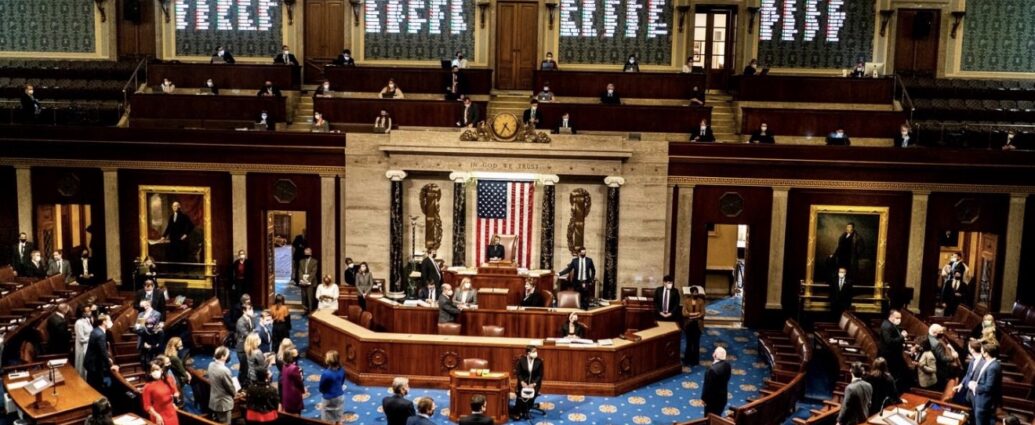
More Than Half of House Democrats Vote to Eliminate $3.3 Billion in Military Aid to Israel
More than half of the Democrats serving in the U.S. House of Representatives voted Wednesday, July 15, to eliminate $3.3 billion in American military financing for Israel, marking the largest recorded break by House Democrats from the longstanding congressional consensus supporting annual security assistance to the country.
The amendment failed by a vote of 104–314 and was not added to the broader national-security spending legislation under consideration. The proposal received support from 103 Democrats and its sponsor, Republican Rep. Thomas Massie of Kentucky. All other Republicans who voted opposed it, along with a substantial group of Democrats.
Massie, a libertarian-leaning lawmaker who has consistently opposed foreign military assistance, proposed removing the full amount of foreign military financing designated for Israel. During the House debate, he said the money should instead be used for roads, bridges, veterans and other needs inside the United States.
“I think we should stop it — we should put them on a diet,” Massie said.
He also said American-supplied weapons had frequently been used in operations that harmed civilians. The amendment would have removed the military financing without replacing it with a narrower restriction tied to particular weapons, military units or Israeli government policies.
The vote divided the Democratic leadership. House Minority Leader Hakeem Jeffries of New York opposed the amendment, although he told colleagues before the vote that American policy toward the Israeli government needed to change.
Jeffries said there were more decisive ways to pursue changes involving the government of Israeli Prime Minister Benjamin Netanyahu without eliminating the entire annual military financing package.
House Democratic Whip Katherine Clark of Massachusetts, the second-ranking Democrat in the chamber, voted for the amendment. Former House Speaker Nancy Pelosi of California also supported it, joining a large group of Democrats who favored withholding the aid even though the measure was introduced by a Republican.
Democratic Rep. Steny Hoyer of Maryland, a former majority leader and a longtime supporter of the U.S.-Israel relationship, opposed the amendment. Hoyer said eliminating the financing would weaken American national security and reduce Israel’s ability to confront organizations including Hamas and Hezbollah.
“I rise in strong opposition to this amendment, which would dangerously undermine American national security,” Hoyer said during the floor debate.
The United States provides Israel with approximately $3.3 billion annually in foreign military financing under a long-term security-assistance agreement. The financing is largely used to purchase American weapons, equipment and defense services, meaning much of the money ultimately flows to U.S. defense manufacturers.
The Wednesday vote was not enough to alter the aid package, but it produced a public record showing how individual House members now approach the issue. More than 100 Democrats supported eliminating the full military-financing allocation, while nearly as many Democrats joined Republicans in preserving it.
The debate came as Democratic lawmakers faced pressure from competing advocacy groups and voters ahead of the November midterm elections. AIPAC, the major pro-Israel advocacy organization, urged supporters to contact members of Congress and oppose Massie’s amendment.
J Street, a liberal organization that describes itself as pro-Israel and supportive of a negotiated two-state solution, also opposed the amendment. The group said it was too broad and poorly drafted, although it acknowledged that some Democrats viewed the vote as one of the few available opportunities to register opposition to the use of American weapons by Israel.
J Street President Jeremy Ben-Ami said the organization understood why lawmakers wanted to express concern about Israeli military operations in Gaza, the West Bank, Lebanon and elsewhere, even while opposing the complete elimination of military financing.
The vote followed nearly three years of conflict since the October 7, 2023, Hamas attack on Israel. Israel’s extended campaign in Gaza has generated increasing criticism among Democratic voters and lawmakers, while Israel and its supporters maintain that continued American assistance is necessary to defend the country from Hamas, Hezbollah, Iran and other regional threats.
Republican leaders used the vote to emphasize divisions among Democrats over Israel, although Massie’s sponsorship also reflected continuing opposition to foreign aid among a smaller group of Republicans aligned with a more noninterventionist approach.
House Speaker Mike Johnson of Louisiana and the overwhelming majority of Republicans supported retaining the assistance. Jeffries did not direct Democratic members to vote as a unified bloc, allowing lawmakers to take individual positions on the amendment.
The result leaves the military financing intact as the larger spending measure advances. It does not change existing aid, impose new conditions on weapons transfers or alter the underlying U.S.-Israel security agreement.
The final tally nevertheless produced the clearest congressional measure to date of the declining Democratic consensus around unrestricted military assistance to Israel. The amendment failed by more than 200 votes, but a majority of House Democrats voted to remove funding that had historically passed Congress with broad bipartisan support.
JBizNews Desk | Washington
© JBizNews.com All Rights Reserved. Reproduction or distribution without written permission is prohibited.

Shas leader Arye Deri accuses IDF chief of ‘helping the Left’ with ultra-Orthodox draft stance
Leader of the haredi (ultra-Orthodox) Sephardic Shas Party, Arye Deri, accused IDF Chief of Staff Lt.-Gen. Eyal Zamir of attempting to “help the left-wing bloc,” and “causing damage to the military” after Zamir sent a recent warning against legislation advanced by Deri’s party that seeks to freeze the arrests of haredi draft evaders.
“He has lost it. What the chief of staff did during an election campaign was an attempt to help the left-wing bloc, without a doubt,” Deri said.
“He has no business involving himself in politics. This sets a very dangerous precedent. He has caused significant damage to the army,” Deri added.
The remarks came in a Thursday interview with the haredi Kikar Hashabbat news outlet, after the Knesset passed the contentious bill this week that will temporarily freeze arrests of haredi draft evaders, a measure expected to remain in effect for at least six months. The High Court of Justice on Wednesday later froze the law and will hear petitions to strike down the legislation.
The passage of the bill in its final readings came following severe legal warnings that the legislation is unbalanced and will not increase haredi enlistment amid the IDF’s severe manpower shortage, as well as outrage from bereaved families and reservists.
Zamir warns draft evasion bill raises issues of national security
Zamir warned ahead of the bill’s passage that implementing such a law would create an array of national security problems.
He stated that he opposes the bill’s implementation “completely and unequivocally.”
Among the issues raised by Zamir was that such a law would decrease recruitment both from the haredi community and from the general Israeli population by delegitimizing the idea of the IDF as the “nation’s army” in which everyone is equally obligated to serve.
Zamir has warned in recent months that the IDF could soon collapse if no solution is found for the manpower shortage.
Party leaders condemn Deri’s statements
Deri’s remarks directed at Zamir sparked outrage from party leaders in the opposition bloc seeking to replace Netanyahu in the upcoming elections.
Yashar Party leader Gadi Eisenkot said that Deri’s remarks were “A display of breathtaking audacity and complete detachment.”
“If the haredi leadership had even a shred of self-awareness, the person who led and advanced the draft exemption legislation this week, while the best of our sons and daughters are deployed on multiple fronts, would at the very least have kept his ‘criticism’ of the chief of staff to himself,” Eisenkot added.
“Arye, after three years of war, perhaps it’s time to understand that military service is not a political issue. It is the insurance policy of the Jewish people in the State of Israel. It is a matter of national security,” Eisenkot added.
Former prime minister Naftali Bennett, who leads the Together Party, responded that “Deri’s attacks on the chief of staff strengthen Israel’s enemies and tear apart the IDF.”
“Only in a government of October 7 can a person like Deri, whose life’s work has been encouraging mass draft evasion, dare to accuse the chief of staff of his own failures.”
Yisrael Beytenu leader MK Avigdor Liberman said that someone who sits in the security cabinet while “simultaneously fighting to ensure that an entire sector does not enlist” was the last person who could attack the IDF chief of staff.
“In the next government, the parties of draft evaders will sit in the opposition,” Liberman vowed.
Opposition leader Yair Lapid referred to Deri’s recent visits to military prisons, in which the Shas leader went to express support for draft evaders.
“In the afternoon, he [Deri] embraced his own draft-evading grandchildren; and at night, from the security cabinet, he sent other people’s children to die in the war,” Lapid said.
“The chief of staff simply told the truth: because of Deri and his people, we do not have enough soldiers. Deri is a danger to national security,” Lapid added.
The haredi parties have continuously encouraged the coalition to advance legislation that would not increase haredi enlistment.
IDF warns of manpower shortage
The IDF has repeatedly warned of an urgent manpower shortage after more than two years of war.
In April, the High Court of Justice ordered that the state take concrete steps to revoke key financial benefits from draft evaders and to move toward criminal enforcement against haredi men who evade military service.
Deri has slammed the High Court, along with Attorney Gali Baharav-Miara, for her insistence on enforcing High Court decisions to seize the funds of haredi draft dodgers.
The tensions also come amid reports that Netanyahu has made a deal with the haredi parties to advance as much of their contentious legislation as possible for support on coalition legislation in exchange.
Netanyahu’s coalition has been on a legislative blitz to advance as much legislation as possible before the Knesset goes on recess this week ahead of the upcoming elections, scheduled for October 27.
Yonah Jeremy Bob contributed to this report.

Israeli singer-songwriter Ehud Banai’s music transforms Beit Guvrin caves in immersive exhibition
Israeli singer-songwriter Ehud Banai’s music has found a beautiful setting deep inside the Bell Caves at Beit Guvrin-Maresha National Park, where it forms the soundtrack to a new immersive video-art exhibition exploring memory, birth, dreams, and the mysteries of human consciousness.
The Eighth Sound exhibition brings together Banai’s songs and texts with video art by Ronen Tanchum. Created specifically for the ancient caves, the approximately 40-minute work surrounds visitors with music, projected images, light, and movement, transforming the underground space into what its creators describe as a kind of “womb of the earth.”
The exhibition, launched by the Israel Nature and Parks Authority, will run on selected evenings from July through the end of November. It is the seventh contemporary art exhibition to be presented in the caves since the site was converted into an unconventional gallery space.
The idea originated in Banai’s response to the caves themselves. The Bell Caves are hundreds of man-made caverns, carved out during the Byzantine and Early Arab periods. They have a bell-like shape, which historians believe was created to prevent the ceilings from caving in.
“On my first visit to the cave, I felt as though I had crossed into another dimension, like entering a giant womb,” Banai said. “The Gemara tells us that a fetus in its mother’s womb possesses the highest level of consciousness.”
An immersive journey through memory, dreams, and consciousness
Banai said he began thinking about figures such as the prophet Elijah and Rabbi Shimon bar Yochai, whose mystical experiences were associated with caves. From there, he developed the concept of a journey told through speech, sound, and images.
“It is about transitions: from pregnancy to birth, from reality to dream, from life to what lies beyond it, from a cycle of seven days and seven notes to the eighth day and the eighth sound,” he said.
The exhibition takes its title from the idea of something existing beyond the familiar cycles of time and music: beyond the seven days of the week and the seven notes of the musical scale. The “eighth sound” represents an elusive frequency that cannot be physically heard, symbolizing hidden consciousness, memory, and voices emerging from silence.
According to various traditions cited in the exhibition text, the fetus learns the secrets of the universe while in the womb, only to forget them at birth. Life then becomes a gradual process of recollection, with each encounter, dream, and observation offering a glimpse of that lost knowledge.
Music and AI imagery reshape Beit Guvrin’s ancient Bell Caves
The soundtrack includes several of Banai’s best-known songs, many in new arrangements recorded especially for the exhibition. It also features his first recorded performance of “Atuf Berahamim,” “Wrapped in Mercy,” which he wrote after seeing an ultrasound during his wife’s pregnancy with their eldest daughter.
Tanchum’s projected imagery follows the emergence and dissolution of memory. Abstract forms gradually become recognizable images before fading away again. Each projector offers a different viewpoint, while the natural contours of the cave become part of the constantly changing visual composition.
“For me, this work began with Ehud’s text, before I had visited the cave and before I had heard the music,” Tanchum said. “In his words, I already felt a gateway to childhood memory, to an inner sense of time, and to a spiritual dimension.”
When he entered the Bell Caves, it became clear that the video work would have to respond to the space rather than merely use it as a screen, Tanchum recalled.
“The cave did not feel like a background, but like a living place with its own rhythm, substance, and breath,” he said.
Tanchum developed an AI-based visual system designed to blend with the cave through light, imagery, and movement. Banai’s voice, he said, provides the “human heart” of the journey.
Tomer Sargosti, director of Beit Guvrin National Park and founder of the Bell Cave Gallery, said the annual exhibitions allow visitors to experience the historic site from a different perspective.
“The cave, its acoustics, the video artwork, and the atmosphere all come together and invite the public on an emotional and sensory journey in one of Israel’s most impressive heritage sites,” he said.
The exhibition will be open from 7 p.m. to 11 p.m., with last admission at 9 p.m., on selected Tuesdays, Wednesdays, Thursdays, and Saturday nights, depending on the month. The exhibition itself lasts about 35 minutes, while a full visit to the Bell Caves takes about 75 minutes.
Visitors may also order picnic packages in advance and collect them at the park’s service center for an evening combining art, nature, food, and wine near the caves. Tickets can be reserved through the Israel Nature and Parks Authority website.

Hezbollah’s weapons harm national security, slim majority of Lebanese say – poll
Hezbollah’s continued armed presence is harming Lebanon’s security, 51% of Lebanese participants answered in a YouGov survey published last month by the Council for a Secure America.
The latest survey, conducted in three waves to track changes in public opinion, collected responses from 260 Lebanese civilians in Arabic in May. Earlier surveys were conducted among 253 people in October and 252 individuals in January. The margin of sampling error is ±5.0%, with a confidence level of 95%.
Only 11% of the respondents said they believed Hezbollah’s armed presence improved Lebanon’s security, with many declining to answer the question.
More than half (58%) said they supported efforts by Lebanon’s President Aoun to strengthen the Lebanese Army and negotiate the disarmament of Hezbollah, so that all armed forces in Lebanon operate under the Government’s authority, though the support fell slightly from January, when 63% said the same. Only 10% said they were not supportive of Aoun’s efforts.
Predicting what will come of the relationship between Jerusalem and Beirut, 41% said it was likely there will be peace, though only 32% said they would support normalizing with Israel after a long-term resolution is made for the issue of “Palestine.” Just over a quarter (27%) predicted peace would be unlikely, while only 19% said they wouldn’t support normalizing with Israel even if the issue of “Palestine” was resolved.
Four in ten Lebanese respondents predict eventual peace with Israel
Christians (43%) were more supportive of normalization than Muslims (28%), though both demographic groups seem to have warmed to the idea since January. In the January survey, only 19% of Muslims and 37% of Christians were in support of the theoretical development.
Though peace and normalization remain a divisive issue, 40% said they thought that normalized ties with Israel would help the Lebanese economy and only 22% said they thought it would hurt it. Notably, those aged over 45 were more likely to think normalization would promote economic growth and stability (47% compared to 29% of younger respondents).
Despite a significant portion believing a peace agreement will be an eventuality, more respondents said they thought Lebanon should keep laws which criminalize dealings with Israel. 32% said the laws should be kept, 28% repealed, and 40% said they didn’t want to answer.
Iran claims ‘existential war’ as Israel and US maintain military cooperation
New episodes every Sunday-Thursday.
Listen and subscribe wherever you get your podcasts.
For more news, analysis, and the latest updates, head to jpost.com.
Headlines edited by Shir Perets.
Hosted and produced by Lara Sukster Mosheyof.

Syria’s actions against Hezbollah weapons smuggling showcase its regional commitment – analysis
Syria has busted a new smuggling operation that was attempting to move weapons to Hezbollah. This bust comes at a key time, as Hezbollah is under some pressure by Israel, the US, and Lebanon as the US hopes for progress on trilateral talks.
The goal of the talks is that Lebanon will extend its control to “pilot zones” in southern Lebanon where Hezbollah will be removed, and Israel has said it won’t withdraw or redeploy in Lebanon until there is progress.
The Trump administration has hinted that Syria might help support operations against Hezbollah. US President Donald Trump again mentioned this possibility in a recent interview with Trey Yingst of Fox News. As Trump maneuvers to bring about peace in Lebanon, Syria plays a key role in helping cut off the arms flow to Hezbollah.
On July 16, Syria’s state media SANA said that Syria’s Interior Ministry had seized an advanced weapons shipment bound for Hezbollah near the Syrian-Iraqi border, one of many successes that it has had against smuggling to Hezbollah.
The new Syrian government came to power after the fall of the Assad regime. Hezbollah had intervened in Syria to back the Assad regime, as they were allies for decades due to Iranian support for both. Hezbollah sent thousands of fighters to Syria between 2012-2024. The Syrian rebels hated Hezbollah for its role in the war. When Assad fled, it was natural that Damascus would act against the Iranian-backed smuggling networks.
Weapons reaching Hezbollah from Iran
Weapons flowing to Hezbollah usually come from Iran via Iraq. They would be smuggling through Al Qaim on the Iraqi border, via Albukamal in Syria and then up the Euphrates River Valley. They would sometimes pass through several points, including the T-4 base at Palmya. They also sometimes moved through Deir Ezzor. The US force at Tanf Garrison in southern Syria made it hard for the arms to flow near the Jordanian border.
When the Assad regime collapsed the smuggling routes may have changed – it is hard to keep track of everything in the Syrian desert. In addition, the instability in southern Syria around Suwayda has led to smuggling routes remaining in that area.
Specialized units may have included US-trained Syrian rebels
The Syrians say that the ministry used “specialized security units” to carry out the operation “after detecting a suspicious vehicle parked near the border. A search uncovered a cache of weapons that included long-range missiles, guided anti-tank missiles and drones.” Some of the Syrian rebels that were trained by the Americans at Tanf were integrated first into Syria’s 70th Division and then into Interior Ministry units. It’s possible some of them may have played a helpful role here.
The reports also say that “preliminary investigations based on evidence collected at the scene indicated that the shipment was intended to transit Syrian territory before being delivered to the Hezbollah terrorist militia in Lebanon. Authorities said investigations were continuing to identify everyone involved in the smuggling operation and dismantle the networks linked to it.”
The Syrians went on to say that “the Interior Ministry said protecting Syria’s borders and safeguarding national sovereignty remained a top priority, adding that it would not allow Syrian territory to be used as a transit route or launch point for arms smuggling or other activities that threaten the security of Syria or neighboring countries.”

Haredi women, academics file petition against Israel’s new gender-segregated education law
Six haredi women and 10 academics petitioned the High Court of Justice on Thursday to strike down, or sharply restrict, a law expanding gender-segregated studies in Israeli higher education, arguing that the legislation dismantles the safeguards on which the court previously found the practice constitutional.
The petition was filed hours after the Knesset approved an amendment to the law sponsored by Otzma Yehudit MK Limor Son Har-Melech, which expressly allows the Council for Higher Education to approve separate programs for men and women in bachelor’s, master’s, and doctoral studies.
At institutions that otherwise teach men and women together, the law limits gender separation to classrooms; that restriction does not apply to institutions that are themselves designated for only men or only women. The amendment also states that operating separate institutions or study programs for men and women for religious reasons will not, in itself, be considered discrimination.
The petitioners asked the court to strike down the amendment in whole or in part. Alternatively, they asked it to rule that the law does not override the restrictions set by the High Court in its 2021 decision, which permitted gender-segregated academic programs only as a narrow exception for haredi (ultra-Orthodox) students, at the bachelor’s level and inside classrooms, while prohibiting the exclusion of women lecturers.
All five justices on the expanded panel agreed that gender segregation in higher education infringed the constitutional right to equality. A 3-2 majority nevertheless upheld the CHE’s framework, finding it proportionate only because it was restricted to haredi students, bachelor’s degrees serving as the “entry gate” to higher education, and separation inside classrooms rather than in public areas of the campus.
The court also ruled unanimously that women lecturers could not be barred from teaching men’s classes and stressed that deviation from the arrangement’s “delicate balances” could bring segregated programs into the realm of illegality.
Knesset failed to address violations on gender segregation restrictions
The current petition, led by Tel Aviv University Faculty of Law Prof. Yofi Tirosh, argues that the Knesset has now expanded the model without addressing longstanding violations of the restrictions that made it permissible in the first place.
It accuses the CHE of failing to prevent segregation from spreading into libraries, corridors, administrative services, and other public spaces; allowing institutions to offer different programs to men and women; and failing to enforce the court’s prohibition on excluding women lecturers from men’s programs.
The petition’s central constitutional argument is that the amendment expressly authorizes an infringement of equality without requiring institutions to ensure substantive equality between the men’s and women’s programs.
A provision intended to protect equality between the programs appeared in an earlier version of the legislation but was removed during the committee process, the petition said. The result, according to the petitioners, is legislation purportedly intended to enable “separate but equal” programs that instead opens the door to “separate and unequal” education.
They warned that different levels of demand could lead institutions to offer certain degrees or specializations to only one sex, while women could be directed toward lower-paid, traditionally female professions. Segregated programs could also produce separate professional networks and limit women’s access to senior academics, laboratories, research opportunities, and future employment, they argued.
Those concerns are particularly acute in advanced degrees, the petition said, because master’s and doctoral studies depend on close work between students and researchers rather than only classroom instruction.
Several of the haredi petitioners argued that presenting segregation as voluntary ignored the social pressure that could develop once separate programs became widely available.
“A partition never remains merely an option,” Dr. Estee Rieder, a haredi woman and researcher of haredi society, said in the petition.
“Once established, it becomes a norm behind which women are expected to stand. What is presented as ‘freedom of choice’ becomes, in practice, social pressure and the absence of any real ability to choose otherwise.”
Feini Suknik, a haredi educator and social activist, said cultural accommodations such as kosher food, consideration for Shabbat and Jewish holidays, and other forms of sensitivity did not require creating a parallel academic system.
“The haredi public does not need a parallel and inferior academy,” she said. “It needs real entry into academia itself.”
Gender segregation law reverses 2021 limitations, critic says
The petition also challenges the law’s application beyond the haredi community. While the 2021 judgment justified limited segregation partly because of the educational and cultural barriers facing haredi students, the new law refers more broadly to separate programs operated “for religious reasons” and does not expressly restrict participation to haredim.
The petitioners argue that the change could create two parallel academic systems: one mixed and another governed by gender-separation requirements for anyone seeking them.
Son Har-Melech defended the legislation following its passage, saying it “does not impose anything on anyone” and instead “expands freedom, enables diversity, and respects the human mosaic of Israeli society.”
Tirosh argued that the legislation did the opposite of each of the limitations established in 2021: It failed to address the exclusion of women lecturers, expanded segregation to advanced degrees, opened the possibility of separation beyond classrooms, and removed the express limitation to haredi students.
“Either the law is unconstitutional because it permits a disproportionate infringement of rights,” she said, “or it has no legal significance and the criteria limiting the permissible form of gender segregation in academic studies, which were established in the 2021 ruling, remain in force.”
Keshet Neev contributed to this report.

Eighty Israelis come together to compete in Rubik’s Cube event with hundreds spectating
Nearly 80 people from across Israel attended the Mike’s Cubes 2026 Rubik’s Cube competition on July 5, joined by hundreds of onlookers at the Shoham Medical Center in Pardes Hanna-Karkur.
Twenty new competitors were welcomed into the community by veteran participants after registration for the event filled to capacity in just a few minutes. The World Cube Association and the Speed Cubing Israel Association supervised the initial registration.
This year’s event was sponsored by the Steimatzky bookstore chain and connected people from various parts of Israeli society.
“Beyond the competition itself, seeing all the friendships being forged here and the community continuing to grow, this is what warms my heart most of all,” said Esti Stone, the co-founder of the event.
The structure of the Rubik’s Cube event was divided into three subsections, dictated by the size of the cube, its shape, and whether competitors were blindfolded when solving.
Meet the winners
Ben Baron was the top competitor, earning 1st place in four of the six categories and placing in the top five overall. Baron set two national records, solving a 3D combination puzzle, called a Skewb, in 1.33 seconds and a 4x4x4 cube blindfolded in just over two minutes.
Yoav Vishne, a computer science student at the Technion-Israel Institute of Technology, also did very well, making the podium in half of the categories. Vishne solved a 2x2x2 cube in just 0.91 seconds, winning the category, though he failed to beat his personal best of 0.68 seconds from 2024.
The only category not won by either Vishne or Baron was the “pyraminx” category. Netanel Pour set a national record for the pyramid-shaped puzzle in the first round, solving it in 1.61 seconds, and going on to take 1st place in the category during the final round.
Stone established the annual event in honor of her late husband Mike Stone, an American-born cube solver who passed his love for Rubik’s Cubes on to his children and grandchildren. “Grandpa Mike” participated in several cubing competitions as Israel’s oldest competitor before he passed away in 2022 at 72-years-old.
Due to increased demand, the community is already preparing for the 2026 Israeli Championship in Tel Aviv at the end of August, which will likely attract a record number of cubing competitors and spectators.

‘Levites Way’: Route 443 renamed in memory of late foreign minister, links major Israeli regions
The government approved a proposal to name Route 443 “The Levites Way” in memory of the late foreign affairs minister David Levy, Prime Minister Benjamin Netanyahu and Transportation and Road Safety Minister Brig.-Gen. (Res.) Miri Regev announced in a joint statement on Tuesday.
The proposed renaming was put forth by Netanyahu and Regev to commemorate both Levy’s service to the State of Israel and the Tribe of Levi’s historical connection to the region.
“We are proud today to commemorate his memory on a road that connects our capital, Jerusalem, with the center of the country, as a symbol of a man who dedicated his life and energy to the unity of Israel,” Netanyahu said in the joint statement.
Route 443 is a major road that connects Tel Aviv, Jerusalem, Modi’in, Judea and Samaria, and the Judean foothills. The specific section of the road being renamed is between the Ben Shemen Interchange in Central Israel and the Beituniya-Givat Ze’ev Junction right outside Jerusalem.
The Ministry of Transportation and Road Safety will work with the Defense Ministry to update the road’s signage. The Government Secretariat will also issue the route’s name in Israel’s official gazette, Reshumot.
Shluhot Reservoir to be named after Levy as well
The naming of Route 443 follows Energy and Infrastructure Minister Eli Cohen’s decision to name the newly inaugurated Shluhot Reservoir after Levy on Sunday.
In 1957, Levy immigrated from North Africa to Israel’s Beit She’an region, which the new Shluhot Reservoir will connect to Israel’s National Water System.
Levy served for many years as Israel’s Deputy Prime Minister, Minister of Foreign Affairs, Construction and Housing Minister, and Aliyah and Integration Minister. He was also a Member of the Knesset for 37 years, from 1969 to 2006.
“From his childhood in Beit She’an, he broke barriers and reached the leadership of the nation, where he championed social action and assistance for disadvantaged populations, while promoting peripheral towns,” Netanyahu said. “He was a loyal representative of the State of Israel and stood our ground proudly before the nations of the world.

Iran tells Houthis to close Red Sea gateway if US hits power network, sources say
Iran has asked Yemen’s Houthi terrorist organization to stand ready to close the Red Sea oil route if the United States strikes Iranian power infrastructure, three sources told Reuters on Thursday, posing a potent new threat to global energy supplies.
The idea has been discussed within the Islamic Republic’s leadership, and the message has been conveyed to Iran’s Houthi allies, two senior Iranian sources and a regional source familiar with the matter said, speaking on condition of anonymity.
The sources said the Houthis had been informed recently of Tehran’s request, which has not been previously reported.
They did not give further details on how it had been conveyed or whether it was after US President Donald Trump’s threat to attack Iranian power infrastructure on Tuesday.
Iran’s foreign ministry and a spokesperson for the Houthis were not immediately available to respond to Reuters‘ request.
Houthis deploy drones near Bab El-Mandeb, says source
A source close to the Houthis said the group had completed preparations to attack shipping by deploying missiles and drones near Bab el-Mandeb strait, the gateway to the Red Sea, in Yemen’s highlands overlooking Hodeidah and the Gulf of Aden and was awaiting the order to begin.
Any threat to the Red Sea and its Bab el-Mandeb gateway risks hugely exacerbating the global energy crisis triggered by Iran’s closure of the Strait of Hormuz and underscores the explosive risks stemming from a new round of warfare.
With the Strait of Hormuz already shut, any Houthi attacks on vessels or ports in the Red Sea would leave the Middle East’s two main oil export routes disrupted simultaneously, opening a new front in both the energy crisis and Iran’s wider conflict with the United States.
Representatives of Iran’s Islamic Revolutionary Guard Corps (IRGC) who are already in Yemen will control the decision on when to close the Bab el-Mandeb strait, said the source close to the Houthis.
In a sign of escalating tensions in the region, the Houthis fired missiles at Saudi Arabia after accusing the kingdom of bombing an airport under their control on Monday, breaking a four-year truce in the conflict between the kingdom and the group.
Torbjorn Solvedt, principal Middle East analyst with risk intelligence company Verisk Maplecroft, said the flare-up between the Houthis and Saudi Arabia had come at a bad time.
“If fighting intensifies and spills over into Red Sea export infrastructure and shipping, it will threaten the only major alternative route for oil exports from the region,” he said.
Two regional sources close to Riyadh said the kingdom was taking threats from Iran and the Houthis very seriously, adding that Riyadh was aware the Yemeni group was now closely coordinating with Iran over the Red Sea.
The conflict began on February 28, when Israel and the United States struck Iran, leading Tehran to shut the Strait of Hormuz, the main route before the war for around a fifth of global energy supplies.
Tensions have mounted since a fragile June truce between Tehran and Washington collapsed, reviving fears of full-scale war and disrupting energy flows through the Strait.
Source says Red Sea closure would not be difficult
A significant amount of Gulf oil has since been diverted to the Red Sea through a Saudi pipeline, and the waterway now carries around 7% of global energy supplies.
When the Houthis attacked shipping during the Gaza war, major shipping companies diverted their cargoes to the much longer, more expensive route around Africa.
With Saudi Arabia having itself diverted 70% of its energy exports through its Red Sea port of Yanbu, any direct attacks there would also be a big problem for oil markets.
One of the regional sources said Iran’s clerical rulers were seeking to pressure the United States by raising the potential cost to the global economy, threatening Red Sea shipping and the flow of Saudi oil exports through the waterway, in what the source described as part of “Iranian thinking.”
Closing down the strait would not be difficult, the source said, adding: “Anybody with a firing rifle can interrupt the shipping. You don’t have to have sophisticated missiles to interrupt the shipping.”

Johnson & Johnson Raises Outlook, Moves Toward First $100 Billion Annual Revenue Year
Johnson & Johnson raised its full-year financial outlook Wednesday after reporting stronger-than-expected second-quarter results, putting the healthcare giant on pace to surpass $100 billion in annual revenue for the first time in its 140-year history.
The company reported second-quarter sales of $25.3 billion, an increase of 6.6% from a year earlier, while adjusted earnings came in at $2.90 per share, topping Wall Street expectations. Chairman and Chief Executive Officer Joaquin Duato said the results reflected continued strength across the company’s pharmaceutical and medical technology businesses despite growing competition for one of its largest medicines.
For investors, the quarter reinforced a central theme surrounding Johnson & Johnson: the company is proving it can continue growing even as STELARA, one of its biggest revenue generators, faces biosimilar competition.
Revenue Nears Historic Milestone
Johnson & Johnson increased its 2026 sales guidance to between $100.8 billion and $101.4 billion, making it likely the company will exceed $100 billion in annual revenue for the first time.
The revised outlook also included higher earnings guidance, with adjusted earnings now expected between $11.60 and $11.75 per share, above previous forecasts and ahead of Wall Street consensus estimates.
Crossing the $100 billion threshold would represent a historic milestone for one of the world’s largest healthcare companies and further strengthen its position among the biggest publicly traded corporations in the United States.
Pharmaceutical Pipeline Offsets Patent Pressure
The quarter demonstrated Johnson & Johnson’s strategy of replacing aging blockbuster medicines with newer therapies.
While STELARA continues losing exclusivity to lower-cost biosimilars, growth from newer medicines and the company’s MedTech division more than offset those headwinds.
Excluding STELARA, management said the Innovative Medicine business delivered double-digit growth during the quarter.
The company also highlighted several regulatory approvals and positive clinical developments, including expanded uses for TREMFYA, CAPLYTA, and the THERMOCOOL SMARTTOUCH SF platform, along with encouraging oncology data involving RYBREVANT FASPRO, TALVEY, and DARZALEX FASPRO.
Those products are expected to become increasingly important as Johnson & Johnson continues refreshing its pharmaceutical portfolio.
Medical Technology Remains a Growth Engine
Johnson & Johnson’s MedTech division continued benefiting from steady demand for surgical equipment, orthopedic products, cardiovascular technologies, and hospital procedures.
Healthcare systems have largely normalized following pandemic-related disruptions, allowing procedure volumes to recover while supporting demand for medical devices.
Management also said a planned acquisition will strengthen the company’s next-generation oncology platform by adding new antibody technology.
Orthopedics Separation Still Planned
Chief Financial Officer Joe Wolk reaffirmed that Johnson & Johnson remains on track to separate its DePuy Synthes orthopedic business around mid-2027.
The move is intended to create a more focused medical technology organization while allowing Johnson & Johnson to continue investing in higher-growth therapeutic areas.
Investors continue watching the planned separation because of its potential impact on the company’s future growth profile and capital allocation strategy.
Why the Quarter Matters
Johnson & Johnson’s results illustrate how large pharmaceutical companies must continually replace aging blockbuster medicines with new therapies to sustain long-term growth.
This quarter suggests that strategy is working.
The company’s ability to raise both revenue and earnings guidance despite increasing biosimilar competition provides additional confidence that its pipeline is beginning to offset expected declines from older products.
For New Jersey, where Johnson & Johnson has been headquartered since 1886, the milestone carries broader economic significance beyond shareholders. The company remains one of the state’s largest employers and supports thousands of jobs across research, manufacturing, healthcare, logistics, and corporate operations.
If current guidance holds, Johnson & Johnson will become one of only a handful of American companies generating more than $100 billion in annual revenue—a milestone reflecting both the scale of its global healthcare franchise and its continued investment in pharmaceuticals and medical technology.
JBizNews Desk | New Brunswick
© JBizNews.com All Rights Reserved. Reproduction or distribution without written permission is prohibited.

STAT+: Kalshi comes for biopharma, with prediction markets for clinical trials and FDA approvals
Prediction markets have permeated the worlds of sports, politics, and reality television shows. Now, the biopharma industry could be next.
On Thursday, Kalshi, one of the world’s largest prediction market exchanges, said it will start taking bets on clinical trials and regulatory approvals.
It’s starting with a small number of markets chosen in collaboration with its partner, AppliedXL, a tech company that monitors and predicts the outcomes of clinical trials.
Point closes $508.6M HEI securitization, largest to date
Point on Thursday announced the completion of a $508.6 million rated securitization backed by home equity investment (HEI) assets, marking what the company says is the largest transaction in the HEI market to date.
The transaction, which closed July 15, is Point‘s eighth rated securitization and its second of 2026. More than 30 institutional investors participated in the offering, including eight first-time investors on the company’s platform.
According to Point, the deal reflects continued growth in institutional demand for HEI-backed securities. The company said funding costs declined significantly from its previous securitization completed in February, with spreads on the BB (low) (sf) bonds narrowing by more than 220 basis points.
“Closing the largest securitization in the HEI asset class to date reaffirms the investment community’s confidence in this asset class and in the quality of the assets Point is originating,” Eddie Lim, co-founder and CEO of Point, said in a statement.
“Since pioneering the category in 2015, we’ve worked with our partners to build a durable, institutional-quality capital markets platform. That platform lets us access capital at scale, enhance liquidity and transparency in the market, and ultimately make home equity a more accessible financial tool for homeowners.”
The securities were issued through Point Securitization Trust 2026-2 and received ratings from Morningstar DBRS. The issuance included $328.6 million in senior Class A-1 notes rated A (low) (sf); $70.7 million in Class A-2 notes rated BBB (low) (sf); $44.5 million in Class B-1 notes rated BB (low) (sf); and $64.8 million in retained Class B-2 notes rated B (sf).
The securitization includes collateral contributed by eight purchasers on Point’s platform, including Tacora Capital Management and Deer Park Road Management. Point originated all of the HEIs included in the transaction and will continue servicing the assets.
Tacora Capital Management CEO Keri Findley said the transaction demonstrates the scale of Point’s origination platform and growing institutional interest in the asset class.
“The strength of institutional demand speaks for itself, and we’re excited to grow alongside Point as HEIs reach a broader base of homeowners,” Findley said.
Scott Burg, chief investment officer at Deer Park Road Management, said the investor base participating in Point’s securitization program has expanded considerably since his firm’s initial investment.
“The evolution of more participants at every rating level is the clearest sign that this asset class has matured,” Burg said.
Barclays Capital served as the sole structuring agent for the transaction. Barclays, Nomura Securities International and Cantor Fitzgerald were joint bookrunners, while East West Markets and StoneX Financial served as co-managers.
This article was generated using HousingWire Automation and reviewed by a HousingWire editor before publication.


Goldman Sachs Profit Jumps as Trading and Dealmaking Fuel Strong Quarter
Goldman Sachs Group Inc. reported a sharp increase in second-quarter profit Wednesday as strength in investment banking and one of the firm’s best trading performances in years helped the Wall Street giant comfortably exceed analysts’ expectations.
The bank earned $20.98 per diluted share, well above Wall Street forecasts of $14.48, while revenue climbed as client activity accelerated across mergers and acquisitions, equity underwriting, debt issuance and global trading operations.
The results extend a strong earnings season for the nation’s largest investment banks, following similarly robust reports from JPMorgan Chase, Morgan Stanley, and BlackRock, suggesting capital markets have regained momentum after several years of subdued dealmaking.
Investment Banking Rebounds
Goldman Sachs benefited from a broad recovery in corporate finance activity.
Companies returned to capital markets to raise money, pursue acquisitions and refinance debt, producing stronger advisory fees and underwriting revenue than many analysts expected.
Executives pointed to growing confidence among corporate clients as financing conditions stabilized and equity markets remained near record highs.
The reopening of the IPO market also contributed to the firm’s results as several large public offerings reached the market during the quarter.
For corporate America, the rebound signals that financing options are becoming increasingly available after an extended slowdown driven by higher interest rates.
Trading Business Delivers Another Standout Quarter
Global Markets remained one of Goldman’s biggest earnings drivers.
Higher market volatility, shifting interest-rate expectations and continued geopolitical uncertainty generated elevated trading activity across equities, fixed income, currencies and commodities.
Periods of increased volatility often create more opportunities for institutional investors to reposition portfolios, benefiting firms with large trading operations.
Goldman continued gaining market share among institutional clients, reinforcing its reputation as one of Wall Street’s premier trading franchises.
Confidence Returning to Capital Markets
Chief Executive Officer David Solomon said clients remained active despite ongoing uncertainty surrounding inflation, interest rates and global geopolitical developments.
The firm continues seeing healthy demand for strategic advisory work, financing transactions and risk-management services from corporations, financial sponsors and institutional investors.
While executives acknowledged that uncertainty remains elevated, they said clients are increasingly moving forward with transactions that had previously been delayed.
That trend has become one of the defining themes of this earnings season.
Wall Street’s Momentum Builds
Goldman Sachs’ results follow a series of strong reports from major financial institutions, reinforcing the view that Wall Street is benefiting from improving market conditions even as economic growth moderates.
Investment banks earn more when companies issue stock, sell bonds, pursue acquisitions and when institutional investors actively trade financial markets.
All four trends strengthened during the second quarter.
For investors, the results suggest that higher interest rates have not significantly reduced demand for financial services among large corporations and institutional clients.
Instead, businesses appear to be adapting to the current environment while continuing to access capital markets to fund expansion, acquisitions and strategic investments.
Looking Ahead
Attention now shifts toward whether the renewed strength in investment banking can continue through the second half of the year.
Corporate executives remain optimistic that moderating inflation, resilient economic growth and improving investor confidence will continue supporting mergers, acquisitions and capital raising activity.
If those trends persist, Goldman Sachs and its Wall Street peers could remain among the biggest beneficiaries of an increasingly active global financial market.
JBizNews Desk | New York
© JBizNews.com All Rights Reserved. Reproduction or distribution without written permission is prohibited.

STAT+: Spring forward forever? Another daylight saving debate arrives in Congress
Get your daily dose of health and medicine every weekday with STAT’s free newsletter Morning Rounds. Sign up here.
Good morning. Who are you rooting for in the World Cup final? Personally, I’m hoping for more drama and heartbreak, plus a good seat wherever I’m watching.
Trump health nominees face fire at Senate hearing
The Senate health committee held a hearing yesterday, and STAT’s Chelsea Cirruzzo was there in person following along:

STAT+: Eli Lilly to acquire psychedelics-focused biotech AtaiBeckley
Eli Lilly is acquiring AtaiBeckley, the developer of psychedelic treatments for mental health conditions, to expand its portfolio of neuroscience medicines, the company said Thursday.
The AtaiBeckley deal is just the latest in a string of acquisitions by the pharma giant, flush with cash from its booming GLP-1 business.
Lilly is paying $2.8 billion in cash upfront for AtaiBeckley, with the potential for another $1 billion payout contingent on certain development and regulatory milestones.




BlackRock Tops $15 Trillion in Assets as Profit Beats Wall Street Estimates
BlackRock Inc. reported second-quarter earnings Wednesday, July 15, surpassing Wall Street expectations as the world’s largest asset manager exceeded $15 trillion in assets under management for the first time in its history.
The company ended the quarter managing $15.34 trillion, driven by rising equity markets and strong client inflows. Chairman and Chief Executive Officer Laurence D. Fink said BlackRock remains positioned at the center of long-term investment trends spanning public markets, private markets and financial technology.
Shares rose as much as 6 percent before the opening bell and remained sharply higher during Wednesday’s trading session.
Strong quarter across the board
BlackRock reported:
- Revenue: $7.08 billion, up 31 percent year over year.
- Adjusted earnings: $13.91 per share, comfortably above Wall Street expectations.
- Operating margin: 45.9 percent, the firm’s strongest level in nearly five years.
- Assets under management: $15.34 trillion, up from $12.53 trillion one year ago.
- Net client inflows: $192 billion during the quarter.
The company also announced plans to repurchase approximately $2 billion of its own stock during 2026.
Perhaps most encouraging for investors, BlackRock recorded its eighth consecutive quarter of at least five percent organic base-fee growth, demonstrating clients continue allocating new money rather than simply benefiting from rising market values.
Private markets remain the priority
A major growth driver continues to be private markets.
BlackRock attracted approximately $22 billion into private-market and alternative investment strategies during the quarter while continuing to integrate its acquisitions of HPS, Global Infrastructure Partners (GIP) and Preqin.
The company has established an ambitious goal of raising $400 billion for private-market investments between 2025 and 2030.
Fink said BlackRock’s competitive advantage comes from offering clients access to traditional investments, private assets and technology through a single integrated platform.
Not every number was perfect
Despite the strong headline results, investors noted a few areas of caution.
BlackRock’s HPS Corporate Lending Fund, a non-traded private credit vehicle, received redemption requests totaling approximately 13.3 percent of outstanding shares during the quarter.
Because the fund limits quarterly withdrawals to 5 percent, not all investors seeking to exit were able to redeem their investments immediately.
The institutional investment segment also recorded approximately $41 billion in net outflows, although those withdrawals were more than offset by strong ETF and retail investor inflows.
Meanwhile, compensation expenses increased 28 percent, reflecting continued hiring and integration costs following recent acquisitions.
Why BlackRock matters
BlackRock’s earnings provide insight into far more than one company.
Managing more than $15 trillion, BlackRock oversees retirement savings, pension funds, sovereign wealth funds, endowments and individual investment accounts around the world.
Its results often serve as a barometer for investor confidence and global capital flows.
The firm’s $192 billion in quarterly inflows came during a period marked by geopolitical conflict, energy market uncertainty, shifting Federal Reserve leadership and continued volatility across technology stocks.
Despite those challenges, investors continued directing capital toward long-term investment products.
Fink also reiterated his optimism for financial markets over the next year, standing in contrast to more cautious comments from Warren Buffett, who warned Wednesday that today’s market increasingly rewards speculation over disciplined investing.
The differing views from two of Wall Street’s most influential voices underscore the uncertainty facing investors as markets continue setting records despite elevated geopolitical and economic risks.
JBizNews Desk | New York
© JBizNews.com All Rights Reserved. Reproduction or distribution without written permission is prohibited.

Eleven people killed in orphanage fire in suburb of Algerian capital
Eleven people were killed and 19 injured in a fire at an orphanage on the outskirts of the Algerian capital early on Thursday, state media reported.
The fire broke out at an orphanage in the Mohammadia district in the eastern suburbs of Algiers.
Ten of the injured suffered burns of varying severity, while emergency crews evacuated five people with disabilities from the orphanage to safety, the civil protection agency said.
It said firefighting operations were continuing and did not immediately identify the victims, disclose their ages or say what caused the fire.
The orphanage fire happened amidst a heatwave in Algeria
Algeria has been gripped by a heatwave in recent days, with civil protection units extinguishing 913 fires nationwide since July 8, state news agency APS reported on Wednesday, citing the General Directorate of Civil Protection.

Hidden for millennia: Mystery ancient stone circle discovered beneath Scotland’s Machrie Moor
An ancient circle was found underground during a geographical survey at the Isle of Arran’s Machrie Moor, according to a recent report from Historic Environment Scotland (HES).
Located on Arran’s west coast, Machrie Moor is a peat moorland where a large collection of Neolithic and Bronze Age archaeological finds, dating back to between 3,500 BCE to 1,500 BCE.
The recently discovered circle joins six others previously identified at the site, known as Circles 1, 2, 3, 4, 5 and 11. Excavations of the site have also shown that several of the stone circles at the moor were preceded by timber circles that stood in the same positions as the stones did.
In a late June statement, HES noted that it is likely the newly discovered circle dates to a similar period as the other six.
Using advanced technology to scan the moor for any disturbances in the ground, HES archaeologists revealed twelve circular pit-like anomalies that, when connected, form a circle with spacing for two more pits.
Due to the fact that there are no stones in the pits, archaeologists have surmised that the circles may have been “settings” for either stone or timber posts.
Stone circles of this kind are famously associated with ritualistic and ceremonial activity, such as the UK’s Stonehenge in Wiltshire and the more recently discovered “prototype” near Bulford.
The circle found at Machrie Moor, HES noted, aligns with a “prominent notch” at the top of Machrie Glen, where the midsummer sunrise would have been clearly visible to Neolithic and Bronze Age farmers taking part in the festivities.
Stone circles were also sometimes used for burials, including for cremations and inhumation. HES noted that there is a chance the newly unearthed circle may have been used for this purpose, but more research is required.
Uncovering more of Scotland’s past
“We are tremendously excited about this new discovery,” said Dr. Nick Hannon, senior heritage recording manager at HES. “We know that there is a lot of archaeology yet to uncover at Machrie Moor, but the discovery of a new circle completely surpassed our expectations.”
“The tools we use to learn about what’s underground are constantly developing, and we can learn more and more about our buried history without disturbing the earth and potentially damaging archaeological remains.”
“Discoveries like this one remind us why we do this work – to look after Scotland’s heritage and uncover more of our past in the process,” said Hannon.
Ancient structure near Stonehenge may have inspired its solstice alignment
In mid-June, a team from Wessex Archaeology uncovered an ancient structure that may have served as an early “prototype” for the solstice alignment at Stonehenge some five kilometers away from the famed site.
Archaeologists have radiocarbon dated the site to approximately 5,000 years ago – around the time of the earliest phase of Stonehenge’s construction.
The site, believed to have likely served as a focus for religious gatherings, bears extensive evidence of feasting and large-scale gatherings.
Further, it shows that “ancient people were using this feat of astronomical engineering to celebrate the solstice here at least 500 years before the alignment of the stones at Stonehenge,” said Wessex Archaeology in its statement.
Discovered at the heart of the site are two pits, thought by researchers to have held two wooden poles standing 120 meters apart.
Analysis of the pits conducted by Wessex Archaeology showed that the alignment of the two poles would have formed a line pointing at the rising sun during the summer solstice and the setting sun during the winter solstice.

Israel works to restore diplomatic ties with Colombia, new embassy to be established in Jerusalem
Foreign Minister Gideon Sa’ar and Colombia’s incoming foreign minister, Omar Bula Escobar, agreed on Wednesday in Washington to fully restore diplomatic and economic relations between Israel and Colombia, according to Israel’s Foreign Ministry.
The agreement is intended to reverse the rupture initiated by outgoing Colombian President Gustavo Petro in May 2024 and renew bilateral cooperation after Colombia’s new government takes office.
The two ministers also agreed to exchange ambassadors, abolish visa requirements for Israeli and Colombian citizens, and expand Israeli development assistance to Colombia through MASHAV, Israel’s international development cooperation agency, the ministry said. Bula told Sa’ar that Colombia’s incoming government intends to open an embassy in Jerusalem.
Colombia plans to move embassy to Jerusalem
The proposed embassy would represent a significant upgrade in relations and mark formal Colombian recognition of Jerusalem as Israel’s capital. Colombia previously opened a trade and innovation office in Jerusalem under former president Iván Duque, who described the country as Israel’s leading ally in Latin America.
The latest agreement follows a telephone conversation in June between Sa’ar and Colombian President-elect Abelardo de la Espriella. The Foreign Ministry has since begun preparations to appoint a new Israeli ambassador to Bogotá ahead of the presidential inauguration scheduled for August 7.
De la Espriella defeated left-wing candidate Iván Cepeda in Colombia’s June presidential election. Petro subsequently accused Israel of interfering in the vote, an allegation reported by The Jerusalem Post, while the incoming president has signaled that he intends to move Colombia away from Petro’s foreign policy.
Colombia had historically been one of Israel’s closest partners in Latin America, with extensive cooperation in diplomacy, trade, security, agriculture, and technology. Relations deteriorated sharply under Petro, who announced in May 2024 that Colombia would sever diplomatic ties with Israel over the war in Gaza.
Israel recalled its ambassador to Colombia in June 2024, while Colombia’s ambassador to Israel completed her term and left the country later that month. The diplomatic rupture raised concerns regarding the future of bilateral trade and security cooperation, although experts assessed at the time that existing agreements could remain in place despite the political dispute, the Post reported.
Petro also ordered Colombia to establish an embassy in Ramallah after cutting ties with Israel, according to a May 2024 report. His government’s policies represented a marked departure from those of Duque, who had sought to deepen Colombian cooperation with Israel.

32 years after AMIA, Argentina sets a regional example against terrorism – opinion
Some say that the bombing of the AMIA Jewish community center was an attack against the Jewish community. Others argue that it was an attack against Argentina as a whole.
Both are right: the attack took place on Argentinian soil and specifically targeted the Jewish community. But I prefer to say that it was an attack against humanity itself. That is the essence of terrorism: to sow fear as a strategy to undermine the very foundations of morality and civilization.
I still remember that tragic Monday, July 18, 1994. I was at home, about 20 blocks from the AMIA building, when at 9:53 a.m. I heard the explosion and felt the walls shake. The images on television showed the unimaginable. Once again.
Barely two years after the bombing of the Israeli Embassy in Buenos Aires, it was happening all over again: the same enemies, the same terrorists, in the same city. This time with even greater cruelty – 85 lives, ordinary citizens like any one of us, torn from this world, leaving behind grieving families, loved ones, and shattered dreams.
We live in an increasingly polarized world. Evil has become ever more fanatical and extremist, and for that very reason, the forces of good must also become stronger, more united, and more vocal. Today, more than ever, silence is no longer an option; silence is an accomplice to terror.
In a world that too often chooses the comfort of silence, President Javier Milei has distinguished himself through his courageous and unwavering stand against terrorism and antisemitism. He unequivocally condemned the cowardly terrorist attacks of October 7 and firmly defended Israel’s right to self-defense.
He designated Hamas and Iran’s Islamic Revolutionary Guard Corps as terrorist organizations and expelled Iran’s chargé d’affaires from Argentina. This year, Argentina also assumed the presidency of the International Holocaust Remembrance Alliance (IHRA), becoming the first Latin American country to do so.
Whereas previous Argentinian governments signed a memorandum of understanding with Iran – effectively obscuring responsibility for the attacks despite the Argentinian judiciary’s determination that the Islamic Republic of Iran and its proxy Hezbollah were responsible – Milei chose instead to sign the Memorandum for Freedom and Democracy with Israel to combat terrorism and antisemitism. He then expanded that vision to the entire region through the Isaac Accords.
This final point is especially significant because it is no longer merely a bilateral initiative, but a regional project. Inspired by US President Donald Trump’s Abraham Accords, the Isaac Accords seek to establish a strategic framework for strengthening cooperation between Latin America and Israel among those nations committed to defending life, liberty, and democracy, while combating terrorism and antisemitism. Under Javier Milei’s leadership, Argentina has become a regional model and beacon for these values.
Ultimately, President Milei has chosen to place Argentina on the right side of history.
Choosing life in the face of terror
Although today we gather to commemorate the victims of the AMIA bombing, we cannot afford the naivety of a narrow view of history. Terrorist attacks must never be seen as isolated events; they are links in a global strategy of terror.
The bombing of the Israeli Embassy in Argentina, the AMIA bombing, the September 11 attacks, October 7, and the long and tragic list of countless other atrocities are all part of the same chain: the campaign of radical Islamist terrorism that seeks to destroy the foundations of Western civilization and undermine peace, coexistence, and genuine tolerance.
It is no coincidence that in Iran, American and Israeli flags are publicly burned amid chants of “Death to the Great Satan” and “Death to the Little Satan.” Intolerance becomes violence, violence becomes terrorism, and tolerance toward that intolerance becomes fertile ground for terror to spread.
As the German essayist Kurt Tucholsky wrote, a nation is defined not only by what it does, but also by what it tolerates. At its core, we are witnessing a profound clash between a culture that glorifies death and a culture that sanctifies life. They speak different moral languages. That is why dialogue with terrorists is impossible: one cannot reason with those who speak an entirely different moral language.
The Torah teaches: “I have set before you life and death… therefore choose life, so that you and your descendants may live” (Deuteronomy 30:19).
For many years, I wondered why such a commandment was necessary. Would any person in their right mind truly choose death? Today, I believe I have found one possible answer: silence in the face of terror is choosing death.
Tolerance toward terrorist intolerance is choosing death. Every day, each of us must choose life: by raising our voices against terror, condemning terrorism and injustice, standing together to confront them, and doing everything within our power to defend life, liberty, peace, and stability. Only then can we secure a future for our children, as the verse concludes: “so that you and your descendants may live.”
This year marks the 32nd anniversary of that brutal and cowardly attack. In Hebrew, the number 32 corresponds to the numerical value of the word lev, meaning “heart.” May this open wound move our hearts. May we feel the pain of every victim and every grieving family as our own.
And may we do everything within our power to bring justice and truth into the world, so that we may help heal the heart of humanity and of our society.
The writer is a rabbi and the Argentinian ambassador to Israel.

Italy upholds sentencing for ‘barbaric’ murderers of honor killed teenager Saman Abbas
The sentences of the relatives involved in the honor killing of 18-year-old Saman Abbas were officially upheld by Italy’s Court of Cassation on Wednesday, five years after the Pakistani teenager was murdered for refusing an arranged marriage, Italian officials confirmed.
The judges of the first criminal section of the court rejected appeals issued by members of the Abbas family, upholding the four life sentences issued on April 18 in 2025 by the Bologna Court of Appeal and the 22 year sentence issued against the victim’s uncle Danish Hasnian.
Hasnain was initially sentenced to only 14 years in prison after accepting a plea bargain, but was later sentenced to 22 years.
Abbas’s parents, Habbar Abbas and Nazia Shaheen , and her cousins Noman Ul Haq and Ijaz Ikram were sentenced to life for murder and suppression of a corpse.
The Attorney General of the Court of Cassation, represented by Attorney General Marco Dall’Olio, emphasized that he was dealing with “not a crime of impulse but a premeditated act. That Saman could not decide for herself is clear, manifest, the reconstruction of the facts is unequivocal. Saman, even though she was an adult, could not decide for herself about her life, she could not have a life of her own. A chilling story, a concerted and premeditated act.”
Con la sentenza definitiva per l’omicidio di Saman Abbas si chiude una dolorosa vicenda giudiziaria.
Saman, giovane di origine pakistana in Italia, è stata uccisa dai suoi genitori e da alcuni familiari dopo essersi opposta a un matrimonio forzato e aver rivendicato il diritto… pic.twitter.com/nFrH3QyoId
— Giorgia Meloni (@GiorgiaMeloni) July 15, 2026
Investigators located Abbas’s body after questioning her uncle in Paris
Abbas was murdered on the night between April 30 and May 1, 2021, in Novellara di Reggio Emilia. Her body was discovered 18 months after her boyfriend reported her missing.
Investigators finally discovered the location of Abbas’s body after her uncle was detained and questioned in Paris. Both of Abbas’s parents fled to Pakistan shortly after the murder and were extradited in 2023 after being sentenced in absentia in 2021. Her cousins, however, were arrested in Spain.
Abbas moved to northern Italy from Pakistan as a teenager, where she quickly adapted to Western culture, a shift that deeply angered her family. She chose not to wear an Islamic head covering and posted photos online of herself kissing her boyfriend, whom she had told she feared for her life after refusing her parents’ demands that she marry an older cousin in Pakistan.
Before her death, she spent several months living under the care of social services but eventually returned to her family home. Some reports indicated that her return to the family home was only intended to be brief, to collect her personal documents.
PM Meloni, ‘ A painful judicial saga comes to a close’
Italian Prime Minister Giorgia Meloni said that “With the final verdict for the murder of Saman Abbas, a painful judicial saga comes to a close. Saman, a young woman of Pakistani origin in Italy, was killed by her parents and some relatives after she opposed a forced marriage and asserted her right to freely choose her own future.
“No verdict can bring her life back, but it is right that those responsible for this barbaric crime have been definitively convicted. In Italy, there is no room for those who presume to deny, in the name of supposed cultural or religious justifications, a woman’s freedom, dignity, and life. These are non-negotiable principles from which we will never retreat.
“My thoughts go to Saman. May she finally rest in peace.”

UN experts demand Iran reverse seizure of Tehran church, warn of crackdown on Persian Christian life
Iran’s confiscation of St. Peter’s Evangelical Church in Tehran, also known as Qavam Church, and the eviction of the 27 members of the Christian community who lived within its compound must be reversed, UN experts demanded on Wednesday.
“Twenty families, most of whom are low-income, long-standing residents of the compound, were reportedly given just two weeks to leave their homes. The church’s leaders were threatened with arrest if they failed to comply. The final resident left on 12 July, prompting fears that the complex may be demolished,” the experts said. “Forced evictions are incompatible with international human rights law and risk leaving members of recognized religious and ethnic minorities homeless.”
The ten-acre compound in central Tehran held homes, offices and two schools in addition to the church itself. The Bible Society and the Council of Evangelical Churches of Iran, which owns the land, also had an office on site. Regime authorities already seized an expansive garden belonging to the church complex, threatening to arrest community members trying to access the ground under the charge of trespassing, according to earlier reports.
Sasan Tavassoli, a US-based minister with the Presbyterian Church in Iran, told international media weeks ago, when threats from the regime intensified, that the church property was now worth tens of millions of dollars, and that they had been expressly told that the seizure was being carried out because the regime no longer feared America.
Despite the council owning the land, a 1998 Revolutionary Court transferred the compound into the Execution of Imam Khomeini’s Order, which has prevented the council from re-registering.
‘The latest incident of a regime forcing the closure of Christian sites’
“This is not an isolated incident, but the culmination of a long pattern of measures directed against Iran’s Christian community, and in particular against Persian-speaking Christian worship,” the experts said.
The UN experts noted that the seizure of this church was just the latest incident of regime authorities forcing the closure of Christian sites. A Presbyterian church was demolished in Mashhad in June 2026, after being forced to close decades earlier, and the last three Anglican churches permitted to preach in Persian have not been allowed to reopen since the COVID-19 shutdowns.
Though Iran is now effectively void of Persian Protestant places of worship, as they have either been forced to close or stop offering services in the language, there had once been around 50 churches from that denomination across Iran.
“Freedom of religion or belief includes the freedom to worship in community with others, in one’s own language, and to maintain places of worship. When a church is confiscated, a community loses not only a building but a place of worship and community life,” the experts said.
Outside the forced closure of Persian Christian spaces, the UN experts noted that Christians continue to face arrest, detention and ill-treatment in Iran. At least 79 Christians are detained or imprisoned, the vast majority of whom are converts.
The experts noted that some Christians, including convert Mohammad Nikbaht, were forced to confess to crimes under torture. Nikbakht was beaten at his home in Golpaygan in March 2026 and held incommunicado in Dastgerd Prison, while his family have been deprived of any access to information or legal counsel.
Christian convert sentenced to prison, 74 lashes over compulsory hijab violation
Earlier this month, human rights groups reported that Ghazal Marzban Joorashari, a Gilak Christian convert imprisoned in Tehran’s Evin Prison, was sentenced to six months in prison and the inhumane punishment of 74 lashes for “failing to observe compulsory hijab.”
Marzban, according to the Human Rights Activists News Agency, was sentenced to nearly 10 years in prison only a few months earlier for charges linked to her Christian faith and activities. Investigators were said to have pressured Marzban during questioning to admit that her Bible and Christian literature were being used for evangelism, something that she denied throughout her interrogation.
Her conversion was also said to have seen her barred from sitting for her bar examination despite her degree in Islamic law.
Mena, a Middle East-based representative of Christian Solidarity Worldwide, told The Jerusalem Post, “We strongly condemn the seizure of the St Peter’s Evangelical Church compound, and the accompanying forced removal of many low income families from affordable homes on the premises. This injustice contravenes the Iranian constitution, which recognises the right of the Christian community ‘to perform their religious rites and ceremonies’, and also violates the nation’s obligations under the ICCPR and ICESCR with regard to freedom of religion or belief, and the right to adequate housing.
“Constructed in the late 1800s, St Peter’s Evangelical Church also constitutes a heritage site. Several other Christian properties have been seized in a similar manner.
“CSW is urging the Iranian authorities to respect sites of Christian and cultural heritage, halt all expropriations, return confiscated properties to rightful owners and focus on the welfare of citizens, including by fulfilling the right to FoRB for every religious community.”
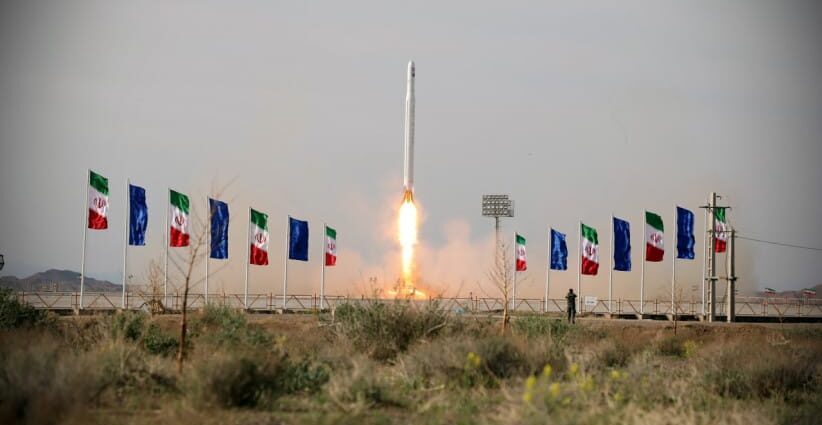
Iran’s space program advances satellite program, eyes better missile launchers, new facilities
Iran’s space program is advancing in its infrastructure development, satellite development, and satellite data and imagery services, Iran’s Tasnim News Agency reported on Thursday, citing the head of the Iranian Space Agency, Hassan Salarieh.
Salarieh said Iran is expected to inaugurate several new facilities in the coming months, including laboratories, satellite control centers, and the Chabahar launch site in the country’s southeast. He added that Iran is establishing a nationwide network of satellite control centers to shorten communication times with satellites, streamline in-orbit testing, and extend their operational lifespans.
Among the major space projects being led by the ayatollah regime, Salarieh listed the Nahid 2 and Nahid 3 satellites, the Shahid Soleimani satellite constellation, the Fars 2 and Fars 3 observation satellites, and the development of Iran’s first domestically produced radar satellite.
He said that combining satellite imagery with artificial intelligence is expected to increase the economic value of space data and assist civilian sectors such as agriculture, water resource management, environmental protection, land monitoring, and emergency management.
Salarieh added that communications satellites being developed by Iranian experts are expected to provide a significant portion of the country’s communications infrastructure in the future, either directly or in a supporting capacity.
Iran Space Agency emphasizes coordination with China
The head of the Iranian Space Agency emphasized that international cooperation is one of the priorities of Iran’s space program, specifically noting continued cooperation with China and Iran’s participation in the Chang’e lunar exploration project.
He said Iran places importance both on exporting space products and services to other countries and on learning from the capabilities of leading countries in the field.
Addressing updates to Iran’s space program for the coming decade, Salarieh said the plan is being adjusted in line with technological advances, after some technologies reached maturity and certain projects required revisions.
Regarding satellite launch vehicles, he said the Simurgh and Qaem 100 launchers had reached an “acceptable” level of maturity and completed several successful launches.
Salarieh said Iran is also developing more advanced generations of launch vehicles, with testing expected to begin soon, as well as an upgraded version of the Simurgh launcher intended to increase payload capacity for low Earth orbit and higher orbits.
He said testing of the upgraded Simurgh began about two years ago and would continue this year.
Israel stymies Iranian attempts at satellite launches
The US intelligence community’s 2024 worldwide threat assessment warned that Iran’s development of satellite launch vehicles “would shorten the timeline” for it to develop an intercontinental ballistic missile (ICBM).
The IDF on March 8 attacked Iran’s Aerospace Headquarters for launching satellites, technology which had potential dual use for being incorporated in future attempts to develop nuclear weapons which could be fired long range into space and hit the US.
The headquarters had been used by the Islamic Revolutionary Guard Corps (IRGC) to promote its aerospace efforts, including the 2022 launch of the Khayyam satellite, successfully launched by Iran using a Russian Soyuz rocket from the Baikonur Cosmodrome in Kazakhstan.
Until attacking the site, Israeli officials were concerned that the Khayyam and the latest space cooperation between Moscow and Tehran would increase Iran’s capabilities to potentially launch ICBMs (intercontinental ballistic missiles) as well as improve its monitoring of targets in the Jewish state and throughout the region in the short-term.
An additional concern for Jerusalem was that Khayyam and future Russian-Iranian satellites could reduce Israeli spies’ ability to penetrate the Islamic Republic’s border with operations that hold back its nuclear progress.
Prior to the June war, Tehran managed numerous satellite launches in recent years, some on its own, and some in conjunction with Moscow.
During that period of time, such satellite launches were often viewed by the Jewish state and by America as a grave danger, due to their being a potential dual-use threat and a move toward producing nuclear weapons, including ICBMs which might eventually reach the US.
Yonah Jeremy Bob contributed to this report.

US Imposes 25 Percent Tariff on Some Brazilian Imports Over Negotiation Impasse
The deadline marks the end of negotiations following a year-long investigation that found certain Brazilian actions and trade policies regarding the United States to be “unreasonable and burden or restrict the commerce of American farmers, workers, innovators, and exporters.”
“Today’s action is necessary to address these unfair trade practices to ensure American workers and companies can compete on a level playing field,” U.S. Trade Representative Jamieson Greer said….


STAT+: Amylyx nears pivotal endocrine drug study readout
This story first appeared in Adam’s Biotech Scorecard, a subscriber-only newsletter. STAT+ subscribers can sign up here to get it delivered to their inbox.
Later this quarter, Amylyx Pharmaceuticals will read out results from a study evaluating a new treatment for a rare endocrine disorder. It’s a pivotal moment that could support the drug’s approval and comes two years after Amylyx was rocked — and lauded — for voluntarily pulling a drug for ALS off the market because a follow-on study showed it wasn’t helping patients.
The Amylyx drug, avexitide, is being developed to halt severe, uncontrolled drops in blood sugar that some people experience after undergoing stomach-reducing surgery for weight loss.

IEA Chief Warns Global Economy Faces Serious Risk if Strait of Hormuz Crisis Drags On
PARIS — The head of the International Energy Agency (IEA) warned Wednesday that the global economy could face significant consequences if disruptions to shipping through the Strait of Hormuz continue for an extended period, underscoring growing concerns that the world’s most important energy corridor has become a major threat to economic growth and financial markets.
Speaking as oil traders, governments and multinational companies closely monitor developments in the Persian Gulf, IEA Executive Director Fatih Birol said the international community cannot afford a prolonged interruption to energy flows through the narrow waterway, which carries roughly one-fifth of the world’s oil supply and a substantial portion of global liquefied natural gas exports.
“If this situation continues for several weeks, it will have major implications for the global economy,” Birol said, urging governments to work toward restoring stability in one of the world’s most strategically important shipping routes.
His warning comes as heightened tensions involving Iran have renewed concerns over commercial shipping through the Strait of Hormuz, a passage connecting the Persian Gulf with the Gulf of Oman and the Arabian Sea. The waterway serves as the primary export route for crude oil produced by Saudi Arabia, Iraq, Kuwait, Qatar, the United Arab Emirates, and Iran, making it indispensable to global energy markets.
While oil prices have risen sharply amid fears of supply disruptions, the IEA stressed that the longer-term economic consequences could extend well beyond energy markets. A sustained interruption would increase transportation costs, raise fuel prices, add inflationary pressure and create additional uncertainty for manufacturers, airlines, shipping companies and consumers worldwide.
Brent crude has climbed above $85 a barrel as traders price in geopolitical risk premiums, reversing much of the decline seen earlier this year. Energy analysts say markets remain highly sensitive to any indication that commercial tanker traffic could be restricted or delayed.
The IEA said it continues to monitor global inventories and remains in close communication with member governments regarding emergency preparedness. The agency was established following the 1970s oil crisis to coordinate responses to major supply disruptions and maintains strategic petroleum stockpiles among its member nations that can be released if necessary.
Birol noted that global oil markets remain adequately supplied for now, but emphasized that prolonged instability would present a far greater challenge than a short-term interruption. He said governments should avoid complacency simply because physical shortages have not yet emerged.
Energy companies have already begun adjusting shipping routes, reviewing insurance costs and reassessing security measures for vessels operating near the Gulf. Maritime insurers have increased premiums for ships entering the region, while some operators have delayed sailings until the security environment becomes clearer.
The uncertainty is also being closely watched by central banks, many of which have spent the past year bringing inflation under control following the sharp price increases that followed the pandemic and earlier geopolitical conflicts. A sustained increase in crude oil prices could complicate those efforts by raising gasoline, diesel, aviation fuel and freight costs across major economies.
Businesses dependent on international shipping are also monitoring the situation closely. Higher transportation expenses typically ripple through supply chains, increasing costs for manufacturers and retailers before eventually reaching consumers through higher prices.
Financial markets have reacted cautiously, with investors shifting toward energy producers while reducing exposure to industries most vulnerable to rising fuel costs, including airlines, transportation companies and some manufacturers. Commodity traders say volatility is likely to remain elevated until markets gain greater clarity about the security of commercial shipping through the region.
Despite the growing concern, the IEA stopped short of forecasting a supply crisis, noting that oil-producing nations and consuming countries retain significant emergency resources should conditions deteriorate further. The agency also emphasized that the ultimate economic impact will depend largely on how quickly stability returns to the region.
For now, Birol’s warning serves as a reminder that the Strait of Hormuz remains one of the world’s most critical economic chokepoints. Any prolonged disruption would not simply affect oil-producing nations—it would reverberate across global trade, transportation, manufacturing and financial markets, potentially slowing economic growth far beyond the Middle East.
JBizNews Desk | Paris
© JBizNews.com All Rights Reserved. Reproduction or distribution without written permission is prohibited.

‘I trust President Trump’

President Trump, he says, does not want to risk Republican losses in the midterm elections and wants quiet, along with lower oil prices, to prevail through the elections. Despite the agreement, Adams says that the Iranians are completely misreading Trump’s intentions. “They’re trying to humiliate Donald Trump and show him that they’re the boss. This is a very bad tactic with this president.”

Turning his attention to the worldwide campaign of antisemitism that has spread since Oct. 7, Adams termed it a premeditated, financed global campaign of antisemitism that had been planned for decades and emerged after the Hamas attacks. “It was always there at a lower level, but after Oct. 7, beginning the next day, the Qataris and the Muslim Brotherhood flicked the switch, and they put their plan into action, thinking that this was their time to destroy the Jewish people. None of it was spontaneous or organic.”
The Jews are not the final target, he asserts. “Israel and the Jews are only the first in the crosshairs. Their objective is to overthrow our Western way of life. This is a foreign invasion. The West needs to wake up. Their first objective is to get rid of the Jews. But their ultimate objective is world domination with their messianic Islamic ideas and to remove our freedom and to change our way of life.”


ABB to Buy U.K.’s Rotork for $5.6 Billion

Memory Chip Stocks Tumble as SanDisk Falls 12% and SK Hynix Drops 11%
The trade that has powered global markets for much of 2026 reversed sharply on Wednesday, July 15, as investors dumped many of the year’s biggest artificial intelligence memory-chip winners.
SanDisk fell 12.4 percent, SK hynix’s U.S.-listed shares dropped 10.7 percent, Western Digital lost 7.7 percent, and Micron Technology declined 7.3 percent during Wednesday trading on the Nasdaq.
There were no major earnings disappointments, no guidance cuts and no significant company announcements. The selling reflected a broad shift in investor sentiment rather than deteriorating business fundamentals.
A dramatic reversal
The volatility began overnight.
South Korea’s Kospi index initially surged more than 6 percent, led by SK hynix and Samsung Electronics, before enthusiasm faded and selling spread into U.S. trading hours.
SK hynix’s American depositary receipts reversed sharply after soaring the previous session, while weakness quickly spread across the semiconductor sector.
Lam Research, Intel, Advanced Micro Devices, and the VanEck Semiconductor ETF all traded lower as investors rotated money into larger technology names including Amazon, Microsoft, Alphabet, and Apple.
A remarkable run before the selloff
The sharp declines followed extraordinary gains earlier this year.
Heading into this week:
- Micron had gained approximately 244 percent year to date.
- SanDisk had climbed roughly 640 percent.
- Western Digital had advanced more than 235 percent.
- Seagate Technology had risen approximately 216 percent.
Since late June, semiconductor companies have collectively surrendered roughly $1.5 trillion in market value as investors locked in profits after one of the strongest rallies in technology history.
What is driving the decline?
Several factors appear to be weighing on investor sentiment.
A South Korean brokerage lowered its earnings outlook for SK hynix, citing slower-than-expected shipments of next-generation HBM4 high-bandwidth memory chips.
Meanwhile, analysts continue monitoring increasing competition from Chinese memory manufacturers, creating concerns that future pricing power could weaken.
The market has also experienced increased volatility following the launch of several leveraged exchange-traded funds tied specifically to SK hynix shares. These products can amplify both gains and losses during periods of heavy trading.
Business fundamentals remain strong
Despite the selloff, company fundamentals remain robust.
Micron Technology recently reported quarterly revenue of approximately $41.5 billion, up more than 340 percent from a year earlier, while forecasting another record quarter driven by strong demand for AI memory products.
SanDisk likewise reported triple-digit revenue growth, improved profitability and eliminated its remaining debt.
Earlier this month, SK hynix completed one of the largest U.S. listings ever, raising approximately $26.5 billion during its Nasdaq debut.
Analysts at several major investment banks continue describing the recent decline as a healthy correction within a longer-term AI infrastructure growth cycle rather than evidence that demand has weakened.
Why businesses should pay attention
Memory chips power nearly every modern technology product.
They are essential components inside AI servers, cloud infrastructure, smartphones, personal computers and enterprise data centers.
Because manufacturers have increasingly prioritized AI-specific memory production, supplies of conventional memory chips remain tight, contributing to higher technology costs across multiple industries.
The current selloff reflects changing investor expectations—not collapsing demand.
Businesses purchasing servers, networking equipment and AI infrastructure continue facing elevated component prices despite recent weakness in semiconductor stocks.
JBizNews Desk | New York
© JBizNews.com All Rights Reserved. Reproduction or distribution without written permission is prohibited.
Major US bank bets big on America’s shipbuilding comeback with $24M investment
With the American merchant fleet down to fewer than 190 flagged vessels from a high of nearly 3,000 in the 1960s, a critical national security gap has left the U.S. heavily reliant on foreign shipbuilders.
To help reverse this decline, JPMorgan Chase announced Wednesday it is injecting $24 million into Philadelphia’s maritime sector to help secure the defense supply chain, building a new submarine assembly facility and training thousands of workers for critical defense roles.
“America can compete and lead in shipbuilding again—it starts with more skilled workers and secure supply chains. We need to train people for the jobs shipbuilders urgently need, connect them to good careers and strengthen the suppliers and partners that keep a shipyard running,” JPMorgan Chairman and CEO Jamie Dimon said in a press release.
“When we build the workforce and the supply chain together,” he added, “we create good careers for workers and a stronger, more resilient maritime industry that supports our national security and our economy.”
JAMIE DIMON SAYS HE UNDERSTANDS WHY PEOPLE HAVE GROWN ‘ANTI-RICH’
“America cannot restore its industrial strength or ensure peace through strength without investing in the workforce that powers it. Philadelphia has long been one of the great shipbuilding cities in the world, and today’s investment by JPMorgan Chase—the kind of investment we’re proud to feature at today’s Defense and Innovation Summit—recognizes that revitalizing this industry requires more than ships and shipyards,” Sen. Dave McCormick, R-Pa., also said.
“It requires creating opportunity for people. By supporting workforce development and strengthening local communities, this commitment will help prepare the next generation of skilled workers who will build the ships that protect our country and reinforce Pennsylvania’s role as a cornerstone of America’s defense industrial base,” the senator continued.
The corporate commitment will use $18 million in commercial financing and capital investments, while the remaining $6 million will come from philanthropic contributions.
The project funds construction of a 95,000-square-foot submarine assembly plant, which will create 450 permanent jobs. Additionally, the program targets the Philadelphia Navy Yard — an industrial hub supporting 16,000 active positions across manufacturing and maritime sectors — to scale non-degree educational pathways.
“Philadelphia is a place where targeted, coordinated investment can translate into real economic mobility,” JPMorgan’s Global Head of Corporate Responsibility and Chairman of the Mid-Atlantic Region Tim Berry said. “By strengthening workforce pathways, supplier readiness and access to capital, we can help more people connect to quality jobs and help local businesses participate in long-term growth.”
“When organizations like JPMorgan Chase invest in Philadelphia, they’re investing in our people,” Mayor Cherelle L. Parker said. “They’re helping create the kind of opportunities that let someone learn a new skill, earn a good paycheck and build a better life for themselves and their family. That’s exactly the future we’re creating in the Lower South and at the Navy Yard: more pathways to family-sustaining careers and more opportunities for Philadelphians to help build America’s future.”
GET FOX BUSINESS ON THE GO BY CLICKING HERE
The rest of the $24 million investment will go toward supporting local businesses and training workers for the shipyard. This includes a $5 million low-cost loan program to help small businesses create or retain 200 jobs and $1.5 million to help 100 local maritime suppliers upgrade their facilities.
Another $2 million will go toward training 300 Philadelphia residents for manufacturing jobs that do not require a college degree, alongside a $2.4 million grant to connect those workers with employers. The entire package is part of a 10-year, $1.5 trillion commitment by JPMorgan Chase to fund domestic industries that are vital to U.S. national security.


Wholesale Prices Fell 0.3% in June as Gasoline Costs Tumbled, Labor Department Says
The U.S. Bureau of Labor Statistics (BLS) reported Wednesday, July 15, that its Producer Price Index (PPI) for final demand fell 0.3% in June on a seasonally adjusted basis, marking the first monthly decline since late 2024. The report follows increases of 0.6% in May and 1.1% in April. On an unadjusted basis, wholesale prices remained 5.5% higher than a year earlier, though that represented a slowdown from 6.5% annual inflation recorded in May.
The June report indicates that the sharp surge in wholesale inflation driven by higher energy prices earlier this year has begun to ease.
Energy Prices Led the Decline
The drop was driven almost entirely by falling goods prices.
The index for final demand goods declined 1.4%, while final demand services increased 0.2%. Excluding food, energy and trade services, the core producer price index rose just 0.1%, a significant slowdown from May’s 0.8% increase.
Energy prices fell 6.4% during the month.
Within that category:
- Gasoline prices dropped 12.0%
- Diesel fuel declined sharply.
- Jet fuel prices fell.
- Crude petroleum prices also moved lower.
Among services, margins for trade services increased 0.4%, including a 13.0% increase in fuel and lubricant retailing margins.
Further up the production chain, inflation pressures also eased.
The BLS reported Stage 1 Intermediate Demand declined 0.5%, the largest monthly decrease since September 2024, as lower diesel fuel, gasoline, grain, crude oil and wholesale food prices outweighed increases in scrap metals and securities brokerage.
Despite June’s improvement, producer prices remain elevated over the past year, with Stage 1 Intermediate Demand still up 11.0% year-over-year and Stage 2 Intermediate Demand up 9.8%.
Oil Prices Changed the Story
The improvement reflects easing energy markets following the mid-June ceasefire in the Middle East and the reopening of shipping through the Strait of Hormuz.
Crude oil prices fell roughly 21% from their June highs, bringing wholesale fuel costs down across the economy.
Tuesday’s Consumer Price Index (CPI) report showed a similar trend.
The BLS reported consumer prices declined 0.4% in June, the first monthly decline in six years. Annual headline inflation slowed to 3.5%, while core inflation eased to 2.6%, both below many economists’ expectations.
Together, the CPI and PPI reports suggest inflation pressures moderated considerably during June.
Federal Reserve Remains Cautious
Federal Reserve Chairman Kevin Warsh, testifying Wednesday before the Senate Banking Committee, welcomed the latest inflation data but cautioned lawmakers against reading too much into a single month’s report.
Warsh said central bankers naturally welcome inflation moving in the right direction but noted current measures remain imperfect indicators of underlying price pressures. He added that the Federal Reserve has established a task force to review how inflation statistics can better reflect today’s economy.
Financial markets interpreted the latest reports as reducing the likelihood of additional interest-rate increases this year.
At the Federal Reserve’s June meeting, policymakers raised their median forecast for 2026 inflation to 3.6% from 2.7% while increasing their projected federal funds rate to 3.8%. Meeting minutes released earlier this month showed officials divided over whether additional tightening would eventually be needed.
What It Means for Business
For businesses that depend heavily on transportation and fuel—including manufacturers, trucking companies, wholesalers, airlines and restaurants—the June report provides the first meaningful relief from rapidly rising operating costs since energy prices surged earlier this year.
A 12% decline in wholesale gasoline prices and a 6.4% drop in overall energy costs can improve operating margins if lower prices persist.
Jamie Cox, Managing Partner at Harris Financial Group, said recent inflation appears largely tied to temporary energy shocks rather than broad-based pricing pressure.
Gargi Chaudhuri, Chief Investment and Portfolio Strategist for the Americas at BlackRock, said the latest inflation data support expectations that the Federal Reserve will likely leave interest rates unchanged at its upcoming meeting.
Whether inflation continues to moderate, however, will depend largely on energy markets and geopolitical developments rather than monetary policy alone.
The July Producer Price Index is scheduled for release on August 13 at 8:30 a.m. Eastern.
JBizNews Desk | Washington
© JBizNews.com All Rights Reserved. Reproduction or distribution without written permission is prohibited.


Apple Shares Jump as Company Nears $5 Trillion Market Value
Apple shares rose approximately 4% Wednesday, bringing the technology company close to a $5 trillion market valuation as investors returned to large technology stocks following encouraging inflation data and strong corporate earnings.
Apple did not definitively cross the $5 trillion threshold during the verified reporting available Wednesday. The company moved closer to the milestone as its shares advanced, according to The Wall Street Journal’s July 15 market report.
The gain helped lift the Nasdaq Composite, which advanced approximately 0.6% Wednesday. Other large technology companies, including Alphabet, Microsoft and Amazon, also contributed to the index’s rise.
Apple’s move came one day after its shares closed at $314.86, down approximately 0.8% on Tuesday following an analyst downgrade. That mixed two-day performance reflected a broader disagreement on Wall Street over the company’s growth outlook and valuation.
Approaching a historic valuation
A company’s market capitalization is calculated by multiplying its share price by the number of shares outstanding.
Apple’s rising share price has placed it within reach of a valuation that no company had previously sustained as a closing market milestone in the reporting reviewed for this article.
The movement does not mean Apple earned or received $5 trillion in cash. Market capitalization represents the combined market value investors assign to a company’s outstanding shares at a particular share price.
Even a small percentage change in Apple’s stock can therefore add or remove tens of billions of dollars in market value.
Wall Street remains divided
Apple’s advance followed a downgrade from KeyBanc Capital Markets analyst Brandon Nispel, who lowered the stock to an underweight-equivalent rating and maintained a $250 price target.
Nispel cited concerns about slower iPhone upgrades, reduced carrier subsidies, weakness in demand for some devices and the possibility that services growth could fall below Wall Street expectations.
Apple had closed Tuesday at $314.86, meaning KeyBanc’s price target implied substantial downside from that level.
Other analysts remained more optimistic.
Morgan Stanley analyst Erik Woodring maintained an overweight rating and a $360 price target, arguing that Apple’s customer loyalty and pricing power could help it manage rising component costs.
Morgan Stanley said possible increases in future iPhone prices could support earnings, even as memory-chip costs rise.
The opposing views illustrate the central debate surrounding Apple: whether its brand, services business and installed customer base justify a premium valuation despite concerns about hardware growth.
Why Apple moved higher Wednesday
Wednesday’s advance occurred during a broader rise in major technology companies rather than following a single new Apple product announcement.
The market received support from cooler-than-expected inflation data and strong quarterly earnings from several large financial and technology-related companies.
The Dow Jones Industrial Average rose 0.34%, the S&P 500 gained 0.36%, and the Nasdaq Composite advanced 0.60% during the verified market snapshot reported Wednesday.
Falling expectations for an immediate Federal Reserve rate increase also supported growth stocks. Technology-company valuations are particularly sensitive to interest rates because investors often value their anticipated future earnings in today’s dollars.
Lower expected rates can increase the present value investors assign to those future profits.
Artificial intelligence remains part of the valuation debate
Apple’s ability to compete in artificial intelligence remains an important issue for investors.
The company has been working to expand artificial-intelligence capabilities across its devices and services, while competing against technology companies that have committed enormous amounts of capital to data centers, advanced chips and generative platforms.
Optimistic investors view Apple’s global device base as a major distribution advantage. New artificial-intelligence services could potentially reach hundreds of millions of existing customers through iPhones, iPads and Mac computers.
More cautious investors question how quickly those services will produce additional revenue or accelerate device upgrades.
A milestone remains a milestone only when reached
Apple’s Wednesday advance placed the company closer to $5 trillion, but careful wording matters.
A company can approach a valuation during intraday trading and fall back before the market closes. Its market capitalization also changes continuously with its share price and share count.
For that reason, JBizNews is reporting that Apple neared the $5 trillion level—not that it definitively crossed or closed above it.
The larger significance is clear: investors continue assigning extraordinary value to Apple despite disagreements over iPhone demand, artificial-intelligence execution and the stock’s premium valuation.
Whether Apple ultimately crosses and holds the $5 trillion level will depend on its share price, financial results and investors’ confidence in the company’s next phase of growth.
JBizNews Desk | Cupertino, California
© JBizNews.com All Rights Reserved. Reproduction or distribution without written permission is prohibited.
Sources: The Wall Street Journal market reporting dated July 15, 2026; MarketWatch; Investor’s Business Daily; Barron’s.

Wheat Jumps to 17-Month High as Drone Strikes Shut Russia’s Azov Grain Route
Wheat prices surged Wednesday to their highest level in 17 months after Ukrainian officials said drone strikes had hit 116 Russian vessels as of Tuesday, forcing Moscow to close the Azov-Don Canal and restrict traffic through the Kerch Strait — the only outlet for roughly a third of Russia’s seaborne wheat exports.
Benchmark September milling wheat on Euronext settled 7% higher at €231.75 a metric ton, about $265, a price last seen in February 2025. Chicago wheat rose 5.6%. Kansas City hard red winter futures hit the 45-cent daily trading limit and have gained more than 13% since the end of last week.
Russia is the world’s largest wheat exporter. When its shipping stops, American grocery bills eventually move.
What actually broke
The Sea of Azov is shallow water. Russian grain leaves it on small coaster vessels that transit the Kerch Strait and transfer their cargo to larger ships at Taman or the Kavkaz anchorage on the Black Sea side. At peak, that route moves over 1.5 million tons of wheat a month — close to what Novorossiysk, Russia’s largest grain port, handles on its own.
Mike Castle of StoneX Financial said Ukraine’s new reach has changed the market’s math. “What we’re seeing in this escalation is kind of novel,” he said, pointing to a sharp increase in Ukraine’s ability to strike Russian vessels.
The timing is the problem. Russian wheat exports run at full capacity from the July harvest through October and November. Every day the Azov is shut subtracts from third-quarter volume that cannot be made up later. Consultancy IKAR cut its July Russian wheat export estimate to 2 million tons from 2.5 million. Other estimates put July shipments near 2.3 million tons against 2.7 million in June — and more than 5 million in a normal peak month.
Moscow says Novorossiysk, 140 kilometers south of the strait, is unaffected, and its Union of Grain Exporters says commitments will be met by rerouting. The arithmetic argues otherwise. Novorossiysk holds only 0.6 million tons of storage while shipping at least twice that most months. The alternate port at Tuapse holds 0.1 million tons. There is no spare warehouse. Russian Railways is offering a 38% discount to move grain south toward Iran and Azerbaijan, but that route reaches few buyers, and trucking rates have jumped against chronic diesel shortages.
Ukraine is taking damage too. Russia struck the Odesa region on July 12, and agricultural holding Kernel suspended its Chornomorsk export terminal after losing roughly 45,000 tons of wheat and 9,000 tons of sunflower oil. Four of Ukraine’s 13 large grain terminals have halted purchases, and some shipowners are refusing to enter Ukrainian ports.
Nobody has a spare crop
This is the part that should concern American food buyers. In a normal year, a Black Sea disruption gets absorbed by someone else’s harvest. Not this year.
France’s farm ministry cut its 2026 soft wheat forecast to 32 million tons, down about 4%, with a 7% yield collapse swamping a 3% increase in plantings. German harvest losses are running an estimated 600,000 to 1 million tons. Western Europe is in a heat wave. The U.S. crop is smaller, and the northern Plains are baking under highs near 115 degrees with drought pushing into the Dakotas and Minnesota — quietly building a spring wheat story of its own.
Where the American money is
For U.S. growers, this is opportunity. American wheat is trading at roughly a 60-cent discount to Paris with weekly export inspections already running 373,611 metric tons. Taiwan booked 98,150 tons of U.S. milling wheat for September and October shipment. EU exports in the first 12 days of July came in at 214,904 tons, well below 260,897 a year earlier. Demand has to go somewhere, and the United States is the cheap seat.
For everyone downstream, it’s a cost. Jamie Gieseke of Paradigm Futures sees Kansas City wheat testing $7.50 if disruptions run long. Traders are watching whether it holds above $7 — sustained trading there means the market has stopped pricing a scare and started pricing a siege. Speculators were still short 46,000 contracts of Chicago soft red wheat as of Tuesday, which is fuel for more upside if they cover.
The Thursday context
The rally is landing at an awkward moment for the inflation story. The Bureau of Labor Statistics reported Wednesday that producer prices fell 0.3% in June, with nearly two-thirds of the goods decline traced to a 12% drop in gasoline. Headline CPI is running 3.5%.
Grain does not reach the shelf on a Tuesday. It reaches it in months — through flour contracts, bakery costs, and every distributor between the elevator and the register. What broke this week shows up in the fall.
Retail sales for June arrive Thursday at 8:30 a.m., forecast at 0.2% after 0.9% in May. That is the read on whether the American consumer can still absorb another cost.
JBizNews Desk | New York © JBizNews.com All Rights Reserved. Reproduction or distribution without written permission is prohibited.

Over 500 Peruvian babies named after Norwegian soccer star Haaland after legendary World Cup run
The country of Peru has seen an influx of babies named after the star of Norway’s World Cup team, Erling Haaland, with over 500 newborns having been named after the forward, data from Peru’s National Registry of Identification and Civil Status (Reniec) revealed.
The “Yorkshire-born, Norwegian lad” recently completed his first stint at the FIFA World Cup, scoring seven goals – just one less than veteran player Kylian Mbappé, and over double the legend Cristiano Ronaldo’s score – and capturing the hearts of fans around the world.
His popularity, however, reached new heights in Peru, where 486 children have been named “Haaland,” and 91 were given the 25-year-old footballer’s full name, “Erling Haaland,” in the weeks since the World Cup began, the national registry confirmed.
Haaland quickly became an internet sensation due to both his larger-than-life personality and size – coming in at six feet five – with many online joking that the Norwegian team had secured an actual Viking for their team.
“Erling Haaland runs like no one taught him to train his dragon,” one user wrote on social media.
Built like a Viking, but with the personality of a golden retriever
“How does someone built like a Viking manage to radiate the energy of a golden retriever?” another wrote.
Peruvians take their soccer seriously, as the registry also revealed 3,402 people in Peru named after Argentina’s Lionel Messi, 1,185 named after Cristiano Ronaldo, and a whopping 33,809 named after Brazil’s Neymar.
“Different football stars serve as inspiration for Peruvians to register their children with these names,” registry spokesperson Ivan Torres told Panamericana Television.

IDF soldier arrested over suspected role in grenade supply network, stealing military weapons
An IDF soldier from Bat Yam was arrested on Wednesday on suspicion of supplying IDF grenades, ammunition, and other weapons to people in possible connection with a wave of recent grenade attacks in central Israel.
Police are investigating his connection to the attacks or whether his arrest could lead them to the person who supplied the grenades.
During a search of the soldier’s home, officers from the Tel Aviv District, together with officers from the Yarkon Subdistrict’s crime-fighting unit and investigators from the Special Investigations Unit of the Military Police Criminal Investigation Division, seized dozens of IDF weapons, including grenades, according to police.
The arrest came as police received a report of an explosion heard near a residential building in the Kochav Hatzafon neighborhood of north Tel Aviv on Wednesday night, though it’s unconfirmed whether the arrested soldier supplied the weapons in the attack.
Officers from the Tel Aviv North police station and bomb disposal experts from the Tel Aviv District were dispatched to the scene. An initial examination indicated that the device was believed to be a stun grenade, and no one was injured and no damage was caused. Police are investigating the incident as a criminal matter.
IDF soldier arrested after wave of grenade attacks
The incident came hours after a similar case in Herzliya Pituah. At around 8 p.m. on Wednesday, what was believed to be an IDF stun grenade was thrown at a luxury car lot on Galgalei Haplada Street. No injuries or damages were reported in that case either.
Police are investigating whether the two incidents are part of a series of attacks being examined in connection with the dispute between the Musli and Jarushi crime families.
The investigation has been transferred to the Special Investigations Unit for further handling, while Israel Police continue to look into the series of incidents.
IDF finds dead body tied to stretcher in southern Lebanon, launches investigation
IDF forces operating in the security buffer in southern Lebanon located a dead body tied to a stretcher on Thursday.
The N12 news site reported that the body had been found adjacent to a minefield.
The body was passed to the police for further investigation.
This is a developing story.

Average Price Paid for New Car Increased Modestly in June: Report
In June, the average transaction price (ATP) of a new vehicle was $49,758, a 0.6 percent increase year-over-year, KBB said in a July 14 statement. Prices have remained steady, below the $50,000 level throughout this year. Buyers were found to have gravitated toward lower-priced offerings, with sales of subcompact SUVs, with an ATP of $31,113 in June, rising by over 23 percent on an annual basis.
The sales of small/medium pickup trucks rose by 12.3 percent year-over-year, while the sales of full-size pickups, which tend to be more expensive, grew by a smaller 2.5 percent….

SpaceX Stock Falls Below Its $135 IPO Price for the First Time
SpaceX shares fell to an all-time low of $132.15 on Wednesday, July 15, dropping below the $135 price the company sold stock to investors at last month — the first time the shares have traded under their offering price since Space Exploration Technologies Corp. went public on the Nasdaq.
It was the fourth straight losing session. The stock fell as much as 2.9 percent before clawing back to roughly $134.85 by early afternoon, still below the IPO price. Anyone who bought at the offering is now underwater for the first time since trading began.
The June offering raised a record $86 billion, the largest initial public offering in history, and made founder Elon Musk the world’s first trillionaire. Shares opened their first day at $150, climbed to an all-time high of $225.64 on June 16, and have been under pressure ever since. From that peak, the stock has fallen roughly 40 percent.
What broke
Three factors have combined to pressure the shares.
The first is index mechanics. SpaceX joined the Nasdaq-100 last week under a revised eligibility rule allowing newly public companies to enter after just 15 trading days. That attracted billions of dollars in passive buying from index funds and ETFs, but the stock slipped below its $150 first-trade price almost immediately afterward. Index inclusion brings automatic buyers—but it also brings automatic sellers.
The second is the balance sheet. Starlink delivered a strong first quarter with 10.3 million subscribers and $1.2 billion in operating profit. However, SpaceX reported a 2025 GAAP operating loss of $2.59 billion, while first-quarter 2026 operating losses widened to $1.94 billion as capital expenditures reached $10.1 billion. Just weeks after raising a record amount through its IPO, the company also announced plans to issue $20 billion in investment-grade unsecured bonds, a move that unsettled some equity investors.
The third is timing. SpaceX’s IPO lock-up period expires on September 2, opening the door for additional shares to enter the market.
The AI valuation question
The selloff extends beyond rockets.
Investors have increasingly been pulling back from companies valued primarily on future AI expectations rather than current earnings. On the same day SpaceX broke below its IPO price, memory-chip manufacturers suffered double-digit declines and semiconductor stocks broadly sold off.
With a market capitalization near $1.77 trillion, SpaceX trades at more than 100 times estimated revenue, a valuation that requires years of exceptional execution and continued growth.
Technical indicators also weakened. Shares are trading roughly 15 percent below their 20-day moving average, while momentum indicators suggest buyers have stepped aside after June’s rapid advance.
Wall Street remains bullish
Despite the recent decline, analyst sentiment has remained largely unchanged.
SpaceX currently carries a consensus Strong Buy rating based on 23 Buy, 4 Hold, and 1 Sell recommendations over the past three months. The average price target of $247.32 implies approximately 83 percent upside from current trading levels.
Supporters argue that SpaceX should be viewed as several businesses under one roof—including launch services, Starlink, direct-to-cell satellite communications, future data center infrastructure, and AI capabilities through its acquisition of xAI and the Grok platform.
Starship returns to center stage
Attention now shifts to Thursday, when SpaceX is scheduled to attempt the 13th test flight of Starship, with a 90-minute launch window opening at 6:45 p.m. ET from Starbase, Texas.
The mission marks the second flight of the larger Version 3 vehicle after the previous test ended unsuccessfully when an engine-sequencing issue prevented the Super Heavy booster from completing its return. Engineers have modified the ignition sequence in an effort to prevent a repeat of that failure.
Starship remains central to SpaceX’s long-term business strategy, supporting future satellite deployments, heavy-lift launches, NASA lunar missions, and eventually missions to Mars.
Why it matters
SpaceX is no longer just another technology stock.
Its inclusion in the Nasdaq-100 means millions of Americans now own the company indirectly through retirement accounts, pension funds, index funds, and exchange-traded funds. The stock’s rapid transition from private-market favorite to major public index constituent has turned its volatility into an issue affecting everyday investors as well as institutional portfolios.
JBizNews Desk | New York
© JBizNews.com All Rights Reserved. Reproduction or distribution without written permission is prohibited.

STAT+: CMS signals intent to revamp how it pays for clinical software and AI
For years, Medicare has been wrestling with how to pay for artificial intelligence and other software-based clinical tools. The Centers for Medicare and Medicaid Services is good at calculating the costs of physical items, from a cotton swab to the wear and tear on a CT scanner. But an algorithm to predict cardiac risk from a CT scan, or an AI-based map to visualize prostate cancer’s spread? Less so.
This month, in its proposed rules for hospital outpatient payments and physician fees for 2027, CMS has signaled that it’s ready to build a more consistent payment structure for clinical software and AI that factors in their impact on patient outcomes. It’s starting — as an interim step, just for 2027 — by proposing a practical change to the way it labels and pays for several clinical software and AI services.
After requesting feedback several times on AI and software payment structures, “it’s really the first time that we’ve heard the agency say that they are planning a different policy moving forward,” said Cybil Roehrenbeck, executive director of industry group the AI Healthcare Coalition. Medicare payment — and its influence on private insurers’ coverage of emerging technologies — has a significant impact on what clinical software and AI gets commercialized and reaches patients.

Opinion: Medicaid and SNAP cuts are exacerbating the intertwined problems of hunger and mental illness
The patient had come in for suicidal ideation. When I asked about his eating habits beforehand and access to food — routine for a psychiatric nutrition consult — he told me he’d lost his SNAP eligibility a few weeks earlier. It was something about a documentation deadline he hadn’t been notified about, or just another thing lost in the mix of making ends meet. Since then, he’d been getting by on what he could. He spent the last of his cash on a motel and dry cereal, which was all he ate for a few weeks. After his money and food ran out, he said, pretty simply, that the hospital made sense. He was hungry, thought through his options, and figured this was better than “Plan B”: ending his life due to hopelessness and a lack of food.
As a clinical dietitian at a large urban hospital, part of my job is coordinating with social work and physicians of all stripes on nutrition support and food access: figuring out what patients need to eat, and occasionally what they’re going to eat after discharge. (Sidebar: We could all do worse than the Mediterranean diet.) Meals on Wheels referrals, pantry connections, SNAP enrollment support — the clinical and the logistical blur into each other because food insecurity doesn’t really stop at the point of discharge. Prior to my current role, I spent several years in public health dedicated to ending hunger and food insecurity for families. I’ve spent my career like the ferryman on the river: navigating hunger’s effects upstream, downstream, and working people across to something better.

Opinion: The growing fang-to-pharmacy pipeline
After a deep breath, the auto-injector pen dumps its dose into a patch of pinched stomach with barely a sting. For many, it has become a mindless nonevent. The hormone collects in a bolus in fat tissue, where it binds to albumin and, over several days, trickles into the bloodstream to do its work. Weight loss and blood sugar control were promised, yet the benefits are still surprising doctors and patients. We are in our peptides era, and this feels like just the beginning.
This all started with a venomous lizard from the Desert Southwest.

Vance suggests Epstein had ‘connections’ to Israeli intelligence, ‘deep state’ on Rogan’s podcast
Vice President JD Vance claimed that the late convicted sex offender Jeffrey Epstein had ties to the “highest levels” of Israeli intelligence.
“He clearly had connections to the upper, the highest levels, of American intelligence. He clearly had connections to the highest levels of Israeli intelligence,” Vance told Joe Rogan, one of the country’s most popular podcasters, in a three-hour interview released Wednesday.
Vance also told Israelis purportedly behind attacks on his efforts to broker a ceasefire with Iran to “go to hell.”
The remarks from Vance, who described himself as “one of the O.G. Epstein conspiracy theorists,” marked a notable embrace by a Trump administration official of theories about Epstein’s ties to Israeli intelligence, which have proliferated in the years since his death and often have veered into antisemitism. No evidence supports the claim, and Naftali Bennett, Israel’s former prime minister, last year publicly denied allegations that Epstein worked for Israel or its intelligence agency.
During the interview, Vance went on to theorize about Epstein’s ties to Israel, particularly his ties to the Israeli political left. Epstein had an association with Ehud Barak, the former Israeli prime minister. Barak, whose politics in recent years have veered to the center, has denied wrongdoing and said he regrets the relationship.
Vance claimed Epstein had connections to ‘Israeli deep state’
“As much as I know, you know, Prime Minister Netanyahu, not a particularly popular person in the United States of America right now, Epstein seemed to be connected to the elements of the Israeli deep state that were left of center,” Vance said. It was not clear what Vance meant by “deep state,” a catchall frequently deployed by right-wingers peddling conspiracy theories.
Vance continued that, in the United States, Epstein was “connected across the board, he had Republican friends, he had Democratic friends. He had much deeper connections to the Israeli left of center than right of center. I don’t know what that means.”
The interview with Rogan was not the first time that Vance had flirted with conspiracy theories about Epstein.
“I am frankly kind of a conspiracy theory on the Epstein stuff,” Vance told the hosts on “The View” last month. “I think that it’s crazy that you have this guy who is clearly a sex predator who is hanging out with a lot of wealthy and powerful people.”
Jewish billionaire philanthropist Lex Wexner’s association with Epstein
During the interview with Rogan, Vance also said that there was a “separate conspiracy that hasn’t gotten covered as much,” saying that Epstein was the “tax guy” of Les Wexner, the Jewish billionaire philanthropist whose decades-long relationship with Epstein has shadowed his philanthropic legacy.
“I think there’s an underreported, underexplored story of, was Epstein doing a lot of tax stuff that was not on the up and up, and is that one way in which he gained blackmail,” Vance said. “It’s not opposite of the sexual blackmail story, but in some ways you could imagine both things being true.”
Epstein’s relationship with Wexner has been extensively reported. Wexner, too, has denied wrongdoing and said he cut off relations with Epstein after learning about his misconduct.
“There’s so much bulls–t out there,” Vance said, referring to a recent report that Israelis are behind a paid campaign to discredit the Iran deal he brokered last month.
Vance said he did not care if Israel or any other country tried to influence outcomes, it’s “the nature of the beast,” he said, but was irked by Americans he claimed were taking Israeli money to oppose the deal.
“Many of the people who were receiving that money were actually attacking me in completely dishonest ways, you know my response to that is ‘Go to hell!’ I’m going to do what I have to do for the American people,” he said. “I represent Americans first.”
Vance’s deal with Iran, which has come under fire for its unprecedented concessions to the country regarding its role in controlling Lebanon and the Strait of Hormuz, is in abeyance. Trump resumed the war against Iran this week.


Bank of Korea Raises Interest Rate to 2.75% in First Hike in More Than Three Years
SEOUL — The Bank of Korea raised its benchmark interest rate Thursday for the first time in more than three years, responding to renewed inflation, a weakened currency and growing household debt even as policymakers sought to preserve the country’s export-driven economic expansion.
The central bank’s Monetary Policy Board increased the base rate by 25 basis points to 2.75%, up from 2.50%. It was the first increase since January 2023 and marked a reversal from the easier monetary policy the bank had used to support growth through a period of weak domestic demand and global trade uncertainty.
The decision followed a renewed acceleration in consumer prices. South Korea’s inflation rate reached 3.2% in June, its highest level in roughly two and a half years and well above the central bank’s 2% target. Higher global energy costs, currency weakness and rising housing expenses have increased pressure on households and businesses, while the won has lost more than 4% against the dollar since the beginning of the year.
A weaker won makes imported oil, natural gas, food and industrial materials more expensive in local currency. Those costs can move through the economy through higher transportation, manufacturing and consumer prices, making currency stability an increasingly important part of the central bank’s policy decision.
The rate increase also reflects growing concern over household borrowing and real-estate prices, particularly in Seoul. South Korean households carry some of the highest debt levels among developed economies, leaving the central bank sensitive to any renewed acceleration in mortgage lending or speculative property activity.
Economic conditions gave policymakers more room to raise rates than they had earlier in the year. South Korea’s semiconductor industry has benefited from global demand for memory chips used in artificial-intelligence servers, data centers and advanced computing systems. Exports rose more than 70% from a year earlier in June, led by strong shipments from the country’s major technology manufacturers.
The government recently raised its forecast for 2026 economic growth to 3%, up sharply from its earlier projection, as semiconductor exports and public investment supported activity. The revised outlook would represent South Korea’s fastest annual expansion since 2021.
The strength of companies including Samsung Electronics and SK Hynix has helped offset weakness in other areas of the economy. South Korea is a major supplier of high-bandwidth memory and other components used alongside artificial-intelligence processors, placing the country near the center of the global technology investment cycle.
The same growth has created new inflation pressures. Higher corporate profits, wage increases and employee bonuses in the technology sector have supported consumer spending, while Seoul property prices and household borrowing have continued to rise.
The Bank of Korea had kept the policy rate at 2.50% since May 2025. Before Thursday’s meeting, economists broadly expected a quarter-point increase after officials signaled growing concern over inflation and the foreign-exchange market.
The decision was the first rate increase under Governor Hyun Song Shin, who began his term in April. Shin previously served as economic adviser and head of research at the Bank for International Settlements, the institution often described as the central bank for central banks.
South Korean financial markets reacted sharply. The Kospi fell heavily as investors sold semiconductor and other growth-oriented shares, while the won strengthened modestly against the dollar. Higher interest rates tend to weigh on technology stocks because they increase borrowing costs and reduce the present value investors place on future earnings.
The central bank is now expected to move carefully as it evaluates whether inflation remains above target and whether the currency and housing markets require additional tightening. Economists generally expect any further increases to come gradually because household debt makes consumers particularly sensitive to higher borrowing costs.
An additional increase would raise monthly payments for borrowers with variable-rate mortgages and business loans, potentially slowing household spending and investment. Holding rates too low for too long, however, could allow inflation, property prices and debt growth to become more difficult to control.
The July decision places South Korea among several Asia-Pacific economies that have tightened monetary policy as higher energy costs and currency pressures revive inflation concerns. It also signals that the Bank of Korea now views price stability and financial risks as more immediate concerns than the need to provide additional support to economic growth.
JBizNews Desk | Seoul
© JBizNews.com All Rights Reserved. Reproduction or distribution without written permission is prohibited.

Israeli questioned in Italian airport after 216 kg of khat found in seven suitcases in his luggage
A 22-year-old Israeli citizen was detained on Monday at Rome’s Fiumicino Airport after, according to suspicion, 216 kilograms of the khat plant were found hidden in seven suitcases in his luggage.
In Yemen and Israel, khat is not defined as a dangerous drug, but it is in Italy and most countries around the world, and Italian authorities classify owning it as a drug possession and trafficking offense.
The seizure took place at Leonardo da Vinci-Fiumicino International Airport in a joint operation by Italy’s Customs and Finance Police unit, the Guardia di Finanza, and the Customs and Monopolies Agency (ADM).
According to the authorities’ statement, the young man, who had arrived on a flight from Tel Aviv, aroused suspicion at passport control after giving vague and contradictory answers about the purpose of his visit to Italy and where he planned to stay. He was then taken for a more thorough inspection, which included scanning the suitcases with an X-ray machine and opening them.
During the inspection, large packages of fresh khat leaves and stalks were found in his seven suitcases, with a total weight of 216 kilograms. The entire shipment is now being held as evidence as part of the investigation.
The authorities said the young man was not arrested, but was released at the end of the initial questioning. However, a criminal case has been opened against him and transferred to prosecutors in Civitavecchia. He is suspected of offenses of possession and trafficking of drugs under Italian narcotics law.
Khat is illegal in Europe, but permitted in Israel
Khat is a stimulant plant native to East Africa and the Arabian Peninsula. While its sale and use are permitted in Israel, in Italy and many European Union countries it is classified as an illegal drug, and bringing commercial quantities of it into the country is therefore a criminal offense.
According to estimates on the European black market, the value of the seized quantity could reach tens of thousands of euros. The value of khat as a drug depends mainly on how fresh it is, since it loses its effect relatively quickly.
The seizure adds to a series of cases in recent years in which Israelis have run into trouble in European countries over smuggling khat, a product that is legal in Israel but banned in destination countries.
Netanyahu races to pass key laws as Israel’s October 27 election campaign begins
Watch this episode without interruptions.
Listen wherever you get your podcasts.
As Israel’s election date is set for October 27, most parties have turned to campaign messaging, but the Likud has instead launched an eleventh-hour legislative push to advance its priorities before the Knesset recess.
In the latest episode of the Jerusalem Post’s Deep Dive podcast, host Jacob Laznik and the paper’s breaking-news desk manager, Shir Perets, examined why Netanyahu views this legislative effort as central to forming his next coalition and how the leverage of his haredi partners continues to shape government spending.
They set the political maneuvering against a striking regional backdrop, in which a US-Middle East alignment exchanges strikes with Iran while Israel remains, for now, on the sidelines.
The discussion centers on two contentious measures enacted this week, the Basic Law on Torah study and the temporary freeze on arresting draft evaders, and their implications for an already strained military manpower crisis that the IDF chief of staff had publicly cautioned against.
Laznik and Perets also weighed the campaign’s most notable development: the rise of former IDF chief of staff Gadi Eisenkot, whose momentum now appears to eclipse both Netanyahu and the Bennett–Lapid ticket.
What distinguishes this episode is the candor of two commentators tracking these events as they unfold, following the fiscal incentives, testing competing arguments, and returning to the question that will define the vote: after four years, is the country better off?

Airwayz, Tenna fuse spectrum intelligence into OVERWATCH airspace‑control platform
Israeli defense tech companies Airwayz and Tenna Systems have launched a strategic partnership that embeds Tenna’s real-time spectrum‑intelligence capabilities into OVERWATCH, Airwayz’s command-and-control and airspace-governance platform. The integration, already deployed through Israel’s National Drone Initiative (INDI), is operating in the field with additional data layers under development.
“OVERWATCH brings the ability to control the airspace, to understand which aircraft flies where and where to broadcast, like a control tower,” Airwayz CEO Eyal Zor told Defense & Tech by The Jerusalem Post. “The chaotic environment of drones in the lower skies – from 400 feet or 7,000 feet – showed us the outcome of non-controlled airspace and the missed potential to utilize drones. The new airspace control is all about drones and autonomous systems.”
Zor described OVERWATCH as “the brain to take over control of the chaotic lower airspace,” comprising airspace planning, unified operational-picture creation, and end-to-end management.
Airwayz’s OVERWATCH is a command-and-control and airspace-governance platform used by military, law-enforcement, and critical-infrastructure organizations worldwide, including the IDF, the Port of Rotterdam, and Israel’s National Drone Initiative. The company operates across the Middle East, the United States, and Europe.
“To smartly and safely command the airspace, you need to know if there’s any interference and current RF and GPS information,” he said. “Whether it’s over the city or on the battlefield, the spectrum is everything. Without control, you cannot command. Without information, you cannot do anything. Tenna provides the information for the spectrum.”
The companies said the integration gives defense and homeland-security operators a unified operational picture that combines airspace management with live radio-frequency (RF) awareness. According to Airwayz, the capability allows operators to identify zones at risk of RF interference before deployment and maintain command and control in GPS-contested environments.
Commercial drone operators are also expected to benefit from the platform, gaining visibility into spectrum-dense conditions and knowing the RF picture even before the platform takes off.
From the cockpit to the boardroom
The collaboration between Zor and Tenna CEO Avner Bendheim didn’t start with OVERWATCH. Zor told D&T that the collaboration of the two companies is rooted in his long personal and professional history with Bendheim as both served together in the Israel Air Force.
“We served together; it’s personal,” he said. “I’m happy that our collaboration extends past the cockpit.”
According to Bendheim, Israel’s busy and contested airspace makes it “a great testbed.” Still, the capability is already scaling abroad as more and more countries recognize the urgency of airspace control.
“All countries see that controlling the airspace is an issue. The world is watching and learning, and even if they haven’t seen the battlefield yet, it can happen within a day. A few months ago, the UAE was quiet. Now it’s contested,” he said.
“These capabilities have no borders, and most of the operation of our companies is abroad,” he added. “We took high-TRL capabilities that have been proven and combined them to enable an extremely effective tool that has saved lives and autonomous systems.”
Busy skies
The partnership began under INDI, where Tenna’s intelligence layer was first incorporated into OVERWATCH. It has since expanded into a broader operational capability.
“Spectrum interference is one of the most underestimated threats to safe and effective airspace operations,” Zor said. “Integrating Tenna’s intelligence layer into OVERWATCH means our defense and homeland security customers no longer have to choose between airspace governance and electromagnetic awareness; they get both in one operational picture.”
According to Bendheim, the integration addresses a challenge shared by both commercial and defense operators.
“Spectrum interference doesn’t discriminate between commercial and defense operations,” he said. “The OVERWATCH integration puts our real-time RF intelligence directly inside the platform operators already rely on. Whether you’re managing commercial drone corridors or complex airspace environments, the ability to see the spectrum before you fly changes everything. INDI was a significant proof point.”
Tenna Systems, founded in 2023 and headquartered in Tel Aviv and New York, provides software-based spectrum intelligence that fuses airborne, space, and terrestrial data to detect interference, geolocate emitters, and strengthen electronic-warfare resilience without additional hardware. Its customers include commercial, civil, and critical-infrastructure operators in Israel and the United States.
“Airspace used to be defined by altitude, and now it’s more about advanced airspace management, including for remotely autonomous systems. It’s less and less a physical boundary and more the systems themselves, manned and unmanned,” Bendheim said.
“We’re giving the intelligence layer for commercial, government, and military customers to understand the spectrum, where to target the emitters and how to give resilience to all the systems,” he said. “We’re not only an intelligence tool; we enable effective autonomy. Giving this layer of intelligence to OVERWATCH and Airwayz is a natural transition for us to support effective autonomy across all domains.”

US rejects Israeli plan to move military aircraft from Ben-Gurion as parking crisis continues
The crisis over the American refueling aircraft parked at Ben-Gurion Airport, thought to be resolved, is now escalating from the military to the diplomatic arena.
While the Transportation Ministry announced Wednesday that a solution had been reached to relocate the United States’ assets to other sites after the Israel Airports Authority said that continued use of the airport could severely disrupt commercial operations, American military sources on Thursday stated the alternative solutions do not meet the needs of the US military.
Defense Minister Israel Katz and Prime Minister Benjamin Netanyahu are expected to address the issue directly.
The demand for the US to utilize the airport stems from the need for the US military to prepare for regional worst-case scenarios, including an attack on its bases in the Persian Gulf, a situation that would require available Israeli logistical support.
Despite agreements to reduce the force that may have been reached, the US military is now demanding to remain at the airport. They are even requesting to increase its presence ahead of emergency scenarios involving Tehran. That decision is being referred to the senior political leadership.
US military officials made clear alternative solutions were not suitable
A senior US military source familiar with the details of the situation said that representatives of the US military made clear to the IDF Planning Directorate that the alternatives offered to them were not suitable.
According to the source, the other sites in Israel where the aircraft were proposed to be moved are very crowded and do not meet the Pentagon’s safety and operational threshold. It would make it difficult for them to go from zero to 100 in real time. As a result, the American military representatives made clear that they must remain at Ben Gurion Airport.
The current crisis is developing after a period of tension between the Transportation Ministry and the security establishment.
US aircraft parked at the airport are harming commercial operations
Transportation Minister Miri Regev previously demanded that the refueling aircraft be removed and that their number be limited to 20, in order to prevent harm to the civilian flight schedule at the height of the summer vacation.
The IDF, with the backing of IDF Chief of Staff Eyal Zamir, opposed moving the aircraft to Air Force bases in the Negev.
Now, in light of the threats from Tehran, the American position is upending the situation and turning the parking issue into a diplomatic challenge requiring intervention at the prime minister level.

US citizen detained, held by Iranian regime since 2024 released, Donald Trump announces
A US citizen who had been detained by Iran since December 2024 has been released, US President Donald Trump announced on Wednesday.
In a post on Truth Social, Trump claimed that the woman had been released as a gesture of goodwill on Iran’s part, adding that the woman was safely outside the country and in good condition.
In August, 2025, The New York Times reported that an Iranian-American woman had been detained in December 2024 after being charged with espionage.
According to the report, the woman worked for an American technological company and ran a charity for Iranian children before her arrest.
The NYT also reported at the time that the woman was out of prison, but that her passports had been confiscated.
British couple imprisoned in Iran have sentence extended
Also on Wednesday, the family of British couple Craig and Lindsay Foreman, who are serving a 10-year prison sentence in Iran on espionage charges that they deny, said that a judge had extended Craig Foreman’s sentence by two years for speaking to the media.
The couple was arrested in 2025 while traveling through Iran by motorcycle as part of a round-the-world journey. Britain has described their original sentences as “totally unjustifiable.”
Joe Bennett, Lindsay Foreman’s son and the family’s spokesperson, said they had received reports that Craig Foreman had been taken before a judge and informed that his sentence had been extended because he had spoken to the media.
Reuters contributed to this report.
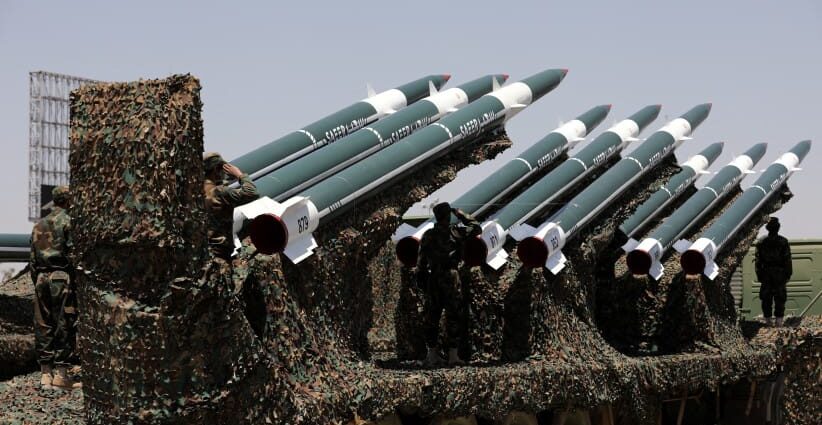
US sanctions network accused of procuring weapons for IRGC as Iran ramps up strikes in Hormuz
The United States imposed sanctions on a network of people supporting the procurement of weapons for the Islamic Revolutionary Guard Corps (IRGC) on Wednesday, according to a press release from the US Treasury Department.
The US Department of the Treasury’s Office of Foreign Assets Control (OFAC) identified seven individuals and organizations attempting to purchase and transfer weapons to Iran. The government action is underscored by an escalation of Iranian attacks towards commercial vessels in the Strait of Hormuz and a parallel US military effort to halt Iran’s actions.
“President Trump has been clear that Iran must denuclearize,” said Secretary of the Treasury Scott Bessent. “Treasury will continue to target and disrupt the illicit procurement networks that fund Iran’s weapons programs and war machine.”
The attempted arms acquisition directly violated renewed UN Security Council resolutions that prohibit UN member states from the procurement, supply, sale, or transfer of weapons to Iran.
“OFAC will continue to disrupt the overseas procurement and financial networks that sustain Iran’s weapons production and proliferation efforts, which threaten Americans and US partners and allies worldwide,” the press statement emphasized.
The IRGC procurement network
One of the people sanctioned is Behrouz Namazi, an Iranian national identified as the general director of the Tehran-based Nika Jet Company, which distributes aircraft and drone parts. According to the press release, he is responsible for obtaining weapons for the IRGC through Vanguard Tactical Supply Limited and a Milan-based Italian national named Dounia Ettaib, who helps procure weapons for Namazi.
Russian national Mariya Vladimirovna Selina was also involved as the head of the financial department of Avratek, an aviation transportation company based in Moscow. Selina also allegedly supported Namazi’s procurement efforts on behalf of the IRGC, according to the Treasury’s statement.
Russian national Vadim Anatolyevich Druzhbin, another employee at Avratek, was also involved in coordinating shipments with Iran.
All implicated individuals and organizations have been penalized for “having provided, or attempted to provide, financial, material, technological or other support for, or goods or services in support of, the IRGC,” or to Namazi himself, under Executive Order 13382.
The sanctions require that all property owned by US individuals that is in any way related to the sanctioned individuals be immediately reported to OFAC, and that entities owned by the sanctioned individuals up to 50% be blocked.
The Treasury’s statement said that violations of US sanctions may result in civil or criminal penalties on US and foreign persons.
Emphasis on economic pressure on Iran
Operation Economic Fury also comes into play as a financial warfare strategy. The Treasury Department’s initiative was designed to impose a chokehold and place maximum economic pressure on Iran during the war, before the US-Iran Memorandum of Understanding was signed.
The strategy consists of maritime blockade efforts in the Strait of Hormuz, as well as sanctions and asset seizures targeting underground weapons procurement networks intended to circumvent existing sanctions on Iran.
The US has taken action to reprimand people sourcing weapons for Iran in the past, including a group of 13 attempting to smuggle man-portable air-defense systems (MANPADS) to the regime in June.
Aaron Glick contributed to this report.

British minor arrested after allegedly planning ‘extreme right-wing’ terror attacks on two mosques
A 14-year-old in London was indicted under suspicion of planning terror attacks on two mosques after police found “documents of concern” in his home, the Metropolitan Police announced on Wednesday.
Originally, the suspect was arrested for damaging a vehicle, but during a search police allegedly located plans to attack two mosques in the Sutton area, in South London.
The minor was charged with planning acts of “extreme right-wing terrorism,” and intentionally breaking a car window, an offense the police described as having been “racially aggravated.”
“This is a very serious terrorism charge against a young boy and likely to be highly concerning to the public and the local community,” Commander Helen Flanagan, head of the London Counter Terrorism Policing unit, stated.
“We know this will be particularly concerning to the Muslim community and we are working closely with the venues affected to ensure they are kept updated and to provide advice, support and reassurance, and this will continue.”
More minors involved in extremist ideologies, CTP head notes
Flanagan also noted the increase in minors conducting criminal activities, and urged parents, teachers, and others with close connections to young children to be aware of when minors may be “vulnerable to radicalization.”
Detective Chief Superintendent Nick Blackburn noted that the incident came only a few days after several other Islamophobic cases, including 12 people being arrested for allegedly threatening an Islamic festival, and a man arrested after an alleged assault outside a mosque.
“We should not underestimate the cumulative impact of incidents of this nature on the Muslim community,” Blackburn stated.

More than 500 feared dead after boats carrying refugees sink off Myanmar coast, UN says
Two boats carrying more than 500 people may have capsized off the coast of Myanmar in recent days, UN agencies said on Thursday, as refugees from the war-torn country continue to make perilous maritime journeys in search of safety and better opportunities.
“According to preliminary information, the two vessels departed from Myanmar’s Rakhine State in late June carrying mostly Rohingya passengers, reportedly including some who had traveled from refugee camps in Cox’s Bazar, Bangladesh,” the International Organization for Migration and the UN Refugee Agency said in a joint statement, saying more than 500 were feared dead.
“While the incidents and casualty figures have yet to be officially confirmed, UNHCR and IOM are gravely concerned by the potentially devastating loss of life.”
Members of Myanmar’s Rohingya Muslim minority for years have risked their lives on flimsy wooden vessels, driven by violence at home and desperate conditions in crowded refugee camps in Bangladesh, hoping to reach safety and opportunity in countries such as Malaysia, Indonesia, or Thailand.
With around 250 people onboard, the first boat lost contact shortly after departure, and a second vessel carrying around 280 people is believed to have sunk off Myanmar’s Ayeyarwady coast on July 8, the UN agencies said.
500 people feared dead after boats sink, many similar incidents this year
“These journeys took place outside the regular sailing season, when maritime conditions are typically more hazardous,” the statement said.
The agencies said that nearly 300 people are reported to be missing or dead in the Andaman Sea and Bay of Bengal this year, including Rohingya refugees and Bangladeshi nationals.

Russian missiles strike Kyiv districts, killing two, officials say
Russian ballistic missiles struck at least two districts in the Ukrainian capital Kyiv early on Thursday, triggering fires and killing two people, officials said.
Mayor Vitali Klitschko, writing on Telegram, said two people had died and six others, including a 16-year-old teenager, had been injured in the attacks.
Reuters witnesses heard a series of explosions in the city.
Tymur Tkachenko, head of the city’s military administration, said Russia was attacking Kyiv with ballistic missiles.
It was the sixth such attack on the Ukrainian capital in July alone, as Russia escalates its air strikes against Ukraine.
Odesa, Kyiv hit by strikes
Ukraine’s emergency services said a fire broke out in two storage buildings and nearby parked trucks in one of the districts, where the two people had died.
In the city’s Svyatoshynskyi district west of the city center, a fire broke out in a one-story warehouse.
Five people were injured in the two incidents, the emergency services said.
The Black Sea port city of Odesa also came under attack early on Thursday, the head of the city’s military administration Serhiy Lysak said, adding that an educational facility had been damaged.

Kyiv’s Chief Rabbi leads humanitarian ops. for local community amid waves of Russian strikes
Chief Rabbi and Chabad shaliach Yonatan Markovitch, with the support of volunteers, has mobilized an extensive humanitarian operation for the local community amid a recent wave of devastating Russian bombings.
In recent days, Kyiv has been experiencing the latest wave of large-scale missile and drone attacks that have struck residential neighborhoods and civilian infrastructure.
Rabbi Markovitch, the JCC Beit Menachem Kyiv, and local volunteers have been working alongside emergency services to provide essential supplies, including food, water, clothing, and medication, to the community.
Volunteers are assisting whomever they can, regardless of whether they are Jewish or not, and have been offering practical support and guidance to families left without help in the wake of the devastation.
Rabbi Markovitch, ‘Our responsibility is to be here for every person in need’
“At a time when the air raid sirens scarcely stop, our responsibility is to be here for every person in need,” Rabbi Markovitch said.
“Our mission is to bring light precisely during these darkest moments for the people of Ukraine in general, and for the residents of Kyiv in particular,” he continued.
Overnight, Russian attacks killed 14 people across Ukraine, the BBC reported Thursday.
Russian ballistic missiles struck at least two districts in the Ukrainian capital Kyiv early on Thursday, triggering fires and killing two people, according to Reuters.

‘Committed to protecting Israel from every threat’: Katz confirms he spoke with Hegseth on Iran war
Defense Minister Israel Katz spoke overnight with US Secretary of Defense Pete Hegseth, he confirmed in a statement on Thursday.
Hegseth briefed Katz on US military operations in Iran, and the two agreed to continue cooperation between the countries in response to any possible developments.
Katz briefed Hegseth on Israel’s operations against terrorist groups in Syria, Gaza, and Lebanon.
Israel must remain in Syria, Gaza, Lebanon, for self-defense, Katz says
He also emphasized Israel’s determination to remain in security zones in Syria, Gaza, and Lebanon to protect Israel’s borders and nearby communities from “threats posed by jihadist forces,” citing this as a central lesson from the events of October 7.
“We have never asked the US to act in our place along our borders. We are committed to protecting the residents of Israel from every threat, and that is what we intend to do,” Katz said.
The next frontier in homebuilding efficiency starts before the first foundation
Builders can no longer rely on rising home prices to offset unexpected costs, scheduled delays and development inefficiencies. After years of home price appreciation that helped cushion operational inefficiencies, today’s market demands greater precision. Builder confidence fell to 37 in May, according to the NAHB/Wells Fargo Housing Market Index, marking the 25th consecutive month below the break-even threshold of 50.
Meanwhile, single-family construction timelines remain roughly two months longer than they were a decade ago, keeping capital tied up before homes can be delivered. As margins tighten, improving visibility in land development is becoming just as critical as improving efficiency during vertical construction.
The homebuilding industry has spent years optimizing vertical construction processes. Production builders have standardized floor plans, optimized construction schedules and developed sophisticated systems for tracking the process from foundation to closing. Yet one critical phase of development remains far less predictable: the horizontal construction process that transforms raw land into build-ready lots.
As builders face mounting pressure to protect margins, improve horizontal cycle times and navigate a more challenging housing market, attention is increasingly shifting toward land development. The ability to understand site conditions, track progress and forecast lot delivery with greater accuracy is emerging as a competitive advantage.
For many builders, the next major opportunity for operational improvement may not be found in the home itself, but in the land beneath it.
Why has horizontal construction lagged behind
The vertical construction process benefits from standardization and repetition. Production builders often construct hundreds of homes using a limited number of floor plans, creating highly standardized workflows and predictable milestones.
Horizontal construction operates differently. Every site introduces unique variables, including soil conditions, topography, drainage requirements, weather events, regulatory requirements and contractor coordination challenges. Even projects within the same region can experience dramatically different development conditions.
Because of this variability, land development has historically been viewed as difficult to standardize and benchmark. Many builders have invested heavily in improving vertical construction performance, driving cycle times lower and optimizing nearly every stage of the homebuilding process. Horizontal operations, however, have remained comparatively difficult to measure.
The cost of that uncertainty continues to grow. According to the Home Builders Institute, the skilled labor shortage now costs the single-family homebuilding industry an estimated $10.8 billion annually, including $2.7 billion in additional carrying costs tied to longer construction schedules. When projects take longer and labor remains scarce, delays during land development become increasingly expensive to absorb.
The hidden cost of uncertainty in land acquisition and development
Land acquisition and development decisions are often made long before construction begins. During those early stages, builders must estimate earthwork volumes, utility installation requirements, lot yields and development timelines using incomplete and often outdated information. While development teams rely on engineering studies, site plans and historical experience, uncertainty in the site conditions remains a constant factor after construction begins.
Earthwork represents one of the most challenging examples. Soil conditions can vary dramatically across a site, especially sites under tree cover, making it difficult to accurately predict cut-and-fill requirements, road lengths, or overall lot yield. Unexpected conditions discovered during grading can introduce delays and additional expenses that ripple throughout the entire project.
The challenge is not simply estimating costs. Builders must also understand how development activities progress over time. A site may appear active, with equipment operating and contractors working daily, but activity alone does not necessarily indicate meaningful progress toward completed lots.
Without clear visibility into site performance, unexpected change orders and delays may remain hidden until they become difficult or expensive to address. According to the NAHB Cost of Doing Business Study in 2024, builders averaged a 11% of the sales price. On a $5 million land development budget, horizontal cost overrun of just 2% to 3% can consume $100,000 to $150,000 in profit, leaving builders with less margin to absorb additional risk. By the time problems are identified, valuable time and capital may already be lost.In today’s market, builders cannot simply offset unexpected costs through higher home prices.
Activity is not the same as progress for the horizontal cycle time
One of the most important distinctions in land development is the difference between activity and measurable progress. A busy construction site can create the impression that work is advancing according to plan. However, builders ultimately need answers to more specific questions:
- How much dirt has moved?
- How many lots are upgraded or nearing completion?
- How many linear feet of utilities are installed?
- Which activities are ahead or behind schedule?
- How will current progress affect future lot readiness?
These questions become increasingly important as projects grow larger and more complex.
Modern site intelligence platforms help answer these questions by providing a comprehensive view of development activity across entire communities. Rather than relying solely on site visits, reports or individual contractor updates, builders can measure physical progress directly and compare performance against project goals.
This shift transforms horizontal land development from a largely observational process into a measurable production system.
Turning land development into a measurable production system
While homebuilders have historically utilized production metrics to optimize vertical construction, these same frameworks are now being extended to the horizontal phase. In vertical workflows, enterprise resource planning (ERP) and accounting systems provide granular tracking. The industry is now shifting toward applying this same logic to land development, transforming a once-opaque process into a measurable production system. The goal is not to eliminate variability. Every site will remain unique.
Instead, the objective is to normalize key factors such as acreage, lot count, earthwork volumes, utility installation, drainage infrastructure and overall site complexity. Once those variables are measured consistently, builders can begin establishing benchmarks and identifying patterns that drive better decision-making.
This approach is giving rise to a new concept: horizontal cycle time. Just as builders closely monitor cycle times during vertical construction, where standardized production metrics became essential management tools, they are beginning to apply similar measurement frameworks to land development. By tracking the duration and performance of critical development activities, organizations can better forecast lot releases, identify emerging delays and improve planning accuracy.
Rather than treating horizontal construction as an unavoidable black box, builders can begin managing it as a predictable production process.
How data and AI are improving predictability
Advances in geospatial intelligence, aerial data collection and artificial intelligence are accelerating this transition. Large builders now have access to years of historical site performance data across multiple geographies and project types. When combined with modern analytics, that information creates new opportunities to identify relationships between site characteristics and development outcomes.
AI does not eliminate the complexity of land development. Human expertise remains essential. However, data-driven models can help builders assign greater weight to critical variables, identify performance trends, spot risks earlier and improve forecasting accuracy. Over time, these insights can help organizations develop increasingly reliable methods for predicting horizontal cycle times and project outcomes.
The result is earlier visibility into potential challenges and more proactive decision-making.
Why capital efficiency is becoming the defining metric
Land development requires significant upfront capital investment long before homes can be sold. Every delay extends the period between capital deployment and revenue generation.
When builders can identify issues earlier, resequence work more effectively and forecast lot deliveries with greater confidence, they shorten the timeline between development spending and vertical construction starts. That acceleration improves cash flow, reduces risk and enhances overall project economics.
In today’s market, where margins are under pressure from rising costs and affordability challenges, these improvements can have a meaningful impact on profitability. More importantly, delays in horizontal construction rarely stay isolated. Every setback in land development ultimately affects homebuilding operations, creating cascading impacts throughout the project lifecycle.
Looking ahead: A new era of land development visibility
The future of homebuilding may be defined as much by land development performance as by vertical construction efficiency.
As builders continue seeking new ways to improve margins, reduce risk and scale operations, real-time site visibility into horizontal construction is becoming increasingly valuable. The organizations that successfully measure, benchmark and optimize land development performance will be better positioned to forecast outcomes, improve capital efficiency and respond more quickly to changing market conditions.
TraceAir is helping drive this transformation by providing builders with greater visibility into site conditions, progress and performance throughout the development process. By turning land development into a measurable production framework, the company is helping builders move beyond intuition and toward more data-driven decision-making.
In an industry built on continuous improvement, the next major breakthrough may come from finally bringing the same level of visibility and control to the horizontal phase that builders have already achieved in the vertical phase.
Click Here


ASML Raises 2026 Sales Forecast as AI Chip Demand Accelerates
ASML Holding raised its 2026 revenue forecast Wednesday after reporting stronger-than-expected second-quarter sales and profit, as demand for the advanced equipment needed to manufacture artificial-intelligence chips continued to accelerate.
The Netherlands-based semiconductor-equipment company said it now expects 2026 net sales of between €43 billion and €45 billion, up from its previous forecast of €36 billion to €40 billion. At the midpoint, the revised projection represents an increase of approximately 16% from the earlier range.
ASML reported second-quarter revenue of €9.33 billion, exceeding the €8.80 billion average estimate compiled by LSEG. Net income reached €2.92 billion, above analysts’ expectation of €2.62 billion. The company’s Amsterdam-listed shares rose 3.7% to €1,613 during Wednesday morning trading and were up approximately 75% for the year at that point in the session.
The earnings report strengthens ASML’s position at the center of the global race to build more computing power for artificial intelligence.
The company behind the world’s most advanced chips
ASML produces lithography machines used to print extremely small electronic circuits onto semiconductor wafers. It is the world’s only manufacturer of extreme ultraviolet lithography systems, commonly known as EUV machines, which are required to produce many of the most advanced logic and memory chips.
Those chips are used in data centers that operate artificial-intelligence systems and cloud-computing platforms.
ASML’s customers include Taiwan Semiconductor Manufacturing Company, Samsung Electronics, SK Hynix and Micron Technology. Taiwan Semiconductor Manufacturing Company manufactures advanced chips for customers including Nvidia, whose processors have become central to the artificial-intelligence data-center expansion.
Chief Executive Officer Christophe Fouquet said customers were continuing to accelerate their capacity-expansion plans, giving ASML greater visibility into longer-term demand.
The company said demand for its lithography systems was “extremely strong.”
Capacity to increase by nearly one-third
ASML plans to increase production capacity for its flagship EUV equipment by approximately 30% in each of the next two years.
The expansion is significant because investors and semiconductor companies have increasingly viewed the limited supply of advanced chipmaking equipment as a potential bottleneck for the artificial-intelligence industry.
Nearly all of ASML’s expanded EUV capacity through 2027 is already booked, according to the company. ASML also plans to increase production of deep ultraviolet lithography systems, known as DUV machines, which are used to produce less advanced but still essential semiconductors.
The capacity increase could make it easier for chipmakers to expand their factories and meet demand from cloud providers, technology companies and data-center operators.
Intel and new High-NA technology
ASML also said Intel Corporation plans to use its new High Numerical Aperture EUV system, known as High-NA, to produce some of Intel’s advanced Panther Lake processors.
High-NA systems are designed to print smaller and more detailed circuits than previous EUV machines, potentially allowing semiconductor companies to increase processing power while fitting more transistors onto individual chips.
The planned Intel use represents an important commercial step for the technology.
ASML Chief Financial Officer Roger Dassen said the company’s capacity plans also account for demand from Terafab, a Texas chip-manufacturing project being developed to supply chips to SpaceX and Tesla.
China remains an important market
ASML expects Chinese customers to represent approximately 20% of its sales in 2026.
The company is prohibited from selling EUV systems and its most advanced DUV machines in China because of export restrictions led by the United States. It continues selling less advanced DUV systems to Chinese customers where permitted.
Dassen said Chinese demand remained strong, particularly among manufacturers producing logic chips for electrical grids, computers, smartphones, artificial-intelligence applications and the domestic Chinese market.
Further restrictions proposed by American lawmakers remain a business risk for ASML.
Why the results matter
ASML’s results provide a direct measure of how rapidly semiconductor manufacturers are expanding to meet artificial-intelligence demand.
Technology companies can announce billions of dollars in planned data-center investment, but those facilities ultimately depend on physical chips. Producing the most advanced chips requires specialized factories, complex supply chains and ASML lithography systems that can take substantial time to manufacture and install.
The company’s higher forecast and planned capacity expansion indicate that its customers are preparing for artificial-intelligence demand to remain strong beyond the current year.
For investors, the report also provides evidence that artificial-intelligence spending is continuing to flow beyond software companies and chip designers into the manufacturers of the equipment needed to build global computing infrastructure.
JBizNews Desk | Amsterdam
© JBizNews.com All Rights Reserved. Reproduction or distribution without written permission is prohibited.
Sources: ASML second-quarter 2026 financial results and company statements; Reuters reporting dated July 15, 2026.




European Union Weighs Easing Bank Capital Rules to Boost Lending and Competitiveness
BRUSSELS — The European Union is weighing changes to bank capital requirements that officials believe could increase lending, strengthen the bloc’s financial sector and improve the competitiveness of European banks against rivals in the United States and the United Kingdom.
The proposal, now under discussion within the European Commission, would adjust portions of the post-financial-crisis regulatory framework that banks say has placed European lenders at a competitive disadvantage while limiting their ability to finance economic growth.
If adopted, the changes would represent one of the most significant reviews of European banking regulation since the implementation of the Basel III capital standards.
Why Brussels Is Considering Changes
European policymakers are increasingly concerned that businesses are relying more heavily on American financial institutions for financing large acquisitions, infrastructure projects and capital-market transactions.
Bank executives have argued that higher regulatory capital requirements reduce their ability to lend, underwrite securities and compete internationally.
Supporters of the proposal believe carefully targeted adjustments could free billions of euros for additional business lending without undermining the overall stability of Europe’s financial system.
The discussions also come as governments across Europe seek new sources of private-sector investment to support economic growth, defense spending, digital infrastructure and energy security.
Not a Rollback of Banking Oversight
Officials have emphasized that the discussions do not represent a broad dismantling of safeguards established after the 2008 global financial crisis.
Instead, regulators are evaluating whether certain technical capital requirements can be modernized while preserving strong protections for depositors and the broader financial system.
European banks today generally hold substantially more capital than they did before the financial crisis and remain subject to extensive stress testing and supervisory oversight.
Any final proposal would still require approval through the European Union’s legislative process before taking effect.
Banks Welcome the Review
Large European lenders have long argued that regulatory differences place them at a disadvantage when competing with major U.S. financial institutions.
Executives contend that reducing unnecessary capital burdens would improve profitability while allowing banks to extend additional credit to businesses and consumers.
Financial institutions also argue that stronger bank lending could support investment, job creation and innovation across the European economy.
Investors have generally viewed the review as positive for the banking sector because lower capital requirements can improve returns on equity and increase financial flexibility.
Critics Urge Caution
Not everyone supports relaxing capital standards.
Some regulators and financial policy experts warn that weakening requirements could leave banks more vulnerable during future economic downturns or financial shocks.
They argue that stronger capital positions helped European banks withstand recent periods of market volatility and should not be compromised for short-term economic gains.
The debate highlights the ongoing challenge facing policymakers: encouraging economic growth while maintaining financial stability.
What Happens Next
The European Commission is expected to continue consulting regulators, financial institutions and member states before presenting any formal legislative proposal.
Until then, the discussions remain exactly that—proposals under consideration rather than adopted policy.
For businesses, the outcome could influence the availability and cost of corporate financing across Europe.
For investors, the review signals that European policymakers are increasingly focused on improving the global competitiveness of the region’s banking sector while balancing the lessons learned from the financial crisis.
JBizNews Desk | Brussels
© JBizNews.com All Rights Reserved. Reproduction or distribution without written permission is prohibited.

Argentina stuns England with dramatic late comeback to reach World Cup final
Enzo Fernandez changed England’s weekend plans, and Lautaro Martinez booked Argentina in the World Cup final with the game-winner seven minutes later in another dramatic comeback and 2-1 win for the defending world champs at Atlanta Stadium on Wednesday afternoon.
Two possessions after he fired a rising missile deflected over the net by England keeper Jordan Pickford, Hernandez used a Lionel Messi assist for a replay of almost the same shot, but planted this one into the left corner of the net in the 85th minute. In the first two minutes of extra time, Martinez settled in front of Pickford at the left edge of the goal and headed a Messi pass by Pickford to cap a stirring rally.
The reigning World Cup champions, Argentina, meet Spain on Sunday in East Rutherford, NJ, with a chance to claim a fourth title.
Messi has eight goals and four assists in this World Cup, and a tournament-record 12 career assists after two on Wednesday.
For more than 80 minutes, all signs were pointing to England getting its first World Cup championship bid in decades.
Deadlock broken late mid-game
With Argentina’s defense backpedaling, Anthony Gordon broke the deadlock in the 55th minute.
He tallied the game’s first goal on a brilliant assist from Morgan Rogers, who was fed by Declan Rice. Rogers recovered the ball outside the box right of the goal and found Gordon streaking ahead of defenders to deflect the pass with the side of his right foot for the score.
Moments later, England defender Djed Spence caught up to Giuliano Simeone, who had space and pace behind coverage on what would have been a clean shot from close range. The maligned Spence delivered one of the tackles of the tournament, covering significant distance to dislodge the ball inside the box.
Before a hydration break as the 70th minute approached, Pickford made his own bid for England’s gold star defensive play of the game. He got his right hand on a ball sailing for the right corner of the goal to make a deflection and diving save to his right, keeping the score 1-0. Only inches spared the Three Lions and Pickford from the equalizer courtesy of Alexis Mac Allister in the 76th minute when he met a cross from Rodrigo DePaul near the penalty spot, but the shot cannoned off the right post.
La Scaloneta tested Pickford immediately out of the halftime break. Julian Alvarez ripped two shots approaching from Pickford’s left to spike the energy and decibel level in the dome, but missed both. The second sank into the outside of the net.
Messi and Argentina also threatened late in the first half, first when Messi danced free of Harry Kane near midfield and drew a yellow card on midfielder Elliot Anderson. The possession nearly ended in a goal by Fernandez, who tallied the decisive quarterfinal goal to eliminate Egypt last week in the round of 16. His clean strike from outside the box whizzed over the top right corner of the bar in the 39th minute, and the first half ended in a 0-0 stalemate.
Neither team threatened a legitimate attempt in a physical opening 19 minutes highlighted by contested defense and restraint from referee Ismail Elfath, allowing grinding defense to turn into grass stains instead of scoring chances. Elfath helped separate England’s Jude Bellingham and Messi when the match opened with a no-call on a forearm from Fernandez to the back of Anderson’s head, one of multiple chest-thumping exchanges between the teams in the first half.
England missed three chances in the first half. The initial shot could’ve been confused for a pass. It came when right back Reece James one-touched a pass from Rogers and looked for his first score of the World Cup. His low, soft try from right of the penalty area was easily smothered at ankle height by Emiliano Martinez.
Before the late onslaught, Messi, playing in his sixth World Cup and 206th international match for Argentina, had a clean look outside the box in the 83rd minute but pushed it wide left.
Argentina finished with 15 attempts on goal to five for England, which squares off with France in the third-place match in Miami on Saturday.
Spain can break a tie with Italy with a victory. La Roja carries a 37-match unbeaten streak — 30 wins, seven draws — into the championship match, vying to win the World Cup for the second time (2010).
England’s Harry Kane: ‘We tried to hold on but it wasn’t enough’
England’s Harry Kane was gutted after his side conceded two late goals to lose to Argentina in the World Cup semi-final on Wednesday, and the captain said they tried to hold on after going ahead, but it was just not enough.
England took the lead through Anthony Gordon’s 55th-minute goal, but came under enormous pressure as Argentina drove forward. Enzo Fernandez netted the equalizer, and Lautaro Martinez scored the winner in added time.
“We played a good game for the large majority of it. Once we went 1-0 up, we seemed to just try and hold on,” Kane told the BBC.
“At this level, it’s not enough, so just gutted, gutted because we’ve worked so hard to be here and the lads have given every last bit of running, sweat, blood, tears, whatever it is.
“After the goal, whether it was them putting more men forward or us just not being able to match them man for man, it just was wave after wave, and we were trying to hold on as we were putting blocks in.
“But in the end, it wasn’t enough.”
England have not reached a World Cup final since winning the trophy in 1966, and Thomas Tuchel’s side came so close but ultimately were left with the same old sinking feeling.
“The boys are always ready for any moment in the game. When we went ahead, the messaging was to go again and get another goal,” Kane said.
“Then obviously once they scored their two goals, it was to try and find something, but we couldn’t quite get the momentum back in the game.
“We had a lot of good moments in this tournament. A lot of good games, another semi-final. We talk about knocking on the door. We’re close; we just need to find that missing piece in the final stage of the tournament.
“Just gutted for the boys, gutted for everyone, the team, the staff, the fans.”

Iran claims ‘existential war’ with US after new wave of strikes, threatens wider energy disruption
The US struck Iran’s coastal defenses and missile sites on Wednesday after reimposing a naval blockade of its ports, while Iran threatened to shut off more regional energy exports, saying it was engaged in an “existential war” with America.
The latest escalation comes days after a fragile truce collapsed, raising the specter of a return to full-scale war, though analysts generally see that as less likely.
Hostilities have intensified since Iran said late on Saturday it had closed the Strait of Hormuz. Military operations are also keeping ships from transiting the vital artery, which carried about a fifth of global oil and gas shipments before the war. Brent crude oil, the international benchmark, closed at a one-month high at $84.95 a barrel on Wednesday.
US Central Command (CENTCOM) said the military had attacked coastal defense systems and cruise missile storage and launch sites on Iran’s Greater Tunb Island starting around 6 a.m. EDT, and had completed the wave of strikes within around 90 minutes.
Nine hours later, CENTCOM reported a second wave of strikes.
US strikes enforce free transit in Hormuz, target Iran’s military capabilities
“The strikes are targeting Iranian military capabilities used to threaten vessels freely transiting through the Strait of Hormuz, an international waterway vital to global commerce. The US military is holding Iran accountable at the Commander in Chief’s direction,” CENTCOM said on X/Twitter.
Three US officials told Reuters that US strikes aimed at forcing open the strait are also targeting Iranian military capabilities the US would want to destroy before executing more complex operations.
Following the latest round of strikes, Iran’s Mehr news agency said four locations around the city of Ahvaz came under attack, just inland from the northern end of the Persian Gulf, as did Bandar Abbas, Iran’s principal port city on the Strait of Hormuz. In neither case were casualties reported, Mehr said. Iran’s Tasnim news agency said explosions were heard in Konarak city, at the southern end of Iran on the Gulf of Oman.
Nonetheless, Iranian state broadcaster IRIB reported the US attacks struck near a hospital in Ahvaz that houses a pediatric cancer center, forcing the temporary evacuation of the hospital. Families have come out to the streets around the hospital to care for their children, IRIB said.
US projectiles also hit near Sirik and Qeshm in southern Iran, according to Iran’s semi-official media.
Following the first wave, which Iran said hit a location on its Hengam Island in the strait, Tehran’s top negotiator Mohammad Baqer Qalibaf issued a statement declaring that Iranian security depended on maintaining what he called “Iranian arrangements” in the strait.
“We are in an essential and existential war with America,” Qalibaf said.
The war has killed thousands of people and displaced millions, mainly in Iran and Lebanon, where conflict restarted between Israel and Iran-backed militant group Hezbollah.
Iran wants to settle, Trump says
Trump struck a triumphant note, as he has repeatedly since the US and Israel started hostilities on Feb. 28, saying, “We’ll have Iran defeated soon. They’ll be defeated very soon.”
Speaking at a roundtable event at the Pennsylvania Defense and Innovation Summit, Trump also claimed the Iranians want to “settle so badly.”
“They don’t like what we’re doing, and they do want to settle. We’ll find out whether or not we settle with them, or we just finish it off,” Trump said.
On Tuesday, Trump said US negotiators had been in touch with their Iranian counterparts to tell them “you better make a deal.”
Iran threatens other shipping routes
Iran has been trying to assert permanent control over shipping in the Strait of Hormuz and to impose fees on vessels passing through it, in what would be a major shift in the balance of power in a region where the US has long acted as guarantor of security.
The Islamic Revolutionary Guard Corps (IRGC) said on Wednesday it had struck US military targets in the region, including in Bahrain, Kuwait and Jordan.
Kuwait said its armed forces intercepted four missiles and 21 drones from Iran on Wednesday, but that no injuries or material damage were reported.
Non-compliant vessel disabled in Arabian Gulf
According to an X post by CENTCOM, an unladen oil tanker that attempted to sail towards an Iranian port in the Arabian Gulf was disabled by US Hellfire missiles that were fired into the ship’s smokestack.
The Curacao-flagged crude oil tanker, named BELMA, was reportedly struck on its way to Kharg Island, after ignoring multiple warnings to stop violating the US blockade.
MoU, Ceasefire deal falters
An interim ceasefire deal signed last month was meant to lead to further negotiations, including on Iran’s nuclear program, and to a permanent truce, but a return to talks has faltered.
“We have no plans for negotiations at the moment and are focused on defense,” Tasnim news agency quoted Iranian Foreign Ministry spokesperson Esmaeil Baghaei as saying.
Qalibaf, who is also speaker of Iran’s parliament, said that if Iran did not benefit from its memorandum of understanding with the US, “we have no reason to adhere to such an understanding.”
Iran never welcomed war, but it must always be ready to fight and “stand to the end” to protect national security and Iranian interests, Qalibaf said. He added Iran must also use “the tools of diplomacy and negotiation,” and choosing either negotiation or war as the sole course of action would be a strategic error.
CENTCOM has announced the conclusion of the recent round of strikes.
Danya Saperstein and Jonah Davidov contributed to this report.

ADL and JCPA diverge over teachers union, exposing a divide over how to fight antisemitism
Two leading Jewish civil rights groups stepped up after Jewish teachers reported antisemitic harassment last year at the National Education Association’s annual convention, only to devolve into disagreement ahead of this year’s convention.
The unusual public dispute between the Jewish Council of Public Affairs and the Anti-Defamation League brought to the fore a simmering tension over how to fight antisemitism within schools and unions. Should Jewish groups promote collaboration with the institutions on solutions — or prioritize confronting them over their failings?
Two days before the assembly, the JCPA and the NEA’s Jewish Affairs Caucus heralded new rules and policies it had developed in collaboration with union leaders to “ensure the safety of Jewish members and educators at the [Representative Assembly] without undermining the union’s vital commitment to free speech and democracy.”
Caucus takes aim at union leaders
A day before the assembly, the ADL, which had worked with caucus members over the past year, told Jewish Insider in an unusual line of attack that it was “extremely frustrated about a so-called ‘agreement’ with JCPA that was reached without all NEA JAC leadership and delegates at the table.”
It also took aim at union leaders: “NEA’s inconsistent enforcement of its own protections has sent an unmistakable message: Jewish educators are not a priority. That must change now.”
‘When you can’t criticize substance, you find reasons to criticize process’
Amy Spitalnick, the CEO of the Jewish Council for Public Affairs, responded to the ADL’s criticism in an interview with the Jewish Telegraphic Agency.
“When you can’t criticize substance, you find reasons to criticize process,” Spitalnick said in an interview. “In this case, we’re both very proud of the substance and the process, and the results underscore that.”
JCPA has emphasized working directly with school leaders and public officials to combat antisemitism, and opposed the Trump administration’s crackdown on campus pro-Palestinian protests.
“It is both possible and necessary to fight antisemitism — on campus, in our communities, and across the country — without abandoning the democratic values that have allowed Jews, and so many other vulnerable minorities, to thrive,” the group wrote in an April 2025 joint statement with the Union for Reform Judaism and a host of other denominational groups condemning the crackdown.
That letter spurred behind-the-scenes pushback from another legacy group, the Jewish Federations of North America.
The ADL, meanwhile, has taken on a more confrontational approach to universities, assigning them “report cards” for campus antisemitism and also empowering Jewish educators to advocate for themselves.
Notably, progressive-leaning groups like the JCPA and centrist groups like the ADL and the JFNA flip strategies when it comes to addressing Trump administration policies that undercut Jewish civil rights advocacy. The centrist groups have at times retreated from confrontation with the government, while the JCPA has been more directly critical. In one instance, the JCPA was more outspoken about a Trump administration attack on the ADL than the ADL was.
“There are absolutely those on the right who think that we should just be burning it all down, and that is not an approach that’s going to make Jews safer or democracy safer,” Spitalnick said. “We believe deeply that the only path forward is one that confronts antisemitism wherever it exists, and does so in a way that recognizes our safety as Jews is tied to our democratic institutions, which includes unions and public education.”
The ADL and the JCPA found common cause last year after the NEA delegates narrowly passed a measure barring the union from using, endorsing, or publicizing any materials from the ADL, which boasts a comprehensive library of anti-bias education materials. (The measure was ultimately rejected by the NEA’s board of directors.)
The JCPA at that time signed onto a letter led by the ADL describing “deep concerns about the growing level of antisemitic activity within teachers’ unions,” including reports that Jewish teachers were verbally accosted during the proceedings.
The harassment, including a reported case of NEA members appearing to cheer at a mention of the 2025 attack on a march for Israeli hostages in Boulder, Colorado, during the convention last year, last month sparked a new antisemitism investigation into NEA by the Trump administration.
Shira Goodman, the ADL’s vice president of advocacy, said in an interview the group “immediately had to take an adversarial advocacy position to address” last year’s conference.
The ADL centered its approach on engaging with Jewish teachers who had sought their help, including the incoming president of the Jewish Affairs Caucus. Goodman said that while the ADL had “some ongoing conversations with leaders at the NEA,” the bulk of its advocacy had been to “support teachers who are doing their own advocacy.”
“Working just with leadership wasn’t going to do it, but we also wanted to be there to support grassroots folks who felt like they wanted to be and remain within their union,” Goodman said.
Goodman added that she did not feel that JCPA and the ADL were working “in tandem.”
“JCPA has said publicly that they have relationships with AFT, with NEA. Different organizations in the Jewish community have different lanes and do different things,” Goodman said. “I just want to make sure that the teachers are represented, and that if somebody is speaking for the teachers, that the teachers have been part of that.”
Spitalnick said JCPA had engaged with JAC leadership and other Jewish organizations, including the ADL, throughout the negotiations with NEA. Last and this year, JCPA also led a workshop at NEA’s annual convention about antisemitism.
“All I could speak to is our approach, which has been to — instead of hammering the union with constant critique and framing a sort of zero sum dynamic in which it’s the union versus the Jewish community — making clear that the union’s success and Jewish safety, inclusion, are one in the same, and that has led to the partnership we have with NEA,” Spitalnick said.
The ADL and other legacy groups have in the past expressed qualified support for Trump administration disciplinary actions targeting educational institutions. Spitalnick was adamant that was the wrong course, including in the most recent government investigation into the NEA.
“The question that everyone should be asking is what is motivating this, and at a time when we’re seeing – whether it be Republicans in Congress or others — use our real fears of antisemitism to fundamentally try to kill the unions by going after their charter and their fundamental existence, I would ask real questions about the motivation for this investigation,” Spitalnick said.
The ADL, meanwhile, wrote in a post on X that the federal government’s investigation “underscores what many Jewish educators have been saying for the last two years: no union member should be made to feel excluded, targeted, or unwelcome because of a core part of their identity.”
Alyson Brauning, the outgoing chair of the Jewish Affairs Caucus, who had collaborated with JCPA ahead of the convention, said the difference between this year’s conference earlier this month and last was “night and day.”
“I actually got to enjoy parts of the [Representative Assembly],” Brauning said. “Our table did not experience any harassment or intimidation in the hall at all. It was actually enjoyable and fun, and we got to do the business of the RA on the floor.”
Naomi Rodriguez, the incoming chair of the Jewish Affairs Caucus who had participated in the ADL’s “Hazak” program, said she “wasn’t aware” of all the work that JCPA had done behind the scenes ahead of the assembly.
“Maybe Alyson was, and she is the chair of the caucus,” she added. “As the incoming chair, I’ll be more on top of those things.”
Rodriquez, who is currently participating in a JCPA cohort to support teachers, said that as the incoming chair she would “accept support from anybody who wants to support us.”
‘This issue with antisemitism is a huge problem, and it’s only getting worse, and I really think we all need to work together, and collaborate and coordinate to ensure that we are as effective as possible in fighting it,” Rodriguez said.
In a statement to JTA, an NEA spokesperson said that the union had “enhanced our work to counter antisemitism and ensure all of our members are respected and supported.”
“That effort included extensive consultation with the Jewish Affairs Caucus, Jewish NEA members, and partners in the Jewish community, including the JCPA,” the spokesperson said.
Following the assembly, which took place in Denver from July 3 through 6, the ADL as well as several other prominent Jewish groups that had also lent support to the Jewish Affairs Caucus published a statement saying that the results of the assembly “provide reason for optimism.”
“We commend the important steps the NEA took to foster a more inclusive Representative Assembly this year,” the groups wrote.
They added a caveat: “Yet that experience does not yet reflect the reality facing many Jewish educators in their own communities. We continue to hear from educators across the country who report marginalization within their unions, hostile rhetoric, intimidation, and exclusion…That reality requires continued attention and action at every level.”
The Conference of Presidents of Major American Jewish Organizations also joined the ADL’s statement, which did not include JCPA.
The JCPA “chose to have their own press release in the beginning,” said Stephanie Hausner, the Conference of Presidents’ chief operating officer. The JCPA, like the ADL, is a constituent member of the conference.
Hausner said she felt the differences between the organizations ahead of the conference “took away from the real issue at hand, which is how do we support Jewish teachers.”
“For the last year I’ve been working with all the organizations on this work, and I really thought we were in that place, and I hope that tomorrow we can get back to that place where everyone’s working together because I do think that it is better for the Jewish community,” Hausner said.
The ADL and JCPA “sometimes reach out to different audiences,” she said, but “in an ideal world, we all speak from the same notes and be able to move together and work together on a regular basis, and we wouldn’t have some of this going on, some of this back and forth.”
“There are no two organizations that operate in this space and do things exactly the same,” Hausner added. “Hopefully, some of their efforts can complement each other moving forward.”
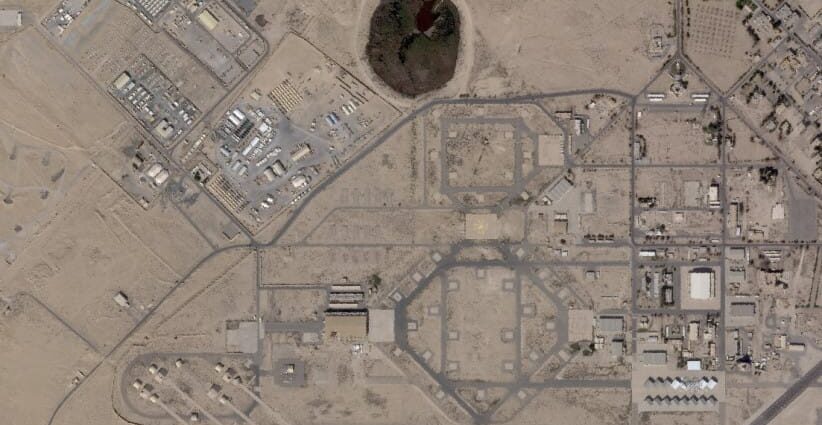
IRGC claims attacks on US military sites in Kuwait, Jordan as hostilities show no sign of stopping
Iran’s Revolutionary Guard Corps (IRGC) says that it targeted a gathering of US soldiers at Ali Al Salem Air Base in Kuwait early Thursday morning, according to Iranian state media.
Iranian state media also reported that the IRGC targeted Kuwait’s early-warning radar systems at the air base in a dual missile and drone attack.
During the night, Bahrain and Jordan also activated missile sirens, with local Jordanian media reporting that eight Iranian missiles were intercepted.
Iranian state media also reported that US military communications systems and fuel storage tanks at the Azraq military base in Jordan had been targeted.
Fifth day of US, Iran trading blows sees fewer vessels in Hormuz
Wednesday was the first day after the US reimposed its naval blockade on Iranian ports, and shipping data showed fewer vessels traveling through the Strait of Hormuz.
Seven vessels crossed the strait on Wednesday, mostly via the Iranian route, down from 13 the previous day, according to Kpler data. Hostilities have intensified since Iran said late on Saturday it had closed the Strait of Hormuz.
Hostilities have intensified since Iran said late on Saturday it had closed the Strait of Hormuz. Military operations are keeping ships from traveling through the waterway, which carried about a fifth of global oil and gas shipments before the war.

American Jewish exceptionalism is ending, here’s what must come next – opinion
Growing up in Argentina, I found American exceptionalism and how it held up Jews as inextricable from the national fabric to be a source of both bewilderment and envy.
Argentinean Jews are patriots. My childhood hero was José de San Martín, the Argentine George Washington. As a teenager, I had a poster of Raúl Alfonsín (the president who brought democracy back to Argentina) on my wall, and you can see me go insane when the national soccer team plays.
Yet the country didn’t feel like the United States felt to American Jews. There was a sense of temporality in the Jewish experience, aided by the country’s perpetual political and economic instability. It was as if we could never fully trust our country.
That was how Jews everywhere felt throughout their long exile. Even when they didn’t experience persecution or discrimination, there was always an insecurity that they accepted as one of the facts of life.
Not so in America, where I moved in 2012. American Jewish intellectual Will Heber claimed in his 1955 book “Protestant, Catholic, Jewish” that “The American Jew does not live in exile; he lives in a land he regards as his own, and it is within that land that he shapes a Jewish identity that is voluntary, confident, and thoroughly American.”
Even when, in past decades, Jews experienced discrimination, they could point towards an unequivocal positive trajectory of integration. Instances of antisemitism weren’t seen as disproving American uniqueness. Instead, the way Jew-hatred receded in the postwar years was seen as further evidence that America was “home” in a way that no other diaspora ever was.
Until now.
American Jews can’t fully trust America
American Jews have lost something invaluable in the last decade: the feeling that their country and their community are exceptional.
Jews here are starting to feel like their brethren throughout history; they can’t fully trust America. It is as though Jewish history has finally caught up with them.
The election of Donald Trump in 2016 proved that an unpredictable candidate who flirted with racism and xenophobia could get elected to the highest office in the land. His election and his populist style insinuated a sense among many Jews that America had lost its predictability. Many Jews consider Trump friendly to them and Israel, and the weakening of institutions that followed may not have targeted Jews directly, but Jews know intuitively that those institutions are key to their long-term safety.
After the murderous Hamas raids in Israel on Oct. 7, 2023, that feeling of lost trust grew by orders of magnitude. The places that had come to symbolize the integration of Jews in American society, like universities and cultural institutions, became overtly hostile to us. The explosion of progressive antisemitism showed how alone Jews were politically and culturally. The conceptual structures that Jews had helped build — such as the human rights doctrine and diversity, equity and inclusion initiatives — were weaponized against them.
Then came the realization that the left and the right will only fight antisemitism when it’s politically expedient, and that both sides will, to degrees small and large, kowtow to their extremists.
The victory of New York City Mayor Zohran Mamdani and his anti-Israel acolytes in the New York Democratic primaries feels like the nail in the coffin of American Jewish exceptionalism. Mamdani legitimized speech (like “globalize the intifada”) that most Jews consider hateful. His election broke the taboo that being considered openly antisemitic is a political liability.
Many voters didn’t see Mamdani’s statements as antisemitic. But that makes the problem even worse. If somebody uses the N-word, we don’t conduct a philological study of the word to determine its true meaning. We simply accept that it’s offensive to Black people because that community told us so. But it’s antisemites, not Jews, whom enlightened society gives the power to define antisemitism.
At first, one could assume the main factor in Mamdani’s election was affordability. But the Mamdani-endorsed insurgents who won the city’s recent congressional primaries centered much of their messaging around Israel, AIPAC and Jews. Antisemitism doesn’t seem to be a bug in the rise of the Democratic Socialists of America to power inside the Democratic Party, but a feature; it’s perhaps one of its most powerful energizing mechanisms.
Every Jew has wondered, at some dark hour, whether their neighbors would have hidden them from the Nazis. After elections like the recent New York primaries, that question returns in a more mundane but painful form: Would they even inconvenience themselves politically to protect us?
It can be argued that the current wave of antisemitism and its mainstream legitimization have not totally dismantled the objective conditions of American Jewish exceptionalism. America had dark patches in its history and managed to grow out of them. The country’s legal and institutional scaffolding remains largely intact, and the basic narrative of America is widely held. One can argue, as President Bill Clinton did in his first inaugural address, that “there’s nothing that is wrong with America that cannot be solved by what’s right with America.”
But the opposite can be argued as well. Both the far left and the far right in the United States seek to deconstruct the basic story of America. The former wants to present America and its history as a corrupt story of oppression; the latter falsely claims that America was founded as a “Christian Nation.”
Exceptionalism has never been a set of concrete data points
But a debate about whether American Judaism is still exceptional would miss the point. Exceptionalism has never been a set of concrete data points, nor was it a set of policies that benefited Jews – after all, France has policies that, on paper, are more friendly to Jews, including funding Jewish schools and criminalizing antisemitic speech. It’s a gestalt: a sense of stability and belonging that led American Jewry to feel radically different from any other community in history.
The question is not the viability of Jewish Life in America. My experience in Argentina shows that Jews can thrive in both left- and right-wing populist regimes and even in an autocracy. But can they really feel at home in a country that allows those forms of government? Can they fully trust a country in which the institutions of democracy may not be strong enough to protect them?
To a certain degree, the question that Franklin Foer asked in his seminal Atlantic essay, “The Golden Age of American Jewry is Ending,” is not the right one. There can be a golden age even when Jews feel existential insecurity. What is changing is the subjective relationship many American Jews have with America.
I believe that antisemitism will recede, and things will “go back to normal,” because antisemitism always ebbs and flows. But we can’t unsee what we’ve been seeing in the last few years. What may be ending is not the Golden Age of American Jewry, if there was ever such a thing, but American Jewish exceptionalism.
American Jews will now need to look at America the way that Jews have looked at every other host country in our long exile – as a place that can turn against them at any time. Will I ever look at my neighbor the same way when, after I told her that Mamdani made my family and me unsafe, she shrugged and voted for him anyway?
Either we were never that exceptional, or our exceptionality is not as protective as we thought. In both cases, we face a painful reckoning with reality: We are more similar to other diasporas than we ever thought.
So what are American Jews to do with this realization?
First, recognizing the truth can be liberating. Yehuda Kurtzer, CEO of the North American Hartman Institute, has urged Jews to embrace “political homelessness.” Whether or not one agrees with all his arguments, the essential insight stands. Jews should stop searching for a permanent home in either political party and begin acting as independent political agents.
Second, we must invest far more in Jewish education, identity and pride. If our place in American society is conditional, our own identity must be unconditional.Judaism — with its depth, history, and purpose — must fill the void before despair or self-rejection does.
Third, we must strengthen Zionism as a central pillar of Jewish identity; invest in Zionist education, and promote engagement with Israel, even if critical. We should remain engaged in American civic life, but it’s clear now that the American project is not, as we thought, an intrinsically Jewish project – at best, it’s a secular project in which Jews may be able to participate.
The only collective Jewish project is Israel. That is not an ideological statement but a fact. That, of course, doesn’t mean blindly accepting any Israeli policy or not fighting for Palestinians’ rights. The opposite: if Israel is our only collective project, we must engage with it from the inside, defending its democracy and its liberalism and fighting against the dark forces that seek to capture it.
Finally, we must stop apologizing for defending Jewish rights. Changing hearts and minds about antisemitism is, at best, an improbable task. Antisemitism rises and falls for reasons largely beyond our control. What we can do is protect ourselves — physically, legally, politically and culturally — and use every legitimate tool available to defend our community.
Jews should stand in solidarity with other oppressed minorities because it is the right thing to do. But we should cease having naïve illusions about others standing up for us. We need to continue “building bridges” — but we need to learn when to burn them. In the case of Mamdani, for example, we’ve seen that opening the doors of Jewish institutions to him has not moderated his views. It has led him to double down. Indeed, after a rabbinical organization honored him at its gala dinner as a way of “building bridges,” Mamdani went on to call an American Zionist group “monsters.”
This American Jewish moment is painful and unsettling, but it’s an opportunity to rethink some of our basic premises and plan according to new principles. Thinking less about our exceptionalism may be liberating. Sometimes it’s good to let go. That energy used to keep aloft something that is collapsing can then be used to enrich our own identity and rediscover our tradition. Clinging to delusions won’t help — looking reality in the face just might.
The views and opinions expressed in this article are those of the author and do not necessarily reflect the views of JTA or its parent company, 70 Faces Media.



Asian Stocks Drop as Chip Selloff Pushes South Korea’s Kospi Down 7%
Asian stocks fell Thursday as renewed selling in semiconductor companies drove South Korea’s benchmark index sharply lower, reversing much of the previous session’s rebound after the country’s central bank raised interest rates for the first time in more than three years.
The Kospi dropped about 7%, with SK Hynix and Samsung Electronics among the biggest weights on the market. The decline followed a volatile week for South Korean technology shares after investors rapidly unwound positions that had benefited from expectations of sustained demand for artificial-intelligence memory chips.
The selloff came one day after the Kospi surged more than 6% as softer U.S. inflation data encouraged investors to return to riskier assets. That rebound proved short-lived after the Bank of Korea raised its seven-day repurchase rate by 25 basis points to 2.75%, its first increase since January 2023.
The central bank had held its benchmark rate at 2.50% since May 2025. Policymakers moved after inflation accelerated to 3.2% in June, above the bank’s 2% target, while a weaker won, elevated household debt and rising housing prices added pressure for tighter monetary policy.
South Korea’s economy has remained supported by strong semiconductor exports, giving the central bank room to raise rates despite uncertainty surrounding global growth. Exports increased more than 70% from a year earlier in June, led by demand for advanced chips used in artificial-intelligence data centers and high-performance computing.
The government recently raised its 2026 economic-growth forecast to 3%, reflecting the strength of the semiconductor industry and domestic fiscal spending. That expansion, however, has also contributed to higher wages, stronger consumer demand and renewed inflation concerns.
Chip shares have become the center of South Korea’s market volatility. SK Hynix, one of the world’s largest producers of high-bandwidth memory, has experienced unusually large price swings since completing its U.S. listing. The company’s American depositary receipts initially rallied after their Nasdaq debut, while its Seoul-traded shares later suffered their steepest one-day decline in years as investors took profits and reduced leveraged positions.
Samsung Electronics has been caught in the same rotation. Both companies had risen sharply during the past year as investors increased exposure to businesses supplying memory for artificial-intelligence processors. Their size within the Kospi means large changes in either stock can move the entire South Korean market.
The latest decline also followed weakness in U.S. semiconductor and computer-hardware shares. Dell Technologies, Micron Technology, Sandisk and other companies tied to memory, servers and artificial-intelligence infrastructure fell Wednesday, even as gains in Apple and other large technology companies helped the broader U.S. indexes finish higher.
Investors have become more selective across the artificial-intelligence trade after a period in which chipmakers, memory producers, server manufacturers and data-center suppliers climbed together. Concerns about stretched valuations, future production capacity and the timing of returns from large AI investments have produced wider differences between individual companies.
South Korea’s rate increase placed additional pressure on richly valued growth shares because higher borrowing costs reduce the present value investors assign to future earnings. The decision also strengthened the won modestly, with the currency trading near 1,486 per dollar, after losing more than 4% during 2026.
The Bank of Korea is balancing the strength of the export economy against inflation, household borrowing and currency weakness. The country continues to post large current-account surpluses, but capital outflows and demand for foreign assets have limited support for the won.
Markets are now assessing whether Thursday’s decline represents another temporary reversal in an increasingly volatile semiconductor trade or the beginning of a broader reduction in exposure to South Korean technology shares.
Demand for advanced memory remains strong, and the country’s chip exports continue to grow rapidly. The immediate market concern is no longer whether artificial-intelligence spending exists, but whether the earnings expected from that spending can keep pace with the sharp rise in share prices.
JBizNews Desk | Seoul
© JBizNews.com All Rights Reserved. Reproduction or distribution without written permission is prohibited.

Intel Falls 5% as BofA Sees Its Server Chip Share Cut Nearly in Half
Intel Corp. shares fell 5.55 percent on Wednesday, July 15, closing at $101.78, after BofA Securities projected the company’s share of the global server processor market will decline sharply over the remainder of the decade, even as demand for artificial intelligence infrastructure continues expanding.
The report forecasts Intel’s share of the server CPU market falling to 24 percent by 2030, down from 41 percent last year, as ARM-based processors gain ground across hyperscale data centers.
Despite the selloff, Bank of America maintained a constructive long-term outlook on Intel, arguing that the company can continue growing server revenue even while losing market share.
ARM Continues Gaining Ground
According to BofA, the biggest shift taking place inside the data center is the rapid adoption of processors built on the ARM architecture.
The firm expects ARM-based chips to account for 50 percent of global server CPU revenue by 2030, up from roughly 32 percent expected this year.
Much of that growth is expected to come from commercial products developed by Nvidia, Arm Holdings and Qualcomm, while the remainder comes from custom chips designed by major cloud providers, including Amazon Web Services’ Graviton, Google’s Axion and Microsoft’s Cobalt processors.
Meanwhile, AMD is expected to maintain roughly 25 to 27 percent market share.
Under BofA’s forecast, nearly all of ARM’s gains come at Intel’s expense.
Growing Revenue, Smaller Market Share
The report’s conclusion is more nuanced than the headline suggests.
BofA does not expect Intel’s server business to shrink.
Instead, the firm projects Intel’s server revenue will continue growing at a 23.4 percent compound annual rate through 2030, supported by expanding AI infrastructure spending, strong enterprise demand and improved profitability.
In other words, Intel is expected to sell more processors than it does today while controlling a smaller percentage of a much larger market.
The overall market is simply growing faster than Intel.
PC Demand Remains a Challenge
While data-center demand continues strengthening, Intel’s personal computer business remains under pressure.
BofA expects global PC shipments to decline 10 to 15 percent this year, although stronger pricing for both server and AI-related products should partially offset that weakness.
Several of Intel’s largest AI server opportunities with cloud providers are also expected to contribute more meaningfully during the second half of 2026 and beyond.
Manufacturing Progress Provides Encouragement
The same day, Intel reported meaningful progress on its advanced manufacturing roadmap.
The company’s 18A manufacturing process achieved approximately 85 percent yield, up from 65 percent during the previous quarter.
Yield measures the percentage of usable chips produced from each semiconductor wafer and is one of the most important indicators of manufacturing efficiency and profitability.
That improvement directly addresses one of Wall Street’s biggest concerns.
Earlier this month, reports suggesting Intel’s next-generation manufacturing technology could face delays contributed to a sharp decline in the stock.
An 85 percent yield indicates manufacturing progress has been stronger than many investors feared.
Analysts Remain Divided
Wall Street continues offering dramatically different views on Intel’s future.
BofA analyst Vivek Arya upgraded Intel to Buy in June, raising his price target to $135 while expressing greater confidence in the company’s foundry strategy, advanced packaging capabilities and long-term AI opportunity.
HSBC maintains one of the most optimistic outlooks on Wall Street with a $200 price target, citing Intel’s manufacturing assets and potential government support for domestic semiconductor production.
Cantor Fitzgerald has established a $150 price target while maintaining a more cautious Neutral rating.
Intel is scheduled to report quarterly earnings on July 23, with investors expected to focus heavily on manufacturing progress, AI demand and foundry execution.
The Entire Semiconductor Sector Was Under Pressure
Wednesday’s decline was not unique to Intel.
Technology investors broadly rotated out of semiconductor stocks despite continued enthusiasm surrounding artificial intelligence.
Micron Technology declined roughly 7 percent, Lam Research lost more than 4 percent, AMD fell approximately 3 percent, and the VanEck Semiconductor ETF dropped around 2 percent as investors locked in profits following one of the strongest rallies the industry has experienced in years.
Money instead flowed toward several of the market’s largest technology companies, including Amazon, Microsoft, Alphabet and Apple.
For business leaders investing in artificial intelligence infrastructure, the report highlights an increasingly competitive server market.
As Intel, AMD, Nvidia and ARM-based providers compete more aggressively for enterprise and cloud workloads, customers are likely to benefit from faster innovation, more product choices and greater pricing competition over the coming years.
JBizNews Desk | New York
© JBizNews.com All Rights Reserved. Reproduction or distribution without written permission is prohibited.

Asia Equities Mostly Decline on AI Concerns

The haredi draft question should be decided by voters, not outgoing lawmakers – editorial
On Tuesday afternoon, the ruling coalition delivered one final punch to the nation’s gut on its way out when the Knesset passed a bill freezing the arrests of haredi (ultra-Orthodox) draft evaders for at least six months.
Fifty-eight lawmakers voted in favor, while 54 voted against. Prime Minister Benjamin Netanyahu, whose arrival in the plenum prompted verbal clashes with the opposition and cries of “disgrace” from bereaved families and IDF reservists watching the proceedings, left shortly afterward and did not remain for the vote itself.
This legislation is, at best, an irresponsible attempt at solving one of Israel’s most divisive issues. At worst, it is a short-sighted political maneuver designed only to preserve haredi participation in the right-wing bloc for the next election cycle. Instead of finally confronting calls for equality in sharing the burden of national service, the coalition chose to shield one sector from enforcement while asking everyone else to continue carrying that burden.
And, as expected, the High Court of Justice intervened on Wednesday, issuing a provisional order suspending the law’s entry into force until further notice. Justice Ofer Grosskopf explained that the order was necessary, among other reasons, because of the implications of freezing enforcement proceedings “with regard to only certain sections of the population.”
The court was right to act swiftly to protect equal treatment under the law. Why should an 18-year-old in Bnei Brak be free to ignore a draft order while another 18-year-old, five minutes away in Ramat Gan, could face military prison for doing exactly the same? The bill was always destined for judicial review, and its temporary suspension should not surprise a single coalition lawmaker.
If the government hopes to convince Israelis that the High Court is overstepping its authority – an argument many find persuasive – introducing legislation that explicitly creates unequal enforcement is a remarkably poor way to make that case.
It is certainly not unusual for a coalition to rush legislation through the Knesset in its final days before dissolution. But this coalition would do well to remember that it was the government in office on October 7, 2023, and remains responsible for leading Israel through the largest massacre of Jews since the Holocaust, as well as the longest and most demanding war in the nation’s history.
A changing reality and greater manpower shortage
Throughout that war, the military echelon has repeatedly sounded the alarm over the IDF’s severe manpower shortages. Chief of Staff Lt.-Gen. Eyal Zamir has warned that the army risks “collapsing into itself” if those shortages are not addressed. In a last-ditch effort to stop the legislation, Zamir warned lawmakers on Monday that implementing the bill would create significant national security risks and said he opposed it “completely and unequivocally.”
This government was democratically elected in November 2022, but circumstances have changed dramatically since then. The October 7 massacre and the wars that followed have fundamentally reshaped Israel’s security reality. Poll after poll across Israeli media has shown that a majority of Israelis, many of whom have completed mandatory service and continue to serve lengthy reserve duty stints in Gaza, Lebanon, Syria, and the West Bank, oppose exempting haredim from military service.
The lawmakers within the coalition who resisted this legislation deserve credit for doing so. Likud MK Yuli Edelstein had already announced he would seek a new political home, months after being removed as chairman of the Foreign Affairs and Defense Committee for insisting on haredi enlistment. Fellow Likud MK Dan Illouz is expected to leave the party, while Deputy Foreign Minister Sharren Haskel resigned following the vote.
Their principled stance is commendable, yet it is difficult to escape the feeling that it is too little, too late. The Knesset will disperse on Friday, and Netanyahu’s government will continue to serve in a transitional capacity until elections are held and a new coalition is formed.
The key issues that have divided Israel for years cannot be settled through short-sighted, last-minute bills pushed through the Knesset. Israelis, regardless of their political affiliation, cannot reasonably be expected to support legislation that even the prime minister could not bring himself to vote for.
The only appropriate course of action now is to leave the question of haredi enlistment to the voters in October.

US troops to receive testosterone screenings, hormone therapy, says Hegseth
US Defense Secretary Pete Hegseth announced mandatory annual testosterone screening for troops 30 years old or above on Wednesday, an initiative he said was aimed at combating testosterone deficiency that can undermine health.
“It’s well-established science that as we age, testosterone levels naturally drop,” Hegseth said in his video message posted on X/Twitter.
The screening would be incorporated into the annual health assessment required for all service members; it would be automatically included for those aged 30 and above, and younger service members could voluntarily opt in.
The High-T Department of War. pic.twitter.com/hlAUq3j2cD
— Secretary of War Pete Hegseth (@SecWar) July 15, 2026
Should an individual’s testosterone levels fall below the benchmark, Hegseth explained, they will be offered testosterone replacement therapy.
“It is entirely your choice,” he added.
Hegseth also noted that this initiative “is not about artificial enhancement.” He stressed that the initiative was designed to restore and protect service members’ “natural capabilities” and longevity.
The defense secretary also claimed that addressing testosterone deficiency would promote the psychological and mental “readiness” of service members, not just physical stamina.
“By addressing these health markers early, we are keeping you on the leading edge of lethality and giving the same level of support that you give this nation,” Hegseth said.
When asked for comment by NBC News, the Defense Department declined to say whether there would be estrogen screenings for female service members and if there would be repercussions for service members who declined the recommended testosterone treatment, instead referring NBC News to Hegseth’s video.
Testosterone levels are declining worldwide, new study reveals
According to a recent study, average testosterone levels in men globally have fallen by 54% in less than five decades.
Low testosterone levels may manifest as fatigue, reduced sex drive, erectile dysfunction, loss of muscle mass, increased body fat, and reduced bone density. Some men may also experience mood disorders, difficulty concentrating, and decreased sperm production.
US Health Department eases some restrictions on HRT
The move comes as the US Department of Health and Human Services has moved to ease some restrictions on testosterone replacement therapies, including announcing last month it would seek to remove limits on use in men with age-related low testosterone.
Still, Hegseth’s announcement triggered backlash from opposition Democrats, who pointed to his ban on transgender service members who often depended on hormone therapy.
“So now y’all support gender-affirming care?” Democratic Congresswoman Summer Lee said.
“Sounds like gender-affirming care to me,” Senator Tammy Duckworth added.
Reuters and Itay Gal contributed to this report.

Trump Says Iran Wants a Settlement as U.S. Launches New Waves of Strikes
President Donald Trump said Iran wants to reach a settlement with the United States as American forces launched two new waves of strikes against Iranian coastal defenses, missile sites and military infrastructure on Wednesday, July 15, escalating a conflict that has entered its fifth month without a broader agreement.
Speaking at the Pennsylvania Defense and Innovation Summit, Trump said Iranian officials wanted to negotiate but left open the possibility of further military action if no agreement is reached.
“They don’t like what we’re doing, and they do want to settle,” Trump said. “We’ll find out whether or not we settle with them, or we just finish it off.”
Trump also said Iran would be defeated soon, while the administration continued weighing additional military options intended to weaken Tehran’s ability to threaten commercial shipping and U.S. forces throughout the region.
U.S. Central Command said the first wave began at approximately 6 a.m. Eastern time and targeted coastal-defense systems and cruise-missile storage and launch sites on Greater Tunb Island during a 90-minute operation. A second wave began roughly nine hours later and struck targets in several locations, including Bandar Abbas, Iran’s largest port and a major base for the Iranian navy and the Islamic Revolutionary Guard Corps.
CENTCOM said the strikes hit Iranian command centers, air-defense positions, missile and drone capabilities, and coastal-surveillance facilities. American officials said the campaign was intended to degrade Iran’s ability to interfere with traffic through the Strait of Hormuz, where military activity and attacks on commercial vessels have sharply reduced shipping.
Iran said late Saturday that it had closed the strait. Military operations have further limited vessel traffic through the passage, which handled approximately one-fifth of global oil and gas shipments before the war. Brent crude closed Wednesday at $84.95 a barrel, its highest level in about a month.
The American military also said it disabled an empty oil tanker that was sailing toward Kharg Island after the vessel ignored repeated warnings. U.S. forces fired Hellfire missiles into the ship’s smokestack. Since restoring a naval blockade of Iran on Tuesday, the military has redirected two ships and disabled another vessel, according to CENTCOM.
Iran retaliated against American military positions in neighboring countries. The Revolutionary Guard said it struck U.S. targets in Bahrain, Kuwait and Jordan, including a radar system and an area used by American personnel at Ali Al Salem Air Base in Kuwait. The United States had not released a public casualty assessment from those attacks as of Wednesday evening.
Iranian media reported explosions near Bandar Abbas and in the areas of Ahvaz, Konarak, Sirik and Qeshm. The state broadcaster said strikes near a hospital in Ahvaz that includes a pediatric cancer center forced a temporary evacuation. Independent confirmation of the reported damage and casualties was not immediately available.
Mohammad Baqer Qalibaf, Iran’s parliament speaker and top negotiator, said Tehran would insist on what he called Iranian arrangements governing the Strait of Hormuz. He described the conflict as an “essential and existential war with America.”
Iran’s military has said the strait will not reopen unless the United States complies with a 14-point memorandum of understanding signed in June and accepts Iranian rules governing ship traffic. The agreement was intended to stop the fighting and create a path toward a broader settlement, but the truce later collapsed.
Three U.S. officials said the latest strikes were also reducing Iranian capabilities that would need to be destroyed before more complex American military operations could be undertaken. One official described the attacks as “shaping operations” that could prepare the battlefield if Trump orders a larger campaign.
Options discussed within the administration have included seizing Kharg Island, the terminal responsible for roughly 90% of Iran’s oil exports, and striking a deeply buried facility associated with Iran’s nuclear program known as Pickaxe Mountain. Trump said Tuesday that U.S. forces had avoided Iranian oil facilities during earlier strikes on Kharg Island but did not rule out taking control of it later.
Iran has suffered extensive damage to its conventional military and defense-industrial base since U.S. and Israeli operations began on February 28, but American officials say Tehran retains significant missile and drone capabilities. Those weapons have allowed Iran to continue attacking tankers and military sites despite the destruction of much of its traditional naval force.
Trump said Tuesday that American negotiators had communicated with Iranian representatives and told them to make a deal. Wednesday’s strikes showed that the administration is continuing diplomatic contacts while simultaneously increasing military pressure.
Trump also announced that Iran had permitted an American citizen prevented from leaving the country since 2024 to depart. Human-rights attorney Jared Genser identified her as Dena Karari and said she was safely traveling back to the United States.
The administration has not announced a new negotiating schedule or the terms Iran would have to accept to end the renewed military campaign.
JBizNews Desk | Washington
© JBizNews.com All Rights Reserved. Reproduction or distribution without written permission is prohibited.

Iran Threatens to Halt All Gulf Energy Exports as Brent Climbs Past $85
Iran’s Revolutionary Guard threatened Wednesday to stop all energy exports from the Middle East in response to the American blockade, declaring that oil and gas will leave the region “either for everyone or for no one.” Hours earlier, U.S. Central Command said American forces had struck dozens of targets overnight and then resumed hitting Iran in daylight — an unusual escalation.
Brent crude traded above $85 a barrel on Wednesday, more than 15% above its pre-war price and still well below the nearly $120 reached at the height of the conflict.
Where the fighting is now
Among the targets was Greater Tunb Island, a strategic position inside the Strait of Hormuz. CENTCOM said the strike hit Iranian defense and missile sites. Iran seized Greater Tunb, Lesser Tunb and Abu Musa in 1971 from territory that became the United Arab Emirates, which has sought them back ever since. Analysts have suggested that whoever holds those islands can effectively control the strait.
A second strike hit a barracks for Iran’s 388th Mechanized Infantry Brigade in Sistan and Baluchestan province. Iranian state television reported at least 13 missiles fired and seven dead, including conscripts and career soldiers. Iranian government spokesperson Fatemeh Mohajerani said more than 30 people have been killed in recent days.
Why the strait still isn’t open
This is day 135 of a crisis that began February 28. In peacetime, roughly a fifth of the world’s oil and gas trade moves through Hormuz — the Congressional Research Service puts it near 27% of maritime crude and petroleum products.
During the interim deal, some ships began moving through a route near Oman overseen by the U.S. military and outside Tehran’s control. In recent days Iran attacked vessels using that corridor, and the exchanges resumed. Washington has threatened to reopen the strait by force. Experts say that would require a far larger armada, if not tens of thousands of ground troops.
Mediation is fraying. Oman, struck by Iran on July 12, has not withdrawn as mediator but has a credibility problem. Qatar, which hosted the most recent technical talks, was also struck. Pakistan’s track has been inactive since early July, and the Islamabad memorandum signed June 17 is functionally suspended. The 60-day nuclear window expires August 17 with no substantive discussion held.
The bill
The International Monetary Fund issued the warning that ought to concern anyone running a business with a supply chain. Economists Azim Sadikov and Jean-Marc Natal wrote that the world’s buffer has shrunk — spare capacity deployed, demand compressed, inventories drawn down. Unless inventories are replenished, they wrote, “the world will start from a weaker position when the next shock comes.”
That is the part most coverage misses. Oil at $85 is survivable. Oil at $85 with no cushion left is a different animal.
The costs are already in the system. War-risk insurance premiums for the strait went from 0.125% of a ship’s insured value per transit to between 0.2% and 0.4% — roughly a quarter-million-dollar increase for a very large crude carrier. Iran has reportedly charged tolls as high as $2 million per ship for passage. The International Maritime Organization reported some 20,000 mariners and 2,000 ships stranded in the Gulf in April.
What it means at the register
Oil is the headline. Fertilizer may matter more. Up to 30% of internationally traded fertilizer normally transits Hormuz, with the Gulf accounting for roughly 30% to 35% of global urea exports and 20% to 30% of ammonia. Fertilizer prices feed grain prices, which feed food prices — on a lag of months, not days. Pharmaceutical shipments have been disrupted as well.
Regular gasoline averaged $3.88 a gallon nationally in recent days, about 70 cents higher than a year ago, according to AAA. Every delivery route, every landscaping truck, every distributor in the tri-state area is paying that spread.
The politics
Rising prices are a direct problem for President Trump and Republicans hoping to hold Congress in November. The Joint Chiefs of Staff warned him before the February strikes that Iran might close the strait. He dismissed it, telling his team Iran would capitulate — and that if it didn’t, the U.S. military could reopen the waterway.
Four and a half months later, it hasn’t.
JBizNews Desk | New York © JBizNews.com All Rights Reserved. Reproduction or distribution without written permission is prohibited.
More American Businesses Are Now Inherited Than Bought, Bank of America Study Finds
For the first time in the survey’s history, wealthy Americans are more likely to have inherited their business than to have bought it, according to the 2026 Study of Wealthy Americans released June 17 by Bank of America Private Bank. Its president, Katy Knox, said the Great Wealth Transfer is “not simply a transfer of assets” but a shift in how families engage with what they own.
The reversal is fast. In 2026, 23% of business owners surveyed said they inherited their company, against 11% who purchased it. Two years ago, the inherited figure was 11%. In 2022, it was 5% inherited against 28% purchased.
That is a complete flip in four years.
The number behind the number
Cerulli Associates estimates $124 trillion will change hands in the United States over the next 25 years, with annual transfers from the Baby Boomer generation reaching nearly $5 trillion by 2048. That projection was $84 trillion as recently as 2021 — a 48% revision upward. Millennials and Generation X, roughly ages 30 to 61, are expected to inherit close to $18 trillion in the next decade alone.
Most of it goes to women. The Bank of America Institute estimates close to $100 trillion of the total will end up with women — $47 trillion to younger generations as inherited wealth, $54 trillion to surviving spouses, of whom 95% are expected to be women.
Why businesses are staying in the family
Two forces are pushing the same direction.
The first is that companies are staying private longer. Apollo chief economist Torsten Slok, citing University of Florida finance professor Jay Ritter, has noted the median age at which companies go public has climbed since 2022, when the Federal Reserve began raising rates. A boom in private capital lets large firms raise billions without ever ringing the bell. Private companies are harder to cash out of — so they get handed down instead.
The second is tax. The current structure rewards holding assets until death rather than selling during life. The study found a notable portion of owners have no plans to transition out at all, while the majority intend to eventually pass ownership to family heirs.
The gap that should worry every family business
Here is the finding with teeth: 78% of respondents said succession planning matters. Only 20% have a fully documented plan.
That is the whole story for the tri-state’s family-owned distributors, contractors, retailers, medical practices and real estate holdings. An entire generation of owners intends to hand the business to their children and has not written down how. Family involvement in these companies has already increased since 2024 across senior and middle management roles — the transition is happening whether the paperwork exists or not.
Among the ultra-wealthy, 79% involve advisors in estate conversations with heirs. Only 36% believe their heirs are very prepared to receive an inheritance, and 61% worry that family wealth will damage their children’s motivation. Their remedies: backing heirs’ own ventures (51%), writing provisions into trusts (41%), and simply not telling the kids the full number.
What the heirs will do with it
They will not invest like their parents. Among ultra-high-net-worth respondents with $25 million or more, 77% say private markets offer better opportunity than public ones. Among younger investors, 67% doubt stocks and bonds can deliver above-average returns, 58% own crypto, and 88% expect to increase allocations to alternatives. Family offices are moving the same way — 87% of family office wealth has yet to pass to the next generation, and 59% of it will move within the decade, according to a separate Bank of America Private Bank family office study.
The other reading
A rising share of inherited businesses is also a measure of concentration. The Federal Reserve Bank of St. Louis puts the top 1% of American households at nearly one-third of national wealth — roughly $44 trillion, about what the bottom 90% holds combined. Businesses passing down rather than trading hands means fewer opportunities for outside buyers to acquire a going concern, and fewer entry points for the operator who has capital but no last name.
The methodology
Escalent conducted the online survey for Bank of America Private Bank, polling 1,431 respondents aged 21 and older with at least $3 million in investable assets excluding a primary residence. The margin of error is plus or minus 2.5 points at a 95% confidence level. Respondents are a nationally representative sample of high-net-worth Americans and not necessarily bank clients.
The takeaway for owners: the transfer is not coming. It is here, and four in five of you have not put it on paper.
JBizNews Desk | New York © JBizNews.com All Rights Reserved. Reproduction or distribution without written permission is prohibited.

Bitcoin Surges Above $65,000 After Cooling Inflation Data Cuts Fed Rate Hike Expectations
Bitcoin surged above $65,000 on Wednesday, July 15, after a series of softer-than-expected U.S. inflation reports prompted investors to sharply reduce expectations for another Federal Reserve interest-rate increase, fueling a broad rally across cryptocurrencies and other risk assets.
The world’s largest cryptocurrency climbed as high as $65,500 after the Bureau of Labor Statistics reported that producer prices fell 0.3 percent in June, reinforcing Tuesday’s unexpectedly weak Consumer Price Index report and strengthening the view that inflation continues to move in the Federal Reserve’s favor.
Ether also advanced about 5 percent to $1,873, while XRP and most other major cryptocurrencies posted solid gains as investors rotated back into risk assets.
Inflation Changed the Conversation
Markets had spent weeks positioning for the possibility of another Federal Reserve rate increase.
That outlook changed quickly.
Tuesday’s Consumer Price Index showed prices fell 0.4 percent in June, the largest monthly decline since April 2020, while annual inflation slowed to 3.5 percent, below economists’ expectations.
Wednesday’s Producer Price Index added further evidence that inflation pressures are easing, with wholesale prices falling 0.3 percent and core producer inflation increasing only 0.2 percent.
Later in the afternoon, the Federal Reserve’s Beige Book reported that price growth was the same or slower across all 12 Federal Reserve districts, providing another indication that inflation pressures are moderating across the country.
Together, the reports significantly strengthened investor confidence that the Federal Reserve may not need to tighten monetary policy as aggressively as markets had anticipated only days earlier.
Markets Responded Immediately
Interest-rate expectations shifted almost as soon as the data was released.
According to CME FedWatch, the probability of another Federal Reserve rate increase by September dropped to roughly 48 percent, down from nearly 70 percent just one week earlier.
The two-year Treasury yield fell about 7 basis points to 4.12 percent, the U.S. dollar weakened, and investors moved back into higher-risk assets including cryptocurrencies and technology stocks.
Earlier Wednesday, New York Federal Reserve President John Williams said there were encouraging reasons to believe inflation had peaked and projected a gradual return toward the Federal Reserve’s 2 percent target over the coming years.
Short Sellers Added Fuel
The rally accelerated as traders betting against Bitcoin were forced to cover losing positions.
Between $209 million and $230 million in leveraged cryptocurrency short positions were liquidated over two sessions, including approximately $107 million tied directly to Bitcoin.
Those forced purchases amplified an already strong move driven by improving economic data.
Institutional Money Remains Active
Institutional investors continued directing money into digital assets through spot exchange-traded funds.
BlackRock’s IBIT led Bitcoin ETF inflows, while Fidelity’s FBTC also attracted fresh capital. Spot Ether ETFs continued adding assets as institutional demand remained resilient despite recent market volatility.
Although ETF flows have alternated between inflows and outflows throughout July, institutional participation remains one of the strongest long-term supports for the cryptocurrency market.
Why This Rally Was Different
Perhaps the biggest takeaway is what didn’t drive Bitcoin higher.
Despite continuing geopolitical tensions and conflict in the Middle East, investors focused overwhelmingly on inflation, interest rates and Federal Reserve policy rather than global events.
That reflects how dramatically Bitcoin’s trading profile has evolved since the launch of U.S. spot Bitcoin ETFs.
Increasingly, Bitcoin trades alongside growth assets, responding to monetary policy, Treasury yields and liquidity conditions more than geopolitical headlines.
What Comes Next
Attention now turns to the Federal Open Market Committee meeting on July 28–29, where policymakers will determine whether recent inflation improvements justify pausing additional rate increases.
Markets will also closely watch the next Consumer Price Index report for confirmation that June’s improvement was not a one-month anomaly.
For businesses and investors alike, the message is becoming clearer.
If inflation continues cooling, financial conditions could gradually ease, supporting equities, cryptocurrencies and other growth-oriented assets.
If energy prices rebound or inflation begins accelerating again, markets could quickly reverse course.
For now, investors are increasingly betting that the Federal Reserve is approaching the end of its tightening cycle—and Wednesday’s surge in Bitcoin reflected that growing confidence.
JBizNews Desk | New York
© JBizNews.com All Rights Reserved. Reproduction or distribution without written permission is prohibited.

BMW recalls nearly 30K vehicles over engine starter defect that could cause fire
BMW is recalling nearly 30,000 vehicles over an engine starter issue that could pose a fire risk, according to federal regulators.
The recall affects 29,119 plug-in hybrid sedans, including 2018-2020 BMW 530e xDrive, 2018-2020 BMW 530e iPerformance, 2017-2019 BMW 740Le xDrive and 2016-2018 BMW 330e iPerformance vehicles.
According to the National Highway Traffic Safety Administration (NHTSA), water can come into contact with the engine starter’s electrical relay, leading to corrosion over time.
SUBARU RECALLS OVER 540,000 SUVS AFTER FEDERAL REGULATORS FLAG WEIGHT CALCULATION ERROR: NHTSA
Corrosion inside the starter relay could affect the relay’s electrical connections and the engine’s ability to start, the recall report reads.
The issue could cause a short circuit and possible overheating of the starter even if it is parked with the ignition turned off, according to NHTSA.
“A short circuit in the starter relay may increase the risk of a fire,” the NHTSA report said.
The recall was issued after a field incident in November involving a 2019 BMW 5 and a field incident in May involving a 2017 BMW 3 Series.
No injuries or accidents have been reported thus far in connection with the recall.
Vehicle owners are urged to park their cars outside and away from buildings until the recall repair is completed.
KIA ISSUES NEW RECALL OF 460,000 VEHICLES AFTER PREVIOUS FIX TO FIRE RISK FAILED
CLICK HERE TO GET FOX BUSINESS ON THE GO
BMW will send out owner notification letters on Aug. 28, advising them to take their vehicles to an authorized dealer for the starter to be replaced free of charge. Owners who have previously purchased a starter replacement may also be eligible for reimbursement.
This post was originally published here



Senators From Both Parties Unveil PROMISE Act to Force a Social Security Solvency Vote
A bipartisan group of senators introduced legislation on Tuesday that would force Congress to hold an up-or-down vote on a plan to fix Social Security’s finances, with Sen. Dick Durbin, the Illinois Democrat and Democratic whip who co-authored the bill, saying in a statement that the longer lawmakers wait, the harder the program’s shortfall becomes to solve. The bill is named the Protecting Retirement Opportunities and Maintaining Income Security for Everyone Act — the PROMISE Act.
Durbin, who is retiring at the end of his term, is joined by Sen. Bill Cassidy of Louisiana, Sen. John Cornyn of Texas and Sen. Thom Tillis of North Carolina on the Republican side, Sen. Tim Kaine of Virginia on the Democratic side, and independent Sen. Angus King of Maine. Sen. Chris Coons, a Delaware Democrat, and Sen. Alan Armstrong, an Oklahoma Republican, signed on just before the bill was filed.
What the bill actually does
The PROMISE Act does not cut benefits, raise taxes or lift the retirement age. It builds a procedure. Under the bill, the Social Security Advisory Board — an independent, bipartisan panel that already exists — would collect public input and send Congress a base bill. That measure would then move under expedited floor rules, ending in a straight yes-or-no vote on a plan that keeps Social Security solvent for at least 50 years. A final bill would still need 60 votes in the Senate.
The legislation would also trigger a solvency review every 10 years, restarting the same fast-track process any time a shortfall is projected. A fact sheet released with the bill states plainly that it does not bypass regular order, does not predetermine a policy outcome and does not create a fiscal commission — three things that have killed similar efforts before.
The numbers behind it
The Social Security Board of Trustees annual report released in June found the retirement trust fund is on track to run short in 2032, a year earlier than the previous projection. At that point the program could pay only about 78% of scheduled retirement benefits — a roughly 22% cut arriving automatically, without a single vote in Congress. The 75-year funding gap widened to 4.42% of payroll from 3.82%, a jump that led the Committee for a Responsible Federal Budget to say the program’s outlook had substantially worsened. The group supports the PROMISE Act.
More than 71 million Americans collect a monthly Social Security check. The trustees attributed the deteriorating math to lower projected birth rates, reduced immigration and lower trust fund revenue tied to the cost of the tax and spending law President Donald Trump signed last summer.
Why employers should be watching
Social Security is funded by a 12.4% payroll tax, split evenly between employer and employee at 6.2% each. The self-employed pay both halves. For 2026, that tax applies to the first $184,500 of wages, up from $176,100 in 2025.
That cap is where the fight will land. Last month, Sen. Elizabeth Warren, a Massachusetts Democrat, and Sen. Bernie Moreno, an Ohio Republican, published a New York Times op-ed calling for the cap to be raised. Any increase lands directly on employers with high-wage staff — professional firms, medical practices, engineering shops — and on every owner filing as self-employed, who absorbs the full 12.4% alone. A business with ten employees earning above the cap pays more the moment the ceiling moves, with no change in headcount.
Americans for Tax Reform organized a detailed rebuttal to the bill with comments from dozens of conservatives. The group has beaten this kind of proposal before: a 2024 House effort to create a federal debt commission covering Social Security and Medicare collapsed after aggressive lobbying by the organization and its president, Grover Norquist.
A closing window
The last real reform came roughly 40 years ago, when the retirement age was raised from 65 to 67 on the recommendation of a commission led by Alan Greenspan. Since then, both parties have avoided the subject — Republicans resisting tax increases, Democrats resisting a higher retirement age.
Two of the bill’s sponsors are on the way out. Durbin is retiring, and Cassidy lost his primary. Cassidy told CNBC.com in June that he wants the issue settled before he leaves. He has floated creating a separate investment fund for Social Security, modeled on changes made to the federal Railroad Retirement system under President George W. Bush. Other proposals on the table include raising the retirement age or increasing taxes on high earners. The PROMISE Act would simply guarantee those ideas get a hearing and a vote.
The stakes reach beyond retirees. A 22% benefit cut in 2032 would pull tens of billions of dollars a year out of consumer spending, hitting grocery stores, pharmacies, landlords and every small business serving older customers. Some analysts have warned that an approaching depletion date, left unaddressed, could unsettle the bond market well before the deadline arrives.
JBizNews Desk | Washington, D.C. © JBizNews.com All Rights Reserved. Reproduction or distribution without written permission is prohibited.

Canadian Wildfires Push Choking Smoke Into New York and New Jersey, Disrupting Business and Daily Life Across the Northeast
Residents across New York, New York City, Brooklyn, Queens, Staten Island, Long Island, Westchester County and much of Central and North Jersey opened their doors Wednesday, July 15, expecting another sweltering summer day. Instead, many were met with the unmistakable smell of smoke, burning eyes, scratchy throats and a gray haze that made it difficult to see across city skylines.
For many, the first question was simple: “Where is the fire?”
The answer surprised millions of people.
There is no major wildfire burning in New York or New Jersey.
The smoke blanketing the Northeast originated hundreds of miles away in Canada, where one of the country’s most active wildfire seasons in recent years continues to burn across large sections of Ontario, Manitoba and Saskatchewan. While many of those fires have been burning for days and, in some cases, weeks, the reason the smoke suddenly appeared across the Northeast on Wednesday had nothing to do with new fires starting. It was caused by a major shift in the weather.
Strong upper-level winds that had previously carried the smoke elsewhere changed direction, pushing an enormous plume southeast across the Great Lakes and directly into some of America’s largest population centers. Within hours, air quality deteriorated across New York, New Jersey, Connecticut, Pennsylvania, Massachusetts and other parts of the Northeast and Mid-Atlantic, leaving millions of people wondering why the air suddenly smelled like a campfire.
The fires themselves remain in Canada. The smoke does not.
Wildfire smoke rises thousands of feet into the atmosphere, where it can travel hundreds or even thousands of miles before descending back toward the ground. When those weather patterns align, communities far removed from the flames can experience air quality nearly as poor as areas much closer to the fires.
That is exactly what happened Wednesday.
The smoke carried billions of microscopic particles known as PM2.5—tiny pieces of ash, soot and burned vegetation small enough to travel deep into the lungs. Those particles are responsible for the burning eyes, coughing, sore throats, headaches and breathing discomfort reported throughout the region. For people with asthma, chronic lung disease, heart conditions, young children, older adults and pregnant women, the health risks are significantly greater.
Health officials urged residents to remain indoors whenever possible, keep windows and doors closed, run air-conditioning systems in recirculation mode and use high-efficiency air filtration where available. People who must spend extended periods outdoors were advised to wear properly fitted N95 or KN95 masks.
The smoke affected far more than New York City.
Conditions stretched across Manhattan, Brooklyn, Queens, the Bronx, Staten Island, Long Island and the Lower Hudson Valley before spreading throughout northern and central New Jersey, including Newark, Jersey City, Elizabeth, Edison, New Brunswick, Woodbridge, Freehold, Lakewood, Toms River, Princeton and surrounding communities. Similar conditions extended into Pennsylvania, Connecticut, Rhode Island, Massachusetts, Vermont, New Hampshire and Maine, while hazy skies were also reported farther south across portions of the Mid-Atlantic.
The flames themselves are not expected to spread into New York or New Jersey.
Unlike a hurricane, wildfire smoke can travel enormous distances without the fire ever approaching the affected area. The current threat crossing the border is the smoke—not the flames.
Canada continues deploying thousands of firefighters, aircraft, helicopters and specialized equipment in an effort to contain the largest fires and protect threatened communities. Many of the fires, however, are burning deep inside remote forests where there are few roads and limited access. In many locations, firefighters focus on protecting nearby towns and critical infrastructure rather than attempting to extinguish every fire immediately. Ultimately, widespread rainfall and changing weather patterns often become the deciding factor in bringing large wildfires under control.
For businesses across the Northeast, the economic effects begin long before any property is damaged.
Construction projects slow as crews require more frequent breaks. Roofing companies, landscapers, utility workers, delivery services, road construction teams and transportation operators lose productivity as unhealthy air combines with near-100-degree temperatures. Employers must balance deadlines with worker safety while complying with health guidance during periods of poor air quality.
Summer camps across the region have canceled or reduced outdoor activities, moving children into indoor facilities for much of the day. Recreational programs, athletic leagues and outdoor events have adjusted schedules or postponed activities as smoke levels fluctuate. Restaurants lose outdoor dining customers, parks become quieter and tourism suffers when skylines disappear behind heavy haze during the busiest weeks of the summer travel season.
The effects ripple across the broader economy. Consumers postpone shopping trips, outdoor entertainment and recreational activities. Electricity demand rises sharply as households keep windows closed and air-conditioning systems running throughout the day. Retailers selling portable air purifiers, HVAC filters, allergy medications and high-filtration masks often experience a surge in demand, while many other businesses see reduced customer traffic.
The financial impact is measured less by physical destruction than by lost productivity, delayed projects, increased operating costs and changes in consumer behavior. Thousands of businesses may each lose only a small portion of a day’s activity, but across one of the nation’s largest economic regions those losses accumulate quickly.
Forecasters expect smoky conditions to continue through at least Friday, with additional waves of smoke possible depending on changing wind patterns. Because Canada’s wildfire season typically extends well into late summer and early fall, additional smoke events remain possible even after this week’s conditions improve.
For millions of Americans, Wednesday served as a reminder that today’s economy—and today’s environment—do not stop at national borders. A wildfire burning hundreds of miles away in northern Canada can, within a matter of hours, become a public health emergency in Manhattan, a business disruption in Central New Jersey and an economic challenge for employers across the Northeast.
JBizNews Desk | New York
© JBizNews.com All Rights Reserved. Reproduction or distribution without written permission is prohibited.