




Bitcoin, Ethereum Will Be Bank Commodities Within 5 Years, Crypto Finance CEO Says
Bitcoin (CRYPTO: BTC) and Ethereum (CRYPTO: ETH) will become commodities available at any bank within five years, says Crypto Finance CEO Stijn Van Straten.
The Commodity Thesis
Van Straten differentiates between major tokens like Bitcoin and Ethereum versus newer innovations like DeFi protocols.
The biggest tokens will become standard commodities in the financial services industry, while DeFi will take another 5-10 years before regulators adopt clear rules.
“You’ll be able to buy that with any bank in 5 years,” Van Straten said about Bitcoin and Ethereum.
Large traditional institutions lag behind crypto-native platforms because they must wait for regulatory clarity before entering new spaces.
The risk is too high for major banks to operate without clear rules of engagement.
Crypto-native platforms are already …

Nasdaq Doubles Down On Crypto Push With Talos Partnership (CORRECTED)
Editor’s Note: This article has been updated to correctly identify Nasdaq’s partner as Talos, a provider of institutional digital-asset infrastructure.
Nasdaq Inc (NASDAQ:NDAQ) is deepening its crypto strategy by partnering with Talos, a provider of institutional digital-asset infrastructure, to integrate crypto trading and risk management with traditional financial systems.
Bridging Crypto And TradFi
The partnership connects Talos’ crypto trading and risk tools with Nasdaq’s Calypso platform, enabling institutions to manage digital assets alongside stocks and bonds within existing workflows, Bloomberg …





How Depreciation Impacts Cash Flow and Financial Statements
This post was originally published here
Short bets in software peak but tension still builds in stocks such as UiPath
Short interest as a percentage of float in the S&P 1500 Software Index has edged lower after peaking on Feb. 26, according to S3 Partners data.
This post was originally published here
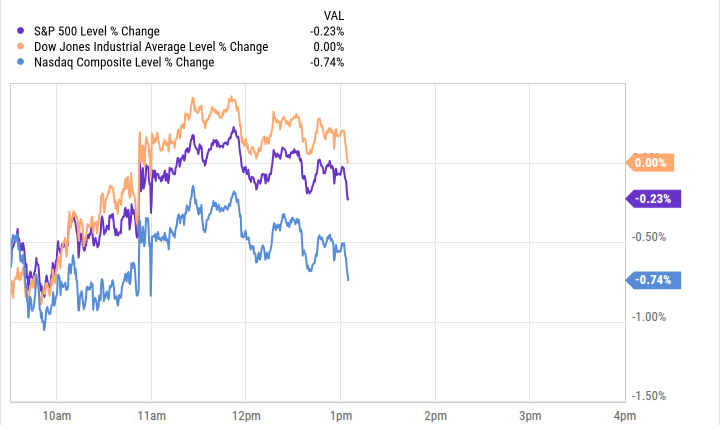
Stock Market Today: Major Indexes Close Lower After Rallying Monday; Oil Prices Rebound From Sell-Off
This post was originally published here

Franklin Templeton Canada Announces ETF Cash Distributions
TORONTO, March 24, 2026 /CNW/ – Franklin Templeton Canada today announced cash distributions for certain ETFs and ETF series of mutual funds available to Canadian investors.
As detailed in the table below, unitholders of record as of March 31, 2026, will receive a per-unit cash distribution payable on April 9, 2026.
|
|
Ticker |
Type |
Cash ($) |
Payment |
|
Franklin Core ETF Portfolio – ETF Series |
CBL |
Active |
0.182671 |
Quarterly |
|
Franklin Conservative Income ETF Portfolio – ETF Series |
CNV |
Active |
0.189561 |
Quarterly |
|
Franklin All-Equity ETF Portfolio – ETF Series |
EQY |
Active |
0.107982 |
This post was originally published here

Cuba sends doctors on medical missions. The U.S. isn’t a fan
It’s a major source of revenue for the island. And it’s controversial. Now countries are sending Cuban doctors home in response to pressure from the Trump administration.
(Image credit: Orlando Sierra/AFP)

This post was originally published here


Americans spend $146 billion and 11.6 billion hours doing their taxes, and most of it is just filling out paperwork
Tax Day is April 15, three weeks away. If you’ve procrastinated doing your taxes so far, that’s probably for a good reason: After all, the fear of a potential jail sentence for accidentally miscounting something looms over you constantly, turning it into a repetitive, redundant, and reiterative, time-consuming process.
Now, there’s not only a price tag on your returns, but on the effort it takes you to complete them—and it’s costly.
How much does it cost to do your taxes in 2026?
A new analysis from Postal, a virtual mailbox and compliance service, found individual tax returns cost American taxpayers a combined $146 billion in time and out-of-pocket expenses this year—roughly $576 per person in labor hours alone, plus an average of $288 in additional expenses like accountants or software. Reviewing data from the OMB and the Bureau of Labor Statistics, the company found Americans will collectively spend 2.1 billion hours on Form 1040 in 2026, or the equivalent of roughly 12 hours per filing—and the IRS expects to receive about 169 million of them.
Businesses don’t get off any easier. Postal estimates business tax returns cost companies more than $126 billion annually in staffing and expenses, or an average of $9,090 per return. Stack on Form 941—the employer’s quarterly return—and that brings additional costs of $47 billion—with the W-2/W-3 series at $8.8 billion. Even organizations that owe nothing in taxes (those filing to not pay) still absorb more than $6.2 billion in staff and expense burden costs.
“These figures reflect what we see every day,” Max Clarke, cofounder of Postal, told Fortune. “Compliance isn’t difficult because people are careless—it’s difficult because it’s fragmented, deadline-driven, and overwhelmingly manual.”
The numbers are even worse when you consider the labor hours involved in being compliant. The OMB currently lists more than 10,000 forms and documents that individuals and organizations must complete each year. In 2026, federal agencies are projected to receive more than 210 billion responses to compliance forms, requiring an estimated 11.6 billion labor hours. The total federal compliance tab, including out-of-pocket expenses, is nearly $738 billion.
What does tax compliance cost small businesses?
Clarke knows this from the inside. A former M&A attorney and Palantir alum who later built and sold a specialty insurance startup, he started Postal after realizing physical mail—still the primary vehicle for IRS notices and federal agency correspondence—was a massive, unresolved problem for small businesses. His company uses AI to open, scan, and prioritize clients’ mail, flagging what’s urgent and when it’s due. Most small business owners aren’t compliance specialists: They’re people trying to run their companies who suddenly have a 126-page IRS instruction document and a weekend to figure it out.
“Small businesses and individuals are expected to track dozens of forms and notices across multiple federal agencies, often with little clarity on what’s urgent or what happens if something is missed,” Clarke said. “When deadlines pass, the penalties and follow-on costs can add up fast.”
To quantify how much Americans spend in labor hours each year, the company pulled from an OMB database that legally requires federal agencies to estimate how long each compliance form takes to complete. For cost, Postal cross-referenced those hour estimates against BLS wage data: specifically, average hourly and weekly earnings for all private employees. Multiply the OMB’s estimated hours by those loaded labor costs, add the OMB’s own out-of-pocket expense projections for software, contractors, and external accountants, and you get the total compliance price tag.
New in 2026: The mailing deadline just got riskier
The physical dimension of tax compliance is easy to overlook in an era when everything is digital. But Clarke points out critical IRS and federal agency notices are still sent by mail—and this year, there’s a new wrinkle. Starting in 2026, the USPS will no longer guarantee same-day postmarks on mailed returns, meaning taxpayers who wait until April 15 to drop their envelope in a mailbox risk having the IRS treat it as late.
“When those documents are delayed, overlooked, or misunderstood, people lose time and money trying to recover,” Clarke said. There’s an easy fix: entering the 21st century.
“Our business shouldn’t have to exist. Everything should be fully digitized. Every business should have one single primary key between itself and the government—and all the information should just be read in there, done seamlessly, electronically, without having to worry about things like, did my Department of Labor form get to me.”
The complexity of the American tax system isn’t exactly accidental. Companies like Intuit and H&R Block—whose business models depend on that 126-page instruction document staying exactly as impenetrable as it is—spent millions lobbying against the IRS’s Direct File program, the agency’s effort to let taxpayers file directly for free. Since 2006, Intuit spent $25.6 million and H&R Block spent $9.6 million on lobbying efforts. Direct File was effectively wound down last year.
That’s not to say Clarke or Postal is against taxes (“taxes are good,” he said, adding people should pay for their use of public goods). Instead, he said this was a system designed around friction, where the friction is profitable for a select few and expensive for everyone else.
“The government already has all the information, because of the way payroll providers are reporting,” he said. “It should be telling me exactly what I owe. It should not be up to me to independently compute that number using a diversity of different sources, and risk fines if I’m wrong.”
But that’s not the system we have. Instead, 169 million Americans will spend an average of 12 hours this spring doing math the government could theoretically do for them—and paying, on average, $864 in time and expenses for the privilege.
“At scale, these 11.6 billion hours represent an enormous opportunity cost for the economy,” Clarke said. “That’s time taken away from building businesses, serving customers, or doing productive work. Until compliance requirements are simplified, the biggest gains will come from reducing friction—making it easier for people to see what they need to do, when they need to do it, and what actually matters.”
You’ll have to do your taxes regardless—the question is just how many hours and how much will it cost you.
This story was originally featured on Fortune.com
This post was originally published here

Best Series 63 Prep Courses: Pass Your State Securities Exam
This post was originally published here


Ares Private Credit Fund Caps Redemptions
Ares Management (NYSE:ARES) announced it would limit withdrawals from its Ares Strategic Income Fund after facing a significant increase in redemption requests. The decision comes as the fund, which targets affluent investors, saw redemptions rise to 11.6% in the first quarter, prompting the firm to cap outflows at 5%.
The Financial Times reported that the $10.7 billion fund received $1.2 billion in redemption requests during this period, fulfilling $524 million, which is slightly over 40% of the total requests.
Ares explained that the redemptions were primarily initiated by a small group of family offices and smaller investors, collectively representing less than 1% of the fund’s more than 20,000 investors. The fund’s assets, bolstered by leverage, comprise loans and securities valued at $20.8 billion, FT stated.
Despite these constraints, the fund managed to grow …
This post was originally published here
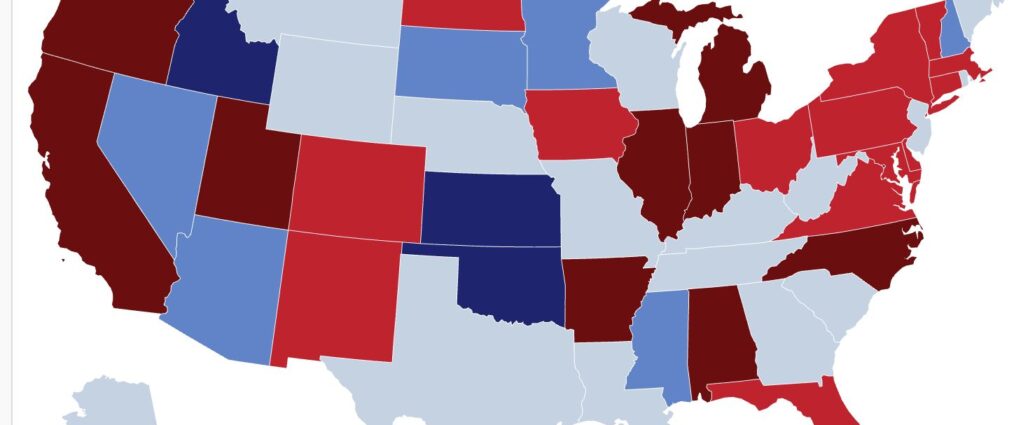
Gas Prices Have Risen $1 in March—See What Drivers in Your State Are Paying Now
This post was originally published here


Starmer’s government increasing spending on foreign trips, figures show
PM’s most costly quarter for travel was in last quarter of 2025, with the most expensive trip to Cop30 in Brazil
Keir Starmer’s government is spending an increasing amount on foreign trips, with almost 40 visits abroad adding up to more than £4m since he took office, the latest transparency figures have showed.
The prime minister had his most costly quarter for foreign travel in the last three months of 2025, with eight trips adding up to £1.2m.
This post was originally published here
Google partners with Agile Robots, growing its AI robotics footprint
Google’s DeepMind division has been partnering with more robotics companies in recent months.
This post was originally published here
Trump’s rehashed 15-point Iran plan unlikely to appease Tehran
Diplomats say US president’s latest claimed plan probably based on now dated framework put forward in May 2025
The 15-point framework plan for peace with Iran that Donald Trump has said is being discussed is based on a proposal put forward by his negotiating team during nuclear talks almost a year ago, diplomats knowledgable about the talks believe.
That original 15-point plan was the basis for negotiations in late May 2025, shortly before the talks collapsed due to Israeli airstrikes on Iran’s nuclear programme.
This post was originally published here


Mette Frederiksen’s leftwing bloc fails to win majority in Danish election, exit polls suggest
PM’s party forecast to win most votes but another centrist or centre-right coalition appears likely
Mette Frederiksen’s Social Democrats and Denmark’s other left-leaning parties appear to have failed to win enough votes to gain a clear mandate to form a government in an election fought amid geopolitical tensions with the US over Greenland.
According to two exit polls released shortly after voting stopped on Tuesday evening, the prime minister’s party looked to have won the most votes but performed worse than expected, with an estimated 19% to 21% of the vote.
This post was originally published here
Market sell-off lets investors turn straw into gold with these tax-smart moves
A market decline isn’t all bad news for investors. There are a few steps you can take to beef up tax-advantaged savings and trim your tax bill.
This post was originally published here

Coinbase, Circle Stocks Slide After Senate Draft Targets Stablecoin Yield
Coinbase Global Inc (NASDAQ:COIN) and Circle Internet Group Inc (NYSE:CRCL) shares are trading sharply lower Tuesday afternoon after CoinDesk reported that the latest Senate draft of the CLARITY Act would bar companies from paying yield simply for holding stablecoin balances in trading or similar accounts, while allowing only narrow rewards programs that do not resemble interest-bearing bank deposits.
Here’s what investors need to know.
- Coinbase Global shares are retreating from recent levels. Why are COIN shares down?
Industry Insiders View Draft As Restrictive
CoinDesk also reported that the language was viewed by industry insiders as restrictive and unclear, with activity-based rewards still potentially allowed but balance-based rewards effectively …



M1 Finance vs. Betterment: Which Should You Choose?
This post was originally published here
Betterment vs. Merrill Guided Investing: Which Should You Choose?
This post was originally published here

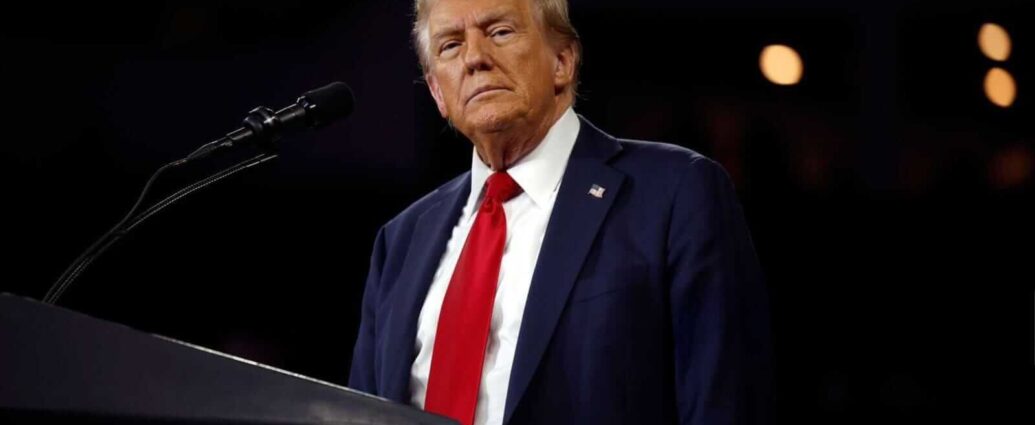





Reform accused of seeking to insert ‘toxic politics’ into English football
Suella Braverman presses the FA to scrap diversity and inclusion policies, which she claims are ‘racist’
Reform UK has been accused of seeking to insert “toxic politics” into football after the party pressed the Football Association in England to scrap diversity and inclusion policies.
Suella Braverman wrote to the FA on Tuesday to ask for a meeting to discuss the governing body’s diversity policies, which Reform’s equalities spokesperson described as “utter woke nonsense”.
This post was originally published here


World has ‘never experienced’ soaring refining margins like this, TotalEnergies CEO tells CNBC
TotalEnergies CEO Patrick Pouyanné on the Iran war, the $1 billion deal with the White House, investment in the U.S., and more.
This post was originally published here



JPMorgan Sees 140% Upside In This eVTOL Stock — And It’s Not Joby Or Archer
The eVTOL (electric Vertical Takeoff and Landing) trade has been all about vision, but one stock is being priced like it has none.
Eve Holding, Inc (NYSE:EVEX) is trading near $2.50, yet JPMorgan analyst Marcelo Motta sees a path to $6—implying ra 140% upside. The disconnect isn’t hype; it’s a market that may be underpricing progress.
The eVTOL Valuation Gap
Start with where it trades.
Eve is valued at just 0.5x 2029 EV/Sales, a fraction of where peers sit. Archer Aviation Inc (NYSE:ACHR) trades closer to 1.8x, while Joby Aviation, Inc (NYSE:JOBY) commands a far richer ~7.8x multiple.
That kind of gap …
This post was originally published here

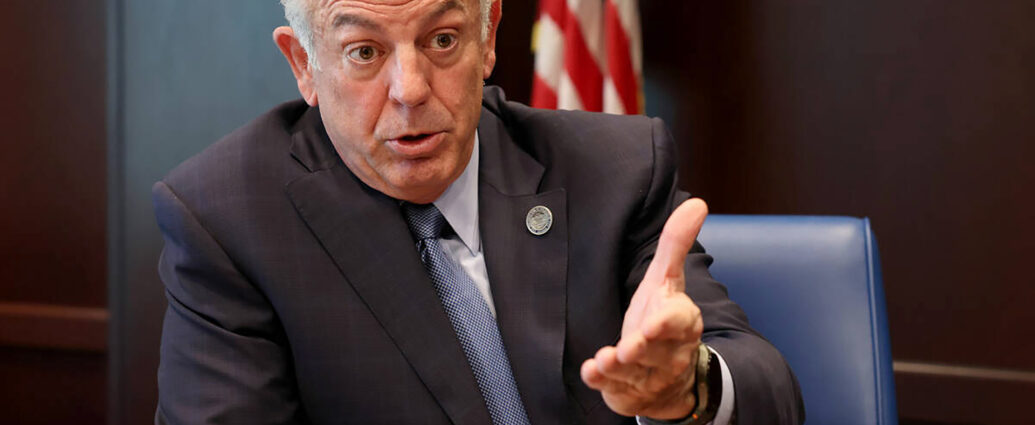
Exclusive: Nevada legislators press Governor Lombardo on Boring Co. oversight, demanding plan for state’s ‘structural failures’
As Nevada regulators continue to investigate safety episodes that have occurred in the tunnels Boring Company is digging below Las Vegas, two Nevada legislators have written a letter to Nevada Gov. Joe Lombardo, demanding a “comprehensive plan” to address concerns of “structural failures” in the state’s oversight of Elon Musk’s tunneling startup.
The letter, which was shown to Fortune, described “significant concerns about record integrity, administrative accountability, and structural failures within Nevada’s workplace safety system,” and said that “these issues remain unresolved and require clear action from the Executive Branch.” The letter was sent to the Governor’s Chief of Staff, Ryan Cherry, on Wednesday morning. Assemblymember Howard Watts and Senator Rochelle Nguyen, two Democrats who lead the state’s Assembly Committee on Growth and Infrastructure, signed and sent the letter.
The letter demanded that Gov.Lombardo and his administration conduct an independent review of an incident revealed by Fortune in which a public record had been altered that was part of an Occupational Safety and Health Administration (OSHA) investigation, and commit to making those findings publicly available. The legislators describe the act of altering or concealing public records in the letter as a “serious matter that may constitute a violation of Nevada law and potentially rise to the level of a Class C felony.” The letter also demanded a plan to address year-long backlogs in OSHA cases waiting to be heard by the OSHA Review Board, a Governor-appointed body that hears safety cases employers have contested with Nevada OSHA.
“Questions surrounding withdrawn citations, altered records, and delays in adjudication have created the perception that Nevada’s enforcement system is not operating independently or transparently,” the letter reads, pointing out that “there still remain a number of unanswered questions and outstanding issues regarding The Boring Company and the health and safety of Nevada workers.”
The demand letter follows a legislative hearing in early February, in which state officials testified before Nevada legislators about their oversight of the Boring Company. Representatives from Boring Company and the Governor’s Office declined to attend the hearing. Boring Company, which was founded and is owned by Elon Musk, has been digging an underground public transportation system of ride-hail Tesla vehicles that is intended to eventually go below the entire city of Las Vegas. While its tunneling to date has taken place in the broader County, the company recently received approvals to start digging below the City of Las Vegas proper.
Projects riddled with safety issues
Since construction began, the project has been riddled with safety issues, including employees getting burned by chemicals in the tunnels, employees digging too close to the Las Vegas monorail, a worker getting crushed and another getting shocked, and illegal wastewater dumping—much of which was first reported by Fortune. KTNV, an ABC affiliate television station in Las Vegas, recently reported that OSHA had completed its investigation regarding the employee who had been shocked, and found that the injured employee had been fired for allegedly demonstrating a “a serious lapse in judgement on more than one occasion,” according to the Boring Company.
There are at least three more pending investigations that are still outstanding, according to OSHA’s website, and Boring Company is currently contesting eight citations it was issued regarding chemical burns in 2024. The Review Board has repeatedly pushed back the hearing on those citations, including most recently in February because Boring Company’s lawyer had a conflict, OSHA officials have said.
The latest injury, the one involving the employee who was shocked, “just points to the fact that we need to ensure that our OSHA process is functioning properly—to hold this and other companies accountable, to provide a safe working environment for people in our community,” Assemblymember Watts said in an interview with Fortune. He pointed out that “these tremendous backlogs” are allowing companies to contest citations for over a year and delay addressing the underlying problems.
In November, a Fortune investigation found that OSHA had issued three citations against the Boring Company after firefighters were burned by chemicals in the tunnels, then withdrew them within 24 hours after Boring Company president Steve Davis reached out to a representative in the Governor’s Office. Federal OSHA, which oversees the state plan, later received a complaint about the matter and opened a federal investigation, which ultimately determined that the allegations were substantiated, and that case file documentation was altered, missing, “and/or removed” from the case file and that the citations had been withdrawn after issuance. Federal OSHA said in its findings that it believed Nevada OSHA “had reasonable justification to withdraw the issued willful citations” and that the legal elements needed to support the “willful” designation had not been met.
Governor Lombardo recently said in an interview with staff at the Nevada Independent that his office had tried to determine who had deleted a line item in the document in the OSHA file, but that the inquiry had apparently been thwarted by a cyberattack against the state that took place several months beforehand in August.
In that recent interview, Governor Lombardo said that “in the long run,” he believed Boring Company would be “very beneficial” to Las Vegas.
“Do I like them in their tactics and how they do business? No,” he said.
The legislators’ letter demanded that Governor Lombardo’s administration submit a written plan that would “detail concrete actions, responsible officials, and implementation timelines” to start the independent investigation and address safety case backlogs by April 17.
The Governor’s Office did not respond to an immediate request for comment.
This story was originally featured on Fortune.com
This post was originally published here
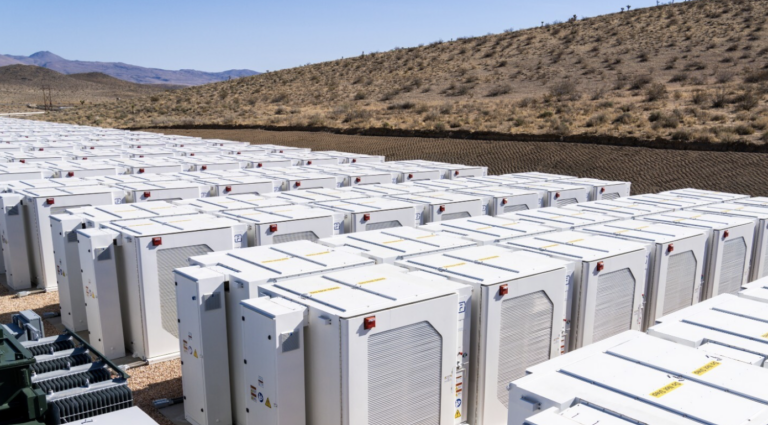














Why Is Bitcoin Suddenly Outperforming Gold? Anthony Pompliano Says Geopolitics Is The Answer
Bitcoin (CRYPTO: BTC) is outperforming traditional safe-haven assets as geopolitical tensions reshape investor behaviour, according to investor Anthony Pompliano.
Bitcoin Leads In Unusual Macro Backdrop
Pompliano on Monday said Bitcoin has emerged as a standout asset amid the U.S.-Iran conflict, rising about 8% since tensions escalated and gaining roughly 34% against gold over a short period.
He noted that traditional safe havens are behaving unusually, while Bitcoin is benefiting from its position as a non-sovereign, decentralized asset that can be moved instantly across borders.
In …

UK offers to host international summit on reopening strait of Hormuz
Defence chiefs have been discussing how to unblock the conduit for about a fifth of the world’s oil supplies
The UK has offered to host an international security summit to draw up a “viable, collective plan” to reopen the strait of Hormuz as economic fallout from the Iran conflict continues.
Defence chiefs have been discussing how they could unblock the vital shipping lane, through which about 20% of global oil supplies usually pass, amid the Middle East crisis unleashed by the US and Israel.
This post was originally published here
Markets are gripped by an alarming cognitive dissonance
Investors all seem to think everyone else is wrong
This post was originally published here


Martin Shkreli Says Silicon Valley’s Hottest Health Obsession Is A ‘Delusion’
Martin Shkreli sees Silicon Valley’s peptide obsession as a “delusion,” firing back at Superpower co-founder and peptide advocate Max Marchione in a podcast debate.
The Debate
Shkreli, who spent twenty years in pharma and made his career evaluating pharmaceutical compounds, says the whole category fails basic science since peptides break down in the body in seconds or minutes.
Without a known target, a binding mechanism, and real clinical data, he argues you don’t have a drug.
“If your drug has never been tested, there is a reason,” he wrote in an X post. “The reason is not that you are a biopharmaceutical genius who has found something cool that everyone else missed.”
Marchione, who founded a health optimization platform that already sells peptides and is building out its offerings, fired back on X and in the TBPN debate.
What Are Peptides
Peptides, such as insulin, are small proteins that have been used in medicine for decades. …
This post was originally published here
Tesla’s Global Sales Crisis Deepens As BYD’s Sales Surge 162% In Europe
BYD Company (OTC:BYDDY) outsold Tesla Inc (NASDAQ:TSLA) in Europe for the second straight month in February, registering 17,954 vehicles to Tesla’s 17,664.
Year-to-date, BYD leads by more than 10,000 units and is up 162% year-over-year. Tesla is essentially flat.
Now BYD is coming for Canada.
Canada Is Next
BYD is planning 20 branded dealerships in Canada within its first year, after Canada slashed its 100% tariff on Chinese-built EVs to 6.1% in January.
Three locations in the Greater Toronto Area are already under discussion, with Vancouver, Montreal, and Calgary next.
Tesla’s Canadian sales collapsed more than 60% in 2025 to roughly 18,000 units.
General Motors (NYSE:GM) overtook Tesla as Canada’s top-selling EV brand. BYD enters a market where the dominant player is wounded and affordable EVs are scarce.
Tesla has announced steep prices increases for its …
This post was originally published here

Baltimore is first U.S. city to sue over Grok deepfake porn as legal pressure mounts on Musk’s xAI
Following international regulatory probes, lawsuits are piling up in the U.S. against Elon Musk’s xAI and its Grok chatbot.
This post was originally published here
Tangled trail probably leads from Golders Green ambulance attack to Tehran
British investigators are circumspect but experts and security officials say incident has hallmarks of Iranian intelligence
From Golders Green, where four ambulances belonging to a Jewish charity were set alight in the early hours of Monday, a tangled trail probably leads across two continents to Tehran.
British investigators are circumspect. Speaking at an event on Monday evening, Mark Rowley, the head of the Metropolitan police, described a “very relevant and rolling threat” from Iran to the UK, and specifically to Jewish targets, but warned it was still too early to attribute the attack in north London to Tehran.
This post was originally published here
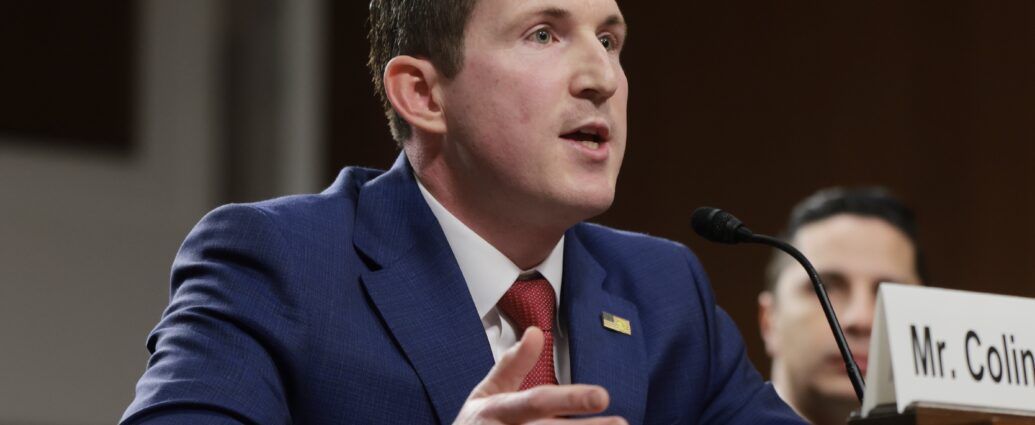
Senate confirms Trump’s pick for new role of fraud enforcement at Justice Department
The confirmation comes just days after the White House announced details of its own task force to pursue fraud in government programs.
(Image credit: Anna Moneymaker)

This post was originally published here

United Airlines warns airfares could jump 20% as oil prices continue to surge
United Airlines is warning that airfares could rise up to 20% if the cost of jet fuel remains elevated for longer due to the spike in oil prices amid the war in Iran.
United CEO Scott Kirby said in an interview on Bloomberg TV on Tuesday that the airline anticipates consumer demand for air travel will soften if higher fuel prices continue to push ticket prices higher.
Kirby added that United has already moved to cut 5% of its capacity on routes that aren’t profitable and don’t cover the cost of higher fuel prices, though he said that demand remains very strong for now.
“Demand is incredibly strong right now,” Kirby told Bloomberg, adding that he does think that oil prices will be “higher for longer.”
UNITED DOUBLES DOWN ON PREMIUM TRAVEL, NEW AIRPLANES
“It’s reasonable for us to plan for that regardless, because the downside is pretty limited. If we leave a little bit of demand on the table by not flying as much this summer, so what, that’s not a big deal. But it gives us more optionality on the other side for the recovery,” he said in the interview.
Kirby said the firm’s forecast that oil prices may rise as high as $175 a barrel and remain above $100 a barrel through the end of next year is “reasonable, I hope it’s better and there’s a good chance it’s better, but I think it’s also reasonable.”
The United Airlines CEO told Bloomberg that if oil prices surge to the peak of the company’s forecast it would be a “stress event” for the airline industry, and would be “nowhere near the magnitude of what happened in COVID.”
UNITED AIRLINES SLASHES FLIGHTS AS IRAN WAR SENDS FUEL PRICES SOARING
While some global airlines have historically hedged against spikes in fuel costs through investment strategies, Kirby said in the interview that because of the company’s size it’s “really tough for us to hedge” because it moves the market when it tries to do so.
He said the company has been focused on its margins and has tripled the amount of cash it keeps on its balance sheet as an alternative to hedging fuel costs.
Kirby added that if oil prices remain at their current level it amounts to about an $11 billion expense for United, which would translate to about a 20% increase in airfares for the company to break even and cover that cost.
UNITED AIRLINES CAN NOW REFUSE TO TRANSPORT PASSENGERS WHO WON’T WEAR HEADPHONES
He also noted that while prices are up relative to a year ago, airfares in 2025 were 2% lower than they were in 2019, even as inflation was up 25%, so the 15%-20% rise in airfares in recent weeks is “covering half to 60% of the inflationary increase.”
Kirby was asked about the incident at New York City’s LaGuardia Airport over the weekend, in which an Air Canada jet collided with a fire truck while the airliner was landing. Both the pilot and first officer were killed, while dozens of injuries were reported.
He told Bloomberg that the U.S. air travel system is safe and is “by far the safest way to travel of any mode of transportation.”
GET FOX BUSINESS ON THE GO BY CLICKING HERE
Kirby added that he thinks there should be more investment in technology and staffing for the Federal Aviation Administration (FAA) and that he sees the Trump administration as being committed to those priorities, which the CEO said should garner bipartisan support.

Jefferies’ M&A possibility brings forward the moment of reckoning
This post was originally published here
Jailed Bolsonaro granted ‘humanitarian house arrest’ amid failing health
Former Brazil president, serving 27 years over attempted coup, given initial 90-day period that could be extended
Brazil’s former president Jair Bolsonaro has been granted permission to serve his 27-year sentence for a coup attempt at home instead of in prison because of his failing health.
The decision by supreme court justice Alexandre de Moraes followed Bolsonaro’s hospitalization since 13 March for pneumonia, one of several health problems the former leader has faced since he was stabbed by a man in 2018 before he was elected president.
This post was originally published here


Bitcoin Drops Below $70,000 As Ethereum, XRP, Dogecoin Slide 2%
Bitcoin is trading below $70,000 despite steady ETF inflows and a slight improvement in sentiment.
| Cryptocurrency | Ticker | Price |
| Bitcoin | (CRYPTO: BTC) | $69,479.56 |
| Ethereum | (CRYPTO: ETH) | $2,118.48 |
| Solana | (CRYPTO: SOL) | $89.11 |
| XRP | (CRYPTO: XRP) | $1.39 |
| Dogecoin | (CRYPTO: DOGE) | $0.09295 |
| Shiba Inu | (CRYPTO: SHIB) | $0.056092 |
Notable Statistics:
- Coinglass data shows 80,886 traders were liquidated in the past 24 hours for $174.56 million.
- SoSoValue data shows net inflows of $167.2 million from spot Bitcoin ETFs on Monday. Spot Ethereum ETFs saw net outflows of $16.2 million.
- In the past 24 hours, top gainers include Bittensor, Kite and Artificial Superintelligence Alliance.
Notable Developments:
Baltimore sues Elon Musk’s AI company over Grok’s fake nude images
Lawsuit argues XAI failed to disclose risks, limitations and exposure to harm that come with using chatbot
The mayor and city council of Baltimore, Maryland, filed a lawsuit against Elon Musk’s xAI company on Tuesday, alleging that its Grok chatbot violated consumer protections by generating nonconsensual sexualized images.
Baltimore’s lawsuit argues that xAI deceptively marketed Grok as a general-purpose AI assistant and X as a mainstream social media site, failing to disclose the risks, limitations and exposure to harm that come with using the platform and chatbot. The suit, filed in the circuit court for Baltimore city, argues that the court has jurisdiction over xAI given that the company advertises and operates in Baltimore.
This post was originally published here

Soaring fertilizer prices could pressure a U.S. agricultural industry that supports 50 million jobs and over $10 trillion in output
The war in Iran could hit a heavy blow to one of the country’s largest industries, one that supports millions of livelihoods.
Now in its fourth week, the conflict has sparked the largest oil supply shock in history and sent gasoline prices soaring worldwide. But fuel products are not the only item to normally pass through the Strait of Hormuz, the critical waterway that has essentially been blockaded for almost a month.
How the Strait of Hormuz blockade is cutting fertilizer supply
Before the war, around one-third of the global fertilizer supply chain passed through the strait, including half of the world’s urea, a nitrogen-based fertilizer vital to many modern farming operations, including in the U.S. The gaping hole in fertilizer supply is, in some ways, a more intractable challenge than the energy crunch, and comes at one of the worst possible times for American farmers.
The U.S. food and agriculture industry does a lot more than putting food on the table: It is a booming business that employs millions and accounts for a huge chunk of the country’s economic output. That value was recently quantified in a sweeping report authored by 35 industry groups and published Monday, shedding light on just how widespread an impact a sustained fertilizer shortage would have on the U.S. economy.
The $10 trillion sector on the line
The sector generates $10.4 trillion in value, around 20% of the U.S. economy’s overall value, the report found. It also supports more than 48 million jobs, including positions in government, tourism, and retail. The jobs story is actually one of growth, as the report also found direct employment in the food and agriculture sector has risen 6.5% over the past decade.
Fertilizer plays an important role in the agricultural economy. In a statement, Corey Rosenbusch, CEO of the Fertilizer Institute, an industry group that participated in the report, called the impact of fertilizers “essential” to the economy.
“Each year, fertilizer delivers $37 billion in wages, supports half a million jobs, and has an economic impact of $140 billion,” he said.
But curtailed exports from the Middle East threaten to undermine that trade, with ripple effects likely to go far beyond the fertilizer industry alone. While the U.S. produces much of its fertilizer at home, it relies on imports for 25% of its stock, including 18% of its nitrogen use. Qatar and Saudi Arabia were important nitrogen suppliers to the U.S., but supply now remains stranded in the Persian Gulf. And much like oil, fertilizer is a globally traded product, so regional supply disruption can lead to price shifts in the U.S.
Why spring planting season makes the timing especially painful
Those swings are already painfully evident for U.S. farmers, with benchmark nitrogen costs at U.S. ports rising nearly 30% since the war began. For many producers, fertilizer can be the single largest variable cost in growing major row crops, and the new spike comes at one of the worst possible times in the sector. This is around the time most farmers finalize their fertilizer purchases ahead of their spring planting season, for crops like corn in the Midwest and cotton in the South.
The extent to which the war in Iran might deal long-term damage to U.S. agriculture remains unclear. There are few alternatives to Middle Eastern fertilizer exports. Unlike oil, which continues to trickle out of the region in small quantities through Saudi pipelines, the Gulf, and the currently blocked strait, is the only way for any significant fertilizer quantities to reach global markets.
Alternative suppliers exist, including Morocco and several Latin American countries, but high prices for U.S. farmers will likely remain until the strait reopens, with the list of possible economic consequences growing longer by the day. Prices could go higher still if more countries follow the lead of China, which last week restricted its own fertilizer exports in a bid to stockpile its reserves.
This story was originally featured on Fortune.com
This post was originally published here
Home Depot makes another pro deal — plus, what’s behind Corning’s big rally
Every weekday, the Investing Club releases the Homestretch; an actionable afternoon update just in time for the last hour of trading.
This post was originally published here

Iran says ‘non-hostile’ ships can transit Strait of Hormuz
This post was originally published here
More than 7 million student loan borrowers are in a defunct payment plan — what that means for their money
Here’s what student loan borrowers should know about the consequences of remaining in the SAVE forbearance — and what their other options are.
This post was originally published here

How To Get Free Professional Financial Advice
This post was originally published here

Epic Games cuts 1,000 jobs as Fortnite ‘magic’ fades in ‘extreme’ market conditions
The Fortnite craze might have reached its crescendo.
Epic Games announced layoffs of 1,000 employees Tuesday, citing declining Fortnite engagement.
“We’ve had challenges delivering consistent Fortnite magic with every season,” CEO Tim Sweeney admitted in a memo to staff.
“Today we’re laying off over 1000 Epic employees,” the memo began. “I’m sorry we’re here again. The downturn in Fortnite engagement that started in 2025 means we’re spending significantly more than we’re making, and we have to make major cuts to keep the company funded.”
OUSTED CBS NEWS STAFFER TAKES TO TIKTOK TO ACCUSE NETWORK OF RACE-BASED LAYOFFS
Sweeney’s memo also noted broader weakness in the video-game industry weighing on the company’s finances.
The cuts, along with more than $500 million in savings from lower contracting and marketing spending and unfilled roles, would put the company in “a more stable place,” according to Sweeney.
The cuts are the latest in the gaming sector, where companies have faced weaker growth as consumers have been sticking with proven titles amid economic uncertainty.
WASHINGTON POST STAFFERS TAKE SWIPES AT BOSSES AS THEY ANNOUNCE DEPARTURE FROM BATTLED PAPER
But even those, especially live services games, which depend on a steady stream of new content to keep players engaged, are now showing signs of cracks.
“Market conditions today are the most extreme” since the early days of the company founded in 1991, Sweeney wrote, adding “the layoffs aren’t related to AI.”
The move marks Epic’s second major round of layoffs in three years. In September 2023, the company cut about 830 jobs, or roughly 16% of its workforce.
NBC NEWS MAKES BIG CUTS TO STAFF, MANY OF THEM TARGETING ‘DIVERSITY VERTICALS,’ INSIDER SAYS
The gaming sector has faced mounting pressure. In September, Electronic Arts laid off hundreds of workers and canceled a Titanfall game that was in development at its Respawn Entertainment unit, according to media reports. Amazon’s broader job cuts late last year also affected its gaming division.
“Some of the challenges we’re facing are industry-wide challenges: slower growth, weaker spending, and tougher cost economics; current consoles selling less than last generation’s; and games competing for time against other increasingly-engaging forms of entertainment,” Sweeney wrote. “And some of our challenges are unique to Epic.
“Despite Fortnite remaining one of the most successful games in the world, we’ve had challenges delivering consistent Fortnite magic with every season; we’re only in the early stages of returning to mobile and optimizing Fortnite for the world’s billions of smartphones; and in being the industry’s vanguard we have taken a lot of bullets in a battle which is only in the early days of paying off for ourselves and all developers.”
Laid-off workers at Epic Games will get “at least four months base pay” and extended “Epic-paid healthcare coverage,” according to the memo.
The charts to watch in tech, gold and emerging market stocks as volatility persists
Todd Gordon also talks about the portfolio changes he’s made to navigate this environment.
This post was originally published here

Gen Z finally had room to breathe. Now Trump’s 26% gas price hike has them suffocating
Bank of America’s spending data tells a rare good-news story about Gen Z — until it doesn’t. After years of being squeezed by surging rents and sluggish wage growth, the youngest adult generation had just begun to really get out there and spend their fun money. Then gas prices jumped 26% year-over-year, and BofA economists are now warning that the recovery could be snuffed out before it fully takes hold.
For the first time in years, Gen Z was winning. Rents had finally stopped devouring their paychecks, wages were rising faster than their housing costs, and a generation that had long trailed older Americans in spending growth was starting to actually open its wallet — on restaurants, new clothes, electronics, even travel. Then came the oil shock, brought on by President Donald Trump’s widely expected and yet also still surprising decision to go to war on Iran.
A recent report from the Bank of America Institute shows that after nearly two years of trailing other generations in spending, Gen Z’s year-over-year spending growth surpassed Baby Boomers’ in mid-2025. Millennials followed suit in December 2025, outpacing older generations for the first time in roughly three years. The turnaround was real, data-driven, and — for a generation that came of age during pandemic shutdowns and an inflation crisis — long overdue.
“Both Gen Z and Millennials may be even more prone to cutting back on ‘nice-to-have’ spending amid higher gasoline prices,” BofA Institute economists Joe Wadford and David Michael Tinsley wrote in the report.

Rent and tax relief offset by gas prices
The engine behind the surge? Rent relief. In Bank of America’s aggregated card and deposit data, median rent payment growth for Gen Z and Millennials slowed sharply in the 12 months through February 2026. And crucially, wages have been growing faster than rents for both generations — up roughly 9% year-over-year for Gen Z and 5% for Millennials. That gap between rent and wages is the financial breathing room younger Americans hadn’t had in years, and proprietary BofA card data shows they were spending it: on clothing, on dining out, and especially on electronics, which saw the sharpest discretionary jump of any category.
Tax refunds added extra fuel early in the year. But economists at the BofA Institute stressed that most of the improvement reflects something more structural: younger renters, who make up a disproportionately large share of Gen Z and Millennial households, were finally catching a break after years of rent outpacing everything. Unlike Gen X and Baby Boomers, who are more likely to own their homes, younger generations live and die by the rental market — and for a stretch, that market was suffocating them.
Now, rising gasoline prices threaten to claw back those gains. The average national gas price is up approximately 26% year-over-year as of March 23, driven by escalating conflict in Iran, according to American Automobile Association data cited in the report. And Gen Z, the analysis warns, is the generation most exposed.
Even before this spike, Gen Z’s gasoline spending as a share of total card spending was running higher than any other generation’s — and had stayed stubbornly elevated while older generations’ shares fell from pre-pandemic levels. BofA economists attribute this to a straightforward reality: Gen Z is just entering the workforce, commuting for the first time, and doing so on relatively modest incomes. The ratio of gas spending to discretionary spending is highest for Gen Z of any cohort. In plain terms, for every dollar a Gen Zer spends on things they want, a larger share of it now goes to the pump than for a Boomer or a Gen Xer.
The next wild card
The labor market adds another layer of risk. Young workers aged 22-27 — including recent college graduates — are already experiencing unemployment rates markedly above the national average, according to data from the Federal Reserve Bank of New York. Many work in retail and leisure, the very sectors most likely to feel the pinch from a pullback in discretionary consumer spending, which would, in turn, eliminate the jobs those same young people hold. It’s a feedback loop that could hit Gen Z from both ends of the ledger: higher costs at the pump and fewer hours at work.
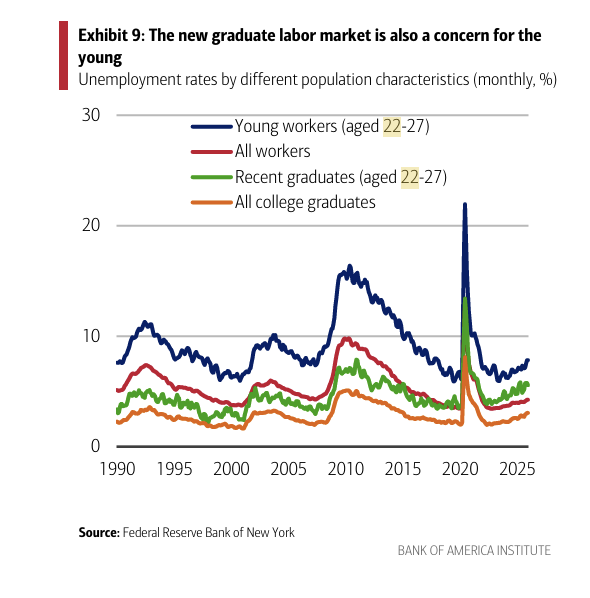
The wild card, BofA says, is whether rent growth continues to cool. If it does, younger consumers may have enough cushion to absorb some of the pain from gas prices. If rents start climbing again alongside fuel costs, the brief, hard-won spending revival that defined the past several months could stall just as it was getting started.
For this story, Fortune journalists used generative AI as a research tool. An editor verified the accuracy of the information before publishing.
This story was originally featured on Fortune.com
This post was originally published here
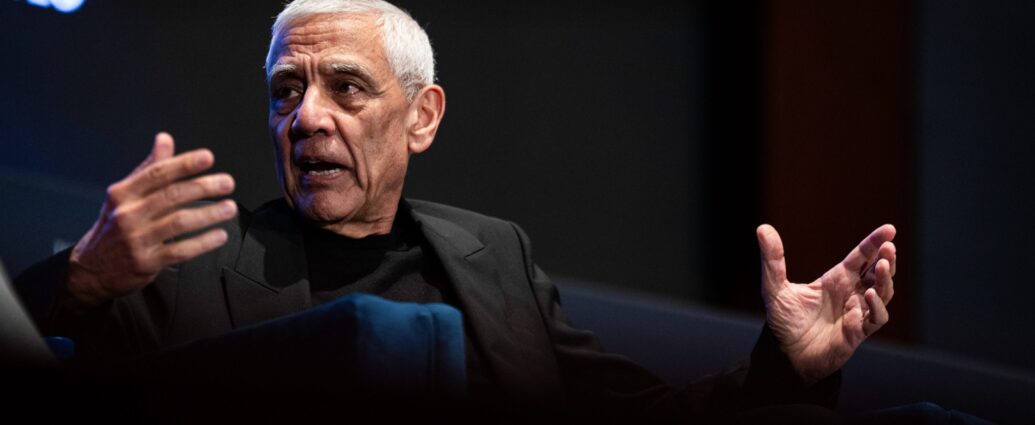
Billionaire OpenAI investor Vinod Khosla thinks 80% of jobs could vanish by 2030, and that ‘fear of AI’ put American politics in a chokehold
In a sit-down interview with Fortune Editor-in-Chief Alyson Shontell, billionaire venture capitalist Vinod Khosla had a dire message: by 2030, 80% of jobs will be AI-capable, and open to potential displacement. Now, he’s warning that’s what’s going to sway politics from now on.
“There will be massive job dislocation” with AI, Khosla said during a panel at the Hill & Valley Forum, a conference bringing together Washington policymakers and Silicon Valley executives on Tuesday. Despite that, people need to see the benefits of the technology before any disruption occurs, he said. “Will there be new kinds of jobs? Maybe, maybe not. I don’t know. There’s very few things AI won’t be able to do today in next few years. So I do think we ought to structurally solve this problem by increasing the minimum level of services.”
But instead of looking at AI’s potential benefits, Khosla—who founded Sun Microsystems and Khosla Ventures and has a net worth of $11.5 billion,—said Americans have AI-caused uncertainty on their minds.
“The single biggest issue I believe in the 2028 presidential election will be fear of AI,” Khosla said.
Khosla has been a leading advocate for AI adoption while tempering the economic impacts on everyday Americans. His comments at the forum, during a panel entitled “Mind and Machine: The Forces Shaping the AI Era” about the role of the government in AI adoption, are not new for the billionaire, who has warned AI will now take over as the country’s most divisive issue from now on.
“I think the single biggest danger to AI is not AI capability or lack thereof. The single biggest danger to AI adoption is politics,” Khosla said. And it’s already playing out at the state level, he said, giving the example of a bill advancing in the New York State legislature that would ban AI from giving medical or legal advice.
Florida recently passed a bill that would force data center companies to pay for their own utilities, and New York lawmakers are considering a bill that would put a moratorium on new data center permits. This comes as Americans are feeling a growing affordability crisis, especially from rising energy costs, which is expected to be a losing issue for Republicans ahead of the midterms.
Instead, Khosla argued, Americans shouldn’t fear AI, but think of the endless possibilities it’s capable of accomplishing.
“The US could develop a free doctor and offer it to everybody on the planet,” he said. “That’s a project doable in the next two, three years, and have more expertise than any doctor.” He pointed to a recent Nature Medicine study that found that AI outperforms human therapists when blindly judged by human therapists.
He even thinks voters should look at the tax benefits AI can bring to their pockets. Khosla repeated his idea to restructure the tax code and end income tax for anyone who makes less than $100,000 a year, starting in 2030.
“AI will favor capital over labor in the historical capital versus labor battle, and so there’s no reason in the AI age to have a capital gains tax that’s different than ordinary income tax,” he said. “If we equalize those two, we can be tax neutral and eliminate 125 million people off the tax roll, just anybody making $100,000 or less doesn’t pay any taxes.” That’s a pretty good balance, especially since 40% of capital gains tax is paid by people making more than 10 million a year.
Khosla’s co-panelist, Sen. Maria Cantwell of Washington, demurred at the idea of restructuring the tax code, saying that Congress is “a little better at the near term.” The senator gave the example of the 2022 CHIPS and Science Act, which committed nearly $53 billion to revitalize domestic semiconductor production. She agreed with Khosla about the need to deploy AI to everyday Americans now.
“Why aren’t we just giving tools that use sophisticated health information and empowering the public with that health information?” she asked. “I think that would go a long way to making people understand the power of what we need to push towards, she said, adding that there should be privacy protections.
When asked by moderator and CEO of Varda Space Industries Delian Asparouhov about how the U.S. can lead and control AI adoption, Cantwell said she supports the idea of starting a “tech NATO.”
“The United States should get the biggest democracies and the biggest technology countries to standardize on principles that we believe in for technology adoption,” Cantwell said. “We should basically say, countries who have back doors and do these other things you shouldn’t buy technology from them because you know you’re going to get.”
This story was originally featured on Fortune.com
This post was originally published here

The Israeli military wants several more weeks to fight Iran war, officials say
The Israeli military estimates it would need several more weeks of fighting to complete its war goals in Iran, at a time when President Trump says the U.S. is negotiating an end to the war.
(Image credit: AFP via Getty Images)

This post was originally published here
Taliban release US academic held in detention for more than a year
Marco Rubio welcomes release of Dennis Coyle, who was detained in January last year for violating unspecified laws
Afghanistan’s Taliban authorities have released the American academic Dennis Coyle after holding him for over a year, with the foreign ministry saying the release came on the occasion of Eid al-Fitr, the Muslim holiday that marks the end of the Islamic holy month of Ramadan.
A statement from the ministry said the academic researcher had been released in Kabul on Tuesday, following an appeal from his family and after Afghanistan’s supreme court “considered his previous imprisonment sufficient”.
This post was originally published here
Crude Oil Soars Amid Conflicting Reports On U.S.-Iran Peace Talks
(RTTNews) – Crude oil has surged on Tuesday as market participants found that U.S. President Donald Trump’s announcement of U.S.-Iran peace talks was not officially substantiated by Iran. Yesterday, oil prices slumped after Trump’s message triggered confidence that the war would
This post was originally published here





Senate closes in on deal to end Homeland Security shutdown—without funding ICE operations
Senators raced Tuesday to clinch an emerging proposal to end the Homeland Security shutdown by funding much of the department, including the unpaid Transportation Security Administration airport workers, but excluding ICE operations that have been core to the dispute.
The sudden sense of urgency comes as U.S. airports are snarled by long security lines, with travelers being told to arrive hours before their flights in Houston, Atlanta and Baltimore Washington International. Routine Homeland Security funding was halted in mid-February ahead of the busy spring travel season. Nearly 11% of TSA workers — more than 3,200 — missed work Monday, and at least 458 have have quit altogether since the shutdown began, according to DHS.
Democrats are refusing to fund the department without restraints on Trump’s immigration and deportation agenda after agents killed two citizens in Minneapolis.
A potential breakthrough came late Monday, after a group of Republican senators met at the White House with President Donald Trump after he upended talks and deployed federal immigration officers at some airport security checkpoints — a move some lawmakers warned could lead to heightened tensions.
Senate Majority Leader John Thune, R-S.D., called the discussions “positive and productive” and said most of DHS would be funded without big changes.
Senate Democratic Leader Chuck Schumer said Tuesday that after Trump’s “temper tantrum” eased, it appears “things are getting back on track.”
But airport conditions have become increasingly unpredictable with swelling crowds seen in major hubs. Travelers headed to LaGuardia and John F. Kennedy airports in New York — as well as Newark Liberty International in neighboring New Jersey — still couldn’t check online TSA wait times Tuesday morning.
At Philadelphia International Airport, several ICE agents were in the terminals. A protester was also at one of the checkpoints holding a sign criticizing ICE.
Airport wait times listed in the MyTSA mobile app and other public sources may be outdated because the agency isn’t actively updating its websites during the shutdown.
Hopes high for a quick deal
Next steps in Congress could move quickly, if lawmakers can reach agreement, or sputter out just as fast.
The contours of the deal under consideration would fund most of Homeland Security, but not one main part of ICE — the enforcement and removal operations that are core to Trump’s deportation agenda.
Under the proposal being floated, ICE’s Homeland Security Investigations would be funded as well as Customs and Border Protection. But that would come with guardrails — keeping officers from those divisions in their traditional roles, rather than deploying them in urban immigration roundups.
The plan would also include a number of changes in immigration operations that Democrats have demanded, including mandating that officers wear body cameras and identification. While the ICE officers manning airports are going without face-covering masks, the Democratic demand that they go unmasked during immigration operations does not appear to be part of the deal.
Since so much of ICE is already funded through Trump’s big tax breaks bill, and immigration officers are still receiving paychecks despite the shutdown, both sides are claiming political wins — the Democrats are able to say they stopped the flow of additional ICE funds while achieving already agreed upon changes, while Republicans can claim they prevented more significant restraints on immigration operations.
Republican Sen. Katie Britt of Alabama, a chief negotiator, returned from the White House meeting hopeful they had a solution to “land this plane.”
Both chambers of Congress are controlled by the Republican president’s party, and any deal reached in the Senate would also have to be approved by the House.
On Tuesday, Delta Air Lines confirmed it was suspending its specialty services for members of Congress amid the shutdown, meaning those who fly with the carrier will be treated like other passengers based on their SkyMiles status. The Atlanta Journal-Constitution first reported the suspension. Delta’s Capital Desk reservations line still remains open.
Political standoff, long airport lines
Key to the standoff appears to have been the senators’ ability to shift the president’s attention off his plan to link any department funding to his push to pass the so-called SAVE America Act, a strict proof-of-citizenship and voter ID bill that has stalled in the Senate ahead of the midterm elections.
Over the weekend Trump injected his demand for the voting bill as a condition for ending the funding standoff. Some GOP senators have pitched the idea of tackling it in the months ahead as part of a broader legislative package the party could pass on its own, similar to last year’s big tax cuts bill.
The White House on Tuesday stressed that conversations were ongoing. But it also said an agreement to split off immigration enforcement funding, while addressing Trump’s elections bill separately, “seems to be acceptable.”
Sen. Chris Coons, D-Del., who was not part of the group at the White House, said his understanding was that there was a “sense of urgency” coming from the talks as the airport disruptions worsen.
Senators are expected to discuss the proposals during their private caucus lunches Tuesday afternoon.
“First step is to get the proposal in writing,” said Sen. Angus King, an Independent from Maine. “I want to see exactly what that means.”
Changes at Homeland Security
The deal could provide a political exit from the standoff over the embattled Homeland Security department, which was stood up in the aftermath of the Sept. 11, 2001 attacks but has come to symbolize Trump’s aggressive mass deportation agenda, with its goal of removing 1 million immigrants this year.
Under mounting political pressure, Trump ousted Homeland Security secretary Kristi Noem amid the public outcry over the immigration operations, and senators late Monday confirmed one of their own, Markwayne Mullin, as the president’s handpicked replacement.
Mullin, an Oklahoma senator who aligns with Trump’s agenda, provides a potentially new face for the department. During his confirmation hearing, Mullin touched on another key demand of Democrats — ensuring a judge has signed off on warrants that immigration officers use to search people’s homes, rather than simply relying on administrative warrants issued by the department.
“This is significant,” Sen. Peter Welch, D-Vt., said about the progress toward changes. “Noem is gone. That’s a big deal.”
ICE’s budget grew under last year’s bill by $75 billion, which has been untouched by the shutdown. Rather its routine annual funding, some $10 billion, would be cut almost in half under the proposal.
After weeks of missed paychecks, many TSA agents have called in sick or even quit their jobs as financial strains pile up. Union leaders representing the workers have pushed Congress to reach a deal.
___
Associated Press writers Rio Yamat, Wyatte Grantham-Philips, Kevin Freking and Seung Min Kim contributed to this report.
This story was originally featured on Fortune.com
This post was originally published here



Crypto Exchange Kraken Delays IPO Citing Market Turbulence
Cryptocurrency exchange Kraken announced a delay in its initial public offering (IPO) due to unfavorable market conditions affecting the digital asset sector.
• How is BTC doing today?
The crypto sector has faced challenges since Bitcoin’s (CRYPTO: BTC) peak in October. Bitcoin tumbled below $70,000 as equities continue to slide lower while oil prices surge. The downturn in asset prices and trading volumes has led to cautiousness among companies considering public offerings.
This decision follows Kraken‘s earlier confidential filing for a U.S. IPO, which aimed for a $20 billion valuation after closing an $800 million funding round that marked a 33% increase in its valuation in under two months.
Other IPOs, Acquisitions
While Kraken has decided to wait for more favorable conditions, other firms continue to pursue public listings.
Securitize, a tokenization platform, is moving forward with its IPO plans, collaborating with BlackRock …


Maximizing Career Opportunities with Magna Cum Laude Honors
This post was originally published here

Stock Market Today: Major Indexes Mostly Fall After Rallying Monday; Nasdaq, S&P 500 Decline, Dow Rises; Oil Prices Rebound From Sell-Off
This post was originally published here



Nobel laureate Paul Krugman calls it ‘treason’: $580 million in suspicious oil futures traded minutes before Trump’s Iran reversal
Roughly $580 million worth of oil futures changed hands in a single minute early Monday morning, only about 15 minutes before President Trump posted on Truth Social that the U.S. had been engaged in “productive conversations” with Iran to end the war.
Now Nobel Prize-winning economist Paul Krugman is calling what he sees: treason.
“We have another word for situations in which people with access to confidential information regarding national security — such as plans to bomb or not to bomb another country — exploit that information for profit,” Krugman wrote in a Substack post Tuesday. “That word is treason.”
Iran’s parliament speaker, Mohammad-Bagher Ghalibaf, denied that any negotiations with Washington had taken place, calling the claim “fakenews” used to “manipulate the financial and oil markets.” Stocks pulled back slightly and energy prices stymied their free-fall on his statement, but ultimately traders seemed to trust that Trump was telling the truth about winding down the war.
Rory Johnston, an oil market analyst, said the pattern has been hard to ignore even without a smoking gun.
“Everyone—every analyst, every oil trader—has been questioning downward pressure on prices,” he told Fortune. He added that whether or not there’s been direct market manipulation by Washington, the administration’s jawboning has spooked participants out of trading where physical fundamentals would otherwise push prices. “I think that probably goes a long way towards it.”
The White House did not immediately respond to Fortune’s request for comment.
The suspicious trading activity
The trades involved roughly 6,200 Brent and West Texas Intermediate futures contracts that were sold between 6:49 and 6:50 a.m. New York time. Trading volumes for S&P 500 futures also spiked moments later, meaning that any potential insider got upside on both ends. After Trump announced the pause of his ultimatum at 7:04 a.m., there was a sharp selloff in oil markets and a jump in equities; precisely the outcome someone holding those positions would have wanted. It is not known whether one entity or several were behind the trades.
Krugman argued that insider trading on national security decisions is illegal for reasons besides unfairness: it presents a strategic vulnerability. Trading on classified information effectively broadcasts government plans to foreign adversaries, he wrote, adding that “who needs to bribe agents within the government” when you can infer the same intelligence from futures markets.
He also raised an unsettling question: whether the possibility of insider profits may be influencing the policy decisions themselves.
“Are decisions about war and peace in part serving the cause of market manipulation rather than the national interest?” he wrote. “If you dismiss this as unthinkable, you just haven’t been paying attention.”
Krugman joins a chorus of Trump critics and investors who called foul on the move Monday. Trump had spent the weekend threatening to bomb Iranian power plants unless Tehran reopened the Strait of Hormuz within 48 hours. His Monday morning reversal, which he attributed to ongoing talks, blindsided markets—and, apparently, Iran.
As for whether insiders are profiting from advance knowledge of policy announcements, Johnston said it “would not surprise me,” but but stressed he didn’t have direct evidence.
This story was originally featured on Fortune.com
This post was originally published here

Pakistan offers to facilitate U.S.-Iran war talks as Trump and Tehran give mixed signals
Trump said top U.S. negotiators and their Iranian counterparts have been engaged in “very, very strong talks,” but Tehran has denied that claim.
This post was originally published here

Martin Shkreli, AOC Agree Kalshi Has A Problem
Martin Shkreli and U.S. Rep. Alexandria Ocasio-Cortez are unexpectedly aligned in arguing that Kalshi hasn’t gone far enough in policing who can trade on its event markets.
- DKNG stock is moving. See the chart and price action here.
Shkreli and AOC’s Rare Agreement
In a social media post, Ocasio-Cortez blasted Kalshi’s new guardrails, calling its insider‑trading crackdown “just a fig leaf” and “absolutely not enough.”
She argued that simply blocking athletes and politicians from wagering on related sports and political markets ignores a long list of insiders with material …
This post was originally published here

Bitcoin Below $70,000, But ETFs Keep Buying: What Is Going On?
Bitcoin (CRYPTO: BTC) spot ETF inflows reaching about $2.5 billion this month, recording a significant spike in activity despite mediocre price action.
ETF Inflows Show Strength
Analyst Shaun Edmondson notes ETF demand has remained resilient despite a sharp price drawdown, reinforcing the long-term bullish case.
He added that Strategy (NASDAQ:MSTR) plans to raise up to $42 billion to acquire more Bitcoin, while Morgan Stanley is preparing to launch a Bitcoin ETF, further signaling growing Wall Street adoption.
At the same time, Bitcoin’s supply remains constrained, with less …
Kuwait says Strait of Hormuz closure is beyond catastrophic, will trigger domino effect across global economy
Iran is holding the world economy hostage by blockading the Strait of Hormuz, said Shaikh Nawaf Al-Sabah, the CEO of Kuwait Petroleum Corporation.
This post was originally published here




Army to test first-ever pilot optional Black Hawk helicopter amid major tech shift
The U.S. Army has taken a major step toward autonomous aviation after receiving its first Black Hawk helicopter capable of flying with or without a pilot onboard, the War Department has announced.
The next-generation UH-60MX Black Hawk, developed with Lockheed Martin’s Sikorsky unit, will now enter a rigorous testing phase as the Army pushes to integrate autonomy into its future fleet.
The aircraft is equipped with advanced flight systems that allow it to operate as a traditional helicopter, an optionally piloted aircraft or a fully autonomous platform controlled remotely from the ground.
TRUMP WEIGHS SALES TO UKRAINE OF RAYTHEON’S TOMAHAWK MISSILES: WHAT TO KNOW
Officials said the delivery marks a milestone in the Army’s broader effort to modernize aviation and reduce risk to soldiers in dangerous environments.
“This capability will enhance mission effectiveness and survivability for warfighters today and lay the groundwork for tomorrow’s networked systems,” Rich Benton, vice president and general manager at Sikorsky, said in a statement.
The technology at the core of the aircraft stems from the Defense Advanced Research Projects Agency’s Aircrew Labor In-Cockpit Automation System, or ALIAS, a program launched more than a decade ago to simplify flight operations and improve safety, the War Department said.
Sikorsky’s MATRIX autonomy suite, integrated into the aircraft, acts as a digital co-pilot capable of handling complex flight tasks such as takeoff, navigation and landing.
The system allows the helicopter to identify landing zones, avoid obstacles and operate in low-visibility environments while reducing pilot workload.
Army officials said the aircraft also features a fly-by-wire system that replaces traditional mechanical controls with electronic ones, making it easier to handle in challenging conditions.
SEE IT: A NEW AUTONOMOUS BLACK HAWK HELICOPTER CALLED ‘U-HAWK’
The UH-60MX will serve as a test platform for the Army Combat Capabilities Development Command as engineers and pilots evaluate how the aircraft performs in real-world missions, including remote and autonomous operations.
The aircraft is part of a broader push under the Army’s Strategic Autonomy Flight Enabler program, which aims to develop a scalable autonomy kit that could be deployed across the entire Black Hawk fleet.
Defense officials said the long-term goal is to enable helicopters to carry out missions independently or with minimal human oversight, potentially reshaping how the Army conducts combat and support operations.
The Army has already tested similar systems on earlier Black Hawk models over hundreds of flight hours, officials said, signaling that the technology is nearing operational readiness.
In 2022, an autonomous Black Hawk completed a 30-minute flight with no crew onboard, demonstrating the technology’s viability.
GET FOX BUSINESS ON THE GO BY CLICKING HERE
Officials say the latest aircraft represents a shift from experimental testing to operational evaluation, with a focus on real-world missions and future deployment across the fleet.
CVS reaches insulin pricing settlement with FTC
Pharmacy benefit managers, which set how drugs are covered by health insurance, have faced scrutiny from regulators and lawmakers over pricing practices.
This post was originally published here







Russia fires nearly 1,000 drones in one of its largest aerial attacks on Ukraine
At least seven killed as Moscow appears to step up spring offensive amid concerns focus on Iran war leaves Kyiv more vulnerable
Russia has launched a huge wave of nearly 1,000 drones at Ukraine, killing at least seven people, as Moscow appears to be stepping up a spring offensive intended to break Ukrainian resistance along the front.
Ukrainian officials said Moscow fired nearly 400 long-range drones and 23 cruise missiles overnight, followed by another 556 drones in an unusual daytime assault on Tuesday, hitting cities across the west of the country.
This post was originally published here







Best Jumbo CD Rates Our Experts Found Today, March 24, 2026: Up to 4.15%
This post was originally published here
Stocks making the biggest moves midday: Circle Internet Group, SAP, Netgear, Jefferies & more
Here are some of the stocks making headlines in midday trading.
This post was originally published here
Live-action movie version of children’s TV series Mr Benn in the works
I Swear’s Kirk Jones set to direct film based on the 1970s cult animation about a ‘very ordinary man’ who accessed different worlds via a magical fancy dress shop
A live-action film based on the cult British kids’ cartoon Mr Benn is to go into production with I Swear director Kirk Jones at the helm.
Mr Benn first appeared on TV on the BBC in 1971, in a series created by David McKee, who died in 2022. The series followed the adventures of “a very ordinary man who could do extraordinary things” when he visited a magical fancy dress shop, which acted as a portal to different worlds. Only 13 episodes were made before the series ended in March 1972, though a one-off episode was broadcast in 2005 on the kids’ channel Nick Jr.
This post was originally published here

Israel says it will seize parts of southern Lebanon as ‘defensive buffer’
Hopes of de-escalation dim as Israeli PM also vows to keep striking Iran, even as Trump talks up deal hopes
Israel said on Tuesday it would seize parts of southern Lebanon to create what it called a “defensive buffer”, while Benjamin Netanyahu vowed to continue striking Iran, dimming hopes of de-escalation even as Donald Trump talked up the prospects of a deal to end the conflict.
During a meeting with the military chief of staff, Israel defence minister Israel Katz said Israeli forces would “control the remaining bridges and the security zone up to the Litani”, a river in Lebanon that meets the Mediterranean about 30km (20 miles) north of Israel’s border.
This post was originally published here
Welcome to America! Trump names ‘manosphere’ troll as tourism envoy
Australian-born Maga influencer Nick Adams appointed to role for tourism, exceptionalism and American values
Donald Trump’s appointment of Nick Adams, the “alpha male” Australian turned American internet provocateur as a new special presidential envoy on Tuesday, could give fuel to theories that the White House is deliberately trolling the world.
The president nominated the Sydney-born Maga influencer, who has a history of theatrically inflammatory and Islamophobic comments, as ambassador to Malaysia in July, but the Senate returned the appointment without a confirmation vote in January and Trump did not re-submit him.
This post was originally published here
Nasa to spend $20bn on moon base after cancelling orbiting station
New Nasa chief outlines changes to moon programme Artemis including repurposing Lunar Gateway
Nasa is cancelling plans to deploy a space station in lunar orbit and will instead use its components to construct a $20bn base on the moon’s surface over the next seven years, its new chief, Jared Isaacman, said on Tuesday.
Isaacman, who was sworn in at the agency in December, made the announcement at the opening of a daylong event at Nasa’s Washington headquarters at which he outlinedchanges he is making to the agency’s flagship moon programme Artemis.
This post was originally published here

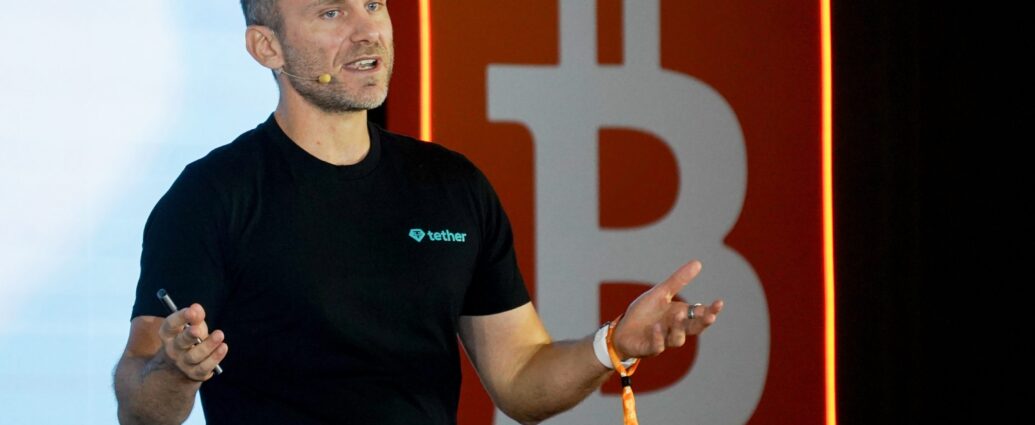
Tether announces it has brought on a Big Four firm to conduct long awaited audit
Tether, the world’s largest stablecoin company, announced on Tuesday that it has signed a Big Four accounting firm to complete its first full audit. The move stands to give the company, which has long faced criticism over its lack of transparency, a stamp of legitimacy.
In a statement, Tether announced that the audit will review Tether’s assets, liabilities, and reserves and be conducted by one of the Big Four—a term that describes Deloitte, EY, KPMG, and PwC—but did not specify which one. Five years ago, Tether was fined $41 million for falsely claiming that its stablecoins were fully backed by fiat currencies.
The announcement comes two months after the company launched USAT, a stablecoin designed to be compliant with U.S. regulations. Tether’s return to the U.S. further cemented its dominance in the stablecoin industry, where it currently owns about 60% of market share. Stablecoins are a type of cryptocurrency pegged to a stable asset like the U.S. dollar.
“The Big Four Firm was selected through a competitive process because the organization is already operating at Big Four audit standard; the audit will be delivered,” said Simon McWilliams, chief financial officer of Tether, in the statement.
Prior to President Donald Trump’s second term, Tether had several run-ins with regulators. In 2021, the company reached a settlement with the New York attorney general’s office after it allegedly covered up roughly $850 million in losses. Three years later, in 2024, the Department of Justice reportedly investigated the company for violations of anti-money-laundering and sanctions rules. That same year, blockchain analytics company TRM Labs found that Tether’s network had been used to finance terrorism.
Since Trump took office last January, the stablecoin giant, along with other major crypto companies, has benefited from more lenient regulation out of Washington. The connections between the president and Tether are not hard to find. Howard Lutnick, Trump’s commerce secretary, is the former CEO of Cantor Fitzgerald, which is the company that manages the reserves of USAT. And the president’s former top crypto official, Bo Hines, is now the CEO of Tether’s U.S. operations
“Tether’s mission has always been to build trust through action, not promises,” said Paolo Ardoino, Tether’s CEO, about the audit in the statement. “Trust is built when institutions are willing to open themselves fully to scrutiny.”
This story was originally featured on Fortune.com
This post was originally published here

OpenAI Eyes Share Of Google And Meta’s Advertising Empire
OpenAI has quietly begun testing ads in ChatGPT, inserting clearly labeled sponsored suggestions into free-tier conversations. This represents a new advertising channel at a time when Alphabet (NASDAQ:GOOGL) and Meta (NASDAQ:META) still control roughly half of U.S. digital ad spend. It is a signal that the duopoly, which has generated hundreds of billions in shareholder value, may be entering a new phase of competition.
ChatGPT ads leverage contextual targeting and first-party data to reach users and launch at high price points. While this pilot may ultimately compete with some search and social budgets, it is not without challenges, including measurement, privacy, and rollout.
Major holding companies, including WPP, Omnicom, and Dentsu, are part of the testing program. Criteo joined in early March 2026 as the first major ad-tech platform to integrate ChatGPT inventory into programmatic channels, giving approximately 17,000 advertisers access to ChatGPT placements.
Key Takeaways
- OpenAI is testing ads in ChatGPT, creating a new advertising channel that could begin to compete with Alphabet and Meta Platforms.
- The ad model focuses on high-priced, context-based placements with strong privacy controls, but challenges like measurement and scalability remain.
- While still early, ChatGPT ads could support OpenAI’s IPO plans and gradually position it as a serious competitor in the digital advertising market.
How ChatGPT Ad Pilot is Structured
In its official announcement on Feb. 9, 2026, OpenAI explained the initial ad test. The ads will be displayed only in the “Free” and “Go” versions of the ChatGPT service, which offer free and low-cost service (but not in the “Pro” and “Enterprise” versions).
The ads will be in the form of “Sponsored” cards inserted in the chat. For example, a user asking a question about recipes might see a sponsored ad for a grocery kit after the response.
OpenAI highlights that ChatGPT’s answers are “independent and unbiased.” Ads are selected based on context and past chat data. Advertisers do not have …
This post was originally published here
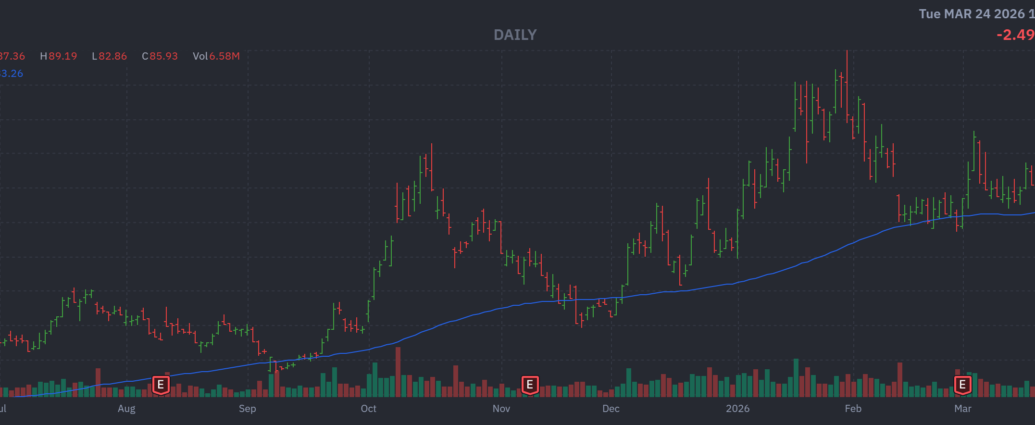
Gavin Newsom says he regrets using term ‘apartheid’ to describe Israel
California governor backtracks and says he meant to apply term to Israel’s future if it continues on present trajectory
The California governor, Gavin Newsom, backtracked on earlier remarks likening Israel to an “apartheid state” in a new interview with Politico published on Tuesday.
In the interview, the Democrat, who is widely expected to launch a presidential bid in 2028, said that when he used the term three weeks ago, he meant it to apply to Israel’s future should it continue on its present trajectory.
This post was originally published here

Micron stock sinks for a fourth straight day despite dominant earnings report
Micron’s revenue almost tripled in the last quarter, but the memory company’s stock has sunk about 15% since reporting earnings on Wednesday.
This post was originally published here

Circle heads for it worst day on record as proposed law could limit stablecoin yield
Earning yield, usually in the form of rewards, on stablecoins like Circle’s USDC and others is key incentive for users to hold the coins.
This post was originally published here
Delta suspends ‘specialty services’ perk for members of Congress, cites DHS shutdown
Delta Air Lines’ move comes as airports around the U.S. are seeing extra-long security lines as a result of elevated absences by TSA agents.
This post was originally published here





‘Never seen a shift like this’: DeSantis details Florida’s historic surge driven by ‘unapologetic’ results
For many Americans, moving to Florida isn’t just about the weather — it’s about escaping a “spendthrift” government that fritters away taxpayer dollars.
Gov. Ron DeSantis told Fox News’ Sean Hannity that the state’s massive 1.4 million Republican voter registration lead is driven by results: a 50-year low crime rate, top rankings in education freedom and a refusal to “hunt” down residents for income tax. From police officers fleeing “demagoguing” mayors to financial titans like Charles Schwab, the message is clear: the American Dream has officially relocated to the Sunshine State.
“Regardless of running or anything, we will be able to show that conservatism works. When you apply it aggressively, unapologetically, when you demonstrate leadership, when you cover all the issues, don’t leave any stone unturned, no meat on the bone, you produce historic results,” DeSantis said on the latest “Hang Out with Sean Hannity” podcast, airing on Tuesday.
About one month ago, the Florida Chamber of Commerce told Fox News Digital that more than $4 million in wealth migrates to the state every single hour, and it is close to surpassing Australia as the world’s 14th-largest economy.
OVER $126M IN 60 DAYS — FLORIDA REAL ESTATE TYCOONS SAY BLUE-STATE WEALTH MIGRATION IS NOW PERMANENT
“Part of the secret sauce in Florida is that we’re all on the same page,” CEO Mark Wilson previously said. “I always say, if Florida was a stock, I’d be investing everything I had in it. It’s because of our economic diversification strategy and our focus on growing business and growing jobs.”
DeSantis said despite having 4 million more residents than New York, Florida’s annual state budget is typically half that of the Empire State’s. Additionally, state lawmakers have fast-tracked legislative plans that would provide a path to zero property tax.
“The problem with socialism is, eventually, you run out of other people’s money. They can’t square the circle. They tax, people leave, businesses leave, they get in a deeper hole, they go back to the well, and it’s just a vicious cycle,” Florida’s governor said.
“Florida leads the nation by a country mile [in income migration],” Wilson previously confirmed. “States like New York, Illinois and California are losing over 1 million dollars an hour of income. And so, if you look at the death spiral that New York is right now, for example, New Yorkers are looking at increasing income taxes, they’re looking at increasing property taxes.”
“When you honestly sit there and say California has lower taxes than Florida, you are lying. Everybody knows you’re lying,” DeSantis also said of Golden State leadership. “When you’re gonna try to sell snake oil, you know you just cross a line where people just know it’s B.S.”
In recent years, Florida has become well-known for actively poaching police officers from blue cities by offering financial incentives and what the governor calls a “culture of support.”
“We have a good culture of support for law enforcement,” DeSantis said. “If you’re in Chicago and you get into a situation, you’re going to have the mayor demagoguing you, right? Here people have your back and it makes a difference and people feel like they’re appreciated.”
“And guess what? We have a 50-year low on our crime rate,” he added.
High taxes and crime do not equal high quality, as evidenced by Florida’s top-tier education rankings, DeSantis also pointed out.
“We’re ranked No. 1 [for] public higher education 10 years in a row… but the reality is that money is not producing a better quality of life for their people that they’re taxing,” he said.
“Charles Schwab, he starts this great financial company, super successful in San Francisco. He grew up in Northern Cal… and yet he moved to Florida,” DeSantis expanded. “What he told me, the first time I saw him after he had moved here? Best decision he ever made.”
GET FOX BUSINESS ON THE GO BY CLICKING HERE
More proof that the “Florida model” is popular may also be found in the voter registration data.
“We had 300,000 more Democrats in this state when I ran in ‘18 in that tough election… Today, we have 1.4 million more registered Republicans. We’ve never seen a shift like that ever in modern American history,” DeSantis said.
“We probably have the most diverse state… from Pensacola to South Beach… there’s definitely something here for everybody.”

Stock Market Today: Major Indexes Fall After Rallying Monday; Nasdaq, S&P 500 Decline, Dow Rises; Oil Prices Rebound From Sell-Off
This post was originally published here
Gold Ticks Lower Amid Conflicting Reports On Efforts To End Gulf War
(RTTNews) – Gold prices gave back the gains made earlier in the session, when it bounced from consecutive sessions of decline amid reports of U.S.-Iran peace talks through third-party mediators, as investors wanted more credible reports before making big moves.
This post was originally published here


Congress loses a flying perk as DHS shutdown continues
Delta Airlines is temporarily suspending specialty services to member of Congress due to resource constraints from the ongoing shutdown of DHS.
(Image credit: SAUL LOEB/AFP via Getty Images)

This post was originally published here




OpenAI revamps shopping experience in ChatGPT after struggling with Instant Checkout offering
OpenAI said the new experience will make it easier for users to find and compare products.
This post was originally published here

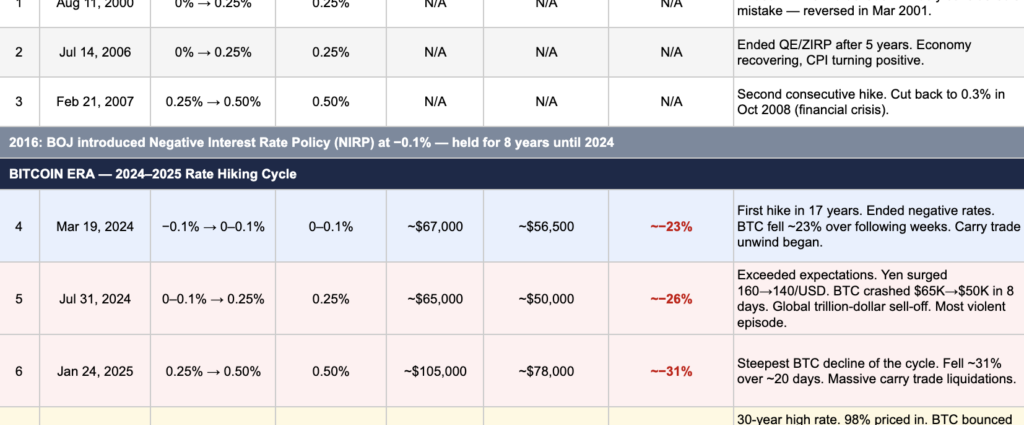
Bitcoin Crashed 20%+ After Every Bank Of Japan Rate Hike—And Another One May Be Coming
Every Bank of Japan (BOJ) rate hike since 2024 has caused a Bitcoin (CRYPTO: BTC) crash of at least 20%.
With Japanese 10-year yields hitting a 27-year high if 2.32% on Monday, fears abound that another BOJ tightening cycle could trigger the next crypto selloff.
The Four Rate Hikes That Crushed Bitcoin
The BOJ raised rates four times since March 2024, and Bitcoin fell sharply after three of them.
On March 19, 2024, the BOJ raised rates from -0.1% to a 0-0.1% range, ending eight years of negative rates. Bitcoin fell roughly 23% in the following weeks.
The July 31, 2024 hike to 0.25% triggered the most violent episode.
The yen appreciated from 160 to below 140 against the dollar, triggering a trillion-dollar global asset selloff.
Bitcoin …



UK politics: Reform UK suspends mayoral candidate after he described Jewish security group as ‘cosplayers’ – as it happened
Labour and Liberal Democrats welcome suspension of Chris Parry, the party’s Hampshire mayoral candidate, after derogatory remarks about Jewish group
The live feed from the Lib Dem local elections campaign launch did not last long, and it did not include footage of Ed Davey taking questions from reporters. But this is what the Lib Dems are saying about their five key campaign issues.
-Cut the cost of living: A plan to halve energy bills within a decade, saving households an average of £870 a year
–Fix the NHS and care: Guarantee the right to see a GP within seven days (or 24 hours for urgent cases) and ending 12-hour A&E waits.
–Rescue high streets: Give an emergency cut to VAT for hospitality businesses, to bring prices down and boost struggling high streets.
–Clean up rivers: Ban water companies from dumping raw sewage into local rivers and coastal areas.
–Restore community policing: Ensure visible, effective local policing to reduce crime.
This post was originally published here

Prediction Market Bills Won’t Pass, But 2028 Could Change Everything, TD Cowen Says
Three bills targeting prediction markets landed in Congress this month, but none of them are going anywhere, according to TD Cowen.
DraftKings Inc (NASDAQ:DKNG) and Flutter Entertainment plc (NYSE:FLUT) jumped as much as 7% Monday after Senators John Curtis (R-Utah) and Adam Schiff (D-Calif.) introduced the Prediction Markets Are Gambling Act, a bipartisan bill that would ban CFTC-regulated platforms like Kalshi and Polymarket from listing sports or casino-style contracts.
The Three Bills
The Schiff-Curtis bill is the headliner but it’s not alone.
Senator Chris Murphy (D-CT) introduced legislation on March 18 that would bar contracts on government actions, terrorism, and war.
Senators Richard Blumenthal (D-CT) and Andy Kim (D-NJ) filed a third bill on March 11 to let states regulate prediction markets directly and impose insider trading bans.
TD Cowen analyst Jaret Seiberg called all three “messaging …
This post was originally published here



Delta suspends VIP services for Congress members amid DHS shutdown, TSA delays
Members of Congress are losing a perk of flying Delta Air Lines because of the Department of Homeland Security shutdown.
FOX Business confirmed Tuesday morning that Atlanta-based Delta has suspended specialty services for members of Congress flying Delta.
“Due to the impact on resources from the long-standing government shutdown, Delta will temporarily suspend specialty services to members of Congress flying Delta,” a company spokesperson told FOX Business. “Next to safety, Delta’s no. 1 priority is taking care of our people and customers, which has become increasingly difficult in the current environment.”
Delta has traditionally given priority VIP service to congressional members, allowing them to skip TSA lines and escorting them to their gates.
MASK-FREE ICE AGENTS BEGIN PATROLLING US AIRPORTS; TRUMP FLOATS NATIONAL GUARD
Now members of Congress will be told they are going to be treated like other passengers based on their respective SkyMiles status.
Additionally, Delta was suspending its “special congressional desk service” for lawmakers until the government shutdown ends, according to the Atlanta Journal-Constitution.
The airport chaos, traveler frustrations and long wait times through the first weekend of the busy spring travel season have apparently hit too close to home for Delta, which has its headquarters in Atlanta.
Hartsfield-Jackson Atlanta International Airport, well-known to be the busiest in the world, has been hamstrung by TSA security lines up to nine hours long, according to some reports.
HOUSE GOP TARGETING VULNERABLE DEMS OVER DHS SHUTDOWN, TSA CHAOS
“Due to current federal conditions, passengers are advised to allow at least 4 hours or more for domestic and international screenings,” a current online advisory read at ATL.com on Tuesday morning.
Delta and other airlines have long warned the shutdown is worsening airport disruptions, particularly as unpaid TSA workers face mounting financial pressure and staffing shortages fuel extended checkpoint waits.
Depending on the side of the aisle, President Donald Trump has been both commended and critiqued for deploying Immigration and Customs Enforcement (ICE) agents to give TSA help at the most distressed airports around the country.
An on-site FOX Business report found TSA security lines in Atlanta had all but been solved after ICE agents arrived.
TOP TSA WATCHDOG BACKS TRUMP’S ICE AIRPORT MOVE AS SHUTDOWN SNARLS TRAVEL
Last week, the Senate approved by unanimous consent a proposal to eliminate the special airport privileges that members of Congress have enjoyed. The measure, introduced by Sen. John Cornyn, R-Texas, would end a long-criticized perk that has symbolized the gap between elected officials and the public they serve.
The bill still needed House approval and the president’s signature before it could become law.
“As many Americans probably don’t know but most of us in Washington do know, airports around the country allow Members of Congress to bypass the usual TSA security screening process at airports nationwide,” Cornyn wrote in a statement, rebuking the “unfair perk.” “In other words, they get to skip the line.
“We know trust in Congress is at an all-time low, but today, thank goodness, the Senate has taken an important step towards restoring the trust of the people we are here to represent.”
HOMAN FIRES BACK AT CNN HOST OVER ‘HOW WELL-THOUGHT-OUT’ ICE AIRPORT DEPLOYMENT PLAN IS
On other issues tying up the Senate, Sen. John Kennedy, R-La., has been forcing the issue on Democrats amid the debate on the SAVE America Act — Trump’s signature election integrity legislation — and the confirmation of now-former Sen. Markwayne Mullin, R-Okla., as the next Department of Homeland Security secretary.
“We’ve had DHS shut down for 38 days,” Kennedy told Fox News’ “America’s Newsroom” on Tuesday morning. “I think, the Democrats at one point voted to fund DHS and then they backtracked.
“We’ve been debating the SAVE Act for, I don’t know, 10 days. I guess we’re stuck. I’m a big believer that when you’re stuck, you ought to try to plow around the stump, not through it.”
Kennedy has been pitching working around Democrats’ obstruction that is gumming up the Senate and leading to the TSA chaos.
TRUMP DEMANDS ‘SAVE AMERICA ACT’ BE TIED TO DHS FUNDING AMID AIRPORT CHAOS
“Sen. [Ted] Cruz and I, a few days ago, came up with a two-step process to solve both problems,” Kennedy continued. “Step one, we would open up everything at DHS except ICE, including TSA, which the Democrats have already agreed to.
“And then we would, we would fund ICE through reconciliation, which we could do only with Republican votes. We would not need any Democratic votes.”
The same goes for the SAVE America Act, giving it the “Byrd bath” to pass it with just the Senate Republican majority (currently 53-47) instead of 60 votes, according to Kennedy.
It is ultimately up to Senate Majority Leader John Thune, R-S.D., to move in that direction.
REPORTER’S NOTEBOOK: GOP EYES DHS DEAL FUNDING ICE PROBES, BUT NOT REMOVALS, AS SHUTDOWN DRAGS
“We pitched this to Sen. Thune a couple of days ago,” Kennedy said. “He pitched it to President Trump. President Trump, as you know, from his tweets said, no.
“But I talked to Sen. Thune last night, and he says the president has reconsidered and may be on board.”
Passing the SAVE America Act before the midterms is a top priority for Trump, who could find his final two years of his second term hamstrung by even more Democrat-forced gridlock.
Georgia, notably, is a key battleground for the Senate majority as Republicans eye Sen. Jon Ossof, D-Ga., as a potential seat to flip in November.
The National Republican Senatorial Committee is leaning in on Ossoff’s continued votes that keep DHS shut down, foisting up to nine-hour TSA security delays in Atlanta.
“Jon Ossoff cares more about protecting illegals like Laken Riley’s killer than standing with hardworking Georgians,” NRSC regional press secretary wrote in a statement. “Ossoff never refuses a chance to use Georgians as political pawns. Ossoff must stop putting illegals first and end his DHS shutdown.”
FOX Business’ Chase Williams contributed to this report.




Arm releases first in-house chip, with Meta as debut customer
Arm is making its first CPU, pivoting from only licensing its architecture to giants like Apple, Nvidia, Amazon and Google. CNBC got an exclusive first look.
This post was originally published here
Strait of Hormuz tanker traffic won’t return to normal for months, Kalshi bettors predict
Prediction market bettors aren’t confident that the vital Middle Eastern oil passageway will reopen anytime soon.
This post was originally published here