












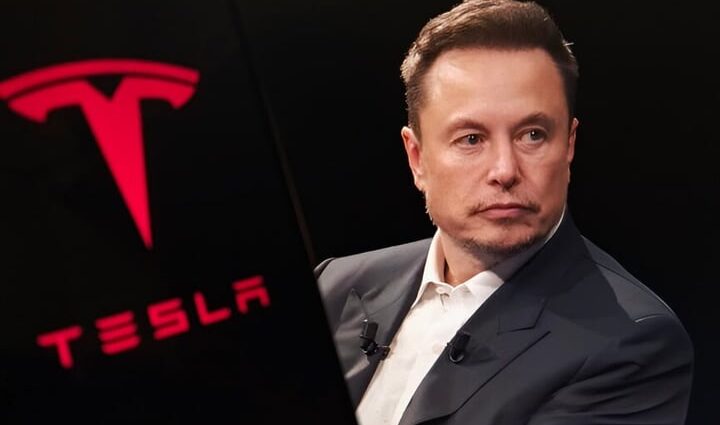
Trump Administration Confirms Tesla Will Build $4.3 Billion Battery Plant In Michigan With LG Energy
The President Donald Trump administration’s Department of the Interior (DOI) has revealed a series of deals totaling around $56 billion, including a deal between Tesla Inc. (NASDAQ:TSLA) and South Korea’s LG Energy Solutions to kick off production of a $4.3 billion battery plant.
Securing Critical Supply Chain
In an official statement released on Monday, the agency confirmed that it had “catalyzed” agreements worth over $56 billion in “private sector commitments that will create good-paying American jobs and secure critical energy supply chains.” Among the agreements, the DOI also mentioned the deal between Tesla and LG Energy.
“Tesla and LG Energy Solution are expanding their partnership with a supply agreement to build a $4.3 billion LFP prismatic …
This post was originally published here






Is there a more fair way to sell World Cup tickets?
World Cup tickets are expensive, and buying them has been frustrating and confusing. But this is what economics is for: figuring out the best ways to allocate scarce resources. FIFA, steal these ideas.

This post was originally published here
UK energy: about 14m households getting ‘below-average’ service
Ecotricity ranked top in Citizens Advice survey, followed by Outfox, Octopus and Co-operative
Around 14 million households in the UK are receiving “below average” customer service from their energy supplier, a consumer group has warned.
Citizens Advice said energy suppliers must improve their service, as its survey of 16 companies showed that half of gas and electricity consumers are with suppliers scoring less than three out of five stars for their customer service.
This post was originally published here
Top 3 Defensive Stocks Which Could Rescue Your Portfolio In Q1
The most oversold stocks in the consumer staples sector presents an opportunity to buy into undervalued companies.
The RSI is a momentum indicator, which compares a stock’s strength on days when prices go up to its strength on days when prices go down. When compared to a stock’s price action, it can give traders a better sense of how a stock may perform in the short term. An asset is typically considered oversold when the RSI is below 30, according to Benzinga Pro.
Here’s the latest list of major oversold players in this sector, having an RSI near or below 30.
MGP Ingredients Inc (NASDAQ:MGPI)
- On Feb. 25, MGP Ingredients reported upbeat fourth-quarter financial results and issued FY26 guidance below estimates. “2025 was a year of deliberate repositioning for MGP,” said Julie Francis, president and CEO. “I am pleased with the team’s efforts as we did what we said we will do and made meaningful progress against each of …
This post was originally published here

Morgan Stanley Says Memory Stocks ‘Cooling Off’—SanDisk, Micron Keep Defying Gravity
Morgan Stanley’s Chief U.S. Equity Strategist Mike Wilson claims the broader equity market correction is nearing its end, but his recent warning that memory stocks have “cooled off” stands in stark contrast to their actual breakneck performance.
Market’s Worst Might Be Behind Us
During his latest market commentary, Wilson explained that Wall Street has been digesting underlying risks for months. He noted that while the market previously saw “concentrated returns” in areas like emerging markets, industrial metals, and memory stocks, the landscape has recently shifted.
“More recently, the dollar has rallied and these same areas have noticeably cooled off,” Wilson stated.
He further cautioned investors to prepare for a “final downdraft” or a “capitulatory shock,” potentially triggered by hawkish Federal Reserve policies, backward-looking inflation concerns, or escalating global conflicts.
Defying The Downdraft
Despite Wilson’s assertion that the memory/storage sector is cooling, current market data tells a radically different and …
This post was originally published here


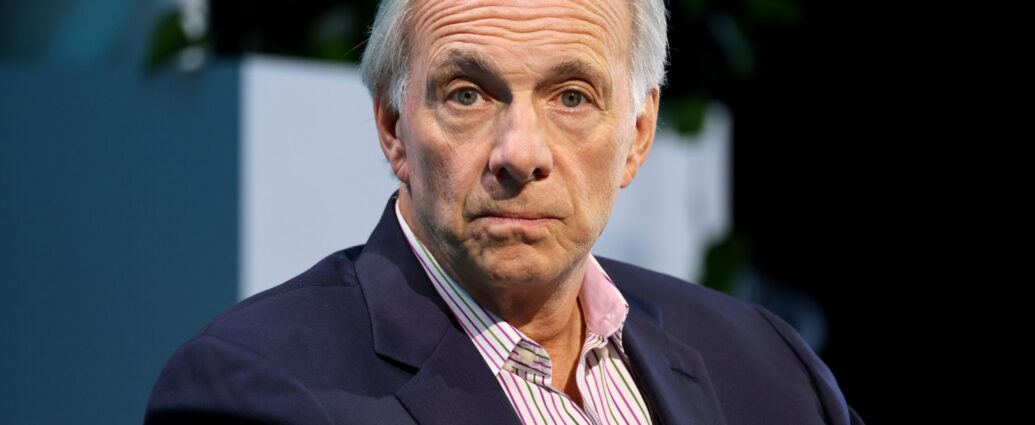
Ray Dalio warns a brutal ‘final battle’ for the Strait of Hormuz is coming—and losing could end the American empire
Bridgewater Associates founder Ray Dalio published a dire warning Monday: the conflict between the United States, Israel, and Iran will be a decisive confrontation over the Strait of Hormuz, and the outcome will determine far more than the price of oil. It will determine whether the American-led global order survives.
“It all comes down to who controls the Strait of Hormuz,” Dalio wrote in a lengthy post on X. If Iran retains the ability to control, or even negotiate over, who passes through the Strait—through which roughly a fifth of the world’s oil supply flows daily—Dalio argues the U.S. will be seen as having lost the war, regardless of how the conflict is resolved.
Dalio compared a potential U.S. failure at Hormuz to Britain’s humiliation during the 1956 Suez Canal Crisis, a moment widely regarded by historians as the end of the British Empire’s global imperialism. He pointed to a pattern he says has repeated across 500 years of history: a rising power challenges the dominant empire over a critical trade route while the world watches, and money and alliances shift fast toward whoever wins.
When that dominant power, the holder of the world’s reserve currency, is “overextended financially,” as Dalio has often argued (including recently in Fortune) and then “reveals its weakness” by losing control over the conflict. “Watch out for allies and creditors losing confidence, the loss of its reserve currency status, the selling of its debt assets, and the weakening of its currency, especially relative to gold,” he wrote.
The post arrives at a moment of confusion around who has control over the Strait of Hormuz. The Strait has been effectively closed for its third week, though there are signs that a small trickle of vessels getting through. President Trump disparaged American allies throughout the weekend, and then again on Monday afternoon for failing to provide military support to help secure the waterway. He then reversed course and said that the U.S. didn’t “need anybody” and was the strongest country in the world. Iranian Foreign Minister Abbas Araghchi said on Sunday that the Strait of Hormuz “is open and only closed to enemies.” Unresolved questions remain on whether Iran mined the Strait, which would be an irreversible escalation if true.
Dalio framed both sides as locked into a conflict with no diplomatic exit. “While there is talk of ending this war with an agreement, everyone knows that no agreement will resolve this war because agreements are worthless,” he wrote, adding that whatever comes next—whether the U.S. takes control of the strait or leaves it to Iran—”is likely to be the worst phase of the conflict.”
The core problem, Dalio said, is motivational asymmetry. For Iran’s leadership, the war is “existential,” a matter of regime survival, national pride, and religious commitment. For Americans, it’s about gas prices, and for U.S. politicians, it’s about the midterm elections. Dalio was clear over which side that calculus favors in a prolonged fight: “In war, one’s ability to withstand pain is even more important than one’s ability to inflict pain.”
Iran’s strategy, he says, is to inflict that pain for as long as possible, then wait for the U.S. to quit, just as it has done in Vietnam, Afghanistan, and Iraq.
Trump is now calling on allied nations to join a multinational escort operation through the strait, though for the most part, they haven’t yet been receptive. Dalio says it remains to be seen whether that effort can serve as a potential “solution” to getting the waterway reopened.
“If President Trump demonstrates his and the U.S.’s power to do what he said he would do, which is win this war by having free passage through the Strait of Hormuz and eliminating Iran as a threat to its neighbors and the world, it will greatly bolster confidence in his and the U.S.’s power.”
But if he doesn’t, the ripple effects, on everything from trade flows, to capital markets and the dollar’s reserve currency status, could irreparably damage American hegemony. Tehran has also threatened the dominance of the petrodollar by reportedly agreeing to open the Strait of Hormuz to a limited number of oil tankers that trade in yuan rather than dollars.
“Both sides know that the final battle, which will make clear which side won and which side lost, still lies ahead,” Dalio wrote.
This story was originally featured on Fortune.com
This post was originally published here
How Software Startup InsightSquared Wrestled with Creating an Optimal Sales and Marketing Strategy
Even with strong product market fit, these founders disagreed on how to best focus their strategy to scale.
This post was originally published here

Samsung Stock Jumps As Nvidia CEO Jensen Huang Confirms New AI Chip Production Deal
Shares of Samsung Electronics (OTC:SSNLF) surged in Seoul and closed 2.76% higher on Tuesday, after Nvidia (NASDAQ:NVDA) CEO Jensen Huang disclosed that the South Korean giant has been selected to manufacture its latest AI chips.
Huang announced this at the GTC developer conference in California on Monday.
The CEO launched Nvidia’s new AI inference processor built with technology from Groq, crediting Samsung for manufacturing the chips, which are already in production and set to ship in the second half of the year.
NVIDIA acquired chip startup Groq for $20.6 billion in December.
Huang doubled the AI demand outlook to $1 trillion at …
This post was originally published here

Warner Bros chief David Zaslav in line for $700mn payday
This post was originally published here

Trump relied on unverified intelligence to blame Iran for deadly school strike
Exclusive: Early US assessment suggesting missile was Iranian was almost immediately dismissed, sources say
Donald Trump’s attempt to blame Iran for the deadly strike on an elementary school stemmed from an early US intelligence assessment that initially suggested the missile was Iranian but was almost immediately dismissed, according to two people familiar with the matter.
The CIA initially told the president that they did not believe the missile that struck the school was a munition used by the US because the fins appeared to be positioned too low for it to be a Tomahawk cruise missile.
This post was originally published here





America’s $38 trillion debt crisis is already here. The reckoning comes next
America does not look like a nation in fiscal distress—and that’s exactly the problem.
The S&P 500 has more than doubled in the past five years. Unemployment is at a multi-decade low. Social Security checks are going out.
But moments like these can hide deeper vulnerabilities. Rising tensions in the Middle East, including the conflict with Iran, are a reminder of how quickly economic conditions can shift. A disruption to global oil supplies could send energy prices higher, reigniting inflation and pushing interest rates upward. For a country already carrying more than $38 trillion in debt and spending more on interest than on national defense, that kind of shock would put even greater strain on federal finances.
And the underlying trend is already troubling. The national debt is on track to reach levels never seen outside of wartime—projected to climb to roughly 120% of GDP within the next decade. That means that the federal government would owe more than the entire annual output of the US economy.
That trajectory will not trigger an alarm bell overnight. As Ernest Hemingway wrote, bankruptcy happens “gradually and then suddenly.” The same can be true of fiscal decline.
A bipartisan fiscal commission offers a structured, credible forum for lawmakers to put everything on the table and produce a package of reforms capable of stabilizing the nation’s finances before gradual erosion becomes genuine crisis.
The US has over $38 trillion of national debt. We now spend more annually on interest than on the military. The primary trust funds for Social Security and Medicare are also projected to become insolvent within the next seven years, requiring an automatic benefit cut or even more deficit spending to backfill these programs. These pressures will intensify as the population ages, health care costs rise, and economic growth slows.
For American businesses, the looming debt crisis carries tangible, real-world consequences. High levels of government debt require the federal government to spend more on interest payments, leaving fewer resources available for infrastructure, education, national defense, and social programs. If investors begin to view US debt as riskier, interest rates could rise further, increasing borrowing costs for expansion, hiring, and investment.
The U.K. offered a preview. In 2022, Prime Minister Liz Truss announced some of the largest tax cuts in decades primarily financed via deficit spending, financial markets were rattled, causing precipitous declines in the value of the pound and threatening the solvency of British pension funds. Within weeks, the prime minister and the country’s finance head were forced to resign. The U.S. economy is larger and the dollar holds reserve currency status—but the dynamic of confidence lost suddenly after building gradually is the same.
Establishing a bipartisan fiscal commission in Congress to address the debt crisis would not solve the problem overnight, but it could break partisan logjams, focus both political parties on finding a solution, bring bipartisan credibility to reforms, and encourage public awareness and support. It would bring bipartisan credibility to reforms and build the public mandate needed for Congress to act.
The commission’s three primary strategic objectives should be to improve the long-term fiscal condition of the federal government, hold the expected debt-to-GDP ratio to a more sustainable level (such as 100%), and address the long-term solvency of the Social Security and Medicare Trust Funds.
For a commission to be successful, everything must be on the table. The commission should undertake a top-to-bottom review of all federal spending and revenue sources. To avoid losing political momentum, the law establishing the commission should include strict timelines and commitments for votes on the House and Senate floor. Following enactment, Congress should adopt strong enforcement mechanisms for future fiscal decisions to avoid altering the new fiscal trajectory.
The American people must understand the stakes. A public education campaign should explain the fiscal crisis, invite broad input, and build the political will needed for Congress to act. This effort should focus especially on groups most vulnerable to a debt crisis—younger generations, low-income communities, and the “sandwich” generation.
The U.S. debt crisis is already here. Forming a bipartisan fiscal commission is an immediate first step in developing a comprehensive plan to address the national debt and forcing action in Congress. Only then can we preserve our national prosperity for future generations.
The opinions expressed in Fortune.com commentary pieces are solely the views of their authors and do not necessarily reflect the opinions and beliefs of Fortune.
This story was originally featured on Fortune.com
This post was originally published here

AI is making productivity obsolete. The leaders who thrive next will have something machines can’t touch
For most of modern history, human worth was measured by output — how much you produced, how fast you moved, how efficiently you performed. The modern economy was built on this premise. Factories needed workers who could produce more units. Corporations rewarded leaders who optimized systems. Knowledge work elevated those who could analyze faster and process more. In a world where intelligence and information were scarce, productivity created advantage.
But something fundamental has changed. For the first time in history, we are creating machines that can out-produce us in the very domains where productivity once defined human value. AI can analyze faster, generate more ideas, and process vastly more information than any human mind. According to the World Economic Forum, 85 million jobs may be displaced by AI-driven automation by 2025 — while the skills most in demand are shifting toward judgment, creativity, and leadership.
The age of the “human doing” — the professional defined entirely by cognitive output and execution speed — is ending.
This shift is unsettling for leaders whose identities have been built on cognitive performance — the smartest analyst, the fastest strategist, the most productive executive. When machines can outperform humans at doing, a deeper question emerges: what remains uniquely human? The answer isn’t intelligence, knowledge, or speed. It’s wisdom.
In my book The Last Book Written by a Human, I describe wisdom as something fundamentally different from intelligence. Intelligence processes information. Wisdom integrates experience. Intelligence answers questions. Wisdom knows which questions actually matter. And wisdom cannot be automated. It emerges from lived experience — through reflection, relationships, responsibility, and the slow accumulation of perspective that no dataset can fully replicate.
AI can summarize the world’s knowledge, but it cannot feel the weight of a hard decision, carry responsibility for another human being, or sit with moral tension when the right path isn’t obvious. Those aren’t bugs in the system. They are the very conditions through which wisdom is formed.
Wisdom: The New Competitive Advantage
For business leaders, this shift has enormous implications. For decades, leadership culture rewarded speed and optimization — executives were expected to process massive information and make rapid decisions. But when intelligence becomes automated and abundant, the source of competitive advantage changes. In an era of infinite “doing” generated by algorithms, the most valuable asset on any balance sheet may be the one that can’t be measured: the human capacity for discernment. Intelligence is becoming a commodity. Wisdom remains scarce.
The leaders who thrive in the AI era will not simply be those who understand technology best. They will be the ones who can see clearly amid overwhelming information — who know when to move fast and when to pause, when to optimize and when to protect something more human.
The Wise Leader
If wisdom is the advantage, three qualities will increasingly define effective leadership:
Discernment: The ability to recognize what truly matters amid an explosion of data, predictions, and automated recommendations.
Reflection: The discipline to pause before reacting — to consider long-term consequences instead of chasing short-term optimization.
Human-Centered Judgment: The courage to make decisions based not only on efficiency, but on how those decisions affect human flourishing.
This isn’t abstract philosophy — it has direct implications for how organizations operate. Many companies today run inside a culture of constant reaction: perpetual urgency, relentless optimization, pressure to move faster at every turn. But in a world saturated with intelligence, speed alone is no longer the differentiator. The real advantage may come from building a culture of reflection, where leaders are rewarded not only for rapid execution but for thoughtful judgment. Sometimes the most valuable decision a leader can make is to say no — to resist a short-term optimization that undermines long-term health.
AI as the Catalyst
None of this means AI is the enemy — in fact, it may be the catalyst that forces this evolution.
Artificial intelligence is, in many ways, a mirror reflecting our current state of consciousness. If we feed it our obsession with speed, efficiency, and profit at any cost, it will amplify those instincts. But if we use this technological disruption as an opportunity to rethink leadership — to rediscover discernment, empathy, and reflection — AI could free humans to focus on what we do best.
The irony is that this future may look strangely familiar. Before the industrial age, many cultures understood the difference between knowledge and wisdom — elders were valued not because they could produce more, but because they had lived long enough to see more clearly. Modern economies replaced elders with experts. Now AI is replacing experts, which may finally create space for wisdom to return.
The Return of the Human Being
AI will continue expanding what organizations are capable of, and businesses will still need efficiency, innovation, and execution. But the deeper question leaders must now confront is this: if machines increasingly handle the doing, what is the role of the human being? The answer lies in qualities machines cannot replicate — meaning-making, ethical judgment, empathy, presence, and the ability to hold complexity without rushing to resolution. In other words, the capacity to be fully human.
For centuries, humans have been conditioned to behave like machines — optimizing productivity, minimizing inefficiency, maximizing output. Now that machines are surpassing us at those tasks, we face a profound invitation: to remember what we really are. Not human doings. Human beings. In the age of AI, that distinction may become the most valuable leadership capability of all.
The opinions expressed in Fortune.com commentary pieces are solely the views of their authors and do not necessarily reflect the opinions and beliefs of Fortune.
This story was originally featured on Fortune.com
This post was originally published here

Bringing marine life back to South Florida’s ‘forgotten edge’
Seawalls are great at protecting property and people. A new nature-inspired seawall add-on is trying to make them better at protecting marine wildlife too.
(Image credit: Nathan Rott)

This post was originally published here

I’m concerned about my blood pressure. Can I check it at home?
If you get a high reading at the doctor’s office, it may not be definitive. Here’s what to know about your risk — and testing your blood pressure at home.

This post was originally published here



DocuSign Earnings Are Imminent; These Most Accurate Analysts Revise Forecasts Ahead Of Earnings Call
DocuSign, Inc. (NASDAQ:DOCU) will release earnings results for its fourth quarter, after the closing bell on Tuesday, March 17.
Analysts expect the San Francisco, California-based company to report quarterly earnings at 95 cents per share, versus 86 cents per share in the year-ago period. The consensus estimate for DocuSign’s quarterly revenue is $828.22 million, versus $776.25 million a year earlier, according to data from Benzinga Pro.
On Feb. 23, Jefferies analyst Brent Thill downgraded Docusign from Buy to Hold and lowered the price target from $105 to $45.
DocuSign shares fell 0.5% to close at $46.82 on Monday.
Benzinga readers can access the latest analyst ratings on the Analyst Stock Ratings page. Readers can sort by stock ticker, company name, analyst firm, rating change or other variables.
Let’s have a look at how Benzinga’s most-accurate …
This post was originally published here


CPA, CFA, or CFP: Understand Key Financial Credentials
This post was originally published here
Close Brothers banking group to cut 600 jobs and roll out AI ‘at pace’
Specialist lender’s shares plunge after short seller claims it will have to raise provision for car finance scandal
The banking group Close Brothers is to cut about 600 jobs and roll out the use of AI “at pace” after posting further losses in the face of a mounting compensation bill for the motor finance scandal.
The specialist lender said the cuts – nearly a quarter of its 2,600-strong workforce – would be made over the next 18 months across its teams in the UK and Ireland.
This post was originally published here

Best CD Rates for March 2026: Lock in 4.30% APY Before It’s Too Late
This post was originally published here

Best 1-Year CD Rates for March 2026: 4.25% APY Still Available
This post was originally published here

Gold Edges Higher In Cautious Trade As Fed Meeting Looms
(RTTNews) – Gold held steady above $5,000 an ounce on Tuesday as investors watched the ongoing geopolitical developments in the Gulf region and braced for a slew of central bank decisions, including the U.S. Federal Open Market Committee (FOMC) meeting scheduled for Wednesday.
This post was originally published here


How Quantum Computing Works

Oil Resumes Climb As West Asia Conflict Escalates
(RTTNews) – Oil prices resumed their rise on Tuesday amid fears over constrained supply.
This post was originally published here





Understanding Gearing Ratios: Key Financial Metrics for Investors
This post was originally published here

Lululemon’s Chip Wilson is giving the company a severe case of ‘post-founder syndrome’
- In today’s CEO Daily: Phil Wahba on Chip Wilson’s fight with the athleisure company he founded
- The big leadership story: Trump’s dealmaking strategy hits a wall in Hormuz
- The markets: Mixed performance across Asia with S&P 500 futures trending slightly down
- Plus: All the news and watercooler chat from Fortune.
Good morning. Good morning. Phil Wahba writing this morning from New York. What’s a company to do when the founder has left—but hasn’t moved on? That’s the plight Lululemon, which reports earnings today after the bell today, finds itself in more than a decade after founder Chip Wilson departed its board. Though his methods have varied—full page newspaper ads berating the board, LinkedIn posts criticizing strategy, open letters to shareholders—Wilson has been adamant that leadership is doing just about everything wrong. I delve into the drama in my latest feature for Fortune. But the question I explore is one familiar to any company with a charismatic and dogged leader who sees the company they founded fumble—and can’t stay away.
There’s even a name for it, “post-founder syndrome,” in which executives who built highly successful companies criticize successors’ perceived stumbles with an “only I can do this properly” attitude. (See: the founders of Starbucks, Papa John’s Pizza, and Nike.) In his Wall Street Journal ad last autumn, Wilson delivered a rather self-aggrandizing disquisition on why Lululemon had drifted: “A company bereft of a visionary loses its singular voice for product and long term strategy,” he intoned.
Wilson’s latest volley was to launch a proxy war, followed by open letters (many of them) to make his case and convince other shareholders to replace three directors at the next annual meeting. He hopes to reshape Lululemon’s board which he blames for letting the company’s culture of innovation disintegrate.
Things between Wilson and the company went south after he left the board in 2015 (he stepped down as chairman in 2013 in the wake of comments about women’s bodies construed as fat-shaming, creating one of the biggest crises in the company’s history). However in the first nine years following his departure, Lululemon’s revenue proceeded to triple. (It is expected to report $11 billion a year in revenue for 2025.)
Today, though, he does have a lot of company in feeling Lululemon is adrift: shares have fallen 68% from their all-time high in 2023 as its U.S. sales have slid, raising fears that it hasn’t introduced enough new merchandise or uphold the technical leadership in its activewear, and has lost brand cache to brands like Alo Yoga. And in my reporting I found that like many founders, Wilson still wields enormous influence inside the company, especially with long-time employees who saw first hand how he stoked a culture of excellence and pioneering.
Last week, Wilson went as far to warn any prospective CEO to beware of a board “that it is not equipped to support a visionary leader and the necessary transformation of the Company.”
Needless to say the CEO who takes on this job won’t just be dealing with a turnaround and a demanding board, they’ll have to manage a post-founder too. You can read the full story here.
Contact CEO Daily via Diane Brady at diane.brady@fortune.com
This story was originally featured on Fortune.com
This post was originally published here

Dubai flights delayed or cancelled after latest drone and missile attacks
This post was originally published here


Crypto Prediction Platform Polymarket Blocked In Argentina For Facilitating Unauthorized Betting: Report
An Argentinian court ordered a nationwide block of betting market platform Polymarket on Monday and instructed Alphabet Inc.‘s (NASDAQ:GOOG) (NASDAQ:GOOGL) Google and Apple Inc (NASDAQ:AAPL) to remove access to its mobile applications within the country.
‘Concealed Online Betting System’
The court issued the order in response to an investigation led by a specialized gambling prosecution office, according to a report by Buenos Aires Times.
The investigation …


867-5309: number from 1980s hit song Jenny now routes callers to cancer support
Music’s most famous number is being repurposed to offer resources for patients and caregivers
The telephone number immortalized in the enduring Tommy Tutone hit song 867-5309/Jenny has started connecting callers to a cancer support line – as one ad touting the news says it was time that music’s most famous digits “did some good”.
Cancer Support Community (CSC)’s Instagram page announced the campaign with a series of posts on Monday alluding to the song about a guy who nervously ponders calling the phone number of a woman named Jenny, which is scrawled on a bathroom wall.
This post was originally published here
Illinois heads to elect next senator and five congressional district candidates
Midwestern state has a slate of competitive races with money flowing in from donors including Aipac
Illinois voters on Tuesday will decide between a crowded field of Democratic candidates vying to be the state’s next senator as the midwestern state also nominates candidates for five open congressional seats.
Longtime Illinois senator Dick Durbin’s retirement leaves a competitive race that includes two US representatives and the lieutenant governor vying to replace him, with massive infusions of money coming to the candidates from outside groups, including donors affiliated with the American Israel Public Affairs Committee (Aipac), that are spending millions to sway voters.
This post was originally published here


Blank Street Wants To Be Starbucks for Gen Z





Your electricity bill keeps rising. Here’s what’s actually causing it—and how to fix it
Retail electricity prices are rising faster than inflation—and the fixes being discussed in Washington and state capitals could make things worse, not better. President Trump has pointed to AI data centers as a contributor, calling rising utility prices an issue that “needs some PR help.” But the real drivers are structural, and popular-sounding policies like rate freezes and blocking new energy permits would only deepen the problem.
Blocking permits for new clean energy keeps cheap supply off the system. Rate freezes and threats to exit competitive power markets would chill investment just at the exact moment a grid built for a 20th-century economy is being asked to support 21st-century demand. So what’s really driving prices up—and what would actually work?
Electricity rates are climbing for several overlapping reasons, and anyone promising a quick fix is either mistaken or misleading you. Power demand is surging, driven in large part by artificial intelligence and energy-intensive data centers.
Utilities are also spending vastly more on the “poles and wires” side of the system: the Energy Information Administration reports that transmission spending nearly tripled from 2003 to 2023, reaching $27.7 billion, while distribution spending hit $50.9 billion in 2023. On top of that, regulators appear to be approving utility profit rates higher than necessary—right as aging infrastructure demands costly upgrades.
No single policy will bring immediate relief. But one central driver of rising bills is a regulatory model that protects monopolies, limits customer choice, and rewards overspending while deterring innovation. Here are three reforms that would actually help.
Fix 1: Stop Rewarding Utilities for Overspending
Most utilities are regulated monopolists—they don’t compete for customers, so regulators must balance two goals: attracting enough capital to maintain reliable service while preventing utilities from gouging customers who have no other option.
Recent reports suggest that regulators have become overly generous in setting utility returns. One report estimates that excess returns for investor-owned utilities cost customers about $50 billion a year—roughly 13.6% of gas and electric revenue, averaging around $300 per household. Another found that excess returns averaged approximately $7 billion a year for the last thirty years. The data points in one direction: state public utility commissions, which regulate retail rates, should make sure utility returns reflect actual financing costs.
Regulation also creates a perverse incentive to overspend. Under traditional rate-of-return regulation, utilities earn returns on capital investment. If a utility earns an 8% return, it makes $80 on a $1,000 investment—but only $8 on a $100 one—even if the cheaper option delivers the same economic or reliability benefits. With utility spending at $320 billion a year, this “capital bias” is likely having a real effect on customer bills.
So what should regulators do? In addition to reducing returns, regulators should also tie utility profits to specific performance criteria such as lower rates or improved reliability. Performance-based rates have been piloted in the UK, with early signs of success. When properly designed, performance-based regulation can encourage utilities to make better use of the system through energy efficiency, demand response, and grid-enhancing technologies.
Fix 2: Get Power Online Faster
Prices rise when supply doesn’t keep up with demand—and right now, the regulatory system makes it difficult to get resources online quickly. Interconnection queues, which are essentially waiting lists for proposed power generators that want to connect to the grid, face extreme backlogs. The Lawrence Berkeley National Laboratory reports that the typical project built in 2023 took nearly five years from interconnection request to commercial operation. That is up from under two years in 2008.
Although federal regulators have begun to reform interconnection processes, the interconnection queue still moves sequentially, regardless of how much value a generator will deliver to the system and regardless of whether projects are speculative and likely to drop out of the queue.
Two policies could help. First, auction off interconnection positions so that resources that are likely to be built and relieve system stress can skip to the front of the line. Second, projects that are willing to accept operating constraints should be allowed to connect faster. Regulators should let resources connect quickly if they accept curtailment risk (reducing power to maintain system stability) or forgo reliability payments. In short: faster access to the grid, in exchange for accepting some operational risk.
Fix 3: Break Up Utility Monopolies and Plan for the Public Good
Vertically integrated utilities, which own both generation and transmission, profit more when transmission bottlenecks prevent low-cost resources from competing with their generation assets. FERC has rules limiting affiliate transactions, but real reform would go further: if a utility owns transmission and distribution, it should not be allowed to own generation.
A complementary reform would be to give customers credible alternatives when utility bottlenecks raise prices and delay new supply. Why not let customers bring self-supply if they are willing and able to do so? Senator Cotton recently introduced legislation that would make it easier for companies to procure their own generation if they don’t connect to the grid. While this proposal will not solve all the problems discussed above, it deserves serious consideration, since it would expose incumbent utilities to the threat that cheaper off-grid options could challenge their monopoly privileges.
Finally, some essential infrastructure should be treated as a public function. The U.S. has essentially outsourced transmission planning to firms that earn more when they spend more. When this system fails to produce cost-effective transmission, states and the federal government should step in and play a more direct role in planning, financing, and paying for high-voltage transmission. States could, for example, create or expand transmission authorities to participate directly in financing and project development. At the federal level, the Department of Energy and FERC can designate priority transmission corridors, support financing, and directly solicit project proposals for large projects that would help supply get online and increase wholesale market competition. Federal regulators have typically been reluctant to get more directly involved in planning and paying for transmission, but current federal programs authorize billions of dollars of direct financing that could be used to bypass utility-led processes altogether.
The utility model is broken. If regulators don’t improve incentives and clear the path for new supply, rates will keep climbing. Fortunately, the tools to fix this already exist. FERC can cut interconnection delays. DOE can plan and pay for projects when incumbent-led processes fail. State regulators can lower utility returns and deliver immediate rate relief. None of these is a silver bullet. But together, these reforms would go a long way towards addressing the structural failures responsible for rising costs.
The opinions expressed in Fortune.com commentary pieces are solely the views of their authors and do not necessarily reflect the opinions and beliefs of Fortune.
This story was originally featured on Fortune.com
This post was originally published here

From Descartes to punk rock, X has an extraordinary history
The letter X can be a lot of things: rebellious, mysterious, religious. For this Word of the Week, we examine its origins and many uses.
(Image credit: jclegg)

This post was originally published here

Reproductive health clinics scramble as Title X funding cliff approaches
Title X is a 56-year-old federal grant program that supports thousands of clinics that provide birth control and STI testing and treatment around the country. Now those clinics could face a funding gap because of a Trump administration delay.
(Image credit: Ed Zurga)

This post was originally published here
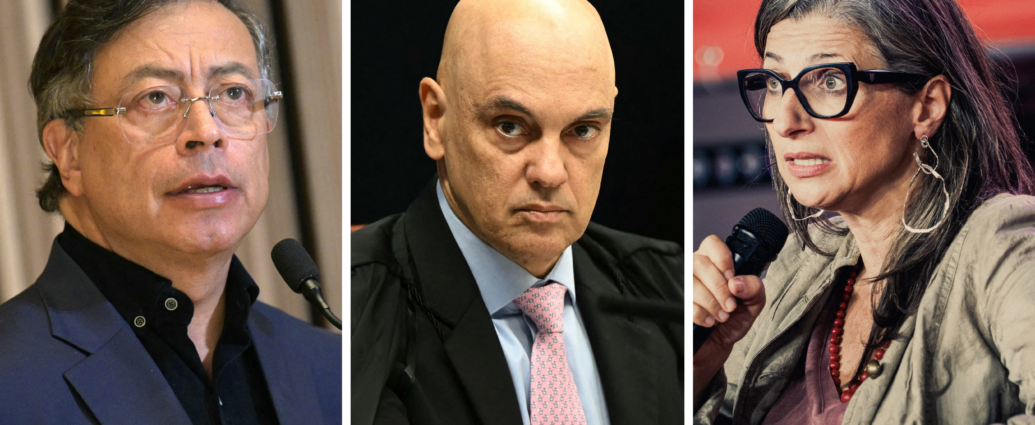
‘Rewarding loyalists,’ punishing critics: How Trump’s Treasury sanctions foreigners
Spain’s Prime Minister called U.S. strikes against Iran “unjustified.” When other foreigners in power have used similar language against the U.S. or Israel, they were sanctioned by the Treasury.
(Image credit: Oliver Contreras, Evaristo Sa and Bastien Ohier/Hans Lucas)

This post was originally published here

Federal Reserve’s Key Economic Tools and Strategies
This post was originally published here

The RBA has made one of its most controversial calls in recent years – and this rate rise may not age well
Michele Bullock says high inflation hurts everyone, but there still seems to be an extraordinary level of complacency about potential fallout from the US-Israel war on Iran
-
Get our breaking news email, free app or daily news podcast
The Reserve Bank has made some controversial calls over recent years, but hiking interest rates in the middle of a historic global energy shock is right up there.
If this Middle East conflict lasts for months, not weeks, and drags the world and our economy down, then Tuesday’s decision to increase households’ borrowing costs will not age well.
This post was originally published here


Trump Promises $5,000 Savings For Homebuyers In Push To Deregulate Mortgage Market: ‘Lowest Level In 5 Years’
President Donald Trump signed a sweeping executive order aimed at deregulating the U.S. mortgage market, touting massive savings for homebuyers and declaring that mortgage rates have hit their “lowest level in 5 years.”
Slashing Red Tape And Boosting Savings
The March 13 directive, titled “Promoting Access to Mortgage Credit,” seeks to reverse years of tightening regulations that the administration claims have sidelined community banks and restricted credit access.
Taking to Truth Social on March 17, he amplified the financial impact of the move. Trump said that his administration’s actions to buy $200 billion in mortgage-backed securities have caused the mortgage levels to reach the “lowest level in five years, adding that the “cost of new mortgage is down by $5000.”
The administration argues that easing compliance burdens, particularly those stemming from the Dodd-Frank Act, will revive bank participation and directly lower costs for rural and low-to-moderate-income households.
By removing these regulatory distortions, the policy aims to foster competition among all lender types to drive down consumer rates.
Easing Rules For Community …
This post was originally published here
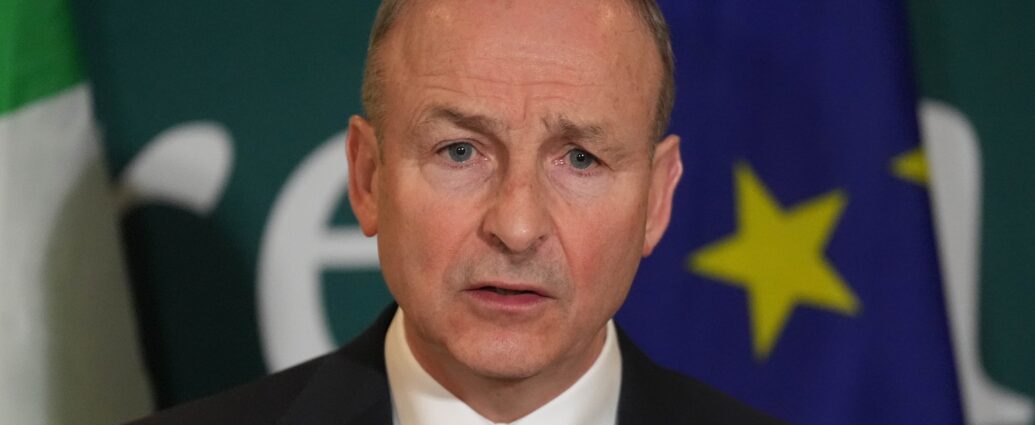
Ireland courts U.S. companies as taoiseach brings deals to Trump on St. Patrick’s Day
Ireland’s Prime Minister, or Taoiseach, Micheál Martin is expected to unveil more than $6 billion in deals Wednesday when he meets with U.S. President Donald Trump in Washington. But the usual St. Patrick’s Day festivities will no doubt be dampened by the Iran war and lingering tensions over trade, tariffs, and Irish policies that the White House has called a “tax scam” for U.S. companies.
Few understand the challenges better than Michael Lohan. As CEO of IDA Ireland, the nation’s foreign direct investment agency, Lohan is charged with attracting companies to a country that has long relied heavily on U.S. capital and companies. “You know, Ireland is closer to Boston today than Berlin,” says Lohan, repeating a long-held trope about its economic similarities to the U.S. in terms of taxes, talent, and ease of doing business. (Technically, Boston is almost three times as far as Berlin.) “Last year was a record year for FDI investment in Ireland—against the backdrop of everything that was happening—and 65% of that investment came from U.S. multinationals.”
That flow of capital is not viewed as a good thing by Trump, who accused Ireland of “taking our pharmaceutical companies” during last year’s St. Patrick’s Day meeting. While his pressure on U.S. companies to double down at home is being heard–U.S. FDI to Ireland dropped 20% in 2024 to $467 billion–America remains the country’s largest investor. Lohan’s job is to attract more of that capital by “telling the story of Ireland” as a place to get talent, agility and easy access to the 27 member states of the European Union.
Pharma-fueled trade surplus
Ireland has proven to be a desirable place to book profits and pay taxes. The country’s 12.5% corporate income tax rate, and prior tax benefits for companies like Apple, have generated both investment and unwanted attention. Among other things, Apple and Microsoft’s intellectual-property rights are held in Irish subsidiaries that collect royalties from elsewhere. Pharmaceutical companies like Eli Lilly manufacture key ingredients of blockbuster drugs like Mounjaro and Zepbound on the emerald isle for the same reason, shipping those drugs to U.S. consumers and booking the revenue in Ireland.
Ireland’s budget watchdog says three U.S. companies accounted for almost half of the country’s corporate tax revenues last year. Although unnamed in the report, they’re known to be Apple, Lilly, and Microsoft. Lilly, for one, paid $6.6 billion in tax to Ireland in 2025, about double what it paid in the U.S.—a country with 65 times the population and the bulk of its customers. With 4,000 employees in Ireland, Lilly’s workforce is also less than a fifth the size of its U.S. operations. Pharmaceutical sales helped Ireland’s exports of goods to the U.S. grow 52% last year to about $132 billion, more than doubling the goods trade surplus to $114.2 billion. (Trade in services between the two countries is essentially the opposite, with Ireland buying more than it sells.)
One man’s trade surplus is another man’s trade deficit, especially if that man is Donald Trump. The U.S. President has paid particular attention to physical goods when it comes to trade flows, and has called out Big Pharma for rising drug costs. Even with the U.S. now at war, Ireland’s reputation as a corporate tax haven is unlikely to escape attention during the White House visit.
That may be why the prime minister, much like his IDA emissary Lohan, has shifted the emphasis from inbound investment to money flowing the other way. Lohan talks about how Ireland invested a historic $389 billion in the U.S. in 2024, making it America’s fifth largest source of FDI. On a per-capita basis, the nation of 5.4 million claims to be number one. “The U.S. continues to be the most innovative economy in the world. It continues to be where capital is readily available and supportive,” says Lohan. “None of those things have really changed.”
What has changed, of course, is Trump’s focus on “America First,” which is why Martin is expected to present $6.1 billion in new Irish investments to the U.S. alongside the traditional bowl of shamrocks. While nurturing European alliances is also not a priority for the White House, Trump’s calls for NATO and Europe to step up in protecting the Iran-controlled Strait of Hormuz could occupy much of Martin’s discussions with Trump. Ireland will begin a six-month stint in holding the presidency of the Council of the European Union in July, which will give it a central role in E.U. decision making.
Martin may want to talk trade this time as the war with Iran is an issue that few leaders want to tackle in public, especially during a White House press conference. IDA’s Lohan is also not oblivious to the fact that consumer sentiment in Ireland is decidedly mixed when it comes to Trump, tariffs, and the tech giants that have raised the cost of housing while putting pressure on the energy grid at home. And Europe’s approach to tech innovation is decidedly different than what’s coming out of D.C.
“We want to push the innovation and technology agenda, but we have to do it safely and ethically,” said Lohan. And that applies to all potential investors, including China.
“We want to see a fair, level playing pitch between China and its counterparts, with Ireland being part of that,” he said. “But I do think we can’t turn our back on what is a very significant economy where there is a significant amount of innovation.”
This story was originally featured on Fortune.com
This post was originally published here

Companies are pouring billions into AI and cutting training budgets. It’s a losing strategy
Businesses are pouring billions into AI to boost productivity and cut costs—and to fund it, they’re slashing hiring, training, and employee support. Headcount isn’t safe either: as Jack Dorsey’s Block recently demonstrated, a growing number of executives are citing AI as justification for substantial layoffs.
That approach may lift short-term margins. But it is a dangerous long-term strategy—and the data makes clear why.
As president of SHRM Foundation—the philanthropic arm of the largest HR association in the world— I’ve seen firsthand how organizations thrive when they invest in human potential alongside AI. Technology can accelerate work. Competitive advantage comes from the judgment, adaptability, and trust that only people provide.
The gap is glaring. Nearly three-quarters of knowledge workers globally now use AI at work, yet 60% say they have not received formal training to use it effectively. AI spending is projected to rise 44% in 2026—while training budgets are expected to grow just 5%, and average learning time is actually falling—from 47 to 40 hours per employee. Companies are deploying powerful tools while quietly disinvesting in the humans required to use them.
At the same time, employees are navigating rising pressures inside and outside the workplace. Burnout and stress remain widespread, the specter of AI-driven layoffs is increasing workers’ sense of precariousness, and millions of Americans balance their jobs with responsibilities like caregiving outside of the workplace. Without support, these pressures carry real costs: Gallup estimates disengaged and stressed workers cost the global economy nearly $9 trillion annually. Unaddressed stress drives absenteeism, presenteeism, and turnover — hidden costs that can exceed an employee’s annual salary. Against this backdrop, it’s no surprise that ADP’s employee motivation index just reported its sixth straight month of decline.
In an AI-driven economy, unlocking business potential and long-term growth requires investing in human potential. That means not just keeping workers around, but equipping workers with the skills to use emerging technologies effectively. It also means addressing the conditions that determine whether people can bring their full capacity to work: ongoing skills development, mental health support, caregiving flexibility, financial stability, and workplace cultures that foster trust and psychological safety.
The Business Case Is No Longer Optional
Employers are uniquely positioned to provide this support — and the business case is increasingly clear. Johnson & Johnson’s long-running employee wellness initiatives generate an estimated $250 million in healthcare savings and returns nearly $3 for every $1 invested. Companies providing childcare support have reported returns exceeding 400% through improved retention and productivity. Organizations that support employee well-being and life responsibilities see stronger retention, higher productivity, and better long-term performance.
By contrast, companies that reshape their workforce around AI and treat workforce investment as discretionary spending often face higher turnover, lost productivity and prolonged vacancies, more safety incidents, and weakened customer experience — costs that compound quietly but relentlessly.
The question for business leaders is no longer “How can AI help us automate more tasks and reduce headcount?” The smarter question is: “Which human capabilities become more valuable as AI absorbs routine work—and how do we redesign roles to strengthen them?”
What Happens When AI Maximizes People Instead of Replacing Them
The productivity upside is real—but only under the right conditions. Research shows tasks completed 25% faster and with 40% better quality, 60% greater productivity, up to 36% more time for higher-order work, and more effective—and cheaper—learning and development programs. But these gains only materialize when workers are trained, supported, and trusted to apply judgment.
Some companies are already showing what this looks like in practice. IBM CHRO Nickle LaMoreaux, bucking the layoff trend, announced plans to expand entry-level hiring and redesign roles around durable skills.
“The companies three to five years from now that are going to be the most successful,” LaMoreaux said, “are those that doubled down on entry-level hiring in this environment.”
IBM isn’t alone. Amazon has committed more than $1.2 billion to upskill hundreds of thousands of workers for technology-enabled roles. Mastercard has deployed an AI-driven internal talent marketplace to match employees to growth opportunities, reducing external hiring costs while increasing retention. SAP has embedded continuous learning time and wellbeing supports into the workweek to sustain productivity and attract scarce talent.
Short-term gains may come from cutting labor costs and accelerating automation. But long-term performance depends on resilience, trust, institutional knowledge, and the capacity to adapt—all of which are built through sustained investment in people.
AI will shape the future of work. Humans will drive it. The organizations that come out ahead will be the ones that treat workforce investment not as a line item to cut, but as the strategy itself. The $500 billion bet on AI only pays off if the people running it are trained, supported, and set up to succeed.
The opinions expressed in Fortune.com commentary pieces are solely the views of their authors and do not necessarily reflect the opinions and beliefs of Fortune.
This story was originally featured on Fortune.com
This post was originally published here


Has AI Killed Bitcoin? Debate Erupts As Crypto Influencer Says Data Centers Outbid Miners For Power
Cryptocurrency influencer Ran Neuner sparked a debate Sunday by claiming that artificial intelligence has become a major competitor to Bitcoin (CRYPTO: BTC) mining.
Is AI Computing More Profitable Than Bitcoin?
Neuner stated in an X post that AI has “killed Bitcoin forever” by outbidding for electricity.
“Both industries compete for the same thing: electricity. And right now, AI is willing to pay much more for it,” Neuner added.
Neuner cited that while Bitcoin mining revenue per megawatt ranges from $57 to $129, AI data center revenue per megawatt stands between $200 and $500.
“Same electricity. But up to 8x more profitable. That’s why miners are starting to pivot,” they added.
Labor appears set to reform capital gains tax discount after parliamentary inquiry findings
Report reveals the Howard-era settings are helping fuel intergenerational inequality in Australia’s housing market
-
Get our breaking news email, free app or daily news podcast
Labor has given one of its strongest signals yet the capital gains tax discount will be reworked in the May budget, with a parliamentary inquiry finding the Howard-era settings are helping fuel intergenerational inequality in Australia’s housing market.
A Greens-led parliamentary inquiry said the 50% discount “skewed the ownership of housing away from owner-occupiers and towards investors”.
This post was originally published here

Scientists discover heavier version of proton with upgraded detector
Snappily named Xi-cc-plus, Cern physicists spotted the particle in shower of debris that lit up Large Hadron Collider
Scientists at the Cern nuclear physics laboratory near Geneva have discovered a heavier version of the proton, the subatomic particle that sits at the heart of every known atom in the universe.
They spotted the particle in a shower of debris that lit up a detector at the Large Hadron Collider (LHC), located deep beneath the ground at Cern, which smashes protons together at close to the speed of light. The collisions recreate in microcosm conditions that prevailed just after the big bang, with the energy converting to particles that spray in all directions.
The newfound particle, which is four times heavier than the regular proton, should help physicists refine their understanding of the strong nuclear force that glues together the innards of all atomic nuclei. The force is unusual because it behaves like a rubber band, getting stronger as the distance between subatomic particles increases.
This post was originally published here

Elon Musk’s Cybercab Gets Major Boost As Trump’s NHTSA Proposes Amendment To Safety Standards
Elon Musk‘s Cybercab goals may have gotten a major boost as the National Highway Traffic Safety Administration (NHTSA) has proposed amendments to the Federal Motor Vehicle Safety Standards (FMVSS).
NHTSA Proposes Amended Safety Standards
The agency, in a filing on Monday, proposed amending the Federal Motor Vehicle Safety Standard (FMVSS) No. 102, which dictates “Transmission shift position sequence, starter interlock, and transmission braking effect.” The amendments outline that AVs without a steering wheel and pedals would not need to have a gear position indicator.
“As the transmission shift position display does not fulfill the same safety need in an ADS-equipped vehicle without manually operated driving controls, the amendment will not impact vehicle safety,” NHTSA said in the filing. The change would not affect traditional vehicles.
Tesla Cybercab
The amendment could provide a major boost to Musk’s Cybercab, which will have no steering wheel or pedals and is set to enter production at the company’s Gigafactory in Texas. The company is also reportedly setting up the …
This post was originally published here


Moody’s Top Economist Warns Recession Is ‘Difficult To Avoid’ Amid Oil Spikes, Pushing Odds Past 49%
The U.S. economy faces an imminent downturn as surging oil prices tied to Middle East tensions threaten to push recession probabilities over 49%, according to Moody’s Analytics Chief Economist Mark Zandi.
Crossing The Critical Threshold
In a stark warning, Zandi declared that an economic contraction is once again a “serious threat.” According to his firm’s machine-learning leading economic indicator model, the probability of a downturn starting within the next 12 months already sat at an “uncomfortably high 49%” even before the latest geopolitical turmoil.
Now, with the Iran conflict triggering a rapid surge in global energy costs, Zandi anticipates conditions will deteriorate further. “It isn’t a stretch to expect the indicator to cross the key 50% threshold,” he stated.
Ultimately, he cautioned that “if oil prices remain elevated for much longer (weeks and not months), a recession will be difficult to avoid.”
This post was originally published here


Will S&P 500 Open Up Or Down On Tuesday? Oil Pullback In Focus As Fed Rate Decision Looms
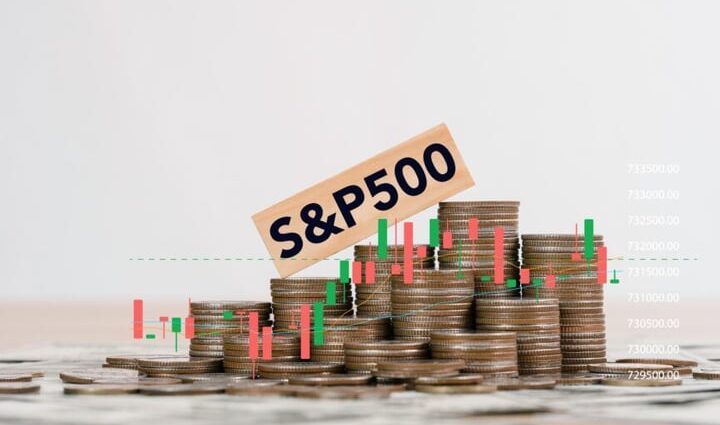
The S&P 500 rose 1.01% on Monday to close at 6,699.38, snapping a four-day losing streak as oil prices pulled back after Treasury Secretary Scott Bessent said the U.S. is allowing Iranian oil tankers to pass through the Strait of Hormuz, and a Wall Street Journal report said a coalition to escort ships through the strait was imminent. By early Tuesday, futures had turned red.
The Polygon-based (CRYPTO: POL) Polymarket crowd is bearish heading into Tuesday, with the “S&P 500 Opens Up or Down on March 17?” market at 24% “Up” and 76% “Down” in early trading.
Why That Number Matters
Monday’s rally was qualified from the start. President Donald Trump, speaking to reporters midday, signaled the tanker escort coalition isn’t finalized yet and encouraged other countries to get involved. Oil came off its session lows on his comments, but stayed …
This post was originally published here



‘The Karpathy Loop’: Former OpenAI researcher’s autonomous agents ran 700 experiments in 2 days—and gave a glimpse of where AI is heading
Earlier this month, Andrej Karpathy, a well-known AI researcher who was one of the founding employees of OpenAI and later headed up AI for Tesla, went viral on X. This alone isn’t so unusual. Karpathy—who now works as an independent AI researcher and is also the founder of Eureka Labs, which says it is creating a new kind of school for the AI era—has 1.9 million followers on X and his reputation is such that almost anything he says about AI is treated as either gospel or prophecy.
But this post was about an experiment he’d run where put an AI coding agent to work running a series of experiments to figure out how to improve the training of a small language model. He let the AI agent run continuously for two days, during which time it conducted 700 different experiments. Over the course of those experiments, it discovered 20 optimizations that improved the training time.
Karpathy found that applying the same 20 tweaks to a larger, but still fairly small, language model resulted in an 11% speed up in the time it took to train the model. Karpathy called the system he built for conducting this experiment “autoresearch.”
Tobias Lütke, the cofounder and CEO of Shopify, posted on X that he tried autoresearch to optimize an AI model on internal company data, giving the agent instructions to improve the model’s quality and speed. Lütke reported that after letting autoresearch run overnight, it ran 37 experiments and delivered a 19% performance gain.
What caught many people’s attention was that the autoresearch is close to the idea of self-improving AI systems that were originally broached in science fiction and that some AI researchers fervently desire and others deeply fear. The concern is that “recursive self-improvement,” where an AI continually optimizes its own code and training in a kind of loop, could lead to what AI safety researchers sometimes call a “hard takeoff” or an “intelligence explosion.” In these scenarios, an AI system rapidly improves its own performance, leading it to surpass human cognitive abilities and escape human control.
Karpathy’s experiment wasn’t quite this. The AI agent at the heart of autoresearch set up isn’t refining its own training set up, it’s adjusting the training code and initial neural network settings for a different, much smaller and less sophisticated, AI model. But Karpathy rightly noted that his experiment had big implications for how AI labs will do research going forward, and this might accelerate their progress.
“All LLM frontier labs will do this. It’s the final boss battle,” Karpathy wrote on X. He acknowledged that “it’s a lot more complex at scale of course,” since his autoresearcher only had to worry about adjusting a model and training process that was contained in just 630 lines of Python code, whereas the training codebase of frontier AI models is orders of magnitude bigger. “But doing it is ‘just engineering’ and it’s going to work,” he continued. “You spin up a swarm of agents, you have them collaborate to tune smaller models, you promote the most promising ideas to increasingly larger scales, and humans (optionally) contribute on the edges.”
He said that while the current autoresearch system he built was designed for a single agent to continually improve a piece of code along a single path, in the future he imagines multiple AI agents will be able to explore different optimizations and different experiments in parallel. “The next step for autoresearch is that it has to be asynchronously massively collaborative for agents,” he wrote. “The goal is not to emulate a single PhD student, it’s to emulate a research community of them.”
Karpathy also said something else about autoresearch which got many people excited. “*any* metric you care about that is reasonably efficient to evaluate (or that has more efficient proxy metrics such as training a smaller network) can be autoresearched by an agent swarm,” he wrote. “It’s worth thinking about whether your problem falls into this bucket too.”
Some commentators pointed out that the basic components of autoresearch could be used for many other agentic systems to optimize a process. Janakiram MSV, principal analyst at Janakiram & Associates, writing in tech publication The New Stack called this “the Karpathy Loop.” It has three components: an agent with access to a single file that it can modify; a single metric, objectively testable metric, that the agent can optimize for; and a fixed time limit for how long each experiment can run. He also highlighted that the instructions Karpathy gave the AI agent in autoresearch were also good models for anyone interacting with any AI agent. The plain text file Karpathy used included clear instructions for what the agent should do, constraints, telling the agent what it should not do or change, and a stopping criteria, indicating how long each loop should run and when the agent should stop looping and report its results.
But some critics said that Karpathy had done little more than rediscover part of a process known as AutoML that researchers at Google, Microsoft, and other AI labs have already been using for years. AutoML also uses an optimization loop and series of experiments to find the best data to use for AI, the best model architecture to use, and to tune that model architecture. But it doesn’t use an AI agent that can read AI research papers and develop hypotheses for which improvement to make. AutoML systems tend to depend on random variations or various evolutionary algorithms to decide which changes to try.
Karpathy replied to some of these comments, saying that some AutoML methods, such as neural architecture search, which is an automated way to optimize the design of an AI model, were not nearly as powerful as his autoresearch. “Neural architecture search as it existed then is such a weak version of this that it’s in its own category of totally useless by comparison,” he wrote. “This is an *actual* LLM writing arbitrary code, learning from previous experiments, with access to the internet. It’s not even close.”
This story was originally featured on Fortune.com
This post was originally published here
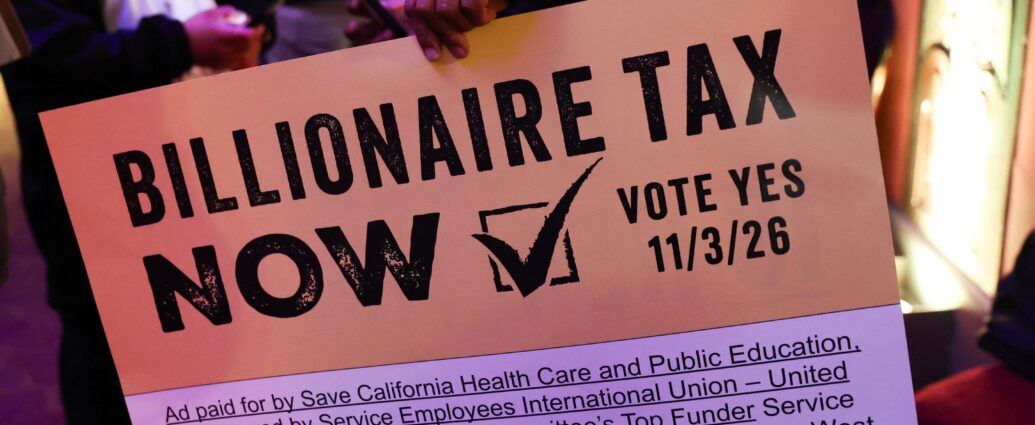
Only 6 billionaires left California over its proposed wealth tax—but they took $27 billion in potential revenue with them
Six of California’s 214 billionaires have been widely reported to have left the state in time to avoid a proposed 5% wealth tax—but that small cohort would have collectively generated $27 billion in tax revenue, roughly a fourth of the initiative’s projected $100 billion haul.
Last November, panic erupted over the announcement of a proposed billionaire’s tax in California. The tax would levy a one-time 5% tax on the net worth of California residents with assets worth at least $1 billion. California’s progressive governor, Gavin Newsom, emerged as the measure’s biggest opponent and vowed to stop the tax to “protect” the state’s tech industry and overall economy.
Before the Jan. 1, 2026, cutoff proposed in the initiative, Google cofounders Larry Page and Sergey Brin, and venture capitalist Peter Thiel, left California for Miami. Car loan magnate and L.A. native Don Hankey left the state for Las Vegas. Former Uber CEO Travis Kalanick recently announced he had left California for Texas in December. Director Steven Spielberg became a New York City resident on New Year’s Day, according to the Los Angeles Times, although his representative said the Jaws director had long planned to move to be closer to family.
The tally of departed billionaires likely understates the extent of the flight. Meta CEO Mark Zuckerberg has also reportedly left the state, but not before the Jan. 1 deadline. Venture capitalist David Sacks, whose net worth has been reported to range from $250 million to $2 billion, also left the state as his company Craft Ventures moved to Austin. Zuckerberg would take another roughly $10 billion of tax revenue with him.
If the state were to tax Page’s $260 billion net worth at 5%, it would rake in $13 billion in tax revenue. Brin’s taxes would bring in about $12 billion. While Thiel, Kalanick, and Hankey may not rank among the top five richest men in the world, together they would have generated $1.775 billion.
The loss of a fourth of the proposed tax revenue is a major hit to the initiative, which intends to use the funds toward health care, education, and food assistance.
Billionaires are backing a fight
Billionaires in and outside of California are working to fight the tax, which has been a harbinger for more wealth taxes across the country.
Brin donated $20 million to a group called Building a Better California that is giving out $15 to people who sign their three countermeasures. The group’s proposals would prevent retroactive taxes and narrow the definition of California residency to fight against the 2026 Billionaire Tax Act’s application to anyone who lived in the state as of Jan. 1, 2026.
Two billionaire-backed political action committees, Stop the Squeeze and Golden State Promise, have launched to stop the proposal.
Chicago-based venture capitalist Daniel Tierney donated $200,000 to Stop the Squeeze, and crypto billionaire Chris Larsen is backing Golden State Promise, the New York Times reported.
Since the California initiative was announced, other states have proposed higher taxes on their high-earning residents. In January, Rhode Island Gov. Dan McKee backed a 3% tax increase on millionaires. Last week, Washington, which is one of nine states without an income tax, passed a 9.9% tax on personal income above $1 million per year.
“We’ve got more millionaires and billionaires than we’ve ever had, and they’re paying, effectively, a 4% tax rate,” Rep. Brianna Thomas, of Seattle, a Democrat who supported the measure, previously told Fortune. “Meanwhile, you got working folks paying 11% of their income, and the lowest-income people paying 14%. Isn’t it unfair for those who have the most, to pay the least, and those who have the least to pay, the most, proportionally?”
This story was originally featured on Fortune.com
This post was originally published here

Robot dogs priced at $300,000 a piece are now guarding some of the country’s biggest data centers
It’s a scene straight out of a science fiction show: robot dogs. Think K9 from the sci-fi series Doctor Who, or Goddard from the cartoon Jimmy Neutron.
Now, robot dogs are standing guard for tech companies, patrolling the massive data centers across the country that power AI operations, according to Business Insider. These four-legged robots, known as quadrupeds, are in high demand from AI firms, according to robotics company Boston Dynamics, which manufactures a quadruped called Spot. These systems are able to navigate complex landscapes on their own, alert authorities about security threats, and can provide around-the-clock video surveillance.
“We’ve seen a huge, huge uptick in interest from data centers in the last year,” Merry Frayne, senior director of product management at Boston Dynamics, told Business Insider, “which is probably not surprising given the investment in that space.”
Companies are pouring nearly $700 billion into the AI infrastructure buildout, a sum that rivals the GDP of developed countries like Sweden. And some data centers are the size of multiple football fields. One data center—Meta’s Hyperion—will sprawl out to about four times the size of Manhattan’s Central Park. Aside from requiring loads of energy and millions of gallons of water, the vast size of the data centers means the cost of security to protect their around-the-clock operations is inspiring some firms to look to alternative security resources.
According to Frayne, Spot’s pricing ranges from $175,000 to $300,000, depending on their client’s needs. But despite that high price, the company estimates that the quadrupeds would compensate for their cost within two years.
The robot dogs are actually capable of doing more than just perimeter patrol. Frayne told Business Insider data center customers are looking for the quadrupeds to conduct industrial inspection, site mapping, and construction monitoring. These tasks could help facility managers to more easily detect hazards, such as puddles or leaks. Boston Dynamics says Spot has “360° perception and athletic intelligence.”
Quadrupeds like Spot have actually existed for some time now, assuming roles in public safety and law enforcement. Another robotics company—Ghost Robotics—advertises quadrupeds as a business solution for construction sites to streamline inspections and enhance safety monitoring. The company also advertises the robots for reconnaissance, intelligence, and surveillance use by the military.
Forget the age of AI—the dawn of the robotics era
Some tech leaders predict the AI revolution could usher in a new era of robotics, with some predicting they’ll soon outnumber humans. The current state of robotics is a bit far off from that reality. A Deloitte research report titled “AI for industrial robotics, humanoid robots, and drones” found that annual sales of new industrial robots have remained flat since 2021, at roughly 500,000 units.
But their longer-term projection suggests massive growth in the future, with robot shipments doubling to 1 million by 2030 and revenues of $21 billion. That prediction jumps to $5 trillion by 2050.
In a recent interview with Fortune, Zak Kidd, founder of AI company AskHumans—which has been used by organizations like the World Bank and Fidelity—said that while AI threatens white-collar work, robots could one day poach jobs that require physical labor.
“I see AI as an augmentation of knowledge work,” he said. “But I see robotics, humanoid robotics, as a replacement for manual work.”
This story was originally featured on Fortune.com
This post was originally published here

S&P 500 Surges 1% As Oil Prices Fall: Fear & Greed Index Remains In ‘Extreme Fear’ Zone
The CNN Money Fear and Greed index showed almost no change in the overall fear level, while the index remained in the “Extreme Fear” zone on Monday.
U.S. stocks settled higher on Monday, with the S&P 500 gaining around 1% during the session as oil prices pulled back.
The S&P 500 recorded a 1.6% loss last week, while the 30-stock Dow dipped about 2%. The tech-heavy Nasdaq declined 1.3% during the week.
Speaking ahead of a Kennedy Center board meeting, Trump urged China, Japan and other Asia-Pacific nations heavily dependent on Hormuz oil flows to help police the waterway. China draws 90% of its oil from the strait, while Japan and South Korea draw 95% and 35%, respectively.
In earnings, Dollar Tree Inc. (NASDAQ:DLTR) reported upbeat earnings for the fourth quarter on Monday.
On the economic data …
This post was originally published here

Uber, Lululemon Athletica And 3 Stocks To Watch Heading Into Tuesday
With U.S. stock futures trading lower this morning on Tuesday, some of the stocks that may grab investor focus today are as follows:
- Wall Street expects Academy Sports and Outdoors Inc. (NASDAQ:ASO) to report quarterly earnings at $2.06 per share on revenue of $1.76 billion before the opening bell, according to data from Benzinga Pro. Academy Sports shares gained 0.2% to $56.61 in after-hours trading.
- Comtech Telecommunications Corp. (NASDAQ:CMTL) posted mixed results for the second quarter after the closing bell on Monday. The company posted adjusted losses of 18 cents per share, compared with market estimates of 30 cents per share. …
This post was originally published here
Trump suggests postponing his key meeting with Xi Jinping by ‘a month or so,’ as Iran overtakes China on the U.S.’s agenda
U.S. President Donald Trump is considering delaying a key meeting with Chinese President Xi Jinping “by a month or so” as he struggles to manage the surging conflict with Iran.
The meeting was set to take place between March 31 and April 2, building on the two leaders’ previous face-to-face dialogue in South Korea last October.
On Monday, Trump pushed back against claims that he was considering postponing his visit to pressure China to intervene in the Strait of Hormuz, a key strategic waterway currently closed by Iran. “I’m looking forward to being with [Xi],” Trump told reporters at the White House on March 16. “[But] it’s very simple, we’ve got a war going on, and I think it’s important that I be here.”
Still, a delay to the meeting will mean that Trump and Xi will have to wait to discuss a number of factors dragging down the U.S.-China relationship, such as China’s continued export controls on critical minerals, the U.S.’s export controls on semiconductors, and U.S. demands that China buy more agricultural products.
Analysts say the U.S. President’s decision appears driven by the Iran conflict—and a need to manage a fast-escalating conflict and the fallout in energy markets—instead of an attempt to pressure China.
“Trump’s delay seems to be genuinely about managing the Iran war,” argues Kyle Chan, a fellow at the Brookings Institution, an American think tank. “The Iran war has escalated dramatically, and it would make sense for the U.S. commander-in-chief to give this his full attention.”
Kevin Chen, an associate research fellow at Singapore’s Nanyang Technological University (NTU), also thinks the mooted delay is not due to China’s unwillingness to help the U.S. unblock the Strait of Hormuz, especially given that the U.S. Treasury Secretary Scott Bessent and Chinese Vice Premier He Lifeng “just had a very productive meeting in Paris”.
During the meeting, China expressed willingness to buy more agricultural produce from the U.S., Reuters reported, citing unnamed sources. U.S. officials also said there were discussions about setting up new mechanisms, like a U.S.-China “Board of Trade” to manage the economic relationship between the two countries.
A shift in priorities
Some Trump officials had suggested withdrawing from some U.S. diplomatic endeavors, like its support for Ukraine, in order to devote more resources and attention to countering China.
But now analysts say Trump’s move indicates that the Iran war—and the resulting blockage of oil and LNG exports from the Gulf—has eclipsed the U.S.’ other geopolitical priorities.
“President Trump’s move to delay the late-March summit with Xi reflects a shift in priority towards the ongoing military campaign in Iran,” says Dylan Loh, an international relations expert from NTU.
The U.S. likely has a narrow window to shape events in Iran. “The next two to three weeks are likely to be the most critical period before the Middle East situation stabilizes,” explains Khuong Minh Vu, a public policy professor from the National University of Singapore, adding that the United States and Israel will try to weaken Iran’s strategic capabilities related to nuclear weapons and missile systems.
Vu adds that Trump may also want the Iran conflict to be resolved prior to his negotiations with China to strengthen his bargaining position, particularly if Trump successfully pressures Iran to accept a negotiated agreement.
China has yet to comment on Trump’s proposal. But Beijing might be pleased with a delay; originally, it had requested a later meeting date to give officials more time to prepare.
“I don’t think the fallout will be large,” says Loh, from NTU. “China will be patient.”
This story was originally featured on Fortune.com
This post was originally published here
‘If we have to change tack, we will’: RBA hikes rates but not aiming to put Australia into recession, Bullock says
Reserve Bank of Australia’s second consecutive increase lifts cash rate target to 4.1%, back to where it was in February last year
-
Get our breaking news email, free app or daily news podcast
The Reserve Bank has increased interest rates and left the door open to further hikes, warning inflation will stay higher for longer amid war in Iran and soaring petrol prices.
The hike followed a move in February and lifted the RBA’s cash rate target to 4.1%, back to where it was in February 2025, wiping out the relief offered by two cuts last year.
This post was originally published here
Venezuela has the world’s largest proven oil reserves, but it can’t solve for the Strait of Hormuz ‘math problem’
As the Iran war drags deeper into its third week, one seemingly obvious solution for more energy is crude oil from Venezuela after the Trump administration seized former leader Nicolás Maduro and pressed for the reopening of the nation’s oil sector.
The glaring problem is more oil from Venezuela—or any other source around the world—represents only metaphorical drops in the global supply bucket compared to the massive losses each day from the Persian Gulf and the effective closure of the Strait of Hormuz by Iran.
“It’s a math problem,” said Fernando Ferreira, director of the geopolitical risk service at Rapidan Energy Group. “Hormuz flows about 20 million barrels [of oil] a day. Venezuela is currently producing about 1 million [barrels daily].”
The issue is there simply are no alternatives to the de facto closure of the passageway that sees about 20% of the world’s oil and liquefied natural gas trek through it each day.
“Venezuela helps; every little bit helps. But, in the grand scheme of things, it doesn’t change the equation,” Ferreira told Fortune. “There is no medium-term solution other than reopening the straits. Nothing else is going to solve the crisis.”
Arguably the best-case scenario for Venezuelan oil production is it grows from producing nearly 1 million barrels of oil a day late last year to churning out about 1.2 million barrels daily by the end of 2026, said Francisco Monaldi, director of the Latin America Energy Program at Rice University’s Baker Institute for Public Policy.
“I’m expecting less than 250,000 barrels added over the whole year, if at all. That is of course significant for a country that produces just 1 million, but it’s nothing for the world market. It’s less than 0.3%,” Monaldi said, considering the world consumes about 103 million barrels a day. “In particular, it’s very insignificant compared to the disrupted market.”
In the meantime, the White House is aiming to build a coalition of allies to control the strait and escort tankers. The U.S. is also temporarily lifting sanctions on some Russian oil—but that only impacts the destination and prices, not the volumes of oil. And member countries of the International Energy Agency agreed to release a record-high, 400 million barrels of oil from strategic reserves, including 172 million barrels from the U.S.
Pulling that oil from storage will take at least four months however. And while the planned emergency releases are helping keep oil prices from hitting all-time highs, crude oil benchmarks are still hovering near $100 a barrel—up almost 70% from the beginning of the year.
The average price of a gallon of regular unleaded gasoline is $3.80 and rising in the U.S.—up nearly 40% since its January low—but that’s nothing compared to the Asian nations suffering from much higher prices and long lines for fuel, closed schools, and shortened work weeks because of their greater reliance on Middle Eastern oil and Qatari natural gas.
The most successful approach thus far is Saudi Arabia and the United Arab Emirates redirecting as much of their oil flows as they can away from the Strait of Hormuz via the Saudi Arabia East-West Pipeline and the UAE’s Habshan–Fujairah pipeline.
Still, close to 14 million barrels of oil per day remain blocked, according to energy analysts.
“If those pipelines are attacked, then it could be even worse,” Monaldi said.
An Iranian drone attack hit Fujairah on March 16—though not the pipeline itself—triggering the temporary suspension of oil-loading operations.
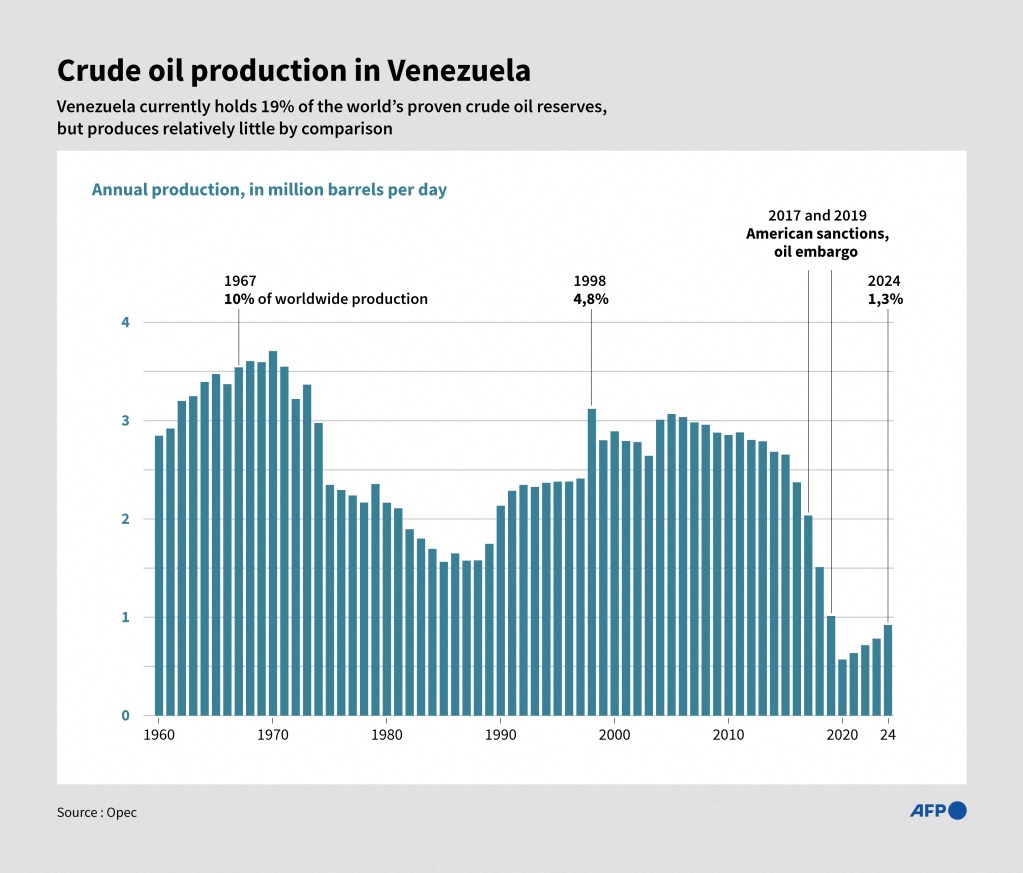
Positive momentum in Venezuela
Even if Venezuelan supplies won’t help solve the global energy crisis, the country’s oil and gas industry is making notable gains quite quickly, analysts said.
And the growth of oil and gas in South America overall eventually can help the world reduce its reliance on Middle Eastern supplies, Monaldi said.
“In the very long term, it does derisk the oil markets if Venezuela produces much more,” he said, citing other key oil-producing countries. “Venezuela and Brazil and Guyana and Argentina are far away from these geopolitical conflicts.”
Venezuela is still home to the world’s largest proven oil reserves on paper. But the dilapidated industry peaked decades ago with an output of nearly 4 million barrels and needs well more than $100 billion in investments to even approach its past glory. Doing so would take several years to bring to fruition.
“Production is moving up, but it’s moving up gradually. There isn’t a secret pool of oil that Venezuela can tap into and immediately unlock hundreds of thousands of barrels a day,” Ferreira said. “The potential is there, but this is years’ worth of work.”
Momentum is building with Venezuela passing new laws to open the industry to outside investment. Chevron, which was the only U.S. producer that didn’t abandon the country during periods of asset expropriation, has agreed to expand its largest project in Venezuela’s oil-rich Orinoco Belt.
Also, Shell plans to develop gassier regions of Venezuela—both onshore and offshore, which would be closer to Trinidad.
Exxon Mobil plans to send a small team to Venezuela to assess the situation, although CEO Darren Woods drew President Donald Trump’s ire in January when was said Venezuela was currently “uninvestable” until major reforms were enacted.
The ongoing political transition with acting Venezuelan president Delcy Rodriguez is going about as well as it possible could thus far, Ferreira said. Changes should continue and eventually usher in elections.
“Folks that have been to Caracas say it’s open for business,” he said.
This story was originally featured on Fortune.com
This post was originally published here

Boards protected CEO bonuses as tariffs threatened business. Now, as Iran disrupts trade, CEOs may get more protection
When Apple CEO Tim Cook and his executive team received their performance targets for fiscal 2025, the board set a modest bar for bonus payouts. The new targets, including sales and operating profit, did not require Apple’s leadership to expand the business—the board set goals at the same level or below the prior year’s results, citing “trade policy” and an “uncertain macroeconomic outlook.”
At the end of the fiscal year, Cook and his team delivered lights-out, extraordinary results anyway, not only blowing past the lackluster bar set by the board, but handily surpassing the prior year’s results, with net sales increasing 6% and operating income increasing 8%.
Cook collected the maximum bonus payout of $12 million—just as he would have, had the company not performed as well, thanks to the safety net offered by Apple’s board.
Apple’s board is hardly unique. An exclusive analysis of pay data from 50 public companies by Compensation Advisory Partners (CAP), published Friday, reveals how corporate boards across America use a range of techniques—more-conservative targets, widened performance curves, and flattened payout ranges—to protect CEO compensation from uncertainties like the chaos of President Trump’s Liberation Day tariffs in 2025. According to CAP’s findings, total pay for CEOs in 2025 rose 8% year-over-year, with annual bonus payouts up 4%. Meanwhile, median financial performance was generally flat to up, with median revenue growing 2.9% and earnings per share down slightly at negative 1.6%, the analysis found. Even among companies with the weakest payouts due to underperformance, CEOs still collected 87% of their target bonuses, up from 77% the year before. The share of companies that landed in the lowest bonus payout tier was down, from 15% in 2024 to 9% in 2025.
Now, with the Iran conflict erupting weeks after most companies finalized their 2026 incentive goals—and global stock markets down roughly $3.5 trillion—some market observers expect that boards will soon be holding the same conversations again.
“They’re not necessarily making decisions today, but they’re just having the conversation about the approaches they might consider at year end, and let’s see how the year plays out,” said Joanna Czyzewski, a co-author of the study and principal at CAP.
To be sure, some of the change among the weakest-performing companies in the CAP report is because of improving results. “Some of it is definitely business improvement,” noted Lauren Peek, a partner at CAP and co-author of the study. But, she said, there are a lot of ways companies can soften the blow of uncertainty and curveballs like tariffs.
“You might have growth in your targets, you might have widened the curve and the wings,” Peek said. “It’s—for lack of better words—easier to get into the money, because at the end of the day, these executives are trying to do the right thing.”
The Escape Hatch
Among the early-filer companies in the CAP study, their fiscal years end between August and October 2025. That means Trump hadn’t even won the election when they were budgeting and planning for the 2025 fiscal year. Company proxy statements, which include compensation details, provide examples as to how some companies dealt with impending tariffs which later came to fruition on April 2, 2025, before the Supreme Court struck them down last month. (Trump has since imposed a global 15% tariff.)
At personal computer and printing giant HP, the company didn’t wait for tariffs to hit before crafting a plan. In January 2025, at the same time the board locked in HP’s fiscal 2025 performance goals, the HR and compensation committee approved an explicit tariff carveout. Then, when it came time to calculate bonuses for CEO Enrique Lores and his executive team at year-end, the committee stripped out the “net impact of tariff-related costs” from both annual and long-term incentive calculations, the company disclosed in its proxy statement. HP said the adjustments “reflect the net impact of the tariffs after management’s actions, including significant and swift movement of the company’s manufacturing and supply chain along with additional cost reductions and price increases.” That included shifting more than 30% of HP’s manufacturing from China to Southeast Asia and Mexico.
Ultimately Lores and the executive team earned 67.3% of their target bonus on average. HP described the tariff hit as having “unexpected magnitude” on its financial results and annual and long-term incentive plan calculations after the relevant goals had been set, suggesting that the bonus payouts would have been lower had the tariff impact not been excluded. The compensation committee also used discretion to bring down the executive payouts in line with the broader employee pool, a small acknowledgment of the optics of shielding C-suite executives while the broader workforce takes it on the chin. Lores collected $1.9 million and then stepped down from HP in February and joined PayPal as its new CEO this month.
HP did not respond to a request for comment.
Peek, who spoke generally and not about any specific companies, acknowledged the reputational pressure some of these decisions can carry.
“If the company is making these adjustments and giving executives a big payout at the same time as significant layoffs, I’m not sure shareholders would formally comment on that, but the overall optics would be seen in the press,” said Peek.
Hedging the Goals
Other companies handled uncertainty earlier, back at the goal-setting stage before a carveout would be on the table. Unlike HP, Apple didn’t strip out any costs after the fact, the board made goals conservative at the start.
For the past three fiscal years, Apple’s compensation committee has set at least one bonus target at or below the prior year’s actual results. Bonuses pay out at Apple based on hitting threshold, target, and maximum performance. Hitting threshold earns 50% of the target payout for that measure, hitting the target gets them 100%, and clearing the top rung, the maximum, means executives can double their bonus opportunity.
For fiscal 2025, Apple’s people and compensation committee appear to have faced a conundrum. Apple’s fiscal year begins in late September and the committee sets goals prior to the start of the fiscal year. President Trump was campaigning against Vice President Kamala Harris and his agenda included massive new tariffs on imports that would hit Apple’s China-based manufacturing significantly. Trump’s tariff rollout wouldn’t happen for roughly another six or seven months when the committee was setting goals. In hashing them out, the committee considered financial results from prior years “as a reference point” but chose goals for 2025 that would “reflect strong financial results commensurate with the projected business and economic conditions for the current fiscal year,” the report in Apple’s 2026 proxy statement reads.
The fiscal 2024 results were key for determining the goals for fiscal 2025.
In fiscal 2024—which saw Apple launch its iPhone 16 and $3,499 Vision Pro virtual reality headset—Apple delivered record net sales of $391 billion and operating income results of $123.2 billion. The results were 2% and 8% year-over-year increases, respectively.
For fiscal 2025, the board set the net sales target at $391 billion—the exact same as the prior year’s actual result. The operating income target was set at $118.5 billion, some $4.7 billion lower than the prior year’s actual result. In doing so, the proxy points to “trade policies and impacts and foreign currency” fluctuations as the rationale for the goal-setting but the committee doesn’t specify a certain anticipated hit to profit margins.
Ultimately, Cook and Apple delivered extraordinary results so strong the structural safety net constructed for the year may have been moot. Net sales in fiscal 2025 swelled to $416.2 billion and operating income was $133.1 billion—bashing past the maximum performance thresholds by more than $14 billion in net sales and $9 billion in operating income. Cook and the other named executive officers took home maximum payouts on their annual bonuses, which for Cook equated to $12 million, according to Apple’s disclosures.
The same broad pattern also appeared in fiscal years 2023 and 2024 when Apple set at least one target at or below the prior year’s actual results. During fiscal years 2021 and 2022, the targets were both set above the prior year’s actual results.
Apple did not respond to requests for comment.
In the proxy, the compensation committee explained the reasons behind the approach, and wrote that it made the decisions after considering business scenarios “and once again focusing on the underlying business performance rather than the absolute growth rates.”
Generally, companies don’t lower the bar in goal setting arbitrarily, they align targets with their financial budgets to measure performance against what they reasonably anticipate, Czyzewski noted. In setting comp-related goals, companies take into consideration their strategic growth for the year, including growth expectations, and headwinds and tailwinds in the industry and broader economy when they set budgets, added Peek. Target incentive goals are usually set at budget and should “be achievable but stretch,” she said.
“If the goals are too easy, then executive pay may not align with the shareholder experience,” Peek said. “If the goals are too difficult or aspirational, then the award may be demotivating if it is believed that all or most of the award cannot be achieved.”
That’s why board committees have conversations at the beginning of the year about financial metric definitions and possible adjustments, Czyzewski said.
“The intent when goals are set is to ‘get it right’ and account for what is both in and out of the executive team’s control—and set realistic goals,” she said. “But when the unexpected happens, it is good to have a plan and parameters for evaluating results and ensuring pay aligns with performance.”
That way, the conversations at the end of the year will be less about pure board discretion and more about evaluating outcomes within the performance framework.
“If companies are setting targets with their budget,” Czyzewski said, “you’re still aligning them to what finance actually thinks is achievable.”
Taking the Hit
In contrast, not every company reached for tools in the kit, although few businesses have the size and risk profile of Apple.
TransDigm, which produces pumps, valves, and other parts for aircraft, explicitly told investors that it had the authority to ratchet up payouts by 20%, but didn’t do it in fiscal 2025. The company beat its target goals but did not clear the maximum. CEO Kevin Stein collected $2.6 million.
Similarly, carbon black manufacturer Cabot told investors it “retains the discretion” to adjust payments, but declined to do it in fiscal 2025. CEO Sean Keohane collected $1.4 million after hitting 90% of target against performance and 130% of target for his individual performance, resulting in a 102% payout.
Executives at lawn and grounds equipment manufacturer Toro landed between threshold and target for its goals, resulting in a payout of 81.6% for CEO, which translated to $1.3 million for chairman and CEO Richard Olson.
The Iran Choice
Most companies with a calendar fiscal year approved their 2026 incentive goals in February or the first week of March. Iran erupted days later.
“So even the latest of those probably had those goals approved about two or three days before the news broke about the Iran situation,” said Czyzewski, referring to the fact that calendar year companies did not have an opportunity incorporate the conflict into their goal setting process. “It’s impacting everyone this year, but no one knows how much.”
Whether boards respond the same way they did to tariffs depends heavily on how the conflict unfolds, said Czyzewski. Companies are likely to look for precedent, added Peek— including how boards responded to the Iraq invasion in 2003.
“It would be looking into a crystal ball that we just do not know, because we don’t know how long this conflict is going to last,” she said.
And, of course, tariffs are still on the table too.
“If you did not make a carve-out last year, you’re probably not going to make one this year,” said Peek. “But if you did—and you still feel like tariffs are going to significantly impact you—you might still consider using that lever.”
The Compensation Advisory Partners analysis published on Friday covered 50 public companies with revenues ranging from $1.1 billion to $416 billion.
This story was originally featured on Fortune.com
This post was originally published here

S&P 500 will return just 3% a year for the next decade, top strategist warns
Rob Arnott warns that shareholders in U.S. big-caps will make one-fifth the returns over the next 10 years they pocketed since 2016, and those meager gains will barely edge the consumer price index. You may want to take a cold shower, or a shot of tequila, before you hear the convincing logic behind his dour prediction.
Arnott is the founder and chairman of Research Affiliates, a firm that oversees strategies for nearly $200 billion index funds and ETFs for the likes of Charles Schwab and Invesco. He served as editor-in-chief of the Financial Analysts Journal in the early 2000s, and today comanages the Pimco All Asset and All Asset All Authority funds. He’s also the father of “fundamental indexing,” the practice of weighting stocks by their size in the economy rather than chasing expensive “winners” by ranking according to market cap. At RA, Arnott has bred a think tank in its own right featuring sundry PhDs who apply advanced statistical research to forging benchmark-beating vehicles.
So I check frequently with Arnott to get his take on what those buying into the S&P 500, or baskets of big-cap U.S. stocks, are likely to reap in the years ahead. It’s an especially good time to get a sober reading. The S&P has dropped 4.4% from its record close in January, and the Iran war and jump in oil prices and Treasury yields following the attack are raising a new cloud of pessimism.
An advantage to consulting the sage: Though his predictions are based on a sophisticated analysis of past trends, the future math is basic. In our conversation over Zoom, Arnott stressed that returns have three sources: dividends, growth in earnings (that lift payouts in tandem), and expansion in valuations or P/Es. The last 10 years, he avows, were something of a seldom seen golden age for this trio, but especially profits and multiples. “Overall, U.S. large-caps [as reflected in the S&P 500] produced overall gains of 15.5% a year, an extraordinary number,” says Arnott.
The rub: The fantastic profit and P/E performance over the past 10 years virtually guarantees a rough road ahead
Arnott emphasizes the gap between the historic trends in both profits and valuations, and the S&P’s extraordinary outperformance from mid-March of 2016 through today. Earnings per share waxed at over 11% annually, almost twice their long-term average. The S&P multiple ramped by around one-fifth from the low-20s to roughly 27.5, the current number according to FactSet. “In effect, the big returns were front-loaded by that highly unusual scenario,” says Arnott.
But the high times also foreshadowed today’s downside. Starting at these heights in both metrics, he adds, “has the effect of reducing future returns.” The Wall Street market strategists’ view that anything resembling the last decade’s results are repeatable amounts to a fantasy, declares Arnott. “P/Es don’t always go up without limit,” he says. “In no sensible world is that plausible.” Arnott contends that it’s equally illogical to argue that EPS can keep advancing five points or so faster than their long-term average. As everyone from Warren Buffett to Milton Friedman has pointed out, profits can’t outgrow the economy forever, and after they absorb an unusually large portion of national income, shrink back toward the norm going forward.
Here’s the picture Arnott foresees over the next 10 years. Because stocks are so pricey, the dividend yield now sits at a mere 1.2%, way below its contribution in most periods. (The stats are available on RA’s website under “Asset Allocation Interactive.”) As for profits and P/Es, he cites one of the laws governing markets: reversion to the mean. In the RA scenario, earnings will wax at 5.3%, more or less matching their traditional trajectory, less than half the 2016 to 2026 pace. Add those two components, and you get a “plus” of 6.4% a year. That already sounds mediocre. But the big hit’s a shrinkage in multiples that severely reverses the potent upward push that helped generate those 15.5% returns since 2016. Arnott predicts that valuations will shrink by 3.4 points a year, or 40% by 2036. That pressure would reduce today’s P/E of 27.5 to around 17. Although that sounds extremely slender versus what we’ve seen in recent years, it’s more or less the multiple in the boom years preceding the Global Financial Crisis, and close to the 120-year mean.
All told, the overall S&P 500 should then deliver total annual returns of 3.1% (6.5% from dividends and growth, minus 3.4% from a decline in the P/E). That’s one-fifth the mark for the past decade, and exactly one point better than projected inflation of 2.4%. By 2036, the S&P would stand at 8073, just 21% above its reading of 6672 at the close on March 12.
To gauge just how hugely this outlook diverges from the conventional wisdom, consider that the Wall Street consensus calls for the S&P to end this year at between 7600 and 7650, or less than 6% short of where RA expects the index to finish 10 years hence.
Arnott tags the Magnificent Seven and other high-fliers for pulling the big returns forward, and advises to shun them
Arnott also highlights a significant difference in prospects between the S&P value and growth contingents. The RA model predicts 4% annual gains in the former and a shockingly puny 1.4% in the latter, meaning the recent champs’ returns will lag inflation by one percentage point. Much of the drag, he says, arises from the big valuations, on top of earnings so gigantic they’ll be hard to grow big from here. A major reason we saw that double-digit EPS boom rampage, he avows, “is the stupendous growth in the Mag Seven.” Now, he adds, “Valuations for growth stocks are very stretched, driven by the Mag Seven. The market’s saying it’s a foregone conclusion they’ll grow earnings like crazy. But to beat the market, they’d need to grow earnings even faster than those lofty expectations.”
Arnott’s especially skeptical of the premium prices awarded by investors expecting fantastic profits from AI. “The companies making money from AI are the ones selling the tools,” he says. “They’re now lending to their own customers so that those customers can keep buying their stuff. And their customers are having a hard time monetizing that equipment.” Arnott related that he’d just used Perplexity to perform an in-depth study of how various tax increases being proposed would affect marginal rates at different income levels, and paid nothing for the service. “These AI providers will figure out how to make money,” he says. “But not as fast as the expectations that are built into their stock prices. It will be a slow build over a long period, meaning returns on these stocks will be much lower than the market’s baked in.”
Here’s his advice: “If you’ve owned the Mag Seven, say ‘Thank you very much, Mag Seven,’ and get out and don’t ride them back down.” Arnott believes that returns will be much bigger outside the U.S. than stateside. For example, RA posits that developed nation, non-U.S. value stocks will provide 7.4% returns going forward, more than twice the expectation from the S&P 500, and that emerging-markets value shares will do even better at 7.6%. Arnott concludes that the best strategy is to “first, own no U.S. shares or at least lighten up, and second, own no growth stocks anywhere.”
Versus what we’re hearing from Wall Street, and the S&P’s spectacular showing over the past decade, Arnott’s perception is highly contrarian. But the math’s on his side. And when the math contradicts belief and momentum, go with the math.
This story was originally featured on Fortune.com
This post was originally published here

Last protester in detention after Trump’s campus crackdown has been released
Leqaa Kordia, a 33-year-old from the West Bank who has lived in New Jersey since 2016, had been held in a U.S. immigration detention center in Texas since last March.
(Image credit: Tony Gutierrez)

This post was originally published here
Tuesday briefing: How the conflict in Iran shattered the Gulf state image of peace and luxury
In today’s newsletter: As drones and missiles hit Dubai, Doha and other sites across the Gulf, Hannah Ellis Peterson explains what happens next for the region
Morning everyone, I’m Patrick Greenfield – you may recognise the name from my environment reporting over the years (or perhaps you read my piece about the possible rebirth of a long-extinct 12ft bird). I’ll be joining you on First Edition for the next few months, where I will inevitably be turning my attention to some rather more worrisome news than the Jurassic Park-adjacent ambitions of a US startup.
On that note: no Gulf state wanted war with Iran. But, as fighting in the Middle East enters its third week, the region finds itself on the frontline of an increasingly intractable conflict. After the US-Israeli attack on Iran in late February, drones and missiles have showered the UAE, Qatar, Kuwait, Bahrain and Saudi Arabia – bringing the region’s oil and gas industries to a near standstill, and prompting an exodus of tourists and expats.
UK news | Keir Starmer has said the UK will not be drawn into the wider war in the Middle East, after Donald Trump called for allies to send warships to the strait of Hormuz to help unblock global oil supplies from the region. Starmer also announced that households reliant on heating oil to warm their homes would receive £53m of government support to help with their bills.
Health | A sixth-form student at Queen Elizabeth’s grammar school in Faversham has been confirmed as the second person to have died after an outbreak of meningitis in Kent.
Environment | Realtime pollution alerts are urgently needed across Windermere, campaigners have said, as the mother of a seven-year-old boy who kayaked on the lake described how he nearly died after contracting a dangerous strain of E coli from contaminated water.
Media | The BBC has asked a US court to throw out Donald Trump’s $10bn (£7.5bn) lawsuit over the way a documentary edited one of his speeches, warning that proceeding with the case would have a “chilling effect” on its reporting on the president.
Energy | Belgium’s prime minister, Bart De Wever, has been criticised for calling for the normalisation of relations with Russia to re-establish cheap energy supplies.
This post was originally published here
Central bank increases cash rate amid global energy shock – as it happened
This blog is now closed
-
Get our breaking news email, free app or daily news podcast
Two men charged with murder after man fatally shot in Sydney unit
Two men have been charged with murder after a gangland-linked shooting at a suburban apartment complex that left one man dead and another injured, AAP reports.
This post was originally published here


BNP bets European private credit boom can defy US downturn
This post was originally published here
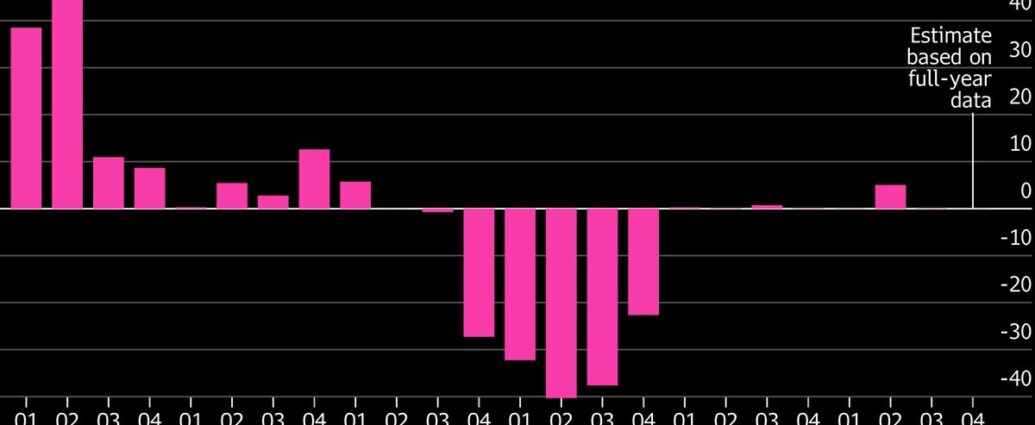


Oil producers: buy the peace, not the war
This post was originally published here

Dogecoin Pops 9% In A Week As Trader Spotlights 470 Million DOGE Purchase By Whales: Shiba-Themed Memecoin Tweets, ‘Not A Phase’
Strong whale buying could be powering Dogecoin (CRYPTO: DOGE) as the memecoin rallied over 9% in a week.
Whale Accumulation Alongside DOGE’s Rally
Widely followed cryptocurrency analyst Ali Martinez highlighted in an X post late Sunday that as many as 470 million DOGE tokens were snapped up by large investors over the last 72 hours. The accumulation totaled roughly $45 million at prevailing prices.
Big Moves In Spot ETFs, Derivatives
Exchange-traded funds echoed the bullish trend, with the Grayscale Dogecoin Trust ETF (NYSE:GDOG), 21Shares Dogecoin ETF (NASDAQ:TDOG), and …
Musk says taxing every billionaire at 100% would barely make a dent in the national debt. Bernie says tax them 5% and you’re $3,000 richer
The richest person in the world and the most well-known person leading the cause against creating more people like him have many differing views on taxing the ultrawealthy.
But now, Elon Musk and Sen. Bernie Sanders, two men on opposite ends of the ideological spectrum, are using the same math to make opposite arguments for how much billionaires should be taxed, and how that money should be allocated.
In Musk’s view, collecting every cent billionaires rake in pales in comparison to federal debt, which is now hurling towards $39 trillion and counting.
“Even if you tax every billionaire in America at 100%, it barely makes a dent in the national debt,” Musk wrote on X in 2023. “In the end, the government will be forced to tax everyone to pay the debt.”
Sanders agrees—but he’s not looking to tax billionaires for all their worth and he’s not trying to eliminate the debt. Instead, he wants enough to give nearly three-quarters of the nation a nice check, offset cuts to federal health programs, and fund social services.
938 people stand in the way of you receiving $3,000 checks
Sanders, along with Rep. Ro Khanna, introduced a billionaire tax earlier this month and suggested there are only 938 billionaires in the country, who, combined, hold a net worth of $8.2 trillion.
Simple math would prove Musk’s logic correct: $8.2 trillion will barely plug a fifth of the national debt.
But that’s not what Sanders and Khanna are suggesting: the two put forward the “Make Billionaires Pay Their Fair Share Act,” which proposed an annual 5% wealth tax on individuals with a net worth of $1 billion or more.
Sanders estimates the bill would generate $4.4 trillion over its first decade. And in the first year, that revenue would fund a one-time $3,000 check for every American in a lower- or middle-income household, defined as those earning $150,000 or less annually, or roughly 74% of the nation.
In the years that follow, Sanders believes the revenue from the tax would reverse the $1.1 trillion in Medicaid and Affordable Care Act cuts, establish a $60,000 minimum salary for public school teachers, and cap childcare payments at 7% of household income for working parents.
“At a time of unprecedented income and wealth inequality,” Sanders said in the press release, “this legislation demands that the billionaire class in America finally pay their fair share of taxes so that we can create an economy that works for all of us, not just the 1%.”
The debt as it stands
The U.S. is paying nearly $1 trillion per year just to service the debt—a figure that has nearly tripled over five years and has surpassed what the government spends on Medicare. The Committee for a Responsible Federal Budget projects interest payments will exceed $1.5 trillion by 2032. America is, at an accelerating pace, borrowing money to pay interest on money it already borrowed.
Musk and Sanders are making two different arguments. Musk’s framing casts a billionaire tax as a debt solution, and by that measure, it fails. Sanders’ framing casts taxing billionaires as a redistribution mechanism, a way to put money back in the pockets of working Americans and fund social services. By that measure, a 5% annual wealth tax generating $4.4 trillion over a decade is significant.
Musk has warned more broadly that America is on a path to going bankrupt “1000%” if spending isn’t curtailed. The debt crisis is structural, rooted in decades of spending that outpaces revenue, and no single tax can undo that. The national debt has grown by more than $11 trillion over the last five years alone.
But Sanders’ counter is equally pointed: the debt crisis and the affordability crisis are not the same problem, and solving one doesn’t require ignoring the other. A $3,000 check won’t fix the national debt. But for a middle-class family barely keeping up with inflation, it may fix something more immediate.
This story was originally featured on Fortune.com
This post was originally published here
Women feel coerced during maternity care in England, charity says
Exclusive: Birthrights report says women are being told they are ‘not allowed’ and are being denied genuine choice
Women feel put under pressure to have medical procedures such as caesareans during their maternity care, according to a report.
The charity Birthrights collated the experiences of 300 people in England who said they had felt or witnessed coercion within a maternity setting.
This post was originally published here
UK must learn lessons from AI race and retain its quantum computing talent, says minister
Liz Kendall announces £1bn funding to help design large-scale quantum computers for scientists, researchers, public sector and business
The UK will not let quantum computing talent slip through its fingers and must learn lessons from US dominance of the AI race, the technology secretary has said, as the government announced a £1bn quantum funding pledge.
Liz Kendall said the government hoped to retain homegrown quantum startups, engineers and researchers rather than lose them to competing countries, with the US stealing a march on its western rivals in AI.
This post was originally published here

Which State Has the Highest Minimum Wage and Which States Will Raise Pay in the New Year
This post was originally published here
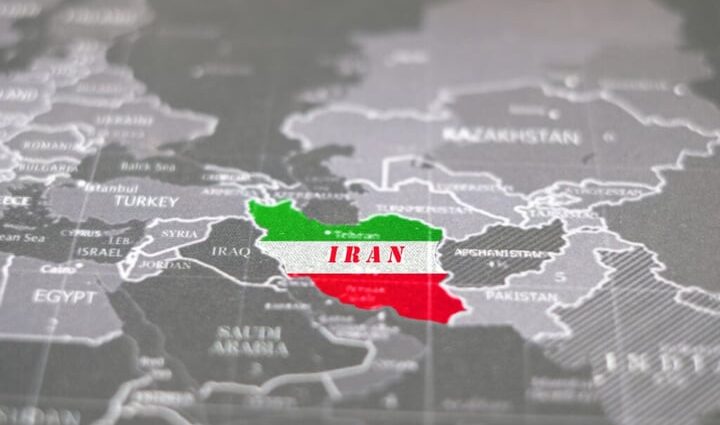
Will Iran Lose Control Of Kharg Island? Here’s What Prediction Market Is Saying
The Kharg Island, a strategically important terminal situated 15 miles from Iran’s coast, has become a part of the Iran war, with Trump reportedly considering its capture.
The Kharg Island handles nearly 90% of Iran’s crude oil exports.
Trump Warns Of More Strikes
President Donald Trump has warned of more strikes on the Kharg Island, days after saying that the U.S. “totally obliterated” military targets on Kharg and warned of tougher action if shipping through the Strait of Hormuz is disrupted.
Trump said U.S. Central Command hit military targets at Kharg Island, while leaving oil infrastructure intact. He warned that this could change if Iran tries to obstruct shipping through the strait.
Here’s What Prediction Market Is Saying
Amid the strong statements from Trump, …
This post was originally published here


‘Removing flags doesn’t stop racism’: regional NSW council abandons plan to stop flying Aboriginal flag
The Federation Council in Corowa received 266 submissions from ratepayers opposed to a plan to remove Indigenous flags, and only 44 in favour
-
Get our breaking news email, free app or daily news podcast
A regional New South Wales council has abandoned a controversial plan to ban the display of Aboriginal and Torres Strait Islander flags, after receiving almost 700 submissions criticising the idea.
But because of council procedure, the flags were removed anyway – at least temporarily.
This post was originally published here

Pauline Hanson fails to properly declare more free flights from Gina Rinehart
Exclusive: One Nation leader updates register after questions from the Guardian to include multiple flights courtesy of Rinehart’s company
-
Get our breaking news email, free app or daily news podcast
One Nation senator Pauline Hanson has failed to properly declare more free flights gifted from mining billionaire Gina Rinehart – this time through her agricultural company S Kidman and Co.
Hanson updated her register on Tuesday to include multiple flights taken last year courtesy of Rinehart’s company following questions sent from Guardian Australia on Monday regarding a flight from Tamworth to Brisbane on 8 December last year.
This post was originally published here


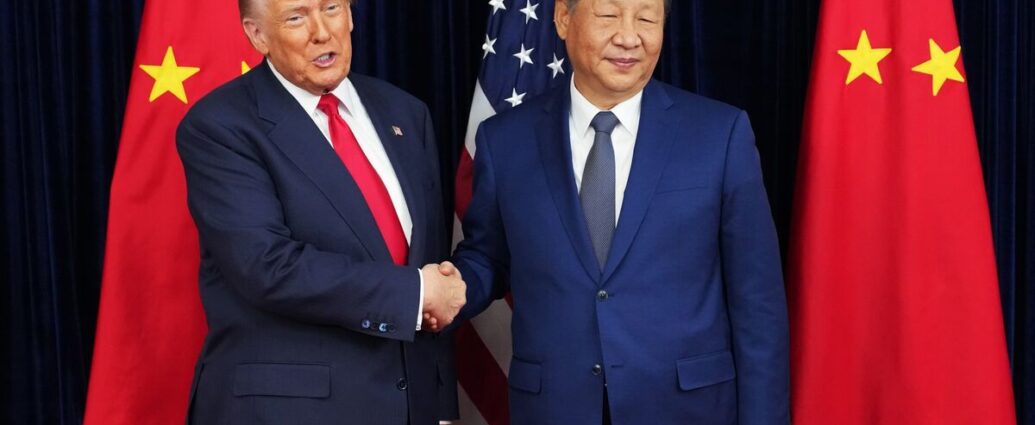
‘National disgrace’: pothole repair backlog hits record £18.6bn in England and Wales
Only half the road network is in good condition despite 1.9m repairs last year, says industry body
A losing battle with potholes has now seen the backlog of repairs across England and Wales reach a record £18.6bn, according to an annual industry estimate, despite councils filling in about 1.9m holes last year.
The “national disgrace” of dangerously pockmarked local roads has been exacerbated by a notably wet winter, with only half of the network now reported to be in good condition.
This post was originally published here
‘We are the family’: low-budget thriller highlights Hungary’s election tension
Audiences draw parallels between the abduction plot of Feels Like Home and Viktor Orbán’s 16-year reign
It’s seven o’clock on a Tuesday night, and one of the most popular movie theatres in Budapest is full, not an empty seat in sight. The audience is not here for a Hollywood blockbuster, but a Hungarian film that barely had the budget to be made.
Feels Like Home (Itt Érzem Magam Otthon) has captured moviegoers not only with its striking visuals but also with its timing – its release coming before Hungary’s pivotal parliamentary elections on 12 April.
This post was originally published here

Naval escorts will not guarantee safe passage through Strait of Hormuz, says IMO chief
This post was originally published here

Who is winning the Middle East war?
This post was originally published here

Blue Owl tipped UK mortgage lender into insolvency after uncovering ‘irregularities’
This post was originally published here

Tehran prepares for a Persian new year under air assault
This post was originally published here

How MBS’s bet on Iran backfired
This post was originally published here

From Vienna’s rooftops, the Kremlin is listening in
This post was originally published here

Queensland government backflips on plan to contest all native title claims
The policy reversal came after a federal court judge asked the government to explain why it had stopped negotiating with Cape York traditional owners
-
Get our breaking news email, free app or daily news podcast
The Queensland government has made an 11th hour backflip on a secret policy to contest every new native title claim in court, on the eve of being hauled before the federal court to explain themselves.
But the Liberal National party’s position appears to still be unclear after Queensland natural resources minister, Dale Last, doubled down on contesting native title in a statement to Guardian Australia on Tuesday.
This post was originally published here
Tesla Rivals BYD, Geely To Adopt Nvidia’s Self-Driving Tech—Jensen Huang Says ‘Everything That Moves’ Will Be Autonomous
Nvidia Corp. (NASDAQ:NVDA) has revealed that Chinese automakers like BYD Co. Ltd. (OTC:BYDDY) (OTC:BYDDF) and Geely Automobile Holdings Ltd. (OTC:GELHY) (OTC:GELYF) are among the companies incorporating its technology into their self-driving pursuits.
Companies To Adopt Drive Hyperion
In an official statement released on Monday following the GPU Technology Conference 2026, the chipmaker announced that, in addition to BYD and Geely, Japanese automakers Isuzu and Nissan will also incorporate Nvidia’s technology. Nvidia said in the statement that the automakers were “developing next-generation level 4 AV programs” based on the company’s “DRIVE Hyperion production-ready compute and sensor architecture.”
Nvidia Alpamayo 1.5
Besides the Drive Hyperion, Nvidia also unveiled an updated iteration of the Alpamayo technology, which has been touted as a “ChatGPT moment” for physical AI and AVs by …
This post was originally published here

Eightco Stock Is Trending Overnight After Popping 34% On Monday — What’s Going On With With Ethereum Hodler ORBS?
Eightco Holdings Inc. (NASDAQ:ORBS) shares rose 1.58% in after-hours trading on Monday, extending a sharp intraday rally. The stock is also trending overnight.
What’s Possibly Driving ORBS?
This spike coincided with a rise in Ethereum’s (CRYPTO: ETH), which forms 19% of Eightco’s $134.56 million cryptocurrency treasury, according to CoinGecko.
The company secured $125 million in institutional commitments last week, including $75 million from BitMine Immersion Technologies Inc.

Australia raises interest rates in big week for global central banks
This post was originally published here


Can Central Bankers Unpoke the Iran Bear?
Chris Bowen declares rush on jerry cans ‘un-Australian’ as he urges end to panic buying of petrol
Energy minister says country’s fuel supply has yet to be affected by war, following meeting with suppliers and retailers
-
Get our breaking news email, free app or daily news podcast
Chris Bowen has insisted the country’s fuel supply is yet to be affected by the war in the Middle East while criticising a rush to buy jerry cans to fill up with petrol as “un-Australian”.
The energy minister made the comments after an emergency meeting with major fuel suppliers and retailers, that was convened by the Australian Competition and Consumer Commission (ACCC) to demand explanations for the recent surge in petrol prices.
This post was originally published here




E. coli outbreak linked to raw cheddar cheese allegedly sickens 7 people across multiple states
Federal regulators announced Sunday that an E. coli outbreak that infected at least seven people in three states have been traced to a raw cheddar cheese product.
Many of the affected individuals are children, ages 3 or younger, across California, Texas and Florida, according to the U.S. Food and Drug Administration (FDA). Of the seven reported cases, five were in California, one in Florida and another in Texas.
“The FDA and CDC, in collaboration with state and local partners, are investigating a multistate outbreak of E. coli O157:H7 infections,” the FDA said. “As of March 14, 2026, a total of 7 confirmed infections have been reported from three states.”
Officials said investigators have traced the outbreak to California producer RAW FARM, a family-owned company recognized as the nation’s largest producer of raw dairy products.
RECALL EXPANDS TO NEARLY 1M FRIGIDAIRE MINIFRIDGES SOLD AT TARGET OVER FIRE HAZARDS
The FDA noted that RAW FARM declined to issue a voluntary recall of its shredded raw cheddar cheese product despite the agency’s recommendation.
In response, the dairy farm denied the allegations on its social media page Monday, claiming that the health agency made “false allegations” against the brand and that no tests have confirmed a positive match for the E. coli strain.
“We disagree 100% with the allegations made by the FDA and CDC,” the company said. “All of our products have been CONFIRMED to be negative for all harmful bacteria, including Ecoli 0157-H7. FDA has found NO Raw Farm products to be tested positive for Ecoli in the marketplace.”
“Inaccurate statements made by the FDA and CDC linking our brand to an outbreak is egregious and extreme harassment towards our brand,” it added.
E. COLI OUTBREAK IN FOUR STATES SPARKS RECALL IN RAW MILK PRODUCT: CDC
The FDA confirmed that no RAW FARM–brand cheddar cheese products have yet tested positive for E. coli, but said state partners have begun collecting product samples.
They added that investigators were able to track the infections using epidemiological data, a scientific method that analyzes the distribution, patterns, and causes of health-related events.
“Epidemiologic evidence indicates that RAW FARM-brand raw cheddar cheese products made by RAW FARM, LLC are the likely source of this outbreak,” the agency said.
Of the three individuals who were interviewed, all reported eating RAW FARM–brand cheese, federal regulators said, adding that local officials are working to gather additional information for the other four cases.
At least two patients have been hospitalized, but no deaths have been reported in the outbreak, health officials added.
GET FOX BUSINESS ON THE GO BY CLICKING HERE
Despite the company’s denials, the FDA released a notice urging consumers and retailers to exercise caution with the cheese and to sanitize any surfaces to prevent cross-contamination.
The E. coli strain involved can cause serious, potentially life-threatening conditions, including severe kidney failure, stomach cramps, fever, nausea, vomiting, and bloody diarrhea, the FDA said. Illness typically begins anywhere from a few days up to nine days after consuming contaminated food.
FOX Business reached out to RAW FARM for additional comment.
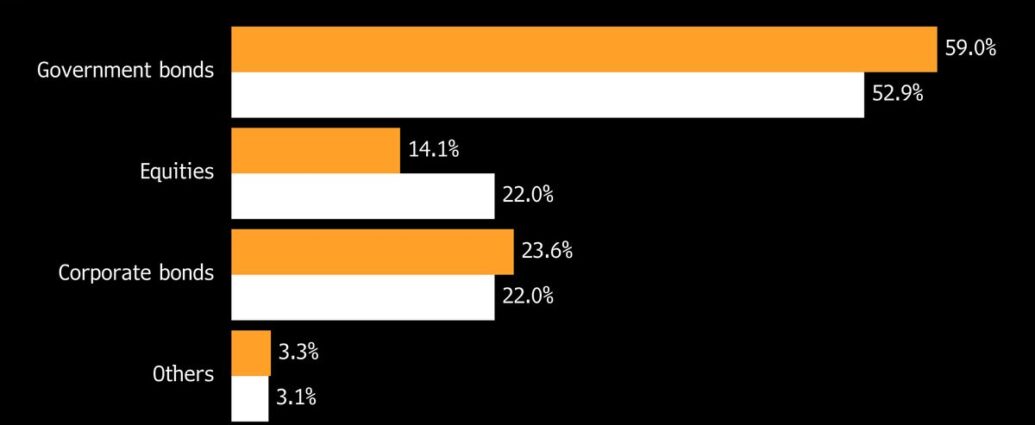



UAE reopens airspace after Iran attack – as it happened
This blog is closed
Continued from previous post:
Japan’s prime minister, Sanae Takaichi, has said she has no immediate plans to send her country’s maritime self-defence forces to help protect tanker traffic in the strait of Homuz.
We have not made any decisions whatsoever about dispatching escort ships. We are continuing to examine what Japan can do independently and what can be done within the legal framework.
I would like to engage in solid discussions based on Japan’s views and position regarding the need for early de-escalation.
This post was originally published here


Tom Lee Highlights Ethereum Bottom Signal From Trader Known For ‘Patience And Discipline’ As ETH Surges Past Key Support
Bitmine Immersion Technologies Inc. (NYSE:BMNR) Chair Tom Lee flagged on Monday veteran trader Peter Brandt’s Ethereum (CRYPTO: ETH) analysis, hinting at the end of the second-largest cryptocurrency’s downtrend.
A Short-Term Bottom For ETH?
Brandt, a technical analyst with nearly 50 years of experience, spotted Ethereum forming a short-term bottom at a “historical” long-term support level, around the $1,800–$2,200 area.
Quoting the analysis, Lee said, “Peter is known for his patience and discipline. To me, its signal that he is highlighting ETH.”
What Are The Signals To Watch?
Ali Martinez, another well-known cryptocurrency trader and commentator, had something similar to say.
“Ethereum just signaled the end …
Will the strait of Hormuz torpedo Trump’s war? – podcast
Events in the narrow waterway are causing chaos around the globe. Jillian Ambrose explains why
The strait of Hormuz, a narrow stretch of water at the mouth of the Gulf, is the world’s petrol pump, a geographical bottleneck through which 20% of the world’s oil normally flows.
Since the US and Israel launched their war on Iran, however, Tehran has threatened to close the strait and cause mayhem. “They’ve not formally, officially shut it down, but they have said that they will set ablaze any tanker that tries to move through. For any shipping owner, for any insurer, that is as good as closed,” explains the Guardian’s energy correspondent, Jillian Ambrose.
This post was originally published here
Let the games begin: Victorian Liberals fail at sport but surprise with teamwork in viral video
Jess Wilson’s party has made a splash on social media but will they work together in the state election race?
-
Get our breaking news email, free app or daily news podcast
Jess Wilson doing bombs into a swimming pool. Brad Battin in a muscle shirt curling 20kg, tattoos on show. John Pesutto throwing a discus, clad in blue jeans. Matthew Guy running, clutching a pink baton.
The current Victorian Liberal leader and three of her predecessors feature in a social media video to mark what would have been the opening ceremony of the regional Commonwealth Games on Tuesday – if the state government hadn’t cancelled them.
This post was originally published here

Naveed Akram’s family members could be killed if their identities aren’t suppressed, court told
Lawyer acting for alleged Bondi beach terror attack shooter says 24-year-old’s mother and siblings have received death threats since December antisemitic shootings
-
Get our breaking news email, free app or daily news podcast
Lawyers for alleged Bondi beach gunman Naveed Akram have argued the names of his family members should be suppressed due to fears “one or more of them may be killed” after they received death threats.
But legal counsel for media organisations, who are challenging the suppression order request, argued there was no evidence before the court of an imminent risk.
This post was originally published here

Bitcoin Tops $75,000, Ethereum, XRP, Dogecoin Also Surge: Analytics Firm Says Be ‘Careful’ As Crowd Getting ‘Comfortable And Optimistic’ On BTC
Leading cryptocurrencies rallied alongside stocks on Monday amid escalating geopolitical tensions over Strait of Hormuz oil shipments.
| Cryptocurrency | 24-Hour Gains +/- | Price (Recorded at 9:35 p.m. ET) |
|---|---|---|
| Bitcoin (CRYPTO: BTC) | +4.71% | $75,983.09 |
| Ethereum (CRYPTO: ETH) |
+9.03% | $2,373.46 |
| XRP (CRYPTO: XRP) | +9.16% | $1.57 |
| Solana (CRYPTO: SOL) | +4.49% | $95.80 |
| Dogecoin (CRYPTO: DOGE) | +6.18% | $0.1035 |
Crypto Extends Gains
Bitcoin almost topped $76,000 in a late evening spike, building on the momentum acquired during the weekend. Trading volume for the leading cryptocurrency nearly doubled over the last 24 hours.
Ethereum outperformed Bitcoin’s rally, soaring 9% to hit its highest value since Feb. 3. XRP and Dogecoin also recorded sharp spikes.
Shares of Strategy Inc. (NASDAQ:MSTR) and Coinbase Global Inc. (NASDAQ:COIN) closed up 5.62% and 3.98%, respectively.
Over $600 million was liquidated from the cryptocurrency market over the past 24 hours, with a whopping $484 million in short positions alone erased, according to Coinglass data.
Open interest in Bitcoin futures soared 10.18% in the last 24 hours, even as Binance retail and whale traders bet against the rally with shorts.
Market sentiment improved from “Extreme Fear” to “Fear,” according to the Crypto Fear & Greed Index here.
Top Gainers (24 Hours)
| Cryptocurrency (Market Cap>$100 M) | Gains +/- | Price (Recorded at 9:35 p.m. ET) |
| Fartcoin (FARTCOIN) | +27.66% | … |
All living former US presidents deny Trump’s claim one of them privately backed his war on Iran – as it happened
This live blog is now closed.
Donald Trump drew a backlash on Sunday for suggesting US efforts to protect the Strait of Hormuz were unnecessary – and that “maybe we shouldn’t even be there at all” because his country has plenty of oil of its own.
The president made the contradictory comment to reporters on Air Force One after pleading with European and Nato allies to enter the war in Iran to help the US secure the strait amid the largest oil supply disruption in history.
This post was originally published here


Video shows Cybertruck nearly drive mom and baby off overpass: lawsuit
A Houston woman sued Tesla last month after she says her Cybertruck, allegedly operating in self-driving mode, was captured on camera nearly sending her and her infant off a bridge before ultimately crashing into an overpass barrier.
The woman, who claims she suffered multiple injuries in the August 2025 incident, is suing Tesla for $1 million in a liability and negligence case, according to the lawsuit.
“On August 18, 2025, our client Justine Saint Amour was driving her Tesla Cybertruck on Houston’s 69 Eastex Freeway with autopilot engaged,” Attorney Bob Hilliard said in a statement to FOX Business.
“Something terrifying happened, without warning, the vehicle attempted to drive straight off an overpass.”
ELON MUSK REVEALS PRICE OF TESLA’S CYBERCAB
In the dashcam video of the incident, driver Justine Saint Amour was in a Cybertruck that was expected to follow a right-hand curve of a Y-shaped overpass.
The car then appeared to barely turn, continuing straight ahead, before violently crashing into a concrete barrier on the overpass. As it ricocheted from the impact, parts of the vehicle were seen flying off.
Amour’s attorney added that just before the crash, she disengaged the driver-assistance feature and tried to take control of the wheel. However, the vehicle was already too far in motion for any intervention to be effective, the law firm indicated.
“She tried to take control, but crashed into the barrier and was seriously injured (mostly her shoulder, neck, and back),” Hilliard said.
Saint Amour suffered serious injuries to her right shoulder, neck and back, including two herniated discs in her lower back and one in her neck, the Austin American-Statesman reported, citing Hilliard Law. Saint Amour also sprained the tendons in her wrist and suffered nerve damage to her right hand, which can cause numbness, a burning sensation and overall weakness, the lawsuit claimed.
Local outlet Khou 11 added that her 1-year-old child was also in the backseat during the incident but was unharmed.
TESLA DODGES CALIFORNIA LICENSE SUSPENSION AFTER DROPPING MISLEADING ‘AUTOPILOT’ MARKETING TERMS
The lawsuit alleged that Tesla misrepresented the capabilities of its driver-assistance system and was negligent in the design of its “Autopilot” feature. It also claimed that the company failed to incorporate safety mechanisms such as more effective emergency braking systems or liDAR, a sensing technology that measures distances.
“Tesla’s self driving relies on cheap video cameras alone, with no LiDar,” Hilliard said. “The vehicle also lacks a proper driver alert system to ensure drivers are ready to take over driving.”
Hilliard Law posted a statement on social media last Wednesday, saying “Tesla could have avoided all of this by not cutting corners.”
“Tesla’s decisions made Justine’s accident inevitable,” Hilliard added. “This company wants drivers to believe and trust their life on a lie: that the vehicle can self-drive and that it can do so safely. It can’t, and it doesn’t.”
The lawsuit, filed in Harris County District Court, comes as Tesla was recently forced to comply with California regulations over false advertising claims related to its “Autopilot” feature.
The case, filed by the California DMV in 2022, alleged that Tesla misleadingly marketed its advanced driver assistance systems as autonomous driving technology under the names “Autopilot” and “Full Self-Driving.”
CLICK HERE TO GET FOX BUSINESS ON THE GO
While the automaker attempted to challenge the ruling, it ultimately adjusted the system’s “Navigate on Autopilot” name to “Navigate on Autosteer,” among other rebranding changes.
Tesla’s shift is part of a high-stakes effort to protect its business while aggressively expanding its fleet of Robotaxi services, including the recent launch of the Cybercab — a fully autonomous ride-hailing vehicle designed without a steering wheel, pedals or any physical controls.
FOX Business reached out to Tesla for comment, but did not hear back.
Afghanistan accuses Pakistan of deadly strike on Kabul hospital
Afghanistan’s deputy government spokesman says death toll has reached 400 people ‘so far’ as Islamabad denies targeting facility for drug addicts
Heavy casualties were feared in Kabul after a hospital that treats drug users was hit by airstrikes, which Afghanistan blamed on Pakistan’s military.
Pakistan dismissed the accusation, saying the strikes on Monday – which were also launched against eastern Afghanistan – did not hit any civilian sites.
This post was originally published here



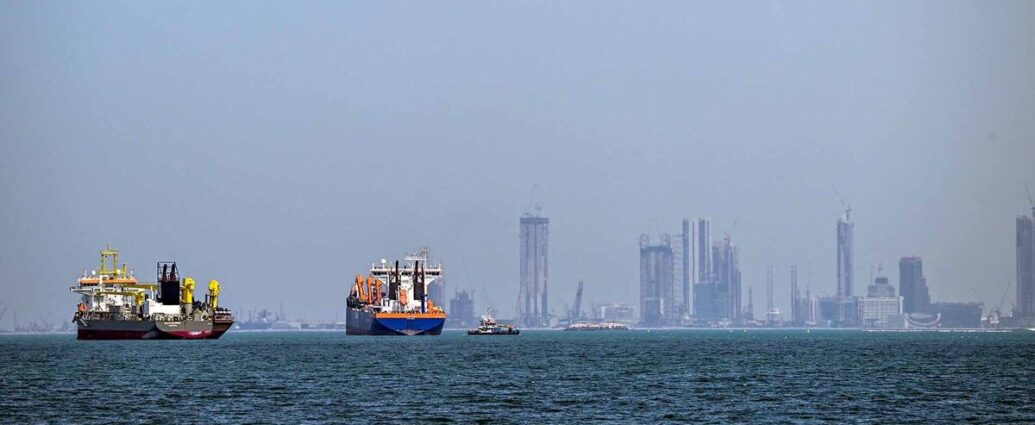
‘Frantic’ Markets Seek Clarity On Oil Supply

Donald Trump says he will have the ‘honour’ of ‘taking Cuba in some form’
This post was originally published here
Cheese from largest US raw milk distributor linked to E coli outbreak
Cheddar cheese from California-based Raw Farm identified as ‘likely source’ of infections across multiple states
Cheese from the country’s largest raw milk distributor have been linked to a multistate E coli outbreak.
Raw cheddar cheese from the California-based company Raw Farm has been identified as the “likely source” of several E coli O157:H7 infections in California, Florida and Texas, according to the Food and Drug Administration (FDA), PBS News reported, though no Raw Farm products have tested positive for E coli.
This post was originally published here

Afghanistan says 400 people killed in Pakistan strike on Kabul hospital
Afghanistan has accused Pakistan of targeting a hospital for drug users in the Afghan capital with an airstrike, marking a dramatic escalation of a conflict that began late last month. Pakistan has dismissed the accusation.
(Image credit: Barackatullah Popal)

This post was originally published here
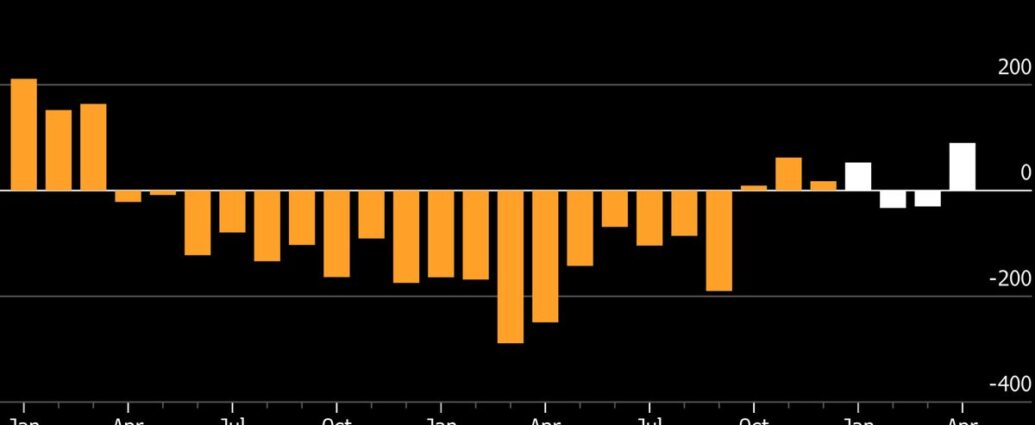

Judge orders ICE to release Minneapolis man after 50 days of unlawful detention
Arrest of asylum seeker Elvis Joel TE and his two-year-old, without a warrant, had sparked widespread outrage
A federal judge ruled on Friday that Immigration and Customs Enforcement (ICE) must release a Minneapolis man and asylum seeker who has been unlawfully detained for 50 days.
The man, identified as Elvis Joel TE in court filings, was arrested on 22 January at the height of ICE’s aggressive raids in Minneapolis. The case sparked widespread outrage as Elvis TE was detained with his two-year-old daughter while they were returning home from the store, and ICE quickly flew both of them to Texas despite a court order barring their transfer out of Minnesota.
This post was originally published here


The Fed Meets This Week—And Could Signal How Long Today’s High Savings Rates Will Last
This post was originally published here
Trump seeks to delay China summit as Vance denies ‘wedge’ over Iran war
Pair attempt to strike united front amid reports vice-president skeptical over US-Israeli attack on Iran
Donald Trump revealed that he had asked China to delay his forthcoming visit to Beijing while the war with Iran was continuing, as he attempted to strike a united front on Monday with his vice-president JD Vance, who is believed to have been skeptical over attacking Tehran’s regime.
Appearing together with Vance for the first time in two weeks, Trump said he did not think the conflict – which started on 28 February after the US and Israel opened hostilities – would be over this week but predicted victory would be achieved soon.
This post was originally published here