


Jim Cramer Warns Selling Now Is ‘Huge Mistake’ Despite $104 Brent Amid Iran War: Don’t Let ‘$200 Oil’ Naysayers Scare You Out
Jim Cramer urged investors to resist the urge to liquidate portfolios as Brent Crude surged to $104, warning that missing the eventual “awesome snapback” would be a costlier error than enduring current volatility.
The ‘Mad Money’ Manifesto
“Selling now is a huge mistake,” Cramer declared on Mad Money, acknowledging that while the market is “terrifying,” the current oversold conditions often precede massive rebounds.
With Brent Crude hitting $104.53 and WTI at $97.69, at the last check, Cramer dismissed “naysayers” predicting $200 oil as an existential threat.
“You’ll be kicking yourself if you sell everything and then you have to watch this market rebound without you,” he warned, noting that the S&P oscillator is at a rare -7.5 reading.
Historical Precedent And Strategy
Supporting Cramer’s thesis, historical data provides a silver lining. The Kobeissi Letter reveals that in six out of seven instances since 1986, the S&P 500 has been higher one year after a 20% oil surge, with an average forward return of 24%.
This post was originally published here

Bitcoin Bear Market Not Over Yet, Says Analyst: ‘My Target Price For Going All-In Is….’
Prominent cryptocurrency analyst and Bitget CEO Gracy Chen cautioned Monday that Bitcoin’s (CRYPTO: BTC) rebound to $74,000 should not be interpreted as the end of the bear market.
‘Not The Time To Go All-In’
Sharing her views in an X post, Chen said the ongoing bear market is not over as liquidity has not fully recovered.
“I’ve said time and again that the $60,000–$70,000 range is a good zone for dollar-cost averaging. But not necessarily the time to go ALL-IN,” Chen stated.
Chen aims to go all-in on Bitcoin at $50,000, where she hopes to buy the full amount of BTC she wants for this cycle.




WTI Oil Price Today: Will Crude Close Above $100 On March 16? Trump’s Hormuz Coalition And Kharg Island Threats In Focus
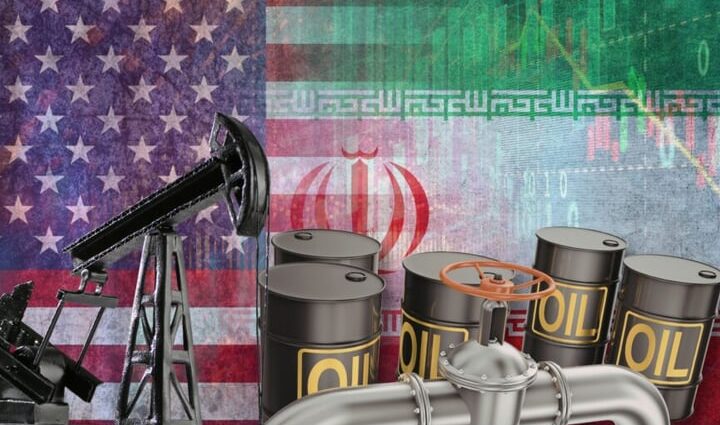
Oil prices remained elevated on Monday as President Donald Trump threatened to strike Iran’s crude export facilities on Kharg Island and the war heads toward its third week, with the Strait of Hormuz still closed.
The Kalshi prediction market crowd has one blunt question on the table: Does WTI close above $100?
The bet resolves against the Intercontinental Exchange (ICE) front-month WTI settlement price — the official end-of-day price published each afternoon by the Intercontinental Exchange, the benchmark the entire oil market uses. Above $99.99 at settlement, YES wins. Below it, NO wins.
At 3.40 AM ET, WTI futures were trading at $100.37 a barrel, up 1.68%, after earlier climbing as high as $102.40 a barrel to their highest level since July 2022.
The Kalshi crowd is leaning YES — but not convincingly. The YES contract on a close above $99.99 is trading at ¢66, implying a 59% probability that WTI settles above $100. The crowd is also pricing a 56% …
This post was originally published here




From foundations to fluency: why upskilling is the key to Europe’s AI future
There is no question that for many Europeans, work will look different in the coming years. We’ve seen this “ripple effect” with every major technology shift, from computers to the Internet. And while research suggests that far more jobs will be introduced rather than lost, we can’t ignore that there will be disruption – we must prepare for it.
At one end of the spectrum, we know that new technologies like AI have the potential to birth industries and create millions of jobs. Twenty years ago, the concept of a professional YouTube Creator didn’t exist: today, there are upwards of 60 million around the world.
Across Europe, there are estimates that 61% of jobs will be augmented by generative AI – while up to 7% of jobs will make a long-term transition. Those roles, which will be augmented or transition, are the ones we must focus on, ensuring that AI expands, rather than automates, human potential.
In Europe, the stakes are too high to ignore. Broad AI adoption holds the potential to boost the region’s GDP by €1.2 trillion. That’s an 8% increase over the next decade. We’ve already seen promising AI stories emerging across the continent. Spanish startup Idoven is using AI to detect heart disease earlier, while Roly’s in the UK is reimagining fudge recipes and Maria Teresa Pellegrino has used AI to modernize marketing materials for her family’s 100 year old Italian olive oil businesses.
But these gains won’t come automatically. To enable more Idovens, more Roly’s, more Maria’s, Europe’s public sector, non profits, employers and universities must come together to provide European people and businesses with the AI skills they need.
Today we’re announcing AI Works for Europe: a series of commitments, research and training to support this effort.
AI’s potential impact on entry-level jobs is a major focus area. Over the past year, we supported European social enterprise INCO and nonprofit Chance to examine how AI is reshaping early careers and to develop tailored solutions for Europe’s future workforce. In addition to drawing from comprehensive employment datasets provided by the OECD and the European Commission, INCO used AI to analyse over 31 million job postings, and interviewed over 1,500 UK and EU employers and young jobseekers. They found that nearly 25% of entry-level roles now require AI skills, and that 74% of SME employers struggle to find qualified candidates. The demand is highest in certain fields: AI-related requirements for Accounting & Finance roles have tripled since 2023 and nearly half (41%) of digital marketing and content roles now require AI proficiency at entry level.
In response and with our support, INCO and Chance have created NewFutures:AI, a set of advanced AI curriculums for final-year students: helping them build practical skills and access career support, especially in the sectors that need it most. The curriculum will be offered directly to students for free through partnerships with fifty higher education institutions across Europe.
But we can’t just focus on the future workforce – we need to to upskill current workers.
Since 2015, we have trained over 21 million Europeans (including Brits) on digital or AI skills. These trainings work: our foundational course, Google AI Essentials, has become the most popular course on Coursera of all time, and 80% of certificate graduates in the EU report a positive career outcome within six months of completion: a new job, promotion or raise.
New research from IPSOS suggests that AI literacy —the ability to understand, evaluate, and make decisions about AI — is vital to driving adoption. We need to move from a surface level understanding of AI to a more substantive use of AI as a collaborator. We’ve just released a new Google AI Professional Certificate focused on just that: moving people and businesses from AI foundations to fluency. The certificate is available now globally in English, and will be translated in ten European languages in the coming months.
Creating these resources alone isn’t enough, partnering with trusted community organizations is what’s going to help us drive broad and equitable access. That’s why we’re supporting local nonprofits like Talents for Tech and AI Sweden to share the certificate and wraparound resources with 50,000 workers across Europe through local trade unions and community organizations.
Significant change is coming. Together, across the public and private sector, we need to invest in people: ensuring they have the AI skills of tomorrow. Just as the internet unlocked new ways to work and build businesses, we need to empower people to innovate with AI.
The opinions expressed in Fortune.com commentary pieces are solely the views of their authors and do not necessarily reflect the opinions and beliefs of Fortune.
This story was originally featured on Fortune.com
This post was originally published here

Malaysia Becomes First Country To Declare US Trade Deal ‘Null And Void’ After Supreme Court Tariff Ruling
Malaysia has declared the trade deal with the U.S. invalid after the Supreme Court ruled President Donald Trump‘s tariffs imposed under the International Emergency Economic Powers Act (IEEPA) illegal in February.
Datuk Seri Johari Abdul Ghani, Malaysia’s Investment, Trade, and Industry Minister, told reporters that the U.S.-Malaysia Agreement on Reciprocal Trade (ART) has been rendered ineffective. “It is not on hold. It is no longer there, it’s null and void,” said Johari, the New Straits Times reported on Sunday.
Johari told reporters that if tariffs were being justified based on a trade surplus, the authorities should clearly specify the industry involved and not impose blanket tariffs.
Regarding the new review launched by the U.S. under Section 301 last week, the Trade Minister said key Malaysian export sectors that could be affected include electrical and electronics, oil and gas, plantation commodities such as …
This post was originally published here

UniCredit launches €35bn Commerzbank takeover offer
This post was originally published here

Congress Stock Trading Ban: Prediction Market Bets Against Passage This Year
Punters are skeptical that a ban on congressional stock trading will be enacted this year, despite the ongoing conflict‑of‑interest debate.
No Ban This Year?
A Kalshi market on whether members of Congress will be banned from trading stocks before 2027 currently shows just 15% odds in favor. The odds of this happening before Jan. 21, 2029, stood at 57%.
Note that a congressional stock trading ban may still qualify for a “Yes” if lawmakers are permitted to use blind trusts or invest in diversified assets like exchange-traded funds or mutual funds. The restriction only applies to individual stock trading.
A similar bet on Polygon (CRYPTO: POL)-based Polymarket showed a 22% chance …



Canada’s Opposition Leader Pushes US-Focused Auto Strategy, Warns Of ‘Dangerous Illusion’ Around Overseas EVs Amid Canada-China EV Deal
Canada’s leader of the Official Opposition, Pierre Poilievre, who is also the leader of the Conservative Party of Canada, has touted a U.S.-focused auto industry strategy amid the country’s China tariff agreement.
A Dollar For Dollar Rule
On Sunday, Bloomberg reported that the leader proposed exemptions for automakers from federal sales tax for vehicles made in Canada, as well as a rule that would enable companies to import vehicles of an equal dollar value from the U.S. or Mexico into the country for every vehicle produced in Canada.
The Canadian leader also said that it was a “dangerous illusion” to think that overseas EVs could replace auto sales to the U.S., the report said. U.S.-made vehicles accounted for over 40% of Canada’s auto sales.
The Conservative Party has also touted an end to subsidies for hybrid vehicles and EVs, as well as a ban on vehicles using Chinese or Russian software.
It’s worth noting that Canada revised its tailpipe emissions strategy recently and revived the subsidies on EVs, offering CA$5,000 on EVs made in Canada and CA$2,500 on Plug-In Hybrids. Both vehicle categories …
This post was originally published here




Microsoft Is ‘Long-Term Winner’ In AI Arms Race—Sell-Off Is Buying ‘Opportunity,’ Says Don Nesbitt
Amidst a backdrop of Middle East volatility and energy market swings, Emerald Advisors portfolio manager Don Nesbitt is urging investors to look past short-term “AI horror stories” and see the current dip in Microsoft Corp. (NASDAQ:MSFT) as a premier entry point.
The AI ‘Buying Opportunity’
While the broader market has been distracted by oil price fluctuations and geopolitical “exogenous shocks,” Nesbitt argues that the recent pressure on software stocks is a sentiment-driven mispricing.
Addressing the recent pullback in big-tech names, Nesbitt was clear on his stance regarding the software giant MSFT: “I think it’s an opportunity here to buy.”
He notes that the stock has been “trounced” recently due to heightened anxiety over AI’s potential to disrupt traditional business models. However, Nesbitt views this fear as misplaced for companies with established ecosystems.
“Microsoft is going to benefit from this,” he stated, dismissing the narrative that the company is at risk.
Data And Scale As A Moat
According to Nesbitt, …
This post was originally published here





Nasdaq Falls Over 200 Points Amid GDP Revision: Investor Sentiment Declines, Fear & Greed Index In ‘Extreme Fear’ Zone
The CNN Money Fear and Greed index showed an increase in the overall fear level, while the index remained in the “Extreme Fear” zone on Friday.
U.S. stocks settled lower on Friday, with the Nasdaq Composite falling more than 200 points during the session as investors weighed a stark downward revision to fourth-quarter economic growth against a sticky inflation reading before the oil shock of the war in Iran.
The Bureau of Economic Analysis revised fourth-quarter 2025 GDP growth to 0.7% annualized, down 0.7 percentage points from its advance estimate.
The January Core Personal Consumption Expenditure (PCE) price index — the Fed’s favorite inflation gauge — showed 3.1% annual increase, up from the previous 3%. The data marks a further departure from the Fed’s 2% target.
Washington temporarily eased sanctions on Russian crude to expand global supply, but Iran-U.S. tensions continued to threaten Persian Gulf energy flows and kept crude prices elevated.
The S&P 500 recorded a …
This post was originally published here


Dollar Tree, SAIC And 3 Stocks To Watch Heading Into Monday
With U.S. stock futures trading higher this morning on Monday, some of the stocks that may grab investor focus today are as follows:
- Wall Street expects Dollar Tree Inc. (NASDAQ:DLTR) to report quarterly earnings at $2.52 per share on revenue of $5.46 billion before the opening bell, according to data from Benzinga Pro. Dollar Tree shares gained 0.5% to $108.00 in after-hours trading.
- Analysts are expecting Science Applications International Corp. (NASDAQ:SAIC) to post quarterly earnings at $1.93 per share on revenue of $1.76 …
This post was originally published here







Will S&P 500 Open Up Or Down On March 16? Traders Lean On Higher Opening As Trump Issues NATO Warning, Oil Hovers Near $100
The S&P 500 closed Friday’s session in a precarious position after hitting its lowest close of 2026 earlier in the last week. However, heading into the Monday open, a wave of late-weekend optimism has shifted the narrative.
The Polygon-based (CRYPTO: POL) Polymarket crowd has turned decisively bullish for the March 16 open. The market currently reflects a 75% chance of an “Up” open, a 26% change in confidence over the last 24 hours. Early trading volume for this specific bet has reached $17,799.
Why That Number Matters
Geopolitical maneuvers are once again the primary driver of market sentiment. On Sunday evening, President Donald Trump increased pressure on global allies, warning NATO of a “very bad” future if they do not provide military assets—including …
This post was originally published here

CytomX Therapeutics Gears Up For Q4 Print; Here Are The Recent Forecast Changes From Wall Street’s Most Accurate Analysts
CytomX Therapeutics, Inc. (NASDAQ:CTMX) will release its fourth-quarter earnings before the opening bell on Monday, March 16.
Analysts expect the South San Francisco, California-based company to report loss of 9 cents per share, versus a year-ago profit of 23 cents per share . The consensus estimate for CytomX Therapeutics’ quarterly revenue is $7.33 million (it reported $38.09 million last year), according to Benzinga Pro.
On Nov. 6, CytomX Therapeutics reported worse-than-expected third-quarter financial results.
Shares of CytomX Therapeutics fell 3.9% to close at $4.68 on Friday.
Benzinga readers can access the latest analyst ratings on the Analyst Stock Ratings page. Readers can sort by stock ticker, company name, analyst firm, rating change or other variables.
Let’s have a look at how Benzinga’s most-accurate analysts have rated the company in the …
This post was originally published here
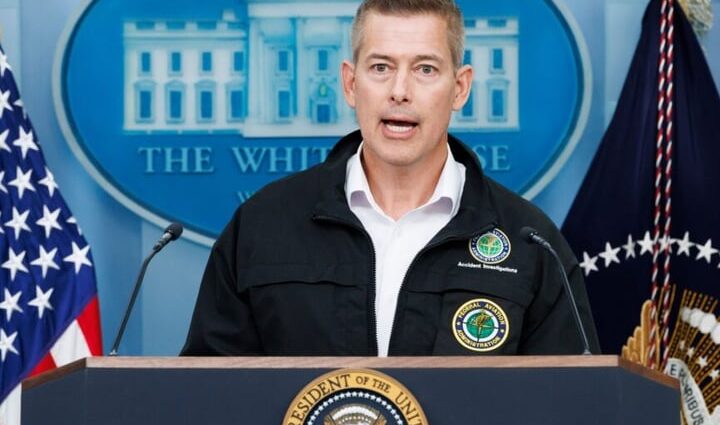
Sean Duffy Calls For End To ‘Schumer DHS Shutdown’ As TSA Workers Go Unpaid
Transportation Secretary Sean Duffy has slammed the Democratic lawmakers, led by Senate Minority Leader Chuck Schumer (D-NY), calling for an end to the partial government shutdown over funding for the Department of Homeland Security (DHS).
End The ‘Schumer DHS Shutdown,’ Sean Duffy Says
In a post on the social media platform X on Sunday, Duffy criticized the Democrats, touting a letter by Airlines for America, which is a coalition of major airline operators in the U.S. “AIRLINE CEOs: ENOUGH OF THE SCHUMER DHS SHUTDOWN,” Duffy said in his post.
He hailed the CEOs in the letter for “standing up for @TSA workers,” as the Transportation Security Administration employees missed their paychecks. The letter, addressed to Congress, called for an end to the shutdown and for the employees to get paid.
“Americans — who live in your districts and home states — are tired of long lines at airports, travel delays and flight cancellations caused by shutdown after shutdown,” the letter said, adding that travel related to the Spring Break, as well as the upcoming FIFA World Cup 2026, could be impacted due to the shutdowns.
“U.S. airlines expect 171 million passengers this spring season, a new record,” the letter said, but lamented the “extraordinarily long” lines at checkpoints across …
This post was originally published here

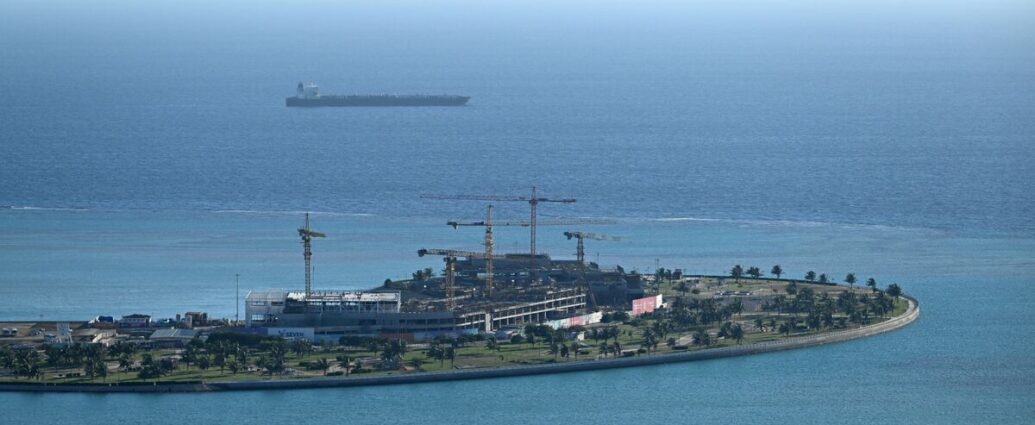

Retail investors pull billions from private capital’s credit gold mine
This post was originally published here

Canadian pension funds count cost of private equity slump
This post was originally published here

Netanyahu’s rivals compete to outdo him over Iran
This post was originally published here

UniCredit’s Orcel draws level with UBS chief Ermotti after record pay deal
This post was originally published here

Iran war reawakens global inflation fears
This post was originally published here

Rising prices push US car ownership costs to breaking point
This post was originally published here

Big bargains and ‘white knuckle’ buying: inside the rise of TJ Maxx
This post was originally published here

‘One Battle After Another’ wins Best Picture at Oscars
This post was originally published here

Dogecoin, Shiba Inu Ride Memecoin Rebound, But This Memecoin Steals The Show With 7% Surge
Frog-themed cryptocurrency Pepe (CRYPTO: PEPE) led Sunday’s memecoin rally amid a broad market rebound.
‘Exciting’ Unlock For Square Sellers
The Ethereum (CRYPTO: ETH)-based token spiked nearly 7%, claiming the top spot among large-cap meme coins over the past 24 hours. PEPE’s trading volume surged 57% to $328 million over the last 24 hours, signaling high buying pressure.
Solana (CRYPTO: SOL)-based Bonk (CRYPTO: BONK) followed closely, rallying 6.13% in the last 24 hours. NFT-related Pudgy Penguins

The highs and lows of the 2026 Oscars
This post was originally published here

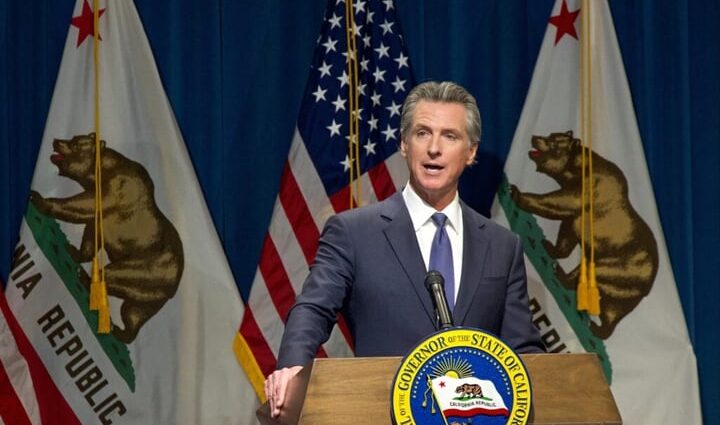
Gavin Newsom ‘Thanks’ Trump As Gas Prices Hit $3.70/Gallon Amid Iran War—Slams $1.5 Billion Spent By Americans In Excess At The Pump
California Governor Gavin Newsom (D) has slammed the President Donald Trump administration as gasoline prices across the U.S. continue to surge.
‘Thanks To President Trump,’ Says Gavin Newsom
In a post on the social media platform X on Sunday, Newsom’s official press office handle slammed Trump for the price surge. “THANKS TO PRESIDENT TRUMP, PRICES ARE COMING DOWN!” the post said, quoting a post that said the price of a gallon of gas in the U.S. hit $3.70.
$1.5 Billion In Excess
In an X post on Saturday, Newsom slammed the Trump administration over the price rise, as well as the “disastrous” war with Iran. “No amount of spin from Trump and his lackeys” could hide that “Americans …
This post was originally published here

China’s economy rebounded ahead of Iran crisis
This post was originally published here






Despite Greenland crisis, Trump suggests NATO owes him help on Iran war after U.S. support for Ukraine. ‘We’ve been very sweet’
Just two months ago, NATO was in the middle of an existential crisis over President Donald Trump’s insistence that the U.S. take control of Greenland. He threatened tariffs and refused to rule out military action, but eventually backed down.
Then on Sunday, Trump demanded the alliance help him clear the Strait of Hormuz, which Iran has blocked since the U.S. and Israel launched their war on the Islamic republic two weeks ago.
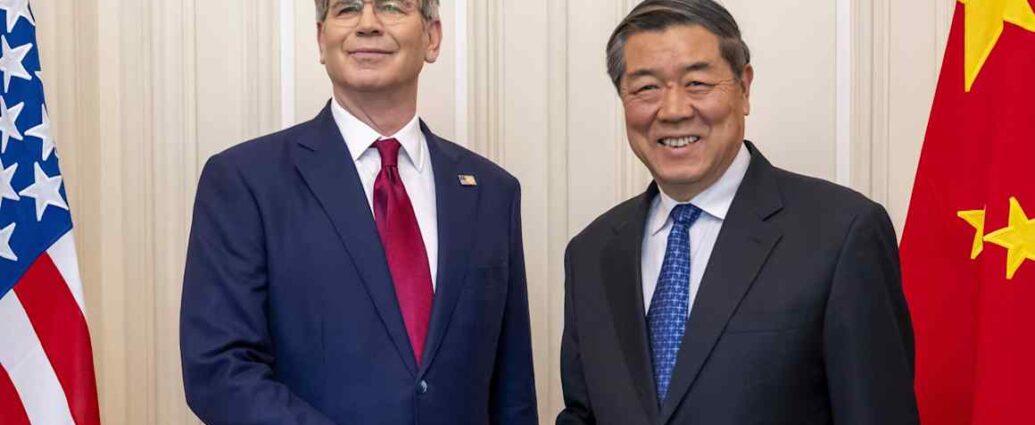
“It’s only appropriate that people who are the beneficiaries of the Strait will help to make sure that nothing bad happens there,” Trump told the Financial Times, while also saying he could delay his summit with Chinese President Xi Jinping. “If there’s no response or if it’s a negative response I think it will be very bad for the future of NATO.”
After he precipitated the Greenland crisis this year and launched a trade war last year, allies have been re-evaluating the global order and their long-term future with the U.S.
Trump admitted to the FT that he’s pessimistic about U.S. allies coming to his aid. But he suggested NATO owes him, despite years of berating member states for not spending more on defense and even belittling their losses fighting with the U.S. in Afghanistan.
“We’ve been very sweet,” Trump said. “We didn’t have to help them with Ukraine. Ukraine is thousands of miles away from us … But we helped them. Now we’ll see if they help us. Because I’ve long said that we’ll be there for them but they won’t be there for us. And I’m not sure that they’d be there.”
He explained that NATO help could come in the form of minesweepers or commandos, and downplayed the military threat that Iran poses. While Iran’s military has indeed been decimated by U.S. and Israeli bombardment, it still packs enough punch to scare commercial shipping away from the Strait of Hormuz.
Iran seize gatekeeper role
But Tehran is also signaling that the strait isn’t totally closed and that it wields the power to choose who may pass, as the U.S. military has yet to re-establish free navigation through the narrow waterway.
Oil prices have soared as Iran’s attacks on shipping in the Persian Gulf have created a de facto blockade over the strait, through which one-fifth of the world’s oil and liquid natural gas flow, with Wall Street warning crude could even hit $150 a barrel in a prolonged conflict.
Iranian Foreign Minister Abbas Araghchi said Sunday that vessels from different countries have already been allowed to transit the strait and that a number of governments have approached Tehran about securing safe passage for their ships.
“I cannot mention any country in particular,” he told on CBS News. “And this is up to our military to decide.”
Reports have indicated that Iran is getting its oil shipments out to top customer China, while hundreds of tankers carrying supplies from other countries remain bottled up in the Gulf.
That keeps critical revenue rolling into Iran. By contrast, Saudi Arabia, Iraq, and other top producers have been forced to pump less with nowhere left to stash their output.
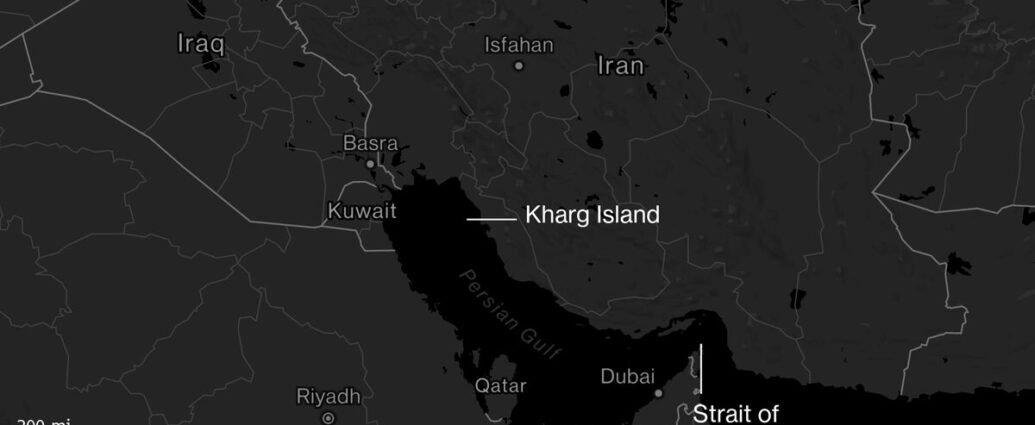
Meanwhile, Trump ordered an attack on military sites on Kharg Island, Iran’s top oil export node, upping the ante of escalation. He is also trying to assemble a naval coalition to reopen the strait. Sources told the Wall Street Journal on Sunday that the administration could soon announce an escort mission that involves multiple countries, though it wasn’t clear if operations would begin before or after hostilities end.
Trump earlier called on China, France, Japan, South Korea, Britain and others to send warships to the Middle East, though responses have been non-committal so far. At the same time, the U.K. and the Gulf Cooperation Council said member states “have the right to take all necessary measures to defend their security and stability and protect their territories, citizens and residents.”
But the Strait of Hormuz remains contested waters, and U.S. Navy officials have called it a “kill box” where Iran’s missiles, aerial drones, underwater drones, surface drones, mines, and small fast-attack boats pose numerous threats. Given the risks to multibillion-dollar warships, the Navy has turned down requests from shipping companies to provide protection.
European officials are considering a naval mission to the Strait of Hormuz but admit that their current effort to protect shipping in the Red Sea “hasn’t been effective.”
“That’s why I’m very skeptical whether an expansion of Aspides into the Strait of Hormuz could provide more security,” German Foreign Minister Johann Wadephul said, adding that Germany won’t take an active role in the war.
‘All U.S. response options are suboptimal’
Defense experts say a proper naval escort mission would require more ships as well as air power and perhaps ground troops to neutralize Iranian threats.
The Strait of Hormuz is navigationally constrained, and reaction times to attacks from the coast are short, according to Jennifer Parker, founder of Barrier Strategic Advisory and a veteran of the Royal Australian Navy.
As a result, escort operations at scale would require significant numbers of warships, plus combat air patrols that would take aircraft away from other missions, she added in a threat on X on Saturday.
“Responding to coastal launch sites as they emerge would require coordinated strike operations ashore and perhaps marines — the latter a clear escalation risk,” Parker wrote. “Without significantly degrading Iran’s UAV and USV capability, escorts alone are unlikely to enable the safe transit of large numbers of tankers.”
Then there’s the problem of clearing any mines in the strait. Despite the U.S. wiping out Iran’s navy, the Islamic Revolutionary Guard Corps can still use small boats to deploy mines, and not many are needed to scare away commercial traffic.
The U.S. also shrank its minesweeping fleet, and its remaining ships are stationed in Asia. A new class of littoral combat ship was designed to handle minesweeping missions, but it has yet to be used in combat.
“Historically, mine clearance has been slow, and it is almost impossible to do under fire,” MIT political science professor Caitlin Talmadge wrote in Foreign Affairs on Friday.
Like Parker, she said defending the strait in the middle of a shooting war may require the U.S. to take control of the Iranian coast by inserting Marines or special operations forces.
In fact, the U.S. is deploying a Marine Expeditionary Unit to the Mideast with more than 2,000 troops, though some analysts have raised the possibility of an amphibious attack on Kharg Island.
“In short, if Iran effectively mines the strait, all U.S. response options are suboptimal,” Talmadge warned. “The United States should therefore focus aggressively on preventing Iranian mine-laying in the first place and finding an off-ramp from the larger war. If it does not, Washington should expect that ongoing harassment of traffic in the strait will be but one of a number of responses that Iran has long prepared and will now deploy.”
This story was originally featured on Fortune.com
This post was originally published here




Nvidia Rubin GPU Faces Possible Delay As HBM4 Supply Falls Short, While Google TPU Demand Surges In Race For TSMC Capacity: Report
Nvidia Corp.’s (NASDAQ:NVDA) next-generation Rubin AI GPU platform could reportedly face production delays due to supply constraints in next-generation memory.
HBM4 Supply Constraints Could Slow Nvidia’s Rubin Rollout
Nvidia’s Blackwell successor, the Rubin GPU platform, is seeing downward revisions to wafer starts due to next-generation HBM4 memory supply coming in below expectations, Taiwan’s Commercial Times reported, citing supply chain sources.
Suppliers are reportedly redesigning certain base-die components used in the memory stacks, a technical adjustment that could delay shipments by roughly one quarter.
As a result, Nvidia is said to be scaling back initial Rubin wafer production while increasing output of its current Blackwell GPUs instead of releasing manufacturing capacity.
Nvidia did not immediately respond to Benzinga’s request for comments.
Cloud Giants Accelerate Custom AI Chip Development
At the same time, cloud service providers are intensifying efforts to develop their own AI chips to reduce reliance on Nvidia.
Alphabet Inc.’s …
This post was originally published here












Bitcoin, Ethereum, XRP, Dogecoin Spike As Trump Vows To Keep Strait Of Hormuz Open: Analyst Wants Traders To ‘Pay Attention’ To This BTC Level
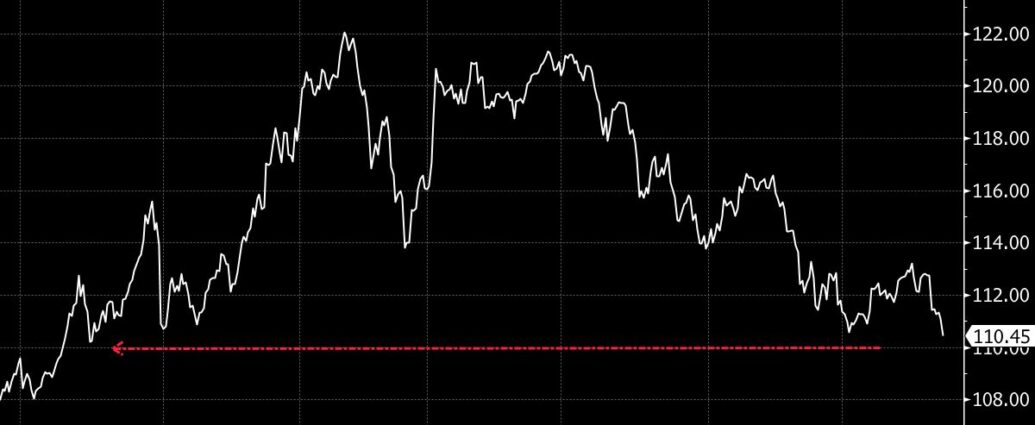
Leading cryptocurrencies rose alongside stock futures on Sunday as President Donald Trump pressed for a coordinated effort to keep oil exports from the Strait of Hormuz running.
| Cryptocurrency | 24-Hour Gains +/- | Price (Recorded at 9:30 p.m. ET) |
|---|---|---|
| Bitcoin (CRYPTO: BTC) | +2.42% | $72,664.81 |
| Ethereum (CRYPTO: ETH) |
+4.52% | $2,180.88 |
| XRP (CRYPTO: XRP) | +3.00% | $1.44 |
| Solana (CRYPTO: SOL) | +4.77% | $92.00 |
| Dogecoin (CRYPTO: DOGE) | +2.24% | $0.09787 |
Crypto Market Sees Relief Rally
Bitcoin spiked during evening hours, with trading volume surging 33% over the past 24 hours.
Ethereum outperformed Bitcoin, reaching an intraday peak of $2,200 amid surging trading volume that signaled strong buying momentum.
Roughly $194 million was liquidated from the cryptocurrency market over the past 24 hours, with short positions worth $145 million evaporated, according to Coinglass data.
Open interest in Bitcoin futures rose 2.92% in the last 24 hours. However, sentiment among retail and whale traders with open BTC positions on Binance remained “Neutral.”
“Extreme Fear” sentiment persisted, according to …


Trump throws US-China reboot off course by saying he could delay Xi summit
This post was originally published here




Germany and UK refuse to be drawn into wider war
This post was originally published here



China’s answer to Amazon launches rival European ecommerce service
This post was originally published here
Top airline CEOs plead with Congress to restore DHS funding and pay airport workers. ‘Once again, air travel is the political football’
The CEOs of the nation’s top airline companies, including American, Delta, Southwest and JetBlue, are imploring Congress to restore funding to the Department of Homeland Security and embrace a bipartisan solution to pay federal aviation workersincluding airport security officers during the partial government shutdown.
“Once again, air travel is the political football amid another government shutdown,” the executives wrote in an open letter to Congress that was published Sunday online and in The Washington Post.
The letter, which was also signed by the CEOs of the cargo companies UPS, FedEx and Atlas Air, said that Congress should pass the Aviation Funding Solvency Act and the Aviation Funding Stability Act, which would guarantee air traffic controllers are paid regardless of the government’s funding status, as well as the Keep America Flying Act. That measure would offer the same protections to Transportation Security Administration officers tasked to provide security and to screen all travelers.
”It’s difficult, if not impossible, to put food on the table, put gas in the car and pay rent when you are not getting paid,” the letter said.
The current partial shutdown affects only the Department of Homeland Security, which includes TSA. Democrats in Congress refused to fund the department over objections to its immigration enforcement tactics. The lapse marks the third shutdown in less than a year to leave TSA workers temporarily without pay — and once the government reopens, to have to wait for back pay.
Democratic lawmakers have said DHS won’t get funded until new restrictions are placed on federal immigration operations following the fatal shootings of Alex Pretti and Renee Good in Minneapolis earlier this year.
The CEOs noted that with spring break in full swing, FIFA’s World Cup 2026 approaching and celebrations for America’s 250th birthday throughout the year, the stakes are high. The letter said that U.S. airlines expect 171 million passengers this spring season.
As the latest partial shutdown drags on, there have been long security lines at a growing number of U.S airports.
The TSA and Homeland Security have consistently blamed Democrats for the long security lines.
Homeland Security posted on its X account last week that more than 300 TSA agents have quit since the start of the shutdown.
This story was originally featured on Fortune.com
This post was originally published here
Trump leaves allies and foes guessing on his endgame for Iran
As the US-Israeli war on Iran enters its third week, pressure is growing on the person in the best position to end it: Donald Trump.
But the US president’s ever-shifting explanations for why he went to war leave friends and adversaries at a loss to forecast when he’ll be ready to stop. And even if he does, Iran has shown little willingness to go along. Trump has gone from declaring the war over soon to calling on European and Gulf allies to help. They’re reluctant, and the likes of Russia are benefiting.
The state of play was exemplified by a recent call with Group of Seven leaders where Trump was repeatedly pressed by European counterparts about his endgame, according to people familiar with the exchange. He said he couldn’t discuss the war’s objectives on the call, but told the leaders he had several in mind and wanted the conflict to end soon.
The past 48 hours have only deepened the confusion among once-stalwart allies.
Conversations with several officials since Trump told Fox News that the war would end when he felt it “in my bones” paint a picture of bewilderment and shock. No one seems ready to rally to his call to deploy scant resources to help reopen the virtually shut Strait of Hormuz, the conduit for a fifth of global oil and a large share of liquefied natural gas. Meanwhile, the backchannels to Iran are proliferating as countries, from India to Turkey, seek their own safe passage to get ships through Hormuz.
Even Japan, which rarely wants to appear out of lockstep with the US, said through a senior official that efforts to escort ships face “high hurdles.” That amounts to a polite “no” that reverberates across countries the US failed to consult on the war that it launched Feb. 28 and is now set to last several weeks.
Read More: US, Iran Keep Up Strikes as Trump Mulls Possibility of Deal
The Trump administration is planning to announce as soon as this week that multiple countries have agreed to form a coalition to escort ships through the corridor, according to a report in the Wall Street Journal, which adds that it’s unclear whether operations would begin during or after the fighting.
Tehran’s forces fire missiles and drones daily at targets across the Mideast despite punishing US and Israeli attacks – and Trump’s claims of victory. Iran’s stranglehold on shipping in the strait has driven oil prices over $100 a barrel, shaking economies worldwide and threatening Trump’s political prospects at home. Even one of Trump’s own advisers went public Friday calling on him to declare victory and end the fighting.
The latest escalation in US military operations may represent the peak of US operations — an intense surge designed to degrade remaining Iranian capabilities, according to European officials, speaking on condition of anonymity to discuss their governments’ views.
While they discount as exaggerated Trump’s claims that the strikes have destroyed Iran’s military capabilities, the European officials see that rhetoric as potentially laying the groundwork for Washington to declare the operation complete.
“There are strong motivators on all sides to conclude the military phase of the mission expeditiously,” said Victoria Coates, a former Trump deputy national security adviser now at the Heritage Foundation. It is Trump who has “dominant leverage to set the terms of any negotiations,” she added.
A senior Arabian Gulf official warned that it would ultimately only be the sustained rise in oil prices that would force Trump to stop fighting and claim victory, leaving regional allies to deal with the residual threat from a wounded and angry Iran.
For the moment, Trump is vowing to continue the campaign, claiming he’s not ready for a deal — though Iran is. Officials in Tehran remain convinced they can outlast the mercurial US leader, but the damage is mounting.
Read More: Stock Trader’s Guide to Navigating Supply Disruption by Iran War
Trump pivoted sharply over the weekend to calling for other countries to join the fray to reopen the strait — a possibility seen in those capitals as ranging from questionable to fanciful. From his Florida golf course, Trump sent a string of mixed messages on social media, calling for support in a war he’s said repeatedly he’s won, and for help in a strait his administration has insisted remains open. He claimed Saturday that Iran wanted a deal, which Iran dismissed.
But Trump’s attempt to wave away concerns with declarations of swift military victory and economic recovery has been stretched thin, with at least 13 Americans killed so far and Trump forced to scramble to ease oil price spikes that further imperil Republicans’ fortunes in a midterm election year. So far, administration efforts to ease the oil-market impact haven’t led to a lasting drop in prices.
Over the weekend, the White House reiterated that the campaign was planned to last four to six weeks but is ahead of schedule. “We expect that the global economy is going to have a big positive shock as soon as this is over,” National Economic Council Director Kevin Hassett told CBS’s Face the Nation.
Read More: Oil Market Set for Tumultuous Week as Kharg Attack Raises Stakes
Trump’s own political coalition is showing signs of strain. David Sacks, Trump’s AI czar, said on a podcast published Friday that he agreed “we should try to find the off-ramp,” saying Iran’s military has been degraded. “This is a good time to declare victory and get out, and that is clearly what the markets would like to see,” he said, warning the conflict could spiral further.
And Vice President JD Vance, an avowed skeptic of foreign incursions, has neither embraced the endeavor fully nor criticized it publicly.
Still, Senator Lindsey Graham, a staunch Trump ally and proxy, praised Trump’s decision to bomb parts of Kharg Island, ending a social media post Saturday with the words of the motto of the US Marine Corps – a nod to the possibility that the US may soon deploy troops on the ground. The US is sending a Marine Expeditionary Unit to the region, officials said Friday.
The US struck military targets on the island, but left intact its oil facilities, which carry the bulk of Iran’s exports.
The International Energy Agency has warned the war may already represent the largest supply disruption in the history of the global oil market. US gasoline prices have already risen sharply — about 65 cents a gallon since the war began. Public support for the war also appears limited, with recent polls showing Americans divided or leaning against the conflict.
“He was hoping this would be a very quick war,” Vali Nasr, an Iran specialist and former Obama administration official who is now a professor at the Johns Hopkins School of Advanced International Studies, told Bloomberg’s Mishal Husain. “Now this war has gone out of his control. It’s longer, messier and is exacting a cost.”
Read More: Why Iran Isn’t Breaking
Some Gulf officials say they have little visibility into Washington’s plans and privately express frustration that the war was launched without meaningful consultation. They say the conflict has underscored how little influence Gulf governments currently have over decisions driving the war, despite their efforts to court the Trump administration with pledges of investment.
“The Gulf states want normalcy: peace and calm to refocus on their national transformation plans,” said Bader Al-Saif, an assistant professor at Kuwait University and an associate fellow at Chatham House. “That requires a major reset to their security arrangements with Western partners and it also requires dialog with Iran.”
Read More: Gulf Economies at Risk of Worst Slump Since 1990s on Iran War
The war may prove difficult to end for a simple reason: Washington and Tehran are measuring victory by very different standards.
For all the US success in striking Iranian military targets, Tehran still has ways to hit back. Even with much of its conventional power damaged, Iran can impose costs through proxy attacks, harassment of shipping and disruption to regional energy flows.
Iran does not need to defeat the US militarily to claim success: Surviving the war may be enough.
“Their calculation is that this is about who has a higher threshold of pain,” said Nasr, the Iran specialist. “They think the United States and Israel can dash a lot faster, but they’re not really long-distance runners.”
Iranian officials have also made clear they are not seeking a quick ceasefire. Senior leaders have framed the conflict as a moment to restore deterrence against the US and Israel and ensure Iran cannot be attacked again.
Iranian Supreme Leader Mojtaba Khamenei said last week the country’s goal was to continue an “effective defense that makes the enemy regret” its actions. “We will extract reparations,” he said in a written statement.
“They may well think they’ve crossed a Rubicon in terms of their ability to inflate the world oil price with relatively simple means,” said Simon Gass, a former UK ambassador to Iran.
Still, countries including Oman, Saudi Arabia and Turkey are exploring channels to reduce tensions and stabilize shipping through the Strait of Hormuz, while European governments are trying to keep back channels open with Iranian intermediaries, officials said.
So far, the efforts remain tentative. European officials say Iran has focused its early messages on two demands: compensation for wartime damage and guarantees against future attacks. Both are likely to be non-starters with the White House.
At the same time, the battlefield could still widen. Israel has expanded operations in Lebanon, while Iraqi militias have signaled a new phase of attacks on US and other foreign targets — leaving any diplomatic opening fragile.
An end to the fighting may also come without negotiations, if Trump decides he’s achieved his goals – or had enough pain.
“The president has destroyed most of Iran’s military and naval power and set back its nuclear program for years,” said Elliott Abrams, who served as the Trump administration’s special representative for Iran. “He could stop any time he decides to do so and claim a victory.”
This story was originally featured on Fortune.com
This post was originally published here

Costco recalls popular meatloaf meal kit over Salmonella contamination fears across 26 states
Costco issued a recall notice over the weekend for its popular ready-to-eat meatloaf meal kit, impacting warehouse locations in at least 26 states.
The “Meatloaf with Mashed Yukon Potatoes and Glaze” was flagged for potential Salmonella contamination after an ingredient supplier raised concerns.
“An ingredient supplier, Griffith Foods Inc., has announced the recall of an ingredient used in the Meatloaf because the ingredient has the potential to be contaminated with Salmonella,” the recall notice said.
Headquartered just outside Chicago, Griffith Foods is a global, family-owned food ingredient manufacturer. The Costco recall notice did not specify which ingredient was linked to the potential contamination.
COSTCO SUED BY CUSTOMER SEEKING REFUNDS FOR TARIFF PAYMENTS
The meal, product #30783, was sold between March 2 and March 13, just days before the Salmonella concern emerged. The items had sell-by dates from March 5 through March 16.
Costco locations across 26 states, as well as the District of Columbia and Puerto Rico, were affected by the recall. The states include Alabama, Arizona, California, Colorado, Delaware, Florida, Georgia, Hawaii, Illinois, Indiana, Iowa, Kentucky, Maryland, Michigan, Mississippi, Missouri, Nevada, New Mexico, North Carolina, Ohio, Pennsylvania, South Carolina, Tennessee, Utah, Virginia and Wisconsin.
GM RECALLS 17K VEHICLES OVER REAR TOE LINK FRACTURE THAT COULD LEAD TO CRASHES
The retail giant urged customers not to consume the product and advised that the affected item could be returned to their local Costco for a full refund.
No illnesses or injuries have been reported in connection with the item, Costco added.
According to the CDC, Salmonella infection is a leading cause of foodborne illness in the United States. It is a bacterium that can cause serious and sometimes life-threatening infections, particularly in young children, the elderly and individuals with weakened immune systems.
GET FOX BUSINESS ON THE GO BY CLICKING HERE
Infections commonly cause diarrhea, fever, and stomach cramps, which typically appear between six hours and six days after exposure.
Most healthy individuals, however, recover within four to seven days, often without specific medical treatment.









2K flights canceled in single day, turning major airport into virtual ghost town
At least 2,000 flights were canceled Sunday as winter blizzards continue to batter the Upper Midwest, turning at least one normally bustling airport into a virtual ghost town.
According to the latest data from FlightAware, U.S. flight cancellations Sunday accounted for roughly 78% of all canceled flights worldwide, with at least 2,216 flights grounded out of roughly 2,842 global cancellations.
Meanwhile, an additional 6,826 delays have reportedly rippled across the national air network, further straining travel schedules across the world.
Many airlines have since issued guidelines allowing passengers to change their flights without major fees, providing flexibility for travelers affected by the winter storms.
AUSTIN AIRPORT GRIDLOCK: SECURITY LINES STRETCH OUTDOORS AS DHS SHUTDOWN HITS ONE-MONTH MARK
The epicenter of the disruptions remains in the Midwest, with the heaviest impact centered on Chicago, followed by Minneapolis. The fallout has created noticeable ripple effects at other major U.S. airports, including Atlanta and Denver.
The airport seeing the largest impact by sheer volume is Chicago’s O’Hare International Airport, with a reported 790 flights affected, according to FlyChicago.
At least 27% of its departing flights have been canceled, while another 29% of incoming flights have also been scrapped, according to FlightAware.
Another 839 flights, both incoming and outgoing, have been delayed, with average wait times of 82 minutes, according to FlyChicago.
SPRING BREAK FLYERS WARNED OF MASSIVE TSA LINES AS SHUTDOWN DRAINS AIRPORT STAFF
The major airport with the highest percentage of affected flights is Minneapolis-St. Paul International (MSP), where 73% of departing flights and 64% of arriving flights have reportedly been canceled, FlightAware reported.
MSP Airport noted a total of 726 canceled flights and 177 on-time departures, while Fox 9 Minneapolis-St. Paul observed Sunday that the terminals virtually resembled a ghost town, with minimal staff on site.
The airport released a statement on their social media Sunday morning, highlighting the severity of the winter storms that disrupted operations at the airport.
“Fake spring came to an end as snow arrived at MSP Saturday evening,” it said. “Airlines have canceled more than 450 flights to and from MSP on Sunday. Please check with your airline for the latest flight information. Stay safe!”
Hartsfield-Jackson Atlanta International (ATL), another major hub connecting to Chicago and Minneapolis, reportedly experienced significant disruptions as well, with at least 227 total flights delayed and another 87 canceled.
Similarly, Denver International (DEN) saw 466 delays and 60 total cancellations.
TRAVEL EXPERT WARNS AMERICANS TO ‘BOOK NOW’ AS OIL PRICES THREATEN HIGHER AIRFARES
Most major carriers have issued travel waivers, allowing passengers to rebook flights as the storm continues to rage. Officials suggest checking airline websites frequently for any updates.
United Airlines issued notices allowing passengers with affected flights from the Upper Midwest and Great Lakes region to reschedule their trips with minimal fee changes.
“You can reschedule your trip and we’ll waive change fees and fare differences,” the site said. “But, your new flight must be a United flight departing between March 12, 2026 and March 20, 2026. Tickets must be in the same cabin and between the same cities as originally booked.”
CLICK HERE TO GET FOX BUSINESS ON THE GO
While Delta Air Lines had previously set a March 22 deadline for ticket reissuance, passengers can now extend this deadline to March 24, 2026.
American Airlines also announced that passengers can change their trips with no change fee, provided the new bookings are made by March 26, 2026.



The closed Strait of Hormuz is testing Asia’s energy security. The answer lies across the Pacific—in Canada
When IRGC brigadier-general Ebrahim Jabari declared the Strait of Hormuz to be closed, 150 oil and LNG tankers decided to stay put rather than risk getting fired upon. Qatar Energy and other oil and gas producers soon halted production, declaring force majeure. The effect on Asia was immediate, with LNG benchmarks jumping 39% in just one session and governments now frantically ordering staff to work-from-home to save energy.
The threat to Asia had been obvious for years. The U.S. Energy Information Administration estimated that, in 2024, over 80% of the crude and LNG that transited Hormuz went to Asian markets. China, India, Japan, and South Korea accounted for nearly 70% of all Hormuz crude flows. Saudi Arabia and the UAE can only send about 2.6 million barrels of crude oil a day through bypass pipelines, not enough to offset the 20 million barrels per day now stuck. It’s even worse for LNG: There’s no way to get it out if Hormuz is closed.
If Asian countries want a solution to their energy woes in the Middle East, perhaps they should look, well, to the east—across the Pacific to energy sources in North America, and Canada in particular.
Canada’s new Pacific energy infrastructure, from the Shell‑led LNG Canada project in Kitimat to the expanded Trans Mountain pipeline feeding crude to tankers near Vancouver, offers Asian buyers a faster, cheaper and geopolitically safer route that can skip Hormuz and other chokepoints like Malacca and the South China Sea, altogether.
A different map already exists
There’s no technological fix for geography, as author Robert D. Kaplan argued in his 2012 book, The Revenge of Geography. The only solution is a different map—and for Asia’s energy buyers, that different map is on Canada’s Pacific coast.
LNG Canada in Kitimat, British Columbia, shipped its first cargo in June 2025, making Canada an LNG‑exporting nation for the first time. Cargoes load directly into the North Pacific and reach Northeast Asian terminals without passing through the Strait of Hormuz, the Strait of Malacca, or the South China Sea, all potential chokepoints for energy trade.
Canadian crude from Alberta now moves west through the Trans Mountain Expansion (TMX) pipeline, which came online in May 2024 and has nearly tripled maximum capacity to 890,000 barrels per day. Since startup, shipments from the Westridge Marine Terminal near Vancouver have helped triple Canadian crude exports to non‑US destinations, with Asia—particularly China—emerging as a key buyer.
The Alberta‑to‑Asia route does not rely on Hormuz or Malacca, and it originates in a jurisdiction perceived as politically stable. Importantly, Canada is low-risk and—one hopes—unlikely to be beset by conflict any time soon.
Why not the United States?
The U.S., the world’s largest LNG exporter, can’t help gas-hungry Asian buyers. The reason, again, is geography. The U.S.’s LNG export terminals are on the Gulf Coast or the East Coast; none are on the Pacific Coast. It can take up to 24 days to get an LNG tanker from the Gulf Coast, through the Panama Canal, and to Japan. Shipping from Kitimat in Canada takes just 11 days.
Canadian LNG from Kitimat takes roughly 10 to 11 days, at a delivered cost of under $1/MMBtu versus $2/MMBtu or more via Panama, according to energy research firm RBN Energy. Canada’s route is shorter, cheaper and avoids congestion in the Canal.
Washington is building the Alaska LNG project, an 800-mile pipeline from North Slope gas fields to a liquefaction terminal at Nikiski on Cook Inlet. It’s got support from the Trump administration, federal permits, and letters of intent from JERA and POSCO. But Alaska LNG still lacks binding long-term contracts, and some estimates put the cost at more than $70 billion. Even if construction begins as planned in late 2026, the first LNG exports won’t be ready until 2031 at the earliest—and that assumes everything goes right.
In contrast, LNG Canada Phase 1 is operational, and ready to serve Asian buyers, today.
The window is this year
The next tranche of Canadian LNG is about to come online. LNG Canada Phase 12 will provide a further 14 million tonnes per annum through a JV that includes Shell, Mitsubishi, Korea Gas Corporation, Petronas, and PetroChina; a final investment decision is expected by late 2026 or early 2027. Ksi Lisims LNG, near Prince Rupert, has cleared all regulatory approvals. If both proceed, Canada’s total Pacific LNG export capacity will exceed 40 million tonnes per annum by the early 2030s.
Asian utilities and importers—from JERA and INPEX to CNOOC, GAIL, CPC Taiwan and Singapore’s EMA—that lock in 20‑ to 40‑year contracts will have structural insurance against the next Hormuz‑related supply shock that will look extraordinarily cheap in hindsight.
And they’d find a willing partner in Ottawa, which is actively encouraging Asian participation as part of a broader effort to diversify energy exports away from an over‑reliance on the U.S. market.
The tankers anchored outside Hormuz and the burning facilities at Ras Laffan are a live demonstration of what happens when energy security relies on a 33-kilometer wide passage flanked by a hostile power.
Asia’s energy buyers need to find an alternative—and fortunately, they have one in Canada.
The opinions expressed in Fortune.com commentary pieces are solely the views of their authors and do not necessarily reflect the opinions and beliefs of Fortune.
This story was originally featured on Fortune.com
This post was originally published here

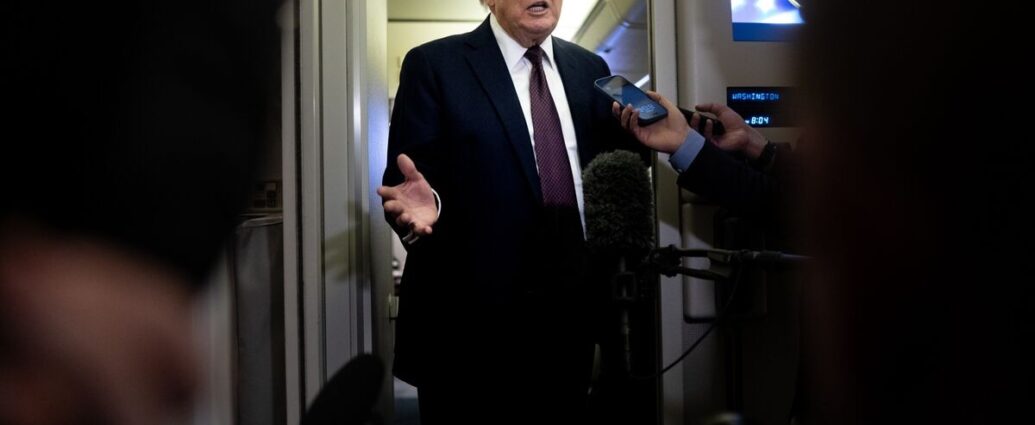
Trump says he asked 7 countries for Hormuz help. None answered the call
President Donald Trump said Sunday that he has demanded about seven countries send warships to keep the Strait of Hormuz open, but his appeals have brought no commitments as oil prices soar during the Iran war.
The president declined to name the countries heavily reliant on Middle East crude that the administration is negotiating with to join a coalition to police the waterway where about one-fifth of the world’s traded oil normally flows.
“I’m demanding that these countries come in and protect their own territory, because it is their own territory,” Trump said about the strait, claiming the shipping channel is not something the United States needs because of its own access to oil. Trump spoke while answering reporters’ questions as he flew back to Washington from Florida aboard Air Force One.
Trump said China gets about 90% of its oil from the strait, while the U.S. gets a minimal amount. He declined to discuss whether China will join the coalition.
“It would be nice to have other countries police that with us, and we’ll help. We’ll work with them,” Trump said. Previously, he has appealed to China, France, Japan, South Korea and Britain.
Iran’s Foreign Minister Abbas Araghchi earlier told CBS that Tehran has been “approached by a number of countries” seeking safe passage for their vessels, “and this is up to our military to decide.” He said a group of vessels from “different countries” had been allowed to pass, without providing details.
Iran has said the strait is open to all except the United States and its allies.
Araghchi added that “we don’t see any reason why we should talk with Americans” about finding a way to end the war, noting that Israel and the U.S. started the fighting with coordinated attacks on Feb. 28 during indirect U.S.-Iran talks on Iran’s nuclear program. He also said Tehran had “no plan to recover” the enriched uranium that is under rubble following U.S. and Israeli attacks last year.
Countries are cautious after Trump’s call
U.S. Energy Secretary Chris Wright told NBC earlier Sunday that he has been “in dialogue” with some of the countries Trump had mentioned previously, and said he expected China “will be a constructive partner” in reopening the strait.
But countries made no promises.
Britain said Prime Minister Keir Starmer on Sunday discussed with Trump the importance of reopening the strait “to end the disruption to global shipping,” and spoke with Canada’s prime minister about it separately.
Aboard Air Force One, Trump specifically named Starmer, who he said initially declined to put British aircraft carriers “into harm’s way.”
“Whether we get support or not, but I can say this, and I said to them: We will remember,” Trump said.
A spokesperson for China’s embassy to the U.S., Liu Pengyu, said previously that “all parties have the responsibility to ensure stable and unimpeded energy supply” and that China would “strengthen communication with relevant parties” for de-escalation.
South Korea’s Foreign Ministry said it “takes note” of Trump’s call and that it “will closely coordinate and carefully review” the situation with the U.S.
Expectations are high that Trump will ask Japan directly when Prime Minister Sanae Takaichi meets him on Thursday at the White House.
France previously said it is working with countries — President Emmanuel Macron mentioned partners in Europe, India and Asia — on a possible international mission to escort ships through the strait but has stressed it must be when “the circumstances permit,” when fighting has subsided.
Foreign Minister Johann Wadephul of Germany, which was not mentioned in Trump’s call, told ARD television: “Will we soon be an active part of this conflict? No.”
Meanwhile, emergency oil stocks “will soon start flowing to global markets,” the International Energy Agency said Sunday, describing the collective action to lower prices “by far the largest ever.”
It updated last week’s announcement of 400 million barrels to nearly 412 million. Asian member countries plan to release stocks “immediately,” and reserves from Europe and the Americas will be released “from the end of March.”
Trump didn’t directly answer whether his administration is talking about selling oil futures as a way to cap surging oil prices.
“The prices are going to come tumbling down as soon as it’s over. And it’s going to be over pretty quickly,” he told reporters.
More missile and drone attacks are reported
Gulf Arab states, including the United Arab Emirates, Saudi Arabia, Kuwait and Bahrain, reported new missile or drone attacks a day after Iran called for the evacuation of three major ports in the United Arab Emirates — the first time it has threatened a neighboring country’s non-U.S. assets.
Dubai temporarily suspended flights at its international airport — the world’s busiest — after a drone hit a fuel tank and caused a fire. Civil defense crews contained the blaze and no injuries were reported, authorities said.
Tehran has claimed that Friday’s U.S. strikes on Kharg Island, home to Iran’s primary oil terminal, were launched from the UAE, without providing evidence. It has threatened to attack U.S.-linked “oil, economic and energy infrastructures” if its oil infrastructure is hit.
U.S. Central Command said it had no response to Iran’s claim, and Anwar Gargash, a diplomatic adviser to the UAE president, rejected it. Gulf countries that host U.S. bases have denied allowing their land or airspace to be used for military operations against Iran.
Iran has fired hundreds of missiles and drones at Arab Gulf neighbors during the war, causing significant damage and rattling economies even as most are intercepted. Tehran says it targets U.S. assets, even as Iranian strikes are reported at civilian sites such as airports and oil fields.
War’s toll mounts across the region
Iranian strikes have killed at least a dozen civilians in Gulf countries, most of them migrant workers.
In Iran, the Iranian Red Crescent said more than 1,300 people have been killed. Iran’s Health Ministry said 223 women and 202 children are among the dead, according to Mizan, the judiciary’s official news agency.
Iran’s government on Sunday showed journalists buildings damaged by strikes in Tehran on Friday. A police station was hit and surrounding buildings were damaged. Some apartments’ outer walls had been stripped away.
“God had mercy on all of us,” said Elham Movagghari, a resident. Other Iranians are leaving the country.
In Israel, 12 people have been killed by Iranian missile fire and more have been injured, including three on Sunday. At least 13 U.S. military members have been killed, six in a plane crash in Iraq last week.
At least 820 people have been killed in Lebanon, according to its Health Ministry, since Iran-backed Hezbollah hit Israel and Israel responded with strikes and sent additional troops into southern Lebanon. In just 10 days, more than 800,000 people — nearly one out of every seven residents of Lebanon — have been displaced.
More Iranian missile strikes hit Israel
Israel’s military said early Monday that Iran launched missiles toward Israel.
Earlier, several strikes hit central Israel and the Tel Aviv area, where they caused damage at 23 sites and sparked a small fire. Magen David Adom, Israel’s rescue service, released video showing a large crater in a street and shrapnel damage to an apartment building.
Israel’s military says Iran is firing cluster bombs that can evade some air defenses and scatter submunitions across multiple locations. ___
This version corrects to say Araghchi was speaking to CBS, not NBC as previously reported.
___
Metz reported from Ramallah, West Bank, Weissert from aboard Air Force One, Frankel from Jerusalem and Anna from Lowville, New York. Contributing were Associated Press journalists Darlene Superville, Fatima Hussein and Tia Goldenberg in Washington; Sally Abou AlJoud and Fadi Tawil in Beirut; John Leicester in Paris; and Christopher Weber in Los Angeles.
This story was originally featured on Fortune.com
This post was originally published here




Opinion | The Real Nuclear History of Iran

Opinion | Put Chuck Schumer on TSA Duty

An OpenAI cofounder ‘vibe coded’ an analysis of the U.S. labor market’s exposure to AI, and the highest-paying jobs have the worst scores
Andrej Karpathy used AI to gauge which U.S. professions are most vulnerable to the technology amid growing fears that a jobs apocalypse may be headed for the economy.
Over the weekend, the OpenAI cofounder and former director of AI at Tesla posted a graphic showing how susceptible every occupation is to Al and automation, using Bureau of Labor Statistics data. Different jobs received scores on a scale of 0 to 10, with 10 being most exposed.
While the overall weighted exposure was 4.9, Karpathy’s data also showed that professions earning more than $100,000 a year had the worst average score (6.7), while the those earning less than $35,000 had the lowest exposure (3.4).
His chart quickly drew attention online, with many predicting doom for white-collar workers. But Karpathy soon removed the data.
“This was a saturday morning 2 hour vibe coded project inspired by a book I’m reading,” he explained on X on Sunday morning. “I thought the code/data might be helpful to others to explore the BLS dataset visually, or color it in different ways or with different prompts or add their own visualizations. It’s been wildly misinterpreted (which I should have anticipated even despite the readme docs) so I took it down.”
He didn’t respond to questions about how it’s been misinterpreted and what the correct interpretation should be.
Still, an archived version of the chart may not be much of a shocker as it echoes what others have been saying about how AI could shape the U.S. labor market.
For example, software developers, computer programmers, database administrators, data scientists, mathematicians, financial analysts, paralegals, writers, editors, graphic designers, and market researchers got scores of 9.
That’s as sophisticated AI tools are increasingly being used to crunch numbers and produce content, performing tasks in minutes that used to require knowledge workers hours, days, or even weeks to do.
While AI is seen as a productivity enhancer for experienced employees, evidence is mounting that companies have less need for entry-level workers. More companies are also announcing layoffs and citing AI, though skeptics see it as a scapegoat to correct pandemic-era overhiring.
Meanwhile, Karpathy’s chart showed that construction laborers, roofers, painters, janitors, ironworkers, and grounds maintenance workers got scores of just 1. Similarly, home healthcare aides, nursing assistants, massage therapists, dental hygienists, veterinary assistants, manicurists, barbers, and bartenders got scores of 2.
Earlier this month, AI startup Anthropic issued a report entitled “Labor market impacts of AI: A new measure and early evidence,” that found actual AI adoption is just a fraction of what AI tools are feasibly capable of performing.
Like Karpathy’s data, Anthropic’s paper said AI can theoretically cover most tasks in business and finance, management, computer science, math, legal, and office administration roles. While AI adoption is still lagging, Anthropic said the workers most at risk are older, highly educated and well paid.
And earlier this year, a viral essay by Citrini Research painted a catastrophic picture of an economy destroyed by AI, sparking a stock market selloff.
But Citadel Securities swiftly debunked the doomsday scenario in a blistering report, pointing out that Indeed job posting data shows demand for software engineers is actually up 11% year over year so far in 2026.
Citadel also noted that the daily use of generative AI for work remains “unexpectedly stable” and currently “presents little evidence of any imminent displacement risk.” Instead of a collapsing economy, new business formation in the U.S. is rapidly expanding, and the construction of massive AI data centers is currently driving a localized boom in construction hiring.
Furthermore, if automation expanded at the breakneck pace Citrini fears, demand for compute would inherently rise, pushing up its marginal cost.
“If the marginal cost of compute rises above the marginal cost of human labor for certain tasks, substitution will not occur, creating a natural economic boundary,” Citadel said.
This story was originally featured on Fortune.com
This post was originally published here




Opinion | The Kurds Could Help in Iran






An Australian tech entrepreneur used AI to help create the first-ever bespoke cancer vaccine for a dog to treat his beloved pet Rosie
In 2024, Sydney tech entrepreneur Paul Conyngham found out his dog Rosie had cancer. But after attacking the diagnosis with chemotherapy and surgery, the tumors persisted and Rosie got sicker.
So he turned to AI and eventually developed a custom a mRNA cancer vaccine with the help of Australian scientists. Most of Rosie’s tumors have shrunk, and the dog is back chasing rabbits.
OpenAI’s ChatGPT suggested immunotherapy and directed Conyngham to the University of New South Wales Ramaciotti Center for Genomics, according to a report in the Australian.
While Conyngham doesn’t have a background in medicine, he is an electrical and computing engineer who cofounded Core Intelligence Technologies. He was also a director for the Data Science and AI Association of Australia.
After reaching out to university, he convinced researchers there to help him and paid UNSW for Rosie’s genomic sequencing. Then he started digging into the DNA.
“I went to ChatGPT and came up with a plan on how to do this,” Conyngham told the Australian.
He also used AlphaFold, an AI tool from Google’s DeepMind, to find mutated proteins that could be potential targets for treatment. While an immunotherapy treatment that looked like a good fit for Rosie was identified, the drugmaker wouldn’t provide it.
Then nanomedicine medicine pioneer Pall Thordarson, director of UNSW’s RNA Institute, stepped in and used Conyngham’s data to develop a bespoke mRNA vaccine in less than two months.
“This is the first time a personalized cancer vaccine has been designed for a dog,” he told the Australian. “This is still at the frontier of where cancer immunotherapeutics are—and ultimately, we’re going to use this for helping humans. What Rosie is teaching us is that personalized medicine can be very effective, and done in a time-sensitive manner, with mRNA technology.”
Rosie got her first injection of the cancer treatment this past December, then received a booster in February. Most of her tumors have already shrunk dramatically. And while they haven’t disappeared, Rosie’s health has improved.
In a thread on X Saturday, Thordarson said Rosie’s story demonstrates that technology can “democratize” the process of designing cancer vaccines.
He cautioned that Rosie may not be cured as some tumors haven’t responded to the vaccine, though it bought her more time. Still, Conyngham will take it.
“In December she had low energy because the tumors were creating a huge burden for her,” he told the Australian. “Six weeks post-treatment, I was at the dog park when she spotted a rabbit and jumped the fence to chase it. I’m under no illusion that this is a cure, but I do believe this treatment has bought Rosie significantly more time and quality of life.”
Rosie’s journey has stunned some people in the tech world while also pointing to AI’s potential to produce breakthroughs in medicine, perhaps turning diagnoses once considered death sentences into routine ailments.
Matt Shumer, cofounder and CEO of OthersideAI, took to X over the weekend to flag a story about Conyngham and his dog.
“This is what I mean when I say the world is going to get very weird, very soon,” he wrote. “Expect more stories like this, each sounding increasingly more insane.”
This story was originally featured on Fortune.com
This post was originally published here

Dolly Parton opens Dollywood’s 41st season, promises more projects ahead: ‘I ain’t near done’
Dolly Parton returned to Dollywood on Friday to kick off the park’s 41st season, reassuring fans about her health while celebrating a major milestone year for both the park and the country.
Parton said she has recently stepped back from touring to focus on her health and personal life, but emphasized she remains energized about the future.
“I have not been touring, as you know,” Parton said. “I’ve had a few little health issues, and we’re taking good care of them… I just kind of got worn down and worn out, grieving over Carl and a lot of other little things going on. I just got myself kind of where I needed to build myself back up spiritually, emotionally and physically. But all is good. It didn’t slow me down.”
DOLLY PARTON $650M EMPIRE: FROM HUMBLE ROOTS TO QUEEN OF COUNTRY MUSIC, MOVIES AND NOW MAKEUP
Parton also addressed rumors about her personal life, saying she does not plan to remarry following the death of her husband, Carl Dean.
“Well, I know there’s a lot of rumors going around, but I did not marry Sylvester Stallone,” she joked. “And I am not dating anybody. I’m not married. I don’t think I’ll ever be married but once. I think Carl Dean’s waiting for me on the other side.”
The beloved country music icon appeared at the park as Dollywood launches its new season with celebrations tied to America’s upcoming 250th anniversary, including patriotic décor, new entertainment and demonstrations of traditional Appalachian craftsmanship.
DOLLY PARTON SHARES THE ONE PART OF HER BUSINESS EMPIRE THAT SHE’S ‘REALLY, REALLY PROUD OF’
Park officials say the heritage of the Smoky Mountains remains central to the experience.
“Here we are in the middle of God’s country,” Eugene Naughton, president of The Dollywood Company, told FOX Business. “The love of the Smoky Mountains is one of the things that locks people into wanting to come here, and we’re fortunate to have the No. 1 visited national park just 6 miles away.”
Dollywood is also unveiling a major new attraction this season, the $50 million indoor adventure coaster NightFlight Expedition, inspired by the bioluminescent synchronous fireflies that light up the Smoky Mountains each summer.
The park, ranked Tripadvisor’s No. 1 theme park in the U.S., continues to expand its footprint as tourism in the East Tennessee region grows. The company has already developed two resorts and plans additional lodging.
“We’ve master-planned a total of five resorts on the property,” Naughton said. “We own 1,142 acres, and there are about 46 million people who live within a nine-hour drive of our property who are theme park users. I’m really excited to tell more people in the world about the cool things that are going on here.”
DOLLY PARTON’S HOME ON WHEELS TURNED INTO $10,000 HOTEL SUITE
Beyond the Smoky Mountains, Parton is also expanding her hospitality presence in Tennessee.
“Of course, we’ve got the new hotel, Songteller, that’s going to open sometime in late summer, early fall in Nashville,” she said.
Dollywood’s growth comes as the broader theme park industry faces economic pressure. Data from Consumer Edge shows spending at U.S. theme parks fell about 5% last summer compared with 2024, as rising costs led some lower- and middle-income families to cut back on travel and entertainment.
Park leaders say Dollywood’s focus on family experiences and regional culture helps it stand out.
“It’s very family-oriented,” said Julie Collins, a locomotive engineer and foreman at Dollywood. “We love to have families come up and ride the train. Some kids have never seen a real steam locomotive before, so it’s their first time. That’s what they come here for. It’s kind of a little kid’s dream.”
For Parton, the park’s success ultimately comes down to something simpler than rides or investments.
“I pray a lot, and God’s been really good to me,” she said. “But, I think so much of it has to do with great management and how we treat people… They feel loved and appreciated, and we want them to always feel that way.”
Dollywood officially opened to the public on Friday with the I Will Always Love You Festival, launching what the park hopes will be a strong season in the Smoky Mountains.
GET FOX BUSINESS ON THE GO BY CLICKING HERE
Parton said fans should expect even more projects ahead.
“I’ve just been doing a lot of writing, a lot of thinking, a lot of praying and a lot of getting ready for a lot of new stuff coming up,” she said. “Be ready for me. I ain’t done. I ain’t near done.”
Pakistan targets militant hideouts in Afghanistan as conflict continues
Afghan government reports zero casualties and accuses neighbouring country of wanting to ‘fuel the fire of war’
Pakistan has targeted militant hideouts in Afghanistan’s Kandahar province overnight, as the fighting that erupted between the two neighbours late last month showed no signs of abating.
The cross-border attacks, which have included Pakistani airstrikes in Kabul, are the deadliest yet between the countries. Islamabad has referred to the conflict as an “open war”, adding to concerns about regional stability as the US-Israeli conflict with Iran engulfs the Middle East and beyond.
This post was originally published here
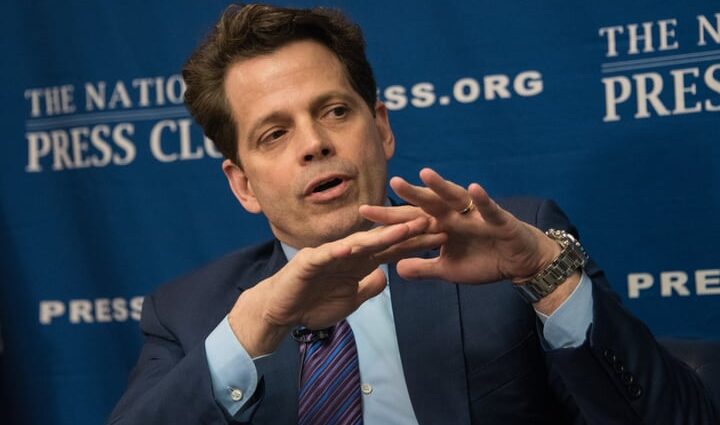
Anthony Scaramucci Was Asked How He Juggles Life And Work — Bitcoin Bull Explained It With This Rock And Sand Example
Anthony Scaramucci, founder of global investment firm SkyBridge Capital, explained how he manages his time across family, business and personal hobbies using the “rock-and-sand” metaphor.
Rock First, Then Sand
In the monthly Q&A episode on March 10, Scaramucci was asked about his approach to work‑life balance and how he organizes his calendar to support it.
Scaramucci likened time to a jar, which needs to be filled with rocks and sand. Rocks, he said, represent the most important things in life, including family, children, and coworkers, which should go in the jar first.
Then the sand goes in. That could be things like exercise. That could be things like reading books, going on vacation, whatever it might be,” …
This post was originally published here
Cory Booker calls both parties ‘feckless’ for ceding war powers to Trump
Democrat says Congress ‘doing nothing’ may embolden president to attack countries such as Cuba and North Korea
Democratic US senator Cory Booker has criticized both his own political party as well as its Republican counterpart for being “feckless” in ceding congressional war powers to Donald Trump, saying that their decision could embolden the president to unilaterally attack Cuba, North Korea and other countries.
“I’m going to be one of those Democrats [who] say I think both parties have been feckless in allowing the growth of the power of the presidency,” Booker said on Sunday on CNN’s State of the Union.
This post was originally published here





How to Handle a Q&A Session Like a Pro


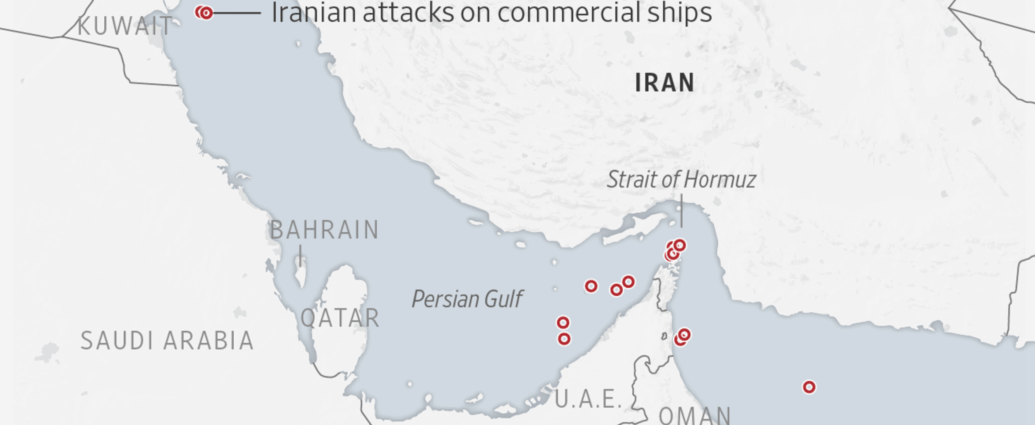

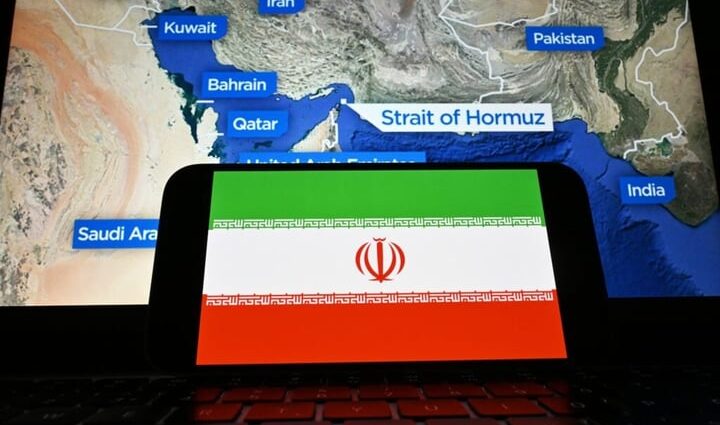
JPMorgan Warns Strategic Oil Reserves Can Cover Only 7.5% Of Hormuz Supply Shock Amid Ongoing Iran War
Amid escalating tensions in the global oil market due to the ongoing Iran war, recent estimates from JPMorgan show that the strategic oil reserve release will only make a small dent in the crude oil supply shock.
Strategic Reserves Not Enough
The ongoing oil crisis cannot be alleviated by strategic reserves alone, according to JPMorgan estimates shared by The Kobeissi Letter.
A coordinated release from the G7’s Strategic Petroleum Reserve (SPR) would yield approximately 1.2 million barrels of oil daily. Historically, emergency releases have reached up to 1.4 million barrels per day.
This post was originally published here

Centene, Paramount Skydance, And Ulta Beauty Are Among Top 10 Large Cap Losers Last Week (March 9-March 13): Are the Others in Your Portfolio?
These ten large-cap stocks were the worst performers last week. These stocks took a beating, with sharp selloffs in names from healthcare and beauty to media and aviation rattling investors across the board.
Are they a part of your portfolio?
Fair Isaac Corporation (NYSE:FICO) decreased 21.59% this week after the company announced a proposed offering of $1.0 billion in senior notes.
Centene Corporation (NYSE:CNC) fell 20.85% this week. The health insurer reaffirmed its 2026 earnings guidance above $1.98 per share and adjusted earnings of above $3 per share. Mizuho maintains Neutral rating on Centene, lowering the price forecast to $41.
This post was originally published here

U.S. energy chief signals Iran war may last several more weeks
Energy Secretary Chris Wright signaled the war with Iran may last several more weeks with oil and gasoline prices elevated as the US and Israel seek to destroy Iranian military capabilities.
In network television interviews Sunday, Wright defended the Trump administration’s argument that Americans are facing short-term pain at the pump in a midterm election year for the larger goal of eliminating Iran as a threat to the Middle East.
“I think that this conflict will certainly come to the end in the next few weeks — could be sooner that that — and we’ll see a rebound in supplies and a pushing down of prices after that,” Wright said Sunday on ABC’s This Week.
Oil closed at more than $103 per barrel on Friday as Iran retains a chokehold on the Strait of Hormuz, normally a conduit for a fifth of the world’s oil and a similar portion of liquefied natural gas.
President Donald Trump on Saturday called on other countries to send warships to keep the strait open, saying he hopes China, France, Japan, South Korea and the UK would take part. A senior official in Japan’s governing party said sending Japanese navy vessels to the Middle East to escort tankers would face “high hurdles.”
Wright said he has been in talks with the countries Trump mentioned, though he didn’t elaborate. “Clearly we will have this support of other nations to achieve that objective,” he said on NBC’s Meet the Press.
Wright said the Trump administration was aware that going to war against Iran would cause “short-term disruption” and “a little bit of increased prices on Americans.”
“So this is short-term pain to get through to a much better place,” he told ABC. “But first and foremost right now is to finish to destroy Iran’s ability to project military force in the region and around the world.”
This story was originally featured on Fortune.com
This post was originally published here
Bessent leads U.S. talks with China ahead of Trump-Xi summit as Iran and trade war loom over ‘big year’ for bilateral ties
Representatives from Beijing and Washington began their economic and trade talks in Paris on Sunday, paving the way for U.S. President Donald Trump’s state visit to Beijing to meet Chinese leader Xi Jinping in about two weeks.
The delegations, led by U.S. Treasury Secretary Scott Bessent and Chinese Vice Premier He Lifeng, convened in the French capital in the morning, China’s official news agency Xinhua reported. The White House has said that Trump will travel to China from March 31 to April 2, though Beijing has not officially confirmed it.
Bessent said on Thursday that his team will continue to deliver results that put America’s farmers, workers and businesses first. The U.S. Treasury Department said Bessent will meet He on Sunday and Monday.
China’s commerce ministry said Friday the two sides are set to discuss “trade and economic issues of mutual concern.”
Trump’s visit to China will be the first for a U.S. president since he went in his first term in 2017. It will come five months after the two leaders met in the South Korean city of Busan and agreed to a one-year truce in a trade war that temporarily saw tit-for-tat tariffs soar to triple digits before the two sides climbed down.
Still, trade remains a source of tensions. The commerce ministry on Friday hit back against the Trump administration’s new trade investigation into 16 trading partners, including China. The investigation — which came after a Supreme Court ruling struck down Trump’s sweeping global tariffs that were imposed last year — could pave the way for new tariffs.
Another issue that could be discussed is the Iran war, especially when global anxiety is soaring over oil prices and supplies. Trump said Saturdaythat he hopes China, France, Japan, South Korea, the United Kingdom and others will send warships to keep the Strait of Hormuz “open and safe.”
Before Sunday’s talks, Gary Ng, a senior economist at French bank Natixis and a research fellow at the Central European Institute of Asian Studies, said the Paris meeting is likely the most important bilateral one before the Xi-Trump summit.
The key issue is “whether China and the U.S. can agree on what is agreed and manage disagreement. Iran is a new factor, but Beijing is more concerned about the flip-flopping of U.S. policies,” he said.
Last week, Chinese Foreign Minister Wang Yi said it would be a “big year” for China-U.S. relations. While he did not confirm the state visit, Wang said that “the agenda of high-level exchange is already on the table.”
Bessent and He have led trade negotiations between the countries since last year, having met in Geneva, London, Stockholm, Madrid and Kuala Lumpur, Malaysia.
This story was originally featured on Fortune.com
This post was originally published here
As Iran war knocks Trump back on his political heels, he lashes out at news coverage while taking flak from top MAGA figures
In the two weeks since the U.S. and Israel launched strikes on Iran, President Donald Trump increasingly has been knocked on his political heels.
He’s grown more agitated with news coverage and has failed to find a way to explain why he started the war — or how he will end it — that resonates with a public concerned by American deaths in the conflict, surging oil prices and dropping financial markets. Even some of his supporters are questioning his plan and his overall poll numbers are declining.
Meanwhile, Moscow is getting a boost from the war’s early days after Trump eased sanctions on some Russian oil shipments. That, combined with rising oil prices, undercut the yearslong push to crimp President Vladimir Putin’s ability to wage war in Ukraine.
Then there are Democrats, who were left reeling after Trump won the 2024 election. With control of Congress at stake in November’s midterms, the party has come together to oppose Trump’s Iran policy and point to the economic turmoil as proof that Republicans haven’t kept their promises to bring down everyday costs.
“I think Democrats are well-positioned for this November and the midterms,” said Kelly Dietrich, CEO of the National Democratic Training Committee, which trains party backers to run for office and staff campaigns.
Dietrich said the past two weeks show the Trump administration has failed at long-term planning. “They’re flying by the seat of their pants, and rest of us are paying the price,” he said.
Trump seeks help securing the Strait of Hormuz
On Saturday, Trump spent hours at his golf club in West Palm Beach, Florida, before attending a closed-door fundraiser for his MAGA Inc. super PAC at his Mar-a-Lago estate.
Last weekend, he also golfed at another of his South Florida properties a day after witnessing the dignified transfer for six U.S. soldiers killed in the Iran war. That death toll rose this past week.
Trump is increasingly complaining about media coverage of the conflict, on Saturday writing: “Media actually want us to lose the War.” His broadcast regulator subsequently threatened to pull broadcast licenses unless they “correct course.”
The president — who kept allies other than Israel in the dark about his war plans for Iran — also for the first time suggested the U.S. would need to lean on the international community to help oil tankers move through the Strait of Hormuz, where transportation has been severely disrupted, throwing global energy markets into a tailspin.
Iran has said it plans to keep up attacks on energy infrastructure and use its effective closure of the strait as leverage against the United States and Israel. A fifth of the world’s traded oil flows through the waterway.
“Many Countries, especially those who are affected by Iran’s attempted closure of the Hormuz Strait, will be sending War Ships, in conjunction with the United States of America, to keep the Strait open and safe,” Trump wrote on Saturday, later adding, “this should have always been a team effort.”
It was not clear if that multi-nation push was set to begin or if Trump only hoped it might, however. That’s because he also wrote: “Hopefully China, France, Japan, South Korea, the UK, and others, that are affected” will “send Ships to the area so that the Hormuz Strait will no longer” be threatened by Iran.
The White House did not provide further details or clarity on what Trump’s post meant. But Britain’s defense ministry said Saturday: “We are currently discussing with our allies and partners a range of options to ensure the security of shipping in the region” without providing details.
Trump had pledged at the beginning of the war that U.S. naval ships would escort tankers through the waterway. But that hasn’t happened yet. “It’ll happen soon. Very soon,” he insisted while boarding Air Force One to fly to Florida on Friday night.
Still, questions about the strait continue to undermine Trump’s recent pronouncement during a Kentucky rally that, “We’ve won.”
“You know, you never like to say too early you won. We won,” he said. “We won the, in the first hour, it was over.”
The war has far-reaching political implications
The U.S. Treasury Department also announced this past week a 30-day waiver on Russian sanctions aiming to free up Russian oil cargoes stranded at sea to help ease supply shortages caused by the Iran war.
That’s despite analysts saying that spiraling oil prices due to Persian Gulf production blockages are benefiting the Russian economy. Moscow relies heavily on oil revenue to finance its war on Ukraine, and sanctions were a growing handicap.
Some of Washington’s key allies have decried the move as empowering Putin. Ukrainian President Volodymyr Zelenskyy called easing sanctions “not the right decision” and “certainly does not help peace” because it leads to a “strengthening of Russia’s position.”
With midterm races now starting to heat up, Trump was asked Friday night about his message to voters who believe gas is too expensive.
“You’re going to see a very big decrease in the prices of gasoline, gas, anything having to do with energy, as soon as this is ended,” Trump said.
The longer the conflict goes, the more pronounced questions about the midterms will become. Sen. Rand Paul, a Kentucky Republican, suggested on Fox News Channel this past week that if gas and oil prices continue to stay high “you’re going to see a disastrous election” for the GOP.
Iran also has even divided Trump’s “Make America Great Again” base, between those who support the action and others who say that Trump expressly campaigned on ending wars.
Leading figures on the right, including Tucker Carlson and Megyn Kelly, have sharply criticized Trump. Trump, though, has continued to insist that he created the MAGA movement and that it will follow him anywhere, on any issue.
The political turbulence has some Democrats predicting their party could see midterm gains rivaling 2018’s “blue wave” election during Trump’s first term.
“Democrats just have to keep reminding people that he made a promise to bring prices down, and they’re still going up,” Democratic strategist Brad Bannon said of Trump. “And now they’re going to go up even more because prices in gasoline can increase prices of everything else, including at the grocery store.”
This story was originally featured on Fortune.com
This post was originally published here


Norovirus outbreak sickens 153 passengers, crew on Caribbean cruise ship
More than 150 people onboard a Princess Cruises ship became ill with norovirus during a Caribbean voyage this week, according to the Centers for Disease Control and Prevention (CDC).
The outbreak occurred aboard the Star Princess during a voyage from March 7 to March 14, according to the CDC’s Vessel Sanitation Program (VSP), which monitors illness on cruise ships.
Those reported sick included 104 passengers and 49 crew members — out of 4,307 passengers and 1,561 crew members in total, the CDC said.
The outbreak was reported to the VSP on March 11, less than a week after the voyage began.
BABY FOOD RECALLED NATIONWIDE AFTER DANGEROUS TOXIN FOUND IN FEDERAL TESTING RAISES HEALTH CONCERNS
According to the CDC, the most commonly reported symptoms were diarrhea and vomiting, which are typical signs of norovirus infection.
In response to the outbreak, Princess Cruises increased cleaning and disinfection procedures, isolated sick passengers and crew members, and collected stool samples from ill individuals for testing, the CDC said.
GROUND STOP LIFTED AT MAJOR DC-AREA AIRPORTS AFTER CHEMICAL ODOR DISRUPTS AIR TRAFFIC CONTROL
Ship officials also consulted with CDC health officials about sanitation practices and reporting cases, according to the agency.
The VSP is conducting an environmental assessment and outbreak investigation to help the ship control the spread of the illness.
The tracking site CruiseMapper showed the vessel docked in Fort Lauderdale on Saturday before continuing its voyage. Its itinerary indicated the ship was scheduled to visit Princess Cays in the Bahamas later Sunday.
Norovirus is a highly contagious virus that commonly causes vomiting and diarrhea and can spread quickly in close quarters such as cruise ships, according to health officials.
The CDC notes that illness totals reported during a cruise represent the cumulative number of cases across the entire voyage — not necessarily people who were sick at the same time.
CLICK HERE TO GET FOX BUSINESS ON THE GO
Cruise ships are required to report gastrointestinal illness cases to the CDC, which tracks outbreaks and works with cruise lines to implement sanitation and containment measures when they occur.
FOX Business has reached out to Princess Cruises and the CDC for further comment.

Bitcoin Bets, Corporate Sales And Crypto’s Next Phase: Crypto Weekend Recap
This week in the world of cryptocurrency was nothing short of eventful. From AI-driven Bitcoin bets to corporate Bitcoin sales, the crypto market continues to evolve and surprise. Here’s a quick recap of the top stories that made headlines.
AI-Driven Bitcoin Bets
Max Wojcik, a 29-year-old engineer, is making waves in the crypto world by using AI chatbots to analyze Bitcoin price data. Wojcik uses three AI chatbots—Claude, Gemini, and ChatGPT—to calculate his probability of winning before he places any five-minute trades. “Claude is my major brain right now, but I’m still manually placing the trades,” Wojcik said.
Corporate Bitcoin Sales
For the first time on record, corporate Bitcoin treasuries posted a net-negative month in February. Sales and holdings reductions …

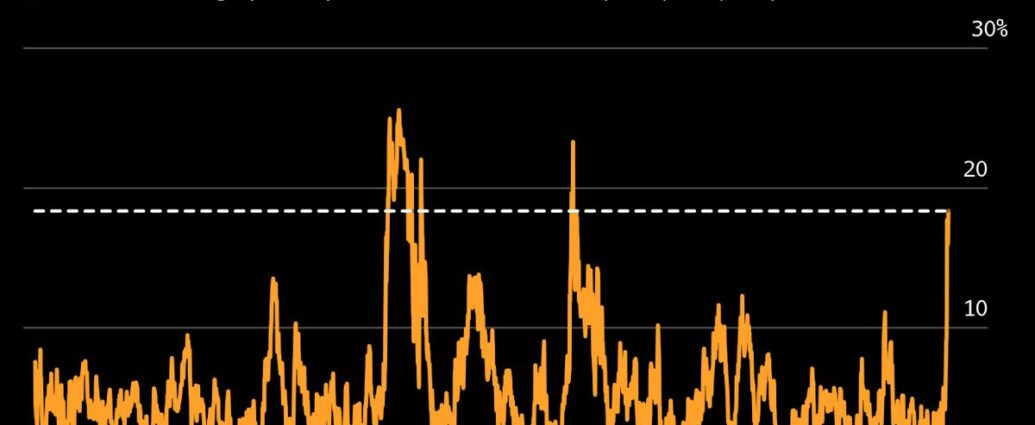


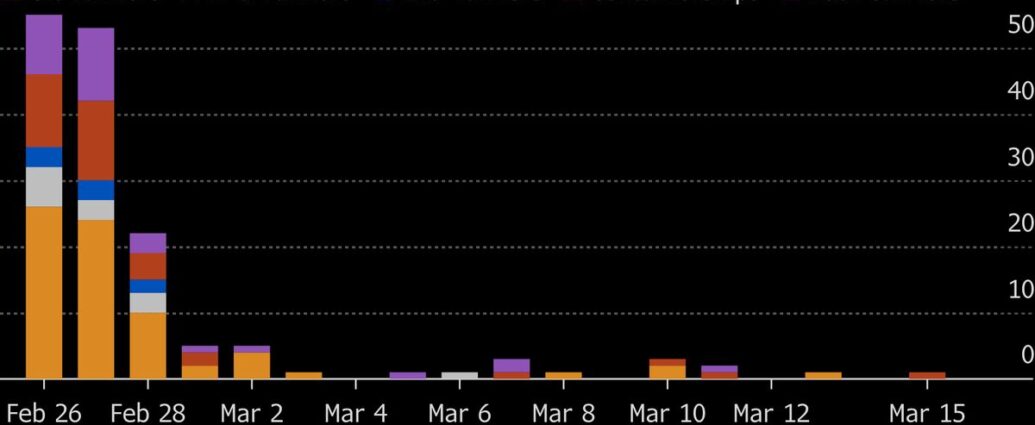


Nebius, Micron, And NIO Are Among the Top 10 Large-Cap Gainers Last Week (March 9-March 13): Are the Others in Your Portfolio?
These ten large-cap stocks were top performers last week.
Artificial intelligence momentum, EV optimism and data-center demand powered a sharp rally across several large-cap technology and energy stocks last week.
Are they a part of your portfolio?
Nebius Group (NASDAQ:NBIS) increased 29.59% this week after the company announced a partnership with NVIDIA Corporation (NASDAQ:NVDA) to deploy hyperscale cloud for AI needs. The partnership includes a $2 billion investment from NVIDIA.
Sandisk Corporation (NASDAQ:SNDK) jumped 27.60% this week.
NIO Inc. (NYSE:NIO) gained 21.12% this week after the Chinese electric vehicle maker released its latest quarterly results. HSBC upgraded the stock from Hold to Buy and raised its price target …
This post was originally published here

What To Expect In Tonight’s Academy Awards



75% of resumes never reach a human: the new rules of job searching in the AI era
More than 1.17 million U.S. jobs were cut in 2025 — the most since the pandemic hit. Now, AI is rebuilding what was torn down, and it’s not building the same thing.
To navigate the dust and noise of this rebuild, it helps to study the blueprint taking shape: Automated job applications, AI-powered digital twins, lifelong career copilots – and, critically, how to wield powerful AI systems without surrendering the cognitive advantages that make human work indispensable.
Living near an active construction site often feels like an embodiment of chaos. It’s loud, dusty, disorienting, and permanently in flux. And that’s the most precise metaphor of what’s happening now to the global labor market.
The pre-Covid structures were torn down by a tide of mass layoffs. In 2025, the U.S. alone had 1.17 million jobs cut. Now, new AI-powered frameworks are rising in their place. This transformation is happening fast, and we all are trying to adapt to it on the go.
How AI Crashed the Old Labor Model
HRs remember Covid-19 for its aggressive recruitment. The tech surge, caused by the sharp need for digital services, seemed limitless, and companies staffed up like never before to outrun competitors. Within two years, this human resources bubble burst, with thousands of those newly hired being laid off.
Analysts painted a gloomy picture of the future of work, that promised hiring freezes and cost-cutting strategies. But almost as quickly as the contraction began, AI entered the enterprise mainstream. The foundations of the previous labor model were already weakened, so instead of reinforcing old systems, AI simply crashed them and began building new ones
So here we are, in the midst of a global work construction site, with no hard hats on. Many job seekers today feel stuck in limbo, with previous playbooks outdated and new rules being written in real time through trial and error and experimentation with AI automation. To break through this vicious circle, we all need to learn to make use of best practices without hurting ourselves in the process.
The Real Level of AI Integration
Strip away the headlines, and the real story of AI in the workplace appears less about transformation and more about expectation. While some bold optimistic slogans encourage “stop hiring humans”, measurable impact of AI inside organizations remains limited – according to Gartner, only one in 50 AI investments delivers transformational value.
This AI optimism is one of the main drivers of the job-market transformations. Corporate leaders are restructuring teams and redesigning hiring workflows based on what AI is expected to do. For job-seekers, that distinction matters as organizational commitment to AI is already reshaping skill demand. McKinsey reports a sevenfold rise in the AI fluency requirements among applicants in the last two years.
Career strategy today must include the ongoing building of this AI fluency: Familiarity with AI services, stronger prompting skills, active implementation of AI in everyday work processes and the ability to showcase both qualitative and quantitative gains. All of this should already be part of an applicant’s professional story, transmitted through social networks, résumés, cover letters and real-world use cases.
Your AI Twin Will Apply Before You Do
Hiring is already shifting toward an environment where AI personas of applicants and employers “meet” before humans do. And this is not hypothetical. Engineer Charlie Cheng has already created a digital twin open for recruiters to talk to.
Besides AI doppelgangers, recruiters will make their own “AI portraits” of potential employees. Here’s how it works: Automated tools scan digital profiles, LinkedIn histories, portfolios and broader web traces to evaluate candidates long before a recruiter reads a résumé. This is why highlighting certifications, AI literacy and use cases should already be actively highlighted.
But visibility cuts both ways. The same systems mapping professional strengths also surface negative digital traces, like hateful comments to a biting social media post, reputational risks, negative reviews at job-search platforms, which will be considered by recruiters and their personal algorithms.
AI tools may be making workers less capable of the thinking that AI can’t replicate
By 2027, most hiring processes are expected to include certifications or assessments measuring workplace AI proficiency – not just the ability to use generative tools, but also critical thinking, creativity, communication and subject-matter expertise. While not yet mandatory, there already exist certification programs that would strengthen a CV, like AWS Certified AI Practitioner or MIT’s Professional Certificate Program in Machine Learning and Artificial Intelligence.
This necessity surged from the latest findings on Gen AI influence on workers’ cognitive offloading. As people actively rely on algorithms to write, analyze, summarize and ideate, they risk outsourcing core thinking processes. Over time, this can erode memory, problem-solving endurance and creative synthesis – the very cognitive advantages that differentiate humans from machines.
While organizations are focused on AI integration and predicting performance advancements, there’s far less effort into understanding how people themselves will change as they integrate these tools into daily workflows. Yearly professional AI upskilling will become part of the human resource corporate education. Until then – it’s the responsibility of workers to keep the cognitive load balanced.
Your Career Copilot is Coming
The next shift is how workers navigate their own careers. The near future points to hyper-personalized AI career assistants – always-on agents that understand not just your résumé and certifications, but your goals, struggles, ambitions and growth trajectory.
These copilots will track skills, recommend learning paths, flag market opportunities and guide decisions from job searches to career pivots. This is all in addition to basic AI opportunities like tailoring applications and interview prep. Feeling afraid to negotiate a salary rise? A personal career coach will help build a data-based scenario, offering realistic rise expectations and what objections there may arise.
AI companies are already developing such deeply personalized career agents designed to align individual potential with market needs. This way, career management is shifting from reactive guesswork to continuous, AI-guided strategy.
How Humans Stay Afloat
In this environment, open-mindedness and careful observation are the major survival skills. The old job-search routines may lead to recruiters’ silence. Not because of people but Applicant Tracking Systems, declining 75% of resumes. This transition is still unfolding, and its final shape is far from fixed.
There is, however, a more-or-less visible direction. Those who learn to balance automation with human judgment, efficiency with authenticity, and speed with depth will remain valuable regardless of how the tools evolve.
Because even as AI redraws workflows and entire professions, the core of work remains human. Meaning, responsibility, trust – these are not lines of code. And for those willing to keep learning, observing, and adjusting, the construction site of today is not just a place of disruption, but of opportunity.
The opinions expressed in Fortune.com commentary pieces are solely the views of their authors and do not necessarily reflect the opinions and beliefs of Fortune.
This story was originally featured on Fortune.com
This post was originally published here
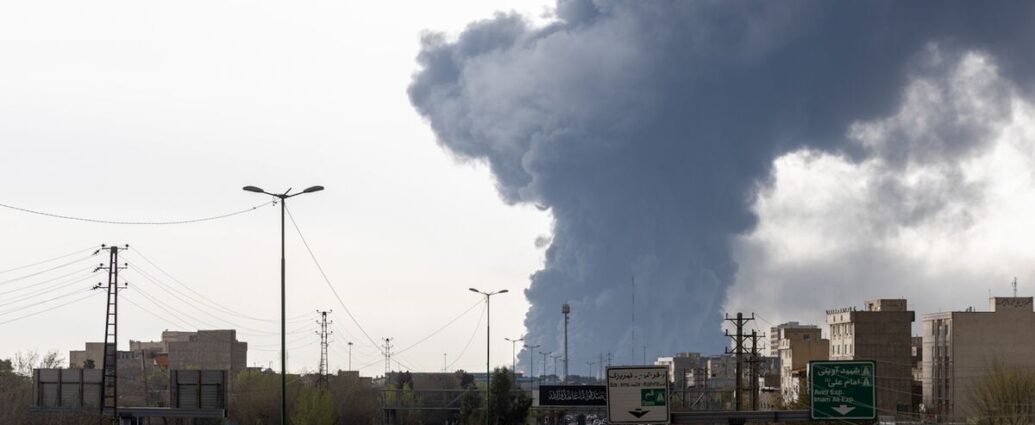
New Strikes In Iran As War Enters Day 16

The states where Americans pay the most — and least — for electricity
Where Americans live can make a striking difference in what they pay to keep the lights on, with typical monthly electric bills in some states more than triple those in others.
The latest figures from the U.S. Energy Information Administration put the national average residential electricity price at 17.24 cents per kilowatt-hour, up 6% from a year earlier, based on average residential prices and an assumed monthly household use of 900 kilowatt-hours, a common benchmark for a typical home.
AMERICANS HIT WITH SOARING ELECTRICITY BILLS AS PRICE HIKES OUTPACE INFLATION NATIONWIDE
North Dakota has the lowest average residential rate in the country at 11.02 cents per kilowatt-hour, while Hawaii has the highest at 41.62 cents per kWh.
But Hawaii’s island geography makes it something of an outlier, leaving California, Rhode Island, Massachusetts and New York among the clearest mainland examples of high electricity costs. Nebraska, Idaho, Oklahoma and Arkansas also rank among the cheapest states.
GAS PRICES SURGE, PINCHING AMERICANS AND HANDING THE GOP A NEW MIDTERM HEADACHE
Those differences are not spread evenly across the country. Many of the lower-cost states are clustered in the Plains and parts of the South, while some of the highest prices are concentrated in the Northeast and on the West Coast.
For households already strained by inflation, those differences can translate into a meaningful monthly burden, especially in places where heavy air conditioning or heating use pushes consumption higher.
The wide gap reflects factors that go beyond politics, including fuel mix, weather, regulation, infrastructure costs and household energy use.
For consumers, however, the bottom line is simple: where they live can have a major impact on one of the few monthly bills they cannot easily avoid.
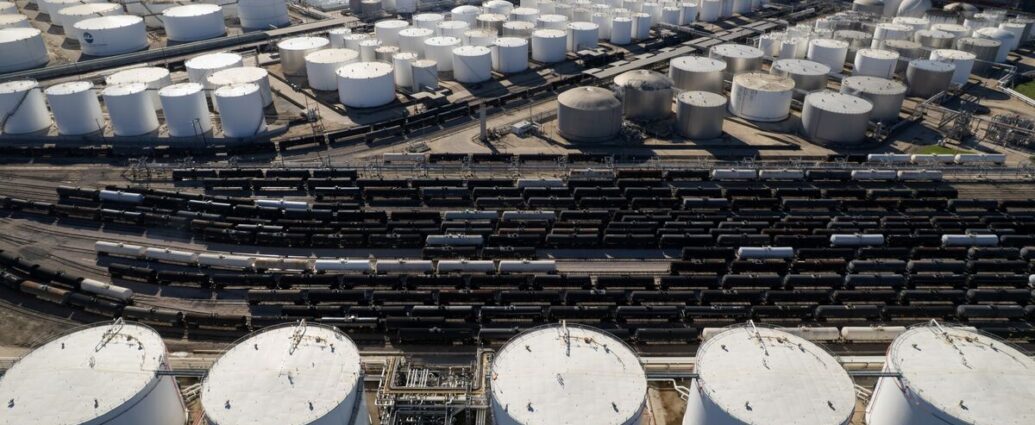
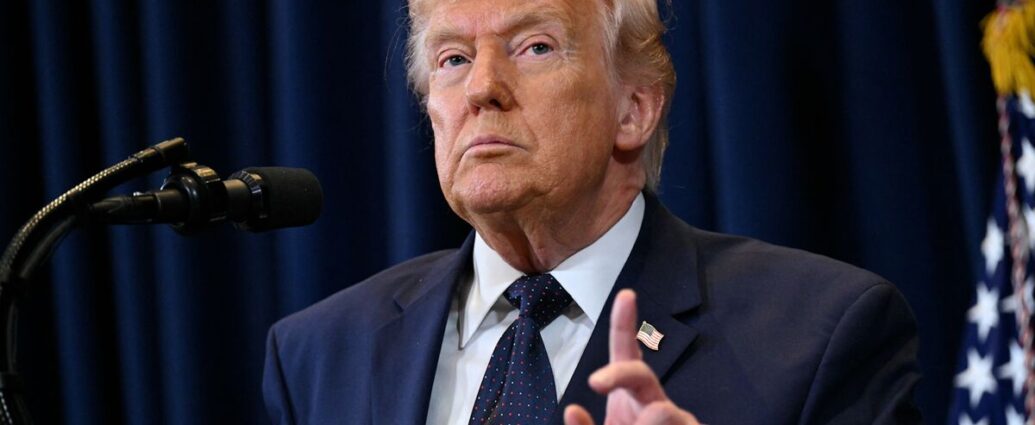

Trump admin invokes Defense Production Act, directs oil company to restart California operations
The Trump administration invoked the Defense Production Act to order an oil company to restart shuttered offshore operations in California, saying the move is necessary to address oil supply disruption risks and reduce reliance on foreign crude.
Energy Secretary Chris Wright on Friday directed Sable Offshore Corp., an oil and gas company headquartered in Houston, to restore operations at the Santa Ynez Unit and the Santa Ynez Pipeline System off the coast of Santa Barbara, according to a statement from the Department of Energy (DOE).
The order prioritizes restarting oil production and pipeline capacity to move crude through the Las Flores Pipeline System to Pentland Station, a key inland hub for transporting offshore oil to refineries, and into interstate pipelines.
“California once supplied nearly 40 percent of U.S. oil production, but decades of radical state policies targeting reliable energy sources have driven a decline in domestic output while fuel demand remains among the highest in the nation,” the DOE said. “Today, more than 60 percent of the oil refined in California comes from overseas, with a significant share traveling through the Strait of Hormuz—presenting serious national security threats.”
The agency said Sable’s facility can produce about 50,000 barrels of oil per day, roughly a 15% increase in California’s in-state oil production, and could replace about 1.5 million barrels of foreign crude each month.
“Today’s order will strengthen America’s oil supply and restore a pipeline system vital to our national security and defense, ensuring that West Coast military installations have the reliable energy critical to military readiness,” Wright said in a statement.
The directive, issued under authorities delegated through the Defense Production Act and related executive orders, also seeks to ensure that oil produced off California’s coast can more efficiently reach domestic refineries.
NEWSOM KNOCKED FOR ‘INSANE’ CALIFORNIA GAS PRICES AFTER BLAMING TRUMP FOR RISING COSTS
California Gov. Gavin Newsom condemned the order Friday, calling the Trump administration’s use of the Defense Production Act “reckless and illegal” and pledging to fight the directive.
His office argued that restarting the Sable Offshore pipeline would have little effect on global oil prices, citing estimates that its output would represent roughly 0.05% of total oil production.
The governor also pointed to the pipeline’s history, noting that a 2015 spill near Refugio State Beach released more than 140,000 gallons of crude oil and caused widespread environmental and economic damage along the Santa Barbara coast.
“California will not stand by while the Trump administration attempts to sacrifice our coastal communities, our environment, and our $51 billion coastal economy,” Newsom said in a statement. “The Trump administration and Sable are defying multiple court orders, and we will see them back in court.”


This 18-year-old college student accidentally emailed thousands of classmates—it turned his pet-sitting business into a valuable side hustle
Hector Gutierrez became an overnight campus celebrity at the University of Alabama earlier this year after an embarrassing email faux pas put him in the spotlight.
While applying for the school’s honor society, he mistakenly sent his business school professor’s recommendation letter to a college listserv with thousands of recipients.
“I started getting phone calls and messages saying, ‘Why did you email me? Why did you email me?’” Gutierrez told Fortune. “My Outlook started blowing up.”
While he initially found himself cringing at the mistake, the exposure turned out to be a boon for his small business. It made him a social media star, earning him a meeting with the university’s president, and landed him a feature in the school newspaper—all of which shone a spotlight on his small business.
Gutierrez, 18, started Hec’s Pet Sitting nearly three years ago. Instead of taking a traditional teen job at his local Publix supermarket, he wanted to start something of his own. The business he started as a high school student in South Florida, has grown into a registered LLC, with 10 part-time employees, and bringing in over $10,000 a year.
“I started simply by going around my neighborhood posting flyers, saying, local pet sitter,” he said. “I was fortunate by having one person trust me, and I did a great job taking care of their dog, and then it started expanding, and then there was a point where I needed to hire people.”
Now in his first year studying business management in Alabama, Gutierrez’s accidental fame is opening new doors—including potential clients in his college town. The business income also helps offset the more than $50,000 annual cost of attendance he faces as an out of state student. But balancing a growing company with a full course load is no small feat—and he’s far from the only one trying.
Gen Z isn’t waiting for a job offer—it’s building its own
As traditional job pathways grow less reliable, a growing number of young workers are redefining what work looks like—and starting earlier than ever.
A 2023 Samsung and Morning Consult survey of U.S. students ages 16 to 25 found that 50% of respondents have aspirations to start their own business. Similarly, a survey from Intuit found that nearly two-thirds of young people aged 18 to 35 have started—or plan to start—a side gig.
The job market isn’t offering much reassurance in the meantime. Three in five college seniors feel pessimistic about their career prospects, according to a Handshake survey.
Jacob Stone Humphries, the University of Alabama business instructor who wrote Gutierrez’s letter of recommendation, said it comes down to a generation confronting deep uncertainty.
“Gen Z can see the writing on the wall. When you’re not sure what the future holds, you start building things yourself. Entrepreneurship becomes less about ambition and more about survival,” he told Fortune. “The students we work with every day understand that instinct; they just need guidance on how to channel it well.”
AI is both a driver of that uncertainty and, increasingly, a tool to work around it. What once cost hundreds of dollars to build—a business plan, website, or marketing materials—can now be generated in minutes. Chatbots can also serve as a de facto business partner, offering guidance on everything from payroll basics to deciphering complex tax language.
Elijah Khasabo is another example of what’s possible. Still completing his senior year at the University of Massachusetts Amherst, he built Vidovo, a user-generated content platform startup on track to bring in seven figures in revenue.
“I truly believe it’s just a generational thing,” he previously told Fortune. “I think we have the digital advantage.”
Business mistakes are a rite of passage—learning from them could be what leads to success
While in the moment, something like an accidental email can seem disastrous—but learning from mistakes is often what drives success. It’s a mantra that even top business leaders have embraced.
For example, Linda Tong, CEO of Webflow, a $4 billion tech firm, said it has been integral to her career.
“Looking back on my experiences, from being put into roles far ahead of when I was ready, failing to be a great teammate, and letting my ego get the better of me, I wouldn’t trade those experiences for anything,” she wrote for Fortune last year. “They shaped the leader I am today. They were painful in the moment, but lifelong lessons that ground me.”
The late Apple cofounder Steve Jobs admitted that his fear of death ultimately drove his decisions in life, and allowed him to overcome that fear of failure.
“Remembering that I’ll be dead soon is the most important tool I’ve ever encountered to help me make the big choices in life,” he told Stanford’s 2005 graduating class. “Because almost everything – all external expectations, all pride, all fear of embarrassment or failure – these things just fall away in the face of death, leaving only what is truly important.”
It’s advice Gutierrez has already internalized—acidentally emailing thousands of strangers notwithstanding: “Always remain patient, trust in God, and never give up.”
This story was originally featured on Fortune.com
This post was originally published here
Ulta Beauty CEO says when you get passed up for career opportunities ‘you can either choose to be bitter or you can be better’
Being snubbed or overlooked for a role is a near universal experience in a career journey. When a setback hits, you should face it with grace and persistence, not resentment, according to Ulta Beauty CEO Kecia Steelman.
“There have been times in all of our careers where we’ve been passed up, or we didn’t get that next role when we felt like we were ready for it,” Steelman said at Fortune’s Most Powerful Women Conference in Washington, D.C., in October 2025. “And I said that the one thing that’s really true to me is, I think that you can either choose to be bitter or you can be better.”
Steelman took on the chief executive role at the beauty retailer in January 2025 after 11 years with the company, most recently as chief operating officer. Ulta’s stock is up 50% year-over-year and the company partnered with Beyoncé earlier last year as part of her Cowboy Carter tour, hosting in-store events and promoting the pop star’s Cécred hair brand.
The CEO prepared for her new role for years under former Ulta boss Dave Kimball, who led the beauty brand beginning in 2021.
“I learned as much as I could to prepare myself for the next role, and I think that actually allowed me to hit the ground running,” Steelman said. “If I would have been bitter, I could have left and taken a CEO job someplace else. I had plenty of opportunities, but this is the company that I wanted to be with, and I took that opportunity to be better instead of being bitter.”
What was Steelman’s path to CEO?
Prior to her time at Ulta, Steelman began her career as an assistant store manager at Target in 1993 before climbing the ranks at the big box retailer. She later held senior management roles at Home Depot and Family Dollar.
In the 10 months since starting as Ulta CEO, Steelman has worked to execute the company’s turnaround plan, including looking to implement agentic AI into the shopping experience, as well as building a base of millions of loyalty customers, who are still spending on non-essential beauty products even in times of economic uncertainty.
Steelman referred to her position as the “best job ever.”
“Our jobs are to make people feel really good about themselves,” she said. “I could think of a lot worse jobs out there than that.”
The road hasn’t been entirely smooth. In August 2025, Ulta and Target ended a shop-in-shop partnership that began in 2021. Target employees had shared experiences online of the shopping experience being underwhelming and instances of shoplifting and understaffing. Steelman said the ending of the partnership was a mutual decision and a “natural occurrence of business.”
“We had to get our swagger back,” she said of Ulta’s turnaround. “I felt like we lost our swagger just a little bit, and I feel like we’ve got our swagger back.”
A version of this story was published on Fortune.com on Oct. 14, 2025.
More on Ulta and the beauty industry:
- Tony Cuccio started with $200 selling beauty products on Venice Beach. Then he brought gel nails to the masses—and forged a $2 billion empire
- Ulta Beauty CEO Kecia Steelman says she has the best job ever: ‘My job is to help make people feel really good about themselves’
- Target and Ulta just broke up: Employees raised red flags about shoplifting, understaffing, and foot-traffic cannibalization
This story was originally featured on Fortune.com
This post was originally published here

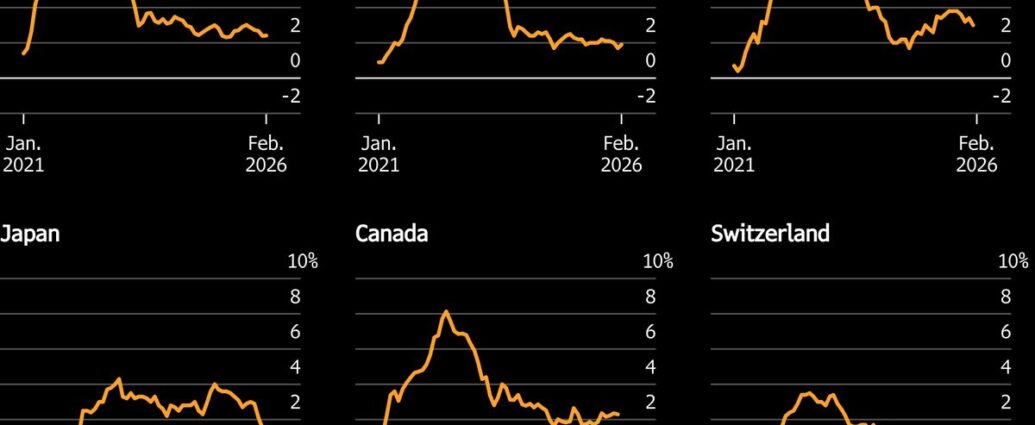
Sheryl Sandberg says Silicon Valley’s hypermasculine rhetoric is ‘terrible’—contributing to ‘one of the worst’ corporate climates she’s ever seen
Sheryl Sandberg, formerly chief operating officer at Meta (formerly Facebook) and author of the motivational leadership book Lean In: Women, Work, and the Will to Lead, has some thoughts on the hypermasculine corporate culture sweeping Silicon Valley: It’s “one of the worst” she’s ever seen.
Sandberg, who served for more than 14 years as Meta’s COO before stepping down in 2022, told CNBC corporate America has undergone a cultural shift, explaining, “Rhetoric matters. Who says what matters.”
“Yes, the environment is terrible, really—I think one of the worst you and I have seen in our careers—but we’ve seen this backsliding before, and that is not an excuse for companies not to do the right thing by all of their employees,” Sandberg told CNBC correspondent Julia Boorstin in December.
Sandberg’s comments stand out because her former boss, Facebook founder and Meta CEO Mark Zuckerberg, has been one of the leaders of Silicon Valley’s creep toward hypermasculinity. In an interview with podcaster Joe Rogan last year, Zuckerberg said while he encouraged fostering welcoming environments, he saw corporate America as “culturally neutered” and said it could use more “aggression” and masculine energy.
Meanwhile, President Donald Trump and the White House have also been on a crusade against diversity, equity, and inclusion (DEI) initiatives both in the public and private sectors. On his first day back in the White House, the president signed an executive order to eliminate all DEI initiatives in the federal government. Beyond the White House, the Trump administration has also ordered all federal agencies to “combat illegal private-sector DEI preferences.” At the same time, the Justice Department closely scrutinized dozens of universities, with some such as Northwestern University, Columbia University, and Cornell University having reached multi-million-dollar settlements with the government.
Some companies are also being scrutinized, such as Northwestern Mutual, which is being investigated by the Equal Employment Opportunity Commission for their DEI policies.
As the masculine and anti-DEI rhetoric has ramped up, women’s progress in the workplace has stalled, according to the 2025 Women in the Workplace study, administered by LeanIn.org and management consulting firm McKinsey, which surveyed 9,500 employees at 124 companies. Half of the companies surveyed are no longer making women’s career advancement a priority. Another 21%, Sandberg said, see women’s career advancement as a low priority, or not a priority at all—and these are companies that are choosing to participate in the study, she added.
All this adds up to a five-alarm fire for gender equity advocates, Sandberg said.
Succeeding at work and uplifting a team means leaders need to be hardcore, she said, but the way to foster that hardcore mentality is through empathetic and kind leadership that brings out the best in workers.
“These things are not at odds, and they’re also not particularly masculine or particularly feminine,” Sandberg said. “The best leaders, whether they’re male or female, have both.”
A version of this story originally published on Fortune.com on Dec. 17, 2025.
More on workplace culture:
- The Iran war is reviving remote work across the world — from Denmark to Vietnam
- The workplace benefit 95% of workers want but aren’t satisfied with is a pretty basic one: bereavement leave, study shows
- In the age of AI, better meetings might be your company’s secret weapon
This story was originally featured on Fortune.com
This post was originally published here

After 93 years and a 25-hour filibuster, Washington finally has an income tax, and billionaires are already packing their bags
After a grueling 25 hours of debate on the House floor, complete with an almost show-stopping filibuster effort of more than 81 amendments by Republicans to stop the bill from moving forward, Washington made history this week with the passage of a millionaires tax bill, which would create the first income tax in the state’s history.
On March 9, lawmakers passed a 9.9% tax on personal income above $1 million per year—a first for the income-taxless state. The final vote was 52–46, and involved the longest floor debate in Washington history, far exceeding the previous record of nine hours.
“We knew it was going to be a pretty major endeavor,” Rep. Brianna Thomas, a Democrat who supported the measure, told Fortune. “We’ve got 93 years of precedent in front of us, behind us, around us at all times on the conversation around an income tax.”
Washington was one of only nine states with no income tax, and has operated on essentially the same tax structure—reliant solely on sales and business taxes—since it was built on an agrarian, timber, and shipping economy in the early 20th century. Washington last voted on an income tax in 1932, when it passed overwhelmingly, only to be struck down by the state Supreme Court a year later on the grounds that income is classified as property under the state constitution, requiring a uniform taxation scheme. In 2010, state legislators attempted to introduce another income tax, only this one didn’t even come close to passage.
For Thomas, the economy has simply outgrown the code. Washington has now become the home of global multitrillion-dollar organizations Amazon, Microsoft, and Boeing, and it’s staring down a projected budget deficit of $10 billion to $12 billion over the next four years.
“Washington state was originally built on an agrarian and timbered economy,” she said. “We still have a tax code based on apples and cherries while building some global-leading technology every which way you throw a rock.”
The result is a tax structure that economists have consistently ranked among the most regressive in the country. According to the Institute on Taxation and Economic Policy, the top 1% of earners in Washington pay just 4.1% of their income in state and local taxes. The bottom 20%, however, pay 13.8%.
“We’ve got more millionaires and billionaires than we’ve ever had, and they’re paying, effectively, a 4% tax rate,” Thomas said. “Meanwhile, you got working folks paying 11% of their income, and the lowest-income people paying 14%. Isn’t it unfair for those who have the most, to pay the least, and those who have the least to pay, the most, proportionally?”
The bill imposes a 9.9% tax on personal income above $1 million annually, affecting roughly 21,000 filers, or less than 1% of Washington’s population, and is projected to generate $3.5 to $4 billion per year once it takes effect in 2029. It also includes tax relief for everyone else: sales tax exemptions on diapers, over-the-counter medications, and personal hygiene products, plus an expanded Working Families Tax Credit.
Passage wasn’t clean. The House considered 81 amendments over 25 hours, with Democrats working to bring their own members along.
“There was not unified assent for the bill on the Democratic side,” Thomas told Fortune.
The Senate then passed a concurrence vote 27–21 (speaking with Fortune prior to the Senate’s vote, Thomas joked the 25 hours of debate would likely deter any similar debacle from occurring in the Senate: “The Senate will concur, because they don’t want to do a 25-hour floor battle. That’s just not how the Senate rolls.”) The bill now heads to Gov. Bob Ferguson, who has signaled he will sign it.
But Thomas was careful about what victory actually means.
“We’ve got to let it sit,” she said. “We have to get through our own Supreme Court review again, and it still has to go to a vote of the people. There are many miles to go before this is actually the law of the land.”
Washington gets a millionaires tax, others push one for billionaires
Washington’s bill is the most concrete step yet in a wider national push to tax extreme wealth. Recently, Sen. Bernie Sanders (I-Vt.) and Rep. Ro Khanna (D-Calif.) introduced the “Make Billionaires Pay Their Fair Share Act,” a proposed 5% annual wealth tax on the roughly 938 Americans with a net worth above $1 billion, a group Sanders says collectively holds $8.2 trillion. In its first year, revenue would fund a one-time $3,000 check for households earning $150,000 or less; going forward, it would target Medicaid, teacher salaries, and childcare costs. Sanders projects the bill would generate $4.4 trillion over its first decade.
Similarly, in California, a labor union put forward the 2026 Billionaire Tax Act, a ballot initiative that would impose a one-time 5% tax on residents with a net worth above $1 billion. If passed, it could generate approximately $100 billion in one-time revenue, directed toward healthcare and food assistance.
“The haves have more than they’ve ever had,” Thomas said. “The have nots have less than they’ve ever had. That’s just not going to be sustainable for everyday folks.”
Almost immediately after the bill passed, billionaire Starbucks founder Howard Schultz announced he was swapping Seattle for Miami, where he recently paid $44 million for a penthouse. Although he has not confirmed the passage of the bill is why he chose to leave, Schultz, who is worth $6.6 billion, wrote on LinkedIn he hoped Washington would “remain a place for business and entrepreneurship to thrive.”
He also isn’t the first to leave Washington. Amazon founder Jeff Bezos similarly moved to Miami in 2023, costing the state an estimated $954 million in tax revenue in 2024 alone. When Bezos sold 50 million Amazon shares that year from Florida, he saved an estimated $610 million in state taxes by no longer being a Washington resident.
Despite Schultz’s departue, Thomas didn’t flinch. “I certainly hope Washington is more than a spreadsheet or a tally sheet to someone,” she said. “This isn’t a math problem to me. This is a policy problem rooted in the fact that I care about my community.”
This story was originally featured on Fortune.com
This post was originally published here
Banning institutional investors from buying homes will backfire for many Americans, experts say
President Donald Trump and Senate Democrats have finally found something they can agree on: banning institutional investors from buying single-family rentals. But it won’t be the cure-all to the housing affordability crisis they think it will be.
“We want homes for people, not for corporations,” Trump said during the State of the Union address in February, touting his plan to cap institutional ownership to 100 single-family homes.
On Thursday, the Senate voted 89-10 to pass a bill containing number of measures to make housing more affordable, including banning any investor that owns at least 350 homes from buying more.
The proposed bans come as the U.S. housing market is facing a shortage of 4.7 million units, an all-time high according to Zillow, and the median age of the average first-time homebuyer in the United States has shot up to 40 years old.
The affordability crisis is real, but economists say both proposals won’t break fundamental barriers to homeownership and may backfire for the low-income Americans the bills aim to help.
“People want to identify a boogeyman that can say, ‘Hey, this is the problem, and give me an easy button to solve it right now,’” rental housing economist Jay Parsons told Fortune. “It’s an emotionally satisfying answer, even if it’s not a real solution.”
He said targeting large institutional investors—who only own about 3% of the single-family rental market—is unlikely to have an impact on affordability for lower-income Americans and could leave millions unable to afford a place to live.
Institutional investors serve tenants who are typically locked out of the gates of homeownership for reasons that have nothing to do with corporations. Parsons said many rent because they cannot meet the requirements to apply for traditional mortgages due to lower incomes and credit scores, or they can’t afford the additional $1,000 a month in homeownership costs.
“These are real people, real families, who live in these homes, and the assumption and the narrative is they would be homeowners, if not for the fact that the investors own these houses,” Parsons said. “The reality is that most of them can’t.”
Homeownership is a ‘sacred cow’
Despite Trump’s claim that the U.S. is at risk of being “a nation of renters,” there are about a million fewer single-family rentals than a decade ago, and the share of single-family homes being rented has gradually decreased since 2014, according to the National Association of Realtors.
Meanwhile, Sean Dobson, the CEO of real estate investing giant The Amherst Group, said he sees younger generations rethinking which assets are the most valuable, challenging the notion that homeownership is a “sacred cow.”
Homeowners can lose up to 9% of a property’s value from transaction fees, which have increased as home prices have soared over time, making mortgages become less valuable. Rather than “being tied to one asset in one town,” young people are prioritizing freedom, saving, personal choice, and life balance, he said.
Dobson also argued people should adjust their expectations to align with longer life expectancy and explained that Americans are accomplishing major milestones like getting married or having children at later ages as life becomes less affordable.
Amherst rents to more than 200,000 people, and 71% of its current residents would not be approved for a mortgage at the current credit and income standards, according to internal research shared with Fortune. An 85% majority of their residents would not qualify to buy the homes they live in today, Dobson said.
The average single-family renter has a FICO score of 650 and a household income of $88,000, much lower than the average single-family homeowner, who has a FICO score of 730 and an income of more than $150,000, according to Amherst Group data. A lower credit score often leads to higher interest rates, so renting from institutional investors is often cheaper.
Renting also has become a way for low- and moderate-income Americans to avoid the traps of subprime mortgages, Parsons, the economist, said. At the same time, mortgage delinquency rates for low-income Americans have been increasing over the past few years due to growing unemployment and higher home prices, according to the New York Federal Reserve.
Moving the needle on affordability
Banning institutional investors would reduce rental housing supply, slow down new unit development, and displace more than a million people from their homes, the National Rental Home Council said in a statement to Fortune. The council’s members include some of the largest single-rental family owners, including Invitation Homes, Progress Residential, American Homes 4 Rent, and Tricon Residential.
“There’s a real problem in America where we have a severe shortage of affordable, quality housing of all types,” Laurie Goodman, an institute fellow at the economic policy think tank Urban Institute, told Fortune.
Zoning laws as well as high land, labor, and materials costs are the main reasons for the 4.7 million housing unit shortage and high costs, she said.
Preventing institutional investors from buying single-family homes will just mean a small investor gets it, Goodman added. In fact, as interest rates and maintenance costs have gone up, institutional investors have slowed down purchase units in recent years, she explained.
“Banning a small piece of the market does nothing to solve for the actual affordability challenges facing people who want to buy a house,” Parsons said. “Ninety percent of single-family rental investors are smaller local moms-and-pops.”
This story was originally featured on Fortune.com
This post was originally published here

China App Store Fee Cut, Musk’s Apple Tribute And More: This Week In Appleverse
As we gear up for the new week, let’s take a look at some of the top stories from the week. These include Apple Inc. (NASDAQ:AAPL) CEO Tim Cook‘s decision to join the company, Apple’s early success in Formula 1, a significant change in Apple’s App Store fees in China, Elon Musk‘s tribute to Apple, and the ongoing debate about market concentration.
Tim Cook’s Crucial Question Before Joining Apple: ‘I Was Warned…’
Tim Cook, the CEO of Apple, revealed the pivotal question that led him to leave a secure job at IBM (NYSE:IBM) for a struggling Apple. Despite the skepticism surrounding Apple’s future, Cook was swayed by Steve Jobs’ vision and his own conviction.
Apple’s Early Formula …
This post was originally published here
Nigeria’s online content creator market has boomed. Can the skit-makers and streamers make it pay?
As platforms make less from advertising, creators are struggling to monetise work – leading to calls for more government investment and tax breaks
On a humid afternoon in Lagos, a shoot for a comedy skit is under way on a set that looks more like a small film production.
Dozens of people mill about: lighting assistants, a sound engineer, a makeup artist and even a content creator recording unscripted behind-the-scenes footage. At the centre is Broda Shaggi, born Samuel Animashaun Perry, who is issuing instructions, rehearsing lines and performing caricatures.
This post was originally published here