

Cathie Wood Going Cold On Big Tech? Ark Sells Nvidia, AMD, Meta And Google Stock — AI Darlings Get The Dump
On Thursday, Cathie Wood-led Ark Invest executed significant trades, focusing on reducing holdings in major tech companies. Among the prominent trades were the sales of shares in Meta Platforms Inc. (NASDAQ:META), NVIDIA Corp (NASDAQ:NVDA), Advanced Micro Devices Inc. (NASDAQ:AMD), Taiwan Semiconductor Manufacturing Co Ltd (NYSE:TSM), Broadcom Inc. (NASDAQ:AVGO), Alphabet Inc. (NASDAQ:GOOG), and Netflix Inc. (NASDAQ:NFLX). These trades reflect a strategic shift in Ark’s investment approach amid market fluctuations.
The Meta Platforms Trade
Ark Invest made a notable move by selling shares of Meta Platforms across multiple ETFs, including ARK Blockchain & Fintech Innovation ETF (BATS:ARKF), ARK Innovation ETF (BATS:ARKK), and ARK Next Generation Internet ETF (BATS:ARKW). The sales amounted to 76,622 shares, valued at approximately $42 million, based on the closing price of $547.54.
This decision comes amid challenges for Meta, including a $6 million verdict related to product liability and ongoing layoffs. The broader market weakness and rising energy costs also contribute to the pressure on …
This post was originally published here

Exclusive: Anthropic acknowledges testing new AI model representing ‘step change’ in capabilities, after accidental data leak reveals its existence
AI company Anthropic is developing and has begun testing with early access customers a new AI model more capable than any it has released previously, the company said, following a data leak that revealed the model’s existence.
An Anthropic spokesperson said the new model represented “a step change” in AI performance and was “the most capable we’ve built to date.” The company said the model is currently being trialed by “early access customers.”
Descriptions of the model were inadvertently stored in a publicly-accessible data cache and were reviewed by Fortune.
A draft blog post that was available in an unsecured and publicly-searchable data store prior to Thursday evening said the new model is called “Claude Mythos” and that the company believes it poses unprecedented cybersecurity risks.
The same cache of unsecured, publicly discoverable documents revealed details of a planned, invite-only CEO summit in Europe that is part of the company’s drive to sell its AI models to large corporate customers.
The AI lab left the material, including what appeared to be a draft blog post announcing a new model, in an unsecured, public data lake, according to documents separately located and reviewed by Roy Paz, a senior AI security researcher at LayerX Security, a computer and network security company, and Alexandre Pauwels, a cybersecurity researcher at the University of Cambridge.
In total, there appeared to be close to 3,000 assets linked to Anthropic’s blog that had not been published previously on the company’s news or research sites that were nonetheless publicly-accessible in this data cache, according to Pauwels, who Fortune asked to assess and review the material.
After being informed of the data leak by Fortune on Thursday, Anthropic removed the public’s ability to search the data store and retrieve documents from it.
In a statement provided to Fortune, Anthropic acknowledged that a “human error” in the configuration of its content management system led the draft blog post to being accessible. It described the unpublished material that was left in an unsecured and publicly-searchable data store as “early drafts of content considered for publication.”
As well as referring to Mythos, the draft blog post also discussed a new tier of AI models that it says will be called “Capybara”. In the document, Anthropic says: “’Capybara’ is a new name for a new tier of model: larger and more intelligent than our Opus models—which were, until now, our most powerful.” Capybara and Mythos appear to refer to the same underlying model.
Currently, Anthropic markets each of its models in three different sizes: the largest and most capable model versions are branded Opus, while a slightly faster and cheaper, but less capable, versions are branded Sonnet, and the smallest, cheapest, and fastest are called Haiku. However, in the blog post, Anthropic describes Capybara as a new tier of model that is even larger and more capable than Opus, but also more expensive.
“Compared to our previous best model, Claude Opus 4.6, Capybara gets dramatically higher scores on tests of software coding, academic reasoning, and cybersecurity, among others,” the company said in the blog.
The document also said the company had completed training “Claude Mythos,” which the draft blog post described as “by far the most powerful AI model we’ve ever developed.”
In response to questions about the draft blog post, the company acknowledged training and testing a new model. “We’re developing a general purpose model with meaningful advances in reasoning, coding, and cybersecurity,” an Anthropic spokesperson said. “Given the strength of its capabilities, we’re being deliberate about how we release it. As is standard practice across the industry, we’re working with a small group of early access customers to test the model. We consider this model a step change and the most capable we’ve built to date.”
The document Fortune and the cybersecurity experts reviewed consists of structured data for a webpage, complete with headings and a publication date, suggesting it forms part of a planned product launch. It outlines a cautious rollout strategy for the model, beginning with a small group of early-access users. The draft blog notes that the model is expensive to run and not yet ready for general release.
Significant new cybersecurity risks
The new AI model poses significant cybersecurity risks, according to the leaked document.
“In preparing to release Claude Capybara, we want to act with extra caution and understand the risks it poses—even beyond what we learn in our own testing. In particular, we want to understand the model’s potential near-term risks in the realm of cybersecurity—and share the results to help cyber defenders prepare,” the document said.
Anthropic appears to be especially worried about the model’s cybersecurity implications, noting that the system is “currently far ahead of any other AI model in cyber capabilities” and “it presages an upcoming wave of models that can exploit vulnerabilities in ways that far outpace the efforts of defenders.” In other words, Anthropic is concerned that hackers could use the model to run large-scale cyberattacks.
The company said in the draft blog that because of this risk, its plan for the model’s release would focus on cyber defenders: “We’re releasing it in early access to organizations, giving them a head start in improving the robustness of their codebases against the impending wave of AI-driven exploits.”
The latest generation of frontier models from both Anthropic and OpenAI have crossed a threshold that the companies say poses new cybersecurity risks. In February, when OpenAI released GPT-5.3-Codex, the company said it was the first model it had classified as “high capability” for cybersecurity-related tasks under its Preparedness Framework—and the first it had directly trained to identify software vulnerabilities.
Anthropic, meanwhile, navigated similar risks with its Opus 4.6, released the same week. The model demonstrated an ability to surface previously unknown vulnerabilities in production codebases, a capability that the company acknowledged was dual-use, meaning that it could both help hackers as well as help cybersecurity defenders find and close vulnerabilities in code.
The company has also reported that hacking groups, including those linked to the Chinese government, have attempted to exploit Claude in real-world cyberattacks. In one documented case, Anthropic discovered that a Chinese state-sponsored group had already been running a coordinated campaign using Claude Code to infiltrate roughly 30 organizations—including tech companies, financial institutions, and government agencies—before the company detected it. Over the following ten days, Anthropic investigated the full scope of the operation, banned the accounts involved, and notified affected organizations.
An exclusive executive retreat
The leak of not-yet-public information appears to stem from an error on the part of users of the company’s content management system (CMS), which is the software used to publish the company’s public blog, according to cybersecurity professionals.
Digital assets created using the content management system are set to public by default and typically assigned a publicly accessible URL when uploaded—unless the user explicitly changes a setting so that these assets are kept private. As a result, a large cache of images, PDF files, and audio files seem to have been published erroneously to an unsecured and publicly-accessible URL via the off-the-shelf content management system.
Anthropic acknowledged in a statement to Fortune that “an issue with one of our external CMS tools led to draft content being accessible.” It attributed this issue to “human error.”
Many of the documents appeared to be discarded or unused assets for past blog posts like images, banners, and logos. However, several appeared to be what were meant to be private or internal documents. For example, one asset has a title that described an employee’s “parental leave.”
The documents also included a PDF containing information about an upcoming, invite-only retreat for the CEOs of European companies being held in the U.K., and which Anthropic CEO Dario Amodei will attend. Names of the other attendees are not listed, but are described as Europe’s most influential business leaders.
The two-day retreat is described as an “intimate gathering” to engage in “thoughtful conversation” at an 18th-century manor-turned-hotel-and-spa in the English countryside. The document says that attendees will hear from lawmakers and policymakers about how businesses are adopting AI and experience unreleased Claude capabilities.
An Anthropic spokesperson told Fortune the event “is part of an ongoing series of events we’ve hosted over the past year. We look forward to hosting European business leaders to discuss the future of AI.”
This story was originally featured on Fortune.com
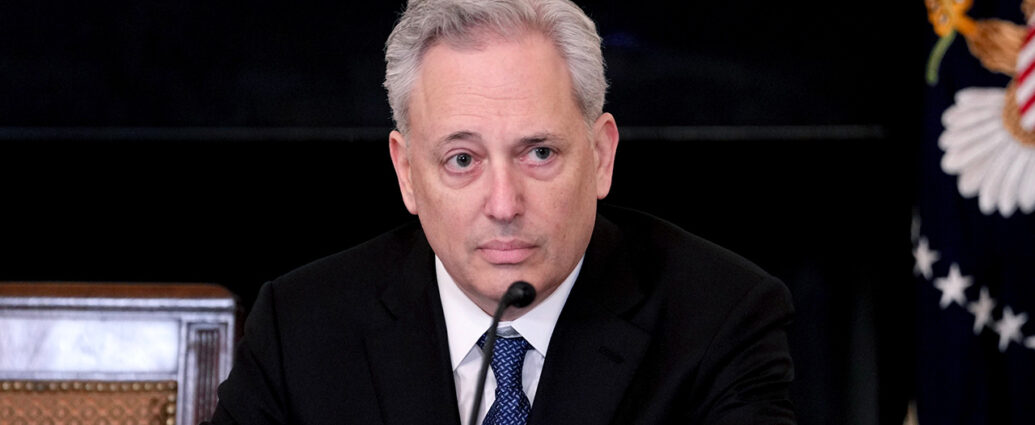
Trump names David Sacks co-chair of tech advisory council, expanding AI, crypto role
White House AI and crypto czar David Sacks was appointed as co-chair of the President’s Council of Advisors on Science and Technology (PCAST), expanding his role within the Trump administration.
President Donald Trump established PCAST through an executive order on Wednesday, aimed at bringing together leading figures in science and technology to advise the president and strengthen U.S. leadership in those fields.
The new role positions Sacks to oversee a broader range of technology issues and deepen the White House’s engagement with major tech companies.
“We’ve accomplished a lot in the first year, but the President wants to keep the pedal to the metal on everything tech. That’s exactly what we will do,” Sacks told FOX Business.
BLACKROCK CEO SAYS TRUMP ACCOUNTS COULD BE A ‘VERY SIGNIFICANT STEP’ FOR YOUNG AMERICANS
The council will include up to 24 members, including Nvidia CEO Jensen Huang, Meta CEO Mark Zuckerberg and Oracle co-founder Larry Ellison.
A senior adviser to the president told FOX Business that Sacks will continue serving as AI and crypto czar while taking on a broader portfolio.
“David will always be his crypto and AI czar, but to the admin more broadly, this new role will allow him to advise on a broader range of critical tech issues,” the adviser said.
As AI and crypto czar, Sacks has helped drive a series of policy shifts aimed at reshaping U.S. artificial intelligence strategy, including rolling back prior restrictions and expanding federal oversight.
CLASSIC BRAND BECOMING A STATUS SYMBOL IN TRUMP’S WHITE HOUSE
In his first week in office, Trump signed an executive order revoking a Biden-era policy that took a more cautious approach to emerging technologies like AI and blockchain.
Trump later signed another executive order in December 2025 establishing a national framework for AI regulation, preempting state-level rules. The order argued that U.S. companies must be able to innovate “without cumbersome regulation.”
In July 2025, the White House released its “Winning the AI Race” action plan, outlining more than 90 federal policy initiatives focused on accelerating innovation, building infrastructure and strengthening the nation’s position in global AI development and security.
More recently, the White House unveiled a national AI policy framework aimed at creating a “consistent” standard for development nationwide while addressing concerns around censorship, free speech and child protection.
Sacks has also played a key role in shaping the administration’s cryptocurrency agenda.
Within days of taking office, Trump signed an executive order promoting U.S. leadership in digital assets, banning the development of a central bank digital currency and creating a presidential working group on the issue.
In March 2025, Trump signed an order establishing a Strategic Bitcoin Reserve and a U.S. Digital Asset Stockpile, positioning the country as a leader in government-backed digital asset strategy.
Congress followed with the passage of the GENIUS Act in July 2025, the first major federal legislation on digital assets, creating a regulatory framework for payment stablecoins. The bill passed with bipartisan support in both chambers.
The administration has also moved to ease regulatory pressure on the crypto industry, including ending several SEC investigations and installing crypto-friendly leadership at key agencies.
The Consumer Financial Protection Bureau was defunded — a move Sacks called his “personal favorite” — eliminating what he described as the crypto industry’s most aggressive enforcement arm.
Exclusive: Anthropic left details of an unreleased model, invite-only CEO retreat, sitting in an unsecured data trove in a significant security lapse
AI company Anthropic has inadvertently revealed details of an upcoming model release, an exclusive CEO event, and other internal data, including images and PDFs, in what appears to be a significant security lapse.
The not-yet-public information was made accessible via the company’s content management system (CMS), which is used by Anthropic to publish information to sections of the company’s website.
In total, there appeared to be close to 3,000 assets linked to Anthropic’s blog that had not previously been published to the company’s public-facing news or research sites that were nonetheless publicly-accessible in this data cache, according to Alexandre Pauwels, a cybersecurity researcher at the University of Cambridge, who Fortune asked to assess and review the material.
After Fortune informed Anthropic of the issue on Thursday, the company took steps to secure the data so that it was no longer publicly-accessible.
Prior to taking these measures, Anthropic stored all the content for its website—such as blog posts, images, and documents—in a central system that was accessible without a login. Anyone with technical knowledge could send requests to that public-facing system, asking it to return information about the files it contains.
While some of this content had not been published to Anthropic’s website, the underlying system would still return the digital assets it was storing to anyone who knew how to ask. This means unpublished material—including draft pages and internal assets—could be accessed directly.
The issue appears to stem from how the content management system (CMS) used by Anthropic works. All assets—such as logos, graphics, or research papers—that were uploaded to the central data store were public by default, unless explicitly set as private. The company appeared to have forgotten to restrict access to some documents that were not supposed to be public, resulting in the large cache of files being available in the company’s public data lake, cybersecurity professionals who analyzed the data told Fortune. Several of the company’s assets also had public browser addresses.
“An issue with one of our external CMS tools led to draft content being accessible,” an Anthropic spokesperson told Fortune. The spokesperson attributed the issue to “human error in the CMS configuration.”
There have been several high-profile cases lately of technology companies experiencing technical faults and snafus due to problems with AI-generated code or with AI agents. But Anthropic, which makes the popular Claude AI models and has boasted of automating much of its own internal software development using Claude-based AI coding agents, said AI was not at fault in this case.
The issue with its CMS was “unrelated to Claude, Cowork, or any Anthropic AI tools,” the Anthropic spokesperson said.
The company also sought to downplay the significance of some of the material that had been left unsecured. “These materials were early drafts of content considered for publication and did not involve our core infrastructure, AI systems, customer data, or security architecture,” the spokesperson said.
While many of the documents appear to be discarded or unused assets for past blog posts, like images, banners, and logos, some of the data appeared to detail sensitive information.
The documents include details of upcoming product announcements, including information about an unreleased AI model that Anthropic said in the documents is the most capable model it has yet trained.
After being contacted by Fortune, the company acknowledged that is developing and testing with early access customers a new model that it said represented a “step change” in AI capabilities, with significantly better performance in “reasoning, coding, and cybersecurity” than prior Anthropic models.
The publicly-accessible data also included information about an upcoming, invite-only retreat for the CEOs of large European companies being held in the U.K. that Anthropic CEO Dario Amodei is scheduled to attend. An Anthropic spokesperson said the retreat was “part of an ongoing series of events we’ve hosted over the past year” and the company was “developing a general-purpose model with meaningful advances in reasoning, coding, and cybersecurity.”
Among the documents were also images that appear to be for internal use, including one image with a title that describes an employee’s “parental leave.”
It’s not the first time a tech company has inadvertently exposed internal or pre-release assets by leaving them publicly accessible before official announcements.
Apple has twice leaked information through its own website—once in 2018, when upcoming iPhone names appeared in a publicly accessible sitemap file hours before launch, and again in late 2025, when a developer discovered that Apple had shipped its redesigned App Store with debugging files left active, making the site’s entire internal code readable to anyone with a browser.
Gaming companies like Epic Games and Nintendo have also seen pre-release images, in-game assets, and other media leak via content delivery network systems (CDNs) or staging servers, similar to the data lake Anthropic used in this case. Even larger firms such as Google have accidentally exposed internal documentation at public URLs, and data associated with Tesla vehicles has been exposed through misconfigured third‑party servers.
However, the problem is likely exacerbated by AI coding tools now readily available on the market—including Anthropic’s own Claude Code.
These tools can automate crawling, pattern detection, and correlation of publicly accessible assets, making it far easier to discover this kind of content and lower the barriers to entry for doing so. AI tools like Claude Code or Codex can also generate scripts or queries that scan entire datasets, rapidly identifying patterns or file naming conventions that a human might miss.
This story was originally featured on Fortune.com
Two humanitarian aid boats heading to Cuba have gone missing, Mexico says
Navy searching for two boats that left Isla Mujeres last week bound for Havana with nine crew members of different nationalities on board
Mexico’s navy said on Thursday it had activated a search-and-rescue operation in the Caribbean to locate two sailboats carrying humanitarian aid to Cuba after the vessels failed to arrive in Havana as scheduled.
In a statement, the navy said the two boats left Isla Mujeres, in the Mexican Caribbean state of Quintana Roo, last week bound for Havana with nine crew members of different nationalities on board.
This post was originally published here
Kyle Sandilands’ termination case should not be a ‘royal commission’ into his career, shock jock’s lawyer tells court
Broadcaster takes Kiis FM to court to argue licensee was wrong to terminate him for serious breach of contract
Kyle Sandilands’ court case was not an occasion for a “royal commission” into his career and he just wants to get back to work quickly, the shock jock’s lawyers have told the federal court.
Sandilands, who was earning $10m a year to front the Kyle and Jackie O Show, has taken Kiis FM to court to argue the licensee, Commonwealth Broadcasting Corporation (CBC), was wrong to terminate him for serious breach of contract earlier this month.
This post was originally published here
‘Emergency situation’: Trump says he will order payments to TSA agents amid turmoil at US airports – as it happened
This blog is now closed. You can read our latest story here
We are awaiting the start of Donald Trump’s latest cabinet meeting, which was due to start at 10am eastern time. This will be the 11th such session Trump has staged since re-entering the White House in January last year. Previous meetings have been open and freewheeling – as well as newsworthy.
The Pentagon is preparing plans for a “final blow” in the war with Iran that could include deploying ground troops and a massive bombing campaign, Axios reports, citing four sources – including two US officials.
This post was originally published here
Swastika found scratched into window of Jewish bagel shop in Sydney
Police investigate damage at Lox in a Box, Paddington, latest in string of alleged antisemitic incidents in wake of Hamas attack of 7 October 2023 and Israel’s war in Gaza
-
Get our breaking news email, free app or daily news podcast
A swastika has been found etched into the window of a Sydney Jewish bagel and sandwich shop weeks before its opening, prompting police investigations.
Police received a report of malicious damage at Lox in a Box, on Oxford Street in Paddington, about 12pm Thursday.
This post was originally published here


The depleted Education Department will move out of its headquarters
In August, Education Department employees will relocate to a smaller office roughly a block away, and the larger Energy Department will take over the old headquarters.
(Image credit: Saul Loeb)

This post was originally published here

Bitcoin, Ethereum, XRP, Dogecoin Fall Amid Trump’s ‘Get Serious’ Warning To Iran: Analytics Firm Sees Strong ‘Buy Signal’ Following Bearish Chatter
Leading cryptocurrencies edged lower alongside stocks on Thursday as President Donald Trump’s warning cast a shadow on Iran negotiations.
| Cryptocurrency | 24-Hour Gains +/- | Price (Recorded at 9:05 p.m. EDT) |
|---|---|---|
| Bitcoin (CRYPTO: BTC) | -3.54% | $68,748.12 |
| Ethereum (CRYPTO: ETH) |
-4.66% | $2,065.55 |
| XRP (CRYPTO: XRP) | -3.63% | $1.36 |
| Solana (CRYPTO: SOL) | -5.72% | $86.55 |
| Dogecoin (CRYPTO: DOGE) | -3.96% | $0.09205 |
Crypto Slide As Leveraged Longs Get Liquidated
Bitcoin dipped to $68,100, with trading volume increasing 10% from the previous day. Ethereum also sank below $2,100, while XRP and Dogecoin recorded steeper declines.
Shares of Strategy Inc. (NASDAQ:MSTR) and Bitmine Immersion Technologies Inc. (NYSE:BMNR) closed down 4.46% and 8.33%, respectively.
Over $330 million in cryptocurrency positions were liquidated in the past 24 hours, with $293 million in bullish long positions alone erased, according to Coinglass data.
Notably, nearly $500 million in Bitcoin shorts on Binance risked liquidation if the apex cryptocurrency rebounds to $71,000
Open interest in Bitcoin futures fell 0.37% in the last 24 hours, while retail and whale traders on Binance increased their long exposure.
Top Gainers (24 Hours)
| Cryptocurrency (Market Cap>$100 M) | Gains +/- | Price (Recorded at 9:05 p.m. EDT) |
| Stargate Finance … |
China industrial profits surge 15% to start year, but oil price shock threatens outlook
This post was originally published here

Meta, Kodiak Sciences, Unity Software, Lumentum Holdings And Reddit: Why These 5 Stocks Are On Investors’ Radars Today
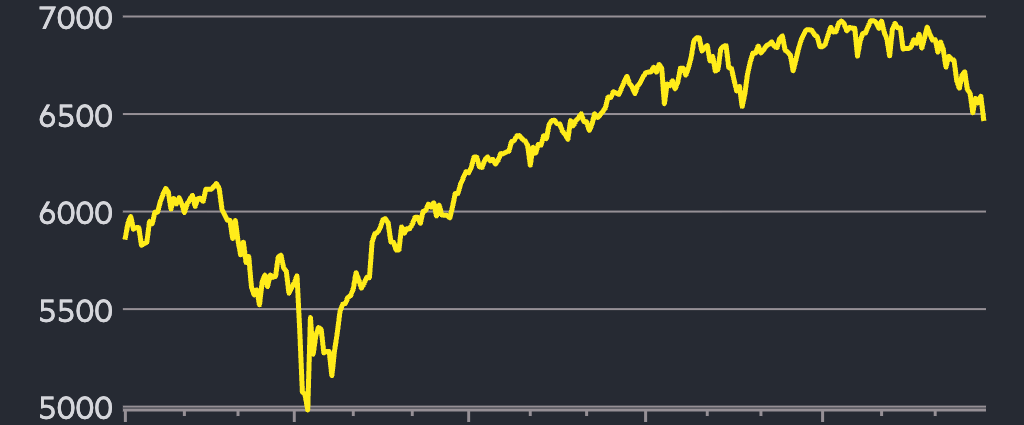
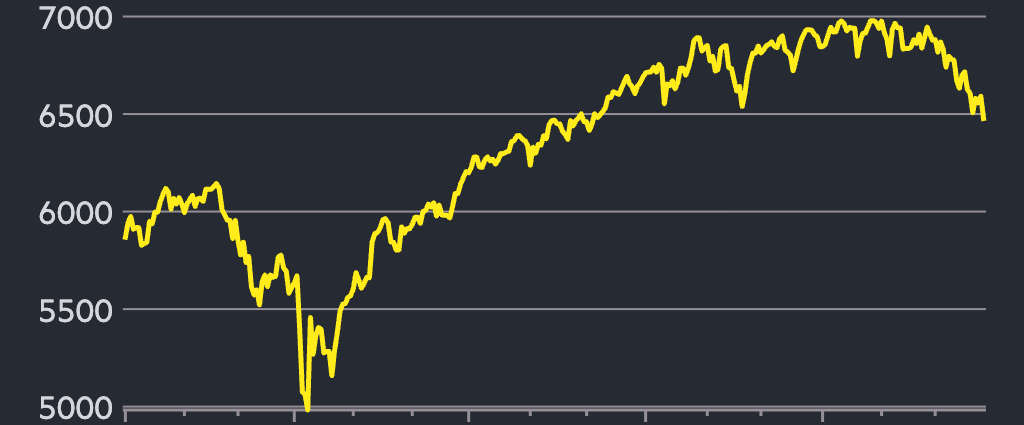
Major U.S. indices closed lower, with the Dow Jones Industrial Average declining 1.01% to 45,960.11, the S&P 500 falling 1.74% to 6,477.16 and the Nasdaq dropping 2.38% to 21,408.
These are the top stocks that gained the attention of retail traders and investors through the day.
Meta Platforms Inc. (NASDAQ:META)
The Mark Zuckerberg-led company saw its shares decline by 7.92%, closing at $547.75. The stock reached an intraday high of $583 and a low of $543.35, with a 52-week range of $796.25 to $479.80.
The decline follows a $6 million verdict against Meta and YouTube for creating products linked to harmful behavior in young users. Jurors found Meta negligent in platform design and operation, failing to warn users of potential risks. Additionaly, the company was in the news for laying off several hundred employees.
Kodiak Sciences Inc. (NASDAQ:KOD)
Kodiak Sciences surged 74.77% to close at $39.76, hitting a high of $40.46 and a low of $33.50. The stock’s 52-week range is $40.46 to $1.92.
The company’s stock soared as it advanced plans for a Biologics License Application submission. In the GLOW2 study, Zenkuda showed significant efficacy in treating diabetic retinopathy, with 62.5% of patients achieving notable improvement.
Unity Software Inc. (NYSE:
This post was originally published here
Albanese says he hasn’t received direct request for help after Trump takes swipe at ‘not great’ Australia
PM downplay’s Trump’s claims after US president criticises lack of support for war against Iran
-
Get our breaking news email, free app or daily news podcast
Donald Trump has taken another swipe at Australia, alongside Nato, the UK and most of the rest of the world, for not getting more involved in the US-Israel war against Iran.
But Australia’s prime minister, Anthony Albanese, again said he had not received any direct requests for help from Trump, and noted the government had not been given any advance notice of the US-Israel military strikes on Iran.
This post was originally published here
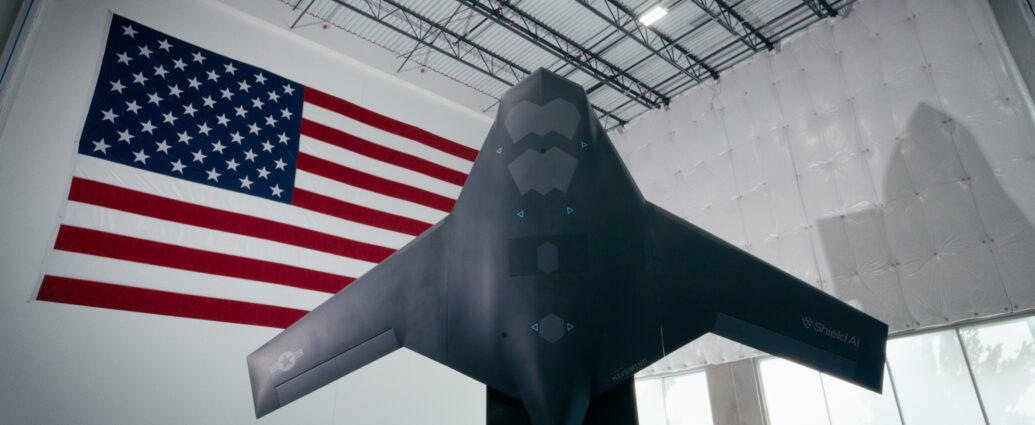
Defense startup Shield AI is projecting more than $540 million in revenue this year as valuation more than doubles to $12.7 billion
Global conflicts are awakening governments—and investors—to the importance of modernizing military forces, says Brandon Tseng, the cofounder and president of ShieldAI, a maker of AI-powered drones that announced Thursday that it had raised $1.5 billion in Series G funding at a $12.7 billion valuation.
The new funding more than doubles the valuation of the San Diego, Calif. defense startup, which was founded in 2015 and was previously valued at $5.6 billion by investors. Shield AI is projecting more than 80% revenue growth by the end of 2026, Shield AI cofounder Brandon Tseng and CFO Kingsley Afemikhe told Fortune. That would equate to at least $540 million in revenue this year, based on Shield AI’s 2025 revenue figures.
“We don’t expect growth to slow down,” Tseng said in an interview.
Shield’s Series G round—co-led by first-time investors Advent International and JPMorganChase’s Security and Resiliency Initiative—is happening in tandem with two major financial moves: the pending acquisition of the tactical simulation company Aechalon and a non-dilutive $500 million fixed return preferred equity financing deal with Blackstone. The infusion of capital will fund the acquisition, as well as help Shield scale its Hivemind autonomy platform and its V-BAT surveillance drone. The funds will also support the development of a new combat drone that is preparing for its first flight by the end of this year.
The deal underscores how global conflict is reshaping venture priorities in Silicon Valley, as a crop of young companies including Anduril and Allen Control Systems produce new tech-driven products designed for a changing battlefield. Shield AI has gained traction from the deployment of its systems in Ukraine, where its V-BAT surveillance drone has been used in active operations.
Tseng told Fortune that fundraising discussions began in November, prior to the U.S. military capturing Venezuelan President Nicolás Maduro or the recent strikes in Iran. Tseng says investor sentiment has shifted alongside “a broad observation” that the world has become less stable.
“Countries around the world are modernizing their militaries, and obviously the U.S. has pushed for an increase in defense spend among all of its allies and partners,” Tseng said. “That certainly is in the background as investors think about investing in defense.”
Tseng declined to say whether Shield AI’s V-BAT drones have been deployed in Iran, but noted the company operates “in almost every single conflict zone.”
Advent Chairman David Mussafer is joining Shield AI’s board as part of the funding deal, while investor Todd Combs, of JPMorgan Chase, will serve as a board observer. Aechelon cofounder and CEO Nacho Sanz-Pastor will continue to lead the business unit and oversee its integration with Hivemind, reporting to Shield AI CEO Gary Steele, according to Tseng.
Shield’s projection of more than 80% revenue this year does not include the acquisition of Aechelon.
The final close of Shield AI’s funding round will also be contingent on approval of the Aechelon acquisition. If the deal fails to clear regulatory hurdles, Tseng said the company would “re-evaluate” the financing with investors.
Aechelon’s platform, which is used across the autonomy sector to simulate battlefield environments and train AI machines, will remain open to other customers following the acquisition, Tseng said.
This story was originally featured on Fortune.com
US Senate fails for seventh time to advance bill to partly fund DHS
Vote came after Trump said he would sign an order directing agency’s new secretary to pay TSA agents
The Senate again failed to advance a bill to fund part of the Department of Homeland Security (DHS), which has now been shut down for almost six weeks.
The latest vote came just hours after Donald Trump said he would sign an executive order instructing Markwayne Mullin, the DHS secretary, to immediately pay Transportation Security Administration (TSA) agents during the shutdown, a move that could ease the immediate urgency for Congress to reach a deal as it heads into a scheduled two‑week recess.
This post was originally published here











8 Game-Changing Inventions in Finance and Technology
This post was originally published here


U.S. judge blocks Pentagon’s ‘Orwellian notion’ to label Anthropic a supply chain risk and ban Claude from the government
A federal judge has ruled in favor of artificial intelligence company Anthropic in temporarily blocking the Pentagon from labeling the company as a supply chain risk.
U.S. District Judge Rita Lin on Thursday said she was also blocking President Donald Trump’s directive ordering all federal agencies to stop using Anthropic and its chatbot Claude.
Lin said the “broad punitive measures” taken against the AI company by the Trump administration and Defense Secretary Pete Hegseth appeared arbitrary and capricious could “cripple Anthropic,” particularly Hegseth’s use of a rare military authority that’s typically directed at foreign adversaries.
“Nothing in the governing statute supports the Orwellian notion that an American company may be branded a potential adversary and saboteur of the U.S. for expressing disagreement with the government,” Lin wrote.
Lin’s ruling followed a 90-minute hearing in San Francisco federal court on Tuesday at which Lin questioned why the Trump administration took the extraordinary step of punishing Anthropic after negotiations over a defense contract went sour over the company’s attempt to prevent its AI technology from being deployed in fully autonomous weapons or surveillance of Americans.
Anthropic had asked Lin to issue an emergency order to remove a stigma that the company alleges was unjustifiably applied as part of an “unlawful campaign of retaliation” that provoked the San Francisco-based company to sue the Trump administration earlier this month. The Pentagon had argued that it should be able to use Claude in any way it deems lawful.
Lin said her ruling was not about that public policy debate but about the government’s actions in response to it.
“If the concern is the integrity of the operational chain of command, the Department of War could just stop using Claude. Instead, these measures appear designed to punish Anthropic,” Lin wrote.
Anthropic has also filed a separate and more narrow case that is still pending in the federal appeals court in Washington, D.C.
Lin wrote that her order is delayed for a week and doesn’t require the Pentagon to use Anthropic’s products or prevent it from transitioning to other AI providers.
This story was originally featured on Fortune.com

Newsom signs California bill to rename Cesar Chavez Day as Farmworkers Day
Lawmakers earlier passed bill to rename 31 March holiday following sexual abuse allegations against labor leader
California governor Gavin Newsom signed legislation Thursday renaming Cesar Chavez Day to Farmworkers Day in the wake of shocking allegations that the labor leader sexually abused women and young girls.
The bill, passed by the state senate earlier on Thursday, authorized the renaming ahead of the state holiday on 31 March. The state has observed the holiday honoring Chavez, who in the 1960s built a major farm-worker labor rights movement California’s agricultural heartland, for more than two decades.
This post was originally published here

Trump administration blocked from punishing Anthropic over Pentagon row
This post was originally published here
‘Accountability has arrived’: dual US court losses show shifting tide against Meta and co
With two unprecedented trial defeats, big tech firms face crisis akin to that faced by cigarette makers in the 1990s
In the span of just two days, the most powerful social media company in the world faced a more severe public reckoning than it has in years.
Jurors in California and New Mexico gave back-to-back verdicts this week that for the first time ever found Meta liable for products that inflict harm on young people. For years, lawmakers, parents and advocates have raised red flags over how social media can hurt children, but now the tech firms are being held to account via court rulings that could set long-lasting precedents.
This post was originally published here




Judge temporarily blocks Trump administration’s Anthropic ban
The order briefly stops the government from labeling tech company Anthropic a “supply chain risk,” calling that “classic First Amendment retaliation.”
(Image credit: RICCARDO MILANI/Hans Lucas)

This post was originally published here

Trump says he’ll sign order to pay TSA agents as Congress struggles to reach funding deal
It’s an extraordinary move that came as senators were reviewing a “last and final” offer to end the funding impasse that has jammed airports and disrupted travel, just as TSA workers faced another missed paycheck Friday.
(Image credit: Noah K. Murray)

This post was originally published here





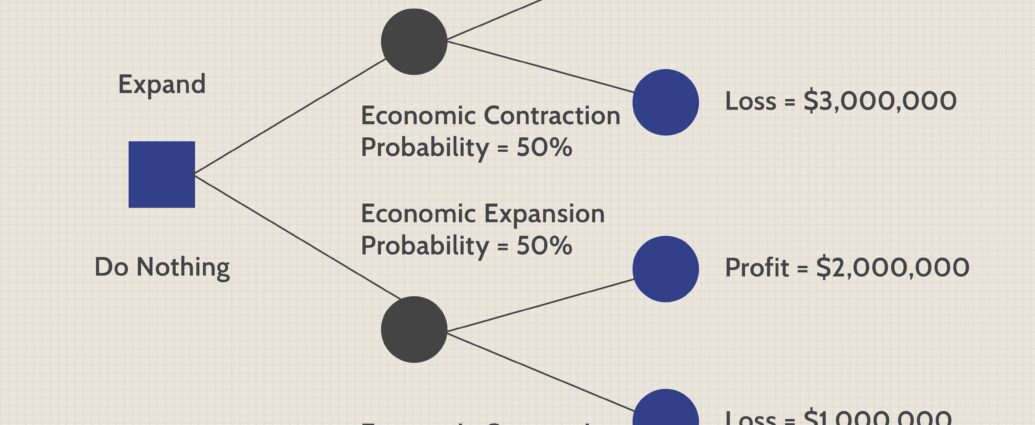
Decision Trees in Finance: A Tool for Analyzing Risks and Outcomes
This post was originally published here



Millions of grill brushes pulled from market over risk of ‘serious internal injuries’
More than 10 million grill brushes are being recalled nationwide after reports that metal bristles can break off and end up in food.
The U.S. Consumer Product Safety Commission (CPSC) announced the recall Thursday, impacting several Nexgrill metal wire brushes sold at Home Depot stores and online between 2015 and 2026.
“Small metal wire bristles can detach from the brushes and stick to the grill or food, posing an ingestion hazard and risk of serious internal injuries that could require surgery,” CPSC said.
HOUSEHOLD CLEANING TOOL RECALLED AFTER DOZENS OF BURN INJURIES REPORTED
Nexgrill has received at least 68 reports of bristles coming loose.
Five people reported swallowing the metal pieces and needed medical treatment to remove them from the throat or digestive tract, according to the CPSC.
The recall includes multiple models of brushes with black plastic or wood handles measuring about 18 to 21 inches long.
TOYOTA RECALLS MORE THAN 144,000 LEXUS VEHICLES OVER REARVIEW CAMERA FAILURE RISK
Model numbers were listed on the packaging, and each product is labeled “Nexgrill.”
The recall covers the following models:
The brushes typically retail for $5 to $15.
GAS RANGES SOLD AT US RETAILERS ARE BEING RECALLED OVER BURN HAZARD RISK
Consumers are urged to stop using the brushes immediately. Nexgrill is offering refunds in the form of gift cards.
CLICK HERE TO GET FOX BUSINESS ON THE GO
The recalled brushes were manufactured in China and imported by Nexgrill Industries, based in California.
Nexgrill could not be immediately reached by FOX Business for comment.

Jews Begin to Wonder: Is Anywhere Safe?
UK government must urgently apologise for forced adoption, MPs say
Ministers urged to work with survivor groups on formal apology as many victims are nearing end of their lives
The UK government must urgently issue a formal apology for the state’s role in forced adoption as many victims are nearing the end of their lives, a cross-party group of MPs has said.
A report from the education select committee said ministers should provide an initial commitment to an apology and begin working with survivor groups as quickly as possible on its wording.
This post was originally published here


4 Nearly Monopolistic Sectors: Dominating Companies Explored
This post was originally published here


Top DIY Home Improvements to Increase Value
This post was originally published here
Anthropic wins preliminary injunction in DOD fight as judge cites ‘First Amendment retaliation’
A federal judge in San Francisco granted Anthropic’s request for a preliminary injunction in its lawsuit against the Trump administration.
This post was originally published here
Federal judge sides with Anthropic in first round of standoff with Pentagon
Face-off is over company’s refusal to let defense department use its Claude AI model in autonomous weapons systems
A federal judge in California sided with Anthropic in its case against the Department of Defense on Thursday, ordering a temporary pause on the government’s punitive measures against the artificial intelligence firm.
Judge Rita Lin granted Anthropic’s request for a temporary injunction while the northern district court of California hears the company’s case. Anthropic argued that the Department of Defense and Donald Trump violated its first amendment rights in declaring the company a supply chain risk and ordering government agencies to cease using its technology.
This post was originally published here
Tether hires KPMG as auditor ahead of US expansion
This post was originally published here

Why Polymarket’s $20 Billion Valuation Ask Might Actually Be Conservative.
Kalshi just raised at an 83.5x fee multiple.
If you apply even a fraction of that to Polymarket’s projected fees, the platform’s reported $20 billion valuation target starts to look like a discount.
A new valuation report from Messari researcher 0xWeiler builds the case from the ground up.
Kalshi raised $1 billion at a $22 billion valuation on March 19, led by Coatue Management. With $263.5 million in 2025 fees, that establishes the 83.5x benchmark.
0xWeiler’s base case for Polymarket uses a 30x multiple on 2028 projected fees, well below Kalshi’s current figure.
The model benchmarks against Kalshi, DraftKings (NASDAQ:DKNG), and traditional exchange infrastructure, then discounts for fee multiple …
This post was originally published here
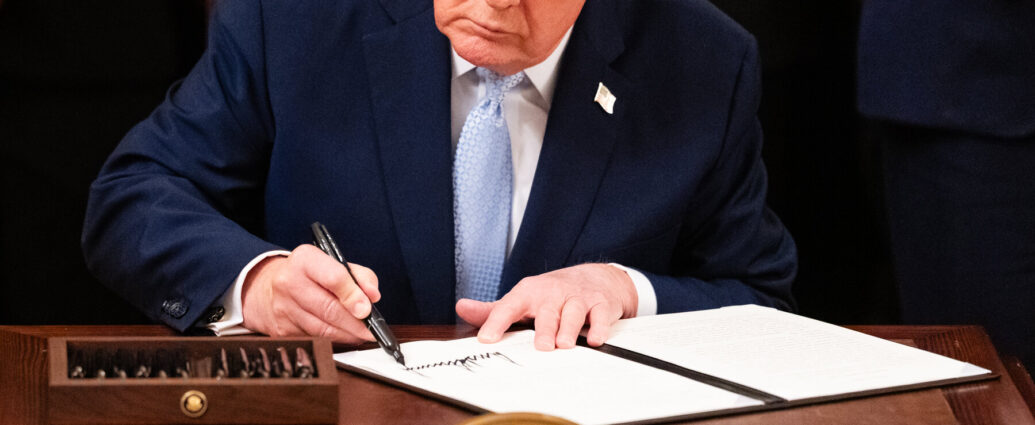



States Offering Prepaid Tuition Plans: Save on College Costs
This post was originally published here
Trump says he will sign an executive order to ‘immediately pay’ TSA agents
Lawmakers are stalled on funding the Department of Homeland Security as airport delays mount.
This post was originally published here

Trump to sign order for DHS to pay TSA agents ‘immediately’ amid funding standoff
President says order will ‘address this Emergency Situation’ as TSA employees have gone without pay during dispute
Donald Trump announced Thursday he will sign an order instructing the Department of Homeland Security (DHS) to pay Transportation Security Administration agents immediately.
“I am going to sign an Order instructing the Secretary of Homeland Security, Markwayne Mullin, to immediately pay our TSA Agents in order to address this Emergency Situation, and to quickly stop the Democrat Chaos at the Airports,” Trump wrote on social media. “I want to thank our hardworking TSA Agents and also, ICE, for the incredible help they have given us at the Airports.”
This post was originally published here
Dark Mofo: 2026 festival to show Willem Dafoe film that can only be watched by one person at a time
Regular events at the Tasmanian festival, including the Winter Solstice Nude Swim and the Night Mass party, joined by Australian and international musicians and artists in a program dominated by Latin American art
A hallucinatory experimental film starring Willem Dafoe and Charlotte Rampling that can only be watched by one person at a time is heading to Australia as part of Tasmania’s 2026 Dark Mofo festival.
It’s estimated that only 500 people in the world have seen French artist Loris Gréaud’s film Sculpt since its premiere at the Los Angeles County Museum of Art in 2016 – though the exact figure is hard to know, since he later supplied the files to hackers to distribute over the dark web.
This post was originally published here

Fed could cut balance sheet by $2tn without market turmoil, says Miran
This post was originally published here










Olivia Dean leads the way with three wins at 2026 Mobo awards
Other winners include Raye for video of the year, Central Cee for best hip-hop act and Ezra Collective in jazz category
British golden girl Olivia Dean was the biggest winner at the 2026 Mobo awards, scooping best female act, album of the year and song of the year for the No 1 hit Man I Need.
Other big winners at the ceremony honouring the best of black music included Raye, whose song Where Is My Husband! won video of the year; Central Cee, who was awarded best hip-hop act; and Ezra Collective in the jazz category.
Best male act – Jim Legxacy
Best female act – Olivia Dean
Album of the year – Olivia Dean, The Art of Loving
Song of the year – Olivia Dean, Man I Need
Best newcomer – DC3
Video of the year – Raye , Where Is My Husband! (directed by The Reids)
Best R&B/soul act – Flo
Best alternative music act – Nova Twins
Best grime act – Chip
Best hip-hop act – Central Cee
Best drill act – Twin S
Best international act – Ayra Starr
Best media personality – Niko Omilana
Best performance in a TV show/film – Stephen Graham, Adolescence
Best African music act – Wizkid
Best Caribbean music act – Vybz Kartel
Best jazz act – Ezra Collective
Best electronic/dance act – Sherelle
Best gospel act – DC3
Best producer – P2J
Mobo global songwriter award – Pharrell Williams
Mobo lifetime achievement award – Slick Rick
This post was originally published here
OpenAI ads pilot tops $100 million in annualized revenue in under 2 months
OpenAI’s nascent ads business has surpassed $100 million in annual recurring revenue less than two months after launching its pilot in the U.S.
This post was originally published here
Is now the time to buy Nvidia? Cramer says ask these questions to arrive at an answer
The war in Iran has forced investors to act more like military strategists instead of stock-pickers, CNBC’s Jim Cramer said Thursday.
This post was originally published here
Expert warns of massive reckoning for social media companies: ‘Giant case of karma’
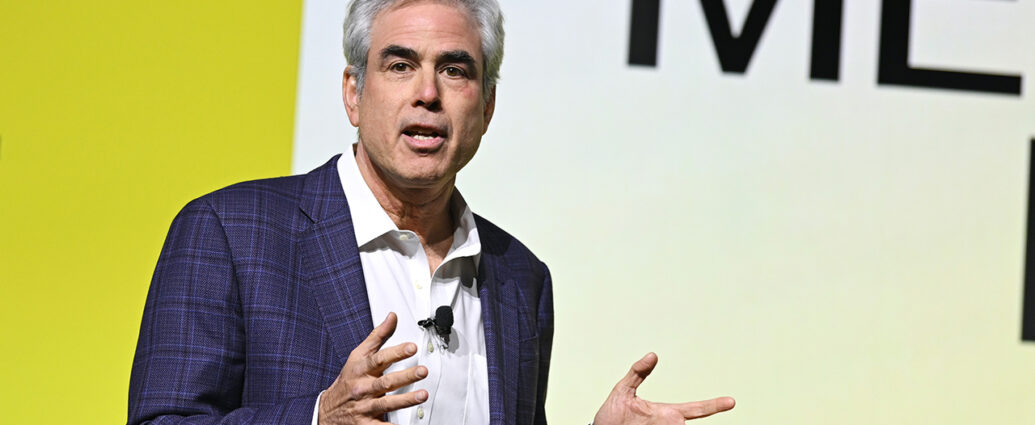
Jonathan Haidt, a social psychologist and author of “The Anxious Generation,” says mounting concerns over social media’s impact on children have hit a “turning point.”
Speaking Thursday on FOX Business’ “The Big Money Show,” Haidt pointed to a closely watched social media trial, citing internal Meta communications in which employees described Instagram as “a drug” and acknowledged they were “basically pushers.”
“What we learned is that the companies really behaved abominably,” Haidt said. “Congress created the problem, and now I’m thrilled to see tweets and statements from senators and congressmen [from] both parties saying, ‘We’ve got to do something about this.'”
Haidt said the recent jury verdict could mark the beginning of a much larger wave of litigation.
“We believe that there are literally millions of victims,” Haidt said. “… Hundreds of kids are dead.”
With “millions of potential plaintiffs,” he warned, the financial consequences for tech companies could be enormous.
“I think we’re looking at a giant case of karma coming for these companies,” Haidt said. “They were able to exploit kids for decades and now their deeds are catching up with them.”
He argued the crisis was shaped in part by decades-old policy decisions.
Haidt pointed to laws like Section 230 of the Communications Decency Act, which shields platforms from liability, and federal rules that allow companies to collect data from users who simply claim to be over 13.
However, public awareness is shifting — driven in part by recent jury verdicts and policy changes abroad, according to Haidt.
“We are at a turning point,” he said. “There is now a global understanding that this stuff is just wildly inappropriate for children.”
On Wednesday, a Los Angeles jury found Meta and Google liable in a case accusing the companies of designing addictive products for young users, awarding the plaintiff $6 million in damages.
Google and Meta both told FOX Business they plan to appeal the verdict.
SOCIAL MEDIA TRIAL VERDICT: WHAT HAPPENS NOW, HOW MUCH WILL TECH GIANTS REALLY PAY?
In a separate case, a New Mexico jury on Tuesday ordered Meta to pay $375 million after finding the company misled users about platform safety and allegedly enabled child sexual exploitation.
GET FOX BUSINESS ON THE GO BY CLICKING HERE
Meanwhile, Australia implemented a landmark law in December banning users under 16 from holding social media accounts — one of the strictest online safety measures globally.
“We parents can’t deal with this on our own,” Haidt said. “We’re all having the same fight with our kids.”
Fox News Digital’s Jasmine Baehr, Louis Casiano and Ashley Carnahan contributed to this report.


Annuities: Key Benefits and Drawbacks Explained
This post was originally published here
Annuities: Key Benefits and Drawbacks Explained
This post was originally published here

JetBlue expands Fort Lauderdale hub with new destinations and increased flights
JetBlue said on Thursday that it’s adding a new route to its offerings while also adding more flights out of one of the low-cost carrier’s Florida hubs starting this summer.
The company announced that it will expand its offerings at Fort-Lauderdale-Hollywood International Airport, including a new route to Cleveland, Ohio, that will offer daily service starting on July 8.
Several existing domestic routes to and from Fort Lauderdale will see additional flight options for travelers starting when the changes take effect on either July 8 or 9.
JetBlue is adding one daily flight to each of Atlanta, Newark, Jacksonville, Las Vegas and Philadelphia. The Atlanta and Newark routes will each have four daily flights, while both Las Vegas and Philadelphia will have three per day and Jacksonville will have two. JetBlue will also add two more weekly flights to Norfolk, which will boost the frequency to once a day.
JETBLUE FLIGHT TURNS BACK AFTER STRIKING A COYOTE ON THE RUNWAY: ‘WE THOUGHT IT WAS A JOKE’
International flights to destinations in the Caribbean will also see a boost under the change. Aruba will see four more weekly flights, up to once a day.
An additional daily flight to Santo Domingo, Dominican Republic, will increase the frequency to twice a day, while three more weekly flights to St. Maarten will leave that route with daily service from Fort Lauderdale.
JETBLUE EXPANDS FLORIDA SERVICE, ADDS MORE INTERNATIONAL ROUTES
“These latest additions reflect our ongoing strategy to build an undeniably strong and relevant network in Fort Lauderdale by adding both new destinations and more frequencies where our customers want to fly,” said Daniel Shurz, senior vice president of revenue, network and enterprise planning at JetBlue.
“As we continue to grow in Fort Lauderdale, we’re offering customers more choice, more flexibility and a more connected network,” Shurz added.
JetBlue’s move comes after it signaled earlier this month that it’s on track to deliver $850 to $950 million in incremental operating profit by 2027 due to its JetForward plan, which seeks to curb costs, expand its network and improve services for travelers over the long term.
UNITED AIRLINES, JETBLUE PARTNERSHIP GETS TRUMP ADMIN CLEARANCE TO FLY
The airline is about two years removed from calling off a $3.8 billion merger with Spirit Airlines, after a federal judge blocked the proposed tie-up over the potential competitive impact and antitrust concerns.
JetBlue and United Airlines announced a partnership last year that allows travelers to book flights on both carriers’ websites and interchangeably earn and use points in their frequent flyer programs.
GET FOX BUSINESS ON THE GO BY CLICKING HERE
Under the partnership, JetBlue also agreed to provide United access to slots at New York City’s congested JFK International Airport for up to seven daily round-trip flights starting in 2027.
Reuters contributed to this report.



Elon Musk’s Boring Co. tunnels aren’t wanted by most Nashville residents
A new survey by Vanderbilt University found that most Nashville residents don’t want Boring Company tunnels in their city.
This post was originally published here
Oil price volatile as traders assess trajectory of Iran talks
This post was originally published here



Trump extends Iran talks deadline after sell-off on Wall Street
This post was originally published here

Sen. Warren rips Federal Reserve chair pick Kevin Warsh: ‘You have learned nothing from your failures’
Kevin Warsh’s nomination as chair of the Federal Reserve has been in limbo because of a criminal investigation of Chair Jerome Powell.
This post was originally published here



David Sacks says his time as Trump’s crypto and AI czar has ended
The venture capitalist said he will still be a part of the White House’s Technology committee and will help push Trump’s AI plan forward.
This post was originally published here


Bitcoin faces $14 billion options expiry while Middle East turmoil mounts
Bitcoin’s largest options expiry of the year is colliding with geopolitical volatility that shows no sign of letting up with make or break peace talks uncertain.
Roughly $14 billion of Bitcoin options are set to expire Friday, as measured by the number for outstanding contracts, known as open interest. The quarterly rollover—which wipes out close to 40% of open positions on the dominant Deribit exchange—comes amid conflicting signals on the prospect of a halt to the nearly month-long war in the Middle East.
The overlap is sharpening a key question for traders: whether the expiry has been artificially muting Bitcoin’s price swings and if its removal will expose the token to a sharper move driven by geopolitics.
Bitcoin has been stuck between roughly $60,000 and $75,000 in recent weeks, drifting well below its October 2025 peak of around $126,000 after a market-wide crash on Oct. 10. The lack of direction has persisted despite geopolitical tensions and intermittent inflows into U.S. exchange-traded funds. Bitcoin fell as much as 4% to $68,122 on Thursday.
Derivatives positioning helps explain the calm, according to market participants. Institutional investors spent much of the first quarter selling upside bets—effectively wagering that prices wouldn’t rise sharply—to generate income in a subdued market, said James Harris, chief executive officer at asset manager Tesseract. That activity shifted risk onto market makers, who have been buying on dips and selling into rallies to keep their exposure balanced.
The result has been a dampening of volatility, traders say, with price action repeatedly gravitating toward a so-called “max pain” level—the point where the largest number of options expire worthless—near $75,000. In practical terms, those hedging flows have acted like a magnet, nudging Bitcoin higher while capping gains.
“The hedging flows might pull price action toward that level as settlement approaches but effectively cap the range,” Harris said.
Once the contracts roll off, the mechanical buying and selling tied to hedging will fade, potentially leaving Bitcoin more exposed to external catalysts. And those catalysts are mounting. On Thursday, President Donald Trump pushed back his deadline for Iran to strike a deal with the U.S. or face more attacks, saying talks with the country were going “very well.”
“Without clear direction from the Middle East, Bitcoin is likely to stay in the $70,000–$75,000 zone,” said Andreja Cobeljic, head of derivatives trading at AMINA Bank, adding that the upper bound could act as both a magnet and resistance. A credible ceasefire could push Bitcoin above $75,000, triggering further gains as bearish positions are unwound. Failure in negotiations, however, may drag the token back toward the rising trend line at $68,500, he added.
The broader backdrop offers limited support. While March has seen about $1.5 billion of net inflows into Bitcoin ETFs—a stabilization after four straight months on net outflows — those allocations have proven sensitive to macro shifts. A single day in mid-March saw $163 million pulled as interest-rate expectations changed.
That fragility underscores the central takeaway from Friday’s expiry: the calm in Bitcoin may be more structural than fundamental.
Jasper De Maere, an OTC trader at Wintermute, said that options dynamics can create a “mild upwards bias,” but conviction remains weak. Once the expiry passes, the forces suppressing volatility will recede — leaving macroeconomics and geopolitics firmly back in control.
That leaves the market exposed to sharper moves if sentiment turns.
“The risk is not that institutions are absent. The risk is that they are present but will exit rapidly if the weekend delivers an adverse outcome and the structural cushion that was there last week will not be there to slow the move. Volatility is more likely to increase from Friday than decrease as a result,” Harris said.
This story was originally featured on Fortune.com

Putin asks oligarchs to donate to budget as cost of Ukraine war soars
This post was originally published here

Opinion | Cuban Communism’s Long Goodbye



Opinion | Democrats for Energy Disarmament
Target faces a new boycott over ICE response as retailer presses ahead with turnaround
It is unclear if and how much the AFT boycott could hurt Target, which is trying to win back shoppers and return to sales growth.
This post was originally published here

Opinion | Senate Democrats Choose TSA Chaos
Fraud probe bill from Reps. Ro Khanna and Tim Burchett would order an audit of all states’ use of federal funds
Khanna, who is leading Democrats on a wealth tax bill, told CNBC in December he would introduce the fraud probe bill when he found a Republican cosponsor.
This post was originally published here










Housing giant Fannie Mae to accept crypto-backed mortgages for the first time
Crypto owners can now use their digital assets as collateral for their down payments to buy a home. That’s because Fannie Mae is accepting crypto-backed mortgages for the first time through a partnership between mortgage company Better Home & Finance and crypto exchange Coinbase, according to a Tuesday statement.
The move aims to make home ownership more accessible to a younger demographic, who are more likely to own crypto. “Token-backed mortgages are a major first step to unlocking homeownership for the younger generations that have struggled with barriers to saving for a traditional down payment,” said Max Branzburg, head of consumer and business products at Coinbase, in the statement.
The goal of the product is also to help those who might be crypto-rich but cash-poor. The homebuyer would take out a traditional 15 or 30-year mortgage but instead of making down payment in cash, they would take out a separate loan backed by their Bitcoin or stablecoin holdings. This new offering would allow them to hold on to their crypto and not have to sell it and pay capital gains taxes. The downside is that the second loan would increase the overall cost of homeownership since the buyer would also have to service that second loan.
The homebuyer can’t trade the crypto assets once they have been pledged. In the event the digital assets go down in value, the mortgage loans don’t get affected if the owner keeps making the monthly payments.
The product arrives at a time when young people are growing disillusioned with the traditional financial system and sometimes turning to crypto. Gen Z and Millennials say that 25% of their portfolio is in non-traditional assets like crypto, and 73% of people in these generations say it is harder for them to build wealth by traditional means, according to a recent crypto report by Coinbase.
Bitcoin owners have been feeling a squeeze in the past few months, as the original cryptocurrency is down 46% since its all-time high in October to its current price of $68,000, according to Binance.
This story was originally featured on Fortune.com

Venezuelans deported by US detail fresh claims of torture and abuse at El Salvador mega-prison
Petition seeks accountability from Salvadorian authorities over human rights violations at notorious Cecot facility
A group of 18 Venezuelan men whom the US expelled a notorious Salvadorian mega-prison are demanding that Salvadorian authorities be held internationally accountable for violation of human rights – detailing new allegations of torture, sexual assault and medical neglect.
A new petition, filed on Thursday before the Inter-American Commission on Human Rights, alleges that El Salvador violated the human rights of these men, who were expelled to El Salvador’s Terrorism Confinement Center (Cecot) last year without charge.
This post was originally published here


A toddler needed a life-saving flight, and the insurer said no. Then Mark Cuban called
After a major insurance company denied coverage for a medical flight that could save her daughter’s life, Alexandria McMahon took the story to social media and caught the attention of billionaire Mark Cuban.
Stella McMahon was diagnosed with T-cell leukemia at just four months old. Now, a year later to the day, she’s been fighting relentless fevers above 104 degrees for nearly a month; her liver’s overtaxed, and her body’s too immunocompromised to ward off a virus on its own. The cruel irony of Stella’s condition: because she has T-cell leukemia, her doctors at Children’s Minnesota had successfully eradicated her T-cells, the very cells she needed to fight the virus now threatening her life.

Her oncologist, Dr. Lane Miller, identified a solution: a federally funded study at Cincinnati Children’s Hospital in which genetically modified T-cells, donated and engineered in a lab, are transfused into the patient. The procedure itself was covered. The medical flight to get Stella there was not.
Her mom, Alexandria, submitted a pre-authorization request through the family’s major insurance provider on a Sunday, March 15. For five days, she heard nothing. “I called them on a Friday just to try to understand what was happening, like why it was taking so long,” she told Fortune, while the sounds of little Stella were heard in the background. “And from that phone call, I learned that we had actually been denied.”
The silence, she said, was devastating in its timing. “To be denied on a Friday from a major business was quite a hit, because they’re closed on the weekend, and they said that they wouldn’t be getting back to us for 24 to 72 hours, business days.” Dr. Miller, McMahon explained, said it was imperative that little 16-month-old Stella receive treatment immediately.
When she pressed the representative for an explanation, she ran into a wall. “She couldn’t tell me the reason why they denied because I didn’t have a medical degree,” McMahon recalled. “I asked her to read [the policy] with me line by line and tell me at what point Stella became disqualified. Because when I read it with my eyes, it looked like everything should be approved.” She recorded the conversation, a decision that would change everything.
TikTok video leads to a breakthrough
McMahon posted the recorded call on social media, and shortly after, it went viral. “I think within about 12 hours, Dr. Warris, who runs Claimable, one of Mark Cuban’s companies, he said, ‘Mark Cuban saw your video, and he wants me to take care of this for you,’” McMahon said.
Claimable, co-founded by Dr. Warris Bokhari, a former NHS physician and healthcare strategist, uses AI to help patients and families navigate and appeal insurance denials. The company’s mission is to “amplify your voice, combining it with cutting-edge science and policy insights to help protect your rights,” according to its website.
Cuban, who has long been a vocal critic of the American healthcare system, wrote on his blog in Jan. 2025 that “healthcare is a very simple industry made complicated,” arguing for radical transparency and the removal of insurance companies from the payment equation. His other healthcare venture, Cost Plus Drugs, has similarly sought to reduce opacity in pharmaceutical pricing.

Cuban’s big credit limit and bigger heart
Within 48 hours, the McMahons were on a chartered medical aircraft to Cincinnati, paid for by Cuban and Claimable. “The hospital case manager was able to book a medical flight with Mark Cuban and Claimable’s money,” McMahon clarified.
The trip needed to happen in a single day. Cincinnati Children’s Hospital did not admit Stella to its campus; she had to remain based in Minneapolis. With Stella connected to five or six pumps, driving was never a realistic option. “She could not ethically be discharged,” McMahon explained, saying the family was so desperate to get Stella her treatment, no idea was too out there. “We were considering renting an RV and just trying.” Even that possibility was off the table, given Stella’s medical needs. A friend of her husband’s who works for Delta had also offered a plane, but that would have meant discharging Stella without medical support and “hoping for the best.”
Instead, Cuban’s team moved fast. “He basically laid down a credit card right then and there, and said, ‘ Book the flight, book a medical flight,” McMahon said. “And we are going to help you fight insurance after she gets taken care of. Stella is the most important.”
For McMahon, the speed and generosity of the response were difficult to fully absorb while simultaneously watching her daughter struggle. “We are dramatically humbled. We are so thankful that this happened,” she said. “I still feel like it’s unbelievable. I still feel like I’m kind of coming down from something that was just so exciting and so positive. And it felt weird being so incredibly happy and ecstatic and thankful while watching my daughter clearly struggle.”
She had no prior knowledge of Cuban’s track record of intervening in cases like Stella’s until the outpouring of comments on her videos. “I had no idea that this person could do something so amazing,” she said. “He has the resources, and he has the heart, and he did it.”

Inspiration to pay it forward
At the time of Fortune‘s interview on Thursday, Stella was showing her first signs of improvement: less jaundiced, her eyes beginning to clear. She was still running fevers above 104 degrees, and her doctors cautioned that the T-cell study can take five to seven days before showing results. But she had avoided an ICU stay. “Stella is now stable,” McMahon said. “She got everything she needs. We’re where we need to be, and it is all thanks to human connection.”
A GoFundMe organized to help the family cover costs, including lost income for McMahon’s husband, who works in aviation and has had to take time off, had raised over $42,000 toward a $50,000 goal from more than 870 donors as of publication.
McMahon said she hopes to use the attention Stella’s story has drawn to advocate for other families facing the same walls. “If I can turn around and give back to people, I will,” she said. “I will carry this and try to pay it forward for the rest of my life.”

This story was originally featured on Fortune.com




Trump extends his deadline for Iran to reopen the Strait of Hormuz to April 6
Iran and the United States appeared at an impasse Thursday, hardening their positions over ceasefire talks and setting the stage for another potential escalation in the Middle East war as thousands more U.S. troops neared the region.
Meanwhile, President Donald Trump extended his deadline for Iran to open the Strait of Hormuz to April 6, and Tehran tightened its grip on the crucial strait while Israel poured more troops into southern Lebanon to fight the Iran-backed militant group Hezbollah.
Sirens over Israel warned of barrages of incoming Iranian missiles, and Gulf nations worked to intercept fire. Heavy strikes were reported in Iran’s capital and other cities.
In a war that appears defined by who can take the most pain, the U.S. has offered shifting objectives, including ensuring Iran’s missile and nuclear programs are no longer a threat and ending Tehran’s support for armed groups in the region. Washington at one point also pushed for the overthrow of Iran’s theocracy.
While the U.S.-Israeli campaign has hit Iran’s military and government hard, killing top leaders and striking scores of targets, Iran continues to fire missiles, and there is no sign of an uprising against the government.
Surviving could be seen as victory
for Iran
For Iran’s leadership, by contrast, merely outlasting the onslaught could be seen as victory. It may be hoping to get the U.S. to back down by roiling the world economy with its stranglehold on the the strait, which has disrupted oil and natural gas shipments and raised prices worldwide for energy and other goods.
Short of a negotiated solution, the U.S. would need a dramatic escalation to end Iran’s attacks and restore the free flow of goods through the strait, where 20% of all traded oil and natural gas is transported in peacetime. Iran rejected a ceasefire proposal put forth by the U.S., while putting forth its own demands.
Trump has vowed to strike Iran’s power plants if it does not fully reopen the strait. His new deadline pulls back on his earlier threat to bombing Iran’s energy plants if Tehran did not open the critical waterway.
Iran had threatened to retaliate against the region’s vital infrastructure, like desalination facilities, if Trump followed through. Trump said he was holding off on carrying out his threat because talks aimed at ending the conflict are going “very well.”
A Gulf Arab bloc said Thursday that Iran is now exacting tolls from ships to ensure their safe passage through the waterway.
Iran seen as operating Strait of Hormuz as ‘de facto toll booth’
Iran has been blocking ships from the strait that it perceives as linked to the U.S. and Israeli war effort, while letting through a trickle of others. Trump said during a Cabinet meeting Thursday that Iran is allowing some oil tankers through as a sign of good faith for talks.
Jasem Mohamed al-Budaiwi, secretary-general of the Gulf Cooperation Council, a bloc of six Gulf Arab nations, said Iran was charging for safe passage.
Lloyd’s List Intelligence called it a “de facto ‘toll booth’ regime,” saying that at least two vessels have paid in yuan, China’s currency.
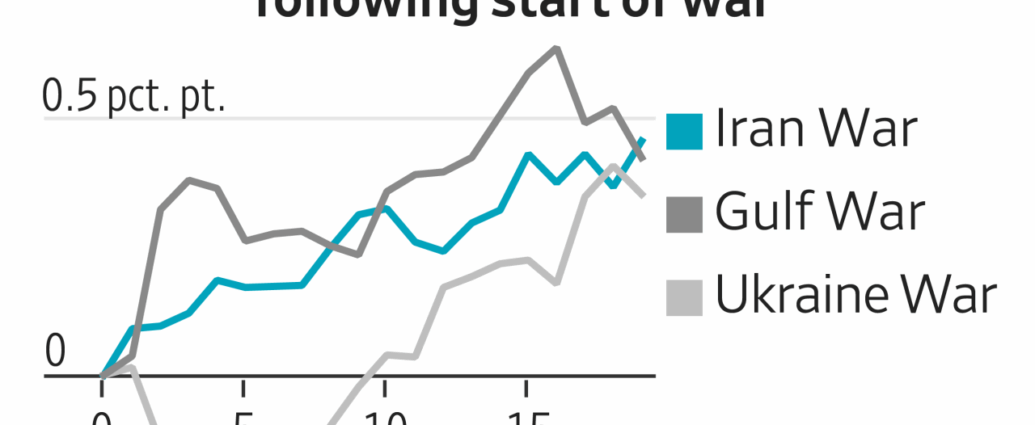
Iran’s grip on the strait and relentless attacks on Gulf energy infrastructure have sent Brent crude, the international standard, up more than 40% since the war started.
Israel said it killed the head of the Iranian Revolutionary Guard’s navy, Commodore Alireza Tangsiri, and the country’s naval intelligence chief, Behnam Rezaei. Israeli Defense Minister Israel Katz said Tangsiri was responsible for bombing operations that have blocked ships from crossing the Strait of Hormuz. Iran did not immediately acknowledge the killings.
This story was originally featured on Fortune.com


US markets see biggest slump since start of US-Israel war on Iran
Dow closed 450 points down and S&P dipped 1.7% while Nasdaq fell 2.3% into correction territory
US markets saw their biggest slump since the start of the US-Israel war with Iran on Thursday as Donald Trump said the conflict’s impact on oil prices hasn’t been as bad as he expected.
The Dow closed 450 points down, while the S&P 500 dipped 1.7%. The tech-heavy Nasdaq fell 2.3%, plunging into correction territory, which happens when an index falls at least 10% below its most recent peak.
This post was originally published here




Israeli military doubts war will topple Iranian regime
This post was originally published here
Top 5 Australian Mining Stocks This Week: Killi Resources Shines on Queensland Grant
Welcome to the Investing News Network’s weekly round-up of the top-performing mining stocks listed on the ASX, starting with news in Australia’s resource sector.This week’s list highlights companies across a range of commodities, with a strong presence from gold, copper and critical minerals.Perth-based Killi Resources (ASX:KLI) emerged as the top gainer, following the addition of new team members and approval for an exploration grant under Round 10 of the Queensland government’s Collaborative Exploration Initiative.Read on to discover this week’s top gaining Australian mining stocks on the ASX and what drove their share prices.
Market and commodities price round-up
The S&P/ASX 200 (INDEXASX:XJO) opened at 8,262.4 on Monday (March 23) and closed at 8,525.7 on Thursday (March 26), reflecting a 3.19 percent increase over the period.The gold price increased 0.43 percent, rising from US$4,491.16 per ounce on Monday to US$4,510.39 by Thursday in US dollars, and increasing 1.44 percent in Australian dollars, moving from AU$6,394.01 to AU$6,486.36.Silver posted larger increases, rising 4.93 percent in US dollars. The metal went from US$67.95 per ounce on Monday to US$71.30 on Thursday. In Australian dollars, the metal saw a 5.99 percent rise from AU$96.74 to AU$102.53.
Top ASX mining stocks this week
How did ASX mining stocks perform against this backdrop?Take a look at this week’s five best-performing Australian mining stocks below as the Investing News Network breaks down their operations and why these companies are up this week.Stocks data for this article was retrieved at 4:10 p.m. AEDT on Thursday using TradingView’s stock screener and reflects price movements between Monday and Thursday. Only companies trading on the ASX with market capitalisations greater than AU$10 million are included. Mineral companies within the non-energy minerals, energy minerals, process industry and producer manufacturing sectors were considered.
1. Killi Resources (ASX:KLI)
Weekly gain: 265.38 percentMarket cap: AU$19.64 millionShare price: AU$0.19Killi Resources is a Perth-based exploration company focused on gold and copper projects in Australia. The company was listed on the ASX in 2022. Its primary focus is the Mount Rawdon West gold-copper project in Queensland, and it also holds the West Tanami project in Western Australia and Ravenswood North in Queensland.Last Friday, Killi paused trading pending the release of an announcement. Come Monday, Killi announced the appointment of Nev Power, a former Fortescue Metals Group CEO, as non-executive chair. Resource executives Steve Parsons and Michael Naylor and geologist Hamish Halliday are also joining the company as consultants.In the same announcement, the company said it has received firm commitments for AU$1.4 million in a share placement backed by Power, Parsons and Naylor. Proceeds will be used in part for exploration activities at its Mount Rawdon West project. Killi previously identified drill targets at the Mount Rawdon Fault prospect and applied to Round 10 of the Queensland Government’s Collaborative Exploration Initiative.The company announced on Thursday that the grant application was approved, providing funding for drilling at Mount Rawdon’s Baloo prospect, which hosts a 1.4 kilometre anomaly. Due to the current “extreme wet conditions” it expects drilling to commence in the winter.After closing at AU$0.052 last week, shares of Killi Resources reached AU$0.120 on Monday and climbed to a peak of AU$0.190 on Thursday.
2. EMC Gold (ASX:EM3)
Weekly gain: 66.67 percentMarket cap: AU$63.91 millionShare price: AU$0.25Headquartered in West Perth and Sydney, EMC Gold is an exploration company focused on its 100 percent owned Salave gold project in the Asturias principality in Northern Spain.EMC was formerly known as Black Dragon Gold, with the name change effective in December 2025.Salave is one of Europe’s largest undeveloped gold deposits, currently hosting a JORC-compliant total resource of 17.1 million tonnes at a grade of 2.85 grams per tonne (g/t) gold for a total of 1.56 million ounces contained gold.It is planned to be an underground mine with a 14 year mine life and average annual production of 99,462 ounces of gold.Salave’s environmental impact assessment process is currently suspended, a decision made by the principality’s Department of Environment after the municipal council chose not to rezone the area. In February, a Spanish court ruled that the suspension was lawful.While no announcements were shared this week, the company said in the February release that it is pursuing the administrative conditions necessary to advance the project. This includes continuing to increase its Asturian shareholder base and pursuing strategic project designation. It also plans to research the possibility of using mining residue for other applications to reduce the mine’s footprint. It will be undertaking a core drilling campaign to provide samples for that research, enhance geological understanding and assess the potential of mineral extension of the project.Shares of EMC Gold closed last Friday and this Monday at AU$0.15, then moved to this week’s peak of AU$0.25 on Thursday.
3. Athena Resources (ASX:AHN)
Weekly gain: 66.67 percentMarket cap: AU$11.33 millionShare price: AU$0.005Headquartered in West Perth, Athena Resources is an iron ore company aiming to produce end products that solve challenges in different industries from high-purity magnetite.The company’s flagship project is the Byro magnetite project, located in Western Australia approximately 340 kilometres from the Port of Geraldton. The project’s FE1 deposit currently has a resource of 29.3 million tonnes at 24.7 percent iron. On Wednesday, Athena announced a strategic joint venture with Terra Mining and Fenix Resources (ASX:FEX) to advance the Byro project’s Narryer prospect. Under the joint venture, Athena will receive 40 percent of profits, while the two companies will hold 30 percent each. Athena will maintain 100 percent ownership of Narryer, but the partners will provide all capital, equipment and infrastructure.“By combining our high-quality magnetite resource with Terra Mining’s proven dry-processing capability and Fenix’s established logistics network, we have assembled a partnership that can take Narryer from prospect to potential production with major mining, processing, and logistics capital provided by Athena’s JV partners,” said Managing Director and CEO Peter Jones.“We are building a platform to supply premium magnetite into some of the world’s most important growth markets, from green steel to battery technology. This JV is the first step in making that vision a reality.”The company also published a copy of its presentation at the Global Iron Ore and Steel Conference, which highlighted that metallurgical testwork at Byro confirms it can produce concentrate with over 70 percent iron and only 1.2 percent silica content.Shares of Athena closed last week and Monday at AU$0.003, then rose to a close of AU$0.005 on Thursday following both updates.
4. Volt Resources (ASX:VRC)
Weekly gain: 40 percentMarket cap: AU$31.42 millionShare price: AU$0.007Also headquartered in Perth is Volt Resources, a company with operations at multiple stages of the graphite supply chain in Tanzania, Ukraine and the US.The company’s flagship asset is the Bunyu graphite project, located in Southeast Tanzania. Bunyu is currently regarded as one of the largest graphite deposits in the world, with an estimated 461 million tonnes of mineral resource at approximately 4.9 percent total graphitic carbon.Volt was previously targeting Stage 1 production of 24,780 tonnes per annum (tpa) of graphite concentrate. However, following a significant investment from the Unbounded Opportunities Fund last year, a revised feasibility study targeting 40,000 tpa is being prepared by the UOF.The investment resulted in the UOF gaining a 62 percent interest in Volt’s Tanzanian subsidiary.In 2021, the company acquired a 70 percent interest in the Zavalievsky Graphite business in Ukraine, including a mine and processing facilities.On March 17, the company completed its current graphite production campaign at the Zavalievsky graphite operation, producing 19.14 tonnes of high-purity graphite using third-party flake graphite feed from an operation in Africa.No further project updates were shared by Volt Resources this week.After closing at AU$0.005 last week, shares of the company reached AU$0.006 Monday, then climbed to AU$0.007 on Thursday.
5. SQX Resources (ASX:SQX)
Weekly gain: 37.04 percentMarket cap: AU$13.54 millionShare price: AU$0.185Subiaco-based SQX Resources is a gold explorer with targets across the US states of Arizona and Montana.Central to the project’s precious metals focus are the Red Bird gold project in Arizona and the Williams gold-silver project in Montana. Also in its portfolio are Queensland, Australia, assets Scrub Paddock and Ollenburgs, both of which are prospective for gold-copper porphyry.On Tuesday, SQX released sampling assays from the Red Bird project. These included underground chip samples grading 16 g/t gold at a depth of 16.7 metres, 18.3 g/t gold at 6.7 metres and 6.4 g/t at 16.1 metres.”These results demonstrate excellent grade continuity and confirm the historical sampling methodology used across the project. With our maiden drilling program now concluded, we look forward to the assay results to further define the potential at Red Bird,” Executive Director Julian Stephens said in the Tuesday announcement.After closing at AU$0.135 last week, shares of the company rose to AU$0.185 by Thursday.
Don’t forget to follow us @INN_Australia for real-time news updates!Securities Disclosure: I, Gabrielle de la Cruz, hold no direct investment interest in any company mentioned in this article.
This post was originally published here
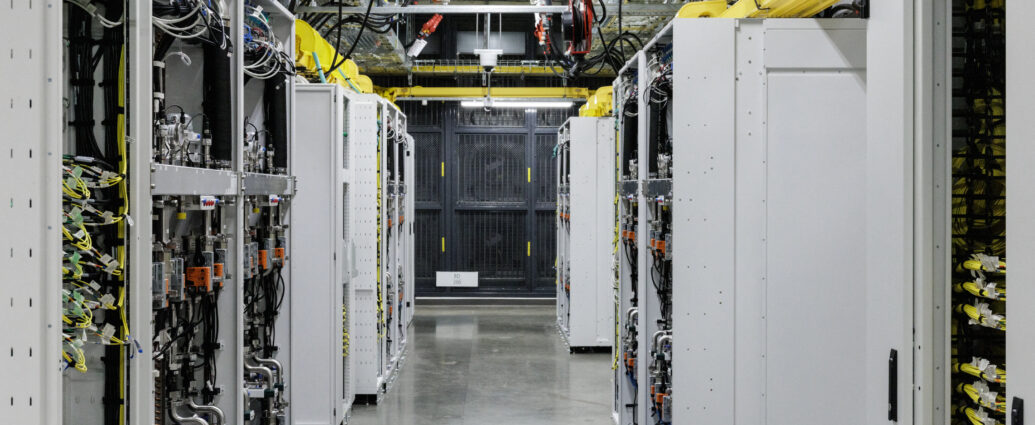
Southeast Asia could become a booming AI market if its data centers can beat the heat
Southeast Asia is racing to build the infrastructure powering the AI boom, but its hot, humid climate could be making that expansion more complicated. Data center demand in the region, where supply is up to 70% lower than in mature markets like the U.S. and China, is expected to grow by 20% each year through 2028, according to the U.S.-ASEAN Business Council. There are now 370 data centers in the region, with the majority in Singapore, Indonesia and Malaysia.
“The ecosystem has realized that if they don’t latch on to this next wave, they might end up being digitally colonized,” Mayank Shrivastava, the CEO of Singapore-headquartered BDx Data Centers, told Fortune. “Economic gains flow to the country that converts raw material into finished goods–and, in this case, the raw material is data.”
Yet, Southeast Asia’s sultry, tropical climate presents a unique challenge for its data centers, which require more energy than counterparts in cooler climates to keep servers up and running. The region’s temperature ranges between 80 and 95°F throughout the year, while data centers should ideally be maintained between 64 and 81°F, according to the American Society of Heating, Refrigerating and Air-Conditioning Engineers.
“The central issue in the tropics is not heat alone, but heat and humidity together,” Lee Poh Seng, a professor specializing in thermal systems at the National University of Singapore (NUS), explains. “In tropical climates, higher ambient temperatures make heat rejection more difficult, while high humidity complicates dew-point control, increases condensation and corrosion risk, and reduces long-term reliability.”
That puts data center operators in a bind. Lots of people live in the tropics, and data centers need to be close by to ensure speedy access. “You can’t ignore the fact that 85% of the world’s population lives outside temperate regions,” Shrivastava says.
On March 11, BDx became the first firm to implement Singapore’s Tropical Data Center Standard, a set of guidelines aiming to help data centers gradually increase operating temperatures to 26°C (or 78.8°F). The standard was launched last August, and is a core tenet of the country’s Green Data Center roadmap, which seeks to chart sustainable growth pathways for Singapore’s data centers. According to the country’s Infocomm Media Development Authority, every 1°C increase in operating temperature translates to up to 5% in energy savings.
“It’s been a mammoth effort to get different stakeholders to agree on changing the operating metrics of a data center,” Shrivastava says. “It had to be done with extreme caution, since we were tinkering with the engines while the aircraft was flying.”
‘Room to build’
Data center CEOs see Southeast Asia as filling a critical gap in the global AI ecosystem, particularly as companies in the U.S. struggle to overcome outdated power infrastructure and political opposition to new projects.
“The U.S. is still the world’s largest data center market, but it’s facing a lot of constraints, with each state having different regulations on the speed of grid build-up,” Eric Fan, the CEO of Bridge Data Centers, tells Fortune. “Many projects in the U.S. have thus been delayed—and it’s been a global play for where this gap can be plugged.”
Malaysia plans to add as much as eight gigawatts of gas-fired power by 2030 to meet the growing needs of data centers, while Singapore has pledged over 1 billion Singapore dollars ($784 million) over the next five years for public AI research.
The global tech sector is also pouring into the region, with giants like Amazon, Microsoft, Google, Alibaba and Tencent all investing billions of dollars in hyperscale data centers.
“Southeast Asia still offers room to build,” says Lee, from NUS. “Tech companies also increasingly see the region as an attractive deployment zone because of its population scale, fibre connectivity and position between the large North Asian and South Asian digital markets.”
BDx Data Centers was founded in 2019, and is now in four different markets: Singapore, Hong Kong, mainland China, and Indonesia. The firm’s largest operations are in Indonesia, where it has six data centers, including a 100MW campus in Jakarta.
Fellow operator Bridge Data Centers was also founded in Singapore in 2017, and now operates data centers across India, Malaysia and Thailand. The firm is backed by Boston-headquartered Bain Capital, which sold a data center firm, Chindata, to a Chinese-led consortium for $4 billion.
‘An energy-and-cooling challenge’
Despite the excitement about AI’s ability to scale in the digital world, companies can’t escape the real world problems of heat and electricity.
“AI infrastructure is fundamentally an energy-and-cooling challenge wrapped inside a digital-economy opportunity,” Lee says. “The winning projects in Southeast Asia will not be the ones that simply build the fastest, but the ones to show credible performance in power usage effectiveness, water use, carbon intensity, and grid compatibility.”
He suggests that firms need to take a “power-first, water-aware and thermally intelligent approach”, by situating projects in places with access to clean power, employing high-efficiency designs and moving beyond room-level cooling to chip-level or liquid-based heat removal.
Both BDx and Bridge Data Centres are exploring alternate energy sources to power their operations. “The big advantage of being in a tropical climate is that you get lots of sun and wind, and you have water around you,” explains Shrivastava of BDx.
Separately, Bridge Data Centers is studying hydrogen and nuclear power, with the goal of achieving carbon neutrality by 2040. One of its Malaysian data centers already sources half its energy from solar, a model Fan wants to adopt in its other locations.
And with traditional sources under strain due to conflict in the Middle East, data centers know they need alternatives. “The Iran war has caused the price of oil to skyrocket, raising concern on the reliability of traditional energies,” Fan says. “This will further push the region’s AI firms to diversify into renewable and greener forms of energy.”
This story was originally featured on Fortune.com

Bank Of America Launches Private Capital M&A Unit
Bank of America (NYSE:BAC) has launched a Private Capital M&A Group to help private equity firms offload companies more efficiently.
The group, which is co-headed by Richard Peacock and Amanda Dupuy Ugarte, will work across BoFA’s teams to assist private equity firms in monetizing their portfolio companies, Bloomberg reported.
Peacock will also continue to lead the consumer and retail M&A and Dupuy Ugarte will continue working in global secondary advisory investment banking. The two will also work with Zeeshan Waris in EMEA and John Lin in Asia Pacific.
Private equity firms are holding onto portfolio companies longer, citing geopolitical tensions and the current interest rate environment. Valuations have also not increased as expected Anthony Arnold, private equity co-chair at Barnes & Thornburg LLP told S&P in December.
To increase valuations, firms …
This post was originally published here

The Olympic committee bans trans athletes from women’s events, raising many questions
The International Olympic Committee will require all athletes who want to participate in women’s events to undergo genetic testing. The policy takes effect for the 2028 Summer Games in Los Angeles.
(Image credit: Leon Neal)

This post was originally published here

Five Guys CEO rewards workers with $1.5M after anniversary deal chaos: ‘We really screwed it up’
Five Guys is rewarding employees after an unexpectedly overwhelming promotion put heavy pressure on store crews.
The burger chain said it was distributing about $1.5 million in bonuses to workers after a buy-one-get-one (BOGO) deal on Feb. 17, which was launched to celebrate its 40th anniversary but quickly exceeded expectations.
“The promotion spread far beyond what we anticipated, and our hardworking crews were placed in a difficult situation,” Five Guys said in a Feb. 18 statement.
FAST-FOOD CHAINS USE PSYCHOLOGY TRICK TO MAKE YOU SPEND MORE MONEY ON THEIR MENU ITEMS: REPORT
The company noted some locations ran out of food, closed early and experienced online ordering issues.
“We also want to recognize the incredible men and women working in our restaurants,” the statement continued. “They handled it with the same grit and dedication that has defined Five Guys for four decades.”
FAST-FOOD GIANT MAINTAINS IRON GRIP ON CUSTOMER SATISFACTION AMID RESTAURANT INDUSTRY CHANGES
CEO Jerry Murrell told Fortune he wrote 1,500 bonus checks, acknowledging the company underestimated demand and wanting to recognize employees for handling the surge.
“I didn’t want anybody shooting me in the back or anything after the first day, because we really screwed it up. We had no idea that we were going to get that kind of response,” Murrell told the outlet.
IS THERE A FAST-FOOD PRICE WAR LOOMING?
Five Guys brought back the BOGO offer from March 9-12.
GET FOX BUSINESS ON THE GO BY CLICKING HERE
Five Guys did not immediately respond to FOX Business’ request for comment.

Put Bitcoin Down On Your Next Home—Fannie Mae Now Takes Crypto
Fannie Mae (OTC:FNMA) is stepping into crypto-backed housing finance through a new partnership that lets borrowers use digital assets to help fund their next home purchase.
Better Home & Finance Holding Co. (NASDAQ:BETR) and Coinbase Global Inc. (NASDAQ:COIN) are at the center of the rollout.
- COIN stock is moving. See the chart and price action here.
How The Structure Works
Under the program, qualified borrowers take out a conventional Fannie‑eligible mortgage from Better Home & Finance for the property itself, while a separate second loan is secured by Bitcoin (CRYPTO: BTC) or USDC custodied with Coinbase.
The crypto is moved into a dedicated custody wallet, allowing borrowers to avoid selling their tokens and potentially triggering capital gains taxes while still unlocking value for the down payment.
The crypto-backed second lien is sized at roughly a 40% loan‑to‑value (LTV) ratio, …
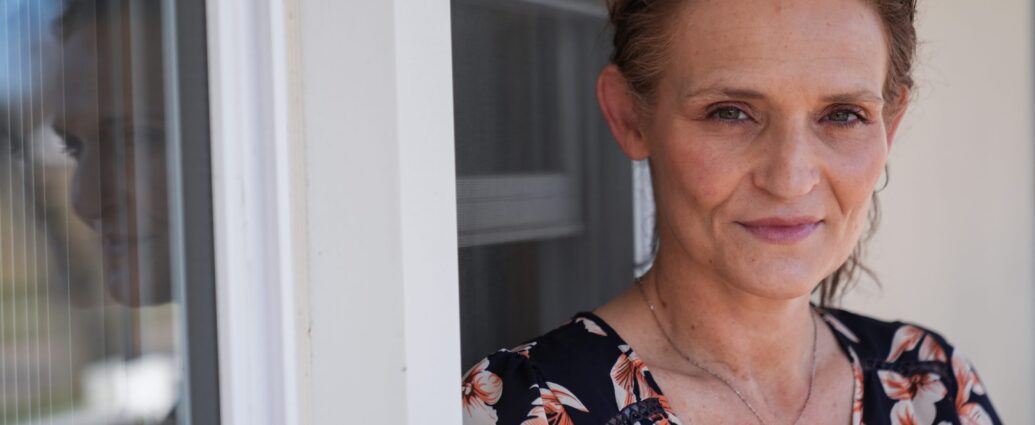
Today’s Equal Pay Day. Women and men still disagree about who has more economic opportunities
Most working women in the U.S. believe they are disadvantaged when it comes to earning competitive wages, but many men hold a different view, according to a new AP-NORC poll.
Equal pay emerged as a major source of concern for working women in the poll and an area where men and women are far apart in their perception of gender equity.
Most women who are employed full-time — about 6 in 10 — say men have more opportunities when it comes to earning competitive wages, according to the survey from The Associated Press-NORC Center for Public Affairs Research, while about one-third think neither gender has an advantage. About 3 in 10 employed women say they have personally experienced wage discrimination because of their gender.
Men who are employed full-time are more divided: About 4 in 10 believe men have an advantage when it comes to wages, while about half think both genders have about the same opportunities and about 1 in 10 say women have more opportunities. Just about 1 in 10 men say they have personally experienced wage discrimination because of their gender.
The survey also found that a majority of employed women say the amount of money they get paid is a “major” source of stress in their life right now, compared to about 4 in 10 employed men.
The findings come at a time when men’s earnings are rising faster than women’s, and the gender wage gap has widened for two years in a row, according to the U.S. Census Bureau.
Reflecting that shift, Equal Pay Day — which symbolizes how many more days into the year women have to work for their earnings to catch up with men — was Thursday, falling a day later than in 2025. That was still 16 days earlier than the first Equal Pay Day on April 11, 1996, when women earned about 75 cents for every dollar earned by men.
The country is deeply divided over how to confront gender pay disparity. A growing number of mostly Democratic-led states are adopting pay transparency laws aimed at making it easier to uncover unfair practices, including requiring employers to disclose pay ranges in job postings.
President Donald Trump’s second administration, for its part, has hollowed out some agencies and limited legal tools that have been key to investigating unfair pay practices, arguing they threatened meritocracy and presuppose that disparities in the workforce are the result of discrimination.
Many employed women say they’ve experienced wage discrimination
Jessica Thompson, 47, said she has seen gender bias throughout her working life. Until losing her job in January, Thompson said she earned $65,000 a year as a senior sales manager in Rockford, Illinois, while a male colleague with similar credentials had earned $87,000.
Thompson said she had to “really prove myself over four years to get the role. And you know, he just came in, just within a few months and got it.”
The poll indicates that women are particularly likely to see wages as a pain point. Fewer women, about 2 in 10, say they’ve been discriminated against in getting hired because of their gender, and men are about as likely to say the same thing.
The overrepresentation of women, especially Black and Hispanic women, in lower-paying jobs is a key driver of the gender wage gap, as is the “motherhood penalty.” Studies show that women’s earnings fall after having children while men see their wages increase after becoming fathers.
Earnings for women barely rose in 2024, while male earnings jumped 3.7%, widening the gender wage gap for the second straight year after two decades of slight narrowing, according to the latest annual report from the U.S. Census Bureau, which analyzes earnings for full-time workers. Women working full-time on average earned 80.9% of what men earned in 2024, down from 82.7% in 2023.
Most employed women say their pay is a ‘major’ source of stress
Women aren’t just likelier than men to be worried about pay equity — the poll also found that employed women are more economically stressed on a range of measures.
About 6 in 10 working women say the cost of groceries and the cost of housing are a “major” source of stress in their lives, and about half, 56%, say this about the amount of money they get paid. By contrast, about 4 in 10 employed men say the same.
Economists attribute the widening pay gap in part to the post-pandemic return to work of many low-wage women, which brought down the average female earnings. But the past two years have also seen a drop-off in the labor force participation rate of mothers with young children, in part because return-to-office mandates have reduced pandemic-era flexibility.
Few men think they are disadvantaged
Democratic lawmakers have criticized the Trump administration for making it more difficult to investigate wage discrimination as part of its campaign to stamp out diversity and inclusion practices.
Trump has ordered federal agencies to stop enforcing ” disparate impact liability,” a concept in civil rights law that has been used in wage discrimination cases against top companies. The Labor Department has also gutted the Office of Federal Contract Compliance Programs, an agency that has audited the pay practices of major companies and obtained hundreds of millions of dollars in compensation for women and minorities who have suffered from unfair policies.
The Equal Employment Opportunity Commission, meanwhile, has pivoted to prioritizing anti-DEI investigations under the premise that men, especially white men, have been discriminated against by practices aimed at advancing women and minorities in the workplace.
The poll suggests that few men see themselves as disadvantaged compared to women in the workplace. Only about 1 in 10 employed men said women had more opportunities when it comes to competitive wages or job advancement.
Michael Bettger, a 51-year-old mechanic who earns $26 an hour in rural Arkansas, said he has seen his wages fall as a result of layoffs and a decade-long struggle with opioid addiction that started after he hurt his back in a worksite accident. But he still believes women struggle more to get ahead in his male-dominated field because of the misogyny he sees, saying other mechanics make jokes about being prone to accidents because female colleagues are a distraction.
“Men do have an advantage and more opportunities for wages. I’ve seen that first hand,” Bettger said. “I have a daughter who wants to be a mechanic, and I’m scared to death of what kind of work she’s going to get.”
___
Savage reported from Chicago and Sanders reported from Washington.
___
The AP-NORC poll of 1,156 adults was conducted Feb. 5-8 using a sample drawn from NORC’s probability-based AmeriSpeak Panel, which is designed to be representative of the U.S. population. The margin of sampling error for adults overall is plus or minus 3.9 percentage points.
___
The Associated Press’ women in the workforce coverage receives financial support from Pivotal Ventures. AP is solely responsible for all content. Find AP’s standards for working with philanthropies, a list of supporters and funded coverage areas at AP.org.
This story was originally featured on Fortune.com

US bond market shows signs of strain as Iran war sparks Treasury tumult
This post was originally published here





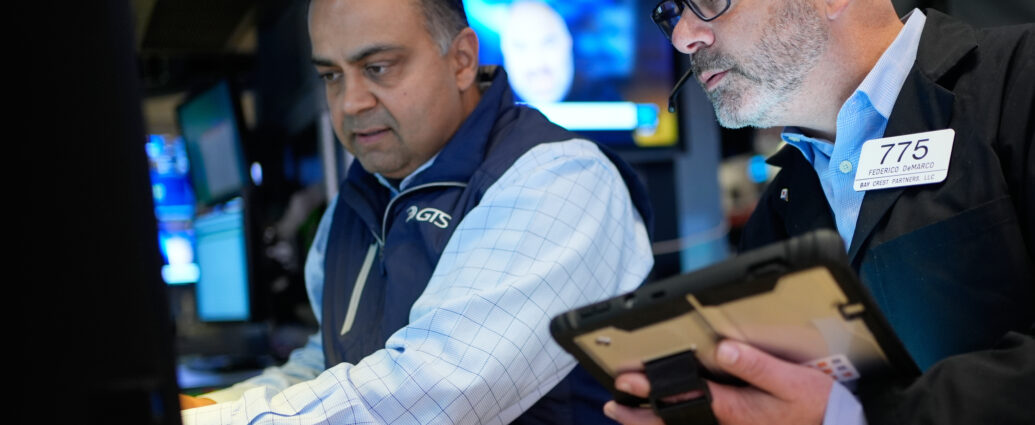



Iran war could push inflation higher this year, Goldman Sachs says
The impact of the Iran war on global oil prices could push the rate of inflation facing U.S. consumers higher, which would leave Federal Reserve policymakers in a difficult spot as they weigh possible interest rate cuts.
An analysis by economists at Goldman Sachs projected that Brent crude oil prices, a common benchmark for the global oil market, are expected to remain elevated, averaging $105 a barrel in March and $115 in April before falling to $80 a barrel in the fourth quarter of 2026. That’s based on oil shipments through the Strait of Hormuz remaining very low for six weeks.
In an adverse scenario where oil flows are disrupted for 10 weeks, the firm estimates Brent oil would peak at $140 a barrel and decline to $100 a barrel in the fourth quarter of 2026. A severely adverse scenario that includes disruptions for 10 weeks and infrastructure damage is a persistent hit to oil production would yield a peak at $160 a barrel and put oil at $115 a barrel in the fourth quarter of 2026.
“Most of the impact of the war on U.S. inflation will come from higher oil prices,” the Goldman economists said, noting that their “rule of thumb is that a 10% increase in oil prices raises headline PCE inflation by 0.2pp and core inflation by 0.04pp,” with much of the rise coming from transportation costs.
IRAN WAR FUELS ASIA ENERGY CRUNCH AS INDIA, JAPAN, OTHERS FEEL STRAIN
Goldman Sachs’ analysis also included a look at other commodities like fertilizer that could have higher costs due to limits on exports from the Gulf. It estimated that higher fertilizer prices could boost food prices by about 1.5% this year, raising headline inflation by 0.1 percentage point.
Additionally, second-round effects stemming from higher inflation expectations could boost inflation 0.1pp by the end of 2026 under the baseline scenario, or 0.4pp under the severely adverse scenario.
Those factors could push the Federal Reserve’s preferred inflation gauge higher. The personal consumption expenditures (PCE) index was up 2.8% on a headline basis in January, while core PCE, which excludes volatile measures of food and energy, was up 3.1% in January. Both figures were well above the Fed’s long-run target of 2% inflation, and policymakers opted against cutting rates at their last two meetings given the elevated readings.
MARKETS HANGING ON ‘EVERY WORD’ AS US-IRAN CONFLICT NEARS ONE MONTH, FORMER NEC DIRECTOR WARNS
The Goldman Sachs economists’ analysis finds that given higher oil prices, the impact on food prices and the more mild impact of other commodities and inflation expectations, they raised their December 2026 PCE inflation estimate by 0.2pp to 3.1% in the baseline scenario.
In the adverse scenario, PCE inflation would be 3.6% in December after peaking at 4.6% this spring, while the severely adverse scenario would leave PCE inflation at 4% at the end of the year after peaking at 4.9%.
The firm also raised its core PCE inflation forecast to 2.5% at the end of the year in the baseline scenario, while it would be 2.6% in December under the adverse and severely adverse scenarios.
IRAN WAR UNLIKELY TO TRIGGER GLOBAL SUPPLY CHAIN CRISIS, GOLDMAN SACHS SAYS
Goldman Sachs also lowered their forecast for economic growth, reducing 2026 gross domestic product (GDP) growth to 2.1% in the fourth quarter compared to the same period the prior year or 2.4% on a full-year basis under the baseline scenario. The GDP growth forecast would fall to 1.9% fourth quarter-to-fourth quarter in the adverse scenario and 1.8% in the severely adverse scenario.
The firm also raised its 12-month recession probability by 5 percentage points to 30%.
The economists didn’t alter their baseline forecast for Federal Reserve interest rate cuts, which featured two 25 basis point rate cuts in September and December. They explained that they expect the unemployment rate to rise to 4.6%, above the 4.4% median projection of Fed policymakers at their latest meeting.
GET FOX BUSINESS ON THE GO BY CLICKING HERE
However, they did raise the probability of the Fed staying on hold this year from 20% to 25%, while lowering the probability of insurance cuts from 15% to 10%, due to the relatively higher inflation readings they anticipate.




As TSA agents miss another paycheck, what’s happening at airports with private security?
At 20 airports around the U.S., security screeners are getting paid as usual despite the ongoing DHS shutdown — because they’re private contractors. Will more airports look at privatizing security?

This post was originally published here
CDE Crosses Critical Technical Indicator
In trading on Thursday, shares of Coeur Mining Inc (Symbol: CDE) entered into oversold territory, changing hands as low as $16.21 per share. We define oversold territory using the Relative Strength Index, or RSI, which is a technical analysis indicator used to measure momentum
This post was originally published here
David Nicholas: Gold, Silver — Use This Entry Point as Prices Slide
David Nicholas, co-founder of XFUNDS, shares his thoughts on gold and silver, saying he remains bullish on the precious metals despite current price pullbacks. In his view, the underlying fundamentals for both markets remain in place. Don’t forget to follow us @INN_Resource for real-time updates!Securities Disclosure: I, Charlotte McLeod, hold no direct investment interest in any company mentioned in this article.
This post was originally published here



Costco’s first standalone gas station is opening soon. Here’s how to get cheap gas at wholesale clubs
With gas prices climbing higher each week, wholesale clubs could be the go-to for your next fill-up.
This post was originally published here
David Davis says Cheshire police made ‘egregious’ failures in Lucy Letby investigation
Conservative former cabinet minister says nurse convicted of murdering seven babies has suffered a miscarriage of justice
The police force that conducted the investigation into the nurse Lucy Letby made “egregious” failures and did not follow official guidance or best professional practice, David Davis has said in parliament.
Speaking in the final parliamentary debate before the Easter recess, the Conservative former cabinet minister made a series of criticisms of Cheshire police and said Letby has suffered a miscarriage of justice. Davis said Cheshire police failed to appoint appropriate medical and statistics experts, and pursue all possible lines of inquiry into why babies died and collapsed on the “failing” neonatal unit of the Countess of Chester hospital in 2015-16.
This post was originally published here
Trump extends deadline for Iran to open strait of Hormuz by 10 days
President claims talks with Tehran regime are ‘going very well’ and says he is pausing ‘Energy Plant destruction’
Donald Trump has extended his deadline for Iran to open the strait of Hormuz by 10 days to 6 April after saying talks are “going very well”.
The president made the statement on Thursday in a social media post, saying: “As per Iranian Government request, please let this statement serve to represent that I am pausing the period of Energy Plant destruction by 10 Days to Monday, April 6, 2026, at 8 P.M., Eastern Time,” Trump said on his Truth Social platform.
This post was originally published here
Flatterers out in force to fill Trump’s head with Venezuelan statue dreams
President’s popularity top of mind at another weird and wild cabinet meeting – riff on merits of Sharpies included
They have become so notorious for displays of flattery and obsequiousness that critics have drawn comparisons with North Korea. Thursday’s cabinet meeting at the White House was no different.
Doug Burgum, the US interior secretary, outflanked his fellow praise singers by saying he believes that Venezuela – which the US attacked in January – intends to honour the president with a statue.
This post was originally published here
Unity Software Stock Soars After The Close: Here’s Why
Unity Software Inc (NYSE:U) shares are rising in Thursday’s after-hours session after the company released strong preliminary results for the first quarter.
- Unity Software stock is among today’s strongest performers. Why is U stock rising?
Unity Reports Preliminary Q1 Results
Unity announced Thursday that it expects first-quarter results to come in above prior guidance. The company sees first-quarter revenue in the range of $505 million to $508 million versus prior guidance of $480 million to $490 million.
Unity also guided …

Notable Two Hundred Day Moving Average Cross – CDE
In trading on Thursday, shares of Coeur Mining Inc (Symbol: CDE) crossed below their 200 day moving average of $16.46, changing hands as low as $16.22 per share. Coeur Mining Inc shares are currently trading down about 8.5% on the day. The chart below shows the one year perfor
This post was originally published here

Understanding Unfair, Deceptive, or Abusive Acts or Practices in Finance
This post was originally published here


Trump extends pause on attacking Iran energy facilities to April 6
This post was originally published here

Google Moves Up Quantum Encryption Deadline To 2029: What Does It Mean For Bitcoin?
Alphabet Inc. (NASDAQ:GOOGL) on Tuesday set a 2029 deadline for migrating its entire infrastructure to post-quantum cryptography, warning that quantum frontiers “may be closer than they appear.”
The target is more aggressive than the U.S. federal government’s 2035 mandate and the NSA’s 2031 deadline, and it may carry serious implications for Bitcoin (CRYPTO: BTC).
Google’s VP of Security Engineering Heather Adkins and Senior Staff Cryptography Engineer Sophie Schmieg cited faster-than-expected progress in quantum hardware, error correction, and factoring resource estimates.
Two Threats, One Deadline
Google flagged two distinct risks.
The first is already happening: “store-now-decrypt-later” attacks, where adversaries harvest encrypted data today to crack it once quantum capability arrives.
The second targets digital signatures, the cryptographic proof underpinning online authentication and every blockchain transaction.
Google said it has adjusted its internal threat model to …
Dow slides more than 450 points, pressured by rising oil prices and doubts over Iran negotiations: Live updates
Higher oil prices and traders’ worries over next steps in Iran pulled the major averages lower on Thursday.
This post was originally published here
i-80 Gold (IAUX) Shares Enter Oversold Territory
In trading on Thursday, shares of i-80 Gold Corp (Symbol: IAUX) entered into oversold territory, changing hands as low as $1.32 per share. We define oversold territory using the Relative Strength Index, or RSI, which is a technical analysis indicator used to measure momentum on
This post was originally published here
ASM Crosses Critical Technical Indicator
In trading on Thursday, shares of Avino Silver & Gold Mines Ltd (Symbol: ASM) entered into oversold territory, changing hands as low as $5.675 per share. We define oversold territory using the Relative Strength Index, or RSI, which is a technical analysis indicator used to
This post was originally published here
Shares of MUX Now Oversold
In trading on Thursday, shares of McEwen Inc (Symbol: MUX) entered into oversold territory, changing hands as low as $18.43 per share. We define oversold territory using the Relative Strength Index, or RSI, which is a technical analysis indicator used to measure momentum on a s
This post was originally published here
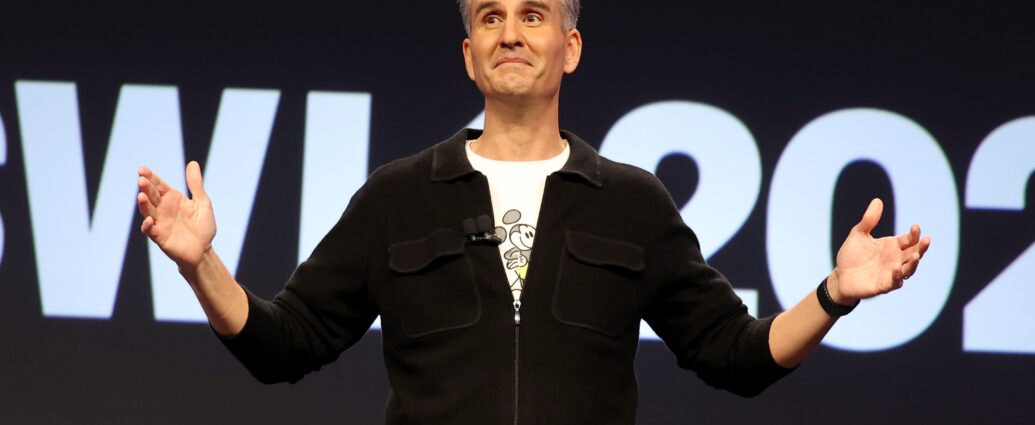
Disney CEO’s no good, very bad week: Josh D’Amaro is dealing with 3 major headaches in his first week
Josh D’Amaro stepped into that corner CEO office at Walt Disney with a clear goal, pledging the company would focus “on coming together as one Disney to deliver a more connected, personalized, and immersive experience to our consumers.”
D’Amaro described a world of Disney entertainment that consolidates its vast intellectual property of movies, games, experiences, and more under one roof. It took a week for some of the biggest bets underpinning that vision to collapse.
The vision of a sweeping field of Disney content relied on multiple external partnerships worth billions of dollars. Several of them unraveled entirely.
D’Amaro, a veteran leader in Disney’s theme park division, was brought in to steady the ship after a period of uncertain leadership. But three major developments, mostly stemming from decisions made far away from the Magic Kingdom, have made his debut at the top of the company memorable for all the wrong reasons.
OpenAI pulls out the rug
A watershed deal Disney struck with OpenAI late last year dissolved suddenly on Tuesday when the tech company announced it was closing down its Sora video generator app, part of OpenAI’s wider efforts to contain spending ahead of a possible IPO later this year. That ended what was supposed to be a three-year $1 billion partnership, under which some 200 Disney characters from Star Wars, Marvel, and other brands would populate short-form AI-generated videos on Disney+.
OpenAI’s decision came as a shock to Disney executives, who learned that Sora would be shut down just 30 minutes after they had been meeting with OpenAI about the video generator’s future, according to Reuters. One anonymous source called OpenAI’s decision a “big rug-pull.”
OpenAI’s CEO Sam Altman is reportedly planning a strategy shift to refocus on business fundamentals and a more streamlined product lineup. Sora was wildly popular in terms of downloads and engagement, but proved difficult to monetize despite high operating costs, making it an obvious target if OpenAI was looking to cut costs. Disney may choose to pursue deals with other AI-powered video platforms, but at least for now, its ambitions of fully integrated AI video populated with Disney characters have effectively become collateral damage in another company’s pivot.
Fortnite isn’t so fun anymore
Also on Tuesday, Epic Games—the videogame developer of Fortnite fame—announced it was laying off 1,000 employees after updates to its hit signature product failed to translate to higher engagement. That’s bad news in general. For D’Amaro, it’s personal.
D’Amaro was the chief architect of Disney’s $1.5 billion investment in Epic, announced in 2024. The deal gave Disney a large equity stake and called for the creation of an entirely new digital universe built around Disney characters and stories, where users could engage in immersive entertainment and shopping. As part of the deal, D’Amaro also joined Epic’s board as an observer. The partnership was the cornerstone of his fan-engagement mission: a Fortnite-powered Disney metaverse where Marvel heroes and Star Wars villains lived alongside players.
“He sees the digital realm—and Epic is a manifestation of that—as a very important place for fans to interact with their favorite characters, franchises and brands in a comprehensive way that you can monetize,” Kevin Mayer, a former head of strategy, told the Hollywood Reporter about D’Amaro’s ambitions in February.
In a memo to staff, Epic founder Tim Sweeney said a downturn in Fortnite engagement had left the company in a financial rut, though he added that $500 million in cost cuts should position Epic for major launch plans toward the end of the year. Whether those plans still include Disney’s digital universe remains to be seen.
A Bachelorette scandal
If the tech wreckage weren’t enough, D’Amaro also inherited a reputational fire at ABC, the network company owned by Disney. Last week, ABC cancelled the already-filmed 22nd season of The Bachelorette amid domestic violence allegations directed at Taylor Frankie Paul, the planned star this season.
It was a messy and widely covered distraction that arrived precisely when the new CEO least needed one. It’s the latest in a string of controversies surrounding The Bachelorette and its companion show, The Bachelor, both of which have long been criticized for underrepresenting people of color in their lineups and promoting sexist stereotypes. But ABC’s move last week is the first time it has cancelled a season of one of its signature franchises after having already filmed it, a call that could cost the company millions.
Disney stock has dipped more than 4% over the past week and underlines the challenge behind D’Amaro’s vision of technology as a growth engine. The developments at OpenAI and Epic may have been out of his control, but they have regardless undermined the universe D’Amaro described so keenly just a week ago.
This story was originally featured on Fortune.com


Ares Private Credit Troubles Mount With Fund Loss
Ares Management‘s (NYSE:ARES) private credit challenges mounted in February, with one of its funds posting the deepest monthly loss in its history as the sector weakened.
The Ares Strategic Income Fund (ASIF), which managed close to $23 billion in assets as of January, declined 0.68% last month in the worst setback since it was launched in 2023, according to a Bloomberg report. Still, ASIF has delivered annual returns of 10.6% since inception through the end of January, according to the outlet.
The Morningstar LSTA index, which tracks publicly traded leveraged loans, fell by 0.8% in February, reflecting broader market challenges.
Withdrawals Capped
Reports of the ASIF loss comes after Ares announced it would limit withdrawals from the fund after facing a significant increase in redemption requests. The fund, which targets affluent investors, saw redemptions rise to 11.6% in the first quarter, prompting the firm to cap outflows at 5%.
The fund received $1.2 billion in redemption requests during this period, fulfilling $524 million, which is slightly over 40% of the total requests, …
This post was originally published here
Family caregivers now provide $1 trillion worth of care annually, AARP finds
About 59 million caregivers provide care for loved ones, representing $1.01 trillion in total economic value annually, according to a new AARP report.
This post was originally published here
Trump says Iran let 10 oil ships through Strait of Hormuz as a ‘present’ to U.S.
Trump said the U.S has “very substantial talks going on with respect to Iran,” though Tehran has denied direct talks have taken place.
This post was originally published here