S&P 500 falls to a key technical spot. Traders watch whether it will hold
2026-03-19
The latest losses put the benchmark stock index down more than 3% since the U.S.-Iran war began.
This post was originally published here

The latest losses put the benchmark stock index down more than 3% since the U.S.-Iran war began.
This post was originally published here
Jabil Inc. (NYSE:JBL) on Wednesday delivered stronger-than-expected fiscal second-quarter 2026 results and raised its full-year outlook.
Quarterly adjusted earnings per share of $2.69, beating the analyst consensus estimate of $2.51. Quarterly net revenue of $8.28 billion, down by 23.1% year-over-year (Y/Y), outpaced the analyst consensus estimate of $7.74 billion.
Jabil expects fiscal third-quarter 2026 net revenue of $8.100 billion-$8.900 billion compared to the analyst estimate of $8.037 billion and adjusted EPS of $2.83-$3.23 against the consensus estimate of $2.89.
The company, known for leveraging advanced technologies such as AI and automation to improve manufacturing and supply chain operations, projects fiscal 2026 net revenue of $34 billion (up …
This post was originally published here

Indonesia’s richest man, Michael Bambang Hartono, who helped turn the Djarum cigarette company into one of the country’s largest business empires and later became a controlling shareholder of Bank Central Asia, Indonesia’s biggest private lender, died Thursday. He was 86.
Hartono died at a hospital in Singapore on Thursday afternoon, the Djarum Group said in a statement.
“With deep sorrow, the extended family of PT Djarum announces the passing of one of our company’s leaders, Michael Bambang Hartono,” the statement said. “We extend our gratitude for his dedication and service.”
The family has not revealed the cause of his death. He had previously acknowledged suffering from chronic obstructive pulmonary disease and a heart attack.
Hartono and his brother Robert Budi Hartono grew their inherited family business into a conglomerate based in Central Java’s Kudus regency, operating in banking, palm oil plantations, properties, electronics, telecommunications, and an e-commerce platform.
Their flagship company PT Djarum produced dozens of domestic and international brands, primarily kretek, or clove cigarettes, including Djarum Black, Djarum Super and L.A. Lights. The brothers also are the biggest shareholders in Bank Central Asia, Indonesia’s largest bank, which had revenue of 57.5 trillion rupiah ($3.43 billion) last year.
Their net worth was more than $43.8 billion, making the Hartono brothers the wealthiest in Indonesia. Michael Hartono had about $25.1 billion in December 2024, making him the 76th richest person in the world, according to Forbes.
In 2004, they won the right to redevelop Hotel Indonesia, a historic site in the heart of Jakarta. They transformed the property into a shopping mall, office, luxury hotel and apartment complex called Grand Indonesia.
Through its parent company, PT Dwimuria Investama Andalan, better known as the Djarum Group, the company has diversified into non‑tobacco businesses, including banking, technology and food.
Djarum also owns PB Djarum, one of Indonesia’s most prominent badminton clubs, whose players have won numerous world championships for Indonesia, and the Italian football club Como. The company was a major sponsor of Indonesia’s top soccer league from 2005 to 2011.
Hartono was also a champion bridge player and the president of the South East Asia Bridge Federation. He received an award from the World Bridge Federation in 2017 for his efforts in making bridge a category in the Asian Games.
He represented Indonesia at the 2018 Asian Games in bridge, winning a bronze medal with his team, making him the oldest Indonesian Asian Games medal winner.
When he and other athletes were honored at the presidential palace for Indonesia’s performance at the Games that year, Hartono received a reward of about $16,700, which he donated to the development of his beloved card game.
Born Oct. 2, 1939, Hartono watched his father roll tobacco with a native clove spice to make the cigarettes Indonesians call “kretek” for the crackling sound made by the burning scented spice. The brothers took over the business upon their father’s death in 1963, worked on developing new blends and began exporting in 1972 to many countries, including the U.S.
They created their first machine-made kretek, the Djarum Filter, in 1976, and introduced the machine-rolled Djarum Super, in 1981.
It is one of the most popular brands in Indonesia, the world’s fourth most populous nation, where more than 64 million adults smoke daily.
Djarum’s clove products are now marketed as “filtered cigars” and are wrapped in tobacco leaf instead of black paper since the Family Smoking Prevention and Tobacco Act banned most flavored cigarettes in the U.S.
Today, about 60,000 workers at their factories manually roll Djarum’s cigarettes, which are sold mostly to lower-income earners.
Hartono is survived by his wife and a son.
This story was originally featured on Fortune.com

Decent Holding Inc. (NASDAQ:DXST) shares are under pressure during Thursday’s pre-market session.
While historically known for wastewater treatment, the company is pivoting. On March 5, it launched an AI-powered senior care platform through its subsidiary, Suncare (Shanghai) Health Technology Co., Ltd.
Chairman Dingxin Sun noted the aging population is a “significant structural opportunity.” The company is targeting China’s silver economy, estimated at $4 trillion. To date, the …
This post was originally published here
Exclusive: Hanne, 16, from Sussex, was denied board on flight to London after weekend in Copenhagen
A 16-year-old British schoolgirl has been left stranded in Denmark after she was refused board on a flight to London because of new UK border rules introduced on British dual nationals.
Hanne*, from Sussex, was stopped from boarding a flight home on 8 March after a weekend seeing her British father, who is an academic on a short work stint at a university in Copenhagen.
Has your child been refused board on a flight because of the new rules? If you want to share your story, email: lisa.ocarroll@theguardian.com
* Names have been changed.
This post was originally published here
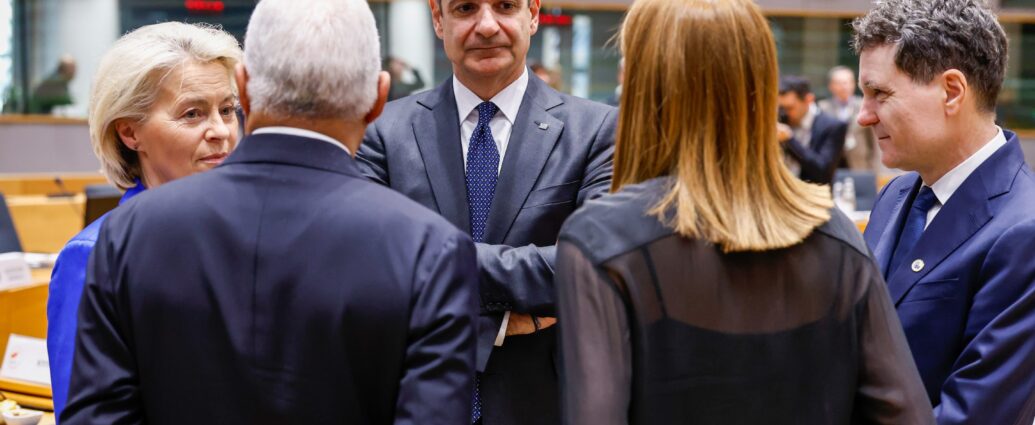
European leaders doubled down Thursday on refusing to join the United States and Israel military campaigns in the Middle East as they met in Brussels to grapple with rising oil and gas prices caused by the war.
European leaders have deflected entreaties from U.S. President Donald Trump to send military assets to secure the Strait of Hormuz, a key waterway for the global flow of oil, gas and fertilizer. However, rising energy prices because of the war and fears in Europe of a new refugee crisis have pushed leaders to make the Middle East a priority at the summit.
“We are very worried about the energy crisis,” said Belgian Prime Minister Bart De Wever ahead of the summit. He said that energy prices were too high before the war, but that the conflict “created another spike.”
“If that becomes structural, we’re in deep trouble,” he said.
The summit was initially expected to center on overcoming Hungary’s opposition to a massive loan for Ukraine, but the conflicts in Iran and Lebanon reset the agenda.
European leaders have been deeply critical of the Iranian government, but none have offered immediate help to the U.S. Britain is flat-out refusing to be drawn into the war. France says the fighting would have to die down first.
Austrian Chancellor Christian Stocker said that Europe “will not allow itself to be blackmailed” into joining the United States and Israel military campaign in the Middle East.
“Europe — and Austria as well — will not allow itself to be blackmailed,” he said ahead of the European Council summit of the leaders of the 27 EU nations. “Intervention in the Strait of Hormuz is not an option for Austria anyway.”
EU foreign policy chief Kaja Kallas said there was “no appetite” among leaders to expand a European naval force in the Red Sea to help secure the Strait of Hormuz or otherwise join the fray.
Chancellor Friedrich Merz said the war must end before his country can help with matters such as keeping shipping lanes clear.
“We can and will commit ourselves only when the weapons fall silent,” he said of potential German military support to secure shipping lanes in the Strait of Hormuz. “We can then do a great deal, up to opening sea lanes and keeping them clear, but we’re not doing it during ongoing combat operations.”
He said that would require an international mandate, among other complicated steps, “before we can even consider such an issue.”
While the EU isn’t a party to the conflict, Dutch Prime Minister Rob Jetten said he understood the U.S. and Israeli reasons for launching the campaign against the “brutal” Iranian government. He called for the EU to increase both sanctions on Iran and support for Iranian opposition groups
But others blasted the war as “illegal” and destabilizing.
“We are against this war because it is illegal,” Spanish Prime Minister Pedro Sánchez said: “It’s causing a lot of damage to civilians, of course, refugees and the economic consequences that the whole world, especially the global south, is already suffering.”
Trump had mentioned NATO support for clearing the Strait of Hormuz but has not officially requested it, said Evika Silina, prime minister of Latvia, one of the 23 out of the 27 EU nations that are NATO members.
“When there will be some official requests, I think we always have to evaluate those requests.”
The European Commission has told leaders it has a mix of financial instruments that member nations could deploy to lower energy prices, which will be up for discussion. No single policy will likely work to blunt the economic shocks from the war across the bloc’s myriad markets from Romania to Ireland.
EU leaders are hoping their experience weaning off of Russian energy in the wake of the 2022 invasion of Ukraine and of building up the bloc’s military spending towards self-sufficiency will enable to them to do the same for energy independence.
While some European capitals have called for the suspension or scrapping of climate policies to stave off the worst of the recent spike in energy prices because of the war, others have argued that the EU’s long-term energy strategy should be home-grown sustainable energy decoupled from vulnerable fossil fuel markets.
European Council President Antonio Costa said that “energy means security” and that the EU should “build our own capacity to produce our own energy, because it’s the only way to be secure.”
___
Associated Press writers Pietro De Cristofaro, Geir Moulson in Berlin and Sylvie Corbet in Paris contributed to this report.
This story was originally featured on Fortune.com
Your next laptop, smartphone, or even refrigerator is going to cost more — and you can thank AI for that. The AI boom has triggered what insiders are calling “RAMageddon”: a gold rush on high-bandwidth memory chips that is squeezing out nearly every other buyer in the global market, driving up prices across consumer electronics and straining industries from automotive to healthcare. Even Apple CEO Tim Cook has warned about the pressure AI infrastructure costs are placing on hardware margins.
The biggest AI players have effectively imposed a tax on the entire economy — and most people have no idea it’s happening.
Modern computing relies on several types of memory. SRAM is the fastest and most expensive; it’s used in small amounts inside processors. DRAM is the workhorse of the group: cheap, abundant, found in everything from laptops to cars to refrigerators. Then there’s High Bandwidth Memory or HBM. This is a specialized, premium form of DRAM that stacks chips die-to-die to achieve dramatically faster data transfer speeds. The cost for this premium memory is quite steep: a single silicon wafer provides 3x as much commodity DRAM as HBM. Fab processing time for HBM is significantly longer too, making the supply problem worse. As a result, producing more HBM equates to fewer total memory chips produced.
For AI training and inference, HBM has become the essential ingredient. It’s the jet fuel that powers the GPUs running today’s largest and most advanced models.
Memory manufacturers have a limited number of wafers they can produce from each fab, or silicon factory. The same production lines that churn out commodity DRAM for the devices consumers use every day are being allocated to building HBM. It’s a rational business decision: HBM commands premium prices in a volatile industry and comes with massive guaranteed purchase orders. In fact, AI firms and their peers have already locked up HBM supply well into 2027. The result is a tightening of commodity memory supply, rising prices, and longer lead times with ripple effects that touch almost every industry. And right now, the industry’s biggest players have cornered the supply, creating the core tension driving the memory shortage. The AI industry is effectively taxing the entire economy in order to build its own.
The scale of AI’s memory appetite is staggering. As model sizes have grown from millions to billions to trillions of parameters and context windows have grown from thousands of tokens to tens of millions of tokens, memory requirements have increased in step, and the architecture of data centers has struggled to keep pace. This is the industry’s “memory wall”: a fundamental bottleneck where memory bandwidth and capacity can’t keep up with the processors demanding it.
HBM was an elegant solution to an earlier version of this problem. When models were smaller (such as GPT-2 and GPT-3), placing memory adjacent to the processors and delivering data at extreme speeds worked well. But we’ve since blown past that era. Today’s frontier models exceed two trillion parameters and the next generation will be over five trillion. A single HBM stack holds about 24 gigabytes. That’s roughly one percent of what today’s workloads actually need and far less than that for the next generation of workloads.
The result is that data centers must now scale out exponentially. They chain together hundreds of processors across servers and racks. At that point, HBM’s killer feature of extreme local bandwidth gets strangled by the comparatively slow links connecting all of these machines. The industry has built a gold-plated solution to the problem: AI companies pay the HBM premium while realizing only diminishing returns on performance.
The prevailing narrative frames AI infrastructure investment as broadly good: better for memory makers, better for chip companies, better for innovation everywhere. The reality is more lopsided.
Memory manufacturers may profit in the short term. But the true winner is concentration itself. When the HBM supply is locked up by a handful of hyperscalers, it functions as a moat. Startups, enterprises, and established industries all face higher hardware costs and more limited access to the advanced AI capabilities they need to compete. The companies that can afford to stockpile chips don’t just win today; they entrench advantages that could become impossible to dislodge.
Everyone else is caught in the crossfire. Consumers will pay more for devices with less capability. Businesses face a hardware cost environment that has become more taxing and volatile. And the broader technology ecosystem is competing for memory resources against an industry that has essentially unlimited capital to outbid them.
The AI industry loves to talk about democratization: open models, accessible tools, intelligence for everyone. That story is increasingly disconnected from the hardware reality being constructed underneath it.
The current trajectory isn’t sustainable. Pouring more investment into HBM capacity addresses a symptom while ignoring the underlying disease. The industry needs to move beyond its fixation on a single memory architecture designed for an earlier era of AI and invest seriously in new approaches—ones that can meet AI’s demands today, and as they grow a hundredfold in the next few years.
Solving this requires more than ramping up additional HBM fabs. It requires a fundamental rethinking of how memory is architected for AI. What’s needed are memory systems that are smart, fast, and compact — architectures that can scale alongside model growth without requiring brute-force resource consumption. Most importantly, the emerging architecture must make AI accessible to more than just a handful of companies.
The memory wall isn’t just an engineering footnote in AI’s rise. It’s the defining infrastructure challenge of this era. The industry’s current answer of “more HBM, faster, at any cost” is a perilous road that risks eroding competition, innovation, and consumer trust. As an industry, we must find a way to do better, and quickly, before it’s too late. The most immediate relief available is a pivot away from HBM dependency toward commodity DRAM architectures engineered specifically for AI’s requirements. The window to act — before the gap between AI haves and have-nots becomes unbridgeable — is closing fast.
The opinions expressed in Fortune.com commentary pieces are solely the views of their authors and do not necessarily reflect the opinions and beliefs of Fortune.
This story was originally featured on Fortune.com

President Donald Trump is facing perhaps the most daunting question of the war with Iran, one that could define his time in office: Will he put U.S. troops on the ground in Iran to secure some 970 pounds of enriched uranium that Tehran could potentially use to build nuclear weapons?
Trump has offered shifting reasons for launching the war, but he has been consistent in articulating that a primary objective in joining Israel in the military action is ensuring that Iran will “never have a nuclear weapon.”
The president has been more circumspect about how far he’s willing to go to follow through on his pledge to destroy Iran’s weapons program once and for all, including seizing or destroying the near-bomb-grade nuclear material that Iran possesses.
Much of it is believed to be buried under the rubble of a mountain facility pummeled in U.S. bombings Trump ordered last June that he had claimed “obliterated” Tehran’s nuclear program.
It’s a risky, complicated project that many nuclear experts say cannot be done without a sizable deployment of U.S. troops into Iran, a dangerous and politically fraught operation for the Republican president, who has vowed not to entangle the U.S. in the sort of extended and bloody Middle East conflicts that still loom large on America’s psyche.
At the same time, lawmakers and experts remain concerned that if Iran hard-liners emerge from the fighting, they’ll be more motivated than ever to build nuclear weapons as they look to deter the U.S. and Israel from future military action, a dynamic that makes taking control of Iran’s enriched uranium even more critical. That stockpile could allow Iran to build as many as 10 nuclear bombs, should it decide to weaponize its program.
Some lawmakers, like Sen. Richard Blumenthal, D-Conn., say they remain deeply fearful that the president has put the nation on a path that will require putting troops inside Iran for what he called Trump’s confused and chaotic objectives.
“Some of the objectives that he continues to espouse simply cannot be achieved without a physical presence there — securing the uranium cannot be done without a physical presence,” said Blumenthal, a member of the Senate Armed Services Committee.
Meanwhile, Republican allies of Trump stress that there are plans in place to deal with the enriched uranium. Senate Foreign Relations Committee chairman James Risch, R-Idaho, on Wednesday cited “a number of plans that have been put on the table.” He declined to elaborate.
Others acknowledged the complications of deploying troops into Iran.
“No one has given me a briefing on how you would do it without boots on the ground,” said Sen. Rick Scott, R-Fla., a member of the Senate Armed Services Committee. “It doesn’t mean you can’t. But no one’s ever briefed me about it.”
Scott added it’s not tenable to allow the stockpile to remain: “I think it would be helpful to get rid of it.”
Nearly three weeks into a conflict that’s left hundreds of people dead, tested longtime alliances and brought pain to the global economy, Trump and his top advisers have been rigidly obtuse about their deliberations over Iran’s uranium stockpile.
“I’m not going to talk about that,” Trump said last week when asked about the enriched uranium. “But we have hit them harder than virtually any country in history has been hit, and we’re not finished yet.”
Later that day, during an appearance in Kentucky, Trump appeared to claim the strikes had already neutralized the threat. “They don’t have nuclear potential,” he said.
Meanwhile, Defense Secretary Pete Hegseth told reporters earlier this week that the administration sees no point in telegraphing “what we’re willing to do or how far we’re willing to go” while asserting “we have options, for sure.”
Richard Goldberg, who served as director for countering Iranian weapons of mass destruction for the National Security Council during Trump’s first term, said that seizing or destroying the enriched uranium is certainly doable, if the president decides to go that route.
The U.S. and Israeli forces have been making strides toward creating the conditions — namely, establishing total air superiority — that would allow for special operations forces operators, who are trained in blowing up centrifuges and dealing with nuclear material, to conduct such an operation if the president decides to go that route.
To be certain, a troops-on-the-ground effort is expected to be far more complicated than other recent high-profile, lightning-strike insertion operations, such as the January capture of Venezuela’s Nicolás Maduro or the May 2011 killing of Osama bin Laden, Goldberg said. And the likely need to remove rubble to get to the canisters of enriched uranium adds another layer of complexity, because it would require heavy construction equipment.
“But if you actually own the airspace and you can have close air support and drones and everything else up in the sky for pretty wide perimeter, presumably you could do a lot,” said Goldberg, who is now a senior adviser at the Foundation for Defense of Democracies, a hawkish Washington think tank.
International Atomic Energy Agency chief Rafael Grossi told reporters in Washington this week that the assumption is much of the enriched uranium remains in the trio of Iranian nuclear sites bombarded last year by the U.S.
“The impression we have … is that it hasn’t been moved,” said Grossi, adding that a bulk of the material is beneath the rubble at Iran’s Isfahan facility while lesser amounts are at the Natanz and Fordow facilities that were destroyed in last year’s American strikes.
Testifying before a Senate committee on Wednesday, Director of National Intelligence Tulsi Gabbard in her prepared remarks said that the U.S. attacks on Iran had “obliterated” Iran’s nuclear enrichment program and buried underground facilities.
Gabbard said the U.S. has been monitoring whether Iran’s leaders will try to restart its nuclear program but said that they have not tried to rebuild their nuclear enrichment capability. She added that the clerical authority overseeing Iranian government has been degraded in Israel’s strikes on its leadership but remains intact.
Brandan Buck, a senior foreign policy fellow at the Cato Institute, said that an effort to extract or dilute the enriched material would likely take more than 1,000 troops at each Iranian site and would take time to complete.
On the other hand, not acting to secure the enriched uranium also comes with risk. Should Iran’s hard-liners remain in power, and with enriched material, they will now have greater motivation to build a nuclear weapon.
“Trump has put himself between a rock and a hard place,” Buck said. “Throughout this, he has had maximalist aims, but he’s wanted to maintain minimal effort in order to keep the costs low.”
___
Associated Press writers Stephen Groves, Matthew Lee and Lisa Mascaro contributed to this report.
This story was originally featured on Fortune.com
Rivian (NASDAQ:RIVN) shares are trading higher during Thursday’s premarket session following a billion-dollar partnership announcement with Uber Technologies, Inc. (NYSE:UBER).
The news comes as the broader market is experiencing a mixed performance, with major indices showing losses.
Uber will invest up to $1.25 billion in Rivian through 2031, contingent on achieving specific autonomous milestones.
The investment represents a significant capital boost relative to Rivian’s $5.387 billion in full-year 2025 revenue, up 8% from $4.970 billion in 2024, underscoring the deal as strategic funding support.
Rivian had long-term debt worth $4.44 billion as of December 2025.
The initial commitment includes a $300 million investment, aimed at deploying thousands of Rivian R2 robotaxis across 25 cities by the end of 2031.
The partnership is expected to accelerate Rivian’s path to level 4 autonomy, with initial deployments planned for San Francisco and Miami starting in 2028.
The collaboration could lead to the purchase of up to 40,000 additional autonomous vehicles by 2030, enhancing Rivian’s position in the autonomous vehicle market.
The broader …
This post was originally published here

Top Wall Street analysts changed their outlook on these top names. For a complete view of all analyst rating changes, including upgrades, downgrades and initiations, please see our analyst ratings page.
This post was originally published here
All of the positive economic talk out of this week’s Federal Reserve meeting had a negative impact on investors
This post was originally published here

Adobe’s longtime CEO Shantanu Narayen announced he was stepping down last week, a move caused, at least in part, by investors’ impatience with the software company’s AI transition. Abode’s stock has been crushed in the “SaaSpocalypse” market selloff that has hit companies whose per-seat software tools are especially vulnerable to automation. Shares are down 25% year-to-date, and investors weren’t impressed with Adobe’s AI-driven quarterly revenue.
Narayen’s exit is a stark reminder that, after years of hyping the technology, CEOs now must turn their AI rhetoric into results—or risk being shown the door. The make-or-break moment for CEOs is contributing to an era of rapid turnover among chief executives. Last year, companies in the S&P 1500 named 168 new CEOs, the highest total in more than 15 years, according to Spencer Stuart, a global executive search and leadership advisory firm. Already this year, the CEOs of several companies including Lululemon, Disney, Target, and Walmart, have left their roles.
CEO tenures are getting shorter and fewer incoming chief executives have prior CEO experience, the data shows, making the two-time CEO exceedingly rare. All told, corporate America has turned into a CEO meat-grinder; it’s chewing up and spitting out leaders at a pace not seen in a decade and a half.
“What we’re seeing right now is clearly a sign of stress,” says Dirk Jenter, professor of finance at the London School of Economics and Political Science. AI is only one part of the reason why.
CEOs have been quick to blame recent layoffs of rank-and-file employees on AI, but their own departures are rarely explained so simply. Still, there’s little doubt that expectations around AI are factoring into chief executives’ more frequent departures in one way or another.
There are circumstances like Narayen’s in which shareholders are displeased with a CEO’s ability to deliver on an AI vision. “Investors are not necessarily super patient,” Jenter says. “They see billions being spent on AI investments, and they see sort of very little in short-term return on investment, and that puts a lot of pressure on company leadership.”
But investors are also expecting CEOs to achieve overall growth on par with the extraordinary gains recorded at companies at the center of the AI revolution, the so-called “Magnificent 7.”
“There’s increasing pressure on all CEOs to be growing at similar kinds of rates,” says Anthony Nyberg, a management professor at the University of South Carolina’s Darla Moore School of Business. “[It’s] not actually sustainable or manageable for those companies.”
A surge in shareholder activism is another sign of investors’ growing impatience. Activist campaigns hit an all-time high of 255 last year, surpassing the 2018 record, according to Barclays. U.S. campaigns rose 23%.
Activists are increasingly targeting CEOs. “Five or ten years ago, activism was largely about corporate policies,” Jenter says. “Now they’re going directly after the top leadership of companies.” Thirty-two U.S. CEOs resigned within a year of an activist campaign, a 38% increase over the four-year average, Barclays’ data shows.
And then there are instances in which boards tap fresh (often younger) blood to guide companies through the AI transition. Doug McMillon, Walmart’s highly-respected former CEO who, by all accounts, left on his own terms, cited AI in explaining his decision to step down in January. He said his successor, John Furner, was “uniquely capable of leading the company through this next AI‑driven transformation.”
Another force behind the churn: Today’s board directors are less likely to be current or former CEOs than in the past, studies show. Nyberg argues that these less CEO‑centric boards tend to be less sympathetic to sitting chiefs—and perhaps less attuned to the full scope of the job—making them more inclined to support a leadership change.
Experts also argue that CEO turnover is catching up after a backlog from the COVID era, during which boards favored continuity.
All told, CEOs are getting less time to deliver on their visions. The average tenure for S&P 1500 CEOs hit 8.5 years last year, down from 9.2 years in 2024—and the shortest since 2019.
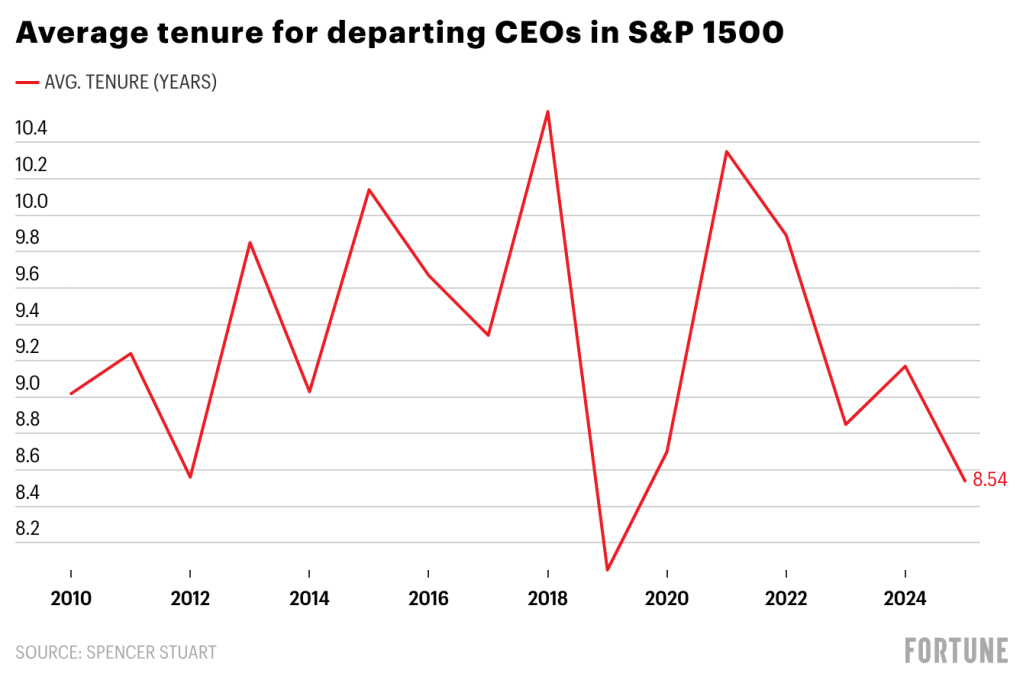
The rapid turnover is requiring boards to fulfill their succession planning responsibilities, and they’re increasingly dipping into their companies’ own ranks to replace chief executives.
The share of externally hired CEOs hit 60% in 2025, up from 57%, a historic low, in 2024. But there are signs that boards have been caught off-guard by the pace of CEO turnover. Nineteen new CEOs were appointed from their company’s board last year, the most since 2020, according to Spencer Stuart, “suggesting that some companies are not ready for succession.”
Almost always, internal CEO hires lack prior chief executive experience, a trait that shows up in the data. In 2025, 84% of newly appointed S&P 1500 CEOs in 2025 were serving in their first enterprise CEO role, reversing a multiyear trend toward CEOs with prior public-company experience.
Boards often view experienced CEOs as a safer bet, but Spencer Stuart research shows that, compared to veteran chief executives, rookies led their companies to higher market-adjusted total shareholder returns, with less volatility in the stock price.
As the number of first-time CEOs has increased, the age of new CEOs has dropped, hitting 54.4 in 2025, down from 55.8 in 2024. The share of incoming CEOs 60 and above fell to 18%, after hovering near 30% for the past two years.
Even with higher stakes and higher turnover, today’s CEOs are unlikely to garner much sympathy from the wider public. Median chief executive compensation hit $16.5 million in the S&P 500, according to 2025 proxy filings. (Exorbitant pay may actually be one reason two-time CEOs are so rare; few need the money.)
Still, rapid CEO churn should raise alarm bells outside the boardroom. CEOs who hold onto the job past year ten beat the S&P 500 over the course of their time in the job, more than those in any other length of tenure, Spencer Stuart research shows. “That’s where the greatest shareholder value creation comes in,” says Jim Citrin, chair of the firm’s global CEO practice. “Longer is better.”
This story was originally featured on Fortune.com

Global energy prices soared Thursday after Iran attacked two oil refineries in Kuwait and a key natural gas facility in Qatar that can supply one-fifth of the world’s liquified natural gas.
The attacks added to fears the energy crisis triggered by the closure of the Strait of Hormuz to tanker traffic may be longer and more extensive than feared, with lasting damage to oil and gas production.
Brent crude, the international benchmark, rose nearly 6% to $113.77 per barrel, up from less than $73 per barrel on the eve of the war. U.S. benchmark crude was less affected by the latest attacks in the Middle East, rising less than 1% to $96.26 per barrel.
The European TTF benchmark for natural gas prices traded 17% higher on Thursday and has doubled in the past month.
The Iranian attack hit the Ras Laffan terminal for shipping out liquefied natural gas in Qatar. Qatar normally supplies some 20% of the world’s consumption of LNG, which can be carried by ship. The facility shut down after a drone attack. The closure of the Strait of Hormuz to most tanker traffic also left the gas with nowhere to go.
If the disruptions from Iran’s attacks on its Gulf Arab neighbors’ energy infrastructure keep oil and gas prices high for long, they could create a debilitating wave of inflation for the global economy.
Markets on Wall Street slipped before the opening bell. Futures for the S&P 500 and Dow Jones Industrial Average each fell a 0.1%, while Nasdaq futures dipped 0.3%.
On Wednesday, the Federal Reserve opted to leave its benchmark interest rate alone and projected just one more quarter-point cut this year due to ongoing elevated inflation and uncertainty about the ramifications the Iran war will have on the global economy.
Prices for gold and silver also tumbled, dragging down major mining stocks with them. Gold fell 4% to $4,697 an ounce, while silver slipped 8.7% to $70.80. Most industrial metals also saw their prices fall.
Shares in miners Hecla and Newmont slid 7.8%, while Freeport-McMoRan fell 4.6%.
Markets in Europe and Asia were getting hit much harder than U.S. markets. Germany’s DAX lost 2.4% by midday, the CAC 40 in Paris fell 1.7% and Britain’s FTSE 100 shed 2.1%.
In Asian trading, Tokyo’s Nikkei 225 fell 3.4% to 53,372.53 as the Bank of Japan also opted to keep its benchmark interest rate on hold at 0.75%, citing the war with Iran as one factor.
In its monetary policy statement the BOJ said that “in the wake of increased tension in the Middle East, global financial and capital markets have been volatile and crude oil prices have risen significantly; future developments warrant attention.”
Higher oil prices are a heavy burden for Japan, which like South Korea and Taiwan depends on imports of most raw materials for industries that rely heavily on oil and its derivatives.
The Kospi in Seoul lost 2.7% to 5,763.22.
In Hong Kong, the Hang Seng slipped 2% to 25,500.58, while the Shanghai Composite index shed 1.4% to 4,006.55.
Australia’s S&P/ASX 200 lost 1.7% to 8,497.80 and Taiwan’s Taiex fell 1.9%. In India, which has also suffered from shocks to supplies of oil and gas, the Sensex lost 2.7%.
“The combination of higher oil, rising U.S. yields, and a stronger dollar is acting as a macro wrecking ball across Asian assets and currencies,” Stephen Innes of SPI Asset Management said in a commentary.
___
Business Writer Matt Ott reported from Washington; McHugh contributed from Frankfurt, Germany.
This story was originally featured on Fortune.com

The Pentagon is seeking $200 billion in additional funds for the Iran war, a senior administration official says.
The department sent the request to the White House, according to the official, who spoke on condition of anonymity to discuss the private information.
It’s an extraordinarily high number and comes on top of extra funding the Defense Department already received last year in President Donald Trump’s big tax cuts bill.
Congress is bracing for a new spending request but it is not clear the White House has transmitted the request for consideration. It is unclear the spending request would have support.
The new funding request was first reported by The Washington Post. Asked about the figure at a press conference Thursday, Defense Secretary Pete Hegseth did not directly confirm the figure, saying it could change. But he said “we’re going back to Congress and our folks there to to ensure that we’re properly funded.”
“It takes money to kill bad guys,” Hegseth said.
This story was originally featured on Fortune.com

This post was originally published here

SoFi Technologies Inc (NASDAQ:SOFI) shares are trading lower during Thursday’s premarket session. The digital lender faces a combination of heavy short-seller allegations and broader market weakness.
The decline follows a turbulent week for the fintech firm. Broad market indices are also under pressure. Nasdaq futures fell 0.71% Thursday morning. S&P 500 futures shed 0.59% in tandem.
The primary catalyst remains a report released on Tuesday from Muddy Waters Research. Led by Carson Block, the firm labeled SoFi a “financial engineering treadmill.”
The report alleged that SoFi’s 2025 adjusted EBITDA was inflated by 90%. Muddy Waters suggested the true figure was $103 million. This contradicts the reported $1.05 billion. Block also questioned “Enron-esque” off-balance-sheet structures.
SoFi characterized …
This post was originally published here

Top Wall Street analysts changed their outlook on these top names. For a complete view of all analyst rating changes, including upgrades, downgrades and initiations, please see our analyst ratings page.
This post was originally published here

The IRS released its “Dirty Dozen” tax scams for the 2026 filing season to warn taxpayers, businesses and tax professionals about the tactics used to commit identity theft and other forms of fraud.
IRS CEO Frank Bisignano said in a statement released earlier this month on “Slam the Scam Day” that the list and other efforts to raise awareness provide “a great opportunity to remind everyone to remain vigilant and watch out for scams because thieves continuously adjust the pitches they use to take advantage of honest taxpayers.”
“For more than two decades, the IRS has used the Dirty Dozen list to flag emerging scams that taxpayers should watch out for,” he added.
HOW TO AVOID TAX SCAMS THIS FILING SEASON
This year’s edition of the IRS’ Dirty Dozen list of tax scams includes one notable change and the agency advises all taxpayers to “remain cautious year-round, as criminals will always be on the lookout for new ways to obtain money, personal identifiable information, and data.
Here’s a look at the 12 key scams the IRS is warning taxpayers to be aware of.
Scammers and fraudsters will send emails, direct messages and text purporting to be from the IRS that often use alarming language and QR codes directing taxpayers to fake IRS websites to “verify” accounts, enter personal information or claim refunds.
The IRS urges taxpayers not to click links or open attachments from unexpected messages and to report suspicious IRS-related emails, DMs, and texts. The agency reported over 600 social media impersonators during its fiscal year 2025. Clicking on such links may install malicious software, including ransomware, on a taxpayer’s personal device and could prevent access to files and personal information.
Phone scams are evolving with the use of artificial intelligence (AI), using computer-generated tactics and spoofed caller IDs to appear legitimate.
The IRS reminds taxpayers that it will generally contact them by mail first and the agency doesn’t leave urgent, threatening prerecorded messages, call to demand immediate payment, or threaten arrest.
Fraudsters frequently exploit tragedies and disasters by creating fake charities to collect donations as well as personal information. Taxpayers who give money or goods to a charity may be able to claim a deduction on their federal tax return if they itemize deductions, but charitable donations only count if they go to a qualified tax-exempt organization recognized by the IRS.
Viral posts about “tax hacks” can push taxpayers to file returns with false information or claim credits they don’t qualify for, which can lead to refund delays, audits, penalties, or worse.
IRS UNVEILS PROPOSED REGULATIONS FOR NEW TRUMP ACCOUNTS SAVINGS PROGRAM
The IRS continues to warn that social media-driven misinformation and disinformation remain a major driver of tax scams. It also reminds taxpayers who knowingly file fraudulent tax returns that they could potentially face significant civil and criminal penalties.
Criminals may attempt to use stolen personal information to gain unauthorized access to a taxpayers’ IRS online account, or may pose as helpers to collect sensitive information to gain access while an account is being set up.
Taxpayers should create their own account directly through the IRS website and shouldn’t rely on unsolicited third parties. The IRS offers official guidance to help taxpayers establish and protect their accounts.
The IRS has identified an increase in the abuse of Form 2439, which allows shareholders of certain investment funds or real estate trusts to claim a refundable credit for taxes paid on undistributed capital gains.
Some of these schemes have involved claims tied to organizations that aren’t legitimate investment funds or real estate trusts, while the IRS has also seen fake claims that are falsely linked to real, well-known organizations.
Scammers may use misleading claims about a broad “self-employment tax credit” to encourage inaccurate filings and generate improper refunds. Many taxpayers don’t qualify for these credits and the IRS is closely reviewing claims coming in under this provision, so taxpayers filing such claims do so at their own risk.
HERE’S WHEN TAXPAYERS WILL GET THEIR REFUNDS
A ghost preparer prepares a tax return but refuses to sign it and/or refuses to include a Preparer Tax Identification Number. Such a refusal is a major red flag as it leaves the taxpayer legally responsible for what is filed, and the IRS urges taxpayers to avoid preparers who won’t sign the return and to seek reputable help.
Some schemes involve inflated appraisals of donated property using art or syndicated conservation easements, with promoters often promising to eliminate or substantially reduce tax liability. The IRS warns taxpayers not to file returns with made-up information, and it may hold refunds while verifying claims.
Scammers are encouraging taxpayers to inflate their withholding amounts (sometimes known as “other withholding”) to manufacture a larger refund by reporting zero or little income on incorrect forms.
There are multiple variations of the scheme using a range of different tax forms, and the IRS warns that it may delay processing returns while verifying wages and withholding, as inaccurate claims can lead to penalties and enforcement action.
AMERICANS SEE BIGGER TAX REFUNDS SO FAR THIS YEAR AS FILING SEASON BEGINS AT A SLOWER PACE
Tax professionals and businesses are targets of “new client” and “document request” emails that deliver malicious links or attachments to gain access to systems and potentially steal client data.
Businesses and individuals, including tax pros, should always be cautious and on the lookout for suspicious requests or unusual behavior before sharing sensitive information or responding to an email.
GET FOX BUSINESS ON THE GO BY CLICKING HERE
The IRS’ Offer in Compromise program can help eligible taxpayers resolve tax debt when they’re unable to pay in full, but so-called “OIC mills” often overpromise results and charge high fees to taxpayers who don’t qualify.
The IRS tells taxpayers they should check their eligibility for the program using the agency’s free tools to avoid high-pressure sales tactics.
This post was originally published here

Top Wall Street analysts changed their outlook on these top names. For a complete view of all analyst rating changes, including upgrades, downgrades and initiations, please see our analyst ratings page.
This post was originally published here

Evernorth Holdings filed an S-4 registration with the SEC on March 18 to merge with Armada Acquisition Corp. II (NASDAQ:XRPN) and become the largest publicly traded XRP (CRYPTO: XRP) treasury company on Nasdaq with over $1 billion in gross proceeds.
Evernorth raised over $1 billion in gross proceeds to create what will be the largest public XRP treasury company.
Ripple Labs contributed over 126 million XRP tokens in a private placement at a signing price of $2.36609, while Advance Funding Subscribers committed $214.05 million in cash plus 600,000 XRP tokens.
Evernorth already holds 388 million XRP tokens purchased at an average price of $2.44, making it the largest institutional …
Carriers warn they cannot hold off passing on costs for long, while some airlines plan to increase flights via Asia
Europe’s biggest airlines have said the spike in fuel prices caused by the war in the Middle East will drive up fares and are advising passengers to book early.
While carriers have partly hedged the price of jet fuel, bosses said they could not keep avoiding passing on additional costs to passengers for long.
This post was originally published here

Stocks tumbled this morning as the U.S.-Iran war continues to escalate and oil prices spike.
This post was originally published here
These are the stocks posting the largest moves in the premarket.
This post was originally published here
The metals shed around 5% and 10%, respectively, while mining stocks and ETFs linked to gold and silver also fell.
This post was originally published here
Wall Street is coming off a dismal trading session as inflation fears took hold.
This post was originally published here
This post was originally published here

This post was originally published here
California Attorney General Rob Bonta said the proposed merger was illegal and would lead to higher pay-TV prices and reduce jobs.
This post was originally published here
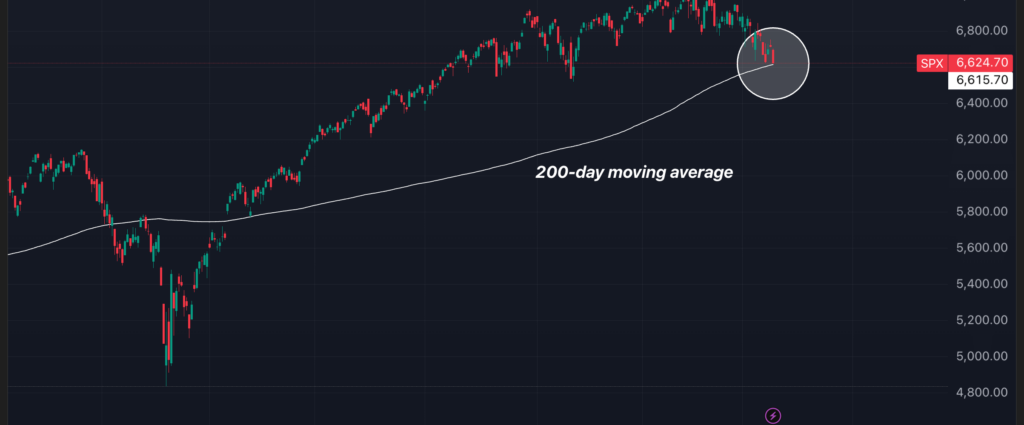
Both the S&P 500 and Nasdaq 100 are poised to break below their 200-day moving averages for the first time since March 2025.
Meanwhile, the Brent-WTI crude spread blew out to $17 per barrel early Thursday — the widest since April 2020 when WTI went negative — as Israel’s strike on Iran’s South Pars gas field triggered retaliatory missile attacks across the Gulf and markets began pricing in the risk of U.S. crude export restrictions.
Brent surged 7.11% to $115.01, while Middle East benchmarks Murban and Dubai crude exploded above $128 and $136 respectively.
S&P 500 Could Break Below Its 200-Day Moving Average For First Time Since March 2025
WTI crude oil futures — as tracked by the United States Oil Fund (NYSE:USO) — traded at $98.35 per barrel early Thursday, up $2.03 (+2.11%). Since the start of the war on Feb. 28, WTI prices have surged roughly 45% from a pre-war level near $68 per barrel.
Brent crude — tracked via the United States Brent Oil Fund, LP ETV (NYSE:BNO) — jumped 7.11% to $115.01 per barrel following Iranian missile strikes on Gulf energy infrastructure.
Middle East benchmarks saw even sharper moves: Murban crude surged 10.34% to $128.84 per barrel, while Dubai crude spiked 11.05% to $136.42 per barrel, reflecting an acute physical supply squeeze in the region.
The Brent-WTI spread widened to approximately $17 per barrel — the widest since April 2020, when WTI famously went negative amid the pandemic storage crisis. Excluding that historic anomaly, the current spread is …
After a 1,088-day wait, a jury acquitted the man Nichols accused. She describes her experience of the system as a complainant – and explains why she went public
Warning: this article contains graphic testimony
Sitting in the House of Commons, waiting for the speaker to call her name last week, the MP Charlotte Nichols was doing breathing exercises to try to keep calm. “I was just trying to get myself into the headspace where I could say what I wanted to say without either completely garbling it or just crying or bottling it at the last minute.”
She didn’t bottle it. She stood up, asked MPs to be gentle with her, and then went public with her biggest secret.
This post was originally published here
Decision comes as concerns mount over economic fallout from Iran war bringing inflation shock
The Bank of England has kept interest rates on hold and signalled it could be forced to increase borrowing costs within the coming months as the US-Israel war on Iran threatens to drive inflation in the UK above 3%.
As households brace for a surge in living costs, the Bank’s rate-setting monetary policy committee (MPC) voted unanimously to keep its base rate at the current level of 3.75% amid growing concern over the surge in energy prices triggered by the conflict.
This post was originally published here
A curated list from one of HBR’s most popular newsletters.
This post was originally published here
Non-traded, publicly registered REITs raised $593 million from investors in January, an increase December, according to Stanger Investment Banking.
This post was originally published here

Bitcoin (CRYPTO: BTC) is down 2% compared to gold sliding 4% after the Federal Reserve delivered hawkish signals, an unusual reversal as Bitcoin typically underperforms the precious metal during risk-off moves.
Positioning may explain the divergence as gold surged 90% over the past year and hit record highs in February before the Middle East conflict started.
That left it overbought and vulnerable. Bitcoin crashed 50% from October highs, leaving it oversold and ready to bounce.
Since the Iran war began, Bitcoin has been one of the strongest performing assets outside energy. Meanwhile gold sits 17% below its January peak, approaching bear-market territory.
The Federal Reserve delivered a more hawkish-than-expected tone Wednesday, pushing back against market expectations for imminent interest-rate cuts.
This weighed on …
Here are Thursday’s biggest calls on Wall Street.
This post was originally published here
Uber plans to invest up to $1.25 billion in Rivian as part of a deal to deploy up to 50,000 robotaxis in several countries through 2031.
This post was originally published here
An eight-month study of 2,500 employees at KPMG discovered indicators that can help identify superusers.
This post was originally published here
Carnival Corporation’s more than 23% fall since the start of the U.S.-Iran war is similar to the impact other military conflicts have had on the stock.
This post was originally published here

At the Emergency Hospital, dozens crowded around a thick book to check the names of the victims killed in an airstrike on a rehabilitation center. The U.N. says over a hundred people were killed.
(Image credit: Fazelminallah Qazizai for NPR)

This post was originally published here
A conversation with HBS professor Tsedal Neeley about the types of organizational change needed for AI to thrive.
This post was originally published here
“What torments of grief you’ve endured from evils that never arrived,” wrote Ralph Waldo Emerson, the 19th-century American philosopher and writer. Millions of workers are feeling similar. How many jobs will artificial intelligence destroy? And are we all worrying unnecessarily?
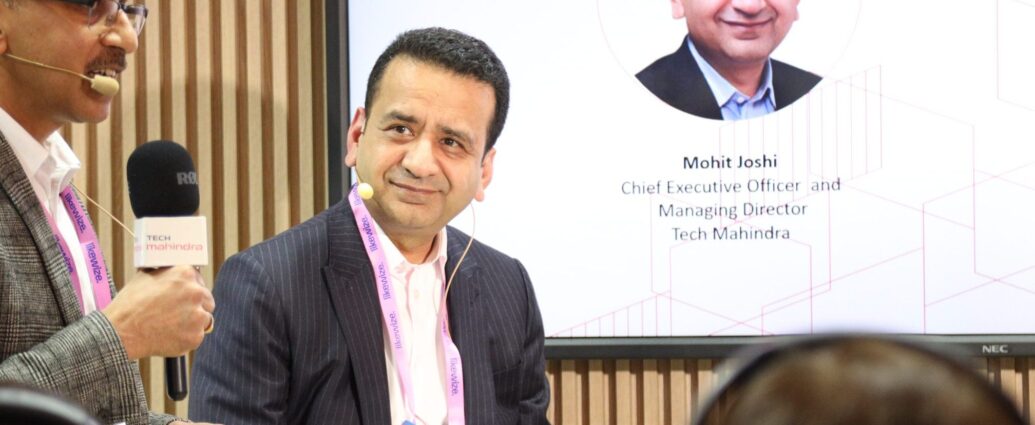
“The demand for human labor will not go away,” Mohit Joshi, the chief executive of the Indian information technology giant, Tech Mahindra, tells me. The world is entering an era of technology complexity and new business opportunities. The changes are likely to increase demand for ‘humans in the lead’, even though the job specifications will be radically different.
Joshi has data and historical precedent to back up his assertion. In the 1990s, many companies, spooked by the threat of the Millennium Bug, invested heavily in technology updates as a protective measure. The bug—linked to the New Year date change from the 20th century to the 21st—never materialized, leading to predictions that tech spending would fall back to 20th century levels. It went in the opposite direction and the ‘trend to spend’ continued.
“The demand for human labor will not go away.”
Mohit Joshi chief executive of Tech Mahindra
Similar momentum is apparent in 2026 when it comes to the effects of artificial intelligence on workforces. “We think the productivity gains will not result in immediate headcount impacts,” Joshi says. “There is a lot of investment that will need to happen over the next couple of years to drive simplification, modernization and optimization. And, especially on the data side, investment will be required beyond the three to five years that it will take to modernize and simplify systems.”
“In the best case beyond that, I feel the complexity of organizations will increase dramatically. And, if the AI premise gets realized fully, the economic growth is going to be so much more significant. It should create more opportunity, because you will have a much larger landscape.”
Elon Musk talks of an era of abundance, ushered in by an applied AI revolution where a robot can do your shopping and energy comes from space. The journalist Ezra Klein has written a book of the same name, Abundance, arguing that governments have a key role to play in ending the age of scarcity. Products and services will change so radically that demand for employees will increase.
“My own advice to my teams is that there will always be somebody who’s a winner,” Joshi says. “And my sense is that the people who are winning will have a few attributes. The first is that they will be fast, because there’s a gigantic premium for speed. You need to be able to pivot very quickly.”
“The second is curiosity. And the final thing is, at a time of great change, leaders will need a degree of empathy and kindness to be able to carry teams along with them.”
The ‘waterfall method’ of change is well known to business leaders—a sequential plan where projects are strictly defined and work is often driven through divisional silos with little opportunity for re-assessment. Most now lean towards the ‘agile method’, a more flexible approach to project management which encourages working between teams across the business.
How to build AI into the agile process is the key question. “What can you do to drive productivity and efficiency in your business?” Joshi says. “What is it that you should be doing to drive revenue in your business? Because productivity is nice, but revenue is really the most important piece.”
“…at a time of great change, leaders will need a degree of empathy and kindness to be able to carry teams along with them.”
Mohit Joshi
Return on AI investment is the key metric boards will want to see. “It’s very clear that organizations are going to get a lot flatter,” Joshi says. “You will have people at the top who will have a lot more in terms of span of control. You will have maybe a bulging middle instead of the traditional pyramid that we’ve had.” Employees with five to ten years’ experience will become ever more valuable.
Not everything is digital. Joshi laughs as we notice that we both write with pens on paper (it helps me think more clearly). He encourages his children to read physical books, with a small pocket-money boost for each one completed.
“What I tell my kids, almost obsessively, is that the ability to read and write well will never go away. So read as widely as you can early in life, because you will never again get this opportunity of unbroken periods of time where you can read, nor will your memory ever be as good to absorb as much as you can today. Learn to speak and write beautifully, and I think everything else will fall into place.”
This story was originally featured on Fortune.com
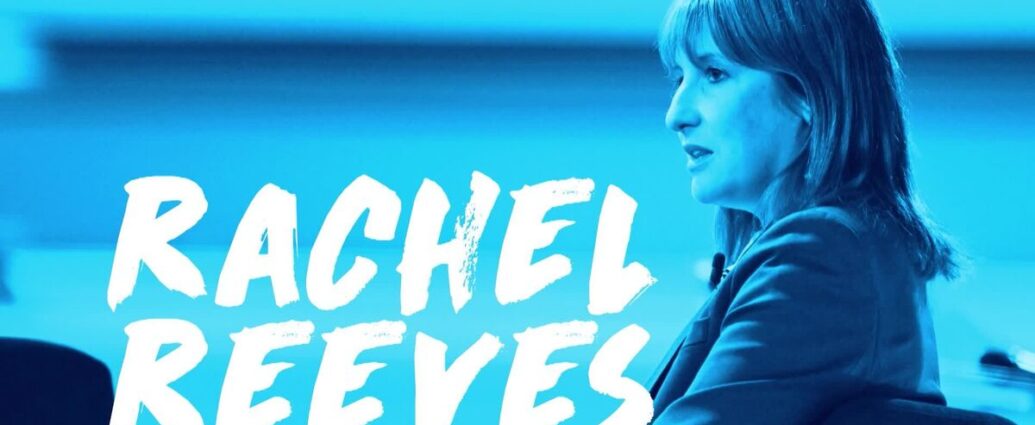
Four strategies for closing the gap between what leaders perceive and what employees actually experience.
This post was originally published here
Paul Griggs says senior staff at consulting firm who are not ‘paranoid about being AI-first’ are likely to be replaced
The US boss of PricewaterhouseCoopers has warned that partners who do not get to grips with AI have no future at the consulting firm.
Paul Griggs said senior staff who were not “paranoid about being AI-first” would probably be replaced by others who were ready to embrace the technology. “I don’t think anyone gets a free pass here. Anyone,” Griggs told the Financial Times.
This post was originally published here
Good morning. The Walt Disney Company’s CEO transition is notable not just for who is ascending, but for how deliberately the company built financial stability around it by extending CFO Hugh Johnston’s contract months before a new CEO was even named.
Josh D’Amaro, a 28-year veteran of the company, took over as chief executive at Disney’s annual shareholders meeting on Wednesday, succeeding longtime CEO Bob Iger. Named to the role on Feb. 3, D’Amaro most recently served as head of Disney Experiences, which includes the company’s theme parks, cruise line, resorts and consumer products.
There was some praise for Iger on social media. “What you have built is not a career, it’s a LEGACY,” NBA star Chris Paul said in a post on LinkedIn.
Iger, who had a long career at Disney, served as CEO from 2005 to 2020, then returned in 2022 following the controversy-filled tenure of his first replacement, Bob Chapek. He will temporarily stay on as a senior advisor and board member, stepping down eight months ahead of schedule.
A potential merger between Paramount Global and Warner Bros. Discovery could increase competition for Disney (No. 46 on the Fortune 500). But D’Amaro could be well-positioned to lead growth. Under his leadership, Disney’s parks and experiences became the company’s primary profit engine, accounting for more than 70% of operating income despite representing under 40% of total revenue, Fortune reported. Streaming is the other major growth driver, following consecutive quarters of profitability.
In November, Disney extended Johnston’s contract through Jan. 31, 2029—before the new CEO was even announced. He joined Disney in 2023, following a long career at PepsiCo. Johnston has a “well-earned reputation as one of the best CFOs in America,” Iger said in a statement in 2023.
At the Morgan Stanley Technology, Media and Telecom Conference earlier this month, Johnston called Disney’s CEO succession process a strength. “I would tell you they looked internally, externally, they really pushed hard on the candidates, and came to a conclusion that is a terrific one,” he said.
He described both D’Amaro and Dana Walden, who will become the company’s president and chief creative officer, a new role, as “terrific growth-oriented executives.” Walden was widely reported to be a CEO contender.
“There’s a lot of energy there in terms of people being excited about Josh, being excited about the fact that this process was also handled so smoothly,” Johnston said. “You all know some of the history of Disney and CEO successions going all the way back to Michael Ovitz. This couldn’t have been more different than that. It was a really smooth, well-run process with minimal drama.”
Johnston reaffirmed guidance for double-digit EPS growth in both 2026 and 2027. On M&A, he said Disney doesn’t need to do significant deals. “We’re very fortunate that with the moves that Bob Iger made during his tenure as CEO, whether it was acquiring Pixar, Lucasfilm, Marvel, and then the Fox acquisition, we were kind of in front of the curve in terms of generating a large collection of IP,” he said.
Sheryl Estrada
sheryl.estrada@fortune.com
This story was originally featured on Fortune.com
Covid-related downturns and reductions in alcohol consumption have taken a toll on a once booming industry
In the early 2000s, Chris Bell, then a student at University of Colorado Boulder, followed a common path among people interested in brewing beer. He started doing so at home, then spent years working at established craft beer makers Long Trail Brewing in Vermont and Avery Brewing in Colorado before opening Call to Arms Brewing Company in 2015 in Denver.
In a crowded market, the business was successful. Its More Like Bore-O-Phyll beer won a gold medal in the fresh or wet hop ale category at the 2018 World Beer Cup. A local outlet called it one of the city’s best breweries, and it had a 4.7 rating from more than 400 reviews on Google.
This post was originally published here


This story was originally featured on Fortune.com


Event platform Posh raised a fresh $37 million to solve one of the quintessential “tarpit” startup ideas: turning the “what are we doing tonight?” group chat into an actual plan.
Founded in 2019 by then‑New York University students Avante Price and Eli Taylor‑Lemire, Posh began as software they built to run their own events after getting cheated by promoters and hitting the limits of Eventbrite. “I was using Eventbrite and other products to manage events, and then realized that the technology components were missing a ton of the capabilities that I needed,” Price told Fortune. That pain point became Posh’s product: a business‑first platform where organizers, not the marketplace, sit at the center. The company is already capturing corners of the events industry which is on track to be worth more than $2 trillion by 2028.
Now, the company has raised its $37 million Series B led by FirstMark Capital with Causeway Ventures, Goodwater Capital, Companyon Ventures, and Epic Ventures, Fortune has exclusively learned.
Posh’s model is straightforward: Posh takes about a 10% cut on paid tickets plus a 99‑cent fee per ticket, its primary revenue stream. In 2024, the company generated roughly $10 million in revenue on more than $83 million in ticket sales (the same year it raised $22 million in Series A funding). Today, the business has grown to an estimated $40 million in cumulative revenue, according to Price, processing $350 million in GMV and 25 million tickets since inception, with top organizers generating over $10 million on the platform. “What you have to do is you have to own the transaction first,” Price told Fortune.
Posh already powers everything from Palm Tree Festival and We Belong Here to brand activations with Lamborghini, Adidas, the NBA, Celsius, HBO, and Complex. The company has also poached talent from Meta, Reddit, Amazon, Hinge, Spotify, Block, and Canva to accomplish its goals. For the first four years, Posh was essentially “Shopify for events,” focused on tooling for nightlife: white‑label pages, SMS CRM, referral kickbacks, linked ticket tiers, and instant payouts. Now, with roughly 50,000 organizers and nearly 8 million users, the center of gravity has shifted toward demand—what Price calls a “Netflix‑style feed” that surfaces parties, activities, food and drink, and other categories based on where your broader social graph is actually going.
“The solved problem is your core group chat,” he says. “The harder problem is those 10 or 20 people you’d love to catch up with but never text. We’re trying to reintroduce that serendipity.”
See you tomorrow,
Lily Mae Lazarus
X: @LilyMaeLazarus
Email: lily.lazarus@fortune.com
Submit a deal for the Term Sheet newsletter here.
Joey Abrams curated the deals section of today’s newsletter. Subscribe here.
This story was originally featured on Fortune.com

Bitcoin fell to around $70,000 as ETF outflows and a higher inflation forecast for 2026 weighed on markets.
Bitcoin ETFs saw $129.6 million in net outflows on Wednesday, while Ethereum ETFs reported $55.5 million in net outflows.
Cryptocurrency |
Ticker | Price |
| Bitcoin | (CRYPTO: BTC) | $70,205.74 |
| Ethereum | (CRYPTO: ETH) | $2,175.81 |
| Solana | (CRYPTO: SOL) | $89.89 |
| XRP | (CRYPTO: XRP) | $1.46 |
| Dogecoin | (CRYPTO: DOGE) | $0.09420 |
| Shiba Inu | (CRYPTO: SHIB) | $0.055756 |
Meme coin market capitalization is down 5.3% over the past …
The move would be a major escalation in the US-Israel war against Iran. Plus, FBI director admits to buying data tracking Americans’ locations
Good morning.
Donald Trump threatened to “massively blow up” the world’s largest gasfield after Israeli strikes on Iran’s South Pars field led Tehran to take revenge on energy facilities across the Middle East.
What’s happening to oil and gas prices? Brent crude rose by 8% to $116 a barrel. European gas prices jumped, with the Dutch wholesale gas price up 24%.
What do we know about the war’s economic cost? The war cost the US $12.7bn by day six – the total is likely to have now exceeded $18bn. Here’s a visualization of how that has been spent.
Could US-Israeli attempts to take out Iranian leaders backfire? Some analysts think so. “It is not an approach that produces Jeffersonian democrats but hardened resistance fighters. It breeds more resistance,” said Sanam Vakil, an Iran expert at Chatham House.
Follow our live coverage here.
Who has spoken out? Labor rights activist and co-founder of the UFW Dolores Huerta, 95, released a statement on Wednesday saying: “I have kept this secret long enough. My silence ends here.” The report also includes the stories of two women, who were daughters of organizers in the movement, who said they were children when the grooming and abuse began.
This post was originally published here
And further angers economically frustrated citizens
This post was originally published here
Energy company plans full return to London by moving global HQ to new development on South Bank
BP has agreed to sell its giant German oil refinery site in Gelsenkirchen to the investment firm Klesch Group as part of the British oil company’s plan to sell off $20bn (£15bn) worth of assets and cut its costs.
The value of the sale was not disclosed but BP said it would save the oil company about $1bn of underlying operating expenditure at the complex, which processes about 12m tonnes of crude oil every year, mainly as fuel for cars and aircraft.
This post was originally published here
We rank the poor world’s exposure and buffers
This post was originally published here

This post was originally published here
As the sex economy grows, it deserves serious analysis
This post was originally published here

This post was originally published here

People in China are rushing to buy preowned computers to try OpenClaw with demand for MacBooks particularly high, according to one reseller.
This post was originally published here
Report shows how minerals critical to defense readiness have seen a ‘near total’ disruption in seaborne trade
The closure of the strait of Hormuz is causing a “paralyzing, real-time problem” for any prospective manufacturing surge in the US defense industrial base, and even for the repair of defense equipment damaged by Iranian attacks, according to analysis published by West Point’s Modern War Institute.
In particular sulphur, a vital upstream input in the extraction of critical minerals including copper and cobalt, has seen a “near total” disruption of seaborne trade in the straits, which makes up half the world’s total shipments, and prices have spiked nearly 25% since the war began, and seen a 165% rise year on year, the report said.
This post was originally published here
Kennedy’s appointees promoted ‘treatments’ like bleach enemas, but new committee has only one autistic member
The first public meeting of US autism advisers – notably, since Robert F Kennedy Jr reshaped the committee – was cancelled recently with few details, coinciding with the creation of a rival organization that has prompted some questions within the autistic community about their focus.
Kennedy, the secretary of the US Department of Health and Human Services (HHS) who has long argued for a debunked link between vaccines and autism, chose entirely new members for the Interagency Autism Coordinating Committee (IACC) in late January, with fewer autistic people and several anti-vaccine advocates.
This post was originally published here
The Gulf states have said Iran’s attacks on energy infrastructure won’t “go unanswered” but, so far, they have not hit back. That stance could change soon.
This post was originally published here

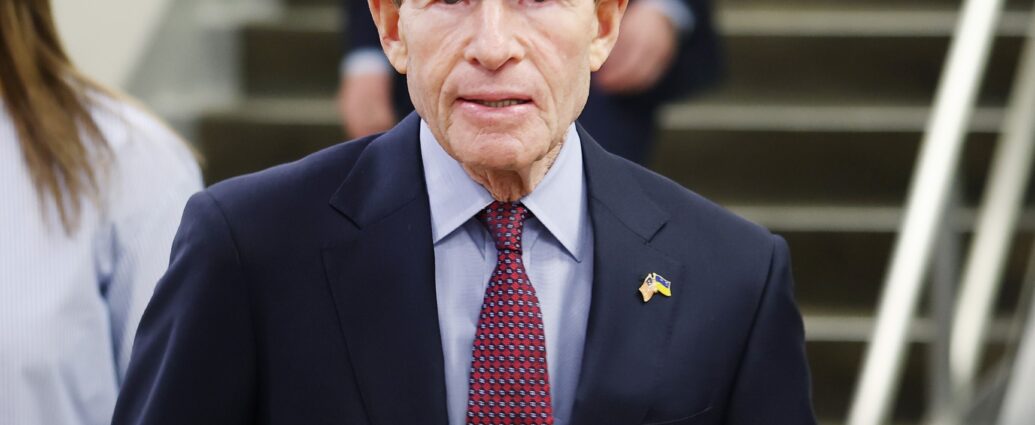
Sen. Richard Blumenthal, a panelist in Sen. Markwayne Mullin’s Department of Homeland Security confirmation hearing, discusses the reforms he wants for the agency and shares his views on the Iran war with NPR’s Steve Inskeep.
(Image credit: Anna Moneymaker/Getty Images)

This post was originally published here
Oil prices jumped as markets react to escalating tensions after Qatar said Iranian missile strikes damaged a key liquefied natural gas export facility.
This post was originally published here
Lilly is betting big on retatrutide as the next pillar of its obesity portfolio after its weight loss injection Zepbound and its upcoming pill, orforglipron.
This post was originally published here
New work will be choreographed and directed by Benoit Swan Pouffer, artistic director of Rambert, with Davies and Pet Shop Boys serving as executive producers
It’s a Sin, the award-winning TV series about friendship during the 1980s Aids crisis, is to be adapted for the stage as a dance show. The new production is being developed by Rambert who had a hit in 2022 with its prequel to the TV series Peaky Blinders.
The creator of It’s a Sin, Russell T Davies, is executive producer on the new work which will be choreographed and directed by Benoit Swan Pouffer, Rambert’s artistic director. “Storytelling sits at the heart of Rambert’s mission,” said Pouffer on Thursday. “Collaborating with Russell – one of the most powerful storytellers of our time – is incredibly exciting. Together we’re exploring how dance and choreography can carry urgent, emotional narratives in a visceral way.”
This post was originally published here

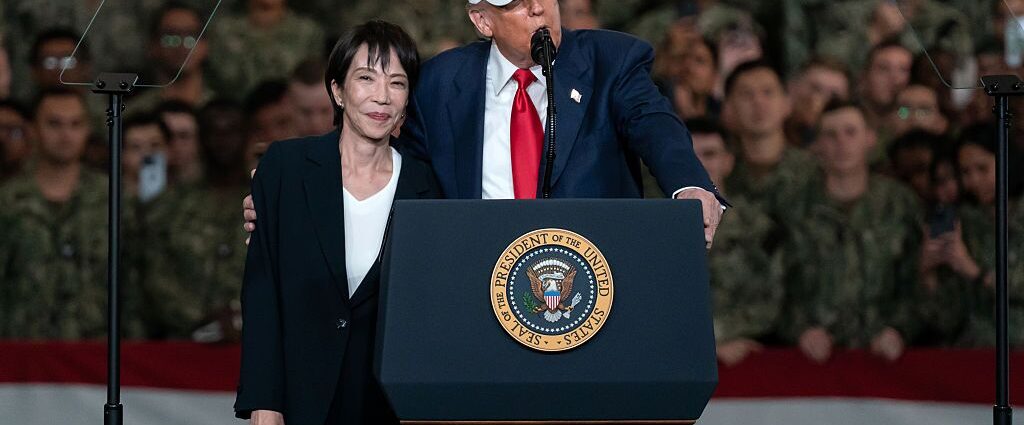
Japan Prime Minister Sanae Takaichi will be the first U.S. ally to visit the White House since President Trump asked for help in sending ships to patrol the Strait of Hormuz.
(Image credit: Tomohiro Ohsumi/Getty Images)

This post was originally published here
This post was originally published here

Artist who topped UK charts with Because I Got High created comedic videos from footage, which officers claimed invaded their privacy
Chart-topping US rapper Afroman has been cleared of wrongdoing after Ohio police filed a lawsuit against him, alleging defamation, emotional distress and invasion of privacy after the artist used footage from a police raid on his home in a series of mocking videos.
In 2022, police searched the rapper’s home for evidence of drug possession and trafficking, and kidnapping. No evidence was found and no charges were filed.
This post was originally published here

Sunway Healthcare shares rose 28% in their first day of trading, following the company’s 2.9 billion ringgit ($732 million) IPO, the country’s largest in nearly a decade. Shares of the Kuala Lumpur-based hospital operator, previously the healthcare arm of Malaysian conglomerate Sunway Group, closed at 1.85 ringgit on Wednesday, up from the offer price of 1.45 ringgit. The listing is Malaysia’s biggest since 2017’s IPO of Lotte Chemical Titan Holdings.
Sunway Group previously said the spin-off will help unlock shareholder value and improve the business’s access to capital markets. In Sunway Healthcare’s IPO prospectus, Sunway described the health business as a “distinct and viable business of its own.”
Sunway Healthcare generated 1.6 billion ringgit ($403 million) in revenue during the first nine months of 2025, a 17.8% year-on-year jump, according to its prospectus. Yet the company’s profits over the same period declined by 22% year-on-year to hit 140 million ringgit ($35.4 million).
Following its IPO, Sunway Healthcare will continue to operate its network of private hospitals, ambulatory care services and ancillary services, with plans to expand to eight hospitals totalling over 3,400 beds by 2032. Sunway Group will also retain majority control of its healthcare offshoot, owning 69.4% of the shares.
Sunway Group, No. 190 on Fortune’s Southeast Asia 500 list, posted record revenue of 9.8 billion ringgit ($2.5 billion) in 2025, up 24.5% from the year before. The revenue jump was fueled by strong performance across most of its business segments, including property investment and construction.
Sunway hopes to tap growing healthcare demand in an aging and wealthier Malaysia. “The outlook for Malaysia’s private healthcare services industry remains positive,” Sunway Group wrote in its Q4 2025 earnings report. “Malaysia has one of the largest middle-income populations in ASEAN, coupled with rising life expectancy and a growing incidence of non-communicable diseases.”
Malaysia has a rapidly aging population, with 14.5% of its population set to be 65 and older by 2040, according to the Malaysian Department of Statistics. Over 2 million Malaysians are living with non-communicable diseases including diabetes, hypertension, high cholesterol and obesity.
Investors are eager to invest in Malaysia’s healthcare boom. KPJ Healthcare, No. 303 on Fortune’s Southeast Asia 500, hit a record share price of 3.53 ringgit during intraday trading on March 18.
Malaysia’s stock exchange, the Bursa Malaysia, has also been having a blockbuster year. The KLCI Composite Index is up by 14.1% over the past 12 months, and breached a six-year high in mid-January. According to Deloitte, Malaysia had more IPOs than other Southeast Asian markets, with 59 IPOs raising 5.5 billion ringgit ($1.4 billion) in 2025.
The Malaysian ringgit has also risen to its strongest value in five years, propelled by AI optimism and rising energy prices. “The Ringgit should be one of the best performing currencies in Asia this year,” wrote Goldman Sachs strategists in a March 14 research note.
This story was originally featured on Fortune.com
World leaders are scrambling to contain a spiraling Middle East conflict on Thursday after Israel and Iran traded strikes on gas production facilities.
This post was originally published here
Unemployment holds steady, but Bank of England is unlikely to be convinced by ONS data to cut interest rates
Wage growth slowed sharply in the three months to January, according to the latest snapshot of the jobs market from the Office for National Statistics.
Average earnings growth fell to 3.8% in the three months to January, down from 4.2% – a larger fall than forecast by City economists. It was the slowest rate of wage growth in more than five years.
This post was originally published here
Lemi Limbu, who has severe intellectual disabilities, remains in prison and will now face retrial for the murder of her daughter
A woman with severe intellectual disabilities in Tanzania has had her conviction and death sentence quashed after spending more than a decade in prison awaiting execution.
Lemi Limbu, now in her early 30s, was convicted of the murder of her daughter in 2015. On 4 March, a court in Shinyanga, northern Tanzania, declared she can appeal. She will face a retrial, but a date has yet to be set.
This post was originally published here
Now, the total is likely to have exceeded $18bn and counting. Where are America’s war dollars going, in a war that was never declared in the first place?
This post was originally published here
Rulings in cases alleging antisemitism on US campuses say common pro-Palestinian speech is constitutionally protected
Few debates from the last few years have been more contentious than whether criticism of Israel and Zionism is antisemitic, threatens Jewish people or violates their civil rights. Allegations of antisemitism have cost people jobs, provided pretexts for censorship and fueled an unprecedented crackdown on protest over Israel and shows of support for Palestinian rights, especially at universities.
Pro-Israel groups have filed hundreds of lawsuits or legal actions in an effort to silence some of this speech, with the vast majority filed since 2023 in response to the protest movement surrounding Israel’s recent war in Gaza. The most important rulings to have come out of these cases, experts say, have found that speech and slogans at the heart of the controversies are protected by the first amendment.
This post was originally published here
Dozens said they weren’t given chance to arrange care for their kids after being deported at short notice, study shows
The Trump administration is deporting a significant number of parents without asking them if they have children or allowing them to decide whether to bring their children with them, in apparent violation of its own policies, a major report has found.
In interviews with dozens of parents deported to Honduras, as well as physicians and psychologists, government officials and staff at reception centers for deportees, researchers found that many parents were deported quickly after they were detained, without a chance to arrange for the care of their children.
This post was originally published here
My oldest daughter starts an internship at Deloitte this year. She’s capable and motivated. She’s also walking into a professional environment that is wildly different from what it was even a few short years ago.
I started my career more than a few short years ago. Back then, success had a simple formula: be the first one in, be the last one out, and always ask for more work. Effort was measured in hours. Visibility was measured in face time. That commitment still matters — I’m not going to tell my daughters that hard work doesn’t matter. But I am going to tell them that hard work alone won’t cut it anymore.
They need to work differently — and so does everyone else.
From my experience as both a CEO and a father, I’m genuinely impressed by Gen Z’s fluency in digital communication. They text. They message. They send voice notes. That’s very useful when communicating with each other. But it has its limits, even in this hyper-digital moment. Building trusted relationships is more important than ever.
A workplace includes people who came up through email culture, phone call culture, and even memo culture. Every generation connects differently, and each method has its place. My daughters will need to adjust their approach to fit the preferences of the people they work with, rather than expecting everyone else to adapt to them.
I’ve told them this directly: figure out how your manager prefers to communicate — even ask them — then use that method. Figure out how the finance team operates, how the field team talks, how the executives want information delivered. This isn’t about abandoning your style. It’s about building range. Be a communicative chameleon.
Building that range also means building capacity for adaptation. Gen Z’s digital fluency will seem outdated to the generations behind them — and they don’t even have to wait for Gen Alpha to enter the workforce. Things are changing much faster than that. Adaptation isn’t a strategy. It’s the baseline.
AI has become one of the most practical tools available for exactly this kind of adaptation — and most people entering the workforce aren’t using it this way yet.
I do this in my own work. Before major presentations, I feed my deck into an LLM and ask how my message might land with different audiences — the board, my direct reports, a customer. It doesn’t do the work for me, but it surfaces perspectives I might not have considered, helping me tailor my communication for maximum impact. If a Fortune 500 CEO is using AI to pressure-test how his message will land before a board meeting, a 22-year-old starting her first job should be doing the same thing.
For someone entering the workforce, this is a practical starting point. You’re walking into rooms — virtual or otherwise — full of people who think differently than you do, communicate differently than you do, and have expectations you haven’t learned yet. AI can help you anticipate how a message will be received before you send it. It can help you build emotional intelligence across departments and age groups — skills that used to take years to develop through experience, trial and error.
The tool is new. The goal isn’t. You’re still trying to connect with people — AI just gives you a way to rehearse before the stakes are real.
AI can help bridge communication gaps, but it’s still just a tool. There are people on both ends of every interaction, and there’s no substitute for human connection at work.
“Showing up” looks different in many companies now, with in-office, remote, and hybrid work physically separating colleagues. But digital elements are facilitators — not replacements. Showing up means more than logging into meetings; it’s about turning your camera on, engaging actively, and looking for ways to add value. True presence, whether virtual or in-person, requires intentional effort to connect, build trust, and participate fully.
My daughters will enter a workforce where building relationships across teams takes deliberate effort. Nobody’s going to bump into them in a hallway and offer career advice. They’ll need to seek it out and cultivate a circle of trusted advisors to help them through every stage of their careers.
Early in my career, someone told me: look for ways to take on more than your job description. Don’t wait to be asked. Find the gap and fill it.
That advice hasn’t changed. Work ethic is still the foundation. But outworking your peers today means something different than it did in 1995. It means adapting. It means communicating in ways that land with people who think differently from you. It means using the tools available to sharpen your judgment, not replace it.
My daughters are smart enough to figure most of this out on their own. But the rules of the game have changed fast enough that even people 30 years into their careers are still catching up. The advantage goes to whoever adapts first.
The opinions expressed in Fortune.com commentary pieces are solely the views of their authors and do not necessarily reflect the opinions and beliefs of Fortune.
This story was originally featured on Fortune.com
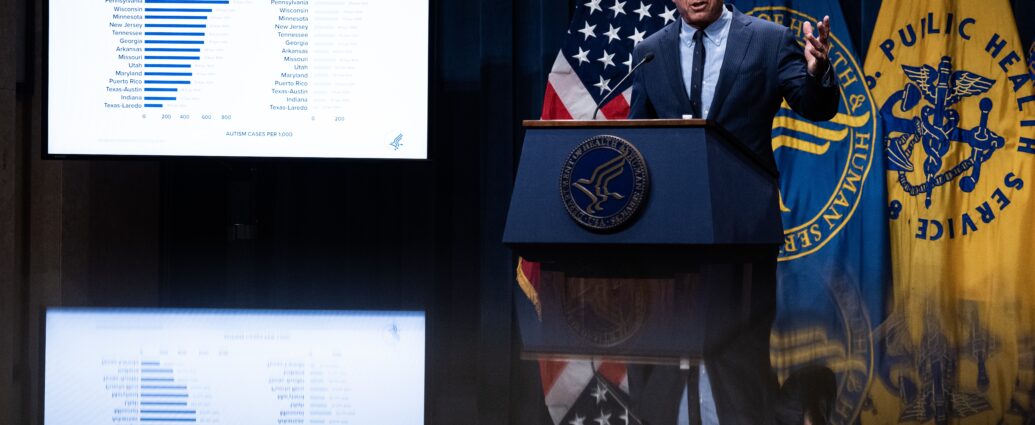
Autism experts plan to convene in Washington Thursday to propose a research agenda at odds with the one endorsed by the Trump Administration.
(Image credit: Tom Williams/CQ-Roll Call, Inc)

This post was originally published here

This post was originally published here
The tech giant is one of several Chinese AI firms that have been rushing to catch up to U.S. companies in the AI race.
This post was originally published here

Shares of Five Below Inc (NASDAQ:FIVE) rose sharply in pre-market trading after the company reported better-than-expected fourth-quarter financial results and issued FY26 EPS guidance above estimates.
Five Below reported fourth-quarter revenue of $1.73 billion, beating estimates of $1.70 billion, according to Benzinga Pro. The company posted adjusted earnings of $4.31 per share for the quarter, beating estimates of $3.98 per share.
Five Below shares jumped 7.2% to $227.80 in the pre-market trading session.
Here are some other stocks moving in pre-market trading.
This post was originally published here

This post was originally published here

This post was originally published here
Taith programme, set up after UK’s post-Brexit withdrawal from Erasmus+, faces uncertain future over funding
A “life-changing” international learning programme set up in Wales after Brexit is at risk of being closed down.
Taith, which means “journey” in Welsh/Cymraeg, was established by the Senedd in 2022 after the UK pulled out of the Erasmus+ student exchange programme. Its reach is much wider: many participants get involved through schools, youth groups or adult education centres, and nearly half come from underrepresented backgrounds. Data suggests Taith has already funded approximately twice as many projects in Wales as Erasmus+ did, working with less money.
This post was originally published here

The anticipated ¥1 trillion ($6.3 billion) fee for SoftBank Group Corp. (OTC:SFTBY) from a U.S.-Japan project has been slashed by over 90% due to intervention from Tokyo officials amid growing concerns over the $550 billion joint investment plan between the U.S. and Japan.
SoftBank was originally slated to earn fees from building and operating a $33 billion gas-fired power plant in Ohio. The project marks the first outcome of a trade deal in which Japan secured tariff relief from Washington in exchange for a $550 billion investment in the U.S., the Financial Times reported on Thursday.
The fee was intended to compensate it for its role as project developer, as it does not hold any equity in the power plant. The facility would be entirely financed by Japan and jointly owned by the U.S. and Japan through a special-purpose vehicle created under the trade agreement.
Despite the reduced fee, SoftBank will continue to receive payments over 15–20 years if …
This post was originally published here
Most dangerous offenders on probation will now be watched more closely than ever before, says government
Tens of thousands of offenders will be released from prisons in England and Wales wearing tags that track their location in real time as part of the biggest expansion of electronic tagging in British history, ministers have announced.
The prisons minister, James Timpson, said a new pilot scheme would track domestic abusers and stalkers, alerting authorities if they approached their victims, while other offenders will wear geolocation tags that will enable probation officers to track their live location.
This post was originally published here

Jailed cryptocurrency fraudster Sam Bankman-Fried lauded on Wednesday the effectiveness of Operation Epic Fury, the joint U.S.-Israeli military campaign against Iran.
Bankman-Fried, also known as SBF, posted on X an Al Jazeera op-ed titled “The US-Israeli strategy against Iran is working. Here is why,” describing it as an “excellent” article.
The piece, penned by Muhanad Seloom, Assistant Professor of International Politics and Security at the Doha Institute for Graduate Studies, argued that the operation has succeeded in “dismantling” Iran’s capacity to wage war, including its missiles, drones, and air defenses.
“The assassination of Supreme Leader Ali Khamenei eliminated the apex of the authorisation pyramid. His son Mojtaba’s appointment as his successor, a dynastic transfer without precedent in the Islamic Republic, signals institutional fragility, not continuity,” the report read.
This post was originally published here

Good morning. For more than 120 years, UL has put its mark on products from tree lights to toaster cords to convey a promise: This won’t kill you. Last week, for the first time, the $3 billion-a-year safety science company issued a new certification for AI-embedded products. As UL Solutions CEO Jennifer Scanlon told me: “Innovation without safety is failure.”
Rarely has there been a technology that’s evolved so fast with so little oversight. (The patchwork of emerging state laws adds to the confusion.) This week, the spotlight is on OpenClaw, the autonomous virtual agent that’s spawned a new craze in China. It got a shout-out from Nvidia CEO Jensen Huang during his developers conference this week, where he announced NemoClaw and declared OpenClaw framework to be “the next ChatGPT.”
Can private-sector safety standards do what Washington has not: provide guardrails to fast-moving technologies with potentially profound consequences? The UL mark already goes on about 22 billion products worldwide every year. This latest standard, UL 3115, evaluates whether an AI-enabled product is safe, robust and well-governed with a “human in control” throughout a product’s lifecycle. “Whether or not there’s government regulation around this, our customers are coming to us because they need broader protections and assurances,” Scanlon told me. “They’re clamoring to have at least a standard that they can adhere to that gives them the confidence in how they’re getting out in front of their customers.”
UL’s expertise is in functional safety. As Scanlon puts it: “When you turn the radio on in your car, you do not want your brakes to slam. So how is that embedded software being tested and proven? They’re embedding AIs in toys. How do we know those toys are safe for kids?”
That’s why UL’s AI Center of Excellence set out to apply its safety protocols to the new world of AI-embedded physical products. “We start with an outline of investigation, which is a precursor to safety. That’s our engineers and scientists working with customers to understand what they’re worried about, what they believe the challenges are—and then we come at it from the scientific perspective, which is: what else should you worry about?”
“In the case of AI‑embedded products, they started thinking about: How transparent is the algorithm? How much bias is built into those algorithms? What’s the veracity of the training data? And if some of that training data is not true, how do you eliminate it from the learning model? And type of human oversight and verification—that essential final check—is in place? What are those processes?”
Thus far, two products have been AI‑certified: Qcells’ Energy Management System, an AI-enabled control engine for data centers, and the Omniconn Platform 4.0, a smart building solution. It’s one part of the puzzle in a world where leaders are trying to match speed with safety.
Contact CEO Daily via Diane Brady at diane.brady@fortune.com
This story was originally featured on Fortune.com
A Virginia after-school cursive club went viral. More than two dozen states require cursive in their curriculums. Is it an effective learning tool or just nostalgia?
(Image credit: Anna Rose Layden for NPR)

This post was originally published here
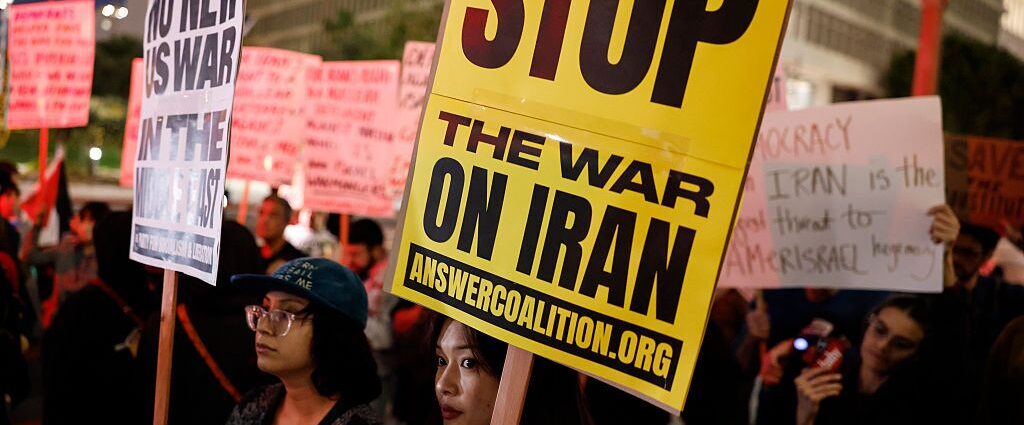
President Trump started a war with no clear end in sight. If his predecessors’ experiences are an indication, conflicts don’t bode well for presidential approval ratings.
(Image credit: Mario Tama)

This post was originally published here

If the U.S. follows through on its threats to bomb the oil assets on Kharg Island, the war would likely escalate and oil prices would increase exponentially.
(Image credit: Atta Kenare)

This post was originally published here

Taxpayers who purchased a new vehicle in 2025 may qualify for a new deduction on their taxes — even if they’re not itemizing. But not everyone is eligible.
(Image credit: Brandon Bell)

This post was originally published here

The risky lending business has been booming — but now its problems are becoming increasingly visible on Wall Street and beyond.
(Image credit: ANGELA WEISS/AFP via Getty Images)

This post was originally published here

Investigators in the U.S. search for motives in three recent instances of targeted attacks, and whether they are related to the war in Iran.
(Image credit: Kevin Dietsch)

This post was originally published here
Iran attacks world’s largest liquified natural gas complex, Sen. Markwayne Mullin faces lawmakers at DHS confirmation hearing, organizers reckon with abuse allegations against activist Caesar Chavez.

This post was originally published here
Immigration agents took DNA samples from observers and protesters they detained during the Minnesota ICE surge, NPR has found, raising questions about how the government uses that personal data.

This post was originally published here
Investor and “Shark Tank” personality Kevin O’Leary said the real winners in business will be those who pair AI with critical thinking and storytelling, warning that leaders who rely solely on technology risk irrelevance.
On Wednesday, in a post on X, O’Leary shared an interview with Fox News and emphasized that execution, not technology, determines business success.
“If you’re a CEO and you’re just pushing a button to generate garbage, you’re dead in the water,” he wrote.
He added, “I don’t care if you have a liberal arts degree or an MBA; if you can’t tell a story that actually moves the needle on customer acquisition, you’re worth zero.”
O’Leary highlighted the rise of creators who combine storytelling with AI skills, noting that some employees who once earned $48,000 a year now generate $600,000 in measurable impact for companies.
In a clip, he said, “The number one inflation is creators, like storytellers, writers that actually have …
This post was originally published here

President Trump said that Israel acted alone when it struck the South Pars gas field in Iran. Trump threatened Iran to halt its attacks on Qatar’s facilities, or face a “blow up” of their South Pars field.
(Image credit: Oliver Contreras)

This post was originally published here