

Five Americans Among Seven Killed in Kenya Safari Helicopter Crash
Five Americans were among seven people killed Wednesday when a helicopter carrying guests on a luxury safari crashed in the remote mountains of northern Kenya, turning a short flight between wildlife destinations into an international aviation investigation.
The Eurocopter EC130 B4 went down at approximately 9:13 a.m. near Mount Ololokwe in Samburu County, according to the Kenya Civil Aviation Authority. All six passengers and the pilot died.
The aircraft was flying from the Loisaba Conservancy toward the Ewaso Nyiro area, a route across one of Kenya’s most celebrated—and geographically isolated—safari regions. The excursion had been arranged for guests of luxury travel company &Beyond, while the flight itself was operated by Lady Lori Kenya.
That distinction will become important to the investigation. Safari companies often assemble a trip using independent aviation operators, lodges, guides and ground-transportation providers. Investigators will need to determine not only what happened in the air, but who controlled the aircraft, maintained it, approved the flight and assessed the conditions along the route.
Among those killed was José Alberto Suárez, a longtime Telemundo executive who served as president and general manager of the network’s stations in Orlando, Tampa and Fort Myers-Naples. NBCUniversal said Suárez had spent nearly two decades within its television operations and remembered him as a deeply respected leader.
Miami businessman Roger Edward Duarte was also killed. Duarte built George Stone Crab and later co-founded My Ceviche, developing a food business that earned him recognition on Forbes’ 30 Under 30 list.
The other American victims were identified as Adam Martin Hlavaty, Henry Parra and Stephany Maria Hollihan Vásconez.
Hollihan Vásconez was traveling with her husband, Michele Sensi-Contugi Ycaza, the director general of Ecuador’s Strategic Intelligence Center. Ecuador’s government confirmed his death, adding a national-security dimension to an accident that had initially been reported as a tourist aviation disaster.
The pilot, Josh Outram, also died.
The crash occurred in rocky, difficult-to-reach terrain, and a fire at the site complicated the initial recovery operation. Images from the region show why helicopters are used there: wildlife conservancies and river destinations can be separated by mountains, unpaved roads and hours of ground travel. Aircraft can turn that journey into a short transfer, but they also place passengers over areas where emergency crews cannot arrive quickly.
The EC130 B4 is a single-engine light helicopter commonly used for sightseeing and passenger transport because of its wide cabin and panoramic visibility. The aircraft type alone does not indicate what caused the crash, and Kenyan authorities have not reported evidence of a mechanical failure, pilot error or weather-related problem.
The Kenya Air Accident Investigation Department is leading the inquiry. Investigators are expected to examine the helicopter’s maintenance history, pilot records, weather conditions, flight planning and any recoverable aircraft data. The wreckage pattern and evidence of fire will also be analyzed to determine whether the aircraft experienced trouble before impact or whether the fire began afterward.
Lady Lori said it was cooperating with authorities. &Beyond said the cause remained unknown and that it was supporting those affected by the disaster. The U.S. State Department confirmed the deaths of five American citizens and said the U.S. Embassy was working with Kenyan authorities and assisting their families.
The crash strikes directly at Kenya’s high-end safari industry, where private aviation is not simply an attraction but part of the transportation system. Luxury itineraries frequently connect remote conservancies by helicopter or small aircraft, allowing travelers to reach wilderness areas that would otherwise require long and difficult drives.
That system depends heavily on confidence: confidence in operators, maintenance standards, pilots and the local regulators overseeing them. Until investigators determine why this helicopter went down, the most consequential question for Kenya’s safari business will remain unanswered—whether this was an isolated tragedy or a warning about a broader weakness in the aviation network carrying tourists into its most remote destinations.
JBizNews Desk | Samburu County, Kenya
© JBizNews.com All Rights Reserved. Reproduction or distribution without written permission is prohibited.


MTA unlikely to meet 2040 goal for 100% zero-emission bus fleet, audit finds

The Metropolitan Transportation Authority is falling behind on its plan to replace New York City’s public bus fleet with zero-emission vehicles by 2040, according to the state comptroller. In the audit published on Wednesday, New York Comptroller Thomas P. DiNapoli found that the MTA’s reliance on single manufacturers with limited production capacity has led to delays, while the cost of producing electric buses has risen substantially. The MTA’s four-stage plan called for the next 485 of 500 buses to be delivered by the end of 2024, but only one had been delivered by June 2025. The agency has since reduced its next order from 1,000 to 500 buses.

“The MTA has set an ambitious goal to transform the nation’s largest bus fleet to 100 percent zero-emission,” DiNapoli said. “Unfortunately, this audit identified multiple challenges that have put its 2040 target in jeopardy. It is encouraging that the MTA has announced steps to address these issues.”
In 2018, the MTA first committed to replacing its roughly 5,800 diesel-burning buses on a one-to-one basis with zero-emission models over the next 22 years.
A 2022 state executive order required “affected entities” like the MTA to have “100 percent of their light-duty non-emergency vehicle fleets” be zero-emission by 2034 and 100 percent of their medium- and heavy-duty vehicle fleets be zero-emission by 2040.
The agency’s Zero-Emission Transition Bus Plan, released the same year, laid the groundwork for the transition, while an updated plan in 2024 focused on three main areas: fleet, facilities, and workforce. The plan is divided into four stages: “Learning at Scale,” “Expansion Challenge,” “Steady Growth,” and “Final Push.”
Across the four stages, the authority planned to purchase 560, 1,000, 1,970, and 3,300 zero-emission buses, respectively. Many of the buses purchased during the first two stages are expected to be battery-electric (BEB), while the agency also plans to test hydrogen fuel cell electric buses to determine whether the technology could be deployed on a larger scale.
However, according to the audit, the MTA is “at risk” of not meeting its 2040 goal. The agency currently has only one battery-electric bus (BEB) manufacturer, which is facing limited production capacity and a backlog of orders from the MTA and other customers.
Additionally, the availability and reliability of the 75 electric buses already deployed could put the MTA’s goal further at risk, according to the audit. The BEBs at five depots were available for service less than 60 percent of the time the MTA had planned for them to be in operation.
Reliability issues have been exacerbated by problems with both the BEBs and their chargers, as well as limitations on the distance the buses can travel on a single charge.
The 2024 plan found that BEBs have higher failure rates, lower availability, and require more time to repair than existing buses. Several MTA officials have echoed those concerns, saying that with the current batteries, BEBs “do not last as long in service” as diesel buses.
For example, the batteries must be at least 70 percent charged for a bus to be deployed, and buses must return to the depot once they reach 30 percent. As a result, BEBs are typically assigned to shorter trips, while extreme hot and cold weather can further reduce their range.
During visits to several bus depots, officials at Depot 1 said that 21 of 32 BEBs had been out of service for an average of 18 days. At Depot 2, 17 of 28 BEBs had been out of service for an average of 23 days. Several other BEBs at Depots 3 and 4 had also been out of service, for averages of 23 and three days, respectively.
As a result, the audit says it is “unlikely” that the MTA will be able to replace its existing buses on a one-to-one basis as previously planned. Instead, the agency would need to increase its fleet size, resulting in additional costs.
In addition to supply and reliability issues, BEBs cost substantially more than traditional buses. The 2022 plan estimated that a 40-foot standard diesel bus and a 60-foot articulated diesel bus cost $635,000 and $835,000, respectively. By comparison, BEBs of the same sizes cost an estimated $1.033 million and $1.388 million, respectively.
Those costs were projected to rise to $1.4 million and $1.83 million by 2024, respectively, while the MTA estimated that the total capital cost of transitioning to a fully zero-emission fleet would reach $11.9 billion.
While environmental justice is also a stated priority of the MTA’s plan, DiNapoli writes that it has not been reflected in the transition plan so far. Because MTA buses serve a disproportionate share of low-income and minority communities, one of the agency’s goals for deploying BEBs was to improve air quality in these historically underserved communities.
To decide where the buses would be deployed, the MTA developed an Environmental Justice Score, a combination of equity and air quality considerations intended to ensure that the most vulnerable communities affected by emissions would be the first to receive the new buses.
However, of the 60 buses that arrived between 2024 and 2025, 45 were placed in two depots with environmental justice scores lower than those of other depots in the borough. One Manhattan depot ranked last among the four in the borough, while another in Brooklyn ranked fifth out of six.
Additionally, the report found that MTA safety officials were not involved in developing safety plans for BEBs and their use of lithium-ion batteries, which can produce rapidly spreading and difficult-to-extinguish fires in some circumstances.
BEB bus drivers and maintainers have also not received adequate training, according to DiNapoli. The MTA and NYC Transit require bus operator training that includes a classroom orientation on safety procedures.
DiNapoli found that there were no attendance sheets to support that 53 of the 247 bus operators and one of the 35 maintainers received the required training. For the attendance sheets that were available, the audit found that the training completion dates did not match the dates in the MTA’s timekeeping system for 49 bus operators.
In response to the findings, the MTA provided attendance sheets for 38 of the 53 bus operators who initially lacked documentation. Still, agency officials failed to provide sufficient documentation showing that 21 bus operators and one maintainer received the required training.
To address these looming concerns, DiNapoli outlined a series of recommendations for the MTA.
The first encourages the agency to develop a contingency plan in case it fails to meet its 2040 target and to address milestones that have yet to be met. This includes revisiting the timeline for zero-emission bus purchases and deployment in the next phase of the transition plan.
He also suggested that the MTA review alternative technologies that could improve the range and performance of its existing zero-emission buses. Finally, he recommended that the agency establish clearer priorities and monitoring controls to ensure the plan’s outcomes align with its goals.
For now, the MTA has purchased lower-emission hybrid and “clean-diesel” buses as it continues working to reduce emissions, according to Gothamist.
In May, the MTA board approved the purchase of 92 clean-diesel express buses for $120.8 million to replace an aging fleet on Staten Island. In December, the board approved another $97.6 million purchase of 100 new clean-diesel buses for local service, according to Gothamist.
During a Wednesday news conference, MTA Chair and CEO Janno Lieber acknowledged the report’s findings, saying it “repeats what has already been said” in several board meetings. He also said the agency is taking action to deploy other lower-emission alternatives.
“The electric buses we have tested so far have not been up to standards,” Lieber said. “They break down too frequently. We put the manufacturer on notice: In order for us to continue purchasing electric buses, we need that reliability standard to be met.”
“In the meantime, we have taken aggressive action to make sure that other low-emission technologies on the buses are deployed,” he added.
RELATED:
- MTA to retrofit every NYC bus with area for open strollers
- City begins construction on first busway in the Bronx
- MTA rolls out 60 electric buses for Queens, Brooklyn, and Staten Island
The post MTA unlikely to meet 2040 goal for 100% zero-emission bus fleet, audit finds first appeared on 6sqft.

Israeli Shekel Gains 2.5% Over U.S. Dollar Even as Dollar Remains Strong Globally
A dollar wired to Israel today buys less than it did a month ago. The Bank of Israel set the representative rate on Monday, Aug. 17, at NIS 2.95 to the dollar, and over the past month the shekel has gained about 2.5% against the American currency — enough to make it the best-performing currency in the world over that stretch, according to Meitav.
The arithmetic is easy to follow. Send $1,000 to Israel in mid-July and it converted to roughly 3,020 shekels. The same $1,000 today comes out around 2,950 — about 70 shekels less. A family covering NIS 8,000 a month in Jerusalem rent for a child in school is now paying close to $66 more each month for the identical apartment. Nothing about the rent changed. The exchange rate did.
Two things are pushing in the same direction. The dollar itself has sagged to its weakest level in roughly two months, after softer American economic data cooled expectations for another Federal Reserve rate increase. Traders now put the odds of a hike at the Fed’s next meeting near one in three, down from about three in four at the end of July. At the same time, a strong run on Wall Street — the S&P 500 has added more than 3% in a month — tends to pull money toward the shekel, a pattern Israeli strategists have tracked for years.
The shekel is also simply outrunning its peers. The euro gained 1.5% against the dollar over the same month and the British pound 1.8%. Israel’s currency did better than both.
Inside Israel, the strong shekel is doing quiet work on prices. Imported goods, fuel and anything priced in dollars cost less in shekel terms, and annual inflation has drifted down to 1.5%, below the midpoint of the Bank of Israel’s 1% to 3% target range. IBI chief economist Rafi Gozlan cautions that the relief is temporary: much of the recent moderation came from the currency itself, and as that effect fades against a tight labor market with more demand for workers than supply, inflation is likely to pick back up later this year.
The pain sits with Israeli exporters and manufacturers, who collect revenue in dollars and pay wages and rent in shekels. Every point of appreciation shaves their margins. Their trade groups have spent months pressing the central bank for deeper interest rate cuts and for dollar buying to slow the climb — a tool the Bank of Israel used sparingly in June and has otherwise kept holstered.
That is the decision in front of Governor Amir Yaron. Cutting rates or buying dollars would ease the squeeze on factories and tech firms but risks reigniting the inflation that the strong shekel has been suppressing. For American families and businesses sending money to Israel, the practical takeaway is narrower: the cost of doing so has been rising for a year, and nothing in this month’s numbers suggests it is about to reverse.
JBizNews Desk | New York
© JBizNews.com All Rights Reserved. Reproduction or distribution without written permission is prohibited.


US warns of active cyber threat targeting critical infrastructure
Federal agencies are warning that hackers are actively targeting industrial control systems used across U.S. water plants, factories, energy facilities and other critical infrastructure.
The NSA, FBI, Department of Energy, EPA and Cybersecurity and Infrastructure Security Agency said Wednesday there is an “active threat” targeting Siemens S7 Series programmable logic controllers.
Siemens said Thursday that it had not detected an increased level of attacks or any previously unknown vulnerabilities affecting its industrial control systems products.
The devices are used to monitor and control industrial equipment across sectors including manufacturing, energy, water and wastewater, chemicals, food and agriculture.
A successful attack could disrupt critical operations, force facilities offline, damage equipment and create safety hazards, according to the advisory. Officials also warned that breaches could trigger cascading disruptions across interconnected systems.
THOUSANDS OF NORTH KOREAN IT WORKERS ARE INFILTRATING CORPORATE AMERICA
The government said hackers are increasingly using artificial intelligence to make such attacks easier, dramatically reducing the expertise and time needed to develop tools capable of exploiting industrial systems.
According to the advisory, attackers are scanning the internet for exposed or poorly protected Siemens controllers and using AI-generated tools to help gain access to them.
Federal agencies said the activity appears aimed in part at studying targeted systems and developing the ability to disrupt operations in the future.
Such attacks could affect production, public services and supply chains, while also causing equipment damage or prolonged downtime.
Officials also warned that some operators may not realize their systems are exposed, particularly when outside vendors have remote access to industrial equipment.
The warning comes amid a recent wave of cyberattacks against local water systems that cybersecurity experts suspect may have links to Iran, though federal officials have not formally attributed those incidents to Tehran.
CISA warned July 30 of a significant increase in attacks targeting programmable logic controllers. Days earlier, the agency said Iranian-affiliated hackers had been exploiting industrial equipment made by Siemens, Rockwell Automation and Schneider Electric.
RUSSIAN HACKERS EXPLOITING VULNERABLE INTERNET ROUTERS, NSA WARNS
Concerns intensified after Minnesota became the first state to report a wave of at least 30 cyber incidents involving local water systems on July 26 and July 27.
Federal officials have stopped short of blaming Iran for those attacks. President Donald Trump said July 31 that he did not believe Tehran was responsible and instead criticized Minnesota over the incidents.
The latest warning underscores the vulnerability of operational technology — systems that control physical equipment rather than simply store corporate data.
HACKERS ARE GOING AFTER WHATEVER THEY CAN ATTACK TO MAKE NEWS, RUBRIK CEO SAYS
Unlike conventional cyberattacks focused on stealing information, attacks on industrial control systems can have direct physical and economic consequences, potentially interrupting utilities, shutting down production or damaging costly equipment.
Siemens told FOX Business that it is aware of the alert and is coordinating with CISA.
“Siemens will provide updates around this issue to potentially affected customers through our ProductCERT team,” a company spokesperson said. “At this point in time, we have not identified increased attack levels or unknown vulnerabilities in Siemens ICS products.”
CLICK HERE TO GET FOX BUSINESS ON THE GO
The potential fallout can extend beyond an individual facility, affecting businesses and services that rely on interconnected industrial systems.
Reuters contributed to this report.

‘Lowest of lows’: US Holocaust survivors targeted in fake restitution scam
New York Governor Kathy Hochul warned Holocaust survivors and their families on Wednesday about potential restitution-related fraud.
This follows an alert by the New York State Department of Financial Services (DFS) regarding correspondence issued by an entity referring to itself as the “Jewish Holocaust Claims Center” or “JHCC,” urging individuals to contact them to submit a claim for compensation.
DFS said it cannot verify the identity, services, or legitimacy of the entity calling itself the JHCC, and encouraged Holocaust survivors and their families to exercise caution when contacted regarding potential eligibility for compensation or restitution.
DFS has referred the scam to the appropriate law enforcement authorities, and reported the entity’s website to its hosting provider. The fraudulent website has since been removed.
“Scamming and stealing from Holocaust survivors and their families is the lowest of lows,” Hochul said.

“This program delivers justice to Holocaust survivors who’ve suffered through the unspeakable, and I’m committed to ensuring New York State protects survivors and their families, and provides the assistance and assets these New Yorkers deserve.”
DFS Acting Superintendent Kaitlin Asrow said her department is committed to ensuring that Holocaust survivors and their families can pursue restitution without fear, and that it will keep working to protect survivors and help families recover assets that were wrongfully taken from them.
DFS’s Holocaust Claims Processing Office (HCPO) was created in 1997 to help Holocaust victims and their descendants recover assets deposited in banks; unpaid proceeds of insurance policies issued by European insurers; and artworks that were lost, looted, or sold under duress. The HCPO does not charge claimants for its services.
Claims Conference cautions Holocaust survivors over unsolicited claims
The Claims Conference also warned against the scam, and encouraged Holocaust survivors and their families to always exercise caution when receiving unsolicited communications concerning compensation, restitution, or Holocaust-related claims.
“The Claims Conference is not affiliated with this organization, has not authorized these communications, and is not involved in sending or administering these letters. This letter is not legitimate. We are not familiar with this organization and cannot verify its identity, services, representations, or legitimacy.”
It recommended that individuals do not provide personal, financial, identification, banking, family history, or other sensitive information to an organization or individual whose identity and legitimacy they have not independently verified.
The Claims Conference stressed that it does not charge survivors or their families a fee to apply for compensation programs, and it does not require applicants to retain a lawyer or other paid intermediary to apply for benefits administered by the Claims Conference.
Targeting families in Atlanta
The fraudulent JHCC also reached out to several families in Atlanta. One recipient, Gary Alleman, shared the letter with a local Atlanta media site.
The letter, sent by alleged JHCC Regional Officer Coordinator Lisa Shakespeare, claims that it has “records [that] indicate that your family name has been identified among those potentially eligible for compensation.”
It attaches a mailing address in Vancouver, as well as a telephone number, email, fax, and reference number. The Jerusalem Post checked the address and found it to be the physical address of the Jewish Community Center of Greater Vancouver. There were no returns on individuals named Lisa Shakespeare.
Multiple individuals have since posted on social media that their parents received the same letter, with the same text.
Stacy Hydrick, director of the Antisemitism Response Network at Jewish Federation of Greater Atlanta, said, “The Jewish Federation of Greater Atlanta is aware of these communications and is working with the Georgia Commission on the Holocaust to ensure community members have accurate information.”
“We encourage anyone who receives suspicious communication regarding Holocaust reparations not to provide personal information and to verify its legitimacy through trusted sources.”
This is not the first Holocaust restitution-related scam to occur in the US.
In 2013, the US Department of Justice uncovered a decade-long scheme involving employees of the Conference on Jewish Material Claims Against Germany and outside recruiters. These parties stole more than $57 million from compensation programs intended for Holocaust survivors by submitting thousands of fraudulent applications to the Claims Conference’s Hardship Fund and Article 2 Fund. In total, 31 people were charged in connection with this scheme, including 10 former Claims Conference employees.
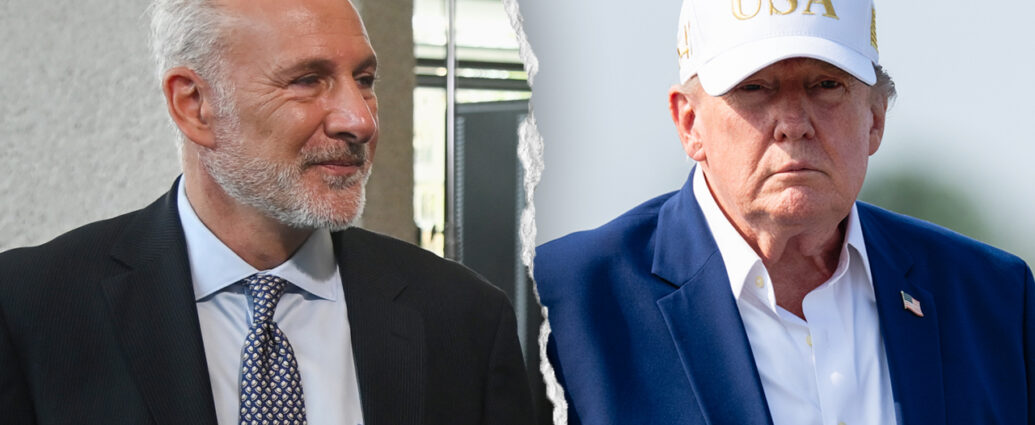
US economy ‘worse’ off than when Biden departed, Peter Schiff says, warning of 2028 Dem socialist ‘threat’
The U.S. economy is currently “worse” than when former President Joe Biden departed office last year, economic and political commentator Peter Schiff asserted, warning that the nation faces the “threat” of a Democratic socialist winning the White House during the 2028 presidential election.
President Donald Trump is “unpopular because the economy is worse now than it was when Biden left office,” Schiff, chief economist and global strategist of Euro Pacific Asset Management and host of “The Peter Schiff Show” podcast, told Fox News Digital during an interview on Wednesday.
“So Trump ran promising to fix what Biden broke,” but then “broke it more,” Schiff asserted.
“He said that prices will come down on day one as soon as I become president,” Schiff said, adding “inflation is a bigger problem now than it was when Trump was elected.”
Fox News Digital reached out to the White House on Thursday.
TRUMP’S APPROVAL RATING PLUMMETS TO NEW LOW AHEAD OF CRITICAL MIDTERMS: ‘MORE WORK TO DO’
While Republicans currently hold majorities in both chambers of Congress, Schiff said that he thinks the GOP will lose many House seats in the midterm elections this year and that they “have a real chance of losing the Senate too.”
Schiff said he expects the party to lose control of the Senate in 2028 if they haven’t lost their majority in the chamber before then and that he thinks the GOP will lose the presidency in 2028 as well. He warned that “the real threat” looming over the 2028 White House contest is the possibility of “a real Democratic socialist” getting elected as president.
Schiff, who is involved in selling precious metals through SchiffGold, made a case for people buying gold and silver. “Buy real money. That will preserve its purchasing power,” he said.
HOW MUCH HAS THE NATIONAL DEBT GROWN UNDER PRESIDENT TRUMP?
He argued that investors should be diversifying into “stocks in international markets” to protect against “a weak U.S. dollar.”
Schiff said “stagflation” will “be a big problem for the U.S. economy for years to come,” warning of a “crisis” pertaining to “sovereign debt” as well as “currency.”
“But I want people to understand that this is not about a failure of capitalism. It’s about a failure to have capitalism. It’s a failure of central planning, central government, central banking. It’s big government that interfered with the free market that created the problem. And the solutions that are gonna be proposed by government to increase the size of government, to have even more regulation, to have even more taxes, they will just make all the problems worse,” Schiff said.
The U.S. national debt has surpassed $40 trillion, according to the U.S. Treasury.
“We need to rein in government. We need massive cuts to government spending, deregulation, we need free market forces,” he said.
US NATIONAL DEBT HITS $40 TRILLION MILESTONE FOR FIRST TIME EVER
GET FOX BUSINESS ON THE GO BY CLICKING HERE
Schiff said that “Republicans are in a predicament because doing the right thing economically is probably political suicide, which is why they won’t do it.”

Mortgage rates fall for second consecutive week
Mortgage rates fell for the second week in a row, mortgage buyer Freddie Mac said Thursday.
Freddie Mac’s latest Primary Mortgage Market Survey, released Thursday, showed the average rate on the benchmark 30-year fixed mortgage fell to 6.65% from last week’s reading of 6.67%.
The average rate on a 30-year loan was 6.58% a year ago.
SLOWING LABOR MARKET CREATES NEW HURDLE FOR FIRST-TIME HOMEBUYERS FACING AFFORDABILITY SQUEEZE
The average rate on a 15-year fixed mortgage fell to 5.95% from last week’s reading of 5.96%.
Mortgage rates are affected by several factors, including the Federal Reserve and geopolitics. Though mortgage rates are not directly affected by the Fed’s interest rate decisions, they closely track the 10-year Treasury yield. The 10-year yield hovered around 4.7% as of Thursday afternoon.
Iranian Parliament Speaker Ghalibaf’s Iraq visit seeks to reshape ties amid regional unrest
Iranian Parliament Speaker Mohammad Bagher Ghalibaf’s visit to Iraq comes as Tehran seeks to “reshuffle relations with Iraq,” Dr. Yaron Schneider, a researcher at the Institute for National Security Studies (INSS) specializing in Iran-backed Popular Mobilization Forces (PMF), told The Jerusalem Post on Wednesday.
Ghalibaf traveled to Iraq on Wednesday for a three-day visit amid growing tensions over the September 30 deadline for militia disarmament and as Iraq grapples with a severe economic crisis stemming from the prolonged closure of the Strait of Hormuz.
Upon his arrival, he insisted that the two countries needed to strengthen a “new regional order” and denounced “foreign interference.”
On Thursday, he met with the President of the Supreme Judicial Council of Iraq, Faiq Zidan, to discuss “mutual interests,” following talks on Wednesday with senior Iraqi officials on issues including “strengthening bilateral relations, border security, the fight against terrorism, expanding economic cooperation and implementing joint agreements,” according to Iran’s Tasnim news agency.
The issue of economic cooperation is one that Iran has used to interfere in Baghdad’s domestic policies, Schneider explained.

Iraq’s oil-dependent economy faces crisis amid Hormuz closure
Iraq’s economy remains heavily reliant on oil, which accounts for 90% of government revenue, 95% of export earnings, and more than 53% of the country’s gross domestic product.
“Iraq is heavily reliant on oil exports as the basis of its economy. The government depends on that, and salaries are being delayed because of it. This is a crisis that is still ongoing and might undermine the state if it continues. They don’t have any short-term solution for this crisis,” he said, adding that Iraq’s monthly oil revenues fell from around $7–$8 billion down to $1.2–$1.9 billion.
The issue was raised by Iraq’s own parliament speaker, Haibat al-Halbousi, on Wednesday, who asked Ghalibaf for Iraqi oil exports to be given a special exemption to safely cross through the Strait of Hormuz, according to a statement from his office.
“The Iranians are trying to mend or fix what has already been out of order over the last month, so they don’t lose Iraq,” Schneider suggested, adding that he didn’t think that all of Iran’s assets in Iraq were endangered by the current tensions “because they still have the power and ability to project their power through these militias, intimidate the government and intimidate elements in Iraq that might want to get rid of their influence, such as the Kurds.”
Iran moves to contain Hormuz fallout, protect Iraqi militias
The visit, and any prospective economic agreement with Baghdad, would suggest “Iran is trying to do its best, first of all, to quiet the voices criticizing it for the devastating consequences of the Hormuz crisis and, secondly, to use all of its assets in Iraq to counter this new policy of dismantling and disarming the militias,” he said.
The Arab newspaper Asharq Al-Awsat reported, citing Iraqi sources, that Iran is currently pushing a deal with Baghdad that would allow the PMF to hold on to its weapons so long as they freeze the use of them, conceal heavy weapons, and/or potentially transfer them temporarily to Iran until a more permanent settlement is agreed upon.
After Iraqi militia attacks saw Saudi Arabia strike Iraq last month, and with pressure from Washington, Baghdad is understandably invested in disarming the militias, though it must balance ties with its neighbor. More complicated, Schneider continued, is the fact that many senior members of Iraq’s coalition government are supportive of the Iranian axis.
“It’s like a tug of war,” Schneider said, noting how in some ways American policy toward Baghdad has been successful in controlling Iranian influence, but Iran still has enough influence and assets to hold sway.
Overloaded boat capsizes in Nigeria, around 40 children’s bodies recovered
An overloaded boat capsized in Nigeria‘s northwest Sokoto State, with around 40 bodies of children recovered so far, a local official at the Inland Waterways Authority said on Thursday.
“I can confirm that so far around 40 corpses of children have been recovered,” Abdulkadir Yusuf, an area manager of the National Inland Waterways Authority, said in a statement to Reuters.
The accident occurred on Thursday morning when passengers were heading either to plant or to harvest rice, said Sarkin Daji, a traditional leader in the area.

“Our local divers recovered the bodies, and the search is still ongoing,” local resident Nasiru Gorau said.
Boat accidents common in Nigeria
Deadly boat accidents are common in Nigeria, where vessels often operate unsafely. In January, at least 25 people died when a leaking boat capsized in Yobe State, northeast Nigeria.
Israeli curbs on labor, banking, and trade drive West Bank economic crisis – report
Israeli pressure and restrictions on labor, government funds, banking, trade, and movement in the West Bank have pushed the territory into an economic crisis, according to a report from The New York Times on Tuesday.
In the aftermath of the October 7 massacre in 2023, Israel imposed a permit ban that prevented over 100,000 Palestinian laborers from entering the West Bank, citing increased security concerns.
As a result of the ban, the Palestinian Authority, which administers certain areas of the West Bank, has had to cut back on salaries and public services due to a significant drop in revenue.
Since the start of the Gaza war, unemployment in the West Bank has risen to 28 percent, more than double the rate before the conflict, according to the Palestinian Central Bureau of Statistics.
Then, in May 2025, Israel began confiscating hundreds of millions of dollars each month in import taxes that it collects on behalf of the PA.

This revenue stream accounts for about two-thirds of the West Bank government’s 2026 budget, projected at around $6 billion, according to Palestinian officials to the NYT.
Local salaries have been slashed
The recent budget cuts have forced the PA to reduce the salaries of 140,000 civil servants and security personnel. They have also shortened the school week to three days and accumulated billions of dollars in debt.
Arafat Halabi, a traffic police officer in Nablus, spoke with the NYT and said his monthly salary of about $1,500 has been halved by the cuts.
“All I can do is the bare minimum,” he said.
Halabi, 36, said he eats meat only on Fridays to save money, relies on public transportation to commute to work instead of driving, and hasn’t been able to buy new clothes for his children.
His debts are increasing because he can only afford a small payment toward his monthly loan and to cover his electricity bill.
Healthcare cuts
The budget cuts have also severely impacted healthcare, according to the NYT. Pharmacies often run out of medications because government funding for purchases has been reduced, many clinics now open only a few days each week, and hospitals operate with fewer doctors and nurses.
The NYT spoke with Ibtisam Hammad, a resident of the West Bank who was diagnosed with breast cancer three months ago, about the ongoing strain on healthcare in the area. After attending a hospital appointment in Ramallah, she went to a pharmacy to collect her medications. Unfortunately, only three out of her six prescriptions were available.
“I’m lucky,” Ms. Hammad said, “Last time, they only had one.”
In response to heightened security concerns, following the October 7 massacre and the rise in violence across the West Bank, Israel has also implemented additional roadblocks throughout the region. Palestinian sources to the NYT reported that these measures are significantly restricting the movement of goods in the area.
IDF spokesperson Doron Spielman denied the claims regarding the restrictions on goods. He accused the PA of trying to divert attention from its support for terrorism and its failure to implement necessary reforms by blaming Israel.
Another ongoing source of tension related to Israeli security concerns in the West Bank is the PA’s practice known as ‘Pay for Slay,’ which notoriously involves providing financial stipends to the families of Palestinians who commit acts of terrorism.
Although the PA claims it has taken measures to address Israeli concerns by issuing a decree to end this practice, recent April reports, based on investigations by the US State Department, indicate the payments are ongoing.
Banks on the brink
The NYT also noted that restrictions on Palestinian banks have significantly affected the West Bank economy. Israel imposes limits on the amount of shekels that Palestinian banks can transfer to Israeli banks, which restricts Palestinian merchants from purchasing goods from Israel and other countries.
The current Netanyahu government allows quarterly transfers of about $1.5 billion from Palestinian to Israeli banks, which is far less than what previous administrations permitted. As a result, approximately $5.7 billion is currently sitting unused in bank vaults in the West Bank, according to officials from the Palestinian government and banking sector.
“They’re preventing us from meeting the demand in our markets,” said Bashar Yasin, general manager of the Association of Banks in Palestine, a trade group, told the NYT.
Palestinian banking executives are also concerned that their institutions might be cut off from Israeli banks. Israel Discount Bank and Bank Hapoalim, the only Israeli banks working with Palestinians, fear that these ties could lead to lawsuits over money laundering or terrorist financing and have threatened to end these partnerships.
Yahya Shunnar, the governor of the Palestinian Monetary Authority, cautioned diplomats in July that the Palestinian economy was approaching a “full crisis” due to Israel’s economic restrictions, according to a recording of his remarks obtained by the NYT.
“There remains a narrow window to act, but it’s closing,” Shunnar said. “And it’s closing quickly.”



California Draws More Investment Than All Other 49 States Combined
Investors have poured approximately $366 billion into California companies since the beginning of 2026—more than three times the venture capital raised by companies in the other 49 states combined.
The arithmetic is difficult to overstate. The rest of the country together attracted less than approximately $122 billion. New York, the runner-up, received about $27 billion, meaning California raised more than 13 times as much as its nearest competitor. The state has already collected nearly twice as much venture funding as it did during its previous record year in 2025.
One industry explains most of it. OpenAI raised $122 billion in March, the largest financing round in Silicon Valley history. Anthropic secured another $95 billion across two rounds. Those two artificial-intelligence companies alone account for $217 billion—nearly 60 cents of every venture dollar invested in California this year.
That is enough money to distort an entire national map. Remove OpenAI and Anthropic, and California would still lead the country. Include them, and two companies headquartered within the same technology cluster raised substantially more than all startups in the other 49 states combined.
It is important to understand how the count works. Venture funding is generally credited to the state where the company is headquartered, not necessarily where the money will ultimately be spent. If a San Francisco AI company raises billions and uses part of it to purchase chips or build data centers in Texas, Georgia or another state, the entire financing round still appears in California’s column.
California therefore receives the investment headline, while other states can receive the construction jobs, electricity demand, land purchases and equipment orders created by that money.
The boom is broader than two enormous financings, although the largest rounds dominate the total. More than 4,000 California startups have raised capital this year. Torrance-based defense manufacturer Hadrian Automation announced a $1.37 billion round in August, while live-commerce company Whatnot raised $545 million.
Southern California is developing its own version of the boom around defense, aerospace and advanced manufacturing, while the Bay Area remains the center of AI models, software and venture financing. The result is not one California investment story but two: concentrated AI wealth in the north and a growing defense-and-space cluster in the south.
The jobs tell a more complicated story. California’s technology sector has lost roughly 110,000 positions since 2022, even as investment reached unprecedented levels. Technology companies are directing more capital toward chips, computing capacity, electricity and highly compensated AI specialists while reducing payrolls elsewhere.
Record venture funding, in other words, does not mean record hiring. A $10 billion AI financing can lift California’s investment total without creating anything close to the number of jobs once associated with a similarly large factory or corporate expansion.
The money is nevertheless reaching California’s broader economy. The state collected approximately $147 billion in personal-income taxes during the fiscal year that ended June 30, compared with the $126 billion previously projected. Rising technology compensation, stock-market gains and AI-related wealth helped produce the difference, giving Sacramento additional room for education, reserves and infrastructure.
California is also trying to protect its advantage. Gov. Gavin Newsom signed legislation in July extending the California Competes Tax Credit, which offers businesses tax incentives to remain, expand or create jobs in the state. That extension comes as California confronts high housing costs, extensive regulation and a proposed one-time 5% billionaire tax that critics warn could drive wealthy founders and investors elsewhere.
Tax incentives alone, however, do not explain the $366 billion. Capital is following a cluster that took decades to assemble: Stanford and Berkeley researchers, experienced founders, semiconductor specialists, AI engineers and investors capable of writing multibillion-dollar checks.
Other states may not be able to reproduce that network quickly. Their more immediate opportunity lies beneath it—providing the power plants, transmission lines, data centers, construction crews and land required to operate the AI systems California companies are financing.
That is the divide hidden inside the record. California is collecting the capital and creating much of the intellectual property. A growing share of the physical economy needed to support it may be built somewhere else.
JBizNews Desk | San Francisco
© JBizNews.com All Rights Reserved. Reproduction or distribution without written permission is prohibited.

Trump told US Congress to provide $206 million for Gaza peacekeeping force, letters show
President Donald Trump’s administration has told Congress it is sending more than $206 million for a proposed Gaza peacekeeping force, the first significant funding for the stalled US plan to rebuild the devastated enclave.
In two July 30-dated notifications seen by Reuters, the State Department informed Congress it will provide $200 million for the International Stabilization Force’s (ISF) equipment, infrastructure, vehicles and operational costs. An additional $6 million would repurpose US armored vehicles to support the force.
The notifications, which were addressed to key appropriations and foreign affairs committees in Congress, have not been previously reported.
The funding is the first concrete US spending on the peacekeeping force and signals the administration’s determination to press ahead with Trump’s Gaza roadmap even as both Israel and Hamas have balked at conditions needed to advance the plan.
“The ISF will lead security operations, support comprehensive demilitarization, and enable the safe delivery of humanitarian aid and reconstruction material to Gaza,” one of the notifications said, while noting the final composition of the force was still being negotiated.

The administration has not said how much money will ultimately be needed to fund the force.
Trump set up a Board of Peace to oversee his ambitious plan to end Israel’s war in Gaza and rebuild the shattered territory. His plan envisioned that the peacekeeping force would deploy to Gaza to secure areas after Israeli forces withdraw and would train new Palestinian police forces and support aid deliveries.
Much of Gaza remains in ruins from two years of war triggered by the Hamas-led attacks on Israel on October 7, 2023.
But since the announcement of an agreement in late July, the effort has stalled, with both Israel and Hamas refusing to fulfill conditions that would allow the deal to move ahead.
Trump’s envoy and son-in-law Jared Kushner held meetings with Hamas officials on Sunday and Israeli leaders on Monday in Jerusalem but left without a breakthrough, with both sides standing firm on key demands.
An official from the Board of Peace described the last two weeks as a period of “significant advances” and said the board had sought additional funding pledges as a result.
The official, who was granted anonymity to speak freely with media, said the funding was needed for the construction of a base for forces inside Gaza among other reconstruction projects.
Member countries had initially pledged $17 billion for reconstruction efforts inside Gaza but Reuters reported in April that only a fraction of the funds had been received. The Board of Peace has not made public the amount that it has received so far.
The State Department did not immediately provide comment for this story.
Stalled plan
On July 30, Trump announced what he described as a breakthrough: that Hamas had agreed to lay down its arms in phases, as Israel’s military withdraws from Gaza. Hamas said it agreed to the roadmap but implementation depends on Israel first meeting its own commitments, including halting attacks and withdrawing.
Israeli Prime Minister Benjamin Netanyahu, whose ruling coalition trails in opinion polls ahead of an October national election, rejected the deal this month, insisting that Israel would not pull back until Hamas is completely disarmed.
Five countries have committed troops to the ISF so far: Indonesia, Morocco, Kazakhstan, Kosovo and Albania, while Egypt and Jordan have committed to train police. It remains unclear when any troops would be able to deploy.
The first of the two congressional notifications addressed the $200 million in funding. The second, with the same date and worth around $6.3 million, said the US was repurposing nine armored personnel carriers previously destined for Nepal to support the ISF and that Albania and Kosovo would be the initial recipients of this equipment as part of their role in the ISF.
The ceasefire plan reduced violence in Gaza but has not ended Israeli attacks or secured the militants’ disarmament. More than 1,200 Palestinians and four Israeli soldiers have been killed in Gaza since a ceasefire was reached in October, according to Gazan health officials and the Israeli military.
Netanyahu and Kushner also agreed that Gaza’s reconstruction would not start until Hamas is disarmed, an Israeli official told Reuters earlier this week.

Another Democratic primary, another shocking DSA upset as Angie Nixon adds to moderates’ heartburn over seemingly unstoppable wave
Florida Democratic voters delivered another shock upset to the party establishment by nominating state Rep. Angie Nixon, a democratic socialist, over Alex Vindman, a moderate former national security professional who played a central role in President Donald Trump’s first impeachment.
Democrats have hoped to mount a comeback in the diverse, populous and economically dynamic state but have struggled to craft a message that resonates in the Sunshine State’s political climate. Nixon’s upset sets up a long-shot challenge to U.S. Sen. Ashley Moody, a former state attorney general selected by Gov. Ron DeSantis to fill the seat after Marco Rubio vacated it when Trump chose him as secretary of state.
The race has already inflamed tensions within the Democratic Party over how to energize liberal voters eager for unapologetic, combative candidates without alienating independents and moderates who have been key to winning in battleground states.
“If you’re surprised by tonight’s election results, you haven’t been paying enough attention to what’s happening in the South,” said Britney Whaley, the southeast regional director of the Working Families Party, which backs populist candidates. “Tonight’s election results must be a wake-up call to a political establishment that believes a populist message can’t win in the South. Angie’s campaign proves voters will respond to a bold economic vision that meets their basic needs.”
A proud progressive who campaigned with new tactics
A spirited progressive who had the backing of Reps. Rashida Tlaib of Michigan and Ilhan Omar of Minnesota, Nixon is a longtime labor organizer who recently joined the Democratic Socialists of America. She championed policies like universal healthcare and childcare and has been an outspoken critic of U.S. foreign policy and the war in Gaza.
In May, Nixon protested the Republican-controlled Florida legislature’s redistricting of the state’s congressional maps by shouting through a megaphone on the state House floor. She was later reprimanded by an ethics committee but earned plaudits from Democratic allies and voting rights groups for her demonstration.
Vindman raised about $16 million in his race and had spent more than $9 million by the end of July. Nixon, by contrast, had raised just shy of $1 million. Nixon eschewed broadcast television advertising, instead focusing on targeting voters on social media. She was backed by prominent online figures like children’s education influencer Ms. Rachel.
In contrast to other high-profile statewide democratic socialist bids this year, Nixon received little opposition from national Democratic figures or major political action committees. That didn’t stop progressives from immediately touting her win as a sign of greater momentum for the region.
Florida’s Senate race was widely considered out of reach for Democrats and not central to the party’s efforts to retake the upper chamber. Nevertheless, Democratic National Committee Chair Ken Martin issued a statement praising Nixon as a “proven leader,” adding that the DNC “is ready to help elect Angie and work together to flip this seat.”
A defeat for ‘resistance’ Democratic politics
Vindman served on the White House’s National Security Council during Trump’s first term. His testimony was central to Trump’s first impeachment over a phone call in which the president pressured Ukrainian President Volodymyr Zelenskyy to investigate Joe Biden and his family. Vindman became a national Democratic star and target of Trump’s ire for his actions, a dynamic that garnered him millions in small-dollar donations.
His twin brother Eugene, who also served on the council, is a Democratic congressman from Virginia.
“Rep. Nixon ran a strong campaign. I will be standing by her side in the fight against Ashley Moody. I hope you’ll join me,” Vindman said in a statement after he conceded the race.
Trump gleefully hailed Vindman’s defeat to Nixon.
“The most gratifying loss last night was that of a real treasonous creep, Alexander Vindman, to a Radical Left Lunatic, who can’t speak or think properly, and who will go down to certain defeat at the hands of Ashley Moody, a truly Fantastic Senator, from the Great State Florida,” Trump wrote on his social media platform, Truth Social. Trump added that Vindman “should be prosecuted for what he’d did!”
Democratic leaders like Senate Minority Leader Chuck Schumer had hoped Vindman’s reputation and campaign war chest would turn what election analysts considered a solidly Republican seat into a more competitive race. Nixon’s upset victory has now buoyed already high Republican confidence in the state and raised progressive confidence about the strength of their message.
Vindman’s defeat mirrors that of others who rose to prominence opposing Trump during his first administration, when Democrats embraced “resistance” as a moniker for that opposition and for standing up for the rule of law. Their defeats may show how rank-and-file voters have shifted toward more strident and affirmative visions of politics.
In May, Rep. Al Green of Texas, a longtime Trump opponent and civil rights icon, lost a runoff race to Rep. Christian Menefee, a freshman progressive representative less than half Green’s age.
Rep. Dan Goldman, who served as counsel for House Democrats during Trump’s first impeachment, lost his primary in June to progressive challenger Brad Lander, who had the backing of New York City’s democratic socialist mayor, Zohran Mamdani. George Conway, a liberal lawyer who has garnered Trump’s ire, came in fifth place in another New York Democratic primary for U.S. House.
And earlier this month, Rep. Shri Thanedar of Michigan, who last year introduced articles of impeachment against Trump, lost his primary to a democratic socialist in a Detroit-area congressional race.
Nixon’s win headlined mixed results for progressives
In multiple southern Florida congressional primaries Tuesday, left-flank candidates lost to more moderate ones. While the state has shifted rightward in recent election cycles, Florida has long been a refuge for Latino communities who had fled left-wing authoritarian regimes in Latin America. Many of those Floridians have consequently reacted negatively to anything or anyone labeled as socialist.
Elijah Manley, who finished third in a Broward County U.S. House primary won by Debbie Wasserman Schultz, acknowledged the tightrope. He got about 14% of the vote in a five-way race. In neighboring districts, Rep. Jared Moskowitz and political newcomer Pia Dandiya ran as moderates and won 64% and 69% of the vote, respectively, over more progressive opponents.
“I’m a proud moderate. We need more moderates,” Dandiya said in an interview.
The Senate returns showed similar trends. Nixon carried most of the state but was weakest in southern Florida, which includes some of the state’s largest Latino communities.
Still, Manley insisted the broader electorate wants a more aggressive, left-leaning party.
“They have looked at the Democratic establishment for the past four years, even 10 years, and it’s something that just isn’t working for them,” he said.
“Say what you will about the DSA. They’re organizing. They’re bringing people into the party. They’re exciting people, and they’re getting people. We should be happy that that’s happening,” Manley added.
Nixon’s allies view her voter base, which includes some of the most working-class and majority-Black counties in the state, as another path to power when coupled with the broader Democratic coalition. But they caution intraparty divisions and an inauthentic message could hamper a candidate from any wing of the party.
“I think people are looking for change. They’re looking for leadership who they can trust and who listens,” said Moné Holder, a liberal activist and urban planning committee chair who defeated a Republican for an at-large seat on Jacksonville’s city council.
“They’re looking for people to serve who aren’t wrapped up in political drama, but are about people. And I think voters came out to show that, and it proved itself in my election, and Angie’s, and a few others,” Holder said.
___
Associated Press writer Bill Barrow contributed to this report.
This story was originally featured on Fortune.com

Nneka Ogwumike’s WNBA legacy isn’t just her 11 all-star nods. It’s a 364% pay raise for the players
Nneka Ogwumike is on Zoom from her hotel room in Boston, getting ready for one of the biggest moments of her career: in two days, she’ll announce her retirement from the WNBA.
“I feel good,” she says. “I don’t know if excited is the right word, but I feel good.”
Ogwumike, 36, was the league’s No. 1 draft pick in 2012 and is currently playing her 15th season. While she may not be a household name outside basketball circles like some of the league’s younger stars are, she’s been a top player over the past decade-and-a-half: an 11-time all-star (the second-most in league history) and 2016 MVP and league champion with the Los Angeles Sparks. She’s part of a pro basketball family; her sister Chiney Ogwumike also played for the Sparks and has become a successful ESPN broadcaster, and sisters Erica and Olivia played in college and went on to play for Nigeria internationally.
Her legacy, though, will be as much about what she accomplished off the court as on it. In 2016, Ogwumike became president of the players’ union, known as the WNBPA. She steered the union through securing a major collective-bargaining agreement in 2020 that included historic protections like parental leave. This year, she had to do it again.
The WNBA experienced historic growth after the 2024 arrival of a generational rookie class including Caitlin Clark and Angel Reese, but player compensation did not keep up. Constant record-setting ticket sales and TV viewership were undermined by growing resentment among everyone from athletes to fans over the players’ salaries; Clark’s rookie pay was just $76,000.
It was Ogwumike who was tasked with turning that discontent into action. As union president, she had to corral a membership that included everyone from veterans who spent years earning salaries in the five figures to 22-year-old NIL millionaires into a cohesive unit able to take on the WNBA (and NBA, which owns much of the WNBA). At times, that united front threatened to fracture, like when stars Breanna Stewart and Kelsey Plum sent a letter outlining concerns with the union’s handling of negotiations. But the end result was a labor agreement that was historic for more than women’s basketball.
With allies in their corner like Nobel-winning economist Claudia Goldin, WNBA players negotiated a 364% raise, the biggest jump in the history of U.S. pro sports. The average player this season is earning $564,000, and WNBA players are now the highest-paid athletes in women’s team sports.
“It took a lot,” Ogwumike reflects. She had to show up as a competitor even while acting as a leader. “I had to manage people not seeing me as president while I’m on the court.” Then there were the toughest moments—like when the union didn’t hear back from the league for six weeks, or when they negotiated until the “wee hours of the morning” in New York and then had to show up to train the next morning.
During this year’s training camp—her first back with the Sparks after a two-year stint with the Seattle Storm—Ogwumike realized it was time for her to step back. “I was just thinking about how much this league has grown and the demand on players as it continues to grow,” she recalls. She played through some of the league’s lowest lows, when games were rarely broadcast on TV and when it came close to collapse during the pandemic. “Even though I know I’m up for the challenge, I wasn’t sure I needed to do it for longer than another year.”
Players respect Ogwumike and, amid dissatisfaction with league leadership, have sometimes called her their own “commish.” Ogwumike herself has in the past expressed interest in working in the league office, and believes that head office should include more ex-players.
Now that the reality of such a transition is closer, Ogwumike is less certain. In the near term, she plans to continue to split her time between Houston and L.A. and enjoy control over her own schedule for the first time in 15 years. She’s signed on to play for Project B, a soon-to-launch international league that proposes extending the playing careers of star players (men and women) with exhibition games around the world. Of a job in the league office, she says, “I don’t close doors.”
But Ogwumike is humble about what it might take to start a career as an exec during such a demanding growth period for women’s sports. “I’m not assuming that it’s just going to be a role that is made available or that is given,” she says. “I don’t feel as though today I am completely qualified for any type of executive role.”
But anyone who watched the WNBA’s tense negotiations can see the skills its union president must have gained: complex stakeholder management, knowledge of the details of the WNBA’s business, communication, high-stakes negotiation.
Ogwumike says she learned that leading can be “a little less tumultuous” when you “provide an environment for everyone to share their thoughts.” As president, she tried to be accessible and communicative. She tried to understand where players were coming from: “Everyone just has different lived experiences,” she says.
The unpredictable nature of negotiating made her slightly less Type A. “Being adaptable is incredibly important,” she learned.
She’s announcing her retirement during a rocky moment for the WNBA. The league has continued to sell out games and draw TV viewers this year, but its season threatens to be overshadowed by a culture war. After Indiana Fever player Sophie Cunningham said she opposes the inclusion of trans women and girls in women’s and girls’ sports, the wedge issue took over the WNBA news cycle (even without any actual eligibility questions in the league’s near future) and drew rightwing commentary. Fans are showing up to games wearing t-shirts supporting trans women, and shirts from the XX-XY brand built around excluding trans girls from girls’ sports. “I think ultimately there’s too much good and too much excitement happening in the league for it to be swallowed up by the noise,” Ogwumike says.
Ogwumike spent tense days sitting across the negotiating table from league execs including WNBA commissioner Cathy Engelbert. And Engelbert acknowledges her achievements too: “Nneka will retire at the end of this season,” she said, “leaving the WNBA much better than she found it.”
This story was originally featured on Fortune.com

The four-day week is here thanks to GTA 6—some employers are giving staff a one-off shorter week to steal cars in the long-anticipated video game
After a series of delays, Grand Theft Auto VI is expected to release later this year and be one of the biggest launches in video game history. And the hype is already spilling into the real world: One U.S. Army unit in Fort Stewart, Georgia is offering active-duty soldiers a four-day pass to play the game as an incentive to reenlist, according to a memorandum that spread around social media.
“The idea was to have a unique incentive program that connects to what soldiers are interested in,” Lt. Col. Angel Tomko, spokesperson for the 3rd Infantry Division, said in a statement to Fortune.
The incentive was offered exclusively to the Division’s 9th Brigade Engineering Battalion, and 20 soldiers have already chosen it as part of a minimum two-year reenlistment commitment, which can extend for up to six years.
While enlistment incentives are nothing new, tying one to a video game is an unusual acknowledgment of just how much anticipation has built around GTA VI. Millions of Gen Z and Millennial fans expected to dive into the game’s fictional “Vice City” world, which launches in November.
GTA VI is expected to bring in billions—and one company is already giving a day off for the ‘unprecedented cultural event’
Take-Two Interactive, which owns the publishing label for many game franchises including NBA 2K and Red Dead, has a market cap of $44 billion—but GTA has been one of its most successful. GTA V sold over 215 million copies after first being released in 2013.
The first trailer for GTA VI was released in late 2023, and it has since garnered nearly 300 million views on YouTube alone.
A series of delays have only fueled anticipation. The game was initially expected in 2025 before being pushed to May 2026 and then delayed again to November 19. It will launch on PlayStation and Xbox.
Take-Two expects fiscal 2027 net bookings between $8 billion and $8.2 billion, up from $6.72 billion the previous year, with the company expecting GTA VI to be a major driver of growth.
Military leaders aren’t alone in recognizing the hype. Some small business owners have weighed on social media how to deal with an influx of PTO requests. And California-based autoparts store Burger Motorsports went ahead and announced in June that their company would have an operational pause on launch day.
“After reviewing multiple employee scheduling conflicts, management has determined that normal business operations may be impacted due to the release of Grand Theft Auto VI,” the company—which did not respond to Fortune’s request for comment—posted on Instagram.
“We appreciate your patience and understanding during this unprecedented cultural event.”
Gen Z and Millennial men are facing a loneliness crisis—and GTA VI could help bridge the gap
While organizations have occasionally given time off for major cultural events—such as the day after the Super Bowl—or provided flexibility for events like the World Cup or Olympics, the GTA 6 phenomenon is unusual in that it is being driven by a single piece of entertainment.
The core audience is largely made of Gen Z and Millennial men who grew up with the franchise, which makes the game’s cultural impact worth watching beyond the workplace. Young men in the U.S. are among the country’s loneliest demographic. A Gallup study released in 2025 found that 25% of young American men had experienced feelings of loneliness the day before.
The launch of GTA 6 could provide a rare shared experience for a generation that increasingly spends time online but reports feeling disconnected. Friends can play together, talk about the game and anticipate its release as a collective event. Already, the r/GTA6 subreddit already has nearly 1 million members, months before the game’s November 19 release.
Are you planning to take the day off—or allow your employees to do so—for the launch of Grand Theft Auto VI? Fortune wants to hear from you. Email preston.fore@fortune.com.
This story was originally featured on Fortune.com


CREDA California Attends California Commercial Real Estate Summit in Sacramento

Every August, Commercial Real Estate Development Association members from all corners of California brave the Sacramento summer heat and gather with other commercial real estate leaders to ensure the industry’s voice is heard in the California State Capitol. Earlier this month, CREDA participated in the California Commercial Real Estate Summit (CCRES), a two-day annual event hosted by the California Business Properties Association (CBPA) that brings together members of CREDA, BOMA, ICSC, IREM, RILA, AIR CRE, Nareit, ACRE, and other commercial real estate organizations to advocate for the industry as a whole. This year, CREDA President and CEO Marc Selvitelli attended CCRES to help introduce our organization’s new name to the industry and to California state legislators.
The summit’s Day at the State Capitol kicked off on August 12 with a breakfast during which three legislators took the time to address attendees. Senator Jesse Arreguín, former Mayor of Berkeley, opened the program, followed by Assemblymember Diane Dixon, former Mayor of Newport Beach. Assemblymember Alexandra Macedo, the newly elected Minority Leader of the California State Assembly, gave the keynote address.
Amid these legislative speakers, Marc Selvitelli delivered a speech concerning the new Commercial Real Estate Development Association name. Later in the day, Assemblymember Blanca Rubio participated in a meet and greet with the CCRES group, and Assemblymember Stephanie Nguyen took a group of CREDA members on a tour of the Assembly floor. Not only was it informative to hear an update on California policymaking from this bipartisan and bicameral group of legislators, but it was also important for building the legislative relationships of the CRE industry.
After the breakfast event, CCRES attendees broke off into groups to meet with nearly 50 legislative offices in just three hours. This year, CBPA identified eight priority bills for attendees to speak about in their meetings. The industry supported the following four bills:
- AB 2418, which would allow an applicant for qualifying tenant improvements in Group B commercial buildings to retain a third-party plan checker if the local jurisdiction has not completed its review within 50 business days.
- AB 1704, which would require the California Air Resources Board to consider the cost-effectiveness of lower embodied carbon building materials and, if they have not reached cost parity with conventional building materials, pause the state’s embodied carbon program.
- AB 2044, which would require the California Building Standards Commission to deny a proposed building standard if the proposal does not contain an estimate of the standard’s costs.
- SB 1398, which would recognize Green Globes certification as an alternative to Leadership in Energy and Environmental Design (LEED) to meet green building requirements.

AB 2044 has since been passed by both chambers of the legislature and now awaits the signature of Governor Gavin Newsom. AB 1704 died in the Senate Appropriations suspense file and will not pass. AB 2418 and SB 1398 are both still alive and can be passed before the end of the legislative session currently scheduled for August 31.
The industry opposed the following four bills:
- AB 2313, which would incentivize customers to permanently shut off natural gas service instead of replacing service lines.
- SB 1075, which would turn local community emissions reduction plans from community engagement tools into enforceable regulatory obligations.
- SB 1359, which would make it easier to transition customers away from natural gas service and toward electrification.
- SB 493, which would add “war” to the list of emergencies that trigger California’s price-gouging law, which includes rent.
In a major victory, SB 1075 was held in the Assembly Appropriations suspense file and is dead for the year. AB 2313, SB 1359 and SB 493 are all still alive and can also be passed before the end of the legislative session. However, both AB 2313 and SB 493 both received CRE industry-supported amendments that address some of the issues with the bills.
Overall, the 2026 installment of CCRES was a great success. The passage of AB 2044 and the failure of SB 1075 both represent massive victories for CREDA California, CBPA, and the rest of the commercial real estate industry. Additionally, it created an important opportunity for CREDA members up and down the state of California to meet in one place and connect commercial real estate developers.



Goldman Sachs Finds AI Hitting Call Centers and Entry-Level Jobs Hardest
The damage from artificial intelligence in the job market is not spread evenly across the economy. It is concentrated in a handful of industries and falls hardest on the people trying to get their first job.
Goldman Sachs published the findings Wednesday in a report titled “Global Economics Comment: Is AI Impacting Global Labor Markets?” The bank found that industries more exposed to AI automation have seen slower growth in job openings since the second half of 2022, with the effect most pronounced in the United States, Germany and Australia.
The onset of generative AI tools, the report said, “may have led companies in highly exposed industries to reevaluate their hiring plans.”
The clearest casualty is the call center. Call center employment in the U.S. now runs 39% below where the long-run trend says it should be. Canada is 33% below, Germany 27%. That is not subtle. Roughly two out of every five call center jobs that would ordinarily exist in America are not there.
Software publishing, management consulting and advertising show the same pattern, and employment across information and communication services has slowed in nearly every major developed economy since 2022. Outside the U.S., however, employment in those industries still sits near or above its long-run trend — meaning American workers in these fields are absorbing more of the hit than their counterparts abroad.
The age split is the sharpest finding. Across more than 800 occupations, a 10% level of AI exposure costs about 0.1 percentage points of annual headcount growth overall in the U.S., France and Canada. For entry-level roles in the U.S., that drag runs above 0.2 points — double the effect. The work that used to train a new hire, summarizing documents, drafting first passes, answering routine calls, is precisely the work software now does for a fraction of the cost.
The scale is real but not catastrophic. Goldman’s earlier research estimated AI was trimming about 16,000 jobs a month from U.S. payroll growth, later revised to roughly 11,000 by June as hiring in construction and other less-exposed sectors offset the losses. That reflects roughly 25,000 positions displaced monthly against about 9,000 created around AI tools. Set against an economy that typically adds 150,000 to 250,000 jobs a month in an expansion, AI is shaving off something on the order of 1 in 20 of those gains.
Goldman economists also note a counterweight: when technology cuts the cost of producing something, buyers often want more of it, which pulls workers back in. Hiring tied to data center construction and broader productivity gains is not captured in the bank’s current estimate.
The practical read for anyone entering the workforce is to look at exposure, not headlines. Call centers, entry-level marketing and junior consulting are contracting. Construction, skilled trades, healthcare and the physical buildout supporting AI itself are not. The pressure, Goldman concludes, is measurable and visible in the data — but still confined to a relatively narrow set of industries and workers.
For now.
JBizNews Desk | New York
© JBizNews.com All Rights Reserved. Reproduction or distribution without written permission is prohibited.
STAT+: How a Trump loyalist got the FDA nomination
You’re reading the web edition of D.C. Diagnosis, STAT’s twice-weekly newsletter about the politics and policy of health and medicine. Sign up here to receive it in your inbox on Tuesdays and Thursdays.
RFK Jr. spent three days at public events in Iowa this week. Send news tips and signs of a presidential run to John.Wilkerson@statnews.com or John_Wilkerson.07 on Signal.
How Overton got picked
The Trump administration wanted acting FDA Commissioner Kyle Diamantas to accept the job permanently. He declined, so they went with Heidi Overton, Daniel Payne and Chelsea Cirruzzo report.

Exclusive: Venezuela, sick with hyperinflation, engages the ‘money doctor’ Steve Hanke for a dose of dollarization medicine
Over four decades, Steve Hanke has pursued a worldwide quest to tame the hyperinflation that so frequently ravages developing nations. His solution: tying their currencies to the U.S. dollar so their governments are no longer free to unleash an avalanche of pesos or sucre to fund their giant overspending, at the expense of their citizens, who pay for the blowout in rocketing bills for rent, medicine and groceries that way outpace their incomes.
The success that the professor of applied economics at Johns Hopkins University has had in advising governments across three continents — whether achieving straight “dollarization” or establishing Hong Kong-like currency boards that fix their monies to the greenback — has won him the title, you might even say the “brand,” of globetrotting “Money Doctor.”
Now, the doctor’s making the most important house call of his career. Venezuela’s National Assembly has just named him Special Adviser on Economic, Monetary, and Energy Affairs, tasking him with curing hyperinflation now running at a 400% annual clip — the worst in the world — as the country tries to rebuild after the ouster of Nicolas Maduro. Hanke’s fix: a full dollarization law that would abolish the bolivar and the central bank outright. He told Fortune he puts the odds of passage at 50% to 80% — the best shot that sound money has had in Venezuela since the country rejected the money doctor’s last surgery attempt, three decades ago.
What does a money doctor have to do with oil? The problems are deeply interconnected. The nation of 29 million boasts arguably the greatest “underground” wealth in Latin America via holding the world’s largest crude oil reserves and immense wealth in minerals from copper to lithium, and still harbors a highly-sophisticated professional class. Meanwhile, an exiled intelligentsia numbering in the millions stands ready to return and rebuild their stricken homeland.
They won’t return until the oil-driven economy revives and Venezuela is producing just 1.1 million barrels per day, around 1.3% of the world total and one-third the pre-Chavez mark of 3.4 million in 1998. Shockingly, it’s only a little over 7% more than before Maduro’s exit, not what the administration hoped after the U.S. Special Forces raid on January 3rd that removed Maduro, the dictator who savaged the economy.
“Taming inflation is the key to restoring stability in Venezuela, and all the other progress flows from that,” Hanke told Fortune. “Stability isn’t everything, but without stability, which means stable prices, you have nothing. And there’s no better case study showing that’s true than Venezuela.”
Ramping oil output is the ticket to restructuring Venezuela’s mountainous $250 billion debt load, equal to roughly 150% of GDP, the highest number in Latin America and fourth in the world. It was sending crude to China as part of a repayment program for as much as $15 billion in loans from Beijing.
The U.S. and other foreign enterprises that could make it happen remain on the sidelines, fearing the kind of expropriations inflicted under Maduro and his predecessor, Hugo Chavez. The government led by President Delcy Rodriguez has so far failed to pass new laws that sufficiently safeguard private property rights, progress essential to attracting heavy overseas investment.
Today, U.S. oil majors are purchasing Venezuelan oil, shipped mostly to China only a year ago, for their Gulf Coast refineries specializing in its staple heavy crude. But none has committed capital to reviving the country’s devastated petroleum infrastructure, even though the Trump Administration is basically now decision-maker for the state-owned oil enterprise, PDVSA. Exxon Mobil CEO Darren Woods expressed his concern that Venezuela won’t “uphold the sanctity of contracts” and slammed its past record of “steal[ing] investments,” concluding that the sleeping oil colossus is currently “uninvestible.”
In short, Venezuela is facing the biggest lender-borrower workout ever. Crude is the country’s life blood, accounting for as much as 98% of the country’s exports. In any new agreement, petroleum production would provide virtually the entire flow of dollars required for paying principal and interest to its creditors. The faster that Venezuela generates petrodollars, the better the deal it will get from the lender group comprising the governments of Russia and China, distressed debt hedge funds, ConocoPhillips and Exxon Mobil, and the quicker an accord gets signed.
By Hanke’s calculation, prices measured in Venezuela’s coin of the realm, the bolivar, are now rising at a 400% annual clip. That’s down from 700% before Maduro’s capture, but it’s still 6x the figure in Iran and tops in the world by far. It’s an 8% weekly increase in prices for eggs, beef and rent paid by consumers, along with electric bills, salaries and taxes by companies, and in turn it’s crushing purchasing power and profits.
As Hanke points out, the stalled oil industry and raging inflation have a seesaw, cause-and-effect relationship. “When oil revenues dried up because the government let the infrastructure fall apart, it paid its bills, including paying government employees and pensioners, by printing money,” he observes. And even post-Maduro, that’s still the practice. It’s the punishing option Hanke wants to totally eliminate.
Hanke has drafted a full “dollarization” law that would shelve the bolivar and replace it with the world’s reserve currency. It would also shutter the central bank, ending the government’s ability to issue new money and manipulate interest rates. On the project, Hanke is working closely the dollarization advocate Antonio Ecarri, 52, an Assembly member and former presidential candidate, and founder of the pragmatic, centrist Pencil Alliance party.
A second shot at the dragon
This is Hanke’s second shot at battling Big Inflation in Venezuela. In 1995 and 1996, he designed the blueprint for a currency board while serving as chief economic adviser to President Rafael Caldera. That plan failed to win a majority in the National Assembly. This time, Hanke said he believes that sound monetary reform finally stands a good chance, pointing to numerous surveys showing that the vast majority of Venezuelans want to dump the bolivar and adopt the dollar.
Hanke estimates the odds the bill will pass in the Assembly and become law at 50% to 80%. That such an upheaval is even somewhat likely may seem farfetched, but at the very least, the possibility is supported by the facts on the ground: If they’re not paid in bolivars, Venezuelan shoppers are already buying virtually everything in greenbacks. And so far, the Trump Administration seems fine with this grassroots near-takeover for the U.S. currency.
“It would be the biggest switch from domestic currencies to an alternative since the introduction of the Euro in 1999,” intones Hanke. Still, dollarization would prove an incredibly bold gambit for a nation of Venezuela’s size and importance. It also introduces policy constraints that opponents abhor because they eliminate monetary discretion, but that Hanke swears are actually beneficial. He stresses that dollarization blocks a nation from depreciating its currency “on the phony grounds” of gaining more competitiveness. If that were the case, he argues, “Venezuela would be the most competitive economy in the world. The bolivar has lost 78% of its value to the U.S. dollar in the past year.”
Still, charismatic leaders who have pushed for dollarization have failed to date, suggesting that the patient may not want the money doctor’s medicine. Case in point: In Argentina, President Javier Milei ran on a peso-to-greenback platform in 2023, but abandoned the plan while in office, in favor of a conservative monetary and fiscal policy that lowered inflation somewhat, though prices are still chugging at over 30% a year, and proving an albatross around Javier Milei’s neck.
The resistance that dollarization often meets with isn’t just political cowardice — it reflects a real and almost permanent trade-off. A company that dollarizes gives up its currency-printing power, along with tools that many economists consider essential in a crisis: seignorage, the revenue a government earns from issuing its own money, and the ability to act as lender of last resort to its own banks. Dollarization is also much harder to reverse than a currency board, something Hanke consider an advantage. All told, it’s usually a price worth paying when hyperinflation climbs to the worst level in the world, or close to it.
Hanke predicts that dollarization will ignite the Venezuelan economy overnight. The monetary transformation would unlock a flood of animal spirits, he claims. “If it happens soon, Venezuela would take off from negative growth this year to positive growth next year,” he says. “You’d get big foreign investment flowing into the oil sector, and for example, the broken electrical infrastructure that’s subject to daily blackouts. It’s tough to renegotiate debt in an unstable and uncertain environment of almost 400% inflation. If you’re holding Venezuelan debt, the rise in oil exports would tremendously increase expectations of getting your money back. The debt resolution would occur far more rapidly.”
Today, consumer loans are virtually extinct in Venezuela. No one can get a mortgage in bolivar. The low rates brought by dollarization, notes Hanke, would create an extensive credit market from scratch that would drive domestic business investment and fire the housing market. Venezuela would be Hanke’s biggest dollarization yet in a nearly 50-year career of engineering the biggest ones on three continents.
The swift rebound when a nation switches from a wobbling to hard currency is a scenario Hanke has witnessed many times before in his adventures as the Money Doctor. And he wants to make it clear that it’s the fruits of those dollarizations and currency boards, not his salesmanship, that gets governments to enlist his expertise. (By the way, he clarified to Fortune, “the term dollarization refers to any change from a weak local currency to a major, stable one, not just to the dollar.)
“The bottom line is that the leaders in these countries know who the Money Doctor is,” he avows. “And they know what works. I never offer my services, the best way to do it is not to peddle. Waiting for the call is how you make sure the government is really serious about getting it done.” He also does the work pro bono and pays his own way, “So then you have the freedom to say and recommend what you want to.”
A series of inflation battles
Indeed, Hanke absolutely relishes the task at hand. In a long campaign wielding the sword, converting Venezuela to the dollar would stand as his biggest dragon-slaying victory ever. His five-decade record is a living referendum on the dollarization debate: where the political commitment held, inflation has largely vanished for good; where the commitment didn’t hold, the hard currency proved only as durable as the government that adopted it.
Hanke’s been the architect in all three of the four cases in the last quarter-century where a state switched from a hyperinflating to a hard currency since World War II. The first came in Montenegro, the Adriatic nation bordered on the south by Albania and on the north by Bosnia-Herzegovina. As a cabinet member, he persuaded Montenegro in 1999 to dump the hyper-inflating Yugoslav dinar for the Deutschemark. Hanke even survived a close call when Yugoslav strongman Slobodan Milosevic spread rumors the economist was a French spy and dispatched a hit squad to assassinate him. Montenegro remains a hard-currency domain: After the European monetary union arrived in 1992, the Euro replaced the Deutschemark as its legal tender.
Next, Hanke moved on to Ecuador. As a counselor to the minister of finance in 2000, he oversaw its switch from the wobbling sucre to the dollar. It was the first dollarization in Latin America since Panama a century earlier, and El Salvador followed suit a year later. In the past two decades Ecuador has enjoyed one of the world’s lowest inflation rates. But critics cite that it has also lost the ability to devalue and has hence ceded market share in cut-flower exports to Colombia.
In 2009, Hanke again traded continents. He became informal advisor to the new prime minister of Zimbabwe, Morgan Tsvangirai, who served as a head of a relatively enlightened National Unity government that included the opposition under dictator Robert Mugabe. (“I didn’t want to be official, because Mugabe and his henchmen would have posed a danger to any foreigner who showed up on the radar,” Hanke recalls.)
The scenario echoed the current one in Venezuela. People en masse refused to use the Zimbabwe “dollar.” To avert a crisis, the government at first allowed its citizenry to use U.S. dollars instead. The greenback effectively took control by popular acclaim. Then in 2009, Zimbabwe officially dollarized, and as Hanke puts it, “Inflation virtually disappeared.” When the National Unity Government fell in 2013, so did dollarization, and triple-digit inflation returned to Zimbabwe. It was a live demonstration that dollarization’s stability is politically contingent, not permanent.
Prior to those dollarizations, Hanke helped institute a number of “currency boards,” where inflation-plagued nations keep their local currencies but tie their value to the dollar or the Euro at a fixed exchange rate, and hold the reserves in the anchor currency equal to the money in circulation. Folks or businesses can exchange the local money for, say, dollars or euros at any time.
In 1991, Hanke advised Argentine President Carlos Menem to institute a currency board, but Menem chose a weaker “convertibility” alternative that still for years enabled the nation to thrive. But in 1995, Menem requested that Hanke draft a dollarization law that never advanced. Then in 2001, the convertibility system collapsed, and inflation collapsed and the peso took off, suggesting that dollarization treats a symptom of the disease, not the underlying cause.
Four years later, Hanke earned great controversy, and the enmity of the Clinton administration, by heeding a request from Indonesia’s president Suharto. Evening after evening, Hanke joined the strongman in a small den at his private residence as they huddled to design a blueprint for a stable rupiah. But President Clinton, according to Hanke, wanted Suharto gone, and feared that sound money could keep him in power. Clinton deployed the threat of withholding billions in aid to nix the Hanke plan, and a weak rupiah hastened Suharto’s departure months later. It was a lesson in how a country’s monetary anchor can become a lever that foreign powers pull for their own political ends, not a neutral technical fix.
Hanke also designed or advised on currency boards in Estonia, Lithuania, Bulgaria and Bosnia — all of which still anchor to the euro today — and pushed similar plans in Kazakhstan that stalled on Moscow’s objections, respectively. Moscow preferred a weak, unstable tenge [the nation’s currency], and a neighbor that was not sure-footed,” he explained. His exploits were never less than swashbuckling, like the time he was greeted in Albania by a deputy prime minister with a revolver strapped to his waist, standing before a picture of Mother Teresa. That country’s currency board didn’t end up going through.
It’s been quite a journey from a boy who grew up in rural Iowa, working on his grandfather’s egg operation, and became fascinated by the farmer’s practice of selling supplies “forward” on the Chicago Mercantile Exchange. Divining that investors could make money simply by speculating on contracts he opened a CME account trading soybeans at age 14. By the 1980s, he served as chief economist at famed Toronto commodities firm Friedberg Mercantile, where he advised a massive short position in crude, betting that Saudi Arabia was set to punish its fellow OPEC members for brazenly cheating on their quotas. His timing was quicksilver when oil prices tumbled from $30 to under $10.
‘Pump to the max, baby’
For Venezuela, Hanke’s championing a maverick strategy he first formed while serving on the UAE’s financial advisory council from 2008 to 2014. In that role, Hanke developed a framework showing that the federation would generate the greatest wealth for its people over time by pumping as much oil as possible. “I called it the ‘take the money and run strategy,’” he says.
But OPEC was imposing a tight limit on how much oil the UAE could sell. “The UAE kept pushing for a much higher quota, and OPEC kept saying no,” says Hanke. He advised the UAE to exit OPEC. But UAE remained a reluctant member, while accepting Hanke’s view that the cap greatly curbed the true value of the deposits under its sands. Hanke stayed in touch with the UAE authorities, and kept recommending the split.
On May 1, 2026, the UAE departed OPEC after 59 years of membership. Hanke’s convinced it was his analysis of the economics that inspired the move. “I argued that unless oil prices rise a lot in real terms, the longer you wait to produce, the lower the ‘present value’ of the reserves,’” he says. “That’s exactly the argument that motivated the UAE’s leaving. It was because of the framework I’d been counseling for almost 20 years.” In four months on its own, the UAE has lifted production 80% from 600,000 to 1.1 million bbd, on track to raise an extra $15 billion annualized revenue.
Venezuelans are abandoning the bolivar already in a kind of “spontaneous dollarization,” Hanke said, raising the chances the switch will become official. Hanke’s brief also encompasses advising on energy policy. And he’s recommending a bold stance he’s successfully advocated to major OPEC-rejector the UAE that can be summarized as, “pump to the max, baby.”
Hanke’s prescription to produce as much of the black stuff as possible, as fast as possible is colliding with the world’s lowest “depletion rate,” meaning the percentage of its reserves produced each year. Venezuela is extracting just 0.2% of its 380 billion barrels in reserves each year. It would take the nation 350 years to exhaust just one-half of its below-ground supply. Venezuela’s depletion rate’s one-fourth the Saudi figure of 1.2%, and one third one-fifth Kuwait’s 1.5%. The number for ExxonMobil and other majors is estimated in the 6% to 7% range, meaning they’d exhaust half their reserves in roughly a decade. “When you apply a discount rate to all the time it takes to get Venezuela’s oil out of the ground, the present value of a huge amount of their oil is effectively zero, and at these anemic production rates, it’s amazing how little the world’s biggest deposits are worth.”
Of course, the reason Venezuela lags by such a huge margin is the dilapidated state of its oil infrastructure. In Hanke’s vision, as dollarization brings big investment to its petroleum patch, Caracas should take a position similar to the super-aggressive posture pursued by the UAE. Today, Venezuela’s an OPEC member, but remains such a petty producer that it doesn’t merit a quota at all. “But as capacity increases, the government should keep pushing for bigger and bigger quotas to match those capacity gains,” says Hanke. “If OPEC refuses, Venezuela should do just what the UAE did, drop out, and pump a lot more.” Hanke proudly adds that Venezuela will gain clout from a credible example when it constantly pushes for higher production caps: If the UAE can walk out, and collect multiple billions in added revenue, so can Venezuela. “That Venezuela has the same advisor who advised the UAE also adds to its clout,” he declares.
Put simply, Hanke sees Venezuela’s future as the world’s leading oil maverick that will go rogue if OPEC’s strictures prevent it from maximizing the worth of its sumptuous reserves. Once again, the best sign that Venezuela’s ready for the dollar is that pretty much everyone not employed by the government, or receiving state aid or pensions in bolivar, is using the world’s most prized and safest currency.
In 2019, the bolivar lost almost all of its value, forcing Maduro to allow full convertibility into dollars. Today, all prices in the stores are posted in dollars. The payments take two forms, physical dollars, or dollar-backed stablecoins; the most popular by far is USDT, known as Tether, which accounts for the vast bulk of remittances from abroad. As Hanke notes, the use of Tether accelerates the shift to the dollar, since it’s convertible into greenbacks. The rub: Some 7 million public employees and pensioners get paid in a bolivar that’s losing a third of its worth every month. The sums they receive can’t keep pace with the prices of the likes of food, medicine and rent. “That’s why they[re dumping their bolivars and getting dollars as fast as they can. And the constant crunch on a huge swath of the nation’s purchasing power is an enormous drag on the economy,” says Hanke.
Still, Venezuela’s already gone a long way towards something Hanke calls a “spontaneous dollarization.” The phenomenon garnered an interesting reaction from Francisco Zalles, the Ecuadorian economist with whom Hanke worked in dollarizing that economy a quarter-century ago, and recently collaborated on a Spanish book about its success. “The Venezuelans have already chosen the currency they want,” said Zalles. The citizens are voting with their wallets, and it’s a landslide. The Money Doctor’s crusade will be a tough one. But it boosts his chances of success that the currency he advocates already reigns as the people’s choice.
This story was originally featured on Fortune.com
US designates Myanmar scholar, US citizen Min Zin held by China as wrongfully detained
The US has designated Myanmar scholar and US citizen Min Zin as wrongfully detained after his arrest by Chinese authorities in June, a senior State Department official told Reuters, a move that makes securing his release a top US priority.
The designation for Min Zin, who is accused of endangering Chinese national security, comes just weeks before US President Donald Trump is scheduled to welcome Chinese President Xi Jinping to the White House.
Rights groups have urged the US to press China for the release of Min Zin, who leads a think tank focused on Myanmar, ahead of Xi’s anticipated September 24 visit.
“US citizen Min Zin has been detained by Chinese security services on undefined charges since June 3. For nearly 11 weeks, he has been subjected to repeated interrogations, isolation and detention conditions,” the official said on Thursday.
“After careful review of Min Zin’s case, the secretary of state has decided to designate him as wrongfully detained,” the official said, referring to Marco Rubio.
Official calls on China to release other detained Americans
The official called on China to release other Americans held by Beijing. In addition to Min Zin, Youlin Chen, a Chinese-born American seismologist from Boston, is being held by China on what the US considers baseless charges. He has been declared wrongfully detained.
“The safety and security of US citizens globally is President Trump’s top priority, and the president has been clear that China must treat US citizens with respect – and those wrongfully detained or under exit bans must be released,” the official said.
Rights groups say the number of Americans unjustly detained in the country ranges from a dozen to hundreds, including coercive exit bans. China says it handles cases in accordance with law and that there are no instances in the country of wrongful detention.
Prior to his arrest, Min Zin lived in Thailand and spent time in the US and Myanmar. He had a valid Chinese visa that he had previously used to travel to China to attend academic conferences, the official said.
Min Zin detained after Chinese government invited him to academic conference
The official said Min Zin traveled to Yunnan, China, on June 3 after being invited by the Chinese government to attend an academic conference in Kunming and was detained inside the airport.
“One minute his colleagues and family were engaging with him on the phone – exchanging updates on his arrival time and plans in China – and the next minute communication was lost. For 48 hours, his loved ones did not know where he had gone, if he was alive, or who could have taken him,” the official said.
Yunnan authorities eventually informed the US embassy that Min Zin was under criminal investigation for “endangering (China’s) national security,” the official said.
Rights advocates argue that China has long conducted “hostage diplomacy,” detaining foreigners, including Americans, to gain leverage in bilateral relations.
Advocates for Min Zin, including some former Trump administration officials, have petitioned Trump to raise his case with the Chinese.
“Min Zin’s case has raised grave concerns among other scholars about whether they could be subject to entrapment and detention by China,” the official said.
China’s foreign ministry in June confirmed the arrest of Min Zin, saying he was suspected of spying and of endangering Chinese national security.
A former student activist who participated in Myanmar’s 1988 democracy movement, Min Zin studied political science at the University of California, Berkeley.
He also helped establish the Institute for Strategy and Policy, which was initially based inside Myanmar but moved overseas following the 2021 coup, when the military ousted the democratically elected government of Nobel Peace Prize winner Aung San Suu Kyi.
China has publicly backed Myanmar’s new administration, which took office after a widely criticized vote that excluded the country’s main opposition groups, including Suu Kyi’s political party.
Hamas using Nasser Hospital as interrogation, torture center in Gaza, IDF says
The IDF revealed on Thursday that Hamas is using the Nasser Hospital in Khan Yunis to carry out interrogations and torture the Palestinians, in a push to retain control of the Gaza Strip through fear.
According to the IDF investigation, conducted in cooperation with the Shin Bet (Israel Security Agency), Hamas is using the second floor of the hospital’s outpatient clinics as an interrogation facility.
The investigation also revealed that Hamas is torturing and extorting the Palestinians it brings up for interrogation, transforming the site into its center of power in the southern Gaza Strip.
According to some Palestinian witnesses cited by the IDF, Hamas’s terrorists have been spotted inside the hospital, in areas where patients and hospital staff were present, with some of them even wearing masks to avoid being recognized.
The military warned that these actions by Hamas constitute a violation of international law, which prohibits the military use of hospitals.

“Hamas is afraid of losing control of the Strip, and is therefore using hospitals, schools, and other civilian facilities for its own needs and attacking them in spaces intended to serve them,” the military added.
Nasser goes from hospital to torture room
The IDF also remarked on the different roles that the hospital has been given since the beginning of the war, with it serving as administrative offices, then as a cafeteria, later converted into a house of prayer, and now serving as a Hamas interrogation center.
Back in February, the military said that the hospital, which had been operated by Doctors Without Borders until they were expelled from Gaza, served both as a weapons storage spot for terror and full-fledged Hamas headquarters.
“For over two years, the IDF and the defense establishment have warned about the cynical use by terrorist organizations in Gaza of hospitals and humanitarian shelters as human shields to conceal terrorist activity,” stated the military.
The Israeli military struck the southern Gaza hospital in August of last year, killing well-known journalists, including from Reuters, and as many as 14 others. The IDF admitted it mistakenly struck the facility at the time, but noted the strike was approved, meaning there was some Hamas target in place.
It said it was probing the attack at the time, meaning significant aspects of the attack and its results were viewed as a major mistake. The IDF said it did not intend to harm journalists or innocent Palestinian civilians.
Yonah Jeremy Bob contributed to this report.
A-G calls for renewed arrests of haredi draft dodgers, says enforcement gap hurts IDF enlistment
Attorney-General Gali Baharav-Miara has called for renewed arrests and broader economic sanctions against military draft evaders, warning that weak enforcement against ultra-Orthodox men is undermining the draft, leaving potential recruits out of the army and producing unequal enforcement against the rest of the population.
The findings were released by the Attorney-General’s Office on Tuesday in a summary of an August 3 meeting chaired by Baharav-Miara to review enforcement of the draft obligation during the 2025 draft year. Representatives of the IDF, Defense Ministry, Finance Ministry, Justice Ministry, Israel Police, Population and Immigration Authority and other government bodies took part. The draft year covered July 1, 2025, through June 30, 2026.
Military officials said the gap is closely tied to who is actually arrested. Criminal proceedings generally begin after enforcement authorities detain a draft evader or the evader reports to a military facility, meaning fewer arrests translate into fewer prosecutions.
Baharav-Miara concluded that the current level of criminal enforcement does not meet what is required of the state.
According to the summary, military officials said the gap causes real harm to effective draft enforcement, leaving recruitment potential unrealized. It also results in unequal enforcement, including greater enforcement against other sectors of the population.

At the same time, the review found that haredi enlistment increased substantially over the past year.
Haredi enlistment up more than 50% in 2025-2026
A total of 4,298 haredi men enlisted during the 2025 draft year, which ran from July 1, 2025, through June 30, 2026, compared with 2,811 the previous year – an increase of about 53%.
Professional officials identified four factors that they said contributed to the increase: issuing draft orders across the eligible haredi population, stronger personal economic enforcement, criminal enforcement including arrests, and the expansion of military tracks adapted for haredi recruits.
Meaning, officials believe that enforcement, combined with appropriate service options, has been effective, and that reducing enforcement would weaken both recruitment and deterrence. This conclusion comes as the government has argued precisely the opposite over arrests.
In July, the Knesset passed a temporary law suspending arrest, investigation and prosecution proceedings against qualifying haredi yeshiva students who fail to report for military service. The government later told the High Court that Israel needed “haredi recruits, not haredi detainees,” arguing that arrests could reverse the gradual increase in enlistment and further inflame tensions with the haredi community.
The High Court froze the law a day after it passed and maintained that freeze following a hearing before a nine-justice panel on July 28. A final ruling has not yet been issued.
Attorney-General: State obligated to enforce law despite difficulties
The IDF and Israel Police told the meeting that proactive enforcement in haredi communities can lead to large-scale disturbances and requires substantial resources. Baharav-Miara said those difficulties did not remove the state’s obligation to enforce the law equally.
The IDF and police have agreed to resume planned proactive operations against haredi draft evaders in the near future, according to the summary. They were also asked to submit by August 30 (next Sunday) an updated, detailed enforcement plan setting out the operations they intend to conduct and how resources will be allocated between different groups of draft evaders.
The review also calls for a rapid expansion of personal economic measures against people who have not regularized their status with the military.
Professional officials have repeatedly argued that sanctions which directly affect the individual – principally the loss of state benefits otherwise available – have particularly strong potential to encourage compliance with draft orders. The government has not adopted a comprehensive policy covering all such benefits, and work between ministries on additional measures remains ongoing.
The latest figures build on a series of increasingly forceful High Court rulings over haredi enlistment.
In June 2024, the court unanimously ruled that, without a law granting an exemption, the state had no authority to refrain from applying the law to haredi yeshiva students. In November 2025, it ordered the state to formulate effective and equal criminal and economic enforcement against draft evaders.
After finding that the ruling had still not been adequately implemented, the court went further in April, directing government ministries to move ahead with specific economic measures and requiring the police to assist military authorities with enforcement.
The question at the heart of the case is how the state enforces the law. Baharav-Miara’s latest position is that the experience of the past year has supplied an answer: enlistment rose while enforcement and tailored military options expanded, but the continuing disparity in arrests and prosecutions means the draft obligation is still not being applied equally – and, according to the military officials involved, the IDF is failing to obtain soldiers it could otherwise recruit.

Netanyahu calls to fire defiant airport workers, Regev vows strike leaders will pay ‘heavy price’
Those who interfere with operations at Ben-Gurion Airport “should be fired,” Prime Minister Benjamin Netanyahu said in an X/Twitter post on Thursday.
“Ben-Gurion Airport will continue to remain open and operate as usual,” said Netanyahu. “Whoever stands in the way should be fired.”
נתב״ג ימשיך להיות פתוח ולעבוד כרגיל. מי שיעמוד בדרך – יעוף הביתה.
— Benjamin Netanyahu – בנימין נתניהו (@netanyahu) August 20, 2026
Netanyahu’s comments come as a surprise workers’ strike at Ben-Gurion Airport concluded at 3:00 p.m. after grounding flights for about an hour and disrupting the travel plans of approximately 100,000 passengers.
Transportation Minister Miri Regev stated earlier on Thursday that she had instructed the Israel Airports Authority management to immediately petition the Labor Court against the workers’ union.
According to her, action must be taken to halt what she called a “thug-like, illegal strike,” adding, “Whoever made the decision to make tens of thousands of Israeli citizens hostage will pay a heavy price.”

Former Transportation Ministry chief blames government for strike
Former Transportation Ministry director-general Keren Terner attributed the strike to “excessive political appointments and failed management” at the government level.
“Anyone who’s stuck right now at Ben Gurion Airport, or in traffic jams, or waiting hours for a bus that never shows up – I want you to know that things don’t have to be this way,” she said in a post on X. “They’ve conditioned us to a government that normalizes the idea that nothing can be fixed, but soon it will be different.”
בדרך כלל הציבור הישראלי לא מבין כמה הוא נפגע משירות ציבורי גרוע, היום הוא מקבל דוגמה לכך, ומשלם את המחיר של משרד בתהליכי קריסה מרוב מינויים פוליטיים וניהול כושל.
כל מי שתקוע כרגע בנתב״ג, או בפקקים, או מחכה שעות לאוטובוס שלא מגיע – חשוב לי שתדעו שהמצב לא חייב להיות ככה. הרגילו… pic.twitter.com/PHfquYe60x
— קרן טרנר (@KerenTernerEyal) August 20, 2026
Gadi Eisenkot (Yashar) tied the strike to the Netanyahu government in his own X post, saying, “The chaos at Ben-Gurion Airport on one of the busiest days of the year is not an isolated incident; it is a reflection of the failed management culture of the Netanyahu government – chaos and disorder, lack of management and lack of accountability.”
“The Israeli government’s lack of interest in the lives of its citizens and, above all, lack of leadership,” he continued. “Israeli citizens deserve leadership that takes responsibility, stands up to the challenges, and knows how to address systems from the ground up.”
הכאוס בנתב״ג באחד הימים העמוסים ביותר בשנה הוא לא אירוע נקודתי, הוא שיקוף של תרבות הניהול הכושלת של ממשלת נתניהו – כאוס ואי-סדר, חוסר ניהול וחוסר אחריות. חוסר עניין של ממשלת ישראל בחיי האזרחים ובעיקר חוסר מנהיגות.
שרת תחבורה אחראית הייתה נמצאת כרגע בדרך לנתב”ג ומכנסת דיון חירום…
— Gadi Eisenkot – גדי איזנקוט (@gadi_eisenkot) August 20, 2026
Bennett: Chaos at airport due to ‘government of chaos,’ ‘political interests’
Former prime minister Naftali Bennett also commented on the strike, saying, “Ben-Gurion Airport is in chaos because of a government of chaos.”
“Tens of thousands of Israelis were blackmailed by the government on one of the busiest days at Ben-Gurion Airport, because of political interests,” Bennett said in comments made at the airport. “They only care about their personal interests, and the people of Israel are paying the price.”
Udi Etzion and Jonah Davidov contributed to this report.
Brands by Integra expands in Florida

Inwood’s new immigrant arts center announces inaugural season

A new theater dedicated to immigrant-centered works opening in New York City this fall released its inaugural schedule of performances. Located on West 206th Street in Inwood, Centro Cultural Inmigrante provides a permanent home for The People’s Theatre, the first immigrant cultural center in New York. The season begins on September 19 with a community open house and jazz power jam, followed by the play “GUAC,” written and performed by Manuel Oliver, whose son Joaquín “Guac” Oliver was killed in the Parkland shooting in 2018.


Now in its 18th season, The People’s Theatre showcases multilingual and multi-generational programming that highlights immigrants, people of color, and queer communities.
The new 19,000-square-foot permanent home for the organization will be located within the mixed-use development called Miramar. Designed by WORKac, Centro Cultural Immigrante includes a mid-size theater, a smaller performance venue, rehearsal studios, a practice room, a gallery space, and areas for educational programming.
The theater, which broke ground in October 2023, was promised as part of the 2018 Inwood rezoning.


A free community open house kicks off the season on September 19, which will unveil “Liquid Highway,” a new mural by Dominican artist Scherezade Garcia, and include a concert by Jazz Power Initiative.
Manuel Oliver’s “GUAC” will run from September 25 through October 10; tickets start at $35.
On October 6, Broadway’s Robin de Jesús and Linedy Genao will perform in the concert, “When You’re Home: An Uptown Cabaret.” The event is described as “part Broadway concert, part Latin music fever dream, and part family party where the playlist moves from Juan Gabriel to ‘Sunday in the Park with George.’” Tickets start at $45.
Lin-Manuel Miranda and Quiara Alegría Hudes of “In The Heights” will join The People’s Theatre for a conversation on the Tony Award-winning musical and the future of Latino theater on October 13. The event is free to attend, but tickets are required.
“Our inaugural season in our new home invites immigrants, Latinos, theater lovers, and all New Yorkers to experience extraordinary talent and productions in an exciting new venue, activated by art and civic energy,” Mino Lora, founder and executive artistic director of The People’s Theatre, said.
“From intergenerational concerts and Broadway artists to fearless new theatrical work, this season honors creativity, resilience, and our cultural heritage, while establishing Uptown as a must-visit destination.”
RELATED:
- NYC breaks ground on Inwood performing arts center dedicated to immigrant experience
- Inside an Inwood rental with lush green space and a performing arts center
The post Inwood’s new immigrant arts center announces inaugural season first appeared on 6sqft.

‘We will tear you to pieces’: Indian general warns Erdogan about pact with Saudi Arabia, Pakistan
Retired Indian Maj.-Gen. Gagan Deep Bakshi warned that the growing alignment among Turkey, Saudi Arabia, and Pakistan could pose a strategic threat to India, while stressing that New Delhi would not sacrifice its ties with Iran to accommodate Israel’s security concerns.
Speaking to the New Delhi-based network, Republic World, Bakshi argued that the emergence of what he calls a “Sunni NATO” in the Middle East is a source of strategic concern for India.
At the same time, he sent a clear message to Israel: The alliance between the two countries is important, but New Delhi will not give up its interests with Iran simply because of the war between Jerusalem and Tehran.
According to Bakshi, the agreement that took shape in Mecca among Turkey, Saudi Arabia, and Pakistan has created a new regional reality from India’s perspective. “A Sunni NATO comprising Turkey, Saudi Arabia, and Pakistan has been established in the Middle East, in Mecca, and that is a serious cause for concern,” he said.
Bakshi stressed that, from India’s perspective, Shi’ite Iran serves as an important counterweight to Pakistan.
Hindistanlı emekli Tümgeneral Gagan Deep Bakshi:
▪️Türkiye, Suudi Arabistan ve Pakistan’dan oluşan Sünni bir NATO kuruldu.
▪️Mekke’de hayata geçen bu oluşum bizim için ciddi bir endişe kaynağı.
▪️Şii İran’ın bizim yanımızda olmasına ihtiyacımız var. Hem de fazlasıyla.… pic.twitter.com/rptv5SuV7e
— TRHaber Savunma (@savunma_trhaber) August 19, 2026
Iran as a counterweight to Pakistan
“We very much need Shi’ite Iran to be on our side because Pakistan is our primary security headache. China may be the main threat, but together with it, Pakistan is our biggest security headache,” he said.
Bakshi compared the threat Iran represents in Israel’s eyes with that posed by Pakistan from India’s perspective.
“Iran does not have even a single nuclear bomb, and yet it is perceived as an existential threat to Israel. And what about Pakistan? A fundamentalist, jihadist Islamic state that possesses 180 nuclear warheads,” he claimed.
He added that India had not seen Israel display similar concern over Pakistan’s nuclear arsenal.
“We have not seen Israel losing sleep over the bombs in Pakistan’s hands because they are considered a threat only to India,” he said.
According to Bakshi, the rapprochement between Ankara and Islamabad is not merely theoretical. He cited Turkish assistance to Pakistan during Operation Sindoor, claiming that Turkey supplied it with nearly 1,000 unmanned aerial vehicles and helped operate them.
“This was already a ‘Sunni NATO,’ with or without an agreement. Turkey and Pakistan are already in an undeclared practical alliance,” he said.
Bakshi also noted that during the confrontation, Turkey sent a warship to the port of Karachi, arguing that this was another expression of the close security ties between the two countries.
“Turkey has the largest army in NATO,” he said, while questioning its ability to intervene directly in a war between India and Pakistan because of the geographical distance.
According to Bakshi, any Turkish force attempting to come to Pakistan’s aid would have to travel through the Mediterranean Sea and the Arabian Sea.
“The Indian Navy can tear apart any Turkish armada that tries to come to Pakistan’s aid,” he said.
India will not sacrifice its interests with Iran
A central part of Bakshi’s remarks was directed squarely at Israel. He stressed that India views Israel as a friend, but would not agree to subordinate its own interests to Israeli needs, particularly when it comes to Iran.
“I am afraid that at some point Israel will also have to be sensitive to Indian concerns,” he said. “We are not the 51st state of the United States, and for that matter we are also not an appendage or client state of Israel. We are friends, certainly. But vassals? No, sir.”
“You cannot simply whistle and make our senior leaders go here and there, and ask us to sacrifice our interests,” he said.
Bakshi specifically addressed possible pressure on India to distance itself from Iran because of the war.
“You cannot tell us: Throw Iran away because you are at war with it. When it comes to Iran, you cannot ask us to sacrifice our interests.”
According to Bakshi, relations with Iran are vital to India economically and geostrategically as well. He pointed to the possibility of purchasing Iranian oil at low prices, refining it at Indian refineries, and subsequently exporting the products to other markets.
Beyond that, he stressed Iran’s importance as an overland route for India.
“Iran provides India with the land bridge to Central Asia and the land bridge to Afghanistan, and these are of vital importance to us.”
India cannot afford to give up those routes because of the war between Israel and Iran, he said.
“We cannot close these land routes because Israel is at war with Iran.”
Bakshi concluded that the friendship between India and Israel remains important, but that from New Delhi’s perspective, it has clear limits when major security and economic interests are at stake. Against the backdrop of growing ties between Turkey and Pakistan, and Indian concerns over a broader Sunni alliance, he believes that India’s relationship with Iran is becoming more important, not less.

US Unemployment Claims Unexpectedly Dropped Last Week
Initial jobless claims fell by 6,000 to 206,000 for the week ending August 15, the Department of Labor said in an Aug. 20 statement. The previous week’s reading was revised upward to 212,000. Economists had penciled in a reading of 210,000.
Despite spikes this year due to seasonal factors—extreme weather and summer school vacations, for example—the number of people claiming jobless benefits remains in the historically low range of 189,000 to 230,000. Initial claims for state jobless benefits dropped last month to the lowest level since September 1969….

Treasury Department bars ESG funds from Trump Accounts, citing ‘political activism’ concerns
The Treasury Department on Thursday moved forward with new rules for investments in Trump Accounts that aim to exclude investment funds rooted in environmental, social and governance (ESG) criteria, FOX Business has learned.
The rules restricting ESG funds from being included in Trump Accounts come alongside other rules ensuring that investment options in the accounts have low fees to ensure investors keep more of their money.
“Corporate America has rejected ESG ideology, and we will not allow it to be a part of Trump Accounts,” Treasury Secretary Scott Bessent told FOX Business in a statement.
“These accounts exist to build financial security for America’s children, not to advance political activism or ideological agendas,” Bessent added.
WHITE HOUSE UNVEILS TRUMP ACCOUNTS MOBILE APP AHEAD OF JULY 4 ROLLOUT
A Treasury Department official told FOX Business that under the proposed eligibility framework, an index would have to be designed primarily to measure the performance of a broad segment of the U.S. or global equity market using objective financial criteria.
The rule is intended to give families clear, transparent investment choices that are focused on cost, diversification and long-term financial performance.
ESG funds have faced criticism for their focus on other criteria, like the environmental and social policies of companies or their governance structures, ahead of investor returns.
WHAT ARE THE INVESTMENT OPTIONS FOR TRUMP ACCOUNTS?
Trump Accounts officially launched on July 4, and a Treasury spokeswoman said that in the month and a half since the launch, the number of families who have signed up for Trump Accounts has risen above 7 million.
Over 2 million of those who have enrolled to date are eligible for the $1,000 seed fund from the federal government, which is available for children born between the start of 2025 and end of 2028 under the One Big Beautiful Bill Act.
Trump Accounts may also be created for children under the age of 18, although those who were born outside the 2025 to 2028 window aren’t eligible for the government’s seed money.
The Treasury spokeswoman also noted that since the launch there has been over $1.5 billion in investment contributions from individuals as well as contributions from pilot programs.
That figure doesn’t include philanthropic contributions, such as the $6.25 billion contributed by billionaires Michael and Susan Dell, who helped fund $250 initial seed deposits into accounts for children under age 10.
The Deal: Why Everyone’s Watching Vanderbilt

Board Approves $19.9 Billion Plan to Overhaul Washington Dulles Airport
Washington Dulles International Airport is moving ahead with one of the largest airport reconstruction projects in U.S. history—a $19.9 billion overhaul that will rebuild its terminal, add new concourses and finally replace the slow passenger vehicles that carry travelers across the tarmac.
The Metropolitan Washington Airports Authority approved the plan Wednesday. It includes $6.2 billion to reconstruct the main terminal and $3.75 billion for underground tunnels and an automated passenger-transit system.
The tunnels would eliminate Dulles’ distinctive “people movers,” the aging mobile lounges that raise and lower passengers between the terminal and aircraft areas. Once considered innovative, the vehicles have become one of the airport’s most common passenger complaints.
The project will add or renovate approximately 5 million square feet. Work on the main terminal is expected to begin in late 2027, while major portions of the new transit system, terminal renovations and concourse construction are targeted for completion beginning in 2034. Other concourse work could continue into 2039.
Dulles needs the additional capacity. Passenger traffic increased 6.4% last year to a record 29 million, making it the fastest-growing large U.S. airport. United Airlines, which handles approximately 70% of Dulles traffic, will also begin using a new 14-gate concourse this fall.
Most of the overhaul will be financed through approximately $14.2 billion in municipal bonds rather than direct federal funding. But travelers may ultimately feel the cost. The amount airlines pay the airport for each boarding passenger is projected to rise from about $13 today to between $60 and $65 by 2038—an increase carriers could eventually reflect in ticket prices.
The approved $19.9 billion package also does not include the enormous parking garage and transportation center contained in President Donald Trump’s broader $22 billion vision for Dulles. Those additions would require separate approval and financing.
JBizNews Desk | Dulles, Virginia
© JBizNews.com All Rights Reserved. Reproduction or distribution without written permission is prohibited.

Your next oil change is becoming a bigger part of car dealers’ business as profits cool and service departments make up the difference
As gross profits from the actual business of selling cars fall from pandemic-era highs, dealerships are trying to convince customers to return for every single oil change to help secure their bottom line.
Gone are the days of a constricted car supply and weak competition that saw dealerships rake in sky-high profits in the early 2020s. As profits fall back to Earth—partly because of compressed margins caused by the car supply moving closer to demand and competition between car sellers increasing—dealerships have had to emphasize other areas of the business to protect their profits.
For many dealerships, this means focusing on service. Despite their reputation for pricey repairs and questionable value, some operations are doubling down on the customer experience to compete with independent shops such as Jiffy Lube, Meineke, and even Walmart. The stakes are high, given 42% of Americans identified one of these chains as their “primary service provider” in 2025—up from 20% in 2020, according to a report by consulting firm Ducker Carlisle.
Tim Pohanka, executive vice president and chief operating officer of Pohanka Nissan Hyundai, a dealership group in Fredericksburg, Va., told Fortune the compressed margins involved with dealerships’ core business of selling cars have singled out service as “the biggest opportunity.”
The data tracks with Pohanka’s take. At the same time margins from car sales have fallen, dealerships’ total service and parts sales has exploded by 48% over the past five years and as of last year stood at $164.6 billion, according to the National Automobile Dealers Association.
No longer can dealerships rely on the large margins and relative pricing power the constrained supply of the pandemic era helped give them. Instead, they’ve had to adapt to compete with independent service chains, which offer oil changes, filter checks, tire rotation, and light repairs on a flexible schedule that has seen them surpass dealerships as the go-to choice for Americans looking for vehicle service.
Pohanka said his dealerships also offer walk-in appointments and options to finance the services they offer. For full transparency, every car serviced at the dealerships also comes with a video update that shows the full vehicle.
These efforts, among others, may be the key to increasing the amount of money that can be made from a single customer even years after they’ve driven their car off the lot.
It’s also especially important as people hold onto their vehicles for longer, extending the window for service over the car’s usable life. The average age of a passenger car on the roads as of last year was 14.5 years, compared to 11.5 years a decade prior, according to the Bureau of Transportation Statistics.
Pohanka said service as a recurring revenue stream is key to keeping dealerships’ business steady even as the car business faces disruptions spanning from tariffs to supply chain issues.
Moreover, the benefits of keeping a customer coming back to the dealership can also emerge when they’re looking for a new car. Pohanka said customers who are already receiving service from a dealership are more likely to buy another car there as well.
For dealerships, the move to emphasize service is motivated by growing pressure.
Average pretax profit per public dealership more than tripled to $6.8 million during the pandemic in 2022 from $1.9 million in 2018, according to a study of publicly traded dealership groups by Kerrigan Advisers, cited by CNBC. But in 2025, the average gross profits for dealerships owned by public companies came in at about $3.9 million.
This decline in profit from car selling comes as the market continues to normalize from the extreme supply shortages that defined the pandemic.
At the beginning of August, U.S. dealers had about 2.73 million new vehicles available, according to Cox Automotive, essentially unchanged from a year earlier. Still, the market may be moving toward a healthier balance between inventory and demand, Cox Automotive said in a report earlier this month. That marks a change from the supply-constrained pandemic market, when dealers could command unusually high prices because consumers had fewer cars to choose from.
To be sure, cars themselves are still expensive. The average new-vehicle listing price was $49,249 at the end of July, while the average transaction price reached $49,855, up 1.9% from a year earlier, according to Kelley Blue Book.
When prices are so high, worries about a potential decline in overall sales are top of mind, Pohanka said. But another factor is also in play. As car prices rise, it may also be harder for dealers to convince a customer to stick around for regular service, given dealerships’ reputation for being pricey. This is despite dealerships’ argument that any price difference could be explained by their factory-trained technicians, specialized equipment, and special access to manufacturer data.
During the pandemic-era vehicle shortage, scarce inventory meant focusing mainly on car sales was good move. Now, dealers have to work harder to emphasize service and keep customers for the long run to secure their business for a potentially tougher future.
“If you’re not engaged in the service industry, and you’re relying only on sales, then you’re really setting yourself up for a potential problem if something goes wrong,” Pohanka said.
This story was originally featured on Fortune.com

The End of Harry and Meghan’s American Dream



Wall Street Opens Lower As Walmart Slides And Bond Yields Rebound
Wall Street opened lower Thursday as Walmart delivered a rare sales disappointment, Treasury yields moved back toward uncomfortable levels and another jump in oil prices reminded investors that the Iran confrontation is still capable of changing the inflation outlook almost overnight.
At the opening bell on Thursday, August 20, the Dow Jones Industrial Average fell 81.8 points to 53,381.22, the S&P 500 dropped 17.5 points to 7,690.49, and the Nasdaq Composite lost 119.6 points to 26,211.52.
The numbers themselves are not dramatic. The pressure underneath them is.
Long-term Treasury yields are climbing again after Wednesday’s extraordinary intervention by the Treasury Department, which announced it would at least double purchases of certain longer-dated government bonds. The move temporarily relieved a bond market that had been demanding increasingly high interest rates to finance Washington’s growing debt load, but Thursday morning the 10-year yield was again hovering near 4.7%.
Oil is adding to that pressure. Brent crude climbed to roughly $94 a barrel, while U.S. crude approached $87, after President Trump threatened a much tougher economic campaign against Iran. Higher oil prices matter far beyond energy stocks: they raise transportation and production costs and can make it harder for inflation to continue cooling.
Thursday’s economic data gave investors an unusual combination of low layoffs and very strong manufacturing activity.
New applications for unemployment benefits fell by 6,000 to 206,000 for the week ended August 15, below economists’ expectations of about 210,000. Continuing claims rose by 18,000 to 1.799 million. The message is that companies still are not laying workers off aggressively, even as hiring has softened.
At the same time, the Philadelphia Federal Reserve’s manufacturing index unexpectedly climbed to 47.4 in August from 41.4 in July, crushing expectations near 25 and reaching its strongest level in years. Employment inside the survey jumped sharply as well, while the prices-paid index dropped to 40.9 from 53.9.
The arithmetic for the Federal Reserve is complicated. A resilient labor market and stronger factory activity argue against rushing to lower rates, while easing price pressures argue that inflation may still be moving in the right direction. Investors already knew from Wednesday’s Fed minutes that a September rate increase has not completely disappeared from the discussion.
The biggest corporate story is Walmart.
Shares fell about 6% around the opening after Walmart’s U.S. comparable sales increased only 2.6%, versus expectations for roughly 3.8%. That was Walmart’s first comparable-sales miss in at least five years and a notable warning because the retailer has been one of the biggest beneficiaries of consumers trading down in search of lower prices.
Walmart itself is hardly collapsing. Quarterly revenue rose nearly 6% to $187.9 billion, U.S. e-commerce sales jumped 24%, its advertising business grew 43%, and the company actually raised its full-year sales forecast.
The concern is underneath those numbers: store traffic growth slowed and the average amount spent per transaction increased only 1.1%. Walmart also expects third-quarter adjusted earnings of 62 to 64 cents a share, below Wall Street expectations around 68 cents.
For investors trying to understand the consumer, that distinction matters. Americans are still shopping. They are simply becoming more selective about where the money goes.
Elsewhere, Alibaba’s U.S.-listed shares fell after adjusted profit missed expectations as the Chinese technology giant increased spending on artificial-intelligence infrastructure by 75%. Its cloud business is growing quickly — AI cloud and computing revenue jumped 45% — but investors are being reminded again that the global AI race requires enormous amounts of capital before those investments translate into profits.
Crypto is moving in the opposite direction. Bitcoin pushed above $70,000 after Trump urged Congress to pass the stalled Clarity Act following his White House meeting with cryptocurrency executives. Coinbase, Strategy, Circle, Robinhood and several crypto miners moved sharply higher.
Moderna, meanwhile, pulled back after Wednesday’s extraordinary 177% surge following successful late-stage results for its personalized mRNA melanoma treatment with Merck. The retreat is less a reversal of the medical news than investors recalibrating after one of the largest single-day moves ever for a major pharmaceutical company.
For the rest of Thursday, three markets deserve as much attention as the Dow itself: Treasury yields, crude oil and Walmart.
If the 10-year yield pushes materially above 4.7%, expensive technology and AI shares could again come under pressure. If oil continues climbing toward $90 in the U.S., the market will begin recalculating inflation expectations. And if Walmart’s decline spreads into other retailers, investors may start treating its sales miss as evidence of a broader consumer slowdown rather than a Walmart-specific quarter.
The Conference Board’s July Leading Economic Index is also scheduled for release at 10 a.m. ET and could provide another read on where the economy is headed.
JBizNews Desk | Wall Street
© JBizNews.com All Rights Reserved. Reproduction or distribution without written permission is prohibited

U.S. Refineries Run Flat Out, Yet Pump Prices Hold Above $4
American refineries are processing more crude oil than at any point since before the pandemic, and it still is not enough to bring prices down.
Refineries ran 17.4 million barrels of crude a day last week, according to Energy Information Administration figures reported Wednesday — above the previous wartime peak set in late July and the highest weekly pace since September 2019. Jet fuel output topped 2 million barrels a day for an 18th consecutive week, with gasoline and other fuels rising as well.
Here is why that matters. A refinery is the middle step between the oil well and the gas pump: it takes raw crude and turns it into gasoline, diesel and jet fuel. Early in the war, the problem was getting crude out of the Persian Gulf. The problem now sits one step further down the chain. Refineries are squeezed between the war and export restrictions, which limits how much crude they can convert into the fuels that actually move the economy. The world has crude. It is short of the finished product.
Drivers are paying for it. The national average for regular gasoline reached $4.07 a gallon Tuesday, up 30% from a year ago. Diesel is 48% more expensive than it was last summer.
Diesel is the one that reaches households indirectly. It powers the trucks, trains and farm tractors that move food and goods, so its price gets folded into the cost of nearly everything on a store shelf. Researchers at Brown University’s Climate Solutions Lab estimate higher diesel prices have cost American consumers close to $40 billion since the war began — roughly $300 per household.
The profit refiners are earning on that diesel explains why every plant in the country is running hard. The gap between the cost of a barrel of crude and what a barrel of diesel sells for hit $102 on Monday, an all-time record and nearly triple the level before the war. A barrel holds 42 gallons, so refiners are clearing roughly $2.40 on every gallon of diesel above what the crude cost them. Damage to Russian refineries has widened those margins further.
The uncomfortable part is what comes next. Refineries typically use the softer demand of autumn to shut down units for repairs. Plants running at maximum for months on end need that maintenance, and skipping it invites breakdowns that take capacity offline without warning. Deferring repairs to chase today’s margins is a bet that nothing breaks.
There is no quick fix available to Washington. Releasing crude from the strategic reserve does not help when the bottleneck is refining rather than oil supply. Building new refining capacity takes years. The realistic paths are a durable reopening of Gulf shipping, restored refining capacity in the Middle East and Russia, or demand cooling as consumers cut back.
For now, the fuel gauge is the honest indicator: American refineries have not run this hard in nearly seven years, and gas is still above $4.
JBizNews Desk | New York
© JBizNews.com All Rights Reserved. Reproduction or distribution without written permission is prohibited.

Central African Republic artisanal gold mine collapses, killing more than 100
More than 100 people were killed when an artisanal gold mine collapsed in the Central African Republic on Tuesday, a senior official at a local mining association said.
A prosecutor confirmed there had been a mine collapse in the village of Zamboye near the border with Cameroon but said the number of deaths and other details were still being established.
The prosecutor said in a statement that rescue efforts were continuing and an investigation would be opened to establish the cause and who was running the site.

Cameroonian authorities ready to receive, treat any injured people crossing border
Cameroonian authorities said they were ready to receive and provide medical care to any injured people who crossed the border.
Artisanal mining supports livelihoods across Africa, but weak regulation and poor safety standards often lead to deadly accidents.

Klarna wants its next CFO in New York. That’s a signal to Wall Street
Good morning. Niclas Neglén helped take Klarna public in September 2025. Now, after six years as CFO, he’s leaving—alongside David Sandström, the company’s chief marketing officer of nearly a decade—in a leadership transition. The changes were announced the same day Klarna tempered its full-year guidance and watched its stock fall about 22%. Both executives will transition out of their roles by early 2027.
Klarna, a Sweden-based buy-now-pay-later company, is a digital bank and payments provider with nearly 120 million global active users. Companies such as Apple, Nike, and Sephora offer Klarna as a payment option for their shoppers. It trades on the New York Stock Exchange under the ticker KLAR. Klarna is backed by Sequoia Capital, which has invested in the company since 2010 and remains its largest institutional shareholder.
On Tuesday, the company reported second-quarter diluted earnings per share of $0.01, beating Wall Street’s expectations, while revenue increased 27% year over year to approximately $1.04 billion. Klarna also reported a surprise $9 million net profit. However, Klarna tempered expectations for full-year revenue and volume growth, cutting its full-year revenue outlook to $4.08 billion–$4.16 billion, citing weakness in German retail spending, its largest market in Europe.
Shares fell an additional 2.19% on Wednesday, closing the regular trading session at $14.73 per share.
“Transaction margin dollar guidance was raised for the full year but still fell short of our expectations,” Niklas Kammer, senior equity analyst at Morningstar, wrote in an analyst note on Wednesday. Visibility into Klarna’s volume growth trajectory has declined, resulting in a material 2-percentage-point-per-year reduction in our volume growth expectations, he wrote.
Neglén played a key role at Klarna, building the finance organization and taking the company public. He has been “a trusted partner to me and the board through six years of growth and change,” Sebastian Siemiatkowski, co-founder and CEO of Klarna, said in a statement. The company said it has begun a search for a New York-based CFO.
The CFO and CMO transitions were not the result of any disagreement with Klarna on matters related to the company’s operations, policies, or practices, the company said in a statement.
I asked Shawn Cole, president and founding partner of executive search firm Cowen Partners, for his assessment of the CFO change. “It’s a natural transition for any company,” Cole told me. Neglén’s tenure and accomplishments at Klarna are significant, he said. “What the company needed to go public may not be what it needs as a public company,” he added.
He continued: “I would also assume that having the CFO based in London created some strain, particularly now that Klarna is U.S.-listed. The fact that the company called out New York in the press release is of note. Foreign companies often use New York as a prestige and capital-markets signal because of its proximity to investors, analysts, and the exchanges.”
The CFO mandate now shifts toward a more strategic, external-facing finance leader with deep U.S. public company experience, capital markets expertise, credit and balance-sheet sophistication, and experience in banking and regulated financial markets, Cole said. “That is not a difficult profile to find in New York,” he said.
Klarna’s new CFO will need to be a pro at navigating Wall Street.
Sheryl Estrada
Sheryl.Estrada@fortune.com
This story was originally featured on Fortune.com
You are paying for your favorite college athlete now: ‘the next stage of the arms race’
Win or lose, the North Carolina Tar Heels already will be in elite company when they kick off the college football season against Texas Christian University in a game played in Dublin. They will be among a small but growing number of athletic programs receiving taxpayer funding from their home states.
With universities competing to pay athletes millions of dollars, some states now are propping up their strained sports budgets in ways not previously seen. The state dollars aren’t going directly to star athletes. But by funding facilities and administrative costs normally borne by the schools, states are freeing universities to use their own dollars for other purposes.
The athletics program at the University of North Carolina at Chapel Hill, for the first time, is receiving $3 million earmarked from state sports betting taxes. Wisconsin lawmakers approved $15 million for athletic costs at the University of Wisconsin. And Connecticut and Louisiana also are using tax dollars to support college athletics. Even more states have considered it.
Sports business analysts see an emerging trend.
“Once one state provides that kind of assistance, schools in competing states can argue that they are being placed at a competitive disadvantage, which could create additional pressure on legislatures to respond,” said Daniel McIntosh, faculty director of the sports business program at Arizona State University.
Legal cases have accelerated spending on college athletes
NCAA rules long barred college athletes from getting paid by schools and boosters. But under pressure from lawsuits and states, the NCAA cleared the way in 2021 for athletes to receive money from private entities for the use of their name, image or likeness (NIL). Then a legal settlement last year allowed higher education institutions to directly pay athletes a total of about $20.5 million annually — on top of any scholarships and other NIL deals they receive.
That cap rose to $21.3 million for this school year, and is set to rise again the following year.
Many mid-level programs cannot afford that much. But almost all NCAA Division I athletic programs are trying to generate more money to pay athletes in a bid to remain competitive with their peers. At the same time, schools have been incurring greater costs for facilities, coaches’ salaries and travel amid conference realignments that discarded old geographic-based rivalries.
Over the past four years, athletic operating expenses at public Division I institutions shot up by nearly a third — notably outpacing revenue and running up deficits, according to an Associated Press analysis using the Knight-Newhouse College Athletics Database.
Federal legislation could drive athletic costs even higher
The Protect College Sports Act, pending in the U.S. Senate, has been promoted as a way to put guardrails on college sports spending. But it could potentially allow even greater spending by schools.
The latest version would allow institutions to pay up to an additional $27.5 million annually to retain players on their rosters, pushing the overall athlete payment cap close to $50 million. The higher ceiling could reduce the demand for third-party NIL deals.
But the legislation contains no provision restraining increases in state and institutional funding for athletics, said Amy Privette Perko, CEO of the Knight Commission on Intercollegiate Athletics.
“Without some restraint on the underlying spending competition, additional public funding could simply finance the next stage of the arms race,” McIntosh said.
States are routing money to schools in creative ways
When North Carolina launched online sports wagering in 2024, it earmarked part of the tax revenue for athletic departments at 13 public universities. But the two largest institutions — the University of North Carolina at Chapel Hill and North Carolina State University — were excluded.
That changed in July under a new state budget that raises the sports betting tax. Those two schools now are projected to receive $3 million each this year and $5.8 million next year.
In the meantime, Louisiana also hiked its sports wagering tax and earmarked about $2.2 million to each of its 11 public universities in conferences with Division I football programs.
Seeking to drum up athletic revenue, Connecticut lawmakers authorized the University of Connecticut to issue vouchers for state tax credits equal to half the amount of donations, sponsorships and licensing endorsements. The program generated $1.7 million in its first four months, according to a university report.
New Jersey’s new budget allots $5 million for “events attraction and marketing” at Rutgers’ flagship campus. A university spokesperson declined to say if the money would be used for athletic programs.
Though not providing new state money, the governing board for Florida’s universities last year authorized institutions to transfer up to $22.5 million to athletics. Florida State University did so almost immediately, and other schools have since followed.
Lawmaker says a bad football team is bad for the state
The Wisconsin budget provides $14.6 million for athletic facility debt payments at the University of Wisconsin-Madison and $200,000 each for the Milwaukee and Green Bay campuses.
“None of that state funds technically would go toward student athletes,” said Republican state Rep. Alex Dallman, who sponsored the legislation.
But with the state covering facility debt, the university could use its own funds “for other things, such as NIL, or just trying to compete,” said Dallman, who typically attends a couple Wisconsin football games each year.
“Having a bad football team, having uncompetitive college sports in general, would not be beneficial to our state, both culturally or economically,” Dallman said. “So we decided as a state we’d help out.”
This story was originally featured on Fortune.com

The great climate change Champagne race, as grape ripening shrinks from 100 to 80 days: ‘We’ve never seen anything like it’
Champagne producers are racing to pick their grapes as the region’s earliest harvest on record gets underway, after extreme heat and drought accelerated ripening, leaving growers a narrow window to preserve the quality of the region’s world-famous sparkling wine.
On the hillsides of Hautvillers, teams of grape pickers start work at 6:30 a.m. among rows of vines that were recognized as a UNESCO World Heritage site in 2015.
For Alexandre Gobillard, production director at the Gobillard & Fils Champagne house, beginning the harvest in mid-August was once almost unthinkable.
“It’s historic in Champagne,” he said. “I’ve been working at the estate for 30 years, and when I started, my father used to tell me: ‘On Aug. 15, go on vacation.’ Today, it’s Aug. 18 and we’re in full harvest. We’ve never seen anything like it.”
At 50, Gobillard represents the fourth generation to work the family vineyards. Gobillard & Fils grows 40 hectares (about 100 acres) of vines and produces about 1.5 million bottles a year.
A changing climate brings an earlier harvest
Champagne’s official harvest opened between Aug. 12 and Aug. 17 this year, depending on the area and grape variety — roughly a month earlier than what was once common in the region.
A late-March frost hit vines after mild temperatures triggered early budburst, reducing the potential crop. It was followed by four heat waves, which never happened before, Gobillard said.
Sun-scorched grapes turned partially brown, something Gobillard said he had rarely seen. He explained that losing roughly 10% of the grapes would mean a loss in volume rather than affect the quality of the wine.
Earlier harvests have become increasingly common in Champagne and other French wine regions as temperatures rise. In neighboring Italy, extreme heat has also prompted sparkling-wine producers to harvest sooner and pick grapes at night.
David Chatillon, president of the Union of Champagne Houses, acknowledged weather conditions this year will lead to a clear decrease in yields.
“But it’s not just because of the drought,” he said. “We lost 43% of the potential production to the spring frosts, and the drought has clearly made the problem of lower yields even worse.”
Chatillon said climate change has been a focus of the industry for the past 25 years, prompting investment in research and innovation to adapt to evolving conditions, including developing grape varieties that are more disease-resistant and ripen later.
Heat speeds grape ripening
Gobillard has seen the shift unfold across generations of his family.
“My grandfather’s generation harvested 100 days after flowering, my father’s 90 days, and today we’re down to 80,” he said. “We’re going to have to change our habits.”
This summer’s record temperatures compressed the ripening period even further. In June, temperatures reached 40 degrees Celsius (104 degrees Fahrenheit) in parts of Champagne.
“The vine needs water to live,” Gobillard said. “The water was drawn out of the grapes to keep the vine alive, and as a result we had a much higher concentration of sugar. That’s why it happened so much faster.”
As his daughter operated the wine press, Gobillard watched the year’s first juice flow with a mix of excitement and anxiety.
He quickly took a sample to measure its sugar level — a key indicator of potential alcohol content and of whether the grapes have been picked at the right moment. “Champagne shouldn’t be too alcoholic. … We’re looking for delicacy,” he said.
An early harvest tests Champagne’s traditions
The early harvest also poses logistical challenges in a region where grapes are traditionally picked by hand, with some workers still on summer vacation and others facing transportation delays.
Gobillard hopes to complete the harvest at the estate in about nine days, a job requiring around 120 workers recruited mostly from across France and Poland.
“It really changes how we look at Champagne’s traditional methods,” said Geoffrey Bonnet-Gobillard, 30, commercial director of the family Champagne house. “Hand harvesting comes with a lot of constraints — housing people, feeding them, recruiting them. It’s very difficult, especially with early harvests in August.”
Those pressures could eventually force producers to reconsider some long-established practices as agricultural machinery becomes more sophisticated, he said.
The house sells most of its Champagne in European markets, including Britain, Belgium, Italy and Spain, as well as in West Africa, with smaller volumes going to the United States and Asia, Bonnet-Gobillard said.
High stakes for a global industry
According to Comité Champagne’s 2026 industry report, 266.1 million bottles of Champagne were shipped in France and abroad last year, generating 5.7 billion euros ($6.6 billion) in sales. Exports accounted for 56.5% of shipments. Champagne represented about 8% of global sparkling wine consumption by volume but 31% by value.
The sector supports around 30,000 direct jobs and requires roughly 100,000 seasonal workers for the harvest, according to Comité Champagne.
Despite this year’s difficult conditions, Gobillard said the grapes he inspected were encouraging.
“I’m very happy with what I’m seeing,” he said. “We were worried that the drought would leave us with very light bunches, but in these plots we’re really pleased. The quantity should be sufficient and the quality will be there.”
But there is little time to spare. “It’s time to cut them. We’re going to have to move quickly,” he said.
This story was originally featured on Fortune.com
Tel Aviv man arrested over alleged theft from home evacuated after Iranian missile strike
A Tel Aviv man in his 60s was arrested on suspicion of stealing property from an apartment evacuated after its building was damaged by Iranian missile fire during Operation Roaring Lion back in February, police said on Thursday.
Officers stopped the man on Wednesday as he was leaving a damaged site in central Tel Aviv carrying a large amount of property, according to police. Investigators suspect that some of the items had been taken from an apartment whose residents were evacuated following the strike.
Police said officers found bottles of alcohol, property suspected of having been taken from the apartment, and tools belonging to workers at the damaged site in the man’s possession.
Investigators also suspect the man of breaking into a restaurant in central Tel Aviv several hours earlier, damaging its lock and stealing bottles of alcohol worth thousands of shekels.
He was held overnight, and police said they planned to bring him to court on Thursday to seek an extension of his detention. No indictment was announced, and the available reports did not include a response from the suspect or an attorney representing him.

Separate alleged theft reported at home damaged by Iranian missile strike
The case follows earlier suspected thefts from homes left vulnerable by Iranian missile damage.
In March, police arrested a different Tel Aviv resident, then 37, on suspicion of stealing personal property worth thousands of shekels from two apartments damaged at the beginning of the Iran operation. In that case, residents reported property missing after returning to their damaged homes, and the Tel Aviv Magistrate’s Court later extended the suspect’s detention until March 10.
Operation Roaring Lion began on February 28 as a joint Israeli-US military campaign against Iran. Iranian forces responded with missile and drone attacks on Israel, including strikes that damaged residential buildings in Tel Aviv and forced residents from their homes.
Venezuelans, Cubans among deportees to Liberia under Trump deal, official says
People deported by the US to Liberia will mostly hail from Latin American countries, including Cuba and Venezuela, Liberia’s information minister told Reuters, as authorities prepared to receive the first deportation flight on Thursday.
The West African nation announced on Tuesday that it had agreed to accept up to 1,200 third-country deportees from the US in the next 12 months, the latest of several deals the Trump administration has implemented on the continent to accelerate removals.
A government statement on Tuesday said the deportees would come from “African and Western Hemisphere countries”, without specifying, while the State Department did not provide details on nationalities.
Liberia’s information minister, Jerolinmek Piah, told Reuters that “most of the people are from Latin American countries. Some from Venezuela, Cuba, Colombia and others.”
He said the International Organization for Migration and the UN refugee agency would help provide services for them, as has been the case elsewhere in Africa.

First flight expected on Thursday
Third-country deportees have in most cases obtained legal protection against repatriation after US immigration judges ruled they risked torture or other abuses in their home countries.
Washington has defended the third-country deals as lawful, although rights groups and advocates have said the details are opaque and many of the deportees were ultimately repatriated.
Liberia said on Tuesday that the deportees would be received “as guests” who could leave when they wanted and who could apply for asylum in Liberia.
Liberia said the first flight, due to arrive on Thursday, would transport 20 deportees. It has not provided information on their nationalities.
It said Monrovia was not demanding compensation but that the government would receive “support to help manage the program and strengthen its migration system more broadly.”
This year, the US awarded $5 million to Liberia for “migration management activities.”
The ‘anyone but Netanyahu’ coalition is not ready to lead – opinion
As Israel approaches its October 27 election carrying the trauma of October 7, the burden on reservists and the threat from Iran and its proxies, its aspiring leaders Gadi Eisenkot, Naftali Bennett, Yair Lapid, and Yair Golan seem tempted to present the removal of Prime Minister Benjamin Netanyahu as a national vision.
As if defeating one man would rebuild the Israel Defense Forces, restore deterrence, repair public trust, unite religious and secular citizens, and answer the question that should define this election: How will the Jewish state remain secure, democratic, and strong for the next 50 years?
Opposing Netanyahu may be understandable. It is not a doctrine. Anger is not a strategy, and “anyone but Bibi” cannot organize Israel’s future. Bennett and Lapid have joined in the B’Yachad alliance. Eisenkot leads Yashar, while Golan leads the Democrats. Yet their campaigns risk being overshadowed by one emotional promise: Netanyahu must go.
Millions of Israelis still respect Netanyahu, credit him with accomplishments, or vote for Likud. They will not disappear after Election Day. They are not obstacles to democracy. They are part of Israel.

Many Americans expect the election to revolve around Gaza, Iran, Lebanon, Washington, and the Palestinian question. Israelis care about all of them, but voters are also asking: Who will serve? Who will investigate October 7? Can any coalition survive? Can leaders stop turning fellow citizens into enemies?
The demand for haredi (ultra-Orthodox) military or civilian service now crosses Left-Right boundaries. Religious Zionist families have carried a wartime burden, and many reject the claim that observant Jewish life is incompatible with an IDF uniform.
An independent state commission of inquiry is also not exclusively a left-wing cause. Hamas murdered Israelis without asking how they voted. The investigation must examine the political, military, and intelligence chain.
Israel has moved rightward on security, sovereignty, and the risks of territorial withdrawal, but that does not mean it must become less democratic. A democratic Right insists on elections, accountability, lawful institutions, shared service, and national responsibility.
Most Israelis are unlikely to support a Palestinian state under present conditions, a redivision of Jerusalem, or a withdrawal that allows Hamas or Hezbollah to rebuild. Security realism, however, cannot excuse political paralysis or permanent personal rule.
I write as an Ethiopian-Israeli American Jew, a Modern Orthodox educator, a student of Rabbi Jonathan Sacks, and a committed democratic thinker who does not believe that any individual should dominate Israeli politics indefinitely.
Netanyahu has served as prime minister for nearly two decades. During that extraordinary tenure, he should have done far more to mentor, empower, and prepare a credible generation of successors. Rabbi Jonathan Sacks taught that Moses’s greatness was not only that he led Israel out of Egypt, but that he prepared Joshua.
HEADING
Netanyahu built extraordinary political power but did not adequately build a Joshua generation. Still, his failures do not erase his achievements. His governments strengthened Israel’s economy and technological influence, deepened regional relationships, and helped produce the Abraham Accords.
He is politically intelligent, resilient, and experienced in American politics and diplomacy. Pretending he has nothing to teach is foolish, but he must be willing to teach rather than merely outlast other leaders.
Eisenkot, Bennett, and others must be humble enough to learn from him without imitating his mistakes. He can teach strategic patience, international communication, and how to understand voters whom elites often dismiss. His challengers can teach renewal, institutional restraint, and accountability.
The safest outcome may be a broad Zionist government bringing Likud together with Eisenkot, Bennett, and other leaders. Eisenkot or Bennett should consider joining forces with Likud through a governing alliance or national framework if that is required for stability.
Joining hands with Likud voters is not capitulation to Netanyahu. National unity cannot be built by excluding one of the country’s largest political communities.
Such cooperation must rest on conditions: an independent commission of inquiry; meaningful military or civilian national service for all, with narrow exemptions; competent ministers, strong democratic institutions, and a succession plan.
A unity government must present a new security doctrine. Hamas must never again govern or militarize Gaza. Hezbollah and Iran must know that rebuilding offensive capabilities will meet a decisive response. Israel must strengthen the IDF, relieve overused reservists, and accelerate defenses against drones, swarms, artificial intelligence, and autonomous weapons.
Israel should preserve its indispensable American alliance while becoming more militarily self-reliant. It must expand domestic weapons production, protect strategic reserves, and diversify supply sources. Friendship is stronger when it is not helpless dependency.
Political stalemate is not harmless. Repeated elections consume time, weaken public confidence, and delay essential decisions. Israel’s enemies use every pause to recruit, rearm, and test our divisions. Hamas, Hezbollah, and Iran do not need Israel to agree with them; they need Israelis to become incapable of agreeing with one another.
Ministers should be chosen for competence, integrity, and international ability – not loyalty or tokenism. It must include women, Mizrahim, Ethiopian Israelis, Druze, immigrants, and religious and secular citizens.
Israel does not need an election organized around love or hatred of Netanyahu. It needs an election about national survival, democratic responsibility, and the future strength of the Jewish state. Netanyahu should neither be worshiped nor demonized. His achievements should be recognized, his failures investigated, and his supporters respected.
He should use his political wisdom to prepare others for leadership. Those seeking to replace him must answer a harder question than why he should leave: Why should they lead? If Eisenkot and Bennett truly place Israel above personal ambition, they should not rule out partnership with Likud.
A stable Zionist government will demand compromise from all of them. Netanyahu must be willing to teach. The next generation must be willing to learn, and then lead in its own way.
Israel cannot give its enemies the gift of prolonged division. Its leaders must build a Joshua generation and a national coalition strong enough to defend the country, renew its democracy, and unite its people.
The writer is a former New York City Supreme Court detective, an investigator and educator in conflict resolution and restorative peace, and a moral diplomacy expert. His upcoming book, Moral Diplomacy for a Broken World, is inspired by the late Rabbi Jonathan Sacks.

STAT+: Pharmalittle: We’re reading about a Regeneron rare disease drug, an Ultragenyx gene therapy, and more
Rise and shine, everyone, another busy day is on the way. And it is getting off to a pleasant start here on the Pharmalot campus, where clear blue skies and comfy breezes are greeting us. As for the official mascots, they are happily snoozing in their respective corners. Meanwhile, we are firing up the trusty kettle for another cuppa stimulation. Our choice today is Earl Grey. And here is a helpful tip — a teaspoon of honey enhances the flavors splendidly. Of course, you are invited to join us. For the full experience, we are now hawking replicas — take a look. Meanwhile, here are a few items of interest. As always, do keep in touch. We appreciate feedback, criticism, and tips. …
A medicine from Regeneron Pharmaceuticals for an ultra-rare disease that causes bone to grow where it shouldn’t, won U.S. regulatory approval, the capstone of a three-decade effort, STAT writes. The hope is that the new medicine, called Pasatru, can help patients with fibrodysplasia ossificans progressiva, or FOP, maintain their mobility and perhaps even live longer. Typically, people with FOP rely on wheelchairs by age 25 as the bone accumulation locks up their limbs, and only some live into their 50s. A Phase 3 trial demonstrated the drug led to a 94% reduction in new lesions that go on to form bone, while a high dose led to a 90% reduction.
The U.S. Food and Drug Administration approved a gene therapy from Ultragenyx Pharmaeutical that will be the first for treating a rare metabolic disorder, Reuters tells us. The drug, branded as Genglycos, will be used to combat glycogen storage disease type Ia (GSDIa), also known as Von Gierke disease, in adults and children. GSDIa affects 1,500 to 2,500 patients in the U.S. The deficiency reduces the liver’s ability to control glucose levels and is associated with potentially life-threatening low blood sugar levels. Genglycos will have a U.S. per-patient list price of $2.7 million and be available through qualified treatment centers within 30 to 60 days.

Contrasting legal decisions on gender-affirming care
Get your daily dose of health and medicine every weekday with STAT’s free newsletter Morning Rounds. Sign up here.
Good morning. After the news about Moderna and Merck’s mRNA cancer vaccine came out yesterday, someone resurfaced a great Sharon Begley story on personalized cancer vaccines from early 2016. I recommend reading it if you’re interested in a primer on “turning your cancer against itself.”

STAT+: FDA approves Ultragenyx gene therapy
Want to stay on top of the science and politics driving biotech today? Sign up to get our biotech newsletter in your inbox.
Today, we talk more about Merck and Moderna’s potentially field-changing cancer vaccine, see a couple FDA approvals, and learn more about the new FDA commissioner nominee. Plus, brain organoids have stayed alive — and continue to mature — in a Harvard lab for five years.
I wonder, actually, about the poor little brain organoids in Megan’s story. Just pulsing in their Petri dishes, contemplating moral relativity or migraines. It’s all very Robin Cook.

Chaos ensues at Ben-Gurion Airport after staff strike grinds Israeli air travel to a halt
A surprise staff strike at Ben-Gurion Airport concluded at 3:00 p.m. after workers halted all check-in counters an hour earlier on Thursday, declaring a “crisis” due to operational difficulties, challenges loading and unloading aircraft, and a shortage of parking stands.
According to N12 News, the majority of flights set to depart from Ben-Gurion today will do so without any luggage, with most of the airport’s employees yet to return.
Flights were grounded from 2:00 p.m after the Israel Airports Authority (IAA) said the union-directed work disruptions affected airport operations and services to the traveling public.
Approximately 100,000 travelers were expected to pass through Ben-Gurion Airport today, as more than 20 American refuelers occupy parking stands adjacent to Terminals 3 and 1.
This is lengthening the transport times of luggage to and from aircraft, as well as the shuttling of passengers to and from planes not connected to jet bridges.

The Public Transport Authority confirmed its management has issued a demand to employees to “immediately cease any action that harms regular work and to restore operations to full routine. The Authority views with utmost severity any deliberate action liable to harm the traveling public and the proper functioning of Ben-Gurion Airport, especially during summer peak loads and high operational volumes.”
Labor leader Pinchas Idan calls it ‘torture,’ Miri Regev threatens severe action
Pinchas Idan, leader of the strike, said, “They give us such hard labor; management has no shame – they are torturing the employees of Ben-Gurion.”
בלגן בנתב”ג. אלפים תקועים שם כבר שעות ארוכות לפני או אחרי טיסות, המזוודות נעלמות ופנחס עידן חוגג אבל אל דאגה. ברגע שהשרה רגב חוזרת ממרוקו ודקה אחרי שהיו”ר יפתח רון טל מסיים פאנל לקקני בערוץ המשטר, הם יטפלו במשבר. סמכו עליהם. pic.twitter.com/VJRnMrH1kQ
— יוסי מזרחי Yossi Mizrachi (@yosimiz1) August 20, 2026
‘Italian’ strike, work-to-rule strategy employed at airport
Employees have reportedly resorted to an “Italian” strike, also known as a “work-to-rule” or “slowdown” labor protest strategy, in which employees technically comply with their duties by following official rules and regulations while grinding work to a halt.
This tactic is often used by sectors that are legally restricted from striking, such as customs agents, air traffic controllers, baggage handlers, and the like.
Senior sources in the Transportation Ministry emphasize that if it turns out to be an Italian strike at the peak of the travel season, “heads will roll and workers will go home.”
The director-general of the Transportation Ministry said, “We are investigating the incident; we are in a peak period with refuelers present, but if the investigation reveals an Italian strike, we will act with a very heavy hand against whoever is behind this.”
Udi Etzion and Jerusalem Post Staff contributed to this report.
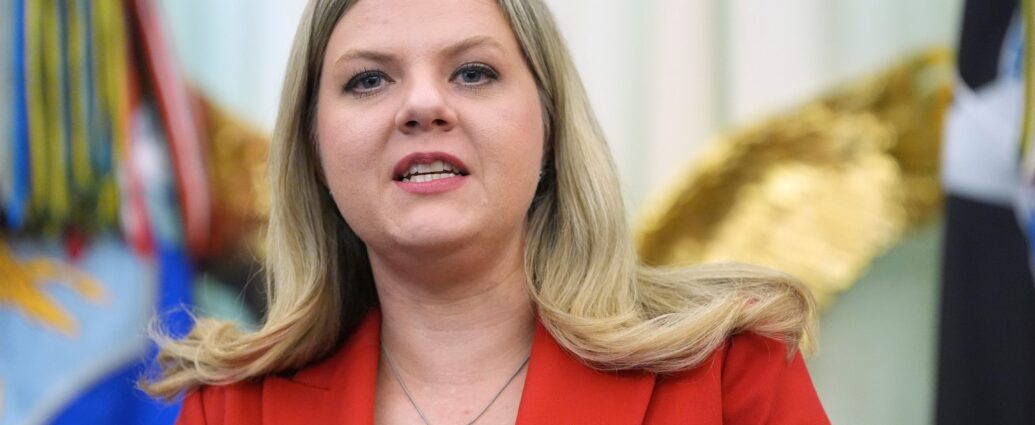
Trump calls his new FDA pick ‘Dr. Heidi.’ Patty Murray calls her a ‘far-right, anti-abortion extremist’
Dr. Heidi Overton, a top White House aide, has been picked to lead the Food and Drug Administration, President Donald Trump announced Wednesday.
Overton is a medical doctor and deputy director of the White House Domestic Policy Council who has worked on several of Trump’s second-term health initiatives. She has become a trusted administration figure and a champion of the Republican president’s goals.
If confirmed by the Senate, she would have to balance a raft of competing priorities, including Trump’s fixations, the anti-regulatory interests of traditional Republicans and the anti-corporate posture of Health Secretary Robert F. Kennedy Jr.
Those challenges dogged the tenure of the previous FDA head, Dr. Marty Makary. He resigned in May, leaving behind unfinished projects such as work on ultraprocessed foods, antidepressants and COVID-19 shots.
Referring to her as “Dr. Heidi” in a Truth Social post, Trump said Overton was a smart and respected “rockstar” who would deliver on his priorities of faster cures, innovation, lower drug prices and more wins for Kennedy’s “Make America Healthy Again” movement.
Kennedy posted on X that Overton has “exceptional judgment, professionalism, discipline and an unwavering commitment to the American people.”
Overton has promoted Trump’s health priorities
Overton attended medical school at the University of New Mexico and has a doctoral degree in clinical investigation from Johns Hopkins University, according to her LinkedIn profile. Before joining Trump’s second administration, she was the chief policy officer at the America First Policy Institute, a conservative think tank.
In recent months, she has appeared with the president to announce major projects, including some of his “most favored nation” deals with drug companies to lower prices to those of other developed countries and his recent vaccine order that sought to split the combined measles, mumps and rubella (MMR) vaccine into three separate immunizations — against the advice of medical groups.
At an Oval Office event to promote that order, she stood by Trump as he falsely suggested the number or timing of vaccines could play a role in rising rates of autism spectrum disorder. Scientific consensus and decades of studies have firmly concluded there is no link.
Overton has been critical of abortion pills and, if confirmed, would be positioned to roll back FDA rules that made them more accessible. U.S. abortion opponents have expressed frustration that the administration has not acted to stem the flow of such pills prescribed online, a situation they view as undermining state abortion bans.
Mifepristone is typically used with misoprostol in medication abortions that make up close to two-thirds of abortions in the U.S. Medical professionals call it “among the safest medications” ever approved by the FDA.
To be confirmed, Overton must seek approval from a narrowly Republican-led Senate and face questions from the Senate Health, Education, Labor and Pensions Committee. Its chair, Republican Sen. Bill Cassidy, a physician from Louisiana, has been a vocal critic of some of Trump’s actions to sow doubt in vaccinations, including the MMR order.
Cassidy posted Wednesday that while he respects Overton’s medical background, he has “strong concerns” about the nomination, mentioning her lack of managerial experience and her participation in the recent vaccine order, which he called “almost disqualifying.”
Democratic senators slammed the nomination.
“Heidi Overton is a far-right, anti-abortion extremist who has no business leading the FDA,” posted Washington Sen. Patty Murray, a committee member.
Makary’s replacement will face challenges he left behind
Before he left the FDA, Makary had drawn complaints from health industry executives and anti-abortion activists. The frustration with him came to a head over the agency’s lack of movement on flavored e-cigarettes. Companies such as R.J. Reynolds are seeking to market to adult smokers, but sweet-flavored vapes have long been blamed for the trend of teenage vaping. FDA scientists have hesitated to endorse those products to curb adult smoking.
Days before Makary’s departure, the agency opened the door to allowing more unauthorized electronic cigarettes and nicotine pouches onto the U.S. market, in a policy change that essentially bypassed FDA experts.
Pharmaceutical companies will be looking for changes at the agency, too, after rejections or reversals of biotech drugs intended for rare diseases. Complaints from biotech companies, investors and patient groups have grown and been taken up by conservative lawmakers.
Makary tried to assuage industry grievances, in part by announcing new programs designed to streamline or accelerate drug approvals. Some of those initiatives, however, have meant new headaches for the agency.
Several of Makary’s deputies also exited the agency.
Dr. Vinay Prasad, the vaccine and biotech chief, stepped down in April following intense criticism from drugmakers, patients and investors. Dr. Tracy Beth Hoeg, who was involved in scrutinizing the safety of antidepressants, COVID-19 vaccines and other widely used therapies, was replaced as FDA’s acting drug center director.
MAHA has high expectations of FDA’s next head
Overton would also need to tend to the priorities of Kennedy’s health movement, some members of which are already skeptical of her.
Kelly Ryerson, an activist critical of pesticides who is known to her supporters as “Glyphosate Girl,” told The Associated Press that Overton parroted pesticide manufacturer Bayer’s talking points in a MAHA roundtable at the White House in April.
“I was stunned by the blatant, undisguised corruption,” Ryerson said.
One major decision for the next commissioner is what to do about peptide regulation. A panel of federal health advisers selected by Kennedy recently recommended easing access to several peptides that are popular with wellness influencers and celebrities, despite warnings from FDA scientists that the chemicals have not been shown to be safe or effective.
The agency recently proposed a rule change that would require food manufacturers to notify regulators before introducing new ingredients or additives into processed or packaged foods. But it is still working with the White House to finalize a first-of-its-kind definition of ultraprocessed foods, which Kennedy blames for elevated rates of diabetes, obesity and other chronic conditions.
Under Kennedy, the FDA has set up extra hurdles for vaccine testing and blocked the publication of research into the effectiveness of COVID-19 shots. Kennedy stood by Trump recently as the president signed the executive order aimed at upending childhood vaccinations in the U.S. despite unprecedented financial and logistical challenges.
The FDA also has an ongoing review of widely used antidepressants, including whether they may increase the risk of autism and other disorders when used during pregnancy. The medicines have long been a target of Kennedy, who was a leader in the anti-vaccine movement before joining the government.
In recent weeks, the agency has been investigating two summertime foodborne illness outbreaks: a cyclospora outbreak linked to tainted iceberg lettuce that has sickened thousands of people and a multistate salmonella outbreak linked to jalapeño peppers.
___
Swenson reported from New York. Associated Press journalist Laura Ungar contributed from Louisville, Kentucky.
___
The Associated Press Health and Science Department receives support from the Howard Hughes Medical Institute’s Department of Science Education and the Robert Wood Johnson Foundation. The AP is solely responsible for all content.
This story was originally featured on Fortune.com

‘Economic D-Day’: Trump threatens economic warfare against countries aiding Iran
US President Donald Trump warned of economic consequences against any country that provided “any type of lifeline to Iran” as the United States looks to resolve a war it began alongside Israel nearly six months ago.
“This will be an ECONOMIC D-DAY,” Trump announced, adding that the US needed all its allies to aid in isolating Iran.
Thousands have been killed in the war, which quickly drew in Gulf nations and shocked global markets as Iran flexed its ability to curb shipping through the Strait of Hormuz, which carried about a fifth of the world’s traded oil before February.
The US and Iran have twice announced ceasefire deals, in April and June, aiming to restore the free flow of shipping through Hormuz on a path towards ending the conflict, but both quickly crumbled even as Israel has largely withdrawn from the fighting.
Trump promises ‘economic warfare, isolation on an unprecedented scale’
In a social media message on Wednesday, Trump promised “Economic Warfare and Isolation on an unprecedented scale,” although details were scant.
“ANY country that allows its financial institutions, businesses, airports, or government entities to provide any type of lifeline to Iran will itself face TREMENDOUS Economic Consequences,” Trump wrote.

Iran Foreign Minister Abbas Araghchi called Trump’s comments an attempt to divert American public opinion from domestic financial problems, including record debt and rising interest rates.
He said Washington’s insistence on policies he described as failed would bring further failures and alienate Iranians.
“America’s economic terrorism threatens the global economy and the national sovereignty of countries around the world,” he said on X.
Trump’s social media threats and announcements do not always get implemented as written, and he did not say what specific steps the US would take against such a country, which would appear to include US allies that have helped mediate peace talks, but he did not identify any.
UAE suspends all trade activities with Iran
On Tuesday, the United Arab Emirates, which hosts a major US military base, said it was suspending all trade activities, commercial exchanges and financial transactions with Iran until further notice.
The step came after the UAE defense ministry said it had detected two missiles launched from Iran that fell into the sea, a report Iran dismissed as baseless.
China buys more than 80% of Iran’s shipped oil, 2025 data from analytics firm Kpler shows, but the US risks retaliation should it engage in further economic warfare with China, a major exporter of items such as vital rare earth minerals to the US
Iran remains open to dialog with the US but does not confuse negotiations with surrender, Mohammad Mokhber, an adviser to Iran’s supreme leader, said on Tuesday, according to the semi-official Fars news agency.
Military pressure and sanctions would not break Iran’s resolve, Mokhber added.
On Tuesday, Trump said no talks were taking place with Iran. A day earlier, Jared Kushner, his son-in-law and special envoy, struck an upbeat tone, saying talks were still underway and “probably more robust” than ever.
Trump wants to seize Iran’s stockpile of highly enriched uranium and is seeking a new, more restrictive agreement curbing its nuclear energy and research programs, to replace one from which he unilaterally withdrew the US in 2018.


Walmart Posts Slowest U.S. Sales Growth in Six Years as Shoppers Pull Back
Walmart just delivered one of the clearest signals yet that American consumers are becoming more cautious.
U.S. comparable sales rose 2.6% in the latest quarter, the weakest increase in six years and sharply below the 4.1% growth Walmart posted in the previous quarter. Wall Street had expected roughly 3.8%.
The last time Walmart’s comparable U.S. sales grew more slowly was the quarter ending January 2020, when the increase was 1.9%.
That matters because Walmart sees more than 150 million customers each week and sells everything from groceries and prescriptions to televisions and clothing. When spending patterns change there, they often say something broader about the American household.
Consumers are still buying necessities. Grocery volumes remained relatively strong, but discretionary spending is under more pressure as higher gasoline and everyday living costs eat into household budgets.
The weakness was also partly technical. New federal rules limiting prices on certain high-cost Medicare drugs reduced pharmacy revenue. Excluding Walmart’s health-and-wellness business, comparable sales would have risen 3.4% — better, but still below expectations.
Online shopping remains the bright spot. Walmart’s U.S. e-commerce sales climbed 24%, although that too slowed from 26% in the previous quarter.
Overall company revenue rose 5.9% to $187.94 billion, and quarterly net income reached $6.37 billion. Walmart also slightly raised its full-year sales and profit outlook, helped by growth in e-commerce and its highly profitable advertising business.
But the consumer message inside the numbers was difficult to miss.
Walmart has already cut prices on more than 7,000 items, and the retailer says it plans to use much of a multibillion-dollar tariff refund to hold down or reduce prices through the end of the year.
That is an unusually aggressive move for a company that already competes primarily on price.
Walmart shares fell about 6% in premarket trading after the report, as investors focused on the sales slowdown and cautious outlook for the coming quarter.
The company still expects to grow this year. What changed is the speed.
For six years, Walmart managed to keep comparable sales growing faster than this. Now even the country’s largest retailer — and one of the biggest beneficiaries when consumers trade down — is seeing shoppers become more selective.
JBizNews Desk | Bentonville, Arkansas
© JBizNews.com All Rights Reserved. Reproduction or distribution without written permission is prohibited.

Bitcoin, Ether Surge As Trump Urges Congress To Pass Crypto Clarity Act
Bitcoin climbed above $70,000 and Ether rose more than 3% after President Donald Trump urged Congress to pass legislation that would establish long-awaited rules for the American cryptocurrency market.
Bitcoin gained 3.4%, while Ether advanced 3.3%. The rally spread across the industry: Coinbase, Strategy and major crypto-mining companies rose between 3% and 10%, while equipment maker Canaan surged roughly 20%.
Trump delivered the message alongside crypto and financial executives at the White House, renewing his pledge to make the United States the “crypto capital of the world.”
The Clarity Act would answer the question that has hung over the industry for years: when is a digital asset a security regulated by the Securities and Exchange Commission, and when is it a commodity overseen by the Commodity Futures Trading Commission?
That distinction determines how tokens may be issued, traded and offered to customers. Clearer rules could make banks and institutional investors more willing to enter the market without fearing that regulators will later classify an asset differently.
The bill remains stalled amid disagreements over ethics provisions intended to prevent presidents and other senior officials from profiting through personal cryptocurrency ventures. The Senate is expected to revisit the legislation in September.
Crypto also benefited from the Treasury Department’s expanded purchases of long-term government debt, which pushed bond yields lower and increased investor demand for riskier assets. Even after the latest rally, however, Bitcoin remains roughly 18% lower for the year.
JBizNews Desk | Washington
© JBizNews.com All Rights Reserved. Reproduction or distribution without written permission is prohibited.

How GLP-1 weight loss drugs are reshaping the healthcare industry
A new report by Wells Fargo spotlights how GLP-1 weight loss drugs are reshaping the healthcare industry by addressing obesity.
Wells Fargo released a report Thursday which notes that much of the American healthcare system has been structured around obesity, given it has become a foundational condition in the country with 40.3% of adults considered obese and 9.4% severely obese.
Usage of GLP-1 drugs surged in recent years, rising over 140% from 2022 to 2024, which had a significant impact on hospital services aimed at treating obesity. In that same timeframe, bariatric surgery volumes fell 34.1%.
MAJOR PBMS TO BOOST PRESCRIPTION DRUG PRICE TRANSPARENCY THROUGH TRUMPRX
“GLP-1s may be marketed as weight-loss drugs, but they’re rapidly becoming one of the most disruptive economic forces in healthcare,” John Teasley, market executive for Wells Fargo Healthcare Banking, told FOX Business. “We’re seeing a medication class with the potential to reshape how providers generate revenue, where investors allocate capital, and how consumers engage with their health.”
The report said that the healthcare system and hospitals in particular are having to adapt to a changing landscape caused by the rise of GLP-1 semaglutide drugs, as obesity patients who previously would’ve undergone surgery after attempting to diet now have a pharmaceutical alternative that is “visible, reversible, and socially normalized.”
AMERICANS SAVE MORE THAN $700M ON PRESCRIPTION MEDICATIONS THROUGH TRUMPRX, WHITE HOUSE SAYS
GLP-1s may also have an impact on cardiology, with a trial showing that their use reduced major cardiovascular events by 20% in overweight or obese adults without diabetes. If that trend prevails at scale, hospitals would see fewer procedures, repeat admissions, complications and other downstream interventions – leading to a sizable reduction in demand for those services.
Other aspects of managing chronic obesity may also evolve with increased use of GLP-1 therapies, with more longitudinal management, outpatient visits, side effect monitoring and medication management. It could also have implications for treating comorbidities driven by obesity, like knee and hip replacements, sleep apnea and metabolic liver disease, the Wells Fargo analysts noted.
“The biggest takeaway from our research isn’t that healthcare is shrinking, it’s that healthcare is being rewired,” Teasley said.
ROUGHLY 23 MILLION AMERICANS TRAPPED IN JOBS THEY WANT TO LEAVE OVER ONE COSTLY FEAR
The report said that the rise of GLP-1 treatments is also reshaping the development strategies of pharmaceutical companies, noting an analysis by Deloitte that obesity drugs are now the largest component of the late-stage pipeline after surpassing oncology treatments for the first time in 16 years.
GLP-1 drugs drove that increase almost exclusively, raising obesity treatments from 1% of the pipeline in 2022 to about 25% now, while oncology slipped to 20% after being at 32% in 2022.
“Obesity therapies have already taken cancer as the pharmaceutical industry’s leading area of investment, reflecting growing confidence that these treatments could improve the health of millions of Americans while fundamentally reshaping one of the country’s largest industries,” Teasley said.
GET FOX BUSINESS ON THE GO BY CLICKING HERE
The Wells Fargo report concluded that the likely winners in the healthcare industry will opt against trying to defend the old model, and instead reposition ahead of it – such as by reallocating capital and talent toward obesity medicine, integrated cardiometabolic care and specialty pharmacy services.

‘Squid has a distinctive odor to it’: Seafood truck crash in Rhode Island creates ‘Squidpocalypse of ’26’
A tractor-trailer rollover sent a truckload of squid spilling into a Rhode Island roadway, leaving a stench as they sat in the road for hours in the summer heat. Local authorities have dubbed it the “Squidpocalypse of ’26.”
It was a warm, sunny day in the coastal town of Narragansett when the spill happened Sunday, and Narragansett Police Capt. Ryan Prest said he was told that the scene “started to smell bad as the squid sat out in the sun for a few hours.”
The fully-loaded trailer was taking the squid to a processing facility out of town when the trailer dislodged and tipped on its side as the driver was navigating a turn, spilling a “substantial portion” of its calamari cargo, the police department said in a statement.
Police responded at 9:27 a.m., and the intersection wasn’t reopened until 5:15 p.m., authorities said.
Video of the scene showed a trailer on its side and massive piles of squid on the road.
“Squid has a distinctive odor to it,” Richard Stevens, a Narragansett resident and fisherman, told WJAR. “It can be very foul smelling, especially if it lands on the road and stays there for awhile.”
Heavy equipment and a dump truck were used to remove the squid, Prest said.
The driver and a passenger in the truck cab weren’t injured, and no other vehicles were involved, Prest said. The Rhode Island State Police Commercial Enforcement Unit is investigating but it’s unclear if any enforcement action will be taken, Prest said.
“We have not issued any citations,” Prest said. “I’m not sure if there will be any citations issued by the state police.”
State police did not immediately respond to a request for comment.
The Narragansett Police Department made light of the situation in a social media post on Wednesday, stating that the town is “still recovering” from the “Squidpocalypse of ’26 — the spill that put ‘slippery when wet’ to shame.”
___
Kelety reported from Phoenix.
This story was originally featured on Fortune.com
Renowned Israeli filmmaker Avi Nesher’s new film to open Haifa International Film Festival
Avi Nesher’s new film, Our Loves, will open the 42nd Haifa International Film Festival, which will take place during Sukkot, from September 26 through October 3.
At the opening-night ceremony, Nesher will also receive the festival’s Lifetime Achievement Award for cinematic excellence and his exceptional contribution to Israeli culture.
Our Loves, which is nominated for 12 Ophir Awards, including Best Film, will come to Haifa following its world premiere in the prestigious Centerpiece section of the Toronto International Film Festival.
The movie is Nesher’s 21st feature and was inspired by true events. It follows seven characters whose lives become intertwined without their realizing it. Each is trapped in an unusual and unsuccessful relationship; some of these relationships are painful as well as comic, and all take unexpected turns.
The seven characters share one conviction: that October 6 – “the day love died” – was the worst day of their lives. But on the following day, as the events of October 7 force them into desperate efforts to survive, each is confronted with revelations about the past and future that had previously remained hidden.

The ensemble cast includes Shalom Michaelshwilli, Maggie Azarzar, Yaniv Biton, Noa Cohen, Daniel Gimpel, Hadas Yaron, Evelin Hagoel, Lena Fraifeld, Sean Mongoza, Kim Or Azulay, Lev Leib Levin, Naomi Aharoni Gal, better known as Nunu, Lior Miller, Elad Turgeman, Amir Banai, Nevo Katan, and Itamar Pinto.
United King Films, SIPUR Studios, Artomas Communications, Zoa Films, Fox Entertainment, and Access Entertainment produced the film, with support from the Rabinovich Foundation, the Gesher Multicultural Film Fund, the Avi Chai Foundation, the Paul Singer Foundation, and Keshet.
Haifa festival director Yaron Shami celebrates Avi Nesher’s illustrious career
“We are proud to open the Haifa International Film Festival with Avi Nesher’s new film and to present him with a Lifetime Achievement Award,” said festival artistic director Yaron Shamir.
“Avi is one of the most consistent, beloved, and highly regarded filmmakers in Israeli cinema across the generations.
Many of his films have become classics that Israeli audiences have warmly embraced.
“Our Loves looks at the pain we all experienced on October 7, but also offers hope, compassion, and the possibility of healing.”
The film will be screened courtesy of United King Films.
The Haifa International Film Festival is supported by the Israel Film Council at the Culture and Sport Ministry, the Tourism Ministry, the Regional Cooperation Ministry, and the Haifa Municipality. ETHOS, the Haifa Municipality’s arts, culture, and sports company, produces it.
Israel’s Syria strategy risks turning Turkey into new Iran – opinion
One question captures the whole Syrian scene: Why does Israel respond to a Turkish presence that differs in kind – not degree – from the Iranian presence with exactly the same military tools?
The difference between the two models is fundamental. Iran’s positioning rested on penetration by militias, irregular supply lines, and an attempt to redraw the demographic map – a project that ran through the Syrian state and ultimately superseded it. Turkey’s positioning is based on a state-to-state partnership: air cover, training for the new Syrian army, and the rehabilitation of bases and airfields. The first deliberately weakened the state; the second requires the state to exist so that Turkey can work through it.
Yet Israel’s response remains the same. Here lies the key to understanding it: Israeli security doctrine classifies a threat not by its legitimacy but by its effect on freedom of aerial movement. A conventional radar operated by a North Atlantic Treaty Organization member restricts Israeli aircraft more than a shoulder-fired missile in the hands of a member of an armed group. By that standard, legitimate partnership and illegitimate infiltration become equivalent – and resurfacing a runway becomes grounds for bombing it.
The raids on Abu al-Duhur lay the equation bare. The strike came hours after a Turkish military delegation inspected a runway under repair, following the precedent set in April at Palmyra, T4 Airbase, and Hama Military Airport. This was not a response to an existing capability; it was an attack on one still taking shape – a logic that kills deterrence in the cradle.
Still, reading Ankara as merely a lawful actor shortchanges the analysis. Turkey has an influence project, not a charitable mission. Its goals include acquiring strategic depth in a neighborhood that has slipped out from under Russian and Iranian tutelage, settling the Kurdish question on its own terms, and securing both a market and a field laboratory for its defense industry. Ankara buys influence with the currency of partnership; Tehran bought it with the currency of infiltration. The same third party pays the bill: Damascus.

Here is the most uncomfortable paradox. The Syria whose airfields are being bombed is not in a declared state of hostility with the country bombing them. A negotiating track under American sponsorship is underway, and discussion of a security agreement – or a return to the 1974 disengagement arrangements – has never stopped. Damascus negotiates over its security in one room while its military infrastructure is destroyed in the field. This contradiction is not at the margin of the story – it is the story, because it precisely measures the gap between sovereignty as rhetoric and sovereignty as capacity. Washington, which opens its doors to the Syrian president, cannot – or will not – restrain Israeli aviation. Its description of the raids as an unjustified escalation demonstrates the limits of its influence, not the absence of that influence.
Is a direct Turkish-Israeli confrontation coming?
Are we heading toward a direct Turkish-Israeli confrontation? Probably not. Ankara’s membership in the North Atlantic Treaty Organization, the deconfliction channels, and its preference for building its presence gradually – because time works in its favor – provide stronger restraints than the temptation to invoke “the Turkish threat” in Israeli electoral politics. The likelier outcome is a war of attrition conducted through messages: slow construction, periodic demolition, and an implicit understanding that personnel will not be targeted.
Three possible trajectories bear watching: a prolonged negative equilibrium; a conditional opening that trades a freeze on heavy Turkish deployments for an end to the strikes and a phased Israeli withdrawal in the south; or a slide toward confrontation triggered by Turkish casualties. Three indicators will determine which course prevails. Will rehabilitation work resume or remain frozen? Will Turkey move from radar installations to an operational air-defense system? Will the negotiating track survive each strike?
Syria today does not have the luxury of choosing its trajectory. Yet, if it manages time well, it may be able to make the cost of turning its territory into an arena higher than the potential returns for every party involved.
Majdi Halabi is a senior reporter at Elaph.com who specializes in the Arabian Gulf and Israeli affairs.

China sentences founder of world’s most-indebted property developer to life in prison for fraud, bribery
The founder of the world’s most-indebted property developer was sentenced to life in prison in China for fraud and bribery – five years after his China Evergrande Group collapsed, roiling the Chinese economy and financial markets.
Hui Ka Yan, 67, was convicted in a court in the southern city of Shenzhen on Thursday and the companies were fined a total of more than $2.3 billion for financial crimes, including inflating the group’s assets and concealing its liabilities that ran more than $300 billion.
“The amount involved is exceptionally large, the circumstances are particularly egregious, and extraordinarily heavy economic losses have been caused,” the court wrote in a statement. “The harm to society is extremely serious. Therefore, severe punishment should be given in accordance with the law.”
Hui, also known as Xu Jiayin, abused his position in orchestrating fraud and misappropriating company assets, the court found.
COURT ORDERS CHINA’S BANKRUPT EVERGRANDE TO LIQUIDATE
Evergrande group was fined 8.82 billion yuan ($1.31 billion) and Evergrande Real Estate Group was fined 7 billion yuan ($1.04 billion).
Hui’s sons, Xu Tenghe and Xu Zhijian, were also sentenced alongside senior Evergrande executives and others linked to the group, according to China’s official Xinhua News Agency. A total of more than 50 individuals were sentenced to imprisonment of between 22 months and 18 years.
Photos released by the court showed a gray-haired Hui standing between two officers in a navy collared shirt as the sentence was announced. He had largely disappeared from public view after Chinese authorities detained him in 2023.
His life sentence is a dramatic end to the career of a man who built one of China’s largest real estate empires in a rags-to-riches story. Born in 1958 into a rural family in central China’s Henan province, he worked in the steel industry in the 1980s before establishing Evergrande, which then prospered during China’s housing market boom. He was one of many businessmen who also gained political influence by joining a major advisory organization, the Chinese People’s Political Consultative Congress (CPPCC).
EMPTY BUILDINGS IN CHINA’S PROVINCIAL CITIES TESTIFY TO EVERGRANDE DEBACLE
The Shenzhen Intermediate People’s Court ordered the confiscation of Hui’s personal property after he pleaded guilty in April to eight charges that included fundraising fraud, illegally taking public deposits, fraudulently issuing securities and bribery.
Chinese authorities cracked down on excessive borrowing in the real estate industry in 2020, triggering a crunch among many developers that brought on a downturn in the property market.
Evergrande, founded by Hui in 1996, expanded aggressively during China’s decades-long property boom, borrowing heavily as it built projects across the country. At its peak, the company became China’s largest developer by contracted sales, while Hui amassed a fortune that made him Asia’s richest man in 2017, with an estimated net worth of more than $45 billion, according to Forbes.
Its collapse helped ignite a broader crisis in China’s real estate sector, where falling home sales, unfinished projects and developer defaults have weighed on economic growth and consumer confidence for years.
CHINA’S EVERGRANDE: WHAT TO KNOW
The fallout also reached millions of ordinary Chinese investors and homebuyers. Evergrande’s inability to repay wealth-management products prompted protests after investors saw savings wiped out, while buyers of unfinished apartments were left uncertain about whether their homes would ever be completed.
Comments by Evergrande homeowners in a social media group included: “All ordinary citizens have paid the cost,” “Imprisonment is meant to protect him. If he comes out, his life is in jeopardy,” and, “What about our money?”
Chinese authorities said revenues were overstated by tens of billions of dollars in 2019 and 2020.
Hui had already faced regulatory punishment before Thursday’s criminal sentence. In 2024, China’s securities regulator fined him roughly $6.5 million and barred him from the country’s securities markets for life over inflated financial results and other violations.
Evergrande’s corporate demise has continued even as Hui’s criminal case moved through the courts.
GET FOX BUSINESS ON THE GO BY CLICKING HERE
A Hong Kong court ordered the company into liquidation in 2024, and its shares were later delisted from the Hong Kong Stock Exchange.
Reuters and The Associated Press contributed to this report.

Democratic Senate candidate El-Sayed’s mother worked for Hamas, Taliban-linked group
The birth mother of Democratic US Senate candidate Abdul El-Sayed worked for a designated terror group that financed Hamas and the Taliban, the Midwesterner first revealed on Tuesday. The information in the report was separately verified by The Jerusalem Post.
El-Sayed was mostly raised by his Egyptian father, Mohamed El-Sayed, and his father’s second wife, Jacqueline. He does not mention his mother – Fatten Fathy Elkomy – often in his campaigns, as she remarried and returned to the Middle East when he was young.
However, the Midwesterner was the first to suggest that this omission might be intentional.
It revealed that for five years (1999-2004) Elkomy worked for the Islamic American/African Relief Agency (IARA). Headquartered in Khartoum, Sudan, with 40 offices throughout the world, IARA purported to work on health care, orphans, and disadvantaged people in areas of conflict.
However, according to a US Department of the Treasury announcement on October 13, 2004, IARA engaged in a joint program with an institute involved in providing assistance to Taliban fighters, and also was responsible for moving funds to the Palestinian territories for use in terrorist activities, notably serving as a conduit to Hamas in one Western European country.

IARA was designated, along with five officials, on the same date.
Subsequently, the Treasury revealed that IARA was tied to Maktab Al-Khidamat (MK), an organization co-founded and financed by Osama Bin Laden and which was the precursor organization of al Qaida.
It also revealed that international offices of IARA provided direct financial support for Osama Bin Laden, and that a former Bin Laden lieutenant served as the director of IARA’s operations in Afghanistan.
In March 2007, the Department of Justice charged IARA-US with a 33-count indictment for illegally transferring funds to Iraq.
Evidence used to secure those convictions in USA v IARA included 945 exhibits detailing phone calls, faxes, wire transfers, tax forms, emails, bank statements and other documents. Within the list of exhibits, filed in U.S. District Court for the Western District of Missouri in May 2010, Elkomy was mentioned 14 times, relating to eight wire transfers, five recorded phone calls, and a IARA transfer request of $24,607.34 to IARA’s Iraq office.
Mohamed Elkomy, her brother (and el-Sayed’s uncle) is also mentioned dozens of times in the exhibits.
Neither Mohamed or Fatten Elkomy were charged or indicted as co-conspirators in the case. No IARA individuals were actually charged with terrorism, but the organization did plead guilty to conspiring to violate financial sanctions to send money to Iraq, and the organization dissolved in 2016.
When interviewed by the St. Louis Post-Dispatch in 2004, El-Sayed’s mother denied any connections between IARA and terrorists, adding that she has “been working there serving orphans and children with at least one deceased parent, and it breaks my heart they’re not going to get any help.”
According to her LinkedIn, she has worked as a psychiatric Nurse Practitioner for Missouri Behavioral Health Services since July 2013.
Who is El-Sayed?
Abdulrahman Mohamed El-Sayed, was born in 1984 in Michigan to Egyptian immigrant parents.
He studied at the University of Michigan, Oxford as a Rhodes Scholar, and Columbia University, where he earned his MD. He also has a doctorate in public health.
He ran unsuccessfully for Michigan governor in 2018 and became nationally known as a progressive/left-wing Democrat. He recently won the Democratic nomination for US Senate in Michigan in August 2026, defeating Rep. Haley Stevens. He will face Republican Mike Rogers in November.
If elected, he would become the first Muslim elected to the US Senate.
Central to his campaign is his criticism of Israel’s conduct in Gaza and a war he describes as genocide.
El-Sayed was condemned for comments he made following an attack on a Michigan synagogue in March, saying, “Hurt people hurt people.”

Portfolio review takes on a new urgency for VCs as AI makes 2024’s great deals look like 2026’s clear mistakes
In Ferris Bueller’s Day Off, Matthew Broderick famously winks straight into the camera: “Life moves pretty fast.”
Life does move fast, but AI might move even faster. I talk to VCs all day, and it recently occurred to me: Though venture capital’s meant to be the long game, AI is moving so quickly that it’s making deals that looked good in 2024, obsolete by 2026.
“No doubt that AI is changing really fast, and it’s changing the half-life of a thesis,” said Eric Archer, cofounder of VC firm Monashees.
So, I’ve been wondering: If you’re an investor right now, what does it even mean to do a responsible portfolio review? How many companies that looked great in 2023 or 2024 are now just toast?
“The two categories that have some amount of insulation are regulated license businesses and businesses with proprietary data that’s difficult to access,” said Kamran Ansari, founder and managing partner at Kapital Ventures, and venture partner at Infinity VC. “Absent those two things, everything else feels exposed.”
Portfolio review is the process in which an investor or firm sits down and assesses the health (or lack thereof) of all the companies they’ve backed. Any portfolio review, in this environment, is necessarily nuanced, said Lily Lyman, managing partner at Underscore VC.
“Portfolio reviews right now aren’t just a question of ‘are you performing?’ or ‘are you not performing?’ Or ‘are you on track or off track?’” she told Fortune. “It’s more like: What track are you on, and what does that mean?”
Lyman says there are essentially four lanes for startups right now: the soaring AI consensus bets, efficient-growth companies, companies with paths to product‑market‑fit in tough industries, and the companies caught in the crosshairs by OpenAI and Anthropic.
“In that fourth bucket, the market’s shifted so much in terms of what’s possible with Claude or any of the models, that [the startup’s] fundamental value prop is no longer as valuable as originally thought,” said Lyman. “So, the question becomes: Do you have something that’s valuable? If so, is it people? Is it a product? Is it distribution? What do you lean into in order to try to recoup value?”
Of course, startups fail all of the time. It’s part of the model and the power law, VC’s golden rule, dictates that there only need to be a few home-run victors. But in the AI bubble, even the winners of a few months ago don’t always stick. Take Perplexity.
“Perplexity is one of those funny companies where it was so molten-lava-hot,” said Ansari. “I don’t think it’s that special anymore because Google caught up extraordinarily fast. Now, their AI-powered search is pretty good. So, why am I going to Perplexity? It’s harder to say.”
Zachary Aarons, cofounder at MetaProp, has been tracking the SaaSpocalypse, and for all software companies, there’s a common thread: You agentify or die.
“The companies that figure out how to agentify their own platform are going to make it because there are certain mission-critical industries, like construction, where they don’t really want to be just screwing around with the foundation model products for everything,” said Aarons.
Ansari referenced an onstage conversation I had at Fortune Brainstorm Tech with private equity titan Robert F. Smith, who told the audience that a small (but real) portion of his software companies, amid AI-fueled changes, no longer have a right to exist. He gets at the key implicit question in all this: What’s normal venture mortality here, and what portion of startups are specifically falling prey to the AI bubble’s speed?
“In my portfolio, I’d say it’s 10–20% in addition [to normal venture dropoff] that sort of feel very vulnerable right now,” said Ansari.
One early-stage VC, who spoke on the condition of anonymity, concurred that about 10% of their portfolio is specifically imperiled by foundation model shifts.
Now, you may be a founder reading this, wondering: Am I in this category? If you are, Ansari had a relatively spicy suggestion: Just return investors’ cash and move on.
“As an investor, I’d welcome more companies saying: ‘you know what, we’re 18 months in, we still have a bunch of the cash, it’s not going to work,’” he said. “‘Why don’t I return like 60, 70 cents of your money on the dollar, and when I have something new, I’ll come back to you to raise money again.’ …That, as an investor, leaves a better taste in your mouth than somebody taking the gas tank to zero and then sending you the inevitable email that says, ‘I tried everything I could. It didn’t work. It’s a zero.’”
For investors right now, it’s probably a good time to take stock, because everything will change again soon enough. And, as Ferris Bueller also says in that famous scene: “If you don’t stop and look around once in a while, you could miss it.”
See you tomorrow,
Allie Garfinkle
X: @agarfinks
Email: alexandra.garfinkle@fortune.com
Submit a deal for the Term Sheet newsletter here.
Joey Abrams curated the deals section of today’s newsletter. Subscribe here.
This story was originally featured on Fortune.com

New York Is America’s Most Expensive City for a Single Adult, Requiring Nearly $159,000 to Live Comfortably
In New York City, a six-figure salary is no longer enough to meet the traditional definition of financial comfort.
A single adult now needs to earn approximately $158,954 a year to cover necessities, afford some discretionary spending and consistently save money, according to SmartAsset’s 2026 analysis of 100 major American cities. That places New York first in the country, narrowly ahead of San Jose, California, at $158,080.
The difference between the two cities is only $874 a year. But the larger comparison is with the rest of the country: a single adult in San Antonio, the least expensive city in the study, needs $83,242—barely more than half of New York’s threshold.
The New York number circulating in some television reports, $124,342, comes from a separate SmartAsset study covering New York State. The statewide figure includes substantially less expensive communities outside the city and ranked New York fourth among states, behind Hawaii, Massachusetts and California.
For New York City itself, the correct figure is nearly $159,000.
SmartAsset did not define “comfortable” as luxurious. It used the familiar 50/30/20 budgeting rule: 50% of after-tax income for necessities, 30% for discretionary spending and 20% for savings or debt repayment.
The basic expenses came from the Massachusetts Institute of Technology’s Living Wage Calculator and included housing, food, transportation, healthcare, taxes and other unavoidable costs. SmartAsset treated those necessities as half of a sustainable budget, then calculated the gross salary required to preserve the remaining 30% for ordinary wants and 20% for financial security.
That arithmetic explains why the number is much higher than the income required merely to survive. A New Yorker earning less than $158,954 may still pay rent, buy food and cover transportation. What becomes difficult is doing all of that while maintaining an emergency fund, saving for retirement, paying down debt and retaining enough money for a life beyond necessities.
The city’s median household income is $81,228, according to the Census data used in the study. That is only 51% of the amount SmartAsset says one adult needs for its definition of comfort. The comparison is not exact—household income can include multiple earners and many residents do not follow a 50/30/20 budget—but it demonstrates how far the city’s typical income has fallen behind its idealized cost structure.
A working family of four requires considerably more: an estimated combined income of $337,875 in New York City. But New York does not rank first for families.
San Francisco carries the highest family threshold at $407,597, followed by San Jose at $402,771. Childcare, larger housing requirements and regional differences in family expenses make the Bay Area more expensive for parents, even though New York demands the highest salary from a single adult.
The distinction reveals that there is no single “most expensive city” for every type of household. New York ranks first for an individual under SmartAsset’s methodology. San Francisco ranks first for a family of four. Manhattan separately carries a cost-of-living premium estimated at 139% above the national average, but that is another measurement covering prices rather than the salary needed under a particular budgeting rule.
For employers, the findings help explain why New York salaries that appear generous nationally may still struggle to attract or retain workers. A $100,000 position is approximately 60% above the median annual earnings of a full-time American worker, yet it falls almost $59,000 short of SmartAsset’s New York comfort threshold.
Businesses feel the difference through wage demands, employee turnover and the difficulty of filling jobs that require workers to live near the city. Employees respond by accepting roommates, commuting longer distances, postponing children, reducing retirement contributions or using more than half of their income for necessities.
That is the real meaning of the ranking. New York has not become a city where everyone must earn $159,000 to remain. It has become a city where a person may need nearly $159,000 before the conventional American budget—half for needs, nearly one-third for living and one-fifth for the future—finally fits.
JBizNews Desk | New York
© JBizNews.com All Rights Reserved. Reproduction or distribution without written permission is prohibited.

STAT+: One of the most consequential years for cancer treatment, ever
This story first appeared in Adam’s Biotech Scorecard, a subscriber-only newsletter. STAT+ subscribers can sign up here to get it delivered to their inbox.
Twenty-four hours later, my brain is still whirling over yesterday’s stunning news from Merck and Moderna about the success of their personalized mRNA cancer therapy in a melanoma late-stage clinical trial.
I posted this on X yesterday but it’s worth repeating here: Between this spring’s Revolution Medicines success with a KRAS-targeted drug and now Merck and Moderna’s success with an mRNA neoantigen vaccine, 2026 will go down as one of the most consequential years in cancer treatment, ever.

Walmart says it will use billions in tariff refunds to keep prices low
Walmart has received nearly $3 billion in tariff refunds and says it will use some of the benefit to help keep prices low for shoppers, while the windfall also gave quarterly profit growth a significant boost.
The company said it “prioritized investment in price” after receiving refunds tied to tariffs imposed under the International Emergency Economic Powers Act, or IEEPA.
The refunds came as Walmart continued leaning into its value proposition. The retailer pointed to more than 11,000 price rollbacks across its U.S. stores during the quarter.
“We’re investing in prices because customers are looking to us for value,” the company said in an earnings release.
WALMART E-COMMERCE SALES SURGE AS CEO TOUTS ‘PRICE, SPEED AND CONVENIENCE’
The tariff refunds also provided a substantial boost to Walmart’s quarterly earnings. Adjusted operating income rose roughly 17% on a constant-currency basis, with the refunds contributing a 750-basis-point net benefit.
Excluding that benefit, Walmart said underlying operating income growth still reached the top end of its previous 7% to 10% second-quarter guidance.
Sales also continued to rise. Total revenue increased 5.9%, while comparable sales at Walmart U.S. grew 2.6%, excluding fuel.
Walmart’s digital businesses posted faster growth. Global e-commerce sales increased 23%, including a 24% gain at Walmart U.S. and 26% growth at Sam’s Club U.S.
Store-fulfilled delivery at Walmart U.S. jumped 40% during the quarter, while marketplace net sales increased more than 50%.
The retailer said stronger sales, improving business economics and continued investment in pricing and technology gave it confidence to raise its sales and operating-income growth guidance for the year.
Walmart generated $19.7 billion in operating cash flow during the period, along with $5.5 billion in free cash flow.
CLICK HERE TO GET FOX BUSINESS ON THE GO
The tariff refunds add another lever to Walmart’s push to hold down prices as it competes for value-conscious shoppers while expanding its higher-growth e-commerce, marketplace and delivery businesses.

Treasury Doubles Debt Buybacks After Long-Term Borrowing Costs Hit 20-Year Highs
The U.S. Treasury is doubling its purchases of older government bonds after a punishing market selloff drove long-term borrowing costs to their highest levels in roughly two decades.
Treasury Secretary Scott Bessent said the department will increase its buybacks of longer-dated securities from $2 billion to at least $4 billion over the next two months. The announcement quickly steadied the bond market, pushing Treasury yields lower and providing relief to stocks.
The move matters far beyond Wall Street. Treasury yields help determine mortgage rates, corporate borrowing costs, auto loans and the interest the government must pay on its rapidly growing debt. When investors demand higher yields to hold Treasury bonds, borrowing becomes more expensive across the economy.
The selloff intensified as the national debt crossed $40 trillion and investors became increasingly concerned about inflation, federal spending and the enormous volume of bonds Washington must sell to finance its obligations.
The buybacks are designed to improve trading in older, less-liquid Treasury securities. They do not erase federal debt or reduce the government’s overall borrowing needs. In practical terms, Washington is buying back difficult-to-trade bonds while continuing to issue new debt elsewhere.
That distinction is important. The intervention can calm a disorderly market, but it does not resolve the underlying arithmetic: the United States continues borrowing faster than revenues are growing, while higher interest rates make every new round of financing more expensive.
For consumers, the immediate benefit could be some relief in mortgage and other long-term borrowing rates if Treasury yields remain lower. But unless inflation, deficits and federal borrowing come under control, the pressure can quickly return.
JBizNews Desk | Washington
© JBizNews.com All Rights Reserved. Reproduction or distribution without written permission is prohibited.
Bessent’s $4 billion bond plan is like ‘rearranging deckchairs on the Titanic given the U.S. national debt of $40 trillion,’ ING says
Good morning. On Fortune’s radar today:
- Bessent’s bond buyback plan is like ‘rearranging deckchairs on the Titanic.’
- Markets: Chill.
- Venezuela wants your money and your drilling equipment.
- Trump calls for “Economic D-Day” against Iran.
- More ships are getting through the Hormuz than we thought.
- Poll: Most Russians want the war with Ukraine to end.
- AI is causing dislocation in the job market.
- It’s a golden era for train robberies, thanks to Covid.
➡️ Did someone forward you this email? If you would like to receive this information directly, every morning before the markets open in New York, sign up here.
This story was originally featured on Fortune.com
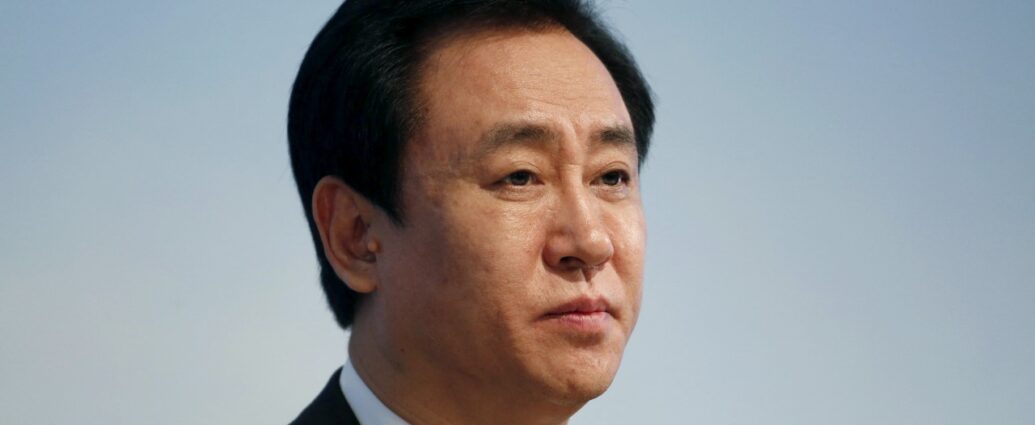




Israel, Colombia announce mutual visa exemption as nations continue to rebuild diplomatic ties
Israel and Colombia are set to mutually exempt one another from requiring visas for travel starting on September 1, the Foreign Ministry announced in a post on X/Twitter on Thursday.
The decision follows talks between Foreign Minister Gideon Sa’ar and Colombia’s Foreign Minister Álvaro Leyva Escobar, as the two countries work to strengthen ties.
שמחים להודיע – בעקבות שיחות בין שר החוץ גדעון סער לשר החוץ של קולומביה אומר בלה אסקובר – על החלטת שתי המדינות לפטור הדדי מאשרות (ויזות) החל מה-1 בספטמבר.
— משרד החוץ (@IsraelHebrew) August 20, 2026
With the election of the new right-wing president of Colombia, Abelardo de la Espriella, Colombia and Israel have restored ties that have been severed for two years under the administration of president Gustavo Petro.
Colombia is an extremely popular destination for Israeli travelers, with tens of thousands visiting the country annually.

Rapid diplomatic developments between Israel, Colombia
Foreign Minister Gideon Sa’ar arrived in Colombia for Espriella’s inaugural ceremony to discuss practical opportunities to deepen cooperation across a range of fields with the intent to translate the renewed diplomatic relationship into a concrete partnership.
On August 10, just three days after the presidential inauguration, the Colombian government announced that it was recognizing Israel’s sovereignty over the Golan Heights, making it only the second country, after the US, to do so.
The decision drew immediate criticism from several Arab countries, which decried the move. Damascus, Riyadh, Doha, and other capitals all raised objections, while Colombia’s Foreign Ministry maintained the necessity of the move, citing “the ongoing regional instability in the Middle East.”
The new government has also announced its intention to move the country’s embassy to Jerusalem.
Following a 7.4-magnitude earthquake that rocked western Colombia last week, the IDF sent a humanitarian delegation called the “Alliance of Brothers” in order to assist in search and rescue efforts.
Colombia’s President, Abelardo de la Espriella, thanked Prime Minister Benjamin Netanyahu for Israel’s support during “these very difficult times.”
Ariella Roitman and Eli Leon contributed to this report.

How much has the national debt grown under President Trump?
The U.S. national debt is rapidly approaching the $40 trillion threshold, and about one-fourth of that debt has been incurred while President Donald Trump has been in office.
Spending by the federal government has accelerated dramatically as the U.S. population has aged, with increased enrollment in Social Security and Medicare pushing spending on those entitlement programs higher and contributing to the growth in federal budget deficits.
The recent rise in interest rates — coupled with the larger national debt — has exacerbated that trend, with interest expenses from servicing the national debt now topping $1 trillion per year.
While presidents and congressional majorities of both parties bear responsibility for the growth in the national debt, President Donald Trump’s first term and the opening half of his second term have seen the debt grow by more than $11.5 trillion combined to date, according to Treasury Department data.
White House spokesman Kush Desai noted Trump’s predecessor in a statement to FOX Business: “Cleaning up Joe Biden’s reckless fiscal mismanagement has been a top priority for the Trump administration, from slashing waste, fraud, and abuse in government spending to accelerating economic growth and getting America’s debt-to-GDP ratio back on the right track.”
US NATIONAL DEBT SURPASSES SIZE OF THE ECONOMY FOR FIRST TIME SINCE WORLD WAR II
The overarching measure of the U.S. national debt used by entities like the Treasury and the nonpartisan Congressional Budget Office is known as the gross national debt, which is nearing $40 trillion.
The figure includes all the U.S. government’s debt, including the obligations held in intragovernmental accounts like the Social Security trust funds. Those debt obligations are excluded in a separate metric known as the debt held by the public, which is currently over $32 trillion.
When Trump’s first term began on Jan. 20, 2017, the gross national debt totaled $19.9 trillion. A variety of tax and spending policies in the first Trump term contributed to the growth in the debt, including the Tax Cuts and Jobs Act as well as massive spending on COVID-19 relief measures.
A White House official noted how the country was facing a historic pandemic during that first term, arguing the crisis accounted for a larger share of the debt growth during that period. The official added that Biden “then recklessly spent trillions on COVID stimulus spending” and pointed to how “Obama economists like Larry Summers correctly warned would only ratchet up inflation, which caused interest rates to rise and just worsen the government’s borrowing costs.”
FEDERAL BUDGET DEFICIT ON TRACK TO SURPASS $2T THIS FISCAL YEAR AS SPENDING OUTPACES REVENUE
The largest U.S. budget deficit in history was incurred in fiscal year 2020 — the last full fiscal year of Trump’s first term — when the federal government ran a more than $3.1 trillion deficit.
That year saw several bipartisan COVID relief measures enacted by Congress and the president to help individuals and businesses, as well as state and local governments, as they dealt with the economic toll of the pandemic.
At the end of Trump’s first term, the gross national debt grew by over $7.8 trillion and stood at over $27.7 trillion as of Jan. 20, 2021, when Biden’s term began. Over the next four years, the gross national debt grew by more than $8.4 trillion as additional COVID relief measures were enacted, and Democratic majorities advanced Biden’s American Rescue Plan Act.
SOCIAL SECURITY’S MAIN TRUST FUND FACES DEPLETION IN 2032, TRIGGERING BENEFIT CUTS
When Trump’s second term began, Treasury Department data showed the gross national debt totaled $36.2 trillion as of Jan. 21, 2025, the day after his second inauguration.
The most recent data shows that as of Aug. 14, 2026, the gross national debt had risen to more than $39.9 trillion — an increase of over $3.7 trillion in the second Trump term to date. Higher spending on entitlement programs and debt interest, as well tax cuts that were enacted under the One Big Beautiful Bill Act and tariff refunds, contributed to the higher debt.
GET FOX BUSINESS ON THE GO BY CLICKING HERE
Taken together, the more than $7.8 trillion in debt from the first Trump term and the $3.7 trillion in debt incurred to date in the president’s second term combine to total about $11.5 trillion in debt during his time in office.

Walmart e-commerce sales surge as CEO touts ‘price, speed and convenience’
Walmart’s e-commerce sales grew in the second quarter across its major business segments.
Global e-commerce sales rose 23%, led by store-fulfilled pickup and delivery and its online marketplace, according to the company’s Q2 earnings report released Thursday.
The gains were even stronger in the U.S., where e-commerce sales increased 24%, with strength in store-fulfilled delivery, advertising and marketplace.
WALMART GOES NUCLEAR IN FIRST-OF-ITS-KIND POWER DEAL FOR RETAIL GIANT
Walmart President and CEO John Furner pointed to the retailer’s online growth as a sign that customers are responding to its “price, speed and convenience.”
“Our team delivered another good quarter, and we continue to make steady progress on the long-term value drivers of our business,” Furner said in a statement. “Our multi-year growth in e-commerce is evidence that customers are choosing Walmart because we deliver price, speed, and convenience across a broad assortment.”
He added, “At Walmart, they can have it all.”
Sam’s Club U.S. — a major division owned and operated by Walmart — also saw strong e-commerce growth, with sales up 26%, driven by continued growth in club-fulfilled pickup and delivery, according to the report.
WALMART, SAM’S CLUB SLASH PRICES ON THOUSANDS OF PRODUCTS AS TRUMP SAYS MOVE CAME AT HIS REQUEST
Walmart International also posted strong e-commerce growth, with e-commerce sales rising 19%, driven by store-fulfilled pickup and delivery.
Walmart reported revenue of $187.9 billion, up 5.9% from a year earlier, and raised its outlook for the fiscal year.
GET FOX BUSINESS ON THE GO BY CLICKING HERE
“Our business model is only getting stronger and more durable, and we’re pleased to raise our guidance for the year,” John David Rainey, Walmart Inc. executive vice president and chief financial officer, said in a statement.
Iranian woman sentenced to three years in prison for comment on Netanyahu social media post
Azar Yahu, a 39-year-old Iranian woman first arrested by the Islamic Revolutionary Guard Corps (IRGC) in March, was sentenced to three years in prison for commenting on a social media post by Prime Minister Benjamin Netanyahu, multiple human rights groups reported.
Branch 4 of the Revolutionary Court in Mashhad sentenced Yahu to three years in prison, with one year to be served and two years suspended.
She was reportedly charged with “cooperation with Israel” over the single comment, according to information received by the Hengaw Organization for Human Rights.
The Iranian legal advocacy network Dadbaan reported that she was also charged with “acting against national security” for using heart stickers on Instagram posts by US President Donald Trump and Netanyahu, as well as for allegedly expressing joy over the killing of Ayatollah Ali Khamenei.
Yahu was denied all outside contact in detention
During her detention before the trial, Yahu was denied access to outside contact, including with her family, after she allegedly attempted to publish a statement about the conditions of her detention, according to Human Rights Activists News Agency and Iran International.

Dadbaan reported that she remained in detention at the Central Prison of Mashhad despite posting bail, after security officials and prison authorities allegedly obstructed her release.
Sepideh Gholian, an Iranian human rights activist and former political prisoner who was released in June, claimed that Yahu was being held in isolation in a ward “where conditions are inhumane.”
“The cell is locked 24 hours a day, and there is no possibility of movement to other cells. Inhumane conditions mean that hygiene is not observed, there is no proper ventilation, and they are deprived of a kitchen and healthy and basic food. Inhumane conditions mean that you are considered a prisoner of some rank, and if you protest, they will send you to solitary confinement,” Gholian claimed, according to the Persian magazine Iran Emrooz.
Outrage after Jewish custodian of tomb of Esther, Mordechai in Iran faces antisemitic abuse
Nejad Rassad, one of only a few dozen Jews remaining in Hamadan in western Iran, was subjected to antisemitic harassment by an Uzbek national outside the Tomb of Esther and Mordechai, according to footage of the incident circulated by Iranian media this week.
The individual was identified by Independent Persian as Bakhtavar Qazaqov, who later published a video apologizing to the Iranian people for the incident.
بختاور قزاقاف،گردشگر ازبکستانی با انتشار ویدیویی از گفتگوی توهینآمیز با یک مرد کلیمی سالخورده در آرامگاه استر و مردخای همدان،باعث خشم کاربران ایرانی شد
مرد ازبکی ویدیوی توهینآمیز را حذف کرد و از مردم ایران عذرخواهی کرد و گفت نمیدانسته ایرانی ها تا این حد از یکدیگر حمایت میکنند pic.twitter.com/YoAjchEq0m— Leila Arya👑 (@Leila_Arya) August 19, 2026
“You [Jews] consider all of humanity to be animals and your servants,” Qazaqov told Rassad, the mausoleum’s custodian, in a video he recorded.
Qazaqov also questioned Rassad about how many Jews live in Hamadan and replied, “Thank God,” when Rassad answered that there were very few left.
The Uzbek national also told Rassad that he had appeared in court in his home country after attacking a Jewish man, alleging that he expressed regret before the judge and pledged to “never beat a dog again.”

Outrage erupts on social media
Following significant outrage on social media over the interaction, Qazaqov posted an apology video and claimed he had returned to the tomb to personally apologize to Rassad.
گردشگر ازبکستانی پس از واکنش ایرانیان به ویدیوی جنجالی خود عذرخواهی کرد
ویدیوی منتشرشده از سوی یک گردشگر ازبکستانی که در جریان گفتوگویی با یک شهروند ایرانیِ یهودی، حاوی اظهاراتی توهینآمیز و تحقیرکننده بود، با واکنش گسترده کاربران ایرانی در شبکههای اجتماعی روبهرو شد.
این… pic.twitter.com/0LL2AbFQkO
— سهند ایرانمهر (@sahandiranmehr) August 18, 2026
“As your fellow citizen, I apologize to you for having shown disrespect. I apologize to all the people of Hamadan and to all the dear people of Iran, as your fellow countryman,” he said.
Independent Persian noted that Qazaqov appeared to have some relationship with Iranian diplomats in his home country. In June, he appeared in photos gifting a portrait of Ayatollah Ali Khamenei to Hassan Safarkhani, the cultural relations adviser at the Islamic Republic of Iran’s embassy in Tashkent.
In an Instagram post, Qazaqov also claimed that he had spoken with Safarkhani about “Iran’s historical attractions, rich culture, and tourism potential” and promised to make more videos touring Iran.
Rassad, a former teacher, was notably interviewed by The New York Times in 2000, where he refused to comment on the arrest of 13 Jews from his community that authorities alleged were spying for Israel. At the time, he was one of only 35 members of the Jewish community remaining in Hamadan.
New Ethiopian dams reignite Nile dispute as Egypt, Ethiopia vie for regional influence – analysis
Ethiopia’s plans to build three additional hydropower dams on the Blue Nile have reopened one of Africa’s most persistent geopolitical disputes, less than a year after Addis Ababa formally inaugurated the Grand Ethiopian Renaissance Dam (GERD) in September 2025.
For Egypt, the issue remains one of national water security. For Ethiopia, it is tied to sovereignty, electricity generation and economic development. The latest confrontation is unfolding in a regional landscape that looks increasingly different from the one in which the GERD dispute began more than a decade ago.
The Horn of Africa has become an arena where Nile politics intersect with competition over Red Sea access, ports, military partnerships and the growing involvement of Middle Eastern powers. Egypt has strengthened relations with several of Ethiopia’s neighbors, while Turkey, Israel, Saudi Arabia and the United Arab Emirates have expanded their political, economic and security footprints across Somalia, Somaliland, Sudan, Eritrea and Ethiopia.
That does not necessarily mean Cairo and Addis Ababa are moving toward direct military confrontation. The emerging pattern is one of diplomatic pressure, strategic positioning and possible proxy competition—a distinction made from different perspectives by experts in Egypt and Ethiopia.
Recent Egyptian statements have become markedly firmer. Cairo maintains that new upstream projects should not proceed without prior notification and coordination, while Ethiopian officials argue that the country has the right to develop water resources originating within its territory. Egypt depends on the Nile for nearly all its freshwater, and the Blue Nile supplies approximately 85% of the water reaching the country.

Dr. Walid Kazziha, a political scientist at the American University in Cairo, described the latest phase as serious but still largely contained within diplomatic and legal channels.
“The Egyptian reaction is … limited to making statements [and] focusing on the legal violations that the Ethiopian action may involve under international law. There are no direct military tones to the Egyptian reaction,” he told The Media Line.
Egyptian warnings ramp up
Egyptian warnings sharpened during the summer. On July 13, Foreign Minister Badr Abdelatty rejected reports of additional unilateral construction on the Blue Nile and said Egypt reserved “the right to legitimate self-defense in accordance with the rules of international law.”
An unnamed Egyptian government official told the state-run Middle East News Agency on Aug. 16 that Cairo had “several means at its disposal” to protect its Nile interests and would not permit any country to control the river’s flow to downstream states.
Addis Ababa views the dispute through a fundamentally different political and legal lens.
Dr. Gashaw Ayferam Endaylalu, a senior researcher specializing in Nile hydropolitics and hydropower development at Ethiopia’s Institute of Foreign Affairs, said Ethiopia considers development of the river a sovereign right and an economic necessity.
“From the Ethiopian perspective, Ethiopia has a sovereign right to utilize the water resource of the Nile,” he told The Media Line.
“Ethiopia has a legal right, a sovereign right, to utilize its water resource for development purposes,” he added. “Because Ethiopia is an agrarian-based economy, food security is the main problem for Ethiopia. Water scarcity is the main problem for Ethiopia. Energy scarcity or energy poverty is also the main problem.”
The disagreement extends beyond the technical operation of dams. It also concerns which legal and political framework should govern the river.
The Nile River Basin Cooperative Framework Agreement entered into force in October 2024 after six countries—Burundi, Ethiopia, Rwanda, South Sudan, Tanzania and Uganda—ratified it. South Sudan supplied the sixth ratification required for the treaty to take effect.
The agreement sets out principles including equitable and reasonable water use, avoidance of significant harm, data exchange and notification of planned measures. It also envisages a permanent Nile River Basin Commission. Egypt and Sudan did not ratify the agreement and are not bound by it, leaving a fundamental divide between upstream and downstream interpretations of the river’s governance.
Gashaw said Cairo’s reliance on the language of historical and existing water rights lies at the center of the disagreement.
“Those things [the claims of historical and existing water rights] are not acceptable since Ethiopia has also historical and territorial claims connected to the Nile,” he said.
For Gashaw, the Nile is “a development issue and a sovereignty issue,” rather than a matter that should be considered exclusively through a national-security framework.
The argument no longer stops at the riverbank.
Egypt’s expanding security relationships in the Horn have become part of how Addis Ababa interprets Cairo’s strategy. Egypt signed a security agreement with Somalia in 2024 and subsequently sent military aid to Mogadishu during a period of acute tension between Somalia and Ethiopia over Addis Ababa’s attempt to obtain access to the sea through Somaliland.
Turkey mediated the dispute throughout 2024, culminating in the Ankara Declaration on Dec. 11. Ethiopia and Somalia affirmed each other’s sovereignty and agreed to negotiate Ethiopian commercial access to the sea under Somali authority.
The countries restored diplomatic relations in January 2025 and opened technical negotiations the following month, although no final sea-access agreement has been announced.
Gashaw described those developments as part of an Egyptian effort to build pressure around Ethiopia.
“Diplomatic and military encirclement is one of the strategies Egypt is using to isolate Ethiopia,” he said. “Egypt is trying to create an alliance with Ethiopia’s neighbors, and Ethiopia is doing the same by diversifying partnerships as well.”
Cairo has presented its regional partnerships as serving bilateral security, Red Sea stability and Egyptian national interests. Their geography is strategically important to Ethiopia: Eritrea, Sudan, Somalia and Djibouti surround much of its route toward the Red Sea and Gulf of Aden, while landlocked Addis Ababa has made access to the sea an increasingly important objective.
Egypt has also expanded military cooperation with Eritrea and secured contracts to develop Djibouti’s ports and later participate in their management, The National reported on Aug. 17.
Other countries are also shaping the strategic environment surrounding Egypt and Ethiopia.
Israel’s recognition of Somaliland
Israel formally recognized Somaliland in December 2025, a decision sharply opposed by Somalia and Turkey. Ankara, already one of Mogadishu’s most important security partners, has expanded its presence through military cooperation, energy agreements, planned offshore drilling and preparations for a spaceport in Somalia.
Gashaw described Israel and Turkey as increasingly important competitors in the Red Sea and Gulf of Aden.
“Israel is also projecting power from the Mediterranean Sea to the Indian Ocean. So the main competition in the Red Sea and Gulf of Aden is between Israel and Turkey,” he said.
He argued that Israel’s recognition of Somaliland was partly intended to establish a presence overlooking the Gulf of Aden.
The Horn is also being drawn into growing competition among Gulf states. Reuters reported on Feb. 14 that the Saudi-UAE rivalry, initially centered on Yemen, had spread across the Red Sea into Somalia, Sudan, Ethiopia, Eritrea and Libya.
The UAE has built influence across Sudan, Somalia, Ethiopia, Eritrea and Djibouti through multibillion-dollar investments, diplomatic relationships and military support. Saudi Arabia, meanwhile, has increasingly aligned with Egypt, Turkey and Qatar.
These relationships do not produce a clean division into fixed blocs. Ethiopia maintains relations with competing powers, including the UAE and Turkey, while Egypt works with countries that may oppose one another elsewhere. A government may be a partner in one theater and a competitor in another.
Gashaw described Ethiopia as pursuing a “multi-vector foreign policy” based on engaging competing regional powers while avoiding membership in a formal alliance directed against Egypt.
Within that fragmented system, proxy competition appears more plausible than a conventional Egypt-Ethiopia war.
“I don’t think there will be a conventional open war between Ethiopia and Egypt for different reasons,” Gashaw said. “Instead … maybe there might be [a] proxy war or proxy competition.”
He predicted “geopolitical competition between the two countries” across Africa and said they would compete for influence over both the Red Sea and the Nile.
Despite viewing Egyptian strategy differently, Kazziha reached a similar conclusion about the immediate danger of direct conflict.
“Up to this point the issue is limited to [an] exchange of unpleasant statements, but [it] has not crossed into anything more serious,” he said.
Kazziha said Egypt may eventually seek intervention from President Donald Trump’s administration to restrain Ethiopia’s ambitions.
“Trump has in the past sent comforting signals to Sissi, but has not taken any serious steps toward mediation,” he said.
The United States has intervened before. During President Trump’s first administration, Egypt, Ethiopia and Sudan held negotiations in Washington with the US Treasury and World Bank over the filling and operation of the GERD. The talks produced a draft agreement that Egypt initialed in 2020, but Ethiopia did not sign it.
Kazziha described the current confrontation as “a war of words” that could invite American intervention before it becomes more serious.
Gashaw said the competing interests surrounding the river make a decisive turn toward either sustained confrontation or lasting cooperation unlikely.
“So, I don’t think conflict will dominate cooperation, even [as] I don’t think cooperation will dominate conflict,” he said. “Rather, conflict, competition, and cooperation will coexist in the Nile River Basin.”
Sister of missing Haymanut Kasau accuses Shin Bet chief of refusing to act in search
Yeros Kasau, sister of Haymanut Kasau, who has been missing for more than 900 days since disappearing in Safed in 2024 at age nine, hit out at Prime Minister Benjamin Netanyahu and Shin Bet Chief David Zini for failing to summon the will to find her sister.
“When there is a will, we saw that things can indeed be done,” said Yeros in a sit-down with her father on Maariv’s Education on the Agenda podcast.
“We saw that others were found within two days,” she said in reference to the Israeli nationals Mali and Liel Yahalomi who went missing in Vienna on August 9 and were tracked down to Buenos Aires, Argentina, a week later.
“When there is no will, nothing gets done. Here is Haymanut – 904 days, and they haven’t found her. I want to ask them: What do we need to do so that you will have the will to bring her home?”
Yeros, who recently completed her National Service in the shadow of the searches for her sister, called out Zini in particular, saying, “He has the ability to bring my sister back to me. That is what we are asking of him. I don’t want to lose hope.”

Kasau family continues the fight after 900 days
The Kasau family continues to fight so that the search for her and the struggle to bring her back do not fall off the public agenda.
Haymanut, nine years old at the time of her disappearance, has been missing since she was last seen in a Safed absorption center office in February 2024.
“Nine hundred and four days she hasn’t been home,” Yeros said.
“She deserves to return home and live her life as other girls live. She deserves to study at school, to play with friends. My parents deserve to hug their child, and we deserve to hug our sister.”
Family slams government, requests establishment of Special Investigative Team
The family previously slammed the government, threatening to sue the Aliyah and Integration Ministry for “doing nothing,” and denying that any real progress was being made by Israel Police in the investigation despite it publicly claiming the contrary.
A statement released by the family in June in response to police failures in the investigation concluded that, “The only way to achieve a breakthrough is the immediate establishment of a joint Special Investigative Team that includes Shin Bet elements. Only a combination of the technological and intelligence capabilities of the Israel Security Agency (Shin Bet) can solve this mystery and bring Haymanut home.”
Haymanot’s parents, Benchi and Tesfaye Kasau, also addressed the discovery of the two women who went missing in Vienna, saying that alongside their joy that the case ended safely, they could not help but compare the efforts invested in that search with the handling of their daughter’s case.
“After Shabbat ended, we received the happy news that Mali and Liel Yahalomi had been found safe and well. Once again, a happy ending, except it is not our happy ending. Our Haymanot has been away from us for 902 days. 902 days have passed since our little daughter was abducted.
“We are once again asking Israel Police to transfer the investigation into Haymanot’s abduction to the Shin Bet, and that Police Commissioner Insp.-Gen. Danny Levy and Lahav 433 head Commissioner Meni Binyamin, who have failed to find any lead in the investigation, transfer the case to the Shin Bet because our girl is still not here.”
Jonah Davidov and Batya Giladi contributed to this report.

Trump Set to Cut Canada Auto Tariffs to 15% in Trade Deal
The Trump administration is preparing to reduce tariffs on Canadian-made cars and trucks from 25% to 15% as part of a broader trade agreement aimed at ending the escalating economic fight between the United States and Canada.
The White House imposed a 25% tariff on foreign-made vehicles last year as part of President Donald Trump’s effort to move automotive manufacturing into the United States. Under the proposed Canadian deal, vehicles assembled in Canada would receive the lower 15% rate, with additional reductions possible based on how much of each vehicle was produced in the United States.
Canada is pressing for a 10% tariff, meaning the final automotive terms remain under negotiation. Officials could also postpone the issue until the wider review of the U.S.-Mexico-Canada Agreement if the two sides cannot settle the details now.
The distinction matters because the North American auto industry does not operate neatly within national borders. Engines, transmissions and other components can cross between the United States and Canada several times before a completed vehicle reaches a dealership. A tariff imposed at the border can therefore raise costs throughout the supply chain, including for vehicles carrying American-made parts.
The proposed agreement could also reduce U.S. tariffs on Canadian steel and aluminum from 50% to 25%, although the lower rate would reportedly apply only within an annual quota. Canada, in return, would remove or reduce retaliatory measures affecting American products.
For consumers, a 15% tariff would still add substantial cost compared with the largely tariff-free North American market that existed previously. But it would reduce the risk of even steeper vehicle price increases and provide automakers with greater certainty over where to build and source parts.
The agreement has not yet been finalized. Trump temporarily suspended a new round of 50% tariffs covering approximately $20 billion in Canadian goods, but that pause expires Saturday unless the two governments complete the deal or extend negotiations again.
JBizNews Desk | Washington
© JBizNews.com All Rights Reserved. Reproduction or distribution without written permission is prohibited.


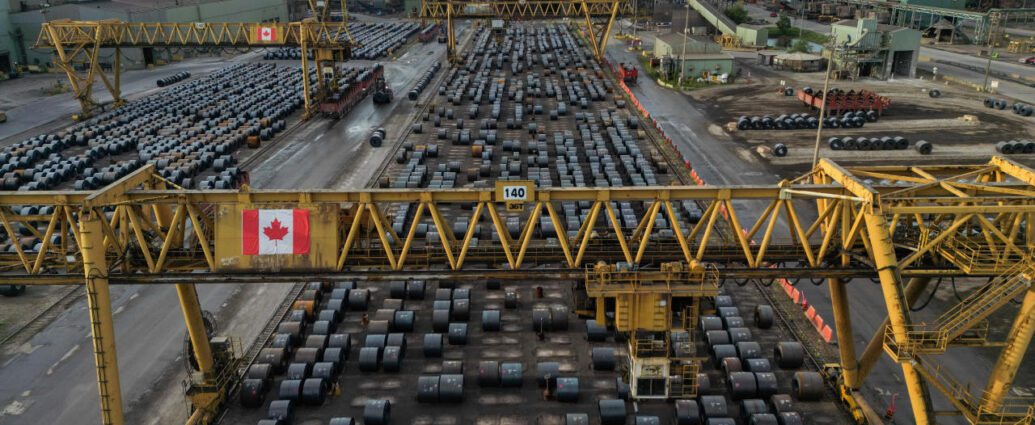


Movie theater group reverses course, urges California AG to settle $110B Paramount-Warner Bros lawsuit
Cinema United President and CEO Michael O’Leary and board Chair Mike Bowers reversed the movie theater trade group’s position Tuesday in California’s federal antitrust fight over Paramount Skydance’s $110 billion acquisition of Warner Bros. Discovery.
They urged Attorney General Rob Bonta and Paramount CEO David Ellison to negotiate because they said prolonged uncertainty threatened box-office momentum and the entertainment industry.
O’Leary and Bowers said the industry’s recovery depended on the two sides discussing a resolution with protections for theaters and moviegoers.
“For many in our industry, the current environment is marked by disruption and uncertainty. That is why we believe that it is incumbent upon both of you to meet in good faith to discuss a resolution that would provide robust protections and serve the entire industry. In fact, it is the next logical step,” O’Leary and Bowers said.
Cinema United explained its reversal in a statement to Fox News Digital Wednesday, saying concerns about consolidation remained, but settlement talks represented the next opportunity to secure protections for theaters.
“Despite our legitimate concerns about industry consolidation, Cinema United, on behalf of our executive board and the entire exhibition community, yesterday called for the AGs and Paramount to meet and discuss (a) settlement,” a Cinema United spokesperson said.
“Since the outset, we have been open to steps that will protect the exhibition industry. This is the next step in that process to ensure a thriving industry for generations to come.”
California Republican Party Chairwoman Corrin Rankin told Fox News Digital Wednesday that Bonta should enter negotiations, accusing Democrats of using lawsuits and regulations that increased costs and drove businesses from the state.
“Democrats keep writing the same bad script, and Californians are stuck paying the price in higher rent, gas and grocery bills. Their endless politically-motivated lawsuits, taxes and red tape drive jobs and opportunity out of California while making life harder for the families and businesses who stay,” Rankin said.
Bonta told reporters Tuesday that his office welcomed theater owners’ views but maintained that the proposed transaction violated the law, according to Reuters.
“The fact remains that this proposed merger breaks the law. It will lead to job loss. It will lead to wage cuts. It will lead to higher prices for consumers to go to the movies or to watch cable television,” Bonta said.
Paramount had taken the opposite position in a July statement to Fox News Digital, blaming the state challenge for prolonging the industry’s difficulties.
“Delaying this transaction will only harm entertainment workers who have already suffered over recent years as technology has disrupted their livelihood and cost California tens of thousands of entertainment jobs,” a Paramount spokesperson said.
Republican attorney general nominee Michael Gates responded to Cinema United’s call for negotiations by criticizing Bonta’s lawsuit and warning that continued litigation could threaten California entertainment jobs.
CNN STAFFERS BRACE FOR PARAMOUNT CEO’S POTENTIAL PLAN TO LAUNCH EDITORIAL BOARD TO OVERSEE NETWORK
“Bonta should accept Cinema United’s invitation and come to his senses. Frankly, Bonta should drop the lawsuit all together,” Gates said in a statement to Fox News Digital.
Bonta’s office told Fox News Digital the office had previously investigated potential Warner Bros. purchases by either Netflix or Paramount.
“The lawsuit against Paramount resulted from clear-cut antitrust analysis, based on the facts and the law,” Bonta’s press office said.
CLICK HERE FOR MORE COVERAGE OF MEDIA AND CULTURE
Cinema United said it represented 30,000 U.S. movie screens and had previously supported the coalition of 12 states seeking to block the acquisition. The group requested enforceable safeguards requiring Paramount to maintain or expand wide theatrical releases and exclusive theater windows, prevent higher film rental terms, preserve theaters’ ability to book titles without onerous conditions and guarantee continued access to both companies’ film catalogs.
The reversal came as domestic box-office receipts had reached $6.8 billion as of Wednesday, nearly 20% above the same period in 2025. Cinemark also joined AMC Theatres and Regal Cinemas in supporting an expedited resolution, while the Directors Guild of America and IATSE had urged Bonta and Ellison to negotiate or advance the trial.
GET FOX BUSINESS ON THE GO BY CLICKING HERE
The antitrust trial is scheduled to begin March 2, 2027. Paramount asked a federal judge Monday to require the states and the Writers Guild of America to post a $1.88 billion bond, saying it faced a $7 million daily fee after Sept. 30.
Israel and Colombia announce visa exemption, Trump declares ‘Economic D-Day’ on Iran
New episodes every Sunday-Thursday.
Listen and subscribe wherever you get your podcasts.
For more news, analysis, and the latest updates, head to jpost.com.
Headlines edited by Shir Perets.
Hosted and produced by Gadi Zaig.
Nearly three-quarters of Arab-Israelis want new political leadership ahead of elections, poll finds
Nearly three-quarters of Arab respondents believe their community urgently needs new public figures and political leadership to represent it, according to a new survey published Wednesday amid growing divisions in Arab politics ahead of the Knesset elections.
The survey, conducted by the Afkar Institute among 402 participants from the Arab sector, found that 74% of respondents believe the community urgently needs new leadership to represent it and meet its expectations.
The findings come as the political system within Arab society is increasingly focused on the approaching elections, against the backdrop of disputes and divisions among the Arab parties.
According to the survey, 64% of respondents strongly or very strongly agreed that their personal trust in public and political figures is lower than it was in the past.
A similar picture emerged regarding younger members of Arab society. Some 61% of respondents said the younger generation is less willing than before to trust people holding public office.

Trust in political leadership declines
The most striking finding concerns the desire for a change in the individuals leading the community. Seventy-four percent of respondents said Arab society urgently needs new public figures and leadership to represent it.
The figure may indicate that criticism is directed not only at the specific conduct of the Arab parties, but also at the figures identified with the existing political establishment.
Of the 402 respondents, 45% had an academic education, something the poll’s organizers said was a relatively high proportion of academics in the sample, giving significant representation to the views of the educated segment of Arab society.
The findings were published as questions surrounding the future of the Arab parties, including whether they will run together or separately in the elections, continue to dominate political discussion within Arab society.
The crisis of confidence reflected in the survey could become a significant factor in the election campaign, including with regard to voter turnout and the ability of the current leadership to mobilize public support once again.

STAT+: Capricor Therapeutics’ Duchenne treatment is heading for an FDA rejection
This story first appeared in Adam’s Biotech Scorecard, a subscriber-only newsletter. STAT+ subscribers can sign up here to get it delivered to their inbox.
Capricor Therapeutics is trying to stave off the Food and Drug Administration’s near-certain rejection of its cell therapy for Duchenne muscular dystrophy by submitting results from an open-label extension of its failed Phase 3 study.
It’s a stall tactic. Nothing more. The only option left for Capricor to secure approval of its treatment, called deramiocel, is to conduct an entirely new, randomized clinical trial.



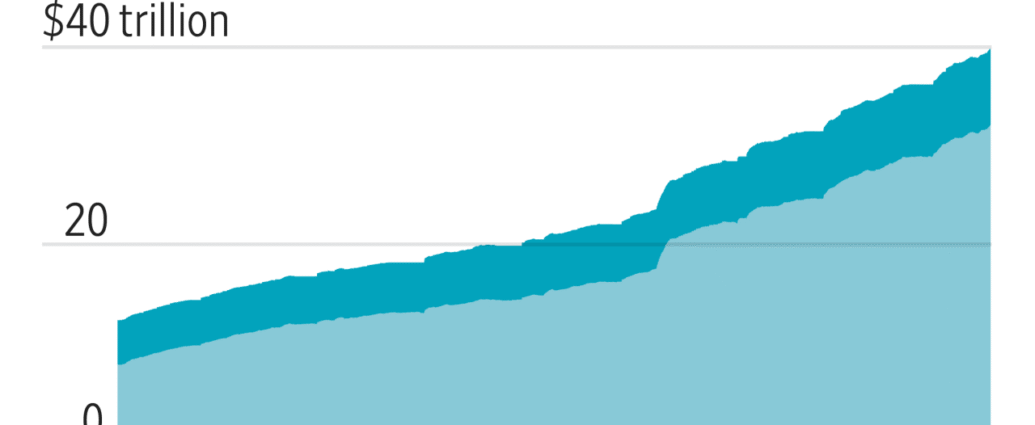

Knock expands bridge loan services to Texas

In 40 years as a founder-CEO, Michael Dell turned his dorm-room PC company into a tech giant. Can he cash in on the AI boom?
It’s hard to get a splashy sound bite out of Michael Dell, even if you tee him up for one. When asked how big a growth opportunity the AI wave could be for his namesake company, Dell Technologies, the founder and longtime chief executive doesn’t offer up any pithy one-liners but instead ruminates in real time.
“It feels every bit as big as previous waves, but probably bigger,” he says, pondering the question, and then adds, “You know, maybe quite a bit bigger.” He takes another brief pause, reconsiders his own words, and delivers a most inconclusive conclusion: “I don’t know for sure. Nobody knows.”
We’re seated in a conference room at Dell Technologies’ headquarters just outside Austin, where the temperature has hit 88° F in early March. Dressed in dark slacks and a navy blue denim button-down (Texan for business casual, no matter the season), Dell has just emerged from a photo shoot that he tolerated but clearly didn’t relish. It’s not that he isn’t on board with being the name and face of his company. That’s been true for a while—40 years, to be exact. He remains Dell Technologies’ biggest believer—and biggest shareholder, with 53% of the $79 billion company’s stock under his or his wife Susan’s name. But he’s not a natural-born showman. Never was. In fact, he seems to go out of his way to not put on a performance—even as he’s embarking on what could be his greatest act yet.
Unlike some other tech CEOs, Dell doesn’t do bombastic declarations or colorful antics; he doesn’t have a side hustle that involves blasting himself into outer space. Despite having spent his entire adult life in the public eye, he is measured, analytical, and almost intentionally unexciting. So his reluctance to put a ceiling, or even a floor, on what generative AI could mean for his company is not surprising.
But while Dell may prefer to hedge, the market isn’t hiding its exuberance. Just a few days before our interview, on March 1, Dell Technologies’ share price leaped 38%, hitting an all-time high above $131 after the company reported earnings that beat analyst expectations. The announcement generated plenty of excitement about demand for Dell’s growing portfolio of back-end tech products, the kind required for storing and managing the massive datasets needed to run—you guessed it—generative AI applications. Orders for AI-optimized servers were up 40% in the most recent quarter. As chief operating officer Jeff Clarke said in the company’s earnings release, “We’ve just started to touch the AI opportunities ahead of us.”
It’s not just Dell’s company that’s been buoyed by the buzz. As a result of the massive rise in the stock, Michael Dell’s personal net worth reportedly hit the $100 billion mark in early March—a notable milestone even for a man who became a billionaire at the tender age of 30.
But none of this seems to rock Dell’s world. Over the decades, he’s maintained the same steady demeanor through exhilarating highs and harrowing lows. Along the way, he’s steered his company through multiple major pivots. And he’s showed an uncanny ability to read his customers’ needs and make the right strategic change at the right time, whether de-emphasizing PCs in favor of servers, sensors, and storage, or taking the company private—over the heated opposition of Carl Icahn—in a mammoth buyout.

That privatization maneuver is precisely what positioned the company to capitalize on the current AI boom. Over the five years that it was privately held, Dell was able to truly diversify from selling laptops and desktops. Away from the market’s obsession with quarterly earnings, Dell consolidated and expanded his company, creating a behemoth provider of infrastructure tools for corporate customers. Along the way, he engineered what was then the biggest tech deal in history, the $67 billion acquisition of data storage provider EMC.
If Dell isn’t a dynamic, headline-making speaker, it may be because he’s built this four-decade run on listening—deploying his analytical skills and deep curiosity to recognize what his customers need and to navigate his industry’s twists and turns. “I love spending time on the technology, and I love spending time with our customers,” he tells me. And at least where business is concerned, he adds, “I don’t really love anything else.”
Dell Technologies still sells Dell PCs; in fact, computers make up the majority of its revenue. But today it’s a company vastly different from what it was five or 10 years ago—let alone 40. The one constant? Dell himself. “This is probably the longest-sitting CEO in the tech industry,” says Marc Benioff, cofounder and CEO of enterprise-software maker Salesforce and a longtime friend. “He’s six months younger than I am, but I view him as an older brother,” Benioff says of Dell. “He’s a phenomenon in every possible way.”
Sitting across from Dell at his HQ in Round Rock, a corporate campus that’s forgettable except for its sheer size, “phenomenon” isn’t the first word that comes to mind. But Dell has built—and hung on to—an empire that now provides the technological building blocks for 99% of Fortune 500 companies, most of which will have new needs in this new era of AI. If he plays his cards right, the next chapter of the story could make both the CEO and his once-flailing PC maker more relevant than ever, all but ensuring he’ll stay at the helm for years to come.
The morning after our interview, Dell is speaking on a panel at a health care innovation summit at the University of Texas at Austin, his alma mater. (Dell finished two semesters before dropping out to devote himself to selling PCs full-time.) Investor Jim Breyer, who relocated to Austin from Silicon Valley in 2019 at the Dells’ suggestion, introduces the CEO with glowing superlatives. “Michael Dell is the most courageous entrepreneur I’ve ever worked with,” he gushes.
Dell’s performance is … just fine. (It’s clear that public speaking is not his happy place.) Still, he comes across as confident and purposeful. At 59, Dell retains a youthful bearing, his curly hair only tinged by gray. And from the audience reaction, it’s clear Dell’s the big man on campus, even if he never graduated.
In his well-documented early days, the nerdy but gutsy founder could seemingly do no wrong. In 1984, as a premed freshman, he started tinkering with computers in his UT dorm room. By age 19, he had left school and turned all of his attention to his business. He faced other, much bigger competitors, including IBM and Apple. But Dell pioneered a new way of doing business: His computers were built to order, and he sold them directly to consumers, cutting out the middleman. In 1988 he took Dell Computer public, raising $30 million and using the capital to expand globally. At age 27, he became the youngest CEO on the Fortune 500. And the company just kept growing—as long as demand for PCs was on the rise.

But PCs would prove to be the company’s Achilles’ heel. In 2001, Dell became the world’s leading computer maker, surpassing the once-mighty Compaq. But sales soon began to decline. Asian manufacturers had entered the fray, offering cheaper products to American consumers. And by the late 2000s, smartphones and tablets had swarmed the market, slowing demand for desktops and laptops even more. The company tried to jump on the mobile bandwagon, but its efforts were ill-received: Dell’s “phablet,” a product that sat in the unnecessary purgatory between a phone and a tablet, was discontinued after just one year.
By then, Dell had been trying for years to diversify. In 1995 he entered the server market with the PowerEdge, a product line that still exists—designed for enterprises that were amassing far more data than they could manage with their existing equipment. In 2006, the company launched a business unit to support cloud computing, including tools to power “hybrid clouds”—private clouds (which keep data on a customer’s premises) that can integrate with public ones (where data is hosted by a third party).
But this expansion wasn’t happening fast enough to offset declines in PC sales, and investors hammered Dell’s shares. In 2013, after more than two years of falling PC revenue (and after the stock price bottomed at under $11), Dell decided to take his baby private—hypothesizing that shielding the company from Wall Street’s short-term focus on profitability was the best way to reset for the long term.
Benioff refers to the deal as Dell’s “magic trick.” But the maneuver was anything but slick and graceful. “I had no idea how difficult it was going to be,” Dell recalls. “When it started, [I thought], ‘Is this like a one-week thing or two-week thing?’ I didn’t know it was going to be an eight-month thing.”

and CEO Marc Benioff.
Dell wasn’t in it alone. Egon Durban, co-CEO of private equity firm Silver Lake, was his partner from the get-go. The two presented Dell shareholders with what they thought was a good offer, a $24.4 billion deal financed by a mix of equity and debt—the largest leveraged buyout in tech-industry history. But then corporate raider Carl Icahn entered the picture, snapping up a sizable chunk of the company’s shares and agitating for a more generous offer. Before they knew it, Dell and Durban were going to war, fighting Icahn as he made a counteroffer that involved buying the company himself—and ousting Dell as CEO.
Eventually, Icahn got concessions, and Dell got his deal. Dell and Durban increased their offer by 10 cents a share and threw in a special dividend for some shareholders. And on Oct. 29, 2013, Dell Computer became a privately held company, owned by Michael Dell and Silver Lake.
During the lengthy feud, the antagonists stayed true to their personalities: Icahn took to CNBC and other outlets to spread his narrative, while Dell lay low. But in recent years, Dell has spoken openly about the clash. His 2021 memoir, Play Nice But Win, opens with a scene in which Dell goes to Icahn’s house for a dinner of mediocre meatloaf, in a (failed) attempt to find common ground. Though Dell says he doesn’t hold grudges, he also says he felt a need to “expose” Icahn’s tactics.
More than 10 years later, it’s clear there’s no love lost between them. “Icahn showing up was the hardest part,” Dell says. “It was a long, painful period where everyone was subjected to this horrible situation.” Dell maintains that Icahn never really planned to buy his company but simply wanted to squeeze more out of the deal. For his part, Icahn, in a phone interview, says that his actions forced a “meaningful improvement” of the buyout. “The shareholders got a lot more money because of me,” says Icahn.

Tellingly, both men quote World War II–era leaders to describe their conflict. “What’s that Winston Churchill quote?” Dell asks me rhetorically, invoking the former British prime minister: “If you’re going through hell, keep going.” Icahn, meanwhile, puts his own paraphrasing spin on a 1936 campaign speech by Franklin D. Roosevelt: “Dell hates me—and I welcome his hatred.”
Still, the trials arguably made Dell a better leader. Those close to the CEO say that his determination and belief in the deal carried the enterprise through a rough patch. “Relationships are forged on the battlefield,” says Durban, who remains close to Dell and whose firm is one of the company’s largest shareholders. Employees from that era say Dell became more connected than ever to his workforce, and even better about communication with the rank and file.
Just as important, Dell proved himself to a wider swath of the business world as an analytical, decisive chief executive. “He took a large risk, which is easier not to do,” Jamie Dimon, the CEO of JPMorgan Chase, says of Dell’s deal. “But he stuck to his guns.” Describing Dell, Dimon invokes the “OODA loop,” a military acronym for efficient decision-making that he says is a secret sauce for the tech CEO. (OODA stands for “observe, orient, decide, act.”)
That kind of coolheadedness also characterizes Dell’s very, very few hobbies. Benioff tells me that his friend recently took up hunting with a bow and arrow. (Dell’s company won’t confirm this.) Dell hunts for birds, Benioff says—the kind of elusive target you can hit only when you’re calm, unemotional, and utterly focused.
Jeff Clarke, Dell Technologies’ COO, is the closest person Michael Dell has to a cofounder, having joined his team in 1987. Speaking to Fortune via videoconference, Clarke—dressed in a red, white, and blue T-shirt that simply says “TEXAS”—refers to the company’s private-company era as one of the most fun periods of his career. “It was liberating,” says Clarke.
Being out of the public market meant that Dell could make big bets and invest in R&D, even if the payoff wasn’t immediate. The company could rebuild itself around providing all things infrastructure for corporate customers like Home Depot and CVS Health, whose greatest needs increasingly revolved around the growing mountains of data they were accumulating. In 2016, Dell and Durban—with Dimon’s help—orchestrated another financial feat, the $67 billion purchase of EMC and its software subsidiary VMware. The acquisition was “something we had dreamed about doing,” Dell says.
Still, the deal was an expensive bet that saddled the business with a heavy debt load—and it created hassles down the road. The merged company started trading publicly again under a share class that tracked its ownership interest in VMware; two years later, it bought those shares back and replaced them with a new share class. Along the way, some VMware investors (including, briefly, Dell’s old buddy Icahn) sued, arguing that the complex deal undervalued their shares, and Dell Technologies eventually paid a $1 billion settlement. Still, the acquisition added an even broader data-storage and management portfolio to Dell’s arsenal, making the company indisputably stronger.
Dell’s company has never been a “market maker,” a company that creates demand for something that didn’t previously exist. But it hasn’t had to be. “What Dell’s been good at is knowing the right time to get into a market,” says Patrick Moorhead, an analyst who has covered Dell and its competitors for years and now runs Moor Insights & Strategy. “They’re so close to their customers that they just know.”
That closeness was embedded at Dell from the earliest days, when Michael Dell himself was building PCs for one customer at a time. In 1988 Dell wrote the company’s first Culture Code, with “Provide high-quality products and excellent customer service” at the top of the list. His focus hasn’t changed much, his allies say, and it’s been central to his ability to keep transforming the company.
On Dec. 28, 2018, the reorganized, renamed Dell Technologies emerged fully from its cocoon, trading on the NYSE under a new share class. In its metamorphosis, the company had all but shed its image as a lagging PC maker, refashioning itself as an enterprise infrastructure giant. And enterprises, it turned out, were about to need a whole lot more infrastructure—and maybe, just maybe, more PCs.
Back in Round Rock, Dell is trying to explain what an “AI PC” is, and why anyone would want one. “I have a list,” he says as he gets up to grab his phone from his office. The CEO comes back and proceeds to rattle off a catalog of capabilities.
There’s real-time, AI-powered translation, he explains, and a feature called “circle to search,” which enables PC users to highlight a word or line, which the computer will then provide more context and information for. There’s also “generative AI editing,” which can assist with any kind of writing or content creation. What customers actually end up using these machines for, Dell admits, is beyond his expertise to foresee. “But I believe that people will figure out creative uses and that companies will want to have the capability to make their people more productive.”
In fact, Dell’s lessons from its earliest days of customizing laptops still apply in the AI era: The key is to be flexible enough to meet customers’ demands. “The competitive advantage for Dell today is that it offers services you can tailor to almost every need in AI,” says Orit Gadiesh, the chairman of Bain & Co. and a decades-long consultant and confidante of Dell’s. “It’s not a fixed thing.”
Corporate customers in and outside tech are already clamoring for back-end machines that can both house and make sense of the data that feeds into generative AI applications. At a time when huge platform creators like OpenAI and Google are competing for corporate clients, Dell Technologies doesn’t have to worry about who wins: Its tech “stack” is agnostic to different flavors of generative AI, just as its cloud offerings have always accommodated hybrid, private, and public cloud strategies. And just as with the move to the cloud, Dell is counting on one common denominator with AI: that all companies, regardless of which AI applications they build or deploy, will want control over the hardware where the relevant data is stored.

and CEO Jensen Huang.
To be sure, Dell didn’t know that the generative AI explosion would happen when it did; he credits Jeff Clarke with devising much of the company’s AI road map. But he calculated long ago that going all in on data infrastructure was the best way to position his company for the future. As a result, “he’s not just providing the picks and shovels, but also housing and food and beverages for the AI gold mine,” says Silver Lake’s Durban.
It’s still early days for Dell Technologies’ AI story. Fast as it’s growing, Dell’s AI server products account for just a tiny fraction of its business. But most financial analysts seem bullish about what’s to come. There’s even hope that the AI craze will jump-start demand for PCs—AI PCs, to be precise. The thinking is that the need for increased processing power won’t just be on the data-center side (where servers and storage systems handle companies’ information), but also on the desktops and laptops that consumers and workers interact with.
In February, Dell Technologies announced its first line of Latitude AI PCs, which look like normal computers but include a tiny component called a neural processor, the key to enabling generative AI workloads. It’s not the only vendor with high hopes in the category—HP and Lenovo have announced similar products. And it’s not clear when demand will take off. Bloomberg Intelligence analysts wrote that “sales and units shipped may disappoint investors in calendar 2024, having a greater potential impact in 2025.”
Even Dell acknowledges that spurring demand could take a while. That said, “if you’re responsible for the PCs in a company, the last thing you want to do is have a bunch of PCs that don’t do the thing that the users want them to do,” says Dell. “I do think there’s going to be a refresh wave.”
The top floor of the University of Texas’s Innovation Tower, a new high-rise that’s meant to be a startup hub, is still empty. But one only has to look out the windows for inspiration. The 360-degree views of the Austin skyline show a city dotted by cranes and construction in almost all directions.
Jay Hartzell, the university’s president, is showing me around, pointing out all of the landmarks—including the buildings adorned with the name of the institution’s most famous dropout. Michael Dell never did become a doctor, but his name is on his alma mater’s medical school, the university’s teaching hospital, and its pediatric research center. (Not to mention Austin’s Jewish Community Center.)
“When we talk about what we want to produce as a university, and why people should come here, he’s sort of Leading Exhibit A,” says Hartzell. He credits Dell not only with being a major employer of UT graduates but also with helping to spur the city’s broader tech ecosystem. Over the years, tech companies from Meta to Apple have set up shop in the Texas capital. Investors, too, from Vista Equity Partners to Pimco to Jim Breyer, have put down roots. UT recently welcomed its first cohort of students in a brand-new AI graduate degree program.
“If you’re responsible for the PCs in a company, the last thing you want to do is have a bunch of PCs that don’t do the thing that the users want them to do.”
Michael Dell
Dell, who is originally from Houston, never wanted to move his headquarters away from Texas, even when others told him he should relocate to Silicon Valley. “He helped put the place on the map,” Austin Mayor Kirk Watson tells me in a phone interview. “If you took Michael Dell out of the equation, it would be a strikingly different city.”
Dell has made his mark outside of Austin, too. The Michael & Susan Dell Foundation, which the couple founded in 1999, has 800 active projects around the world at any given time—focusing on education, training, and health innovation to help children living in poverty. (Dell and his wife recently contributed another $3.6 billion to the foundation, bringing its total endowment to $5.2 billion.) Dell says he spends a little more time each year on the foundation. He’s also gotten more hands-on with his family office, which invests in real estate development and hotel companies, among other sectors.
Could those jobs someday be his life’s work? Dell’s next chapter could be a long one: Even after 40 years leading Dell, he’s still so young, at 59. But the thought of playing any role other than his current one—at the center of the business that he’s synonymous with—seems to stump him. When asked if he could see himself running Dell Technologies in 20 years, Dell says he hasn’t thought that far ahead, but that there’s no other role he craves. Then, at long last, he provides something like a money quote: “I’ve said this before: I’ll still care about Dell when I’m gone.”
The long and winding road
Michael Dell’s company began life in 1984 as PC’s Limited—selling computers, and that’s it. A few crucial pivots helped the company evolve and stay not just relevant but dominant.
1995
Dell Computer, by then a Fortune 500 company, releases the first-generation PowerEdge enterprise server—its first attempt to sell data storage to enterprises.
2006
Dell joins the cloud era, announcing a new business unit that provides cloud products and services to customers. Demand is relatively slow to catch on.

2013
Michael Dell and Egon Durban of PE firm Silver Lake (above, with Dell at left) take the company private in an effort to refocus the company on corporations’ data infrastructure needs.
2016
Dell acquires EMC and its stake in VMware for $67 billion, at the time the largest tech deal ever—making Dell’s data-storage and management portfolio far larger.

2023
Dell Technologies releases a series of infrastructure products, including servers and storage, that are optimized for generative-AI applications.
2024
In February, the company announces its AI PC, which includes a “neural processor” to handle AI workloads. In early March, Dell Technologies stock hits an all-time high.
This article appears in the April/May 2024 issue of Fortune with the headline, “The [forever] founder.”
This story was originally featured on Fortune.com

Zynga founder Mark Pincus: AI can get you to a B-plus, but it won’t get you to an A
- In today’s CEO Daily: The executive behind FarmVille shares lessons on creating and popularizing products in the AI era
- The big leadership story: Who’s in charge of corporate AI spending?
- The markets: A good day in Asian markets, with Korea leading the way
- Plus: All the news and watercooler chat from Fortune.
Good morning. Zynga founder Mark Pincus made social gaming a global habit. Now he’s sharing his learnings—and has a lot to say about why AI won’t save you. Zynga reached more than a billion users with hits like FarmVille before being acquired by Take-Two Interactive in 2022. Now Pincus has written a book called Life at the Speed of Play that’s both a memoir and a guide to creating products that people want. These are hard-won lessons.
I spoke with Pincus years ago when he was struggling as the hard-driving, metrics-obsessed culture he’d built was spiraling amid rapid growth, a volatile IPO, and poor management decisions. He was, by his own admission, a bad boss who had to learn leadership lessons on the job. But he’s also a successful serial entrepreneur who has built popular products and empowered others to do the same.
I spoke to him recently about his advice for creating and popularizing products in an AI era. Some observations:
Science before art: “There is an art and a science to product making. The best leaders really have mastered the science, and then they do the art. Picasso spent the first part of his career tracing … until me and our teams have mastered what’s proven, we haven’t earned the right to do something new. When great companies launch their products, they’re collecting winnings, they’re not making bets.”
The impact of AI: “What we find quickly is that AI gets us to a B‑plus in seconds. Not only does it never get us to an A, it distracts us. You don’t know what an A looks like if you’ve never really owned it. You have to learn how to do it first to know what A looks like … but I’m an extreme AI optimist; we haven’t gotten to the new economies that are going to be created by AI.”
Grow your talent: “At Zynga, I found that we had to grow our own product makers. People we hired from outside were smart, but they’d been taught things in a way that were not useful. They weren’t fast enough, or it wasn’t the right kind of speed. Our whole ethos was test more ideas in a week than the industry tests in a year. I picked this one room and called it my teaching hospital. We were trying, ideating, inventing in the space of a game.
Demand ‘bold beats’: “It’s something we made up to convince our teams to innovate and try to grow futures. We said, every quarter you have to do a bold beat, which is a positive disruption in the consumer experience that, if it’s successful, lights up Twitter or the blogosphere or TikTok—and moves some real metrics by 10% or more. Whether you’re running American Express or a startup, you’re trying to figure out: how do we launch really bold ideas this week? Not three years from now.”
Contact CEO Daily via Diane Brady at diane.brady@fortune.com
This story was originally featured on Fortune.com
AI won’t fix a broken company. Rewiring it will
Every CEO wants to talk about AI’s magic. Almost none want to talk about the boring problems standing in the way.
Picture a railroad that spends billions on the fastest trains in the world, then runs them on the same aging rails. The trains aren’t the constraint. The tracks are. That’s the uncomfortable truth for most enterprises deploying AI today: the technology has never been more powerful, yet only a fraction of companies turn it into measurable business impact. The rest are stacking agents on top of decades of legacy IT, siloed data, and broken workflows, which doesn’t accelerate the business. It just automates the dysfunction faster.
We know this firsthand. Nearly two years ago, our organizations partnered to modernize TIAA’s recordkeeping infrastructure. TIAA is 108 years old and carries the technical debt to prove it. Before we could scale AI, we had to rebuild the foundation underneath it, cleaning data, retiring outdated systems, and redesigning how work actually flows. The payoff: plan sponsors can now change investment options for employees’ retirement plans in days instead of weeks, and digital engagement across TIAA’s millions of participants has risen 13%. None of that came from a flashy AI demo. It came from the unglamorous work most companies skip.
That’s the real story of this moment: AI transformation isn’t a technology project. It’s a business transformation, a change-management project, and an operating-model rebuild that happens to run on AI. Companies that treat it as a tech bolt-on will spend years chasing pilots that never scale.
Here are five focus areas we believe separate the enterprises pulling ahead from those stuck in perpetual pilot mode, and the actions leaders should take now.
- Modernize the digital core before you scale agents. Don’t layer AI on top of legacy systems and hope for the best. Audit which platforms are actually load-bearing, retire the rest, and rebuild the infrastructure agents will run on. AI amplifies whatever foundation it’s given, good or bad.
- Treat data readiness as a prerequisite, not an afterthought. Only 5% of businesses say their data is AI-ready, and Gartner predicts 60% of AI projects will be abandoned through 2026 for lack of AI-ready data. The fix isn’t more data, it’s a unified, governed platform with quality pipelines that structure what you already have before it ever reaches a model.
- Redesign the workflow, not just the task. Automating a broken process just makes it fail faster. Map the end-to-end workflow first, then decide what AI should touch. Apply an 80/20 lens to every role: some jobs will change 20%, others 80%, and the people doing the work are best positioned to say which is which.
- Keep humans in the loop where trust is the product. When a 73-year-old retiree calls to make a decision about their life savings, that moment requires a different level of care than a chatbot can offer. Put AI in employees’ hands first to make them faster and better, TIAA has rolled out its own generative and agentic platform, GAIT, to 85% daily adoption among colleagues, while reserving high-stakes, high-trust interactions for humans augmented by AI, not replaced by it.
- Build for resilience, governance, security, and optionality. Stay tech- and model-agnostic so you’re not betting the enterprise on a single frontier lab’s roadmap. Strengthen third-party and cyber defenses as attack surfaces grow, and build audit trails and human oversight into the orchestration layer itself, especially in regulated industries where compliance can’t be an afterthought.
None of this is glamorous. It won’t generate a headline about a breakthrough demo. But the enterprises winning with AI aren’t the ones with the biggest budgets or the fastest adoption, they’re the ones disciplined enough to do the boring work first: clean data, a modernized core, and workflows rebuilt for how AI actually works, not how it’s marketed.
In the AI era, complexity is a competitive disadvantage that can no longer be hidden behind a sizzling AI experience. The tracks determine how fast the trains can go. Enterprises that rewire the foundation now, not just the technology sitting on top of it, are the ones that will still be running at full speed five years from now.
The opinions expressed in Fortune.com commentary pieces are solely the views of their authors and do not necessarily reflect the opinions and beliefs of Fortune.
This story was originally featured on Fortune.com
Turkey denies Israeli claims, says no troops were at Syrian airbase struck by IDF
Turkey’s defense ministry denied on Thursday that Turkish troops were present at the Syrian airbase struck by Israel, while warning that Israel’s military interventions against neighboring countries must not be allowed to become “routine” or accepted.
The ministry stressed that it was “essential” for the international community to “take more concrete and effective measures against Israel’s actions that threaten regional peace and stability.”
Netanyahu: Syria allowed Turkish troops to deploy at airbase
Prime Minister Benjamin Netanyahu confirmed late on Wednesday that the Israeli Air Force struck a Syrian airbase in northwestern Syria, arguing that Damascus was “on the verge” of breaching a status quo reached between the two nations.
According to Netanyahu, Syria had allowed Turkish troops to deploy at an airbase near Aleppo, prompting the Israeli airstrike targeting the Abu al-Duhur military airfield in Syria’s Idlib province.

“Israel repeatedly warned Syria that such a deployment would pose a threat to Israel’s security. Syria chose to ignore these warnings,” the prime minister’s post read. “Israel will not tolerate threats to its security, and would welcome a return to the status quo.”
A source familiar with the details also told The Jerusalem Post on Wednesday that Israel recently provided the US with intelligence on attempts by Syria to build up its military capabilities.
Earlier on Thursday, Defense Minister Israel Katz also warned Turkish President Recep Tayyip Erdogan not to test Israel’s determination to defend itself, accusing the Turkish leader of dragging his country into “dangerous adventures” in Syria.
“Erdogan is dragging Turkey into dangerous adventures in Syria. Israel will not allow any actor to threaten its security. Erdogan would be better off continuing to deliver empty, fantastical speeches against Israel in the Turkish parliament rather than testing Israel’s determination to defend itself,” Katz wrote on X/Twitter.
Amichai Stein contributed to this report.
Chinese-made drones could expose Israeli soldiers’ locations, IDF officials warn
IDF officials warned that the widespread use of Chinese-made drones by frontline combat units could expose troop locations and sensitive operational information to hostile monitoring, Walla learned on Wednesday.
At the beginning of the war nearly three years ago, enormous donations poured into the IDF to fund weapons and equipment, including various types of drones.
Some of the drones, among the most advanced in the world, come in different configurations and are intended primarily to assist with intelligence gathering, observation, reconnaissance, and attack missions.
The IDF Ground Forces began collecting the drones to regulate their use after discovering, among other things, that units lacked balance and that allocation was not uniform across battalions. In other words, some battalions received larger donations, while others received none at all.
At the same time, the IDF was working to carry out large-scale procurement under stringent standards for its ground troops.

IDF tightens security policy, still permits unregulated use of Chinese tech
Security officials told Walla that, on the one hand, the IDF had decided to tighten its information security policy and had banned Chinese-made vehicles from entering IDF bases, similar to a policy adopted by the Shin Bet.
On the other hand, the military still permits the widespread and unregulated use of Chinese technology, including drones used by troops at the IDF’s frontline operational edge.
“In Sayeret Matkal, there is particular care not to use any piece of Chinese-made technology that can collect information and transmit it back or create a clear signature that can be detected remotely,” one of the officials said.
The official added that some drones are sold with an application that not only operates the drone, but can also identify similar drones in the area of operations.
An official familiar with the IDF’s use of drones explained that Chinese-made drones are very inexpensive, and the military therefore prefers them over Israeli-, American-, or European-made drones, which are significantly more expensive by every measure.
IDF must regulate quality, types, and frequencies
In addition, another official said the IDF must regulate not only the quality and types of drones in use, but also the frequencies on which they operate.
“The IDF is far from having this issue in order, and there is a lot of chaos. Frequencies were allocated to the Ground Forces, and they do not really adhere to them. It is a sensitive issue,” the official stated.
In response, the IDF stated that it operates “in accordance with regulation and binding security standards in the field of force buildup, including in the areas of weapons, vehicles, technology, and digital components.”
“Systems that meet the requirements and security standards may be considered for integration into the IDF, subject to the relevant directives and approval processes. Additionally, systems that do not meet the requirements will be required to make the necessary adjustments, and if they fail to meet the conditions, they will not be approved for use in the IDF,” the military responded.


Amazon can’t quit Bezos’ drone dream
Good morning. Earlier this week, we told you about Google’s $10 million purchase of Spirit Airlines’ data in a bankruptcy auction. Well, Spirit Airlines’ former flight attendants have an announcement to make: Not so fast.
According to the Wall Street Journal, a labor union representing thousands of former flight attendants from the defunct airline have asked the court to block the deal unless it explicitly guarantees protection of their personal data.
Google wants to feed the data—which includes decades’ worth of travel and booking information, payroll data, and emails—into the maw of its ever-hungry AI machine, and it has said that customers’ personal information will be removed. The flight attendants want to make sure employee data gets the same safeguards. A judge overseeing the bankruptcy case has delayed approval of the sale so that the court can evaluate the claims.
Now for today’s other tech news…
Want to send thoughts or suggestions to Fortune Tech? Drop a line here.
This story was originally featured on Fortune.com
‘Come fight me Zios’: Anti-Israel influencer’s boxing challenge ends in 40-second TKO
Ten days after publishing a video to his Instagram account with the challenge “come fight me Zios” in “Tel Aviv, occupied Palestine,” pro-Palestinian influencer Ido Amiaz, also known as “the Salukie,” found himself knocked down three times in a boxing match that ended in a technical knockout after around 40 seconds.
Amiaz, an Israeli-born anti-Zionist influencer who has built a following through videos documenting his activism in the West Bank and now describes himself as a journalist in Palestine, was fighting Israeli mixed martial artist Shimon Smotritsky.
Smotritsky previously posted a video accepting the fight on his Instagram account on August 9, one day after the anti-Zionist influencer issued the challenge.
In later comments to The Jerusalem Post, Smotritsky said that the minute he saw Amiaz’s challenge, he knew “that’s my opportunity to shut him up.”
“This guy is always spreading lies about Israel, about IDF soldiers, about all the heroes that are protecting us. And he’s saying things that are against my values, against the truth. So, I knew I needed to make him quiet and teach him a lesson.”
In Amiaz’s initial video in which he issued the challenge, he said that he had had the idea to fight for some time because he was getting daily threats to fight him in Israel.
Amiaz’s challenge to Zionists: ‘Meet here in Tel Aviv. I’m waiting’
“So, this is an open invitation. Write me a DM, and we meet here in Tel Aviv. I’m waiting. B***h,” he said.
In his response video, Smotritsky accepted the challenge, adding, “now let’s see if you will actually stand up behind your words and fight an Israeli, or you will act like a typical Palestinian troll: you’ll talk s**t about Israelis and then when we respond, you will cry on social media and say that we are the bullies and the aggressors like you always do.”
Amiaz’s response followed the same day, mocking Smotritsky and speaking Hebrew in a Russian accent, saying, “I hear your accent, my dear. Definitely very indigenous to the region!”
He went on to complain that he had been planning on fighting “normal Zios,” rather than a professional fighter, but that “as per usual, you people don’t like to play fair,” noting that he had received direct messages from a number of Israeli MMA fighters accepting the challenge.
He added, though, that he would keep his word, despite a prediction that the fighters would “tear me a new a*****e.”
Videos published to his account over the following days addressed the fight in various ways. One showed him as he trained to box, another dismissed accusations that he would back out of the fight, and another jokingly asked his audience if they would donate for facial reconstruction surgery.
In another, after an Israeli man asked him on a train ride if he’s been training and if he had a message he was trying to send, Amiaz complained “I can’t even take the choo-choo these days without the Chosen Crew convening an impromptu extemporaneous pre-fight conference.”
Amiaz brought Amir Hetsroni, an Israeli anti-Zionist academic, with him to the fight.
Hetsroni is widely known in Israel as a provocateur, a description he has denied despite a public record of inflammatory statements and high-profile controversies.
After the third and final time Smotritsky knocked Amiaz down in the boxing match between the two, the referee stopped the fight, declaring it a technical knockout.
Speaking shortly thereafter, Smotritsky expressed his surprise that Amiaz showed up to the fight, adding that doing so had earned his respect.
“Everyone curses me and threatens me, saying they’re going to kill me. Saluki challenged a Zionist fighter, and he showed up. For that alone, I respect you. I don’t agree with your views at all, and I think you’re a troll, but at the end of the day, you wanted this, and you got it,” Smotritsky said.
“Next time someone wants to represent Palestinians and fight against a Zionist, I want a bigger challenge. So, Belal Muhammad, Adam Salah, any one of you p*****s that talks s**t about my country, come get it.”
In his later comments to the Post, Smotritsky said that his fight with Amiaz wasn’t a challenge for him.
“It was easy work for me,” he said. “I don’t even consider it as a fight. And I hope I beat some Zionism into this guy.”
Lital Davidov contributed to this article.
Israel will not tolerate Turkey’s ‘dangerous adventures’ in Syria, Katz warns Erdogan
Defense Minister Israel Katz warned Turkish President Recep Tayyip Erdogan on Thursday not to test Israel’s determination to defend itself, accusing the Turkish leader of dragging his country into “dangerous adventures” in Syria.
“Erdogan is dragging Turkey into dangerous adventures in Syria. Israel will not allow any actor to threaten its security. Erdogan would be better off continuing to deliver empty, fantastical speeches against Israel in the Turkish parliament rather than testing Israel’s determination to defend itself,” Katz wrote on X/Twitter.
ארדואן @RTErdogan גורר את טורקיה להרפתקאות מסוכנות בסוריה.
ישראל לא תאפשר לאף גורם לאיים על ביטחונה.
עדיף לארדואן שימשיך לנאום נאומי סרק פנטזיונרים נגד ישראל בפרלמנט הטורקי ולא יעמיד למבחן את נחישותה של ישראל להגן על עצמה.— ישראל כ”ץ Israel Katz (@Israel_katz) August 20, 2026
Netanyahu: Syria allowed Turkish troops to deploy at airbase
Prime Minister Benjamin Netanyahu confirmed late on Wednesday that the Israeli Air Force struck a Syrian airbase in northwestern Syria, arguing that Damascus was “on the verge” of breaching a status quo reached between the two nations.
According to Netanyahu, Syria had allowed Turkish troops to deploy at an airbase near Aleppo, prompting the Israeli airstrike targeting the Abu al-Duhur military airfield in Syria’s Idlib province.

“Israel repeatedly warned Syria that such a deployment would pose a threat to Israel’s security. Syria chose to ignore these warnings,” the prime minister’s post read. “Israel will not tolerate threats to its security, and would welcome a return to the status quo.”
A source familiar with the details also told The Jerusalem Post on Wednesday that Israel recently provided the US with intelligence on attempts by Syria to build up its military capabilities.
The strikes drew condemnations across the Arab world, as well as from American envoy to the area, Tom Barrack.
Trump’s economic ‘D-Day’ will only bring further defeat to US, Iran’s Araghchi warns
Iran’s Foreign Minister, Abbas Araghchi, says US President Donald Trump‘s ‘economic D-day’ on Iran will only bring ‘further defeat’ to the US in a post to X/Twitter on Thursday.
“The so-called ‘Economic D-Day’ is a diversion from America’s own crisis: unprecedented debt & surging interest costs,” Araghchi remarked.
“Doubling down on failed policies will only bring further defeat – and enmity of Iranians. US economic terrorism threatens global economy and sovereignty worldwide.” He concluded.
The so-called “Economic D-Day” is a diversion from America’s own crisis: unprecedented debt & surging interest costs.
Doubling down on failed policies will only bring further defeat—and enmity of Iranians. US economic terrorism threatens global economy and sovereignty worldwide pic.twitter.com/Qj5SzVBjvX
— Seyed Abbas Araghchi (@araghchi) August 20, 2026
The statement was made in response to Trump’s announcement on Truth Social on Wednesday, declaring that the United States would be launching “the most crushing economic operation ever taken against any country” aimed at Iran.
“This will be an ECONOMIC D-DAY,” Trump stated in the post, adding that the US needed all its allies to aid in isolating Iran.

Trump also said that any country which provided aid to Iran would face “TREMENDOUS Economic Consequences.”
“Oil smuggling, swap lines, cash transfers, exchange houses, ship registries, front companies – It all needs to stop NOW,” Trump wrote. “You know who you are.”
Trump also described Iran as “maniacs” who were “on the ropes.”
“These HISTORIC MEASURES will cripple them and their ability to project terror worldwide,” he stated, adding, “IRAN WILL NEVER HAVE A NUCLEAR WEAPON.”
Islamic Revolutionary Guard Corps (IRGC) spokesman Hussein Mohabi also responded to Trump’s threats on Thursday, stating that Iran will use more destructive weapons if a new war breaks out.
“The warheads used in Iranian missiles are far more destructive than those used in previous wars. Iran’s weapons will be completely different in every respect if another war breaks out,” he asserted.
Economic pressure over military action
On Monday, US Special Envoy Jared Kushner stated that Trump was emphasizing economic pressure over military action in Iran, in an interview with FOX News.
Kushner stated Trump is focusing on the blockade of Iran which had left the Iranian economy “way worse off now.”
He also claimed, “Trump doesn’t want to rush into a deal,” emphasizing that the President will make the right agreement when the time is right and will continue to be “very patient with Iran.”
Additionally, Kushner mentioned that Trump is taking action to ensure that Iran cannot develop a nuclear weapon. He added, “if Iran is willing to finish the deal that they’ve been discussing with us to give up their ability to create a nuclear weapon, then obviously he is willing to make a deal.”
Israel denies approving ISF’s entry into Gaza without ‘complete disarmament of Hamas’
The Prime Minister’s Office on Thursday denied reports that the political echelon had approved the entry of the International Stabilization Force (ISF) into the Gaza Strip.
“Israel has reiterated that there will be no reconstruction of any kind in Gaza before the complete disarmament of Hamas,” the PMO stated.
This is a developing story.
Likud fears new right-wing parties, alliances could split vote below electoral threshold – analysis
As Maj.-Gen. (ret.) Ofer Winter continues to hint at the formation of a new party, Likud officials have grown increasingly concerned amid fears that the rapid expansion of right-wing lists could leave votes below the electoral threshold.
Winter will likely announce the establishment of his party as early as next Tuesday, and has reportedly been holding talks with Yoseph Haddad about joining the party.
The possibility that the two could run together is particularly troubling to senior Likud officials and is already pressuring Prime Minister Benjamin Netanyahu to act.
In recent days, senior Likud officials have urged Netanyahu to consider reserving a spot for Haddad on the Likud list in order to prevent him from joining Winter and creating another electoral force to Likud’s right.
Those officials are less concerned with the potential contribution Haddad could make to Likud than with what could happen if he joins Winter and draws votes away from the bloc.

Divide and conquer, a Likud strategy
Likud officials believe that if Winter runs alone and fails to gain traction in the polls, it will be easier later to persuade him to drop out of the race or join Bezalel Smotrich. Attempts to promote such a move have so far failed to materialize, and Winter himself is not pursuing it at this stage.
From their perspective, either scenario would reduce the danger of right-wing votes being wasted below the electoral threshold.
With Haddad at his side, however, Winter’s position could be different. Likud officials fear Haddad could give the new party a much stronger starting point because of his supporter base and public profile. If the partnership brings the list close to the electoral threshold, and certainly if polls put it above the threshold, it would become much harder to persuade Winter to drop out.
Likud officials believe that in such a situation, Winter and his associates would insist on running through the election, while the possibility of a later alliance with Smotrich would also become more remote.
The talks between Winter and Haddad are at an advanced stage. Haddad is slated for the Number two spot on the list and is seeking to place three additional candidates of his choosing in the top 10.
Haddad is behind an application to register a party called Israel Amitza (“Brave Israel”). His options remain open: joining Winter, running independently, or staying out of politics.
Winter, meanwhile, is working to finalize his slate by the end of the week ahead of the planned announcement next week. Activist and bereaved mother Lali Deri is also among those with whom talks are being held.
Winter, Haddad consider a full merger
The discussions between Winter and Haddad concern a full merger, rather than a technical bloc or temporary arrangement ahead of the election.
The two want to present a slate of new faces and, as much as possible, avoid politicians who have previously held political office. Haddad’s demand for three additional places in the top 10 indicates that the negotiations also involve significant influence over the composition of the slate Winter intends to present.
Likud’s concern extends beyond Winter’s candidacy. The possibility that he will run separately comes amid uncertainty surrounding other lists and fears that parties falling below the electoral threshold will drain votes from the bloc. Similar concerns have arisen over Yuli Edelstein’s political moves. Figures on the Right warn that multiple independent lists competing for the same pool of voters could ultimately leave many votes outside the Knesset and cost the bloc seats.
At the same time, Likud is considering using some of the reserved spots still at Netanyahu’s disposal to assist the Religious Zionist Party and reduce the risk of votes being lost within the bloc if Smotrich struggles to cross the electoral threshold.
Likud officials point to a similar move Netanyahu promoted ahead of the 2021 election. Ofir Sofer, then a member of Smotrich’s party, was placed at No. 28 on the Likud list as part of an agreement intended to facilitate a joint run by the Religious Zionist Party, the Otzma Yehudit Party, and Noam, and prevent the loss of right-wing votes. Formally, Sofer ran on behalf of the shelf party Atid Ehad, entered the Knesset after Likud won 30 seats, and later split from the Likud faction and returned to the Religious Zionist Party faction.
The decision over the reserved spots therefore carries significance beyond the composition of the Likud list itself. Netanyahu can use them to preempt a Winter-Haddad alliance while also helping Smotrich if it becomes clear that he is struggling to cross the electoral threshold.
With several right-wing lists competing for the same pool of voters, the decision over who receives the remaining spots at Netanyahu’s disposal is becoming part of the effort to enter the election without leaving thousands of votes from the bloc outside the Knesset.

National debt crosses $40 trillion and think tank warns: ‘The level of fiscal mismanagement is tragic
U.S. government debt has hit $40 trillion—an alarming milestone for economists who fear the nation’s fiscal policy is spiraling out of control.
It comes after the Congressional Budget Office (CBO) reported earlier this month that deficits are now so large that the U.S. Treasury is paying $3 billion a day in interest, totaling $963 billion between October 2025 (when the 2026 fiscal year begins) and July 2026.
Treasury data for August 18 shows the closing balance for the day on public debt outstanding totaled $40.04 trillion.
Budget watchdogs have continually called on policymakers to get America’s fiscal house in order. Proposals range from cutting annual federal deficits in half as a share of GDP, down from the current 6% to 3%, to calls to “cut up the credit cards” entirely. The White House itself has indicated it recognizes a problem, with President Trump suggesting tariffs or visa policy could help plug the budget gap: So far, data suggests it won’t be enough.
With the country’s debt-to-GDP ratio now north of 120% (a metric lenders will watch when analyzing the risk premium on loans to the U.S.), debt hawks are warning the public is already paying, and is only going to start feeling the squeeze more acutely.
Michael Peterson is the chairman and CEO of the Peterson Foundation, a nonpartisan organization dedicated to putting the U.S. on a more sustainable fiscal path. Speaking to Fortune as America hit the $40 trillion benchmark, Peterson explained that even if families don’t receive a “bill in the mail” for national debt, they’re already paying.
He explained: “When the U.S. borrows this much—and continues to borrow more and more—that drives up interest rates, which then increases household expenses because your mortgage goes up, your car loan, your credit card bills, and inflation more generally. So [we] may not get a bill at the end of the month for national debt, but [we] are paying that bill both in the form of taxes as well as an inflated level of expenses.”
While the mechanics of how debt may trickle down to individual households’ finances are complicated, voters are nevertheless expressing concern about the topic as D.C. heads into midterms. In July, a Peterson Foundation study reported 94% of voters are more likely to support a candidate with a plan to address the debt, including 95% of Democrats, 92% of independents, and 94% of Republicans.
“To anyone who cares about America, about democracy and our future, in my view, this is already a crisis,” Peterson said, “because the level of fiscal mismanagement is tragic. It is burdening every household today, it’s laying more and more debt on our children and grandchildren, and that’s not how America got to be the great country that it is.”
What gives?
The bull case for debt is reasonable. Firstly, despite years of warnings, there has yet to be a market meltdown sparked by debt.
Indeed, Treasury yields—the surest sign of confidence in U.S. borrowing and lending—are showing no signs of acute discomfort. At the time of writing, 30-year Treasuries sit above 5%, elevated (in part) by the uncertainty of Federal Reserve policy. 10-year treasuries are sitting above 4.6% for a similar confluence of reasons.
But debt hawks point to other indicators that suggest the budget will have to give in one area or another.
Nancy Vanden Houten, lead U.S. economist Oxford Economics, said in a recent note that “mandatory spending, including Social Security, Medicare, and interest on the debt, continue to see the most growth in spending. Fiscal year-to-date defense spending continues to creep higher as the war with Iran drags on; as of July, defense spending was up 5% y/y.”
A trade-off between two of those outlays seems to be on the books: The trust fund for social security is due to run dry in a little under eight years, and Medicare in a little under seven years, according to estimates by the Committee for a Responsible Federal Budget.
While “it’s hard to pinpoint an exact moment in time or an exact program that will be in jeopardy, if you care about government programs and what the government can do to help society, defend our country, make sure the most vulnerable are protected, and take care of the elderly, the first thing you should do is put us on a more stable fiscal path so that all those programs are less in jeopardy,” Peterson said.
However, any cross-party agreement to examine or target borrowing in order to reduce debt is yet to materialize. Peterson adds: “There’s a lack of urgency that concerns me. Just because the financial markets were OK yesterday doesn’t mean they’re gonna be OK tomorrow. To just continue to cross your fingers and hope that we can get away with a completely irresponsible level of budgeting is not a reasonable way to lead our country.”
This story was originally featured on Fortune.com



STAT+: How health systems are embracing chatbots to query and summarize patient records
The pathologists were stumped. Six people had tried to identify a patient’s cancer based on a recent lymph node biopsy. They’d stained the cells 70 times to try to draw out more distinguishing features — but still, nobody had an answer.
At Stanford, a physician called onto the case was trying out a new tool called ChatEHR, one of several large language model-powered tools being deployed by health systems to summarize patients’ often-extensive medical records. It got a question: Did the patient have any history of skin lesions? After some back-and-forth, from the depths of the patient’s history, ChatEHR delivered an answer: In a different health system, the patient had previously been diagnosed with sarcomatoid squamous cell carcinoma.
It “completely explained the findings in the lymph node,” wrote the happy doctor in their feedback for the chatbot. “If that doesn’t prove the value of ChatEHR, I don’t know what does!”
This was the kind of needle in a haystack doctors hoped to find when health systems first started experimenting with generative AI tools like ChatEHR to search and synthesize patients’ health records. Clinicians often struggle to find the information they need to care for patients, because modern electronic health records have gotten so bloated. Today, a number of health systems are moving toward broad implementation of chatbots for EHRs, both homegrown and vendor-built. And it turns out that solving diagnostic mysteries is the least of their selling points.

Opinion: Capricor’s Duchenne muscular dystrophy drug and the countless tiny decisions that can make or break a study
Five years ago, we moved my son into a college dorm. I know that makes us sound like thousands of other families with 18-year-olds, but my son has Duchenne muscular dystrophy. He couldn’t walk, and because of his waning arm strength, we all thought his college independence would be short-lived.
Instead, we are now getting ready to move him into that same dorm again, where he still lives independently, so he can begin the second year of his master’s degree study. He has spent those five years on Capricor’s deramiocel, a drug that received a negative FDA advisory committee vote last week on its secondary outcome: the definitiveness of its ability to stabilize heart function in a population of boys that included ones whose hearts were still stable. It was much noisier data than the significance seen in the subpopulation that already had signs of heart dysfunction.

Reduce protein to increase longevity? Nutrition experts say that’s a bad idea
Protein is on everyone’s mind, and for older adults, it should be.
Nutrition experts say that’s worth a reminder after researchers recently suggested there’s evidence that “dietary protein restriction promotes metabolic health, healthspan, and lifespan.”

Can reclassifying muscle dysmorphia unlock better care for boys and men?
Males make up about a third of the population struggling with eating disorders in the United States. While these conditions often start during the teen years, by some estimates, as many as 14% of American men experience an eating disorder by age 40, and they may be more likely to die from it than women. Yet, recognition of this mental illness is not where it should be according to male eating disorder expert Jason Nagata.
This is especially true for muscle dysmorphia, he says, a disorder that overwhelmingly affects males and is characterized by a hyperfixation on building muscles. It is categorized under obsessive-compulsive and related disorders in the diagnostic manual for psychiatric illnesses, known as the DSM, though it frequently also involves extreme dieting.

Opinion: The global health aid architecture is collapsing. The faith economy isn’t
This month, the Trump administration announced nearly $2 billion for faith-based groups, the largest allocation of global health foreign assistance to faith-based organizations in more than 20 years. The bulk of it, $1.4 billion, funds health services, including an $850 million award to World Vision supporting 2,500 faith-based hospitals and clinics across 17 countries.
Whatever the administration’s ultimate motives, this is an important signal to my public health and humanitarian relief colleagues. Even as the old aid architecture is collapsing, the faith economy is not. Washington has rediscovered faith as a delivery mechanism. The bigger opportunity is faith as a source of capital.

Israel struck Syria to avoid a direct clash with Turkey, experts say
Israel’s strikes on the Abu al-Duhur military airfield in the Idlib province in northwestern Syria on Tuesday were necessary to avoid a direct clash with Turkish forces on its borders, two experts on the region told The Jerusalem Post on Wednesday.
Dr. Hay Eytan Cohen Yanarocak, an expert on Turkey at the Moshe Dayan Center for Middle Eastern and African Studies at Tel Aviv University, told the Post that Jerusalem was “not interested” in clashing with Turkey, and was therefore “doing everything possible to keep Turkey away from its borders.”
Ankara rejected allegations made by Jerusalem that the deployment of Turkish forces violated the “status quo” and posed a threat to Israel’s security. Turkey’s Presidency said Netanyahu’s remarks stemmed from his intention to pursue “expansionist and destabilizing policies” ahead of elections, adding that lasting regional peace could only be achieved if Jerusalem abandoned its “aggressive and coercive policies.”
“The untenable allegations put forward by the Israeli Prime Minister’s Office are intended to legitimize Israel’s unlawful airstrikes targeting Syria’s sovereignty and territorial integrity,” it said on X/Twitter.
“Turkey will resolutely continue to cooperate with the Syrian Government on a legitimate basis for the establishment of peace, stability, and prosperity in Syria, and will never allow the destabilization of Syria.”

Yanarocak said that “the geographical contiguity between Turkey and Syria” makes it harder for Israel to avoid a direct clash with Turkey.
“So long as Turkish forces remain in their current positions in the north and do not seek to gradually penetrate southward…Israel can feel secure,” he said.
Turkish influence extends beyond military presence in Syria
Jonathan Hessen, a senior fellow at the Jerusalem Institute for Strategy and Security, said Turkish influence was far more deeply embedded in Syria and that the threat from Syria, even if it is a “country in creation,” was not limited to Ankara’s presence alone. Israel has faced numerous attacks from Islamist forces in Syria under the Assad regime, while many members of the new Syrian Transitional Government have yet to sever their ties with groups that have also expressed hostility toward the Jewish state.
“If we focus on the emergence of the new government in Damascus, which was essentially installed with Turkish backing in December [2024], we also need to take into account the developments that have taken place from a geostrategic perspective, including efforts by Turkish forces, or Turkey specifically, to establish a military presence beyond the security belt it had established over the course of the past several years to defend itself against potential threats emanating from Syria during the Assad regime,” he said.
Claiming that Damascus’s Defense Ministry is controlled “in many respects” by Turkey, Hessen noted that it was strange for such a newly established regime to be “armed to the teeth” and to have built up its military so rapidly, particularly given the economic challenges in Syria that might have demanded another government’s attention at the expense of the military.
“It is investing heavily in its military buildup, despite the fact that many people within its military are clearly still maintaining their jihadist pasts in both vocal form as well as indicating their unruliness in areas of friction with minorities and other aspects,” he said.
The National reported in June 2025 that Syria had recruited around 100,000 personnel into its new army, half of its planned 200,000-strong force, including 30,000 members of the Turkish-backed Syrian National Army.
The new military also incorporated foreign fighters, including a 3,500-member brigade composed mostly of Uyghurs, many of whom belong to the al-Qaeda-linked Turkistan Islamic Party. The fighters were reportedly promised Syrian citizenship in exchange for their service.
Israel signals limits on Turkish military expansion
Hessen said that Israel’s use of military force must be understood in the context that it is being utilized in a region marred by years of violence and where there are evident threats in addition to “concrete intelligence of malign intentions towards Israel.”
“We’re also talking about Turkey’s proactive and deliberate effort to establish a military presence in Syria, with a number of bases already established in northern Syria and efforts to expand that presence, particularly its aerial presence, into areas such as the T4 airbase,” he continued.
“Turkey attempted to rehabilitate the base to its own advantage, which Israel, in a decisive signal as part of its messaging, essentially struck on March 21-22, 2025.”
Though Israel had previously targeted the base to prevent Iranian and Assad-era forces from using it to transfer equipment to Hezbollah, Israel’s March strike specifically targeted T4’s runways after Turkey sought to convert the base into a Turkish drone base following the fall of Bashar al-Assad, as previously reported by the Post.
Despite the strikes and condemnation from Syrian and Turkish leadership, Hessen maintained that there was likely some degree of diplomacy behind-the-scenes and reporting on the attack “might be framed differently than what actually is happening on the ground.”
US seeks to prevent Israel-Turkey escalation
US Ambassador to Turkey and the Trump administration’s special envoy to Syria Tom Barrack told the Post that the Israeli attack was “serious” and could have resulted in a military escalation. However, Hessen said he “wouldn’t necessarily say” that Washington was seriously at odds with Jerusalem over the incident.
Hessen argued that the United States understood Israel’s “new realm of more assertive doctrine,” but that there were also competing interests within Washington, with some officials more concerned about the fiscal benefits of a stable Syria than Israel’s security interests.
“Ambassador Tom Barrack, who is essentially the point man for Syria, has, I think, projected a lot more pro-Turkish sentiment through his role as ambassador to Turkey, at the expense of Israel in Syria, in a manner that does not necessarily align with the national security interests of the State of Israel or the United States,” he said.
“Washington has been very coherent and very clear about the necessity for Damascus to prove itself on the ground and the need to de-escalate the situation. The reality on the ground is very different from what many people try to project or sell, so to speak, to the international community. There are clear interests in Europe in seeing stability in Syria consolidate into an environment that would once again give European nations the opportunity to repatriate all those Syrians who entered continental Europe illegally.”