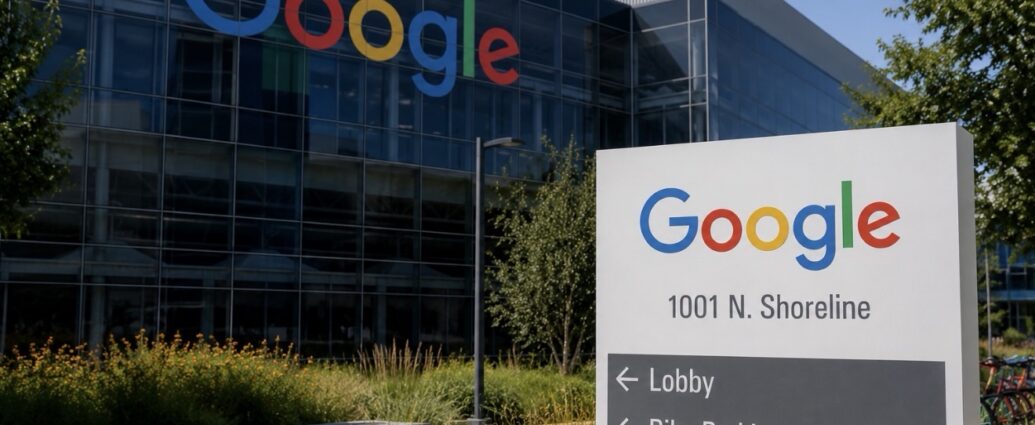
Alphabet raised its capital-spending forecast for a second time this year on Wednesday, telling investors it will pour even more money into the data centers and computing power behind its artificial intelligence push — a move that delivered strong quarterly results but reignited Wall Street’s unease about the mounting cost of the AI race.
The Google parent now expects 2026 capital expenditures of $195 billion to $205 billion, up from the $180 billion to $190 billion range it set just last quarter and well above the roughly $186 billion to $188 billion analysts had penciled in. Chief Financial Officer Anat Ashkenazi told analysts the higher range reflects an acceleration in bringing new capacity online to meet demand that continues to outrun supply. She reiterated that spending is set to rise again in 2027.
The revised outlook cements Alphabet’s position at the leading edge of Big Tech’s infrastructure arms race, in which the largest technology companies are collectively committing hundreds of billions of dollars this year to build out AI capacity. It also underscores a shift in how the company funds that growth: Alphabet has already raised $80 billion in fresh equity capital to help pay for the buildout, breaking from its long-standing habit of financing expansion internally.
The spending came alongside a quarter that, on the surface, was one of Alphabet’s strongest in years. Revenue rose 24 percent from a year earlier to $119.8 billion, topping the roughly $117 billion analysts expected and marking the company’s 12th straight quarter of double-digit growth. Google Cloud was the standout, with revenue surging 82 percent to about $24.8 billion — a sharp acceleration driven by enterprise demand for AI infrastructure and services, and a figure that comfortably beat expectations. Cloud operating profit more than tripled from a year ago, and the division’s order backlog has swelled to roughly $460 billion, a pipeline of contracted revenue that management points to as justification for the heavy spending. Advertising revenue, still Alphabet’s largest business, came in at $81.63 billion.
The bottom-line numbers require a closer read. Alphabet reported net income of $112.1 billion and diluted earnings of $9.11 per share, figures inflated by a one-time equity gain of roughly $98 billion. Stripping that out, the picture is more mixed: adjusted earnings of about $2.85 per share came in just shy of the $2.89 analysts expected, and underlying net income actually slipped from a year earlier. Operating income, which strips out one-time items, rose about 30 percent to $40.8 billion — a cleaner measure of how the core business performed during the quarter.
Investors focused on the spending. Despite the revenue beat and the cloud acceleration, Alphabet shares fell more than 2 percent following the report, a reaction that captures the central tension hanging over the entire sector. The market has grown increasingly sensitive to AI capital expenditures all year, worried that the returns on record infrastructure investment are arriving more slowly than the bills. Alphabet’s raise — a second consecutive increase stacked on April’s — fed precisely that anxiety, even as the company argued the spending is buying real growth.
Alphabet does have a clearer path from AI investment to revenue than some of its peers. Google Cloud gives it a direct commercial channel to monetize the infrastructure it is building, an advantage over rivals whose AI returns are harder to trace. That distinction has helped Alphabet’s stock hold up better than those of several competitors in recent months. The company also continues to push its own custom silicon and AI products, and Chief Executive Sundar Pichai told analysts that its Antigravity AI coding tool has climbed to more than 2.4 million weekly active users.
Still, the core worry is straightforward. If each new dollar of capacity requires ever-larger outlays while cloud growth eventually cools, the cost of staying competitive in AI could rise faster than the payoff. For now, Alphabet’s booming cloud numbers and near-half-trillion-dollar backlog give management a strong answer to that concern. But by lifting its spending ceiling yet again, the company has raised the stakes on proving that its AI bet will keep converting into growth — and set the tone for a Big Tech earnings season in which investors will be scrutinizing every capital-spending line that follows.
JBizNews Desk | Mountain View, Calif.
© JBizNews.com All Rights Reserved. Reproduction or distribution without written permission is prohibited.