By JBizNews Desk
Amazon Expands Rural Delivery Push, Pressuring Local Businesses
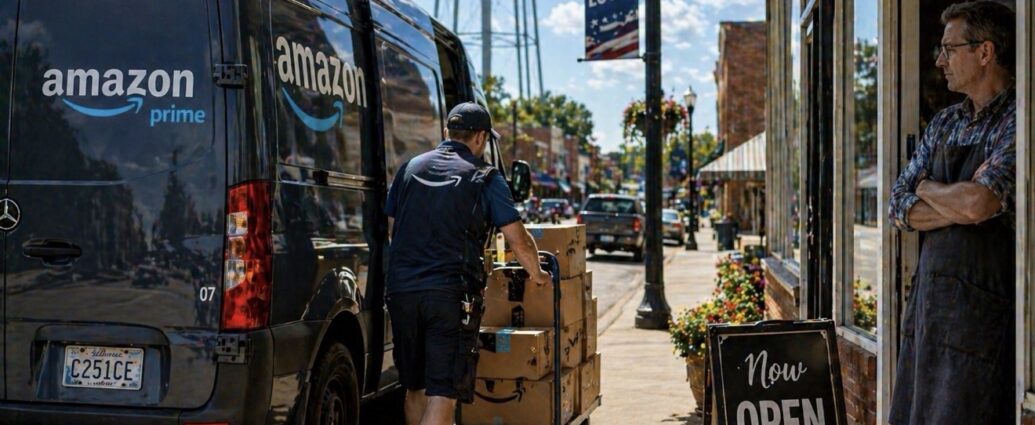
Amazon announced on April 29, 2026, a significant expansion of its rural delivery infrastructure across the United States, targeting underserved communities in the Midwest and Southeast with same-day and next-day delivery capabilities. The move, which includes partnerships with independent delivery contractors and regional logistics providers, is reshaping the competitive landscape for small-town retailers who have long relied on geographic distance as a natural buffer against the e-commerce giant.
The expansion involves the addition of more than 40 new delivery stations in towns with populations under 50,000 — a direct push into markets that have historically been slower to feel the full weight of Amazon’s logistics machine.
What the Expansion Looks Like on the Ground
According to Amazon’s April 29 announcement, the new infrastructure buildout includes:
• Over 40 new last-mile delivery stations in small and mid-size towns
• Expanded partnerships with Delivery Service Partner (DSP) small business operators
• Integration with Amazon’s existing freight and air cargo network for faster rural replenishment
• Investment in electric delivery vehicles for select rural corridors
• Expanded same-day availability for Amazon Prime members in previously excluded ZIP codes
Impact on Small-Town Retailers
Ellen Hughes-Cromwick of the Economic Policy Institute noted that rural small businesses face a compounding set of pressures heading into mid-2026. “When same-day delivery arrives in a town of 20,000 people, it does not just change where people shop — it changes what they expect from every local business,” she said in commentary published April 29. “Convenience is now the baseline, and that raises the bar dramatically for Main Street operators.”
Small hardware stores, pharmacies, and general merchandise retailers in rural communities are among the most exposed. Many of these businesses operate on thin margins and lack the technology infrastructure or capital to compete on speed or price.
Marcus Walton of the Small Business Majority pointed out in a statement released April 29 that the timing compounds existing stress. “Rural small businesses are already navigating elevated insurance costs, persistent workforce shortages, and higher borrowing costs,” he said. “A surge in Amazon’s rural reach could accelerate store closures in communities that can least afford to lose them.”
The DSP Angle: Opportunity for Some Small Operators
Not everyone on Main Street loses. Amazon’s Delivery Service Partner program — which allows small business owners to operate independent delivery franchises — is central to this expansion. The company is actively recruiting entrepreneurs in rural markets to launch DSP operations with startup support and volume guarantees.
Rohit Kumar of Deloitte’s Supply Chain Practice described this as a deliberate dual strategy. “Amazon is simultaneously disrupting local retail and creating a new class of small logistics entrepreneurs in the same communities,” he said in an April 29 industry briefing. “The net effect on local employment and business ownership is genuinely mixed and will vary significantly by region.”
Key details of the DSP opportunity include:
• Startup investment typically ranges from $10,000 to $30,000
• Amazon provides vehicles, equipment, and technology support
• DSP owners can employ between 40 and 100 drivers
• Revenue is volume-based with performance incentives
• No prior logistics experience required
Consumer Behavior Shifting Faster Than Expected
Dana Peterson of The Conference Board highlighted in April 2026 consumer data that rural shoppers are increasingly prioritizing delivery speed and price over local loyalty. “Post-pandemic behavioral shifts have proven stickier than many analysts predicted,” she said. “Rural consumers now shop online at rates approaching suburban levels, and that trend is only accelerating as infrastructure catches up.”
This shift is visible in categories once thought immune to e-commerce disruption — pet supplies, auto parts, and even fresh groceries — all now seeing meaningful online penetration in rural ZIP codes.
Outlook
Amazon’s April 29 rural expansion announcement marks a structural turning point for small-town commerce. While DSP opportunities offer a genuine entrepreneurial path for some, the broader pressure on independent retailers is real and growing. Analysts expect further consolidation among rural small businesses over the next 12 to 18 months, particularly in general merchandise and pharmacy categories.
Ellen Hughes-Cromwick of the Economic Policy Institute summed it up plainly: “Rural communities will need proactive policy support and local business adaptation strategies — not just market forces — to preserve the economic diversity that makes small towns viable places to live and work.”
For small-business owners in affected markets, the window to differentiate through personalized service, community relationships, and niche offerings is narrowing. The time to adapt is now.
JBizNews Desk