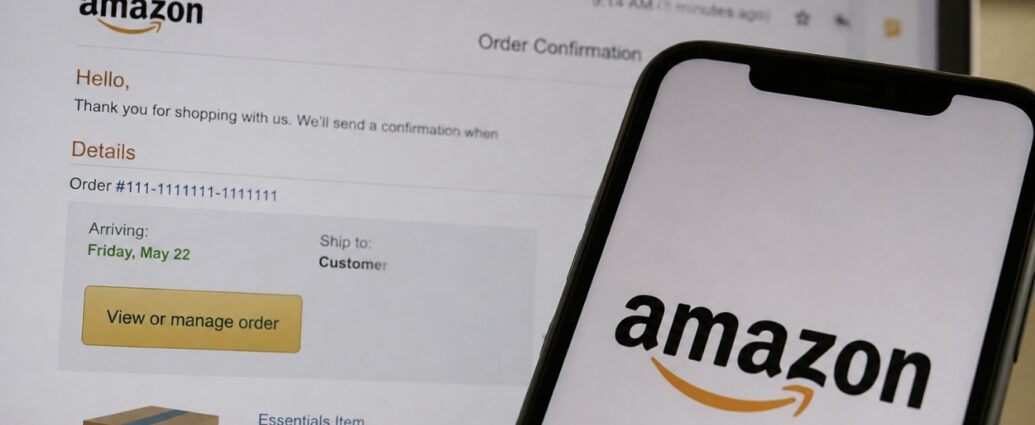
SEATTLE — Amazon has quietly changed the way millions of customers receive order-confirmation emails, replacing specific product names and images with broad labels such as “Household item,” “Essentials item” or “Beauty item” — a privacy-focused move that cybersecurity specialists warn could have an unintended consequence: making fake Amazon emails harder to identify.
Until recently, Amazon confirmation emails typically told customers exactly what they had purchased, often including the product name and image. That gave shoppers an immediate way to recognize whether an email matched an order they had actually placed.
The newer format removes much of that information from the email itself. Customers instead have to open Amazon’s app or independently visit its website to see precisely what was ordered.
Amazon has said the change is intended to simplify its communications and reduce the amount of customer information being shared outside Amazon-controlled channels.
That provides a legitimate privacy benefit. Purchase histories can reveal surprisingly sensitive information about a person’s health, finances, household, interests and daily habits, and keeping those details out of email reduces the amount of information sitting inside third-party inboxes.
But the change creates a tradeoff.
Fake order confirmations are already one of the tactics commonly used by scammers impersonating Amazon. Criminals send messages claiming that an unfamiliar purchase has been made, then pressure recipients to click a link, call a phone number or provide account information.
When legitimate Amazon messages themselves become intentionally vague, consumers lose one of the easiest clues they previously had for distinguishing a real confirmation from a generic fraudulent one.
There is currently no evidence that scammers are already exploiting Amazon’s new email design on a significant scale, making it important not to overstate the threat.
The vulnerability is instead about what the new format could make possible.
Amazon itself has warned consumers about fake order confirmations, shipping notifications and refund offers. The company says shoppers who receive a suspicious message should avoid relying on links inside the email and instead check their account directly through Amazon’s “Your Orders” page or the Amazon Shopping app.
That becomes particularly important under the new system.
If an email unexpectedly says an Amazon “Household item” or “Electronics item” has been ordered, consumers should not click the message simply to discover what the product is. They can independently open Amazon and check their order history.
If the purchase does not appear there, the email should be treated as potentially fraudulent.
For shoppers, Amazon’s change illustrates a growing tension in online commerce: protecting customer data can improve privacy while simultaneously removing information consumers once relied upon to recognize scams.
JBizNews Desk | Seattle
© JBizNews.com All Rights Reserved. Reproduction or distribution without written permission is prohibited.